The blog to end all blogs. Reviews and comments about all and everything. This blog is NOT affiliated with YouTube, Wikipedia, Microsoft Bing, Gemini, ChatGPT or any commercial vendor! Links don´t imply endorsement. Many posts and comments are ironic. The blogger is not responsible for comments made by others. The languages used are English and Swedish. Content warning: Essentially everything.
Showing posts with label Ukraine crisis 2022. Show all posts
Showing posts with label Ukraine crisis 2022. Show all posts
Hittade detta på nätet just nu. Vet förstås inte om det är sant, eftersom jag bara träffade Wolmar Holmström två eller tre gånger (på Ortodoxa bokhandeln i Stockholm). Kanske omkring år 2000? Minns att han var med i TV en gång också. I något slags ekumenisk dokumentär om trossamfund i Sverige.
Och apropå ekumenik...
Första gången jag besökte bokhandeln (på jakt efter "Den Ortodoxa Kyrkan" av Kallistos Ware) utspelade sig en "situation" i den lilla lokalen. Wolmar storgrälade med en mycket märklig gubbe. Han såg ut att vara 90+, hade stora stövlar och en gigantisk överrock. Ärligt talat såg han ut att vara hemlös. Gubben skrek något i stil med detta: "Jehova, Jehova kommer att STRAFFA ER på domedagen, ni kommer att BRINNA". Till svar skrek Wolmar "Ut, ut härifrån!!!". Han lyckades på något sätt slänga ut den galne gyben genom dörren (där jag också stod).
Jag frågade förstås (något chockad) vem i allsin dar gubben var. Var han ett Jehovas Vittne? Som alltså trängt sig in på Ortodoxa Kyrkans bokhandel och öppet hotade föreståndaren med yttersta dagens ljungeldar. Till min stora förvåning svarade Wolmar: "Det där? Nej, nej, det där är en gammal pingstpastor. Vi har känt varandra i 40 år. Han brukar låtsas att vara ett Jehovas Vittne, och jag låtsas att slänga ut honom. Vi brukar kalla det rå men hjärtlig stil".
ChatGPT on the current state of the Russian military, etc.
Can you comment the following claim: Russia hasn´t deployed its best troops in Ukraine, but are purposefully holding them back for a future confrontation with NATO. This explains why the casaulties on the Russian side is mostly untrained conscript troops ("cannon fodder") and various mercenary companies. Thus, Russia can both defeat Ukraine and threaten NATO at a later point.
This claim — that Russia is deliberately holding back its best troops for a future confrontation with NATO, using mostly low-quality forces in Ukraine — is an assertion that deserves careful scrutiny. Let's break it down and comment on its plausibility based on available evidence and strategic logic.
1. Has Russia deployed its best troops in Ukraine?
Reality:
Yes, many of them. At the beginning of the invasion in February 2022, Russia did commit elite units, such as airborne (VDV), Spetsnaz, and tank divisions. Many of these units suffered significant losses in the early months of the war, particularly in battles near Kyiv, Kharkiv, and the Donbas.
VDV and other elite forces have been heavily degraded — multiple analysts and Western intelligence sources confirm that these units were not only deployed, but also took disproportionate casualties. Some had to be rebuilt or replenished with less experienced troops.
2. Is Russia primarily using conscripts and mercenaries now?
Partially true, but misleading.
Russia has increasingly relied on mobilized reservists, volunteer contract soldiers, prisoner recruits (Wagner Group), and regional militias — many of whom are poorly trained and equipped.
However, by late 2023 and into 2024, Russia began reconstituting better-trained brigades, incorporating battle-hardened veterans, and professionalizing units as part of a longer war effort. So it’s not purely “cannon fodder” anymore.
Wagner, for instance, was a key offensive force, especially in battles like Bakhmut. But after the 2023 Wagner mutiny and the death of Prigozhin, their role changed.
3. Is Russia holding back troops for a future war with NATO?
Highly speculative and strategically questionable.
Russia’s ability to fight NATO directly is currently limited. The war in Ukraine has severely strained its conventional forces — equipment losses, manpower attrition, and sanctions-induced limitations on replenishment are all significant.
If Russia were seriously preparing for war with NATO, it would be rebuilding high-readiness reserves, modernizing command and control, and deploying more troops to borders with NATO countries — but open-source data does not strongly support this narrative.
Moreover, Russia’s doctrine assumes nuclear deterrence as its primary check against NATO, not conventional parity.
4. Can Russia “defeat” Ukraine while preserving strength for NATO confrontation?
Unlikely under current conditions.
The Ukrainian military, heavily supported by Western intelligence, weapons, and logistics, has proven resilient. Even if Russia gains ground, it will be costly and slow, not a quick conquest.
If Russia could “defeat” Ukraine easily with second-rate troops, it would already have done so. The fact that the war has dragged on for more than two years indicates that Russia has been forced to use more of its conventional capacity than it might have liked.
Conclusion:
The claim overstates Russia’s strategic flexibility and underestimates the toll the Ukraine war has taken on its military.
Russia did use many elite troops and suffered for it.
Its current force structure is a mix, but not mostly cannon fodder.
The idea of “saving” elite forces for a NATO fight assumes a level of foresight and capability that doesn’t match how Russia has been forced to fight.
So, while there might be some element of strategic reserve in play (every major power does this to some extent), the core of the claim — that Russia has held back its best troops and is playing a long game for a NATO conflict — lacks solid support and appears more like strategic speculation or propaganda than a robust military analysis.
This seems correct. If Russia could have defeated Ukraine swiftly through a blitz krieg with their best troops, why not do so? Why fight a war of attrition instead, unless forced to do so?
Exactly — that line of reasoning is crucial.
If Russia could have achieved a swift victory in Ukraine by deploying its best troops in a "shock and awe" blitzkrieg-style campaign, there are strong incentives to do so:
1. Political Objectives:
Putin's original plan in February 2022 seems to have been a rapid decapitation of the Ukrainian government — a quick advance to Kyiv, the installation of a pro-Russian regime, and minimal resistance.
A fast win would have minimized sanctions, preserved Russia’s conventional forces, and demonstrated power to both NATO and internal audiences.
Instead, the failure to take Kyiv quickly turned the war into a prolonged, grinding campaign — something Russia almost certainly didn’t want or plan for initially.
2. Military Logic:
Blitzkrieg works best with surprise, speed, and overwhelming force. Russia attempted this in 2022, but:
Coordination failures between air, armor, and infantry created bottlenecks.
Elite units were committed and badly mauled, especially airborne and Spetsnaz troops in Hostomel and elsewhere.
So the war shifted to attrition not by choice, but by necessity.
3. War of Attrition: A Tactical Retreat in Strategy
After the initial failure, Russia had to fall back on a deep reserves model, using mass mobilization and long-range fires (artillery, missiles, drones) to wear Ukraine down.
This is not a high-efficiency strategy — it’s costly, slow, and politically risky (mobilizations stir dissent).
But it’s what Russia has left. The alternative — rotating in unused elite troops — would only make sense if such troops existed in sufficient quantity and readiness, which seems doubtful.
4. Strategic Signaling:
If Russia had held back elite units in meaningful numbers, NATO intelligence would likely detect this via satellite and electronic surveillance. Western planners have not indicated the presence of a large, unused elite strike force.
What has been observed is efforts to rebuild units degraded in Ukraine, not whole elite armies waiting in the wings.
Bottom Line:
Russia tried and failed to win quickly. It did not voluntarily choose a war of attrition — it was forced into it by Ukrainian resistance and its own operational failures. The idea that Russia is holding back its “real army” for NATO is far more likely to be:
Propaganda to intimidate,
Wishful thinking by some analysts or commentators,
Or a misreading of Russia’s actual force-generation capabilities.
If a blitzkrieg had been feasible, it would have been the logical and preferred path. The fact that we’ve seen the opposite speaks volumes.
What kind of troops did North Korea send to the Kursk region?
North Korea has deployed a substantial military contingent to Russia's Kursk region, primarily consisting of elite special operations forces from the 11th Army Corps, also known as the "Storm Corps."This unit includes specialized brigades such as the 16th Sniper Brigade and the 43rd Mountain Infantry Sniper Brigade .thesun.co.uk+4longwarjournal.org+4reddit.com+4en.wikipedia.org
Composition and Deployment
Initial deployments began in late 2024, with approximately 12,000 troops sent to support Russian operations in Kursk . These forces were integrated into Russian units, often wearing Russian uniforms and carrying Russian military identification . Their roles included front-line infantry assaults, often accompanying Russian paratrooper companies .forbes.comlongwarjournal.org+1apnews.com+1kyivindependent.com
In early 2025, North Korea dispatched an additional 1,000 to 3,000 specialist troops to bolster their presence.These reinforcements included motorized infantry, sappers, and electronic intelligence units, aiming to enhance operational effectiveness in modern warfare environments .kyivpost.com
Tactical Evolution
Initially, North Korean forces employed large-scale, company-sized assaults, which resulted in significant casualties due to vulnerability to Ukrainian artillery and drone strikes . Recognizing these losses, tactics shifted to smaller, platoon-sized units to reduce detectability and improve maneuverability on the battlefield .
Casualties and Impact
The deployment has come at a high cost.Reports indicate that approximately one-third of the initial 12,000 troops have been killed or wounded . Despite these losses, North Korean forces have contributed to Russian efforts in contested areas of Kursk, though their overall impact on the broader conflict remains limited.theguardian.com+16theguardian.com+16reddit.com+16kyivindependent.com+4kyivpost.com+4forbes.com+4
The involvement of North Korean troops marks a significant development in the Russia-Ukraine conflict, highlighting the deepening military ties between Moscow and Pyongyang.thesun.co.uk
Could the North Korean deployments indicate that Russia itself has a shortage of elite troops?
Yes, the deployment of North Korean troops—especially elite special forces from units like the 11th Army Corps—strongly suggests that Russia is facing a shortage of elite, high-readiness troops and is compensating by drawing on foreign manpower.
Here’s why that conclusion is plausible:
1. Use of Foreign Combat Troops is Unusual for a Major Power
For a nuclear-armed state with one of the world’s largest militaries, relying on North Korean special forces in an active combat zone is highly irregular.
Major powers typically prefer to retain control over their operations and avoid political entanglements from foreign boots on the ground.
If Russia had a large surplus of ready, elite forces, it would be illogical to bring in North Korean troops, especially given the coordination, logistical, and language barriers.
2. Elite Russian Units Have Been Degraded
Many of Russia’s top-tier units (e.g. VDV, Spetsnaz GRU, Naval Infantry) suffered heavy casualties in the first two years of the war.
Western intelligence and independent analysis confirm that these units had to be reconstituted using conscripts or minimally trained personnel.
Even by late 2024, Russia was rotating wounded or depleted brigades out of front-line roles, indicating a need for reinforcement.
3. North Korean Troops Are Replacing, Not Just Supplementing
Reports indicate that North Korean forces were deployed into active combat zones in Kursk, sometimes integrated into Russian formations, and even wearing Russian uniforms.
This level of integration implies they are filling operational gaps, not just playing a symbolic or training support role.
4. Elite North Korean Troops Are Costly Assets
Pyongyang would not lightly risk sending its best troops abroad unless the strategic or economic benefits were high — or unless Russia desperately needed competent manpower in key sectors.
5. Strategic Implications
If Russia still had a large pool of reliable, elite soldiers, it would likely prefer to:
Reinforce overstretched sectors with its own vetted units.
Avoid political complications from foreign troop presence.
Retain tight control over operational security and command structure.
That they’re not doing this suggests either:
Severe depletion of high-quality Russian forces, or
An effort to preserve what remains of their elite units for higher-priority threats or future contingencies.
In Summary:
The North Korean deployments are a strong signal of Russian force strain, particularly at the elite level.
It suggests:
Russia’s best units are degraded, recovering, or being conserved.
Moscow is increasingly relying on unconventional partnerships to maintain pressure along multiple fronts.
The strategic situation for Russia is likely more brittle than public messaging suggests — at least in terms of manpower quality.
It’s a sign not of strength, but of strategic necessity.
Was there really a 50% chance that Russia would nuke Ukraine in 2022? Or is it just Western war propaganda? Or covert Russian disinformation to make the enemy shit in their pants?
What´s most worrying: that Putin contemplated to use a tactical nuclear weapon against some target in Ukraine, or that NATO assumed he was contemplating it although he really wasn´t?
A very interesting article from 2019. Also mentions certain salient events in 2015. What makes the piece interesting is that Russia´s hybrid warfare involving migrants was well known (and feared) by the cognoscenti long before the 2021 Belarus border crisis and the 2022 Russian attack on Ukraine. Yet, it went underreported in the mainstream media.
Tobias Hübinette om hur SD bör benämnas. Alltså vad SD faktiskt är. Ett förslag utifrån hans inlägg vore väl semi-krypto-ex-nazister...
Hur ska Azov benämnas, då? Nyssnazister, kanske? Varför är det fel att vara nyssnazist i Grönköping, men okej i Mariupol? I know, I know, my enemy´s enemy and all that...
Sosse med parlamentariskt stöd av (V), (MP) och (C) på väg till underhandlingar om energipolitiken med högern och SD, efter att herr Bildt skrivit på deal med Ryssland om pipeline
Observera att varken sossarna eller högern vill avskaffa momsen eller skatterna på energin, och att även den socialdemokratiska regeringen är medansvarig till kaoset (vinstkaoset?) på elmarknaden...
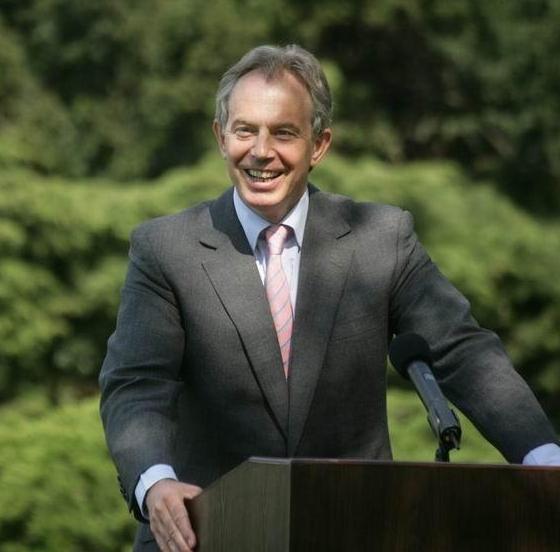
Tony Blair was one of the "New Labour" fakers who begun the bizarre phase of late capitalism we are currently living through, in which neo-liberal "free" market reforms are combined with a "woke" left-liberal culture. But it seems even this old hypocrite is now having second thoughts about it, well! But sure, maybe his recent schwärmerei for the Qatari absolutist monarchy can be squared with some kind of woke-ish pro-Islamism?
What´s really going on here isn´t simply Qatari investments, but the present energy crisis. EU and Germany have struck deals with Qatar about replacing the Russian oil and gas with Liquified Natural Gas (LNG). When push comes to shove, LNG takes precedence over LGBT, it seems.
I don´t think Qatar is really "pro-Western", but are simply doing some opportunistic gyrations, while flexing their economic muscle, which are indeed considerable.
That being said, sure, if the only alternative to buying LNG from Al-Jazeera´s finest is to freeze to death in a Russospherian People´s Republic, I take the LNG anytime!
The European nations are running short of ammunition to send to Ukraine. Germany is one example. Hunters, sport shooters and others have had increasing difficulty getting hold of ammo for their chosen gun-wielding pursuits. And guess who is *making* the ammunition? Yes, that would be China. Mainland China, that is!
Let that sink in. The ammunition used by the EU to support Ukraine´s resistance against Russia is made in China, a Russian ally?! Indeed, for all we know, Russia might be a *proxy* for China...
So the only way to defend globalism in Ukraine is to break with globalism? Deal! I can live with that. We could support Taiwan instead. Or Japan. Or how about producing the stuff ourselves?
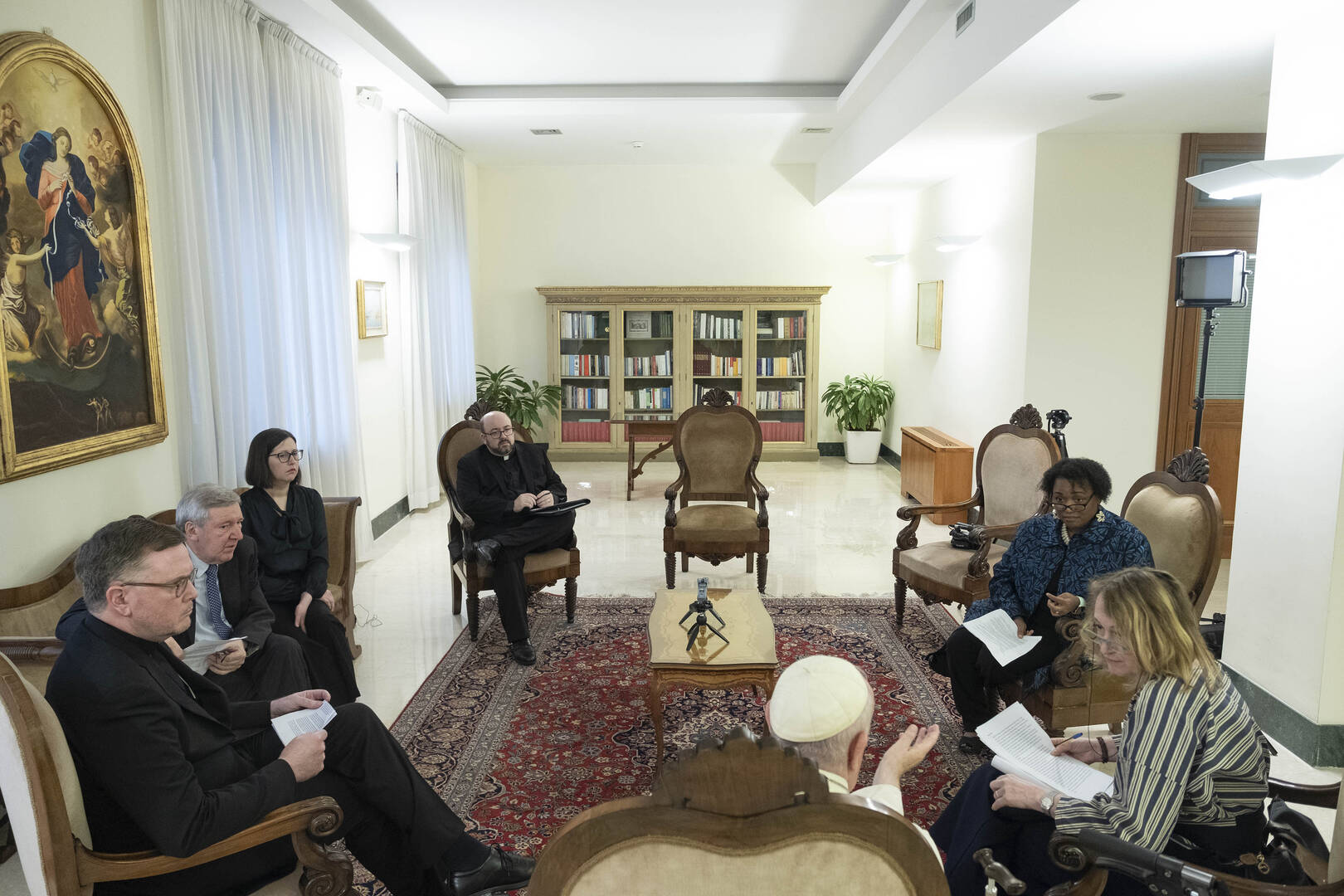
Maybe. And then, maybe not. His statements about Chechens and Buryats (Mongols?) are weird, to be sure, but here are the Papal remarks on Russia and Ukraine in context. And in context, the Pope sounds much more moderate. So I suppose it´s interesting that the Kremlin seems to have disavowed him anyway after the remarks below (sorry for the weird formating):
Gerard O’Connell: Holy Father, about Ukraine: Many in the United States have been confused by your seeming unwillingness to directly criticize Russia for its aggression against Ukraine, preferring instead to speak more generally of the need for an end to war, an end to mercenary activity rather than Russian attacks, and to the traffic in arms. How would you explain your position on this war to Ukrainians, or Americans and others who support Ukraine?
When I speak about Ukraine, I speak of a people who are martyred. If you have a martyred people, you have someone who martyrs them. When I speak about Ukraine, I speak about the cruelty because I have much information about the cruelty of the troops that come in. Generally, the cruelest are perhaps those who are of Russia but are not of the Russian tradition, such as the Chechens, the Buryati and so on. Certainly, the one who invades is the Russian state. This is very clear. Sometimes I try not to specify so as not to offend and rather condemn in general, although it is well known whom I am condemning. It is not necessary that I put a name and surname.
On the second day of the war, I went to the Russian embassy [to the Holy See], an unusual gesture because the pope never goes to an embassy. And there I said to the ambassador to tell [Vladimir] Putin that I was willing to travel on condition that he allowed me a tiny window to negotiate. [Sergey] Lavrov, the foreign minister at a high level, replied with a very nice letter from which I understood that for the time being it was not necessary.
I spoke to President Zelensky three times by phone. And I work in general with receiving lists of prisoners, both civilian prisoners and military prisoners, and I have these sent to the Russian government, and the response has always been very positive.
I also thought of traveling, but I made the decision: If I travel, I go to Moscow and to Kyiv, to both, not to one place only. And I never gave the impression that I was covering up the aggression. I received here in this hall, three or four times, a delegation from the Ukrainian government. And we work together.
Why do I not name Putin? Because it is not necessary; it is already known. However, sometimes people latch onto a detail. Everyone knows my stance, with Putin or without Putin, without naming him.
Some cardinals went to Ukraine: Cardinal Czerny went twice; [Archbishop] Gallagher, who is responsible for [relations with] states, spent four days in Ukraine, and I received a report of what he saw; and Cardinal Krajewski went four times. He goes with his van loaded with things and spent last Holy Week in Ukraine. I mean the presence of the Holy See with the cardinals is very strong, and I am in continual contact with people in positions of responsibility.
And I should like to mention that there is in these days the anniversary of the Holodomor, the genocide that Stalin committed against the Ukrainians [in 1932-33]. I believe it is appropriate to mention it as a historical antecedent of the [present] conflict.
The position of the Holy See is to seek peace and to seek an understanding. The diplomacy of the Holy See is moving in this direction and, of course, is always willing to mediate.
The entire interview (which mostly deals with other issues) can be read here:
Polska ultra-nationalister godhetssignalerar lite. Fast inte om judar, utan om - just det - polacker. Får väl hoppas att Rzeczpospolita är lite mer realpolitisch i verkligheten och fortsätter att skicka söta små luftvärnskanoner till det slaviska broderfolket...
Hur ska drömmen om Intermarium annars kunna förverkligas?
Förresten rätt kul att Bandera-kramaren är uppkallad efter Banderas främsta rival inom OUN!
Russia has retreated from Kherson. That means the war is over, right? I mean, the Russians are *retreating*, right? Retreat. That means we´ve won, rightie?
Consult the guy above for further information. Or ask a Chechen about what happened when Russia retreated from *their* country...
Översättning: "etablissemanget" förbereder allmänheten på att kriget troligen kommer att bli långvarigt, genom att bedriva lite formell "självkritik" om mediebevakningen.