Showing posts with label Dragonflies. Show all posts

Monday, December 4, 2023

Demonic dragonflies


An entertaining blog post about sightings of oversized dragonflies. Probably not hoaxes, but could the insects spotted really be real? Some kind of radio-controlled models are more likely. Or perhaps hallucinations after spending an entire day dragonfly-watching down at the local pond! 

Unless it´s the fairies. As per usual.   

Demonic dragonflies


Saturday, November 20, 2021

A world of damselflies


"David Attenborough´s Dragons and Damsels" is a wittily titled documentary about dragonflies (Anisoptera) and damselflies (Zygoptera) somewhere in the UK. And yes, the odonate extravaganza is narrated by the apparently ever-young David Attenborough. 

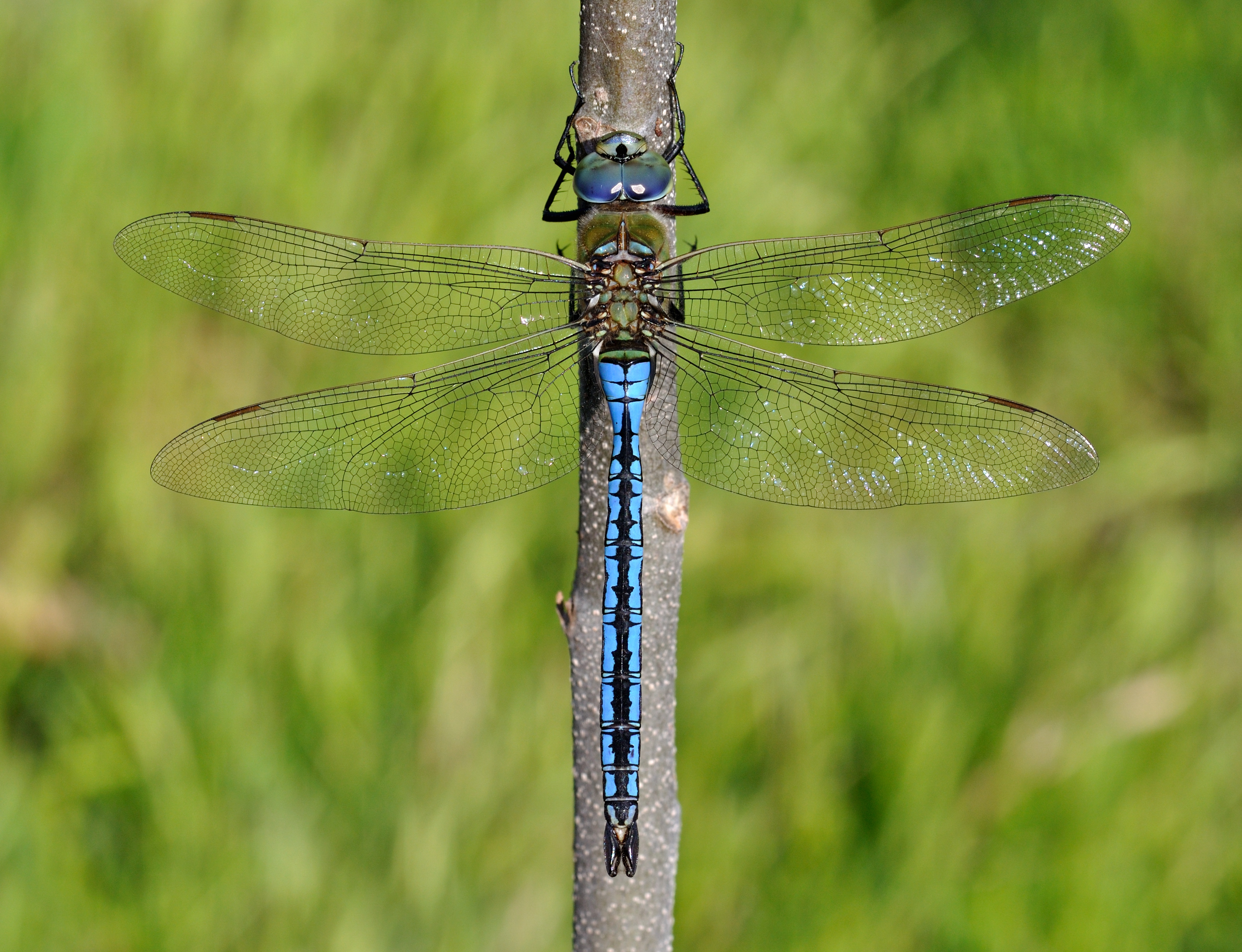
Dragonfly-like insects have been around for a staggering 330 million years! This production shows a wide variety of dragonfly and damselfly species, mostly the latter, come to think of it. If you are a budding zygopterist, this may rock your little world. Damselfly species shown include the Common Blue, the Banded Demoiselle, the Willow Emerald, the Azure Damselfly, the Common Red Eye, and perhaps some others I missed. Dragonflies shown include the "Emperor" and the Common Darter. 

Odonates turn out to be surprisingly highly evolved insects, with complex behaviors surrounding territorial defense, mating and signaling. Their flying capabilities are so extraordinary that human engineers who built a "dragonfly robot" had major problems mimicking the original insect! The documentary shows how Emperor dragonflies laying their eggs inside Common Blue territory are mobbed by swarms of the smaller damselflies. It´s interesting to note that the underwater nymphs of the damselflies are hunted and eaten by the Emperor nymphs, but it´s difficult to believe that the damselflies somehow *know* this. Other natural enemies of the damsels include fish, spiders and "pond skaters" (a bizarre "true bug" that can walk on water). Climate change rears its head with the Willow Emerald, a south European species which has began to spread in Britain, catching the attention of scientists and odonate aficionados alike. The Willow Emerald lays its eggs inside the bark of trees (rather than in the water) and is believed to have colonized the UK due to changes in weather patterns. 

"Dragons and Damsels" ends with winter coming to the anonymous lake, killing off all remaining specimens of Odonata...except the nymphs, which survive deep under the lake surface, only to re-emerge as adults in the spring. As they (perhaps) have done for 330 million years. 


Sunday, August 26, 2018

Ospreys, grizzlies and cruel eels


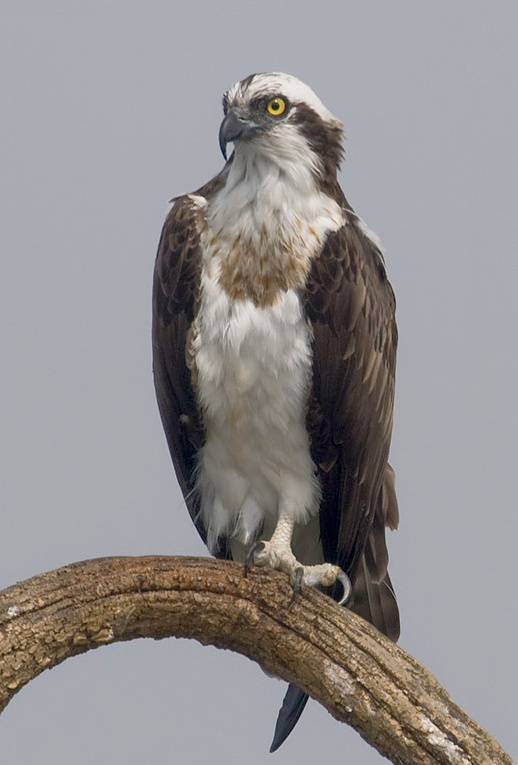
“Nature's Wonders of Oceans and Mountains” is a British children's book by John Gilbert. Apart from the wildlife of oceans and mountain ranges, it also covers rivers, lakes and marshes. The Andes, the Alps and the Himalayas are some of the areas covered, alongside the Rockies, the Everglades and the rivers of temperate North America. Additional sections deal with deep sea fish and island endemics. There is even a chapter on perfectly regular European lakes, featuring mallards, swans and dragonflies.

Despite the colourful pictures and relatively easy accompanying text, I didn't like the book as a kid. A number of errors had crept into the Swedish translation (at least I hope it's just in the translation!). The author, editor or translator confuses the Osprey and the Lammergeier, and seems to think that all North American brown bears are grizzlies. One picture shows black bears, but the caption claims they are brown bears! The innocent children are also taught that the shark is the “terror of the seas” and that the moray eel is a “cruel, carnivorous fish”. Cruel? Compared to what exactly? British fox-hunting? LOL.

Gilbert's book is probably part of a series also covering other biotas, but if so, I haven't seen any other volumes…

Sunday, August 19, 2018

Dragonflies..and the rest of the world


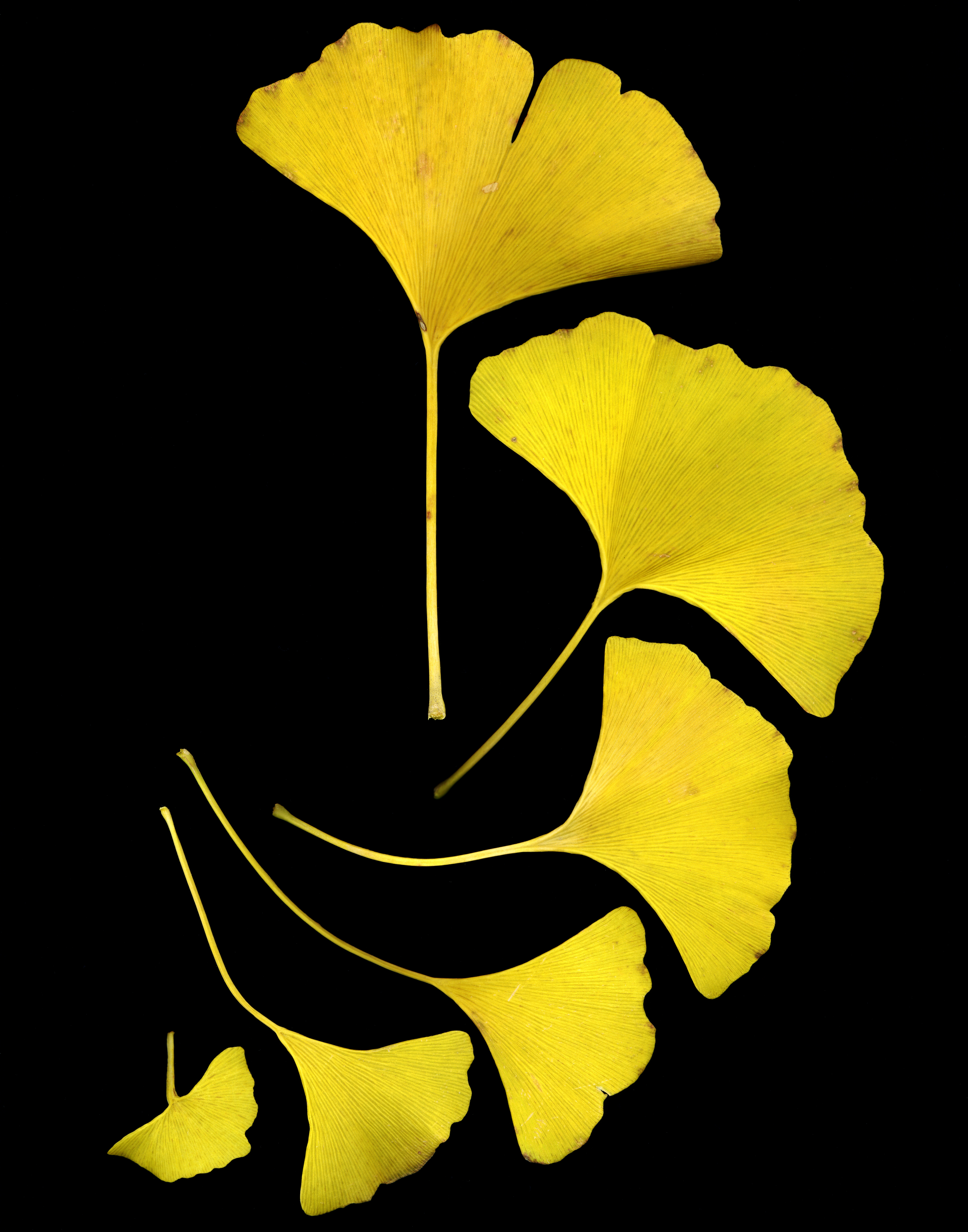
“Sky Hunters” is indeed a documentary about dragonflies and their close relatives, the damselflies. It gives the viewer a basic introduction to their evolution, feeding habits and bizarre life cycle. Yet, the producers must have found dragonflies boring (or assumed the viewers might do so), since they have filled “The World of the Dragonfly” with butterflies, moths, jellyfish, gingko trees and the odd dinosaur! Still, worth watching if assorted Insecta is the main love of your life cycle…

Monday, August 13, 2018

Macho dragonflies


(A review of the book "Dragonflies and damselflies of Texas and the South-Central United States" by John C Abbott) 

This is an extensive field guide to the odonates of Texas, Louisiana, Arkansas, Oklahoma and New Mexico. It covers 263 species. Rather than illustrations, it features color photos of all species covered. I'm not sure if field guides with photos are better than the usual ones - I suspect they might actually be somewhat worse. But then, I don't commute to the Deep South looking for dragonflies...

Otherwise, the book contains the usual features of a field guide: checklists, keys, drawings of the appendages of similar species, etc. The species presentations include information on size, regional distribution (both the biotic province and watersheds), flight season, identification, similar species and references. The extensive list of references makes the book valuable for advanced students of entomology. Thus, it could function both as an identification guide and a reference work. There are also range maps. Both vernacular and scientific names of the various species have been included.

This is the only book on odonates I've seen which claims that dragonflies can actually hurt humans. The author claims that female dragonflies occasionally mistake the leg of a wader or river rafter for a plant when laying her eggs: "Though I have never experienced this first-hand, those that have confirm that having a dragonfly attempt to lay eggs in you is painful". Why haven't we been told this before? Are even the beautiful, sweet-looking, multi-colored dragonflies dangerous to our health?

Or are dragonflies in Texas particularly macho?

I'm not sure how to rate this book, since I haven't been anywhere near the Alamo, but I'm sure it's useful as a reference and general presentation of the species found in South-Central United States.
For that reason, I give it four stars.

Friday, August 10, 2018

Operation Dragonfly


A review of "Field Guide to the dragonflies of Britain and Europe" by Klaas Douwe B Dijkstra and Richard Lewington.

I was somewhat surprised to learn that there are dragonfly-watchers (like bird-watchers, but with their binoculars refocused). I assumed that different species of dragonfly couldn't be told apart, except perhaps by a specialist under microscope. Besides, I usually run when I see these large, sturdy insects, some of which seem to be larger than a House Sparrow! Their somewhat smaller cousins, the damselflies, don't appeal to me either.

In reality, it often *is* possible to identify dragonflies, although it probably takes more training (and guts) than identifying birds or butterflies. Dragonfly species can be told apart by their color, size, wing color, habitat or general behavior. Often, similar species occupy different, non-overlapping ranges. Occasionally, however, it is necessary to catch a dragonfly and take a closer look at its appendages to place it in the correct species (the appendages are used by dragonfly males to catch and hold the females).

This book is a field guide to the dragonflies and damselflies of Europe, northwest Africa (Morocco, Algeria, Tunisia) and western Turkey. The guide also covers the Canary Island, Azores, Madeira and Cyprus. Please note that Russia isn't included, while Belarus and the Ukraine are. About 160 species live in the area covered by the book, and they are all included. The illustrations are in color, and there are also color photos of many species. There are detailed range maps for every species, and descriptions to aid identification, including information on flight season, habitat and general habits. The guide also contains identification keys.

Perhaps most importantly, the guide also contains an extensive chapter on exactly where the dragonflies can be found. Of course, dragonflies can be found pretty much everywhere, but some places are better than others, especially if you want to find rare species, or as many different species as possible in one single location. Where should the avid dragonfly-watcher go if he or she visits Tunisia, Slovakia or Sweden? Apparently, my closest haunt would be Lake Mårdsjön north of Stockholm, where one can find 17 species of dragonfly and damselfly, including the Green Hawker, the Bog Hawker and the Arctic Bluet! (I will avoid that lake from now on.)

Recommended.

PS. Dragonflies and damselflies are, of course, harmless to humans...

;-)

A dazzling dragonfly extravaganza


"A Dazzle of Dragonflies" is precisely what it claims to be: a dazzling, spectacular dragonfly extravaganza. Forrest Mitchell and James Laswell have written a book sure to captivate any budding entomologist, insect collector, or dragonfly-watcher. The book is filled with *really* good, large photos of dragonflies in different environments, situations and life-stages. The authors have also developed a new scanning technique, making many of their pictures extra fascinating (and almost scary).

The book starts off with a chapter on dragonfly tales, dealing with myths, folklore and urban legends about dragonflies. It turns out that dragonflies are universally hated or feared in Western cultures, even in the modern US, while many Native and East Asian cultures considered them beautiful and near-divine. In Japan, the dragonflies were a constant inspiration for poets!

The book then deals with dragonfly fossils, dragonfly larvae, adult dragonfly behavior, and a survey of North American dragonfly families, to aid identification. (If it's well-camouflaged, lives in a dense forest, and fly right at you, it's a Petaltail.) Finally, there are chapters on dragonfly collection, how to breed dragonflies, and watergardening for dragonflies. Attracting dragonflies to your backyard garden isn't difficult, it seems. If you have a small artificial pond, they will come whether you like it or not!

Naturally, the authors have also included a chapter on their scanning technology. They also share some trade secrets of nature photographers. It turns out that these often paralyze captured dragonflies by throwing them in the freezer for half an hour or so, and then place the unconscious insect on a suitable perch, with the best ligh conditions, all to get a clean shot!

There is one problem with this book, however. It's a "nerd book", written by one pair of enthusiasts for another enthusiasts. As a general reader, you need to be *very* interested in the subject to appreciate it. The book is very unevenly written. Some chapters are popularized, others are extremely technical. The authors often loose themselves in details that only interest the specialist. Part of the first chapter sounds like a college lecture on Chinese and Japanese poetry, and another section sounds like a dissertation on the exact methods of propulsion used by larvae. The inclusion of information on how to breed dragonflies, or attract them to your fishpond, also shows that the intended audience are dragonfly buffs.

I understand why the enthusiasts on this product page gave this book five stars. But as a naughty little general reader, I only give it three stars. But yes, the photos (and scans) are worth ten stars at least.

Incidentally, British readers should note that the term "dragonfly" in American English only refers to the "true" or "large" dragonflies, those belonging to the sub-order Anisoptera. Thus, the book doesn't deal with damselflies, except in passing.

PS. I discovered a factual error in the book. It claims that the Swedish word for damselfly, "jungfruslända" means "fairy spinning needle". Actually, it means "virgin spinning needle".

I'm flying off, cheers...

Wednesday, August 1, 2018

Welcome to Planet Dragonfly


The main author of this book, Jill Sillsby, is the honorary secretary of the Worldwide Dragonfly Association and a former ditto of the British Dragonfly Society. As behoves such a prominent student of dragonflies, her book is interesting, readable and illustrated with a large amount of stunning colour photos. Indeed, this is one of the best books on dragonflies I've seen.

"Dragonflies of the world" covers all odonates: true dragonflies, damselflies and anisozygopterans. The book is divided into two main sections. The first deals with the life cycle and behaviour of these fascinating insects. The second is an encyclopaedic section, covering all extant families of the order Odonata. Apart from the usual Hawkers, Emperors and Chasers, there are some groups I haven't heard of previously. The Primitives are dragonflies with curiously shaped wings, Dwarves are the smallest dragonflies (one species is only 15 mm), and the largest ones are called Forest Giants (strictly, they are damselflies). Finally, there are the anisozygopterans, which I personally think looks like a cross between dragonflies and wasps!

The two main sections are followed by three shorter chapters on evolutionary riddles, dragonfly breeding and conservation issues.

All things considered, "Dragonflies of the world" might be the only book about dragonflies you are likely to need.

Welcome to Planet Dragonfly!

An excellent introduction


Steve Brooks' book "Dragonflies" is an excellent introduction to the Odonata or odonates, a group of insects comprising dragonflies, damselflies and anisozygopterans. The book looks like a shorter version of Jill Sillsby's "Dragonflies of the world", and seems to be partially based on that book.

Brooks covers all aspects of dragonfly and damselfly behaviour: feeding, mating, flying, the larval stages. There is a chapter on odonates and humans. There is also a section mentioning every known family of the Odonata. The book is superbly illustrated with glowing photos, all in colour. (It should be noted that the anisozygopterans are mentioned mostly in passing. But then, there are only two species of those!)

"Dragonflies" is definitely worth buying if you have even a passing interest in these large, sturdy and completely harmless bugs...