Showing posts with label Protista. Show all posts

Wednesday, October 1, 2025

Catocalypse


- Rapture? What rapture? 

So Edward Dutton believes that histrionic Woke women are infected by a parasitic disease spread by cats. 

It struck me that the same analysis could be applied to histrionic conservative women who believe in the "Biblical" Rapture. Ever noticed how many of them *worry about their cats* in the event of apocalypse?

And no, I´m not saying this is true. My point is that what´s sauce for the goose, surely works just fine for the gander. Not to mention the old tom!

Tuesday, September 30, 2025

Curiosity killed the cat


Edward Dutton has stopped donning a false beard lately, but his speculations are still as "far out" as usual. Here, he claims that Woke women have a parasitical disease known as toxoplasmosis, the vector of which is...cats. Apparently, half of all domestic cats world-wide are infected with this disease. 

He also speculates that the witches of yore may have been infected by the same parasite, which is why the cat has always been the symbol of evil. It also explains the stereotype of the "cat lady". 

A lot of push back in the commentary section from right-wing cat owners... 

Wednesday, October 2, 2024

Welcome to the Sargasso Sea


- I´m not a plant, dude.
I´m just posing as one to trick the eels!

Eh, so brown algae (including kelp in the Sargasso Sea) are not *really* plants, but some kind of mega-sized protists?! Aaaargh, bring back Boomer science! 

>>>Kelps are large brown algae or seaweeds that make up the order Laminariales. There are about 30 different genera. Despite its appearance, kelp is not a plant but a stramenopile, a group containing many protists.

>>>Seaweed were generally considered homologues of terrestrial plants but are only very distantly related to plants, and have evolved plant-like structures through convergent evolution. Where plants have leaves, stems, and reproductive organs, kelp have independently evolved blades, stipes, and sporangia. 

>>>With radiometric dating vascular plants have been measured as having evolved around 419–454 Ma while the ancestors of Laminariales are much younger at 189 Ma.

Evolution is even crazier than we *can* know, LOL.

Monday, July 1, 2024

Applied metaphysics?


So I just tried to read a 48-page paper titled “Ernst Haeckel´s Discovery of Magosphaera planula: A Vestige of Metazoan Origins?”, published in 2008 in “History and Philosophy of the Life Sciences”, apparently a journal. One of the authors, Andrew Reynolds, is a scholar of religion and philosophy. The other, Norbert Hülsmann, is a zoologist. And yes, their paper was quite hard to read! 

It deals with German evolutionist Ernst Haeckel´s discovery of a curious micro-organism off the Norwegian coast in 1869, a creature Haeckel named Magosphaera planula, the generic name meaning “magician´s ball”. The organism was only observed and studied by the German naturalist himself, and only at this one occasion! Despite this, it played an important part in the evolutionary speculations of both Haeckel and others during the 19th and early 20th centuries. It´s still occasionally mentioned in scientific works (and even on Wikipedia), but only with a huge question mark as to its placement on the tree of life.

In Haeckel´s theories, Magosphaera was first given the rank of a protist (Haeckel apparently regarded protists as a somewhat nebulous group transitional between plants and animals), but was later upgraded to a protozoan (a unicellular animal) of the “blastaea” stage in the German naturalist´s “ontogeny recapitulates phylogeny” scheme. The fact that Magosphaera had only ever been seen by Haeckel himself could easily be misinterpreted as science fraud, especially since Haeckel have posthumously come under fire for his supposedly fake illustrations of embryos. The two authors are therefore at pains to point out that they are *not* accusing Haeckel of hoaxing. However, they do believe that he made an honest mistake.

The magician´s ball doesn´t really exist. With one exception, no other scientist has claimed to observe anything even remotely similar (the equally dubious species Magosphaera maggii). The authors have actually looked for Magosphaera-like organisms in the North Sea on several occasions, but always without success. They also believe that Haeckel´s illustrations and descriptions of Magosphaera are inconsistent. Haeckel had made other mistaken identifications, something he also admitted. The purported missing link in animal evolution was probably two or three different species of marine organisms temporarily hanging together, perhaps even one kind of organism parasitizing another kind. I haven´t kept up to speed on Haeckel-bashing lately, but I wouldn´t be too surprised if both creationists and Woke evolutionists (who regard the German fellow as a proto-fascist) will nevertheless use this unfortunate little episode to further their respective agendas.

The article initially promises to discuss the social construction and “applied metaphysics” of scientific objects, but there is very little of this in the actual text, suggesting it´s just a nod to popular trends in academic research. Obviously, a marine zoologist can´t be a postmodernist!

With that, I end this little conversation. 

Thursday, December 28, 2023

God loves protists

Credit: Alastair Simpson

The link below goes to an article explaining the evolution of the scientific concept of "kingdoms of life". 

Well, in popular science literature and at museums, the situation was a bit different. When I was a kid (think 1970´s), encyclopedias directed at the general public only talked about two kingdoms of life: animals and plants. If a thingy could move around all by itself, it was an animal. Everything else were plants! Simple as. 

Then, at some point I don´t quite remember (early 1980´s), the kingdom of the fungi was introduced. So now there were three kingdoms. 

And that´s pretty much were I assumed things still stood decades later...until I decided to check up on kingdoms of life on all-knowing Wiki.

WTF?!

It seems nobody even knows how many "kingdoms" there are anymore. Some have discarded that taxonomic level altogether, in favor of the complex diagram above. And that´s just the eukaryotes! Bacteria, archeobacteria, viruses, viroids and prions are not included. And, I suppose, fairies. 

But if you look very closely, you can actually find the animals, plants and fungi somewhere in there...

It seems Einstein got it all wrong. God really does place dice with the universe. Even apart from having an inordinate fondness for protists! 
 

A brief history of the kingdoms of life

Monday, September 10, 2018

Hate to spoil the Christmas fun, but...


A reminder.

Severe malaria can progress extremely rapidly and cause death within hours or days. In the most severe cases of the disease, fatality rates can reach 20%, even with intensive care and treatment. Over the longer term, developmental impairments have been documented in children who have suffered episodes of severe malaria.

Malaria causes widespread anemia during a period of rapid brain development, and also direct brain damage. This neurologic damage results from cerebral malaria to which children are more vulnerable. Some survivors of cerebral malaria have an increased risk of neurological and cognitive deficits, behavioural disorders, and epilepsy. The World Health Organization has estimated that in 2010, there were 216 million documented cases of malaria. That year, between 655,000 and 1.2 million people died from the disease (roughly 2000-3000 per day), many of whom were children in Africa.

This Christmas, thousands of American kids will get this "educational toy" as a gift from their parents. Or, more likely, from Crazy Uncle Jester. Just make sure the kids don't suffer from malaria. I mean, it might spoil the fun.

Wednesday, September 5, 2018

Caveat emptor


"Qualitative observations on recent Foraminifera tests with emphasis on the Eastern Pacific" is the impossibly long title of a four-volume mastodon work, signed Irene McCulloch. She compiled it with the help of the heroic captain G. Allan Hancock onboard the Velero IV. For several years, this science vessel was cruising the world's oceans searching for valuable specimens of forams. However, it seems that not everything is well on the foram front, since McCulloch complains about "lack of space, lack of a budget and lack of all kinds of assistance". But she did manage to fill four extensive hardcover books with information, didn't she? Incidentally, I really hope that Amazon's third party seller carries all 4 volumes in one set, since you're going to need them all, if at all interested in foraminiferans. The black-and-white photographic plates are in volume IV, and I suppose the list of research "stations" (the exact places in the ocean where the forams were collected) is also in that volume, since I couldn't find it in volume I.

Buyer, beware!

The rest of us honestly don't know what to say...

Wednesday, August 29, 2018

Bacteria for boys


“The Pictorial Encylopedia of Plants and Flowers” by F A Novak is an originally Czech work. It has been translated to several foreign languages, including Swedish. As a kid, I and my best friend sneaked into the local library in secret to leaf through it. We had gotten into our tiny little heads that plants and flowers were somehow “girlie” and hence uncool for boys. Ha ha ha.

Actually, this huge volume contains a lot of cool stuff for boys, too: bacteria, cyanobacteria, algae, fungi, lichens and ferns. Plants? Flowers? But sure, most of the cyclopaedia does contain photos of flowery plants, unfortunately mostly in black-and-white. The editor did use the few colour plates relatively wisely. They feature orchids, the golden crocus, the poinsettia and…the fly agaric mushroom. More original is the inclusion of a colour photo of a…pineapple.

Not sure how to rate this somewhat strange product, which contains more illustrations than text (and hence information). Could work as a leaf-through volume on your book shelf (or the waiting room of a dentist?), but otherwise I say its use is limited and popularity somehow mysterious…

Wednesday, August 22, 2018

Social slime


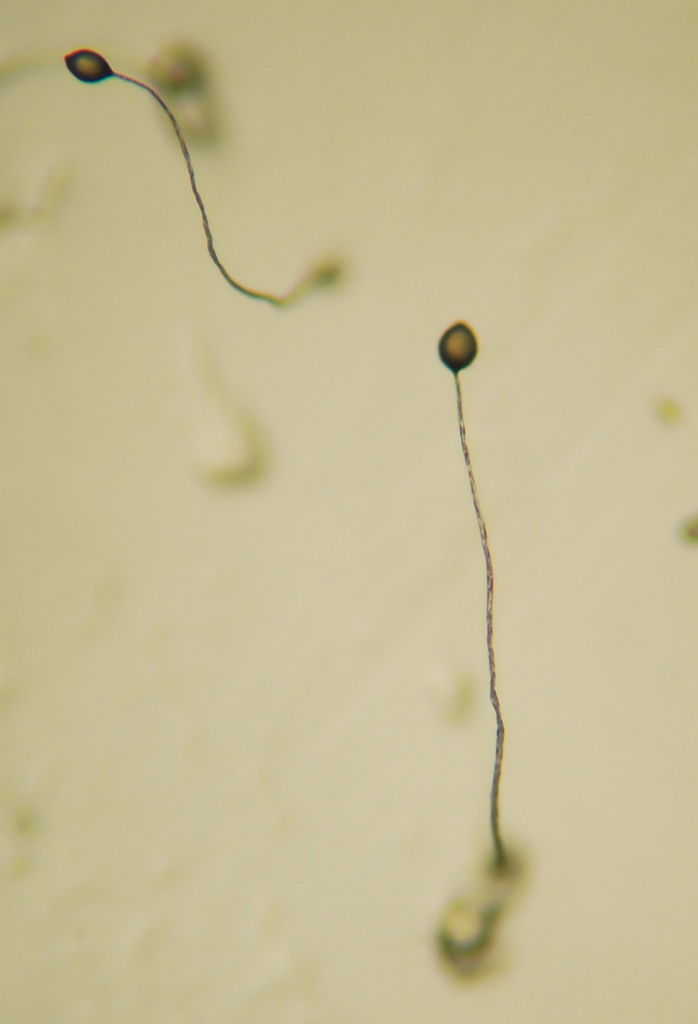
“The Social Amoebae” is a rather narrow book. It seems to be the only reasonably popularized book on cellular slime molds, a group of amoebae-like organisms difficult to classify. Indeed, the author doesn't even try! A somewhat different group of creatures, the plasmodial or “regular” slime molds, are covered in another book, “Myxomycetes: A Handbook of Slime Molds” by two different authors. If you are some kind of super-nerd with an obsession for, ahem, slime, then I think both books are must-haves. If not, you will probably wonder what on earth all the fuzz is about (or where all the slime comes from).

The author of “The Social Amoebae”, John Tyler Bonner, is an elderly gentleman who has studied cellular slime molds since the 1930's. He is particularly fascinated by their life cycle, which is indeed peculiar. An amoeba-like creature starts to divide, whereupon it and its descendants combine to form a slug, a kind of colony which acts as if it was a single organism. Despite being “primitive”, the slug can orient itself towards light and detect minute differences in temperature and gas levels. If underground, this helps the slug to reach the surface. There, another startling transformation takes place, with some of the cells forming a stalk, while others turn into spores. The stalk-forming cells eventually die and hence sacrifice themselves in favor of the spores, which spread by latching onto invertebrate animals.

Since each cell in the “slime mold” is really a separate amoeba, this altruistic self-immolation is curious from a Darwinist perspective. The author's explanation is that the slug functions like a colony of social insects, where the worker caste sacrifices itself in favor of the queen, since they are family genetically speaking. In the same way, slugs usually consist of descendants of a founding amoeba. Indeed, the founder cell acts as the “queen” of the colony, secreting certain chemicals to attract its descendants. Sometimes, slugs are invaded by alien amoebae, which are genetically different, and hence act as parasites or “cheaters”. The parasite can trick the host to create stalks, while it produces the spores!

While this is no doubt fascinating, I admit that Bonner's book became increasingly less interesting as I read on. I stopped reading it about half-way through. However, since this quintessential “nerd book” seems to be the only widely available work on these critters, I have nevertheless decided to give it four stars. But, as I already explained, you probably shouldn't even try reading it unless your first love in life are social amoebae climbing the slimier parts of Mount Improbable…

Sunday, August 12, 2018

No war for oil?


"The biology of dinoflagellates" is a book edited by F.J.R. Taylor. The editor presumably doesn't regard the dinoflagellates as plants, yet his book is part of the series "Botanical monographs"!

Taylor self-ironically writes that pretty much nobody was interested in dinoflagellates when he started his research career: "For many years, dinoflagellates have languished as an obscure group among the miscellaneous collection of pigmented flagellates claimed by both botanists (as algae) and zoologists (as protozoans), but only desultorily treated by both". However, our editor started paying attention when one species of dinoflagellate killed all marine life in a bay of the Indian Ocean during a massive "red tide" that was also luminous at night! Clearly, the time had come to do some serious scientific research on this group of plankton.

The current volume is intended to provide a review of the general biology of living forms, with a summary of the fossil record and its applications also included. Dinoflagellates should be of considerable interest to evolutionary biologists, since they have a bizarre blend of "primitive" and "advanced" traits. Botanists see them as algae, since most dinoflagellates are photosynthetic. However, to zoologists they are protozoa. Many dinoflagellates are parasitic on fish and marine invertebrates. The toxicity and self-luminosity of some species make them extra fascinating (and somewhat spooky). The fossil cysts of these critters are used to date and correlate near shore marine sediments in regions of hydrocarbon exploration. Taylor claims that more dinoflagellate taxonomists can be found in the laboratories of petroleum companies than in academic institutions!

Unfortunately, this book is rather technical, although a complete dino-nerd might perhaps be able to read it from cover to cover. Chapters include: "Bioluminescence and circadian rhythms", "Dinoflagellate toxins", "Parasitic dinoflagellates" and "Dinoflagellate reproduction" (which turns out to be both sexual and asexual).

This book is too heavy for the general reader, but might come in handy if you want a well-paid job at Exxon-Mobil.
Four stars.

Sunday, August 5, 2018

The Blob in real life


A review of "Myxomycetes: A Handbook of Slime Molds".

Did you know that the classic horror movie "The Blob" is freely based on a true story?

Well, *very* freely...

Slime molds are a curious and often overlooked group of organisms, defying all attempts at classification. Are they fungi? Are they animals? Or something else entirely? Currently, most slime molds are believed to be related to amoebae. But then, what on earth is an amoeba? Previously classified as animals, they are now an independent "kingdom".

Slime molds have a complicated life cycle. Their most notorious phase is the plasmodium, actually a multinucleate cell. The plasmodium is bloblike, slimy and can become quite large (the size, say, of a mushroom). Also, it can move around. Often, the plasmodia are brightly coloured as well. This created quite a panic in a suburb of Dallas, Texas in 1973. The yellow plasmodia of the slime mold species Fuligo septica suddenly appeared on people's lawns, and when blasted with water, broke apart - with the parts continuing to slowly creep around, even getting somewhat bigger! Naturally, people panicked and assumed UFOs had something to do with it. Or had they just been watching "The Blob" too much? Eventually, the plasmodium settles down and becomes a fruiting body with spores. It's this strange life cycle, combining an amoeba-like stage and a fungus-like stage, which has long baffled researchers.

"Myxomycetes" is a good introduction to these organisms. The book is intended as a field guide to 175 species of slime molds found in eastern North America, but since most species are cosmopolitan, the book can probably be used in Europe as well. It should be noted that all illustrations are in black and white. Many of these creatures are extremely small, and found only in decaying wood or litter. Still, it's a pity that no colour plates of the more dramatic species have been included (such as the previously mentioned Fuligo septica).

Apart from the species presentations, "Myxomycetes" contain chapters on how to collect and study slime molds, their geographical distribution, and their ecology. There is also a reference section.

Apparently, slime molds prefer the temperate region, being less abundant in the tropics. They can be found in deserts and in the hills, but they prefer woods where they grow on bark, litter or dung. Some insects have specialized in attacking slime molds, including the slime mold beetles and the slime mold fly (which, however, may help them spread the spores). In the Mexican state of Veracruz, some of the natives actually eat our old friend Fuligo septica! They call it "moon feces", while the preferred English term is "dog vomit".

Personally, I just call it The Blob...

Finally, a word of warning. This is a typical book for nerds. If you don't already have a strong interest in slime molds, fungi or perhaps amoebae, I don't think you will appreciate it. Buy a more popularized book on mushrooms first! However, if you are one of those nature-lovers who just love to poke around in the litter, or look under the bark of trees, "Myxomycetes" might come in handy.

Wednesday, July 25, 2018

Neo-Haeckelian protistology


"Handbook of Protoctista" is an extensive, scientific reference work on micro-organisms. Lynn Margulis is one of the editors. The subtitle is rather extensive: "The structure, cultivation, habitats and life histories of the Eukaryotic microorganisms and their descendants exclusive of animals, plants and fungi. A guide to the algae, ciliates, foraminifera, sporozoa, water moulds, slime moulds and the other protoctists".

Why even write a review, with this presentation?

The following statement from the introduction by Lewis Thomas is also worth quoting: "Just a few years back, this book would have seemed to most readers trained in either medicine or biology nothing more than an arcane compendium of nature's most outlandish oddities, queer single cells of primary interest only to the most specialized of specialists". Well, at least he's honest! I suppose doing research on chimpanzees or mountain gorillas is better for your pay check, too. What turned the scientific community to a more pro-protoctistan position isn't entirely clear, but it sounds as if evolutionary theory has something to do with it. Today, Protoctista are regarded as our distant parents. Amen and amen?

When this book was published, about 100,000 species of protoctists were known to science. As behoves a micro-organism, they can be encountered pretty much anywhere. When studying the hypertrophied intestines of an East African rhinoceros, W. Van Hoven discovered a new world of symbiotic eukaryotes using scanning electron microscopy. Meanwhile, a wood-ingesting termite may contain as many as thirty different protist species. No surprise there.

The editors of "Handbook of Protoctista" don't consider their objects of study to be single-celled plants or animals, "anymore than humans are shell-less multicellular amebas". An ironic statement, given the claim that protoctists are our parents. Be that as it may, Lynn Margulis and her colleagues wanted to establish the Protoctista not only as an independent field of study, but also as a "kingdom" in its own right, alongside the "kingdoms" of animals, plants and fungi. They also reject classification schemes of algae based on colour. No more talk about red or green algae, please! At one point, the authors call their approach Neo-Haeckelian protistology.

The rest of the book is an extravagant super-encyclopaedia. The entries are divided into sections dealing with Habitat and Ecology, Characterization and Recognition, Maintenance and Cultivation, Evolutionary History and References. There is also an extensive glossary. The text is heavy, but "Handbook of Protoctista" is probably a must for advanced students who want to walk in the footsteps of Margulis.