Showing posts with label Galapagos. Show all posts

Sunday, November 21, 2021

The other side of the pond


I´m shocked, shocked I say! It turns out that there is an entire genus of insects that is MARINE. Yes, they live in the freakin´ ocean!!! And no, I´m not confusing Insecta with Crustacea. They really are actual insects, "true bugs" in fact, related to the pond skaters we can find in our quiet little inland lakes. It seems the pond skaters found a much bigger pond to skate over! 

Wtf.

Below, I link to All-Knowing Nerd Site Wikipedia´s entry on these deeply disturbing creatures, and one of Wiki´s main sources. 

Halobates

Biology of Halobates (Heteroptera: Gerridae)

Thursday, May 6, 2021

Back to Galapagos


"Oceans" is the fourth part of the five-part documentary "A Perfect Planet" from the BBC. Or rather ocean, since strictly speaking there really is just one large sea on planet Earth. As usual, we get to see spectacular footage of more or less bizarre creatures. There is the flightless cormorant on the Galapagos Islands (it´s an excellent swimmer and diver) and the sea iguanas, large lizards which seek their food in the oceans...but die of cold unless they swim back to shore within 30 minutes. When really hungry, they simply attack the nests of the cormorants, eating the algae the nest are made of! 

Meanwhile, somewhere else in the Pacific, surgeon fish gather to release their eggs and sperm into the water to be carried away by the streams from any threatening predators...except the giant manta rays, which gather at the same place at exactly the same time, gobbling up substantial amounts of the nutritious mix! Another pelagic glutton is Bryde´s whale, which we see in action somewhere off the Thai coast. "A Perfect Planet: Oceans" also features sharks, sting rays, bony fish of all kinds, and a very bizarre octopus (or is it a squid?). 

The episode ends with another look at how "A Perfect Planet" was made, concentrating on the first part of the series, "Volcano". The team, led by Richard Wollocombe, descend into the crater of the dormant volcano at Fernandina, one of the Galapagos Islands. More people have been in space than down this particular crater, and I can´t say I blame Buzz Aldrin for choosing the former option! The place looks like a cross between Mordor and Dante´s Inferno, with huge rocks constantly falling down the steep slopes. At the bottom of the crater is a mysterious blue-green lake. But why on earth does anyone want to film *there*, and did they ever get an insurance, and if so, how much did it cost? If you´ve seen "Volcano", you know the answer: female land iguanas regularly descend into the crater, despite all the dangers, to lay their eggs in the warm ash at the bottom. How on earth evolution took *this* course is never explained, and perhaps we don´t even want to know...

The next and last episode of this stunning series is, perhaps ominously, entitled "Humans". Let me guess. We get to see a lot of house crows, house sparrows and cockroaches? A perfect planet indeed! :D 


Thursday, April 15, 2021

Perfectly wild


"A Perfect Planet" is a new series shown on BBC Earth, narrated by David Attenborough. When shown on Swedish TV, however, we have to rest contented with Henrik Ekman! I recently watched the first episode, "Volcano".

It´s ostensibly an educational production about the pivotal role of volcanic activity in sustaining life on Earth. Except, of course, that it isn´t. The "educational" angle is just an excuse to show the most spectacular footage of wildlife the BBC could lay their hands on this season. No hard feelings, btw! I mean, who cares about geology, anyway?

First, we get to see Lake Natron in Tanzania, a large volcanic lake where literally millions of lesser flamingoes breed and nest every year. It looks like another planet. Unfortunately for the flamingoes, but fortunately for the ecological balance in nature, marabou storks also gather to feast at those young flamingoes which aren´t fit enough to run away. I assumed the truly spectacular footage from Lake Natron was made by drones (the lake seems to be strongly acidic) but actually it was shot by an actual human who reached the interior of the lake area with a hovercraft! The local Massai tribeswomen even had to help him repair the hovercraft´s skirt... 

Next, we get to see some bizarre footage from the Galapagos Islands. At the small island of Wolf, one of "Darwin´s finches" (actually tanagers) have evolved a truly remarkable behavior. The "vampire ground finch" sometimes attacks the Nazca boobies and literally sucks their blood, weirldy enough without the boobies even noticing. At the island of Fernardina, an iguana climbs down into a volcanic crater 800 meters deep to lay its eggs in the hot sands surrounding the volcanic lake. This almost literal descensus into hell is extremely dangerous for the lizard, due to steep cliffs and falling rocks. 

This first episode ends with scenes of otters and coyotes from Yellowstone and a large gathering of cute-looking but dangerous brown bears from Kamchatka in Russia. 

I´m not sure if "A Perfect Planet" really proves that the planet is perfect, but at the very least, it does seem to be perfectly wild! 

I will certainly continue watching this series with great interest. 


Wednesday, September 5, 2018

Evolution in action?


If you are a hopeless conventionalist, this might be the show for you. A good introduction to Neo-Darwinism's view of mutations and natural selection, with all the usual suspects. Galapagos finches, fruit flies, lactose intolerant humans, cancer research, etc. New stuff: macaques at Sulawesi.

If you are of a more Fortean bent, you will at least love the first part of the documentary, featuring authentic photos of Elephant Man (Joseph Merrick) and a number of bizarre, two-headed reptiles, including a snake affectionately baptized "Golden Girls". Its present owner bought it (or them?) for 20,000 dollars! We also get to visit the small town of Olney in Illinois, famous for its population of albino squirrels. The squirrels are protected by the local police, and even have their own road crossing. Evolution in action?

Three-and-a-half stars for this educational, high school level material.

Sunday, August 5, 2018

Shepherding the sharks


"Sharkwater" is a fascinating Canadian documentary featuring the scuba diver Rob Stewart and the controversial environmentalist activist Paul Watson, the leader of the Sea Shepherd organization. Together, Stewart and Watson want to save - wait for it - the sharks!

I've heard of people who want to save whales or dolphins, but this is the first time I encounter people who actually want to save sharks. I didn't even know sharks were particularly threatened. Shark the hunter, man the hunted, right?

Not so, according to "Sharkwater". 90% of the shark population is already gone, and several species are threatened with extinction, including the peaceful whale shark (the world's largest fish). The documentary even claims that the complete extinction of sharks might affect the global climate, since shark predation stops other fish from overconsuming plankton. And plankton is necessary to keep the climate in balance.

I'm not sure if I buy that particular argument, or the claim that most sharks are pretty harmless to humans, but it's pretty clear from the documentary that all sharks are threatened by overfishing from the absurd shark finning industry. Conservations efforts are hampered by a variety of factors: shark fin soup and other shark-derived products are part of East Asian culture, the oceans are difficult to control, and many people don't like sharks anyway!

The most interesting part of "Sharkwater" features Paul Watson and his notorious activist group Sea Shepherd. I've heard of Sea Shepherd already 25 years ago, when they were literally attacking whaling ships in Iceland and Norway. Sea Shepherd has always been considered a dangerous extremist group.

Or so I imagined.

In "Sharkwater", Sea Shepherd is actually invited by the president of Costa Rica to protect the Cocos Island from poachers. However, as Watson and his ship approaches Costa Rica, something goes dangerously wrong. The local authorities in the coastal town of Puntarenas suddenly turn coat and start prosecuting Sea Shepherd, placing the entire crew in house arrest! Stewart goes AWOL and soon discovers what's going on: the Taiwanese mafia controls large and illegal shark finning facilities in the town, complete with secret ports. Here we have another and more disturbing reason why conservation efforts fail: sheer corruption. The mobsters presumably bought off the courts in Puntarenas, making sure they turn against Sea Shepherd.

Watson, Stewart and the other activists see no other choice than to leave Costa Rica as fast as possible, which they also manage to do under dramatic circumstances, the Sea Shepherd ship being chased by the coast guard. Instead, they set sail to the Galapagos Islands, where they are on friendly terms with the local authorities (!). Undaunted, Stewart decides to go back to Costa Rica in secret, and even sneeks into Puntarenas where the people have started to protest against the Taiwanese mafia and their illegal activities. Taking advantage of the chaos, Stewart finally manages to visit the elusive Cocos Island, where he can be alone with his beloved sharks...

"Sharkwater" does get a bit too romantic for my taste at times, but it's nevertheless one of the best documentaries I've ever seen. Indeed, it often comes close to being an adventure or action movie. To some extent, it's also a propaganda movie for the Sea Shepherd organization. Indeed, this is the film's weakest point, since Paul Watson turns out to be a misanthrope who apparently thinks sharks are better than primates (i.e. us). Perhaps when the sharks are safe and sound, we could feed this man to them? Still, I admit that these guys and their chases make great television!

Five stars.

Where on earth are the sharks?

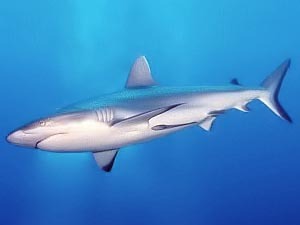
The shark on the photo has no connection to the book under review


The book "Sharkwater" is a companion to the documentary of the same name, also available from Amazon. The movie "Sharkwater" is one of the best documentaries I've ever seen, and it has received a lot of awards at various international film festivals. The movie follows the controversial action group Sea Shepherd as they try to save sharks from poachers in Costa Rica and the Galapagos. It also contains splendid footage of sharks.

I had expected the book to be pretty much the same. Sure, the photos are (mostly) excellent. Most are in colour. But where on earth are the sharks???

I'd say only about 10% of the photos in the book version show sharks. Instead, we are treated to pictures of starfish, jellyfish, barracudas, seals, iguanas and the Sea Shepherd crew. All very interesting, to be sure, but I wanted more hammerheads and whale sharks! Not to mention our old friend (and Spielberg's nemesis), the Great White. In that sense, the book was something of a disappointment.

Still, since the photos aren't bad, I nevertheless give "Sharkwater" four stars.
But I prefer the movie documentary.