Showing posts with label Starlings. Show all posts

Wednesday, March 18, 2026

*Sturnid* signs


Sturnidae is The Sign from Shakti! Meditate on this, ye ov little faith and even lesser understanding. 

Friday, October 15, 2021

Realm of Mother Volga


"Realm of the Volga" is a two-part German nature documentary, produced by Altay Films. It takes the viewer on a journey from the taiga of northern European Russia all the way down to the steppes surrounding the Caspian Sea. Most of the time, the documentary follows the Volga, the largest river in Europe. With the exception of Astrakhan close to the delta, the cities in the Volga basin are mostly not shown, the most notorious of these being Volgograd (Stalingrad). Instead, we get to see the Russian wilds (and a few Orthodox churches) in mostly pristine condition. 

Many of the animals shown are instantly familiar to a Swedish viewer like myself: moose, beaver, red fox, boar, capercaillie, mallard, tawny owl, black woodpecker, great tit... I even recognized the wisents, since we have them at the Skansen zoo in Stockholm! 

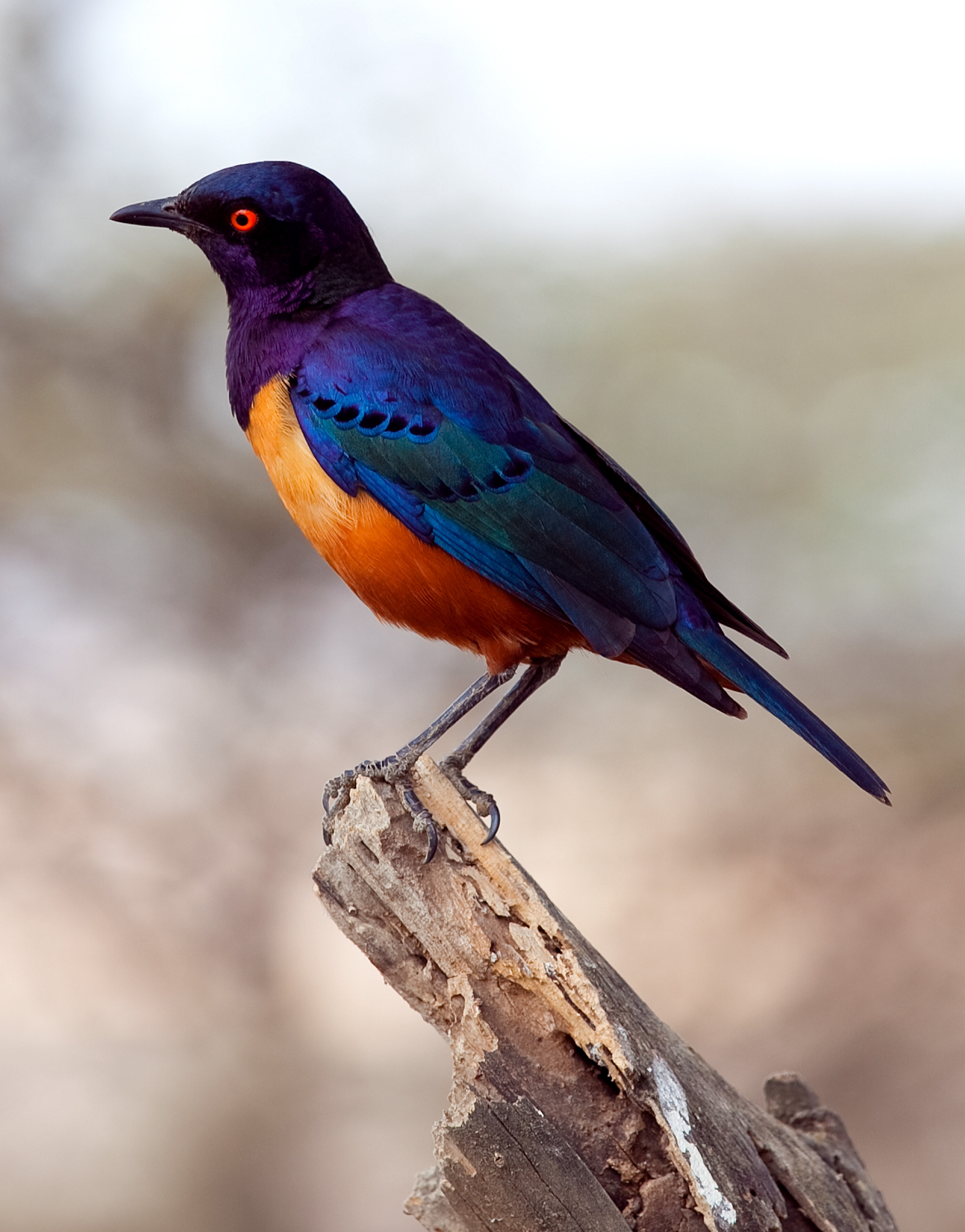
Further south, the fauna becomes more exotic. Large flocks of saiga antelopes roam the desolate landscape and drink the brackish water, while trying to stay clear of the steppe wolfe. Meanwhile, steppe eagles build their nests on the ground, and demoiselle cranes carry out their mating rituals. Corsac foxes, rosy starlings and hoopoes are other characteristic species found around Volga´s southern portions. In the Caspian Sea, cormorants and white-tailed eagles live onboard eerie abandoned ships, while enormous colonies of seals gather at the islands of this peculiar inland sea. And yet, even this feels familiar somehow, obviously because all these animals are included in field guides to European mammals or birds, the geographical border of "Europe" being situated even further east than the Volga river.

It´s a fascinating trip, to be sure, almost aesthetical. And yet, by not showing the great cities, the oil industry and the environmental degradation, I still get the impression that perhaps somehow we are being served the wrong picture here! I can´t help thinking that perhaps Mother Volga has fallen on hard times...   

Friday, August 31, 2018

Hello, starling


A review of a starling trap (sic) sold by Amazon.

I must say that the other comments are pretty entertaining. "This trap works. I caught two starlings in it the first day". Two? Starlings? Lady, the starling is a *gregarious* bird, with a flock size from around 30 (my neighbourhood) to 1.5 MILLION (fortunately, somebody else's neighbourhood). Catching two per day doesn't mean hokum, not even if you relocate the unfortunate invasive birds. Starlings can fly, remember? As in fly back to your front porch, unite with the local House Sparrow tribe and attack the nesting places of your beloved little purple martins... :D

Lord Martin has the purple, I mean, floor


Although me and mine appreciate all the assistance we can get from the unfortunate race of bipedal creatures known as “American suburbanites” in our War of Independence against the nefarious European invaders (a.k.a. Common Starlings and House Sparrows), we would ask for our dear and kind allies to – don't get me wrong – realize that sometimes the Declaration of the Right of Birds have to play second fiddle to more pragmatic, immediate but likely more effective methods of actions. In plain English, DON'T RELOCATE THE BLOODY STARLINGS AFTER YOU CAUGHT THEM IN YOUR SPARROW TRAPS!!! May we also ask one of your high priest-wizards, commonly but not entirely correctly referred to as “scientists”, to use their magical skills and engineer a new deadly disease which selectively targets Common Starlings and House Sparrows only? Of course, the brood-parasitical provocations of the Brown-Headed Cowbird is the next causus belli, but then, nature red in tooth and beak, yes? Martin Purple, elected plenipotentiary of the Purple Martin tribe, over and out. And merry Xmas!

Saturday, August 25, 2018

Respect, avian bro!


The European Starling is one of the most hated birds in North America. According to Wikipedia, 60 starlings were released in New York's Central Park in 1890 by one Eugene Schieffelin, a crackpot bird lover who wanted to introduce all birds mentioned in Shakespeare's plays into the United States. The experiment succeeded only too well.

Today, there are 150 million starlings in the United States, and their only redeeming trait is that they don't need fossil fuels to thrive!

According to Wiki, "Starlings are among the worst nuisance species in North America. The birds travel in enormous flocks; pose danger to air travel; disrupt farms; displace native birds; and roost on city blocks. Corrosive droppings on structures cause hundreds of millions of dollars of yearly damage. In 2008 the U.S. government poisoned, shot or trapped 1.7 million, the most of any nuisance species."

Respect, avian bro. But sure, something tells me Sturnus vulgaris won't replace the Bald-headed Eagle as the U.S. national bird any time soon...

Personally, I find Starlings weirdly sinister, due to their noises which I associate with really bad horror movies. They make exactly the kind of noise the director puts on before some zombie or mutant creature show up behind the next bush, going BOOO. How apt.

For a very long time, I assumed Starlings were actually Blackbirds, apparently a common mistake in Sweden, where both species are moderately abundant in pretty much the same milieux (nothing like 150 million, though). But then, I'm a bad, near-sighted bird-watcher!

I'm sure I'd never confuse a Starling and a Bald-Headed Eagle, however.

The runner up


The Common Blackbird is the national bird of Sweden, not officially but certainly in practice. It gained this coveted status in 1962, when the readers of Dagens Nyheter (a large Swedish daily paper) decided in its favour in a readers' poll. I don't know who the runner-up might have been! The Swedish blue-and-yellow duck?

The "national bird" status isn't surprising, I mean these birds are practically...well, everywhere??!! It's almost ridiculous.

My own relation to the Blackbird is pretty complicated. For a very long time, I wondered why I wasn't seeing any Starlings - supposedly another extremely common bird. However, I was seeing those Blackbirds all the damn time (often in unusually large flocks). Just a couple of years ago, when I took up "bad bird-watching", I realized that most "Blackbirds" I've seen for the past thirty years or so were actually...well, Starlings.

Ooops.

In my defence, let me say that most field guide to birds do state that confusing Blackbirds with Starlings at a distance is extremely common. Well, thank you. At least I don't have to die of everlasting shame for confusing the National Bird of the Kingdom of Sweden with the crop-destroying, noisy, dirty, crow-like Starling. (Apparently, it can mimic human speech, too. Including foul language!) Who knows, maybe this pest of the avian world was the runner-up back in 1962?

I've double checked, and the bird above is definitely a Blackbird (Turdus merula).
Not a Starling. Just so you know.

Friday, August 3, 2018

Birds and bowers


This is the 14th volume of the mega-encyclopaedia "Handbook of the Birds of the World" (HBW), published by Lynx Editions.

This volume covers 17 passerine families, including bowerbirds, birds of paradise, corvids, starlings and Old World sparrows. All species are extensively described and illustrated on large colour plates.

There are also introductory chapters to the various families, complete with photos. Some of these are quite spectacular, including a drongo attacking an eagle, a House Crow chasing a flying fox, and a raven being attacked by a kestrel. Some other photos are more humorous, such as the one with a small girl eating ice cream, while the tray besides hers is frequented by House Sparrows. For whatever reason, the photographers seem to love birds sitting on top of cows, camels and buffaloes!

The most bizarre group of birds covered in this volume are presumably the bowerbirds, their "bowers" sometimes eerily resembling small human-built huts, complete with neatly arranged colourful objects outside, almost as if somebody was preparing a ritual of some sort. Indeed, the natives of Australia and New Guinea assumed that the bowerbirds *were* conducting rituals, and believed these birds to be supernatural. After watching the photos of bowerbirds and their bowers in this book, I see why!

As usual, the HBW is extremely expensive and the text is rather heavy. This is a book for the reference section of a university library, rather than something for the average reader. Still, the colour plates and fanciful photographs make it well worth waiting for, in case you do order it!

Both this volume and earlier ones can be ordered directly from the publisher.