Showing posts with label Bordigism. Show all posts

Tuesday, March 19, 2024

Dialogue with the Dead


Even the dead vote for Putin. Wtf. He must be the most powerful man in the world. But sure, it would be fun if his undead doppelgänger would vote against him! And what about the mummies of Lenin and Stalin, do *they* at least root for the Communist Party of the Russian Federation?  

Tuesday, January 18, 2022

Marxism and Nirvana


Some hilarious quotes from the press of the International Communist Current. I´m beginning to suspect that there is something very, very strange with the ICC, ha ha!  

>>>In his comments on the EPM, Bordiga was particularly insistent on this point: the resolution of the enigmas of history was only possible "once we have left behind the millennia-old deception of the lone individual facing the natural world, stupidly called 'external' by the philosophers. External to what? External to the 'I', this supreme deficiency,' but we can no longer say external to the human species, because the species man is internal to nature, part of the physical world." And he goes on to say that "in this powerful text, object and subject becomes, like man and nature, one and the same thing. We can even say that everything becomes object: man as a subject 'against nature' disappears, along with the illusion of a separate ego." ('Tables immuables de la theorie communiste de parti', in Bordiga et Ie passion du communisme. edited by J Camatte, 1972).

>>>Hitherto, the intentional cultivation of states (or rather stages, since we are not talking about anything final here) of consciousness which go beyond the perception of the isolated ego has been largely restricted to the mystical traditions. For example, in Zen Buddhism, accounts of the experience of Satori, which expresses an attempt to go beyond the split between subject and object into a vaster unity, bear a certain resemblance to the mode of being that Bordiga, following Marx, is attempting to describe. But while communist humanity will perhaps find elements that can be reappropriated from these traditions, it is not correct to deduce from these passages in Marx and Bordiga that communism should be described as the "mystical society" or to posit a "communist mysticism", as in certain texts on the question of nature that have been published recently by the Bordigist group II Partito Comunista

>>>Inevitably, the teachings of all the mystical traditions were more or less - bound up with various religious and ideological misconceptions resulting from - immature historical conditions, whereas communism will be able to take the 'rational kernel' from these traditions and incorporate them into a real science of man. With equal inevitability, the insights and techniques of the mystical traditions were almost by definition limited to an elite of privileged individuals, whereas in communism there will be no secrets to be hidden from the vulgar masses. And as a result, the expansion of awareness that will be achieved by the collective humanity of the future will be incomparably greater than the individual flashes of illumination attained within the horizons of class society.

XXXXXXXX

>>>At first sight this might seem to be a strange subject for a polemic between revolutionary groups, but it would be a mistake to think that the most advanced fractions of the proletarian movement are immune from the influence of religious and mystical ideologies. This was certainly the case in the struggle to found the Communist League, when Marx and Engels had to combat the sectarian, semi-religious visions of communism professed by Weitling and other; it was no less true during the period of the First International, when the marxist fraction had to confront the masonic ideologies of sects like the Philadelphians, and above all of Bakunin's "International Brotherhood".

 >>>But it was above all once it ceased to be a revolutionary class, and even more when it entered its epoch of decadence, that the bourgeoisie more and more abandoned the materialist outlook of its youth and relapsed into irrational and semi-mystical world-views: the case of nazism is a concentrated example. And the final phase of capitalist decadence - the phase of decomposition - has exacerbated such tendencies still further, as witness phenomena such as the upsurge of Islamic fundamentalism and the proliferation of suicidal cults. These ideologies are increasingly all-pervasive and the proletariat can by no means escape them.
 

>>>The fact that the proletarian political milieu itself has to be on guard against such ideologies has been demonstrated clearly in the recent period. We can cite the case of the London Psychogeographical Association and similar "groups", which have concocted a snake-oil mixture of communism and occultism and have been busily trying to sell it in the milieu. Within the ICC itself, we have seen the activities of the adventurer JJ, expelled for seeking to create a clandestine network of "interest" in the ideas of freemasonry.

Monday, January 17, 2022

Anti-democratic principles


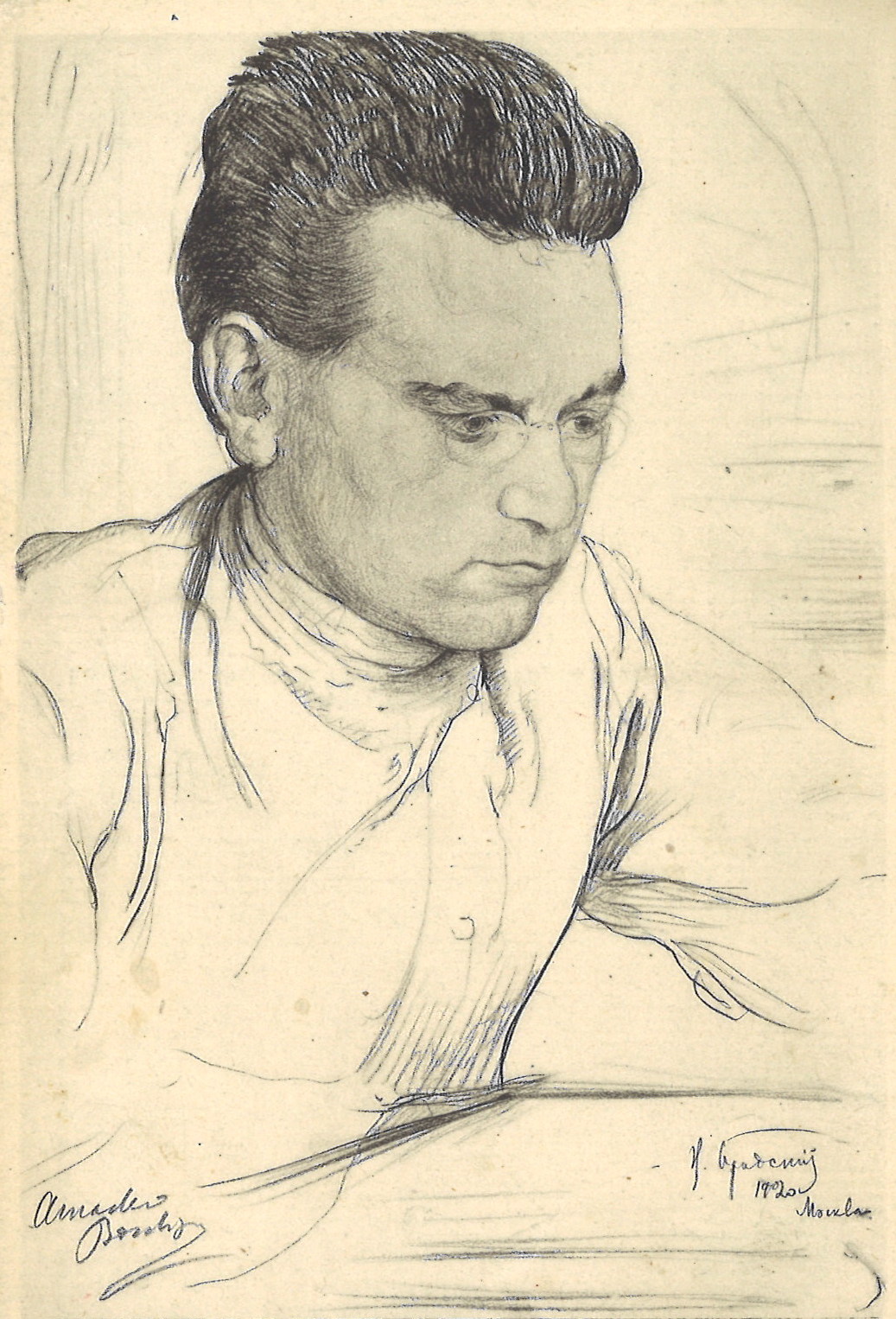
"The Democratic Principle" is an anonymous text attributed to Amadeo Bordiga, the first leader of the Communist Party of Italy (which was founded in 1921 at Leghorn). Bordiga was later dethroned and expelled from the Italian Communist Party (his replacement was the famous Antonio Gramsci), and resurfaced after World War II as the leader of a small group called the International Communist Party. Today, several different "Bordigist" groups exists, mostly in Italy. They are frequently indistinguishable from each other, at least to outsiders.

"The Democratic Principle", first published in 1922, belongs to the same genre as Leon Trotsky´s "Terrorism and Communism" or Nahuel Moreno´s "The Revolutionary Dictatorship of the Proletariat". In other words, anti-Stalinist Communists (or "Communists") freely admitting that they, too, aren´t exactly friends of freedom. Trotsky´s and Bordiga´s texts are particularly interesting, being written during the "revolutionary" and "internationalist" period of Bolshevism, before Joe Stalin became top dog of the Moscow operation. This is how the Communists sounded like during their "good" period, when they were sure of the victory of the revolutionary wave that engulfed parts of Europe after World War I. 

What perhaps makes "The Democratic Principle" even more interesting is its strongly theoretical character, and also its non-sensationalism. There are no obviously bizarre formulations (in contrast to Trotsky´s book), and no obsession, per se, with terror and violence (in contrast to some of Bordiga´s epigones). The anonymous text explains in an almost boring manner why Communists, of course, oppose democracy or "the democratic principle", although they can of course use democratic methods of decision-making for purely practical purposes, or as a tactic against the class enemy. 

Bordiga begins by making a distinction between organizations where everyone is roughly equal (such as a labor union and its working class membership) and a society marked by inequality. He takes it as obvious that "one person - one vote" in the latter situation is meaningless. Indeed, it seems to be meaningless on a quite "deep" level. To Bordiga, the human race has been marked by inequality almost since the dawn of time. The family was the first hierarchy, and the Stone Age bands had a division of labor based on gender, with the men being hunters, while the women stayed home with the kids. In a class society, inequality is even more obvious, but I get the impression that Bordiga actually believes that *everyone* is unequal to everyone else in any society (except the classless communism of the future), surely a somewhat harder proposition!

The author mocks the liberal conception of democracy as just another form of metaphysics, similar in kind to the "spiritualist" idea that the king or the aristocracy had a "divine right to rule". In the liberal scenario, something (could it still be divine providence?) mysteriously bestows on every "sovereign individual" the "right" and even the capacity to make sound judgements about matters of state, completely unsullied by his material surroundings or social context. Such a conception is possible to "defend" only on metaphysical or religious grounds, as if each voter was possessed by an immortal soul created by God. (Bordiga doesn´t mention it, but the US Declaration of Independence is pretty explicit on this point.) 

Judging by the above, it would seem that Bordiga would at least be for democracy in "unitary organs", such as labor unions comprised by workers whose station in life is relatively uniform. However, it soon turns out that the Communist leader isn´t particularly happy about workers´ democracy either! After all, workers are on different levels of consciousness. This makes a revolutionary leadership necessary, and since no revolution is possible without centralization and swift action, many decisions during a revolutionary struggle (including the struggles after the taking of power) will not be made by democratic consultation, but by special commissions appointed by the party. 

A large portion of the text analyzes the early Soviet Russian constitution, which was "undemocratic" on a number of points. For instance, it gave preferential treatment to workers at the expense of peasants (since the workers originally supported the Bolsheviks, while the peasants never did). Instead of national elections, higher soviets were appointed by lower ones, with only the lowest soviets being directly elected by the people. Also, the soviets were both legislative and executive at the same time. (This section of the text is quite confusing, or perhaps badly translated.) Nor does it particularly matter to Bordiga whether the soviets are elected on the basis of territory, place of work or profession. They are "empirical" and are created according to the tactical situation. The deeper point is that a constitutional theory is meaningless. *Any* constitutional form would do, as long as it advances the cause of the Communist revolution. As already noted, inequality and hierarchy will disappear only in the distant future, when classless society has been established all over the world, but the author (perhaps wisely) declines to speculate about the details...  

But what about the Communist party itself? Bordiga explicitly (and notoriously) rejects democratic centralism in favor of something he calls "organic centralism". The decisions of the party majority aren´t necesserily the best ones. Just like the revolutionary state power, the party needs to act in a disciplined and centralized way to advance the class struggle. Democratic forms aren´t always the best in such situations. Bordiga doesn´t propose any alternative system to democratic centralism, however, simply pointing out that while centralism is a principle, democracy cannot be, not even in internal party matters. 

The irony of the anti-democratic Bordiga later being expelled by the "Stalinists" is not lost on his critics, but Bordiga himself might very well have responded that this simply shows that majority decisions aren´t always correct! The "Stalinists" transformed the Russian Communist Party after Lenin´s death through the so-called Lenin Levy, recruiting half a million new members, who - no surprise - supported the Triumvirs rather than the Trotskys or the Myasnikovs. Presumably, the Italian Communist majority supported Gramsci. Something tells me these facts, salient perhaps to a Bordigist, don´t particularly impress said critics...

In later Bordigism, organic centralism seems to have been connected to the weird idea of the Communist program being "invariant since 1848", any doctrinal changes being verboten, but this could be a sectarian-metaphysical distortion of Bordiga´s original point, where democratic forms are problematic for exactly the opposite reason, standing in the way of tactical emergencies. But sure, I could be wrong here.

The publication history of "The Democratic Principle" is a curious one. Mostly, it has been reprinted by Bordiga´s latter day disciples. However, a Swedish edition (no longer extant) was actually published by a kookish Trotskyist groupuscule which probably couldn´t tell Bordiga from a tea-spoon, but there you go. 


Saturday, April 13, 2019

Bordigist program


”Communist Program” is, or was, the English-language publication of the Partito Comunista Internazionale, or perhaps one of its splits (they often used the same name as the parent party and had politics which looked identical to outsiders). In other words, we are dealing with the Bordigist current, the ultra-dogmatic fringe of the fringe of Leninism. The Bordigists are named after Amadeo Bordiga, the first leader of the Communist Party of Italy, later defrocked by Stalin and Bukharin in favor of the more famous Antonio Gramsci. The Bordigists re-emerged after World War II in the form of the International Communist Party (sometimes called Programma Comunista). Found mostly in Italy and France, little material of this current exists in English (or Swedish).

This issue of ”Communist Program” is marked “No. 6” and was published in 1980. The articles give a slightly curious impression. They are dogmatic rather than theoretical, restating various old ”Marxist” positions (complete with the proof texts) rather than analyzing the world situation at depth or develop new theories. Indeed, the platform of this small party explicitly says that members are forbidden to develop new theories – the Marxist program as it looked like circa 1921 is apparently set in stone, period. The Bordigists are known among left-watchers for their strong sectarianism, amply confirmed in this magazine: both united fronts and people´s fronts are rejected, so is the Workers Government slogan, any support for any side in World War II, any participation in ”bourgeois” elections, and any regroupments with ”opportunist” forces to build the party. Even democratic centralism is rejected in favor of organic centralism. The revolution must be extended internationally, and Soviet Russia should have been governed by the Communist International as a whole, rather than by the Russian party alone (a peculiar proposal). What distinguishes the Bordigistas from other ultra-lefts is that they don´t reject work in the labor unions, nor do they oppose national liberation struggles. The latter are seen as bourgeois revolutions against feudalism and are still objectively necessary in the Third World. However, I get the impression that ”Communist Program” regards post-World War II national liberation struggles as fake, really being moments in the inter-imperialist competition between the United States and Stalinist Russia. Or perhaps something deeper has happened, since the article on the Sandinistas declare that even the petty-bourgeois democrats and radicals in the underdeveloped countries are a spent force for revolution, being incapable even of carrying out a genuine 19th century “bourgeois” revolution. It´s never explained why, but it seems to have happened quite recently (i.e. recently from the vantage point of 1980).

While being extremely doctrinaire and frankly somewhat boring, the articles nevertheless also have an undertone of violence and a slight whiff of adventurism. The anonymous writers never tire of emphasizing the violent nature of the revolution, the need for mass terror after the conquest of power (”more than 1793”) and even the need for terrorism (and bank robberies) before the revolution, albeit a terrorism which is connected to mass revolutionary struggles and strictly under the control of the Party. The capitalist system in all its forms is viewed as necessarily violent and intrusive-expansive, making proletarian violence the only possible answer. Fascism is seen as the inevitable end-point of capitalism. Since the International Communist Party rejects all anti-fascist united fronts, it doesn´t really have any strategy to fight the fascist menace, except to go it alone in preparation of the final confrontation. Bizarrely, these brave sectarians then declare: ”It [the party] must do everything in its power to unleash the final attack, and when it cannot do this, it must face defeat: but it must never in a cowardly and defeatist manner beseech the devil of fascism to go away, which would amount to begging stupidly for tolerance or forgiveness from the class enemy” (p. 52) This is simply grandstanding from a bunch of intellectuals who will *never* see military or militant action.

The magazine predicts that the world will soon see a resurgence of proletarian struggles on a massive scale, something which (of course) is yet to happen, 40 years later and counting. A curious trait of Programma is that they don´t believe capitalism can ever collapse – if the working class doesn´t put an end to the system, it will simply continue on its cyclical course of boom, bust, world war and reconstruction. Somebody forgot to pass Programma the memo about environmental destruction, or perhaps they simply didn´t enjoy reading Camatte! Otherwise, I was struck by the strong contrast between the Bordigists´ super-materialist or near-determinist perspective, and the fact that *no* successful proletarian revolution ever happened anywhere in the world since 1871 (the year when capitalism ceased being progressive in the First World, according to Programma). The Russian revolution is only a partial exception to the rule, since Programma considers it a “dual” revolution (presumably proletarian and bourgeois) which later degenerated under Stalin. If conditions are so ripe for socialism, why is the Bordigist current forced to vegetate at the margins of politics in the form of small propaganda groups?

With that observation, I close this review.


Wednesday, September 19, 2018

Lip service


“Lip and the Self-Managed Counter-Revolution” is a rare pamphlet published in 1975 by Black & Red in Detroit, an anarchist press associated with Fredy Perlman, who later became a contributor to the radical magazine Fifth Estate. Black & Red supported the IWW and this publication therefore comes with an IWW union bug! “Lip and the Self-Managed Counter-Revolution” is a translation of an article from an obscure French journal, Négation. The original article probably appeared in 1974. The political philosophy of Négation isn't entirely clear, but they were some kind of ultraleftists. By “ultraleftists”, I mean the political tendencies that came out of the Left Communist tradition (Council Communism, Bordigism, Battaglia Communista, etc). The Left Communists were politically “to the left” of the Russian Bolsheviks (i.e. even more sectarian). Négation's article often quotes Amadeo Bordiga, but otherwise sound more Council Communist in orientation. We are probably dealing with some kind of eclectic hybrid.

Lip (also spelled LIP) was a watch-making company in the French town of Besancon. In 1973, the Lip workers occupied their plant to stop the owner, Fred Lip, from closing it down. The occupation became famous after the workers (supported by the ex-Catholic labor union CFDT) tried to run the plant by themselves, selling watches at solidarity meetings all across France. The high tide of the struggle took place in 1973-74 and included several confrontations with the notorious French riot police, the CRS. Most left-wing radicals, naturally, supported the Lip workers (called “Lips” in the pamphlet). The small Négation group didn't. True to ultraleftist form, they condemned the struggle at Lip as “counter-revolution”. This makes their article an exasperating read, doubly so since it's liberally sprinkled with heavy “Marxist” theoretical jargon. This can't have been easy to translate! Even so, Négation's article might perhaps be of some use if you're interested in Situationism, the neo-Bordigism of Jacques Camatte or indeed Fredy Perlman. It *is* easier to read than Camatte's oeuvres.

Négation divides the evolution of capitalism into three distinct phases. Very briefly and using my own terminology, these are the eras of free market capitalism (which came to an end during the Great Depression), state capitalism and “self-management”. The state capitalist period is characterized by a bloated public sector, constant government interference in the economy, a division between managers and owners of a corporation, and the economic dominance of the credit-giving finance sector. In other words, capitalism as it looked like from the end of World War II until the 1980's. Négation doesn't regard nationalizations or state interventionism as bourgeois concessions to the working class. Quite the contrary, state capitalism is a more pure or advanced form of capitalism than the free market version, and represents “the real domination of Capital”. In the future, capitalism will be transformed one more time. Today, we know that the transformation was towards neo-liberalism and globalism. Négation's prediction was that capitalism would use “self-management” as a universal tool to make workers administer their own exploitation. Making employees and users take over public hospitals or schools is part of this ploy. They also predicted a more aggressive, nationalist and “anti-imperialist” French capitalism. In my opinion, Négation's predictions may come true, but they are still in the future as we speak.

Due to the above analysis, Négation (some members of which had bad experiences with cooperative businesses or hippy communes) condemned the Lip workers for taking over the watch-making plant in an attempt to “self-manage” it. This, Négation argues, is precisely the next wave of counter-revolution from Capital. But what should the Lips have done instead? What concrete advice can the disenchanted hippy Bordigists give them? Négation argues that during the period of “real domination”, the most important forms of anti-capitalist struggle are sabotage and absenteeism. It's not clear what this means in a Lip context. Should the workers have destroyed the machines and then gone home? Négation then writes that a world-wide socialist revolution is necessary to completely transform the human community. Indeed! So the Lips should have rioted inside the plant, absconded and waited for the apocalypse… (How this is different from, say, stoned hippies isn't entirely clear.)

In the end, I would say that “Lip and the Self-Managed Revolution” is a theoretically intriguing but practically worthless pamphlet. Still, I do think this footnote to history deserves at least the OK rating, so I give it three stars.

Saturday, September 1, 2018

In Bordiga's absence


Left Communism, the Communist Left or (usually disparagingly) the ultraleft is a relatively unknown Marxist current. It's certainly less known than, say, Maoism or Trotskyism. It's also somewhat heterogeneous.

Some of the Left Communists left the Communist International already before Lenin's death and the subsequent ascent of Stalinism. This was the case of the German KAPD and the Dutch group around Anton Pannekoek and Herman Gorter. This current eventually developed in an anarchistic/libertarian socialist direction, sometimes referred to as Council Communism. Paul Mattick and Otto Rühle were other representatives of this variety of Left Communism.

By contrast, the Italian Left Communists decided to stay inside the Comintern, criticizing Lenin and later fighting Stalin. This is hardly surprising since the Italian Left was the dominant group in the Communist Party of Italy. Its main spokesperson, Amadeo Bordiga, was simultaneously the leader of the Italian party. In 1926, the game was up as the Soviet leadership around Stalin and Bukharin moved to expel the Bordigists, replacing Bordiga with the legendary Antonio Gramsci. In contrast to the German and Dutch ultralefts, the Italian Left wasn't anarchistic, but rather the exact opposite. It upheld and even strengthened Lenin's concept of a centralized vanguard party, thereby becoming "more Leninist than Lenin".

After 1926, however, the expelled "Italian Left Faction in Exile" drifted away from Bordiga's super-Leninism, instead developing positions somewhere in between Council Communism and Bordigism. Today, at least two Left Communist groups lay claim to the heritage of the Faction, without necessarily having identical positions with it: Battaglia Comunista (founded in 1945 and often considered a direct continuation of the Italian Faction) and the International Communist Current (ICC), founded in 1975 by an old ex-militant of the Faction who had refused to join Battaglia.

The book "The Italian Communist Left 1926-45" is published by the ICC and is an extensive history of the Italian Faction in Exile, although it also mentions the Bordigist background and the later emergence of Battaglia Comunista (or, to use its full name, Partito Comunista Internazionalista). The book further deals with groups in Belgium, Mexico and the United States which had contacts with the Italian Left.

"The Italian Communist Left 1926-45" is "boring" and very political, and is probably useful only to people with a very strong, non-causal interest in Left Communism. However, it seems to be the only book of its kind, and I therefore give it four stars.

Hippy Bordigism


The author of this obscure pamphlet, Jacques Camatte, was originally a member of Amadeo Bordiga's "International Communist Party". He broke with it in 1966, setting up his own little group, with the dogmatic name Invariance. But, as the in-house joke went at the time among the few people in France who gave a damn: "The only thing certain about Invariance, is that it constantly changes". Some of Camatte's ideological wanderings are actually quite interesting, although not very original!

"The Wandering of Humanity" could be considered a relatively good introduction to Camatte's ideas. Unfortunately, the operative word here is "relative", since Camatte's language sounds like a strange blend of theoretical Marxism, Situationism and post-structuralism. Well, I think! He even references Bordiga, who - on most interpretations - didn't share Camatte's political perspectives. If read carefully, the author's perspective turns out to be similar to anarcho-primitivism, and even has a (somewhat subdued) "spiritual" trait. It's hardly a co-incidence that Camatte's works have been translated to English by Fredy Perlman, who was associated with the anti-authoritarian journal Fifth Estate.

Camatte's text starts off with a near-incomprehensible analysis of "capital", but I get the impression that he isn't really referring to something economical (at least not in the strict sense). Rather, "capital" seems to be the author's Marxist-sounding synonym for authoritarian structures or authoritarian thinking. These completely dominate modern human beings, something Camatte refers to (once again using a Marxist term in a different context) "the real domination of capital". Today, "capital" has become so strong and pervasive that it threatens not only our minds and activities, but even our biological survival. The future of humanity under "capital" is grim indeed, and almost looks like a science fiction dystopia: either a completely mechanized world ruled by machines, or a mutation turning Homo sapiens into something else, or perhaps a complete collapse of civilization. Or, in a really terrifying development, boring business-as-usual...forever?

Humanity must somehow regain its ancient sense of community, and combine it with a radical sense of both individuality and universalism. This is best done in a society that is a network of small, diverse communes. The communes should be semi-nomadic, something Camatte believes strengthens both body and soul. He even leaves room for mystical experiences and spirituality, although he never elaborates on this theme. Appropriate technology and the reconciliation of Man and Nature are other desirable traits of this utopian future. Thus, "communism" (the classless society) isn't built upon the technological foundations of capitalism, as Marx imagined, but is rather a radical rupture with everything that went before. Camatte doesn't seem to know how his ideal society should be set up, though. Perhaps he didn't know, or didn't care.

According to the International Communist Current (who hated Camatte), the author actually "took to the hills" and joined a survivalist commune in the Cevennes, a mountain range in southern France. The International Communist Party wasn't pleased with him either. I faintly remember reading somewhere that they sued the dangerous heretic for copyright violation when he attempted to publish a text by the late Bordiga! But enough gossip. I'm not sure who might profit from reading a somewhat exotic article like "The Wandering of Humanity" (also available free on the web), but something tells me they can be found in the milieu which believes that Alan Watts is still the man...

Tuesday, July 31, 2018

Jacques Camatte has left the building


Jacques Camatte is known only among the absolute connoisseurs among left-watchers and self-proclaimed experts on alternative politics. This elusive Frenchman originally belonged to Amadeo Bordiga's Italian-based "International Communist Party", one of the more dogmatic Communist groups. Lenin himself criticized Bordiga for sectarianism, and Stalin had him expelled from the Communist movement.

Camatte broke with the Partito Communista Internazionale already during Bordiga's lifetime, and for a while seems to have been "more Bordigist than Bordiga". His group was known as Invariance. Around 1970, however, Camatte and his small group broke with Bordigism and indeed Marxism, and developed in a somewhat unexpected direction (see below).

According to the ICC (a competing group), Camatte eventually gave up political activity altogether, and joined a survivalist commune in the Cévennes. However, he seems to be back in town these days, even having a website of his own. Or are the Cévennes hill tracts on-line?

The anthology "This world we must leave and other essays" contains the following essays by our survivalist friend: On Organization (1972), The Wandering of Humanity (1973), Against Domestication (1973), This World We Must Leave (1976), and Echoes of the Past (1980). Except for the latter, they are all available free on-line as well. Several have also been printed as separate pamphlets.

Camatte's texts are written in a convoluted, pseudo-intellectual style and are often hard to follow, even in English translation. However, the main lines of thought are discernible, and the ideas are remarkably similar to the current of thought known as primitivism or anarcho-primitivism. The source of Camatte's ideas are obscure, however, and they are still couched in a heavy dose of Marxist language.

Camatte believes that capital had succeeded in integrating the working class into the system, and "domesticating" all of humanity. Capital has become independent of humans, including the capitalists themselves, and has created a "material community" in its own image. Since pretty much everything is under the domination of capital, all of society must be overturned, not just the ownership of the means of production. Camatte longs for a return to pre-capitalist forms of authentic community. He has a soft spot for religion, which he believes has retained a memory of a community long lost. He also attacks technology, modern science, overpopulation and the destruction of the environment.

But how should the new state of affairs be brought about? This is less clear. In some texts, Camatte talks about a general revolution of humanity against capital. He looks upon the Green movement, feminists, organic farming, hippies and marginals as new revolutionary forces. However, in one text (not included in this volume), titled "The last train has left the station", he claims that nothing (!) can be done. Perhaps he was just being sarcastic, but there is a certain logic in his position, pointing in a pessimistic direction. What if the slaves of capital doesn't want to rebel? What then? Leave this world, or what?

The present collection also includes Camatte's text on organization, in which he rejects all traditional organizations as inherently capitalist, including those of the workers' movement and the traditional left. This text is rather brief, and quite bad, certainly compared to OJTR's classical attack on left-wing groups, "Militancy - the highest stage of alienation".

Finally, a small word of warning. I ordered this book from a third party seller, but instead received a small pamphlet only containing the title essay "This world we must leave"...for the extortionate price of $30. My advice is to buy this book either from the publisher (Autonomedia) or access the articles free of charge on the web.

Friday, July 27, 2018

Blame the masses


Amadeo Bordiga became the leader of the Communist Party of Italy in 1921, but was replaced by the more famous Antonio Gramsci in 1924. Bordiga and his dwindling band of followers were eventually expelled from the world Communist movement on the orders of Stalin. Today, Bordiga is almost unknown, although a few "Bordigist" groups are still active in Italy and France. Few articles by Bordiga have been translated into English, and those that have are usually anonymous. The politics of the Bordigists are hard to fathom, but seem to be a very abstract and dogmatic form of Marxism-Leninism, so dogmatic that even Lenin himself criticized Bordiga for being too sectarian and ultraleft (it takes one to know one?).

"Murdering the Dead" is a booklet published by Antagonism Press, which seems to be an anarchist group. It contains six articles by Bordiga, plus a short introduction by the publishers. It's unclear why anarchists would want to translate and publish texts by a super-authoritarian Communist? The publisher has decided to give Bordiga a quasi-Green, anti-civilization "spin", a bit like Jacques Camatte (an ex-Bordigist reviewed by me elsewhere).

While this is probably the wrong way to read Bordiga, his articles do contain formulations that easily render themselves to such an interpretation. Thus, Bordiga attacks "Progress" and "Civilization", the specialization of labour, the subordination of men to machines, and at several points suggests that precapitalist modes of production had better safety thinking and long-term planning. There's also a curious footnote, either by Bordiga himself or added by the editors, which talks about the chivalry of the feudal nobility! Since Bordiga also extols the virtues of the early capitalists and industrialists, while demanding a collective economy based on advanced technology, I suspect that his "primitivist" formulations are a form of subtle irony. But yes, Bordiga seems to put more emphasis on environmental destruction, including deforestation, than more dogmatic Marxists.

Bordiga's articles are peculiar in other ways as well. They are heavily sarcastic, something I did not expect from a writer usually considered a super-theoretical bore. At one point, he calls Stalin "big moustache"! Also, the articles frequently seem to "blame the masses" for the failures of the system. Bordiga loathes his native Italy, with its corrupt politicians, greedy bureaucrats, incompetent engineers and lazy populace on constant look out for new handouts. The finance minister Ezio Vanoni is a special object of spite - according to the editors, the hapless Vanoni introduced an income tax which entered the Guinness Book of World Records as "the least paid tax in the world". The titles of Bordiga's articles are also pretty strange, and frequently sound Situationist: Murder of the Dead, Weird and Wonderful Tales of Modern Social Decadence, Doctrine of the Body Possessed by the Devil...

The articles also contain frequent contradictions. As already noted, Bordiga could be given an "anti-progress" spin, but at other times, he rather attacks capitalism for being too inefficient, and harks back to the "heroic" period of early Italian capitalism, before corruption and stagnation set in. Was Bordiga unsure whether he wanted to be a Luddite or a Saint-Simonist? Another contradiction concerns the Soviet Union, which the author denounces as "state capitalist". However, he also says that capitalism means independent firms and the abolition of rigid castes and estates. In the land of "big moustache", however, firms were not independent while the labourers were virtually enserfed. North Korea would become even worse, yet that too is "capitalist" according to the Bordigists. Somehow, this doesn't compute.

I'm not sure who (except me) would be interested in purchasing "Murdering the Dead", but I give it the OK rating for at least making me bewildered...