Showing posts with label Svalbard. Show all posts

Wednesday, September 2, 2026

Naftogaz


Credit: Naftogaz Ukraini (?)

Varför är inte detta en större nyhet? Det verkar som att beslaget gjordes i Barentsburg (detta nämns dock inte i Yles artikel), som ryssarna med stor sannolikhet betraktar som sitt territorium. Och som de facto nog är det också.

Tänk om Svalbard blir Rysslands nästa måltavla...? 

Norska myndigheter beslagtog ryskt fartyg vid Svalbard

Tuesday, February 24, 2026

Back to Asgard


Credit: pitpony.photography

I blogged about this before (see second link). This seems to be the sequel! So there is a hypothesis that the evolutionary ancestors of the eukaryotes (a vast group of organisms including animals, plants and fungi) were Archaea. Asgard Archaea, more exactly. Or perhaps some unknown microbe living in symbiosis with a bacterium *inside* an Archaeon? The content linked below isn´t entirely clear on this topic, but some kind of hybridization is the bottom line. 

The problem, apparently, is that the bacterium participating in the primordial merger needed oxygen to survive. Asgard Archaea, on the other hand, can´t stand oxygen. However, recent research suggests that some of them actually can do so, making the scenario more plausible. 

Personally, I like the fact that our deep evolutionary ancestors might (at least partially) be tentacled micro-organisms named after the abode of the Norse gods, and that some of them have been found in a remote part of the Atlantic Ocean named after Loki. Life looks like a "trickster", somehow...   

Ancient "Asgard" microbe might have used oxygen

This is us now

Monday, December 22, 2025

Thursday, April 3, 2025

This is us now


There is something strangely reassuring about our ultimate evolutionary ancestors being "Asgard Archaea" found inside "Loki´s Castle" in the Atlantic Ocean midway between Iceland and Svalbard. 

The hypothesis is that an archaeum captured a bacterium...and this became the first eukaryotic cell. All (?) extant living creatures which aren´t Archaea or Bacteria are Eukaryota, including humans. The idea that our evolutionary ancestor was a hybrid between two different lineages (presumably combining the best traits of both) is obviously also appealing. Are you listening, Lynn Margulis? 

Note also that we are no longer bacteria "cladistically speaking", but rather archaea. Thank you. Always considered archaea to be more cool somehow!

This is us now.  

Friday, January 17, 2025

A tale of two towns


"Makten över Svalbard" is the Swedish title of a Spanish (sic) documentary about Svalbard, the contested archipelago in the Arctic Sea. I´m not familiar with the original Spanish title. Svalbard has a somewhat curious status. Most of the territory is administered by Norway, but it´s simultaneously also an international demilitarized zone. Any nation that signs the so-called Svalbard Agreement can exploit the archipelago´s natural resources. 

There are two towns at Svalbard: Longyearbyen and Barentsburg. The former is the seat of the Norwegian governor. The latter is a Russian mining town and seems to be de facto independent of the Norwegian authorities. A large portion of the documentary deals with the simmering conflict between the two towns. Barentsburg looks like an anachronism, with a bust of Lenin, some Soviet flags and even a mural showing a red (!) polar bear. By contrast, Longyearbyen is surprisingly modern. Half of the population are Norwegians, the other half come from 50 different nations. 

When Russia attacked Ukraine, most Ukrainian citizens left Barentsburg and moved to Longyearbyen. The Norwegian settlement then imposed its own "sanctions" against Barentsburg. They refuse to do any business with the Russian town, tourism is actively discouraged, and climate scientists stationed in the Norwegian town don´t seem to be allowed to work with Russian scientists. Barentsburg looks pretty deserted, with most shops and diners being almost empty. Western sanctions against Russia makes it difficult for the Russian mining company to obtain new machinery.

Despite the Russian coal mines being barely profitable, Russia nevertheless refuses to evacuate. Svalbard is simply too strategically important and might become even more so in the future, ironically because of global warming. If the ice recedes in the Arctic Sea, new shipping lanes will open up. The Northeast Passage might suddenly become more important than the Suez Canal. Also, new natural resources could be exploited on the islands. Russia has already invited China to finance a mysterious project at Pyramiden, an abandoned mine...

Meanwhile, Longyearbyen are setting themselves up for failure. The last coal mine on the Norwegian side will close in 2025, the town will make a "Green transition" to solar and geothermal energy, et cetera. The mining workers (the only longterm residents) will leave, and most people at Longyearbyen will presumably be transient scientists and tourists. Not sure how this is supposed to counter the Russian influence? 

However, there is also an element of hypocrisy in the whole thing. One scientist says that diesel fuel will be used even after 2025, and it turns out that the mine (originally set to close already in 2023) was kept operational for two more years since Germany needed the coal after losing Russian oil and gas due to Western sanctions. Note also the absurdity of importing diesel fuel to islands with *literal coal mines*! Both are fossil fuels, of course. 

A fascinating part of the docu is about the Svalbard Global Seed Vault, a facility for the storage of plant seeds from all over the world. The seeds are stored in the permafrost. But...the permafrost might start melting due to climate change. What will happen to the unique Arctic genebank then?

All in all, a quite interesting documentary, although I often drew somewhat different conclusions from it than those presumably intended by the producers. 

Sure wonder what happens when somebody tells a certain Donald Trump about this valuable piece of real estate in the Arctic...      

Wednesday, November 13, 2024

Winter everywhere


“A Year on Planet Earth” is a four-part nature documentary about…essentially everything. 

I just watched the “winter” episode, which takes us to such diverse places as the African savannah, the jungles of New Guinea, and Svalbard. Well, at least there´s winter at the latter place! Arctic night, too. The polar bears, seals and reindeer could pass for wintery animals. Maybe the penguins in the Antarctic, too. “Dancing” riflebirds in the rainforest? Elephants?! Not so much. 

The nominal point is that all these animals are active during the season *we* call winter, but in reality, I think they just wanted to show some (admittedly good) footage of various Animalia as filler on some nature channel…


Monday, November 13, 2023

Fire, ice and ugly bovids

Who´s calling me ugly, boy?
Credit: Charles J Sharp

"Wild Scandinavia (Fire and Ice)" is a 2023 BBC documentary about wildlife in Norway, Iceland and Svalbard. The two latter aren´t part of Scandinavia as the term is usually understood...at least in Scandinavia! In Swedish, the docu has been titled "Det arktiska Skandinavien" but that too is wrong, since Dovrefjell in Norway isn´t Arctic...

But sure, the wildlife shown is so cool that casual viewers probably don´t care about the geographical naming conventions (or even locations). 

Muskoxen (the bovids at Dovrefjell), arctic foxes and polar bears are featured. So are peculiar birds such as ruffs and little auks. We also get to meet a wolf spider which hunts flies at the outskrits of a hot spring on Iceland! I admit that the muskoxen were my favorites - these large beasts are even uglier than I expected, LOL. For some reason, they don´t show killer whales.

Could be of some interest if you are a nature documentary aficionado, but don´t expect any deeper philosophical insights... 

Saturday, March 18, 2023

Nightmare Tales


“Nightmare Tales” is a collection of nine short horror stories. They were written from 1876 to 1891, and originally published in various magazines. The stories are rather unremarkable in themselves, except for one thing: the author is none other than Helena Petrovna Blavatsky, the founder and first leader of the Theosophical Society. The collection was published the year after Blavatsky´s death (or shall we say departure). It´s freely available at the website of the “Pasadena” branch of Theosophy. I´ve read them in a Swedish translation which I picked up at a very respectable venue (I was surprised).

While the short stories aren´t “bad” as in bad-bad, they feel unfinished, although it´s possible that 19th century magazines habitually published tales of this sort. If so, Blavatsky simply adapted to the genre. Most of the stories are about Spiritualist séances gone dangerously wrong. All the usual “Gothic” tropes are there, including mysterious castles, journeys through the Balkans, Hungarian Gypsies, and so forth. Blavatsky was a Russian, so a few horror tropes that are perhaps more fitting to that nation are included, such as Siberian shamans. A strong belief in reincarnation shines through. So does the author´s ethnic prejudices: two of the bad guys are Jewish, one of them an extremely obnoxious brothel madam! Sometimes, evil people or skeptics who dabble in the occult get severely punished by the inexorable law of karma, but some villains actually get away with it. I suspect most of the stories are for entertainment only, rather than edifying morality tales.

A certain amount of mischievous humor shines through in some of the tales. The old grey-haired man on Svalbard in “From the Polar Lands: A Christmas Story” is presumably Santa Claus! “The Legend of the Blue Lotus” retells a Hindu legend with obvious anti-Biblical allusions added (Blavatsky hated Abrahamic religion). Blavatsky´s extreme pessimism is evident in “Karmic Visions”. The most serious story is “A Bewitched Life”, about a vain skeptic who gets possessed by demons after rejecting a Shinto purification ritual.

Not sure what to say about “Nightmare Tales” in general, but it does raise at least some eyebrows that the founder of a New Religious Movement with some kind of soteriological message also penned quasi-Gothic fiction!  

Friday, June 19, 2020

Nordic tribes


"Nationalnyckeln till Sveriges flora och fauna" is a multi-volume work covering select portions of the Swedish plant- and wildlife. Originally intended to cover *all* (!) species of plants, animals and fungi in Sweden, the series is now published on a more sporadic basis. 

"Tvåvingar: Blomflugor.  Diptera: Syrphidae: Syrphinae" (otherwise known as volume DH53a) covers 169 species of hoverflies of the subfamily Syrphinae. The two other syrphid subfamilies, Eristalinae and Microdontinae, are covered in vol DH53b (reviewed by me elsewhere on this blog). For some reason, the hoverfly volumes cover all Nordic species, not just the Swedish ones. The Nordic countries and territories are Sweden, Finland, Denmark, Norway, Iceland, the Faroe Islands and Svalbard. Greenland is excluded. 

Volume DH53a begins with a general overview of the hoverfly family, including sections on morphology, ecology, species diversity and collection for study (why would anyone want to kill and collect these beautiful creatures, is beyond me). Systematics are apparently difficult in this group. The existence of three subfamilies is generally accepted, the number and extent of tribes and genera not so much. "Nationalnyckeln" accepts the following tribes within Syrphinae: Bacchini, Melanostomini, Paragini, Chrysotoxini, Syrphini. 

The bulk of the book contains species presentations. General characteristics, behavior, range, and the etymology and pronunciation of the scientific name are discussed for each species. Range maps are included. The Swedish vernacular names seem to be mostly new, constructed by the "Committee for Swedish Animal Names" (I didn´t know we had one!). Each species is illustrated both to scale and magnified, and most illustrations are in color. There are also lavish color photos in the introduction. There are very short English summaries, and bilingual identification keys, but otherwise this is a Swedish in-house work. 

Still, since hoverflies are more appealing than, say, gadflies, the volume could be an excellent collector´s item even if you don´t understand a word of it! Recommended. 

Saturday, February 1, 2020

Tillväxtens gränser flyttas framåt...


...och det är som vanligt Norge som leder ligan. De har olja och CCS också. Sverige har torvtäkter. Eller nåt. Fast visst är väl Svalbard en internationell zon? Vad händer när Russki Pushki Kaputjnik får reda på att ett NATO-land just upptäckt mineraler värda 1000 miljarder (sic) i ett rätt så omstritt område...? 

Antingen är västalliansen räddad. Eller så blir det atomkrig och 1000 miljarder människor dööööör.

Som vanligt, alltså. 

Norskt fynd: mineraler värda 1000 miljarder

Saturday, August 24, 2019

Donald Trumps arktiska triumf


Nej, Donald Trump var inte galen när han nyligen ville köpa loss hela Grönland från Danmark. Läs detta (skrivet innan Trump-historien) och begrunda... 


Saturday, July 27, 2019

Thursday, September 27, 2018

The color green


The first of three volumes covering all species of mosses (yes, mosses) found in the Nordic lands. This one describes 262 species of the following orders: Buxbaumiales, Diphysciales, Timmiales, Encalyptales, Funariales, Bryoxiphiales, Grimmiales, Archidiales, Diacranales. Extremely boring, despite illustrations and photos in color. Mostly the green color, actually. But sure, I was shocked to realize that there are about 1,000 species of moss just in Sweden. I mean, they all look the same to me. But then, due to the super-abundant amount of mosquitoes, gnats, spiders, no-see-ums, no-want-ums, no-patience-with-ums, I usually never take a closer look! I assume these latter critters will be dealt with in future volumes of this mother lode of all cyclopedias, and then some?

Sensu stricto, volume two


The second of three volumes covering all species of mosses (Bryophyta sensu stricto) found in the Nordic countries. Bulk of the text is in Swedish. Many color illustrations and photos of the 292 species covered. Mostly in green! Orders included: Pottiales, Splachnales, Orthotrichales, Hedwigiales, Bryales. Part of 17-volume biological encyclopedia known as Nationalnyckeln. The NN is a work in progress, and nobody knows where it will end up, or even whether it will ever cover Bryophyta sensu latto…


Thursday, September 13, 2018

Made in Poland


This is the first volume of "Atlas of the Marine Fauna of Southern Spitsbergen". I've only seen the second volume of this obviously very obscure work. Small wonder. The atlas is Polish, and the text is in both Polish, Russian and English! The second volume deals with crustaceans (many of them bizarre) and molluscs. What this volume covers, I honestly don't know. Seabirds?

Saturday, August 11, 2018

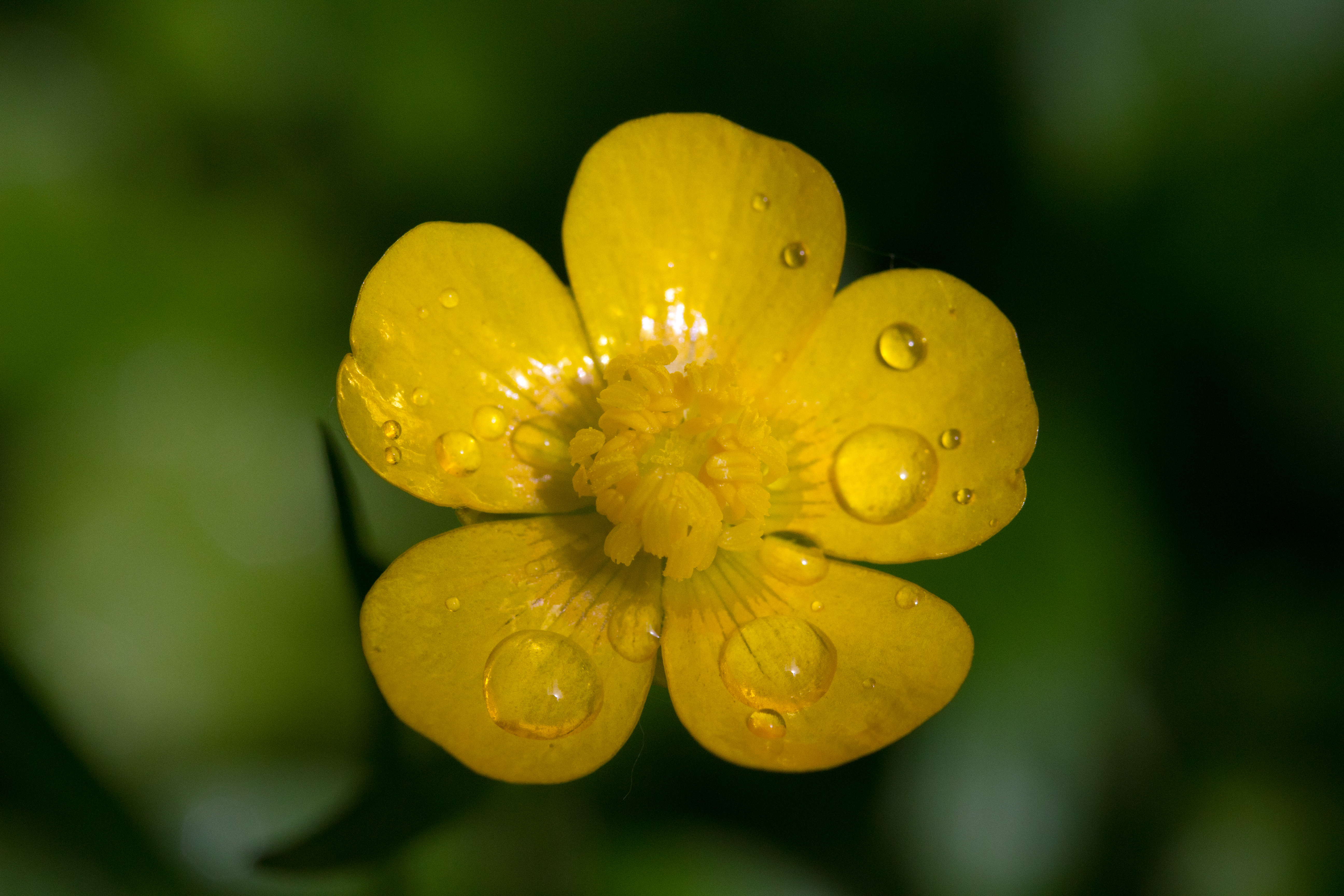
A reasonably critical look at buttercups


A review of "Flora Nordica, Vol 2"

This is the second volume of a potentially never-ending work the goal of which is to describe all species of vascular plants found in Scandinavia, Finland, Iceland, the Faroe Islands and Svalbard. Only two volumes have been published so far by the Bergius Foundation, with grants from various obscure “royal” institutions, and nobody knows how or when the project will continue. That being said, this second volume of what is essentially a scientific reference work was probably greeted with elation by Scandinavian botanists. It includes a number of families of flowery plants not included in Hylander's classical work “Nordisk kärlväxtflora” (1953/1966). Thus, this is the first time the Nordic species of these particular families (including goosefoot, fumewort and buttercup) receive “an even reasonably modern critical treatment”. Imagine that! If fairly advanced scientific analysis of buttercups is your cup of butter, definitely a must have.

The Nordic Über-flora


“Den nya nordiska floran” is Bo Mossberg's and Lennart Stenberg's Über-flora for the Nordic countries, here defined as Scandinavia, Finland, Iceland, the Faroe Islands and Svalbard. The flora is intended for the general public, and all 3,250 species included seems to have been illustrated in color. The flora covers seed plants plus ferns and their allies. It's a wholly revised edition of “Den nordiska floran”, another mammoth work by the same authors.

Bo Mossberg is a distinguished, award-winning illustrator. He has worked on several “classical” Swedish floras. The illustrations in this particular work took him about 15 years to complete, working full time! But yes, he did cheat a bit, since the orchid section uses the same illustrations as an earlier book on that specific group. Mossberg is so well known in Sweden that his name is mentioned on the book cover before that of the actual writer, Lennart Stenberg, a biologist and ex-chemist who headed the botanical department of the Swedish Museum of Natural History when the flora was published.

The aim of “Den nya nordiska floran” is obviously to make a botany version of Heinzel, Fitter and Parslow's detailed field guide to European birds, a guide notorious for including virtually any vagrant birdie you're likely to encounter anywhere between the Green Island and the Caspian Sea. Likewise, Mossberg's and Stenberg's flora include not only indigenous Nordic plants, but also escapees from gardens, or actual garden cultivars surviving at abandoned property lots! Thus, the American purple pitcher plant grows at a few locations in Sweden (including Gammelstorp at Blekinge) and has therefore been bestowed with a full-size color illustration. Even the date palm has been included, since it sprouts at garbage dumps in southern Sweden (the sprouts die at the onset of winter). Just in case, species that are “previously known” from the Nordic area has been included, too, such as the Russian rose “Rosa jundzillii”, since one specimen was found at Stora Karlsö about 150 years ago. If you ever see it again, you know who you gonna call!

Naturally, not even the Perfect Flora can include literally *all* species of seed plant (or fern) found on our distant shores. Thus, there are – wait for it – 900 apomictic species of dandelions in Norden, hardly surprising since this notorious weed apparently reproduces asexually (that's what “apomictic” means), presumably cheating evolution in the process. Only a few dandelions have been included, most of them eerily similar. The only exception is the cool Arctic Dandelion which spouts white flowers and grows at Svalbard. OK, let me guess. Mr Mossberg didn't want to spend 15 years (full time) painting dandelions? He has my sympathy and understanding…

“Den nya nordiska floran” can be found in well-stashed Swedish public libraries, and while it's too heavy to bring out in the field (or to an abandoned property lot near you), it's probably a must have for all serious plant collectors, nature romantics or botany students. 

Tuesday, August 7, 2018

Grandmother is Swedish


"Nationalnyckeln till Sveriges Flora och Fauna. Fjärilar: Dagfjärilar. Hesperiidae - Nymphalidae".

Such is the forbidding title of this book, published in Sweden and (unfortunately for foreign readers) with text mostly in Swedish. The book is about butterflies and covers all 140 species found in Scandinavia and Finland. All species are illustrated with large, colour pictures of high quality. This makes "Nationalnyckeln. Dagfjärilar" an excellent collectors' item. At least if you like butterflies, or books about them! Incidentally, even the Monarch is included in this work, since a few specimens of this typical American species have been found in Sweden.

But, as I already pointed out, you won't be able to actually read the book. The identification key is bilingual, and there are very short summaries of each species presentation in English. Still, 99% of the text is in Swedish.

If you absolutely want this work, you might as well contact the publishers directly through their bilingual website, also called Nationalnyckeln, to compare their prices and delivery rates with those of Amazon's sellers. They may be better, worse or similar. I don't know.

"Nationalnyckeln. Dagfjärilar" is part of a series, the ultimate aim of which is to illustrate and describe all species of living organisms in Sweden (!). The whole project will probably take decades to complete. Thankfully, Nationalnyckeln is supported by both the Swedish Parliament and the crown princess Victoria. So far, only seven volumes have been published: Butterflies, Moths (Lasiocampidae - Lymantriidae), Moths (Micropterigidae - Psychidae), Longhorn Beetles, Myriapods, Mosses (Buxbaumia - Leucobryum) and Mosses (Anoectangium - Orthodontium). Next in line are two volumes on Hoverflies.

It's a pity that the English sections aren't longer. These books are so well produced, and so nicely illustrated, that they could definitely have become best sellers abroad, despite their restricted geographical ranges. In a sense, this is the Grandmother of all Reference Works.

But it seems Grandmother is Swedish...

Still, this butterfly volume could be a nice collectors' item, and I would also recommend Moths (Lasiocampidae - Lymantriidae) and Longhorn Beetles for such purposes. The other volumes look more boring.