Showing posts with label Prosimians. Show all posts

Sunday, November 24, 2024

The Goblin Shark feat. Marvin


"The best cryptid evidence" doesn´t strike me as very "cryptid". Note that the Patterson-Gimlin film of Bigfoot fame isn´t included in this survey. All animals featured (except maybe Marvin) seem to belong to known and currently extant taxa. So-called cryptozoologists don´t really care - they want to find a giant ape-man, a surviving dinosaur, or something to that effect. 

So it seems the Patterson-Gimlin film is unique, being the only good footage of an *actual* cryptid (i.e. a monster). But it´s precisely it´s singular character that makes it so hard to believe...   

Monday, June 24, 2024

Tuesday, March 19, 2024

Mountains of the Moon


A Giant Potto (and it really is huge) and two scary mystery birds...don´t get me wrong, but is *this* the best the fabled Mountains of the Moon at Ruwenzori can offer us in terms of cryptids? Geezus, I had expected albino killer apes, dinosaurs, or at the very least some really nasty spider, but naah!

Some cryptozoological riddles from Ruwenzori


Friday, June 24, 2022

The oldest island


"Earth´s Tropical Islands" is a 2020 nature documentary in three parts, co-produced by the BBC and PBS. I just watched the first episode, covering the weird and wonderful wildlife of Madagascar, the world´s oldest island. Formed about 88 million years ago, the first animals somehow managed to reach the island around 60 million years ago. Today, there are about 25,000 endemic species of animals and plants on Madagascar. An enormous mountain range cuts the island in several distinct bio-geographical regions. The climate of the southwestern part is extremely dry, while lush rainforests grow in the eastern part. 

While parts of the documentary deal with the people of Madagascar (the first humans only arrived about 2,000 years ago), the emphasis is on the unique wildlife. In the "deserts", the ring-tailed lemurs eat plants that are deadly to humans. The national park Tsingy de Bemaraha, with its bizarre Mordor-like cliffs, is home to Von der Decken´s Sifaka, which climbs and jumps the rock formations with surprising ease. We also get to meet a chameleon that only lives for four months - the shortest known lifespan of a terrestrial vertebrate species (their eggs last longer). In the rainforest, the tenrec can have up to 32 young per litter. The "pelican spider" catches and eats other spiders by mimicking the movements of an insect caught in the other spider´s web. And so on! For some reason, I found the locusts to be particularly absurd. After eating everything in its wake, their enormous swarms are stopped by the Madagscar mountains and rains, simply dying?!

One problem with the docu is that it treats Madagascar as a self-contained unit. This becomes problematic when discussing the island´s environmental destruction. Yes, it´s caused by humans, and yes, the natives exterminated the local mega-fauna alreday at arrival (we are shown an underwater cave with skeletal remains of extinct animals). Still today, those darn natives cut down the forests to grow food. But "Earth´s Tropical Islands" says nothing about timber, cash crops or French colonialism. Are the Malagasy solely responsible for the deforestation?

Unfortunately, the endemics (including most of the iconic lemurs) at the world´s oldest island are threatened by extinction at the hands of *some* sub-branch of Homo sapiens. Still, they experienced 60 million years in the sun. Or the rain shadow. That´s probably longer than we will ever be around, so I say the flora and fauna wins... 


Sunday, December 26, 2021

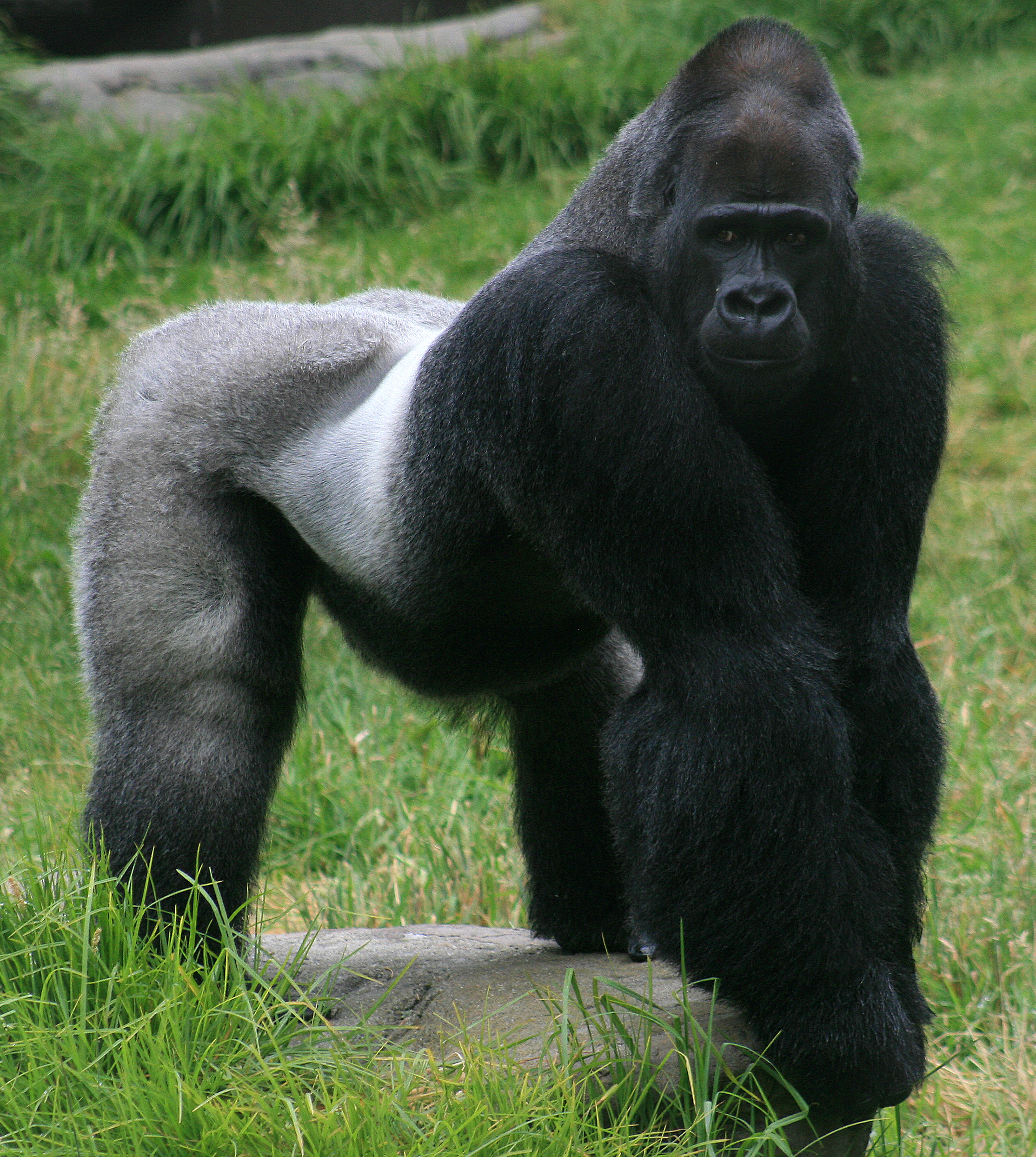
Gorillas against guerillas

Credit: virunga.org

"Primates" is a 2020 BBC mini-series about apes, monkeys and prosimians. Some humans (mostly primatologists) have been thrown in for good measure, too! Most of the documentary is standard fare: spectacular footage of non-human primates from all over the world, and calls to save them for posterity. Good for a boring Christmas holiday, but perhaps not *that* interesting...

However, I did notice a few things. 

In the Congolese hills, the Virunga National Park - with a rare population of mountain gorillas - is protected by "park rangers", actually a heavily armed uniformed militia. The park rangers have been repeatedly attacked by rebel groups operating in the region. But why would humans volunteer to protect gorillas against guerillas, risking their lives in the process? The BBC interviews a ranger who claims to have a spiritual bond with the gorillas. Maybe he has. 

However, there is a much more mundane explanation. The rangers are recruited from the local population and paid by international organizations. Eco-tourism from Western nations is another source of income. Also, the local communities get a share of the profits. Nothing wrong with that, per se, but it *does* mean that the rangers have a very vested *human* (Homo sapiens sapiens) interest in protecting the gorillas. They are simply protecting their own sources of income. Since the rebels are presumably Hutu expats or expellees from Rwanda, some kind of ethnic dimension can´t be ruled out either. The people in the Virunga area are literally defending their homeland against foreign intruders. See how I managed to de-romanticize the whole situation? When the Western money stops coming, the mountain gorillas are bush meat, if you ask me...

Another uncomfortable fact. As I have repeatedly pointed out on this blog, even Native peoples deplete their resource bases if given half the chance. Research carried out at Koram Island off the coast of Thailand shows that monkeys, specifically crab-eating macaques, do exactly the same thing! The monkeys are tool-users: they use heavy stones to crack open oysters. The tool-use leads to over-exploitation of the oysters, which tend to become smaller and less abundant as a result. Imagine what would happen if some primate started to use tools consistently...wait... 

Edenic ecological balance doesn´t even exist among tool-using freakin´ *animals*, it seems. 

"Primates" does contain other interesting information, to be sure. We get to meet a team of animal rescuers trying to "retrain" young orphaned orangutans for a life in the wild (the orphans are used to human "foster parents" and have therefore lost these skills). As part of their project, the human trainers have to take climbing lessons in really tall trees! Another team tries to reintroduce pet gibbons into the wild. Gibbons are popular as exotic pets, but many of them are snatched from the wild and essentially trafficked as part of the illegal animal trade. The gibbons shown in the docu are rescued and taken back to their original habitat. 

So perhaps there is some hope, after all. However, I have to say that what really caught my attention was the somewhat more pessimistic facts, some of which BBC doesn´t really want the viewers to confront...  


Tuesday, September 18, 2018

On the planet of the apes


This is the third volume of Lynx Edicions' mammoth work on the mammals of the world. This volume deals exclusively with primates, or rather the non-human primates. According to the editors, an additional volume would be needed to cover Homo sapiens!

Currently, science recognizes 479 living species of non-human primates, and they are all covered in this work. As usual, there are both species presentations with color plates and family presentations with color (and colorful) photos. This, plus the sheer volume of the work, makes it almost prohibitively expensive. My review is therefore based on the previews provided by the publishers at their website.

While other volumes of the “Handbook of the Mammals of the World” strike me as more popularized than Lynx Edicions' previous mega-encyclopedia “Handbook of the Birds of the World” (which I have seen for real), the primate volume seems to be written in the same impenetrably scientific style as the HBW. But sure, if the history of marmoset and tamarin systematics is what makes your day, perhaps you should check this out! While the photos are superb as usual, the plates look rather boring.

Perhaps apes, monkeys and prosimians just doesn't have the right jizz for color plates? Or do they lack “the gorilla mindset”? :D

Be that as it may, I nevertheless bow – once again – to the publishing house that gave us the ultimate work on Hawaiian Honeycreepers, Australian Mudnesters and Gnateaters. Five stars for this scientific survey of The Planet of the Apes, pardon, Non-Human Primates!