
Can we please stop talking about the Torenza passport woman, Lafufus and Your Party? Not to mention flat earthism. Let me finish my chocolate shake for crying out loud!
This is my 12,000th post, btw.
Can we please stop talking about the Torenza passport woman, Lafufus and Your Party? Not to mention flat earthism. Let me finish my chocolate shake for crying out loud!
This is my 12,000th post, btw.
LOL. This guy was Paramount Leader of China when this little incident happened...
 |
| Credit: Pop Mart |
Bråda dagar hos Tullverket. Men är inte originalet också Made in China?
Tullen: Stoppat Labubu-kopior för 1,4 miljoner kr
Here we go again. 20 years ago, there was an unconfirmed claim on the internets that Christian fundamentalists opposed the Smurfs (for all kinds of unrelated reasons). Not sure if that was even true, or some kind of anti-Xian satire, but these days the memes make themselves.
A new toy line known as Labubus (and the rip-off version Lafufus) has created pandemonium on TikTok, with misguided believers claiming that the adorable critters are demon-possesed, specifically by the Sumerian demon Pazuzu. Which would have been completely unknown to the layperson...had it not been for "The Exorcist".
Guys, I´m sure there is real evil out there (I don´t know, Epstein or something) so stop obsessing about some Chinese collectible elves, please!

Chairman Mao, come back, all is forgiven! How is this even possible? Money laundering? Is crypto real money in the first place?
So some "crypto entrepreneur" bought a banana for 6 million dollars and then consumed it. The banana was apparently "conceptual art"?!
Crypto entrepreneur eats banana he bought for 6 million dollars
 |
| Credit: Thurundir |
"Godzilla vs. Kong" (2021) is the latest but apparently not last film in the so-called MonsterVerse series. One of the lead actors is Swedish: Alexander Skarsgård (I admit I had no idea). While the film isn´t terribly interesting, I admit that it was better than I expected and can work as light entertainment on a rainy Saturday evening. Some standard tropes have been reimagined in fun ways. Thus, the crackpot conspiracy theorist who turns out to be right is African-American, while the ugly computer nerd who knows everything turns out to be just ugly, knowing essentially nothing at all! Some other tropes are the usual ones, such as the mad scientist being eaten by his own monstrous creation (bye bye!).
I did enjoy all the "in-house" references to the Illuminati, lizard people, the breakaway civilization, and so on. Indeed, the entire MonsterVerse concept is woven around one of the crazier alternative ideas out there (pun intended): the Hollow Earth. The monstrous "Titans" inhabiting these nether regions of our planet get their enormous powers from a mysterious source even deeper down, and naturally the bad guys (called Apex) want to tap it for their own nefarious ends: to energize "Mechagodzilla", a robot interfacing with the extracted neural pathways of a particularly evil Titan, the famed hydra-like Ghidorah. Unfortunately for Apex, the robot spins out of control and becomes the apex predator. The only thing that can save the human race (and, I suppose, the franchise) is a temporary alliance between two other Titans who are usually at each other´s throats: King Kong and Godzilla...
The final battle between the cryptid monstrosities is set in Hong Kong, but before we reach that point, the film takes us on an extended trip through the Hollow Earth, which turns out to be anything but a paradise. Sure, the jungles are lush, but the titantic beings dwelling there are engaged in an apparently never-ending bellum omnium contra omnes, with Kong as the "king" sitting on a mountain throne, trying to uphold some semblance of order with his huge battle-axe, powered by the enigmatic energy from further below. I can´t say that´s much of an improvement over life on the surface, to be honest! Apparently, the sequel will be called "Godzilla x Kong: The New Empire", a rather ominous title and pit these titanids against an even bigger terror from the bowles of our hardboiled planet, the identity of which isn´t revealed by Warner Bros just yet. OK, let me guess. Sorath? Cthulhu?
I´m already bracing myself for that extravaganza!
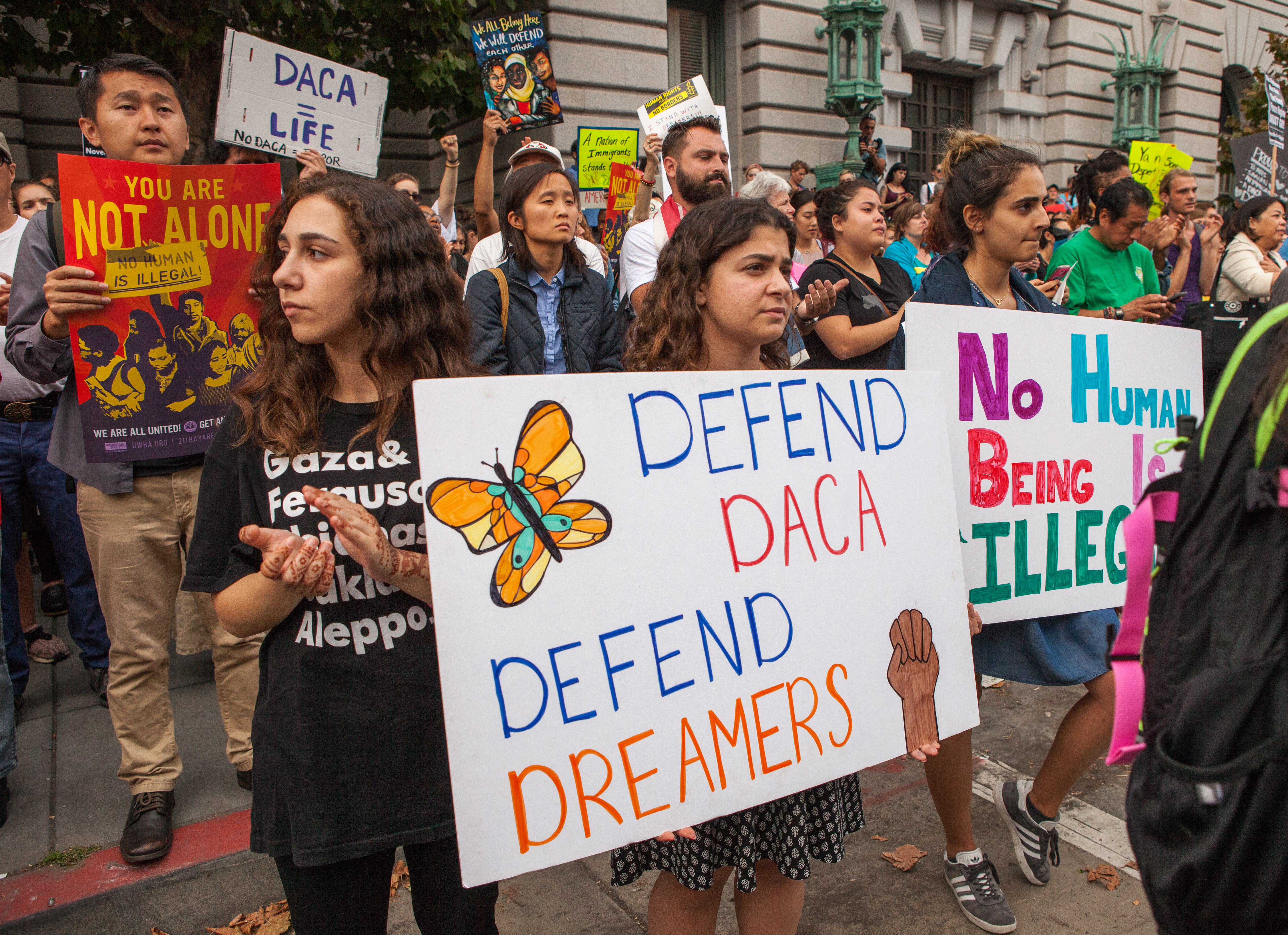
The few remaining Trumpistas are angry. Why? Because Biden wants to give 11 million Hispanic DACA recipients citizenship. Read: 11 million new AOCs. And 11 million new Democrat voters.
However, this problem is relatively easy to solve.
The GOP can simply import the 11 million Uyghurs and 7 million Hong Kong Chinese which the Trump operatives pretended to care so much about during the recent election campaign.
Check mate, Beijing Biden!
Or no? 😂

"Opiumkrigen" is a book in Swedish by Bertil Lintner, a foreign correspondent now living permanently in Thailand. His articles have appeared in Svenska Dagbladet, Far Eastern Economic Review, and Asia Times.
"Opiumkrigen" gives a short (150 pages) overview of Chinese 19th and early 20th century history, with the main chapters dealing with the Opium Wars. While Lintner never takes a side in the Hong Kong conflict, the book as a whole could certainly be used by those who believe that the territory should be an integreted part of China.
Today, opium is mostly associated with China and the Chinese. Lintner points out that the opium poppy probably comes from the Eastern Medditerranean region, and was cultivated there by humans already during the Neolithic. The Muslim invaders introduced it to India. When India was subsequently conquered by the British, they took over the poppy fields and the opium production. There was just one problem: who should they sell it to? For obvious reasons, the British didn't want people in *their* colony to become opium-addicts! Bad for social stability, you see.
The solution was to export (or rather smuggle) the opium to China, where opium had never been used on a massive scale before. This was also good for the British terms of trade, since the mercantilist policy of China had soaked Britain of its precious silver, used to pay for Chinese tea (the Chinese more or less refused to import anything from the British colonies). This sounds vaguely familiar somehow...
By large-scale smuggling operations, aided and abetted by corrupt local officials in southern China, the British gradually turned the Chinese into a nation of opium addicts. When the Manchu emperor in Beijing ordered the illegal opium destroyed, the British got their causus belli and the "Opium Wars" were on.
The First Opium War (1839-1842) and the Second Opium War (1856-1860) were both resounding victories for Britain. The Chinese were essentially massacred by superior British fire power. Hong Kong became a British crown colony, China was "opened up for foreign trade" and other colonial powers saw their chance and started preying on the Chinese. And, of course, the opium trade continued, even more profitable than before.
Colonial wars are seldom moral, but the idea of turning an entire nation into junkies just to adjust the trade balance strikes me as one of the more evil ideas in human history (and let's face it, the competition for that title is pretty stiff).
After opium followed morphine and then heroine, both Western opium-derived products that were dumped on the Chinese market.
Eventually, large scale domestic poppy growing and opium production was established. On the one hand, this lowered the fabulous profits of the Western colonialists, who suddenly became more amenable towards liberal-philantropic demands to suppress the international opium trade. On the other hand, the opium crisis simply continued, now with Chinese warlords and crime gangs as the main culprits.
Lintner clearly knows his Chinese and Asian history, and manages to mention almost everything in this book: Christian missionary activity, the Boxer Rising, the Shanghai International Settlement, opium trade and ditto addiction in French Indochina and the Philippines, and even the recent Hong Kong protests. Ironically, he says relatively little about the Communist Party of China, although he does point out that they clamped down hard on poppy-growing and opium addiction after taking power in 1949.
A very curious oversight is that the Taiping Rebellion (1850-1864) is treated as a mere episode. But surely this was one of the bloodiest conflicts in Chinese and 19th century history?
I also spotted some typos, but that's because I'm a nerd!
Overall, I would rate "Opiumkrigen" very high. The book must have been published in January of this year, and feels very current due to the ongoing conflicts between the People's Republic of China and the United States.
And while it never mentions the opiate crisis in the United States, certain parallels seem to be discernable...


