Showing posts with label Worms. Show all posts

Friday, August 23, 2024

Reverse aging


A comb jelly
Credit: Steven G Johnson

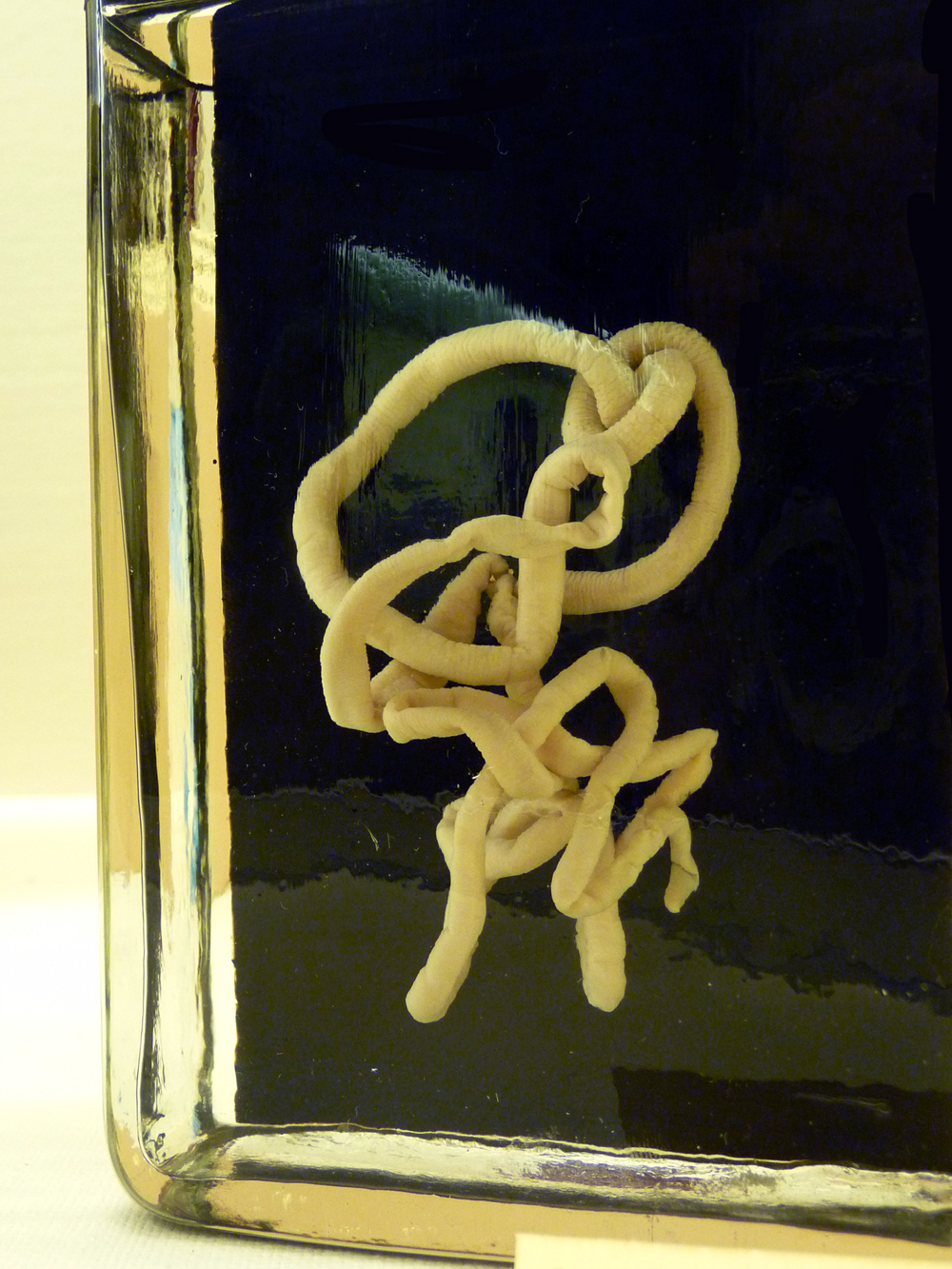
A kind of weird experiment, would probably have been considered cruelty to animals had it not been a primitive/basal jellyfish-like organism, so the RSPCA and the ALF don´t give shit! Still, I suppose the ability to "reverse aging" is...interesting. What a pity it´s only cnidarians, comb jellies and the dog tapeworm (!) that has this unusual ability. 

This sea creature can age in reverse

The next link goes to a Wiki article about "Ming the Mollusk", a quahog clam and the oldest animal ever recorded. Or rather "the oldest individual (non-colonial) animal ever discovered whose age could be precisely determined"Yes, it was 507 years old when it was captured and killed (!) off the Icelandic coast. So this damn mollusc was older than our industrial civilization?!

Ming (clam)  

And if you absolutely want to read Wikipedia´s confusing list of the oldest organisms ever-ever-forever (many considerably more ancient than poor old Ming), you can find it here. I *think* the absolutely oldest living "things" ever were bacterial spores found in New Mexico which were revived after 250 million years. And then there´s the story about the scientist in California who sold "Amber Ale" produced with a 45 million year old revived yeast!

Somehow, I find that hard to believe. 

List of longest-living organisms

Sunday, July 23, 2023

This is your god, panteista


Thank god for the Axial Age. Thank god for Orpheus, who on his golden tablets revealed the secrets of our real origins and the path to our salvation!

If you are a pantheist, animist or animatist, this is your god:

>>>In Spinochordodes tellinii and Paragordius tricuspidatus, which have grasshoppers and crickets as their hosts, the infection acts on the infected host's brain. This causes the host insect to seek water and drown itself, thus returning the nematomorph to water. 

>>>P. tricuspidatus is also remarkably able to survive the predation of their host, being able to wiggle out of the predator that has eaten the host. The nematomorpha parasite affects host Hierodula patellifera´s light-interpreting organs so the host is attracted to horizontally polarized light. Thus the host goes into water and the parasite's lifecycle completes.

Kneel and worship the horsehair worms!  

Friday, June 19, 2020

Worms in the water


"Nationalnyckeln" is a multi-volume work in Swedish originally intended to cover all species of living organisms found in Sweden and its adjacent territorial waters. This goal proved too ambitious (mostly due to extremely high production costs for each volume and a surprisingly stingy Swedish government), but the publisher occasionally still ads new volumes to the work. 

This one was published in 2018 and its full title is "Nationalnyckeln till Sveriges flora och fauna. Ringmaskar: Havsborstmaskar. Annelida: Polychaeta: Aciculata". Yes, it´s about worms! 

Aciculata (sometimes Errantia) is a subclass of Polychaeta (bristle worms) which in turn is a class within the phylum Annelida (ringed worms). The most well known annelids are the earthworms and leeches, but there are also thousands of marine species, many of them within Polychaeta. This volume covers 205 species of aciculate bristle worms found in Swedish waters. Somewhat surprisingly, most are illustrated in color, some even with color photos! The English summary has been dropped, but the keys are still bilingual. There is also a general introduction to the annelids. 

Although I can´t say I´m *that* interested in bristle worms, I admit that the species diversity is stunning. Some species are predators, others are "herbivores" (or whatever you call bristle worms which don´t munch on other animals), still others are parasites. These are small and not elongated. Many species in this group are virtually unknown, so the species presentations are sometimes pretty short. And since worms aren´t particularly aesthetically pleasing, I don´t think this is a good collector´s item! That being said, probably indispensable if you are a Swedish nerd with a strange interest in ocean-dwelling invertebrates... 

Thursday, September 27, 2018

Based worms


This volume of Nationalnyckeln, a Swedish biological encyclopedia, is devoted to peanut worms (Sipuncula) and ribbon worms (Nemertea), two groups of marine invertebrates. It covers all species found in Swedish waters: 9 species of sipunculids and 69 species of nemerteans. Or perhaps somewhat more, since the 6 species of the genus Cerebratulus are very different to tell apart even for specialists!

The volume includes the longest known organism, the bootlace worm (Lineus longissimus), a nemertean which can grow to become 50 meters long! Otherwise, I note that the Swedish editors of this volume had a lot of fun inventing vernacular names for the various worms, calling one of them Röd julklappsmask (Red Christmas Worm). Or is that name traditional?

As usual, Nationalnyckeln is fully illustrated in color (!), and contains bilingual (Swedish-English) keys, but the bulk of the book is in Swedish only. The species presentations note both traits important for identification, behavior and range.

Monday, August 13, 2018

Just remove the tyres


A review of "The Biology of Temporary Waters" by D Dudley Williams 

I spotted this book in "my" library the other day. I only skimmed it, but it looks extremely interesting!The "temporary waters" of the title include intermittent streams and ponds, episodic rain puddles, seasonal limestone lakes, the water-retaining structures of certain plants, and man-made container habitats. Watch out, they are all teeming with life! The author is pretty thorough, and no temporary water seems obscure enough to avoid his detection. The rain-filled cup of a mushroom is a "temporary water" and houses oligochaetes (a kind of worms). Rainfilled puddles in eastern Utah, Dry Creek in Oklahoma and large flower bracts of the genus Heliconia are also of considerabe interest. Waterfilled snail shells may house at least four species of rotifers, at least on Jamaica. On a more sinister note, 67% of water-filled snail shells in Tanzania were found to contain larvae of Aedes aegypti, the mosquito that spreads dengue fever. In the United States, rain-filled tyres (for instance at rural dumps in southeastern Illinois) are also veritable havens for mosquitos, in particular the notorious Asian tiger mosquito. However, if there's leaf-litter in the tyres, copepods might destroy 90% of the mosquito larvae. Why not just remove the tyres?! Somebody should notify the proper authorities in downstate Illinois...

OK, I admit I was fascinated.

However, this work is *not* a popularized work for the layman, but a serious and scholarly study. Chapter-headings include "Water temperature and turbidity", "Population dynamics" and "Importance and stewardship of temporary waters". Still, this is one of the few heavy scientific works I've seen which I'm actually prepared to buy and attempt to digest...provided somebody lowers the price!

Sunday, August 12, 2018

The legend of Tor Karling


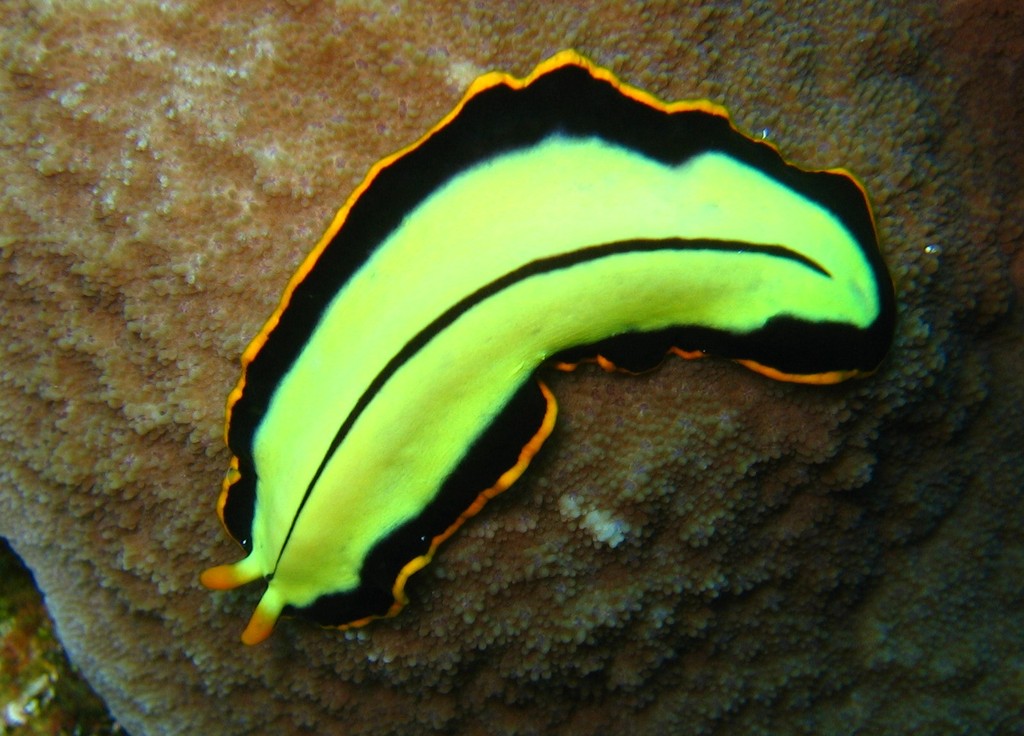
"The biology of the Turbellaria" is a heavy volume, edited by E.R. Shockaert and I.R. Ball. It's published by Dr. W. Junk Publishers as no. 6 in their series Developments in Hydrobiology. It contains papers presented at the Third international symposium on the biology of the Turbellaria, in honour of the living legend (the editors' words!) Tor G. Karling. A brief biography of Tor, who spent 50 years in turbellarian research, has been included plus a photo of the old man. The rest of the book contains sections on Systematics & Zoogeography, Ecology & Faunistics, Nutrition & Reproduction, Regeneration & Differentiation, Ultrastructure.

This is an extremely technical work, only for Tor's students, I imagine. Are the freshwater triclads (Paludicola) monophyletic or not? What is the geographical and bathymetrical distribution of the Fecampiidae? Seven entirely new species of sand-dwelling Turbellaria from the Netherlands are described.

However, the book doesn't answer the most important question, a question so crucial that it's amazing the editors didn't think of including it. And that question is: What the hell *is* a turbellarian anyway???

Another living legend, perhaps? Or just a living fossil?

A profitable field guide


"Marine Fauna and Flora of Bermuda" by Wolfgang Sterrer is a macro-field guide covering 740 full-sized pages. Over 1500 species are described, most never before included in a general guide. Since many of the organisms in the waters of Bermuda can also be found in the West Indies or southeastern United States, the field guide can be used profitably in those areas, as well.

There are 228 black-and-white plates and 16 colour plates. The latter show invertebrates. Weirdly, each plate has a private corporate sponsor! Thus, the Bank of Bermuda sponsors the plate showing sea hares and other sea slugs. Thank you. By contrast, the Bank of Butterfield brings us sea squirts. It seems this work is "profitable" in more ways than one...

Organisms featured in this volume include cyanobacteria, fungi, lichens, amoebas, bristle worms, beard worms, spoon worms and (surprise) round worms. Biggest surprise: the Belted Kingfisher.

The Bermuda Triangle might indeed be dangerous, but perhaps not in the sense we expected!

Saturday, August 11, 2018

Yes, White Sea roundworms


Roundworms (Nematoda) is a group of mostly parasitic worms found pretty much everywhere. Naturally, Russia and the former Soviet Union haven't been spared the tremors. “Nematodes and their role in the Meiobenthos” is a book by T A Platonova and V V Galtsova. The Russian-language version was published by Nauka in Leningrad back in 1976, while the translation is dated 1985. For some reason, it's printed in Faridabad, India. The book is marked Volume XV (XXIII) of “Studies on Marine Fauna”, or rather “Issledovanie Fauny Morei”. It includes two highly technical sections, “Lower Enoplida of the Seas of the Soviet Union” and “Free-living marine nematodes as a component of the meiobenthos of Chupa inlet of the White Sea”. The illustrations are black-and-white drawings of (scary) diagnostic characters of nematodes. We're talking parasitical worms here, remember?