Showing posts with label Jakob Böhme. Show all posts

Saturday, August 5, 2023

Crazy as they come


I may return to Jacob Böhme in the future, but here, let me just say that if what I read about his theology in "Kristendomens idéhistoria" by Alexander Radler is in any way representative, the man was a nutter of monumental proportions. He seems to have believed not only that evil comes from God, but that God has a split personality?! So is this where Jung got all those weird ideas in his Job book from? Or the "mature" Schelling when he got more Goth somehow? 

Ahem, no, dear Jacob, what you "saw" during your visions is either the Devil himself or, more likely, the fallen world-soul crying out for redemption. That´s not God. That´s us crying out for God! An atheist would say that you just saw the void in your own id and then interpreted it in a proto-Jungian way. But when you look into the void, guess what...

How can you be sure of your salvation if God isn´t perfect? If indeed God himself needs to be saved? And what kind of God is this, who needs a shoe-maker from Görlitz to save Him?

Friday, September 21, 2018

The missing link


A review of “The Mystical Sources of German Romantic Philosophy” 

This is a series of translated lectures, given in France by a German scholar, dealing with the mystical sources of German Romanticism. It should be read together with “Hegel and the Hermetic Tradition” by Glenn Alexander Magee and “Schelling and Swedenborg” by Friedemann Horn. In the lecture, Romanticism is a somewhat broad concept, encompassing Fichte, Schelling and Hegel, amongst others.

Usually portrayed as a strictly philosophical movement, Romanticism was actually heavily influenced by various esoteric, mystical and apocalyptic notions derived from religious traditions. Thus, Fichte's subjective idealism centered on a “divine” Ego is probably inspired by German mystic Master Eckhart. Schelling's speculations about spiritual corporeality and the “evolution” of God owe something to the Kabbala. He also studied Swedish mystic Swedenborg, including the idea that conjugal love could survive the physical death of both spouses. Franz von Baader is prominently mentioned in these lectures, hardly surprising since he was an esotericist in his own right, while acting as the “gray eminence” of German Romanticism. Baader studied Jacob Boehme, Master Eckhart and Saint-Martin (the latter a contemporary).

One thing that always baffled me is the connection to Hegel, whose philosophy at first glance seems very different, in both degree and kind, from anything “occult”. Yet, Hegel was a friend of Baader, who introduced him to the writings of Boehme and Eckhart! The notion that the World Spirit comes to know itself through history is superficially similar to the mystical idea that God comes to know himself through the mystic, but I always felt there must be a missing link somewhere. This book provides two such links: Christian Pietists Johann Albrecht Bengel and Friedrich Christoph Oetinger. Both had developed an evolutionary perspective already before Romanticism. God's revelation evolves, not simply in the sense of new theological truths being revealed through the Spirit, but concretely in and through history. The perspective is apocalyptic: God's redemptive plan will eventually evolve to a point when His kingdom on Earth will be established. To Oetinger, the millennial kingdom was explicitly democratic, egalitarian and socialist. There was even a kind of “dialectic” involved, since God's moves are always countered by Satan's ditto, forcing God to change his plans to attack Satan the better. As evolution progresses, the conflicts between good and evil become more and more violent. Since the battle between God and Satan takes places in history and therefore in society, it's easy to secularize this perspective into a this-worldly plan of evolutionary-apocalyptic salvation. This sounds almost like Hegel…and Marx!

Schelling was also influenced by Oetinger, who attempted to combine the evolutionary apocalyptic with studies of the Kabbala. God or Spirit evolves by becoming more corporeal, eventually creating a kind of spiritualized matter (compare “the resurrection of the body” and “heavenly bodies” in Christianity). This is almost identical to Schelling's perspective. Thus, the various sefira in the Kabbalist system aren't simply conceptually distinct from each other, but actually evolve one by one during a cosmogonic process of God's becoming. A tie-in to Hegel's World Spirit is possible here. It turns out that both Schelling and Hegel had studied at the theological seminary at Tübingen in their youth, a seminary where the writings of Bengel and Oetinger were studied!

I realize “The Mystical Sources of German Romantic Philosophy” is a very obscure work about a rather narrow subject, but I found it fascinating, and therefore give it five stars. They were wrong, of course. History is obviously cyclical. :P

Friday, September 7, 2018

Almost famous

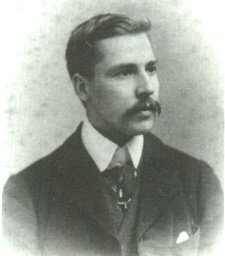
A E Waite 


"Famous Mystics" is a book about Saint-Martin, Jacob Boehme and Emanuel Swedenborg. The article on the French mystic and Freemason Louis Claude de Saint-Martin is written by Arthur Edward Waite, who was both a scholarly expert on occultism and an occultist himself (Golden Dawn and its split-off Fellowship of the Rosy Cross). The pieces on Boehme and Swedenborg are penned by W.P. Swainson, an author about whom I know nothing, except that he is obviously sympathetic to the two men and their ideas.

Waite's article on Saint-Martin is rather bad, saying almost nothing about "the unknown philosopher's" actual philosophy (or mysticism). Instead, Waite concentrates on the pre-mystical part of Saint-Martin's life, tediously detailing every grade of the obscure Masonic groups to which the Frenchman or his friends had been affiliated. Apparently, Saint-Martin had originally belonged to a group which had conjured "Jesus Christ" through white ritual magic (!) and received a substantial amount of communications from the same. I suppose this is of great interest to a member of the Golden Dawn, but what about Saint-Martin's independent career?

Swainson's presentations of "the Teutonic philosopher" and the "Swedish seer" are better, since they actually attempt to introduce the reader to Boehme's and Swedenborg's respective messages. Unsurprisingly, the weirdly literalist revelations of Swedenborg ("the angels dress like humans", etc) are easier to describe than the Christian Kabbala of Boehme. Still, Swainson's descriptions of the latter's speculations are neither better nor worse than anybody elses. He emphasize the specifically Christian traits in Boehme: Jesus as literal historical figure who died and rose again in order to redeem the world, prayer, sacraments, etc. Of course, I suppose non-Christian admirers of the shoe-maker from Goerlitz can claim that this was just clever allegory...

I'm not sure why anyone would want to read this book, rather than the innumerable other books on the famous mystics, but I nevertheless give it three stars.

The grey eminence


A review of "Franz von Baader´s Philosophy of Love" by Ramon J Betanzos 

This is a difficult book on philosophy, theology and mysticism. I admit that I didn't read literally every word of it! Still, Betanzos' work seems to be to the only book-length study of Franz von Baader available in English. Thus, it's impossible to avoid for those interested in this particular thinker. There is also some interesting material on Baader's political ideas in "Conservative Millenarians", which could complement this study.

Franz von Baader (1765-1841) was a Bavarian polymath whose interests spanned science, theology, philosophy, politics and occultism. For a period, he was the Bavarian superintendent of mines. Baader had contacts with the Pietistic circles in Russia around Czar Alexander I, wrote several memoranda to the rulers of Russia, Austria and Prussia after the Napoleonic wars, and was involved in the drafting of the founding document of the Holy Alliance. Perhaps more importantly, he was something of an eminence grise of the Romantic movement, being personally acquainted with its foremost representatives. The infusion of esotericism into Romanticism was at least to some extent due to Baader's towering influence backstage. He was also on good terms with Hegel, despite major philosophical differences.

Baader was (of course) a political conservative, who wanted an organic and hierarchic society. He saw himself as a Christian and belonged to the Roman Catholic Church. Ironically, however, it seems that Baader was nevertheless the wrong kind of conservative. His contacts with the Russian Pietists and his attempts at ecumenism between the Orthodox Church and the Western churches eventually made him persona non grata in Czarist Russia. His opposition to the papacy in favour of conciliarism didn't exactly endear him to the Roman Catholic hierarchy. His political ideas also took a somewhat unexpected turn, when Baader began calling for democratic reforms in Bavaria in order to win the working class for the conservative cause, thus making Baader a forerunner to Christian Democracy (this is not mentioned in Betanzos' book, however).

Philosophically, Baader was heavily influenced by Jacob Böhme. He also appreciated Saint-Martin. My impression is that Baader's project was to harmonize Böhme with more traditional Christian theology, including Trinitarianism. He rejected the idea that Böhme was a pantheist, and took a position that could perhaps be viewed as panentheist. While Schelling and Hegel seem to have emphasized the "heretical" sides of Böhme, Baader rather viewed him as a spiritually advanced Christian. Baader also lacked the evolutionary perspective of Hegel and the Romantics. Rather, he viewed the human condition as one of creation, fall and redemption, with the resurrection of the body as the last phase.

Of course, Baader's concrete interpretation of this Christian schema was somewhat unusual. Adam's fall is a gradual fall in several steps from a spiritual state into matter. Adam was originally an androgynous creature. The "creation of Eve from Adam's rib" was really a splitting apart of the androgynous creature, and a consequence of the fall. Man is saved by Sophia, sometimes called Sophia-Eros, who is embodied by Christ. Despite being in some sense "female", Sophia is at bottom androgynous and represents God's love. Baader sees many symbols of androgyny in the Bible or Church tradition, including the Virgin Mary who begets Jesus without a male, or the Father begetting the Son. Redeemed man will be restored to his androgynous position. His glorified resurrection body is sexless, something the Bible states explicitly.

The path to redemption goes through restoring God's image in man by subordinating oneself to God's love. One way of restoring the original androgynous unity is by marriage and marital love. The man and the woman complement one another, and hence become a kind of first attempt at restoring the primordial unity. Baader's view of gender roles was essentialist and hopelessly patriarchal, with women being subordinate to men, and marriage being indissoluble á la Catholicism. Indeed, his view of love, androgyny and hierarchy reflected his view of society as a whole: an organic unity, in which hierarchy is preserved, while the various classes or estates love one another, thereby reflecting God's love. (That's what they always say, isn't it?) Christian ecumenism was based on the same reasoning, with Catholics, Orthodox and Protestants uniting in love.

From Betanzos' description, I get the impression that Baader's message is a kind of domesticated occultism. The antinomian potential of love and androgyny are safely channelled away through traditional marriage. Something tells me Baader would have disapproved of transsexuality (that would presumably have been "negative androgyny"), not to mention sex magic. Although somewhat unusual, his exegesis is nevertheless based on the Bible, appeals to the Church Fathers, etc. In contrast to his role model Böhme, I don't get the impression that Baader was a real mystic. However, he did have a wild side nevertheless, with a strong interest in mediumship, magnetism and other paranormal manifestations. I believe I read in another book - probably "Schelling and Swedenborg" - that Baader used his own teenage daughter as a medium, which scared the living daylights out of poor Schelling, who was invited to one of the séances! This makes you wonder about Baader's discernment...

I can't say that "Franz von Baader's Philosophy of Love" is the most exciting read around, but as I already pointed out, those unfortunate enough not to understand German, have no other choice than to peruse this book. Today, Franz von Baader is almost forgotten, but one can't fully understand Romanticism without getting acquainted with the ideas and activities of its grey eminence.