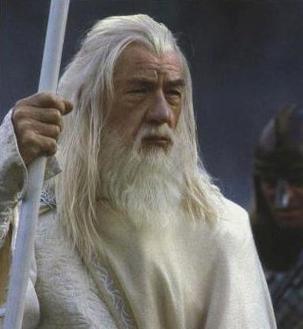
A review of J R R Tolkien´s "Lord of the Rings", originally posted in 2007
This
is a review of the novel, not this particular edition. Before the LOTR fans eat
me alive, Orc style, let me say that I'm not an expert on Tolkien or LOTR, and
only read the epic once, in a non-approved Swedish translation. Still, I offer
my comments, for all they may be worth.
Here in Sweden, almost everyone reads LOTR. And I really mean, everyone! I met assembly-line workers and dispatch riders who read LOTR. Already in elementary school, all kids read LOTR, and one of our teachers read it aloud during class. It took at least two semesters. Every year in February, Swedish bookstores have a traditional clearence sale. LOTR always sold out the very first day. Imagine growing up in a nation where reading "Lord of the Rings" is considered conventional, almost common knowledge!
As a kind of protest against all this, I decided already as a kid *not* to read LOTR, and I never did, until after I saw Peter Jackson's first movie, and by then I was obviously an adult. I can't say the novel thrilled me. The first part, "The Fellowship of the Ring" smacks of being written for children, and I found it quite silly. By contrast, "The Two Towers" and "The Return of the King" are more for adults. Here, Tolkien presumably wanted to write a quasi-historical epic, and inadvertently founded an entirely new literary genre, fantasy. I didn't really like the two concluding books either, however. To me, "The Two Towers" and "The Return of the King" are essentially the same story, repeated twice. First, the dark lord Sauron attacks Rohan, and somewhat later he attacks Gondor. The Ents were just plain silly, a kind of throwback to the childishness of "The Fellowship of the Ring".
I readily admit that these impressions of mine are purely subjective. Perhaps I'm just not a fantasy guy. Incidentally, I think Peter Jackson experienced the same problems as I did with the contradiction between children's story and adult epic. He seems to have solved it by turning his movie version of the "Fellowship" into a dark monster movie (adieu, Tom Bombadil).
Why is LOTR so popular, then? Perhaps one of the reasons is that the story can be read on many different levels. The similarities with Norse and Anglo-Saxon mythology (Beowulf) are obvious. Indeed, Tolkien apparently wanted to create a new mythology for our age, and what better place to start than simply re-write the old one? The popularity of LOTR here in Sweden can at least in part be explained by this Norse angle of the work, which the un-authorized Swedish translation apparently strengthened even further.
On another level, LOTR is a political allegory of World War Two and the Cold War, although Tolkien himself denied this. Still, the similarities are pretty obvious: Saruman is Hitler, Sauron is Stalin, the Shire is England. The main part of the story could be read as a Third World War allegory, with the Soviet Union (Mordor) in alliance with the Third World (the pirates from the south) attacking the free nations of the West. While this may appeal to people with bad experiences of Communism, it unfortunately leads to racism at times. The crooks are often black-skinned, have almond eyes and wield scimitars, while many of the heroes are white and fair. Still, it seems few people interpret the story as racist, thank Iluvatar, and many actually see it as anti-racist, since the Fellowship of the Ring consists of both humans, elves, dwarfs and hobbits.
Yet another reason for LOTR's popularity is that the work can be read as environmentalist. A romantic love of nature and hatred for modern industrialized society is a recurring theme in the novel. For some reason, Saruman seems to be the chief culprit in this regard, both in Isengard and later in the Shire. Indeed, it was a great pity that Peter Jackson left out the scourging of the Shire from his movie version of "The Return of the King", since this is obviously an important part of the story.
Here in Sweden, most people have only read LOTR in Åke Ohlmark's translation from 1959-61. Tolkien himself hated this translation, and never authorized it. This lead to a later fall-out between Ohlmarks and Tolkien's son Christopher, who prohibited Ohlmarks from translating "The Silmarillion". Ohlmarks denounced Christopher as a "sociopath" and the Silmarillion as "crap" at a fantasy convention, which didn't exactly endear him to the Tolkien fans. Later, Ohlmarks claimed to have been attacked by a dark-side faction of the Tolkien Society, and wrote a scurrilous book accusing fantasy fans of being Satanists, going so far as to state that he regretted ever having translated LOTR. He even claimed that the real author of LOTR wasn't Tolkien, but C.S. Lewis (!). This entire episode was something of a tragedy, since Ohlmarks, despite being a very well-educated man, was a fantasy freak himself. I believe he was over 70 years old when he agreed to play "Bombur the Fat Dwarf" at a fantasy party organized by the Tolkien Society in Sweden!
It's ironic that generations of Swedes have grown up reading a version of LOTR Tolkien himself discarded. Indeed, the only Swedes who don't read Ohlmark's translation are presumably the members of the Swedish Tolkien Society, who prefer the English original. Yet, it might have been Ohlmark's idiosyncratic translation that made LOTR so popular in Sweden, since he consciously attempted to make the names of places and persons in the epic as "Swedish" as possible.
I have no idea how to rate this work, so I give it three stars out of five. One thing is certain: badly translated or not, LOTR will sure find new readers and new converts in many generations still to come.
Here in Sweden, almost everyone reads LOTR. And I really mean, everyone! I met assembly-line workers and dispatch riders who read LOTR. Already in elementary school, all kids read LOTR, and one of our teachers read it aloud during class. It took at least two semesters. Every year in February, Swedish bookstores have a traditional clearence sale. LOTR always sold out the very first day. Imagine growing up in a nation where reading "Lord of the Rings" is considered conventional, almost common knowledge!
As a kind of protest against all this, I decided already as a kid *not* to read LOTR, and I never did, until after I saw Peter Jackson's first movie, and by then I was obviously an adult. I can't say the novel thrilled me. The first part, "The Fellowship of the Ring" smacks of being written for children, and I found it quite silly. By contrast, "The Two Towers" and "The Return of the King" are more for adults. Here, Tolkien presumably wanted to write a quasi-historical epic, and inadvertently founded an entirely new literary genre, fantasy. I didn't really like the two concluding books either, however. To me, "The Two Towers" and "The Return of the King" are essentially the same story, repeated twice. First, the dark lord Sauron attacks Rohan, and somewhat later he attacks Gondor. The Ents were just plain silly, a kind of throwback to the childishness of "The Fellowship of the Ring".
I readily admit that these impressions of mine are purely subjective. Perhaps I'm just not a fantasy guy. Incidentally, I think Peter Jackson experienced the same problems as I did with the contradiction between children's story and adult epic. He seems to have solved it by turning his movie version of the "Fellowship" into a dark monster movie (adieu, Tom Bombadil).
Why is LOTR so popular, then? Perhaps one of the reasons is that the story can be read on many different levels. The similarities with Norse and Anglo-Saxon mythology (Beowulf) are obvious. Indeed, Tolkien apparently wanted to create a new mythology for our age, and what better place to start than simply re-write the old one? The popularity of LOTR here in Sweden can at least in part be explained by this Norse angle of the work, which the un-authorized Swedish translation apparently strengthened even further.
On another level, LOTR is a political allegory of World War Two and the Cold War, although Tolkien himself denied this. Still, the similarities are pretty obvious: Saruman is Hitler, Sauron is Stalin, the Shire is England. The main part of the story could be read as a Third World War allegory, with the Soviet Union (Mordor) in alliance with the Third World (the pirates from the south) attacking the free nations of the West. While this may appeal to people with bad experiences of Communism, it unfortunately leads to racism at times. The crooks are often black-skinned, have almond eyes and wield scimitars, while many of the heroes are white and fair. Still, it seems few people interpret the story as racist, thank Iluvatar, and many actually see it as anti-racist, since the Fellowship of the Ring consists of both humans, elves, dwarfs and hobbits.
Yet another reason for LOTR's popularity is that the work can be read as environmentalist. A romantic love of nature and hatred for modern industrialized society is a recurring theme in the novel. For some reason, Saruman seems to be the chief culprit in this regard, both in Isengard and later in the Shire. Indeed, it was a great pity that Peter Jackson left out the scourging of the Shire from his movie version of "The Return of the King", since this is obviously an important part of the story.
Here in Sweden, most people have only read LOTR in Åke Ohlmark's translation from 1959-61. Tolkien himself hated this translation, and never authorized it. This lead to a later fall-out between Ohlmarks and Tolkien's son Christopher, who prohibited Ohlmarks from translating "The Silmarillion". Ohlmarks denounced Christopher as a "sociopath" and the Silmarillion as "crap" at a fantasy convention, which didn't exactly endear him to the Tolkien fans. Later, Ohlmarks claimed to have been attacked by a dark-side faction of the Tolkien Society, and wrote a scurrilous book accusing fantasy fans of being Satanists, going so far as to state that he regretted ever having translated LOTR. He even claimed that the real author of LOTR wasn't Tolkien, but C.S. Lewis (!). This entire episode was something of a tragedy, since Ohlmarks, despite being a very well-educated man, was a fantasy freak himself. I believe he was over 70 years old when he agreed to play "Bombur the Fat Dwarf" at a fantasy party organized by the Tolkien Society in Sweden!
It's ironic that generations of Swedes have grown up reading a version of LOTR Tolkien himself discarded. Indeed, the only Swedes who don't read Ohlmark's translation are presumably the members of the Swedish Tolkien Society, who prefer the English original. Yet, it might have been Ohlmark's idiosyncratic translation that made LOTR so popular in Sweden, since he consciously attempted to make the names of places and persons in the epic as "Swedish" as possible.
I have no idea how to rate this work, so I give it three stars out of five. One thing is certain: badly translated or not, LOTR will sure find new readers and new converts in many generations still to come.

