The blog to end all blogs. Reviews and comments about all and everything. This blog is NOT affiliated with YouTube, Wikipedia, Microsoft Bing, Gemini, ChatGPT or any commercial vendor! Links don´t imply endorsement. Many posts and comments are ironic. The blogger is not responsible for comments made by others. The languages used are English and Swedish. Content warning: Essentially everything.
Evidence for Roman exploration and conquest in the New World? Probably not, but the topic is fascinating.
The first link goes to a short piece by Richard Carrier, discussing whether art from Pompeii shows pineapples, an American fruit which (probably) shouldn´t have been known to the Romans. He reaches the conclusion that it´s another delicacy altogether.
I already blogged about the content in the second link (see third link!), but here we go again. The "Roman mosaic" with the South American parrot is with outmost probability a forgery. So nah, the first Italian to reach the Americas probably was a certain Columbus, after all...
A very interesting presentation on the origins of the Christmas tree, from a scholarly channel on YouTube.
The short story is that the tree isn´t "pagan", neither Roman nor Germanic, but probably originated in 14th century Alsace (Elsass) and Baden, both regions being Catholic at the time (although I suppose you could call them "Germanic" if you like).
The first secure evidence of Christmas trees comes from the 15th century, again from Alsace and Baden, the practice then spreading like wildfire to other regions of Central and Northern Europe.
In its present form, I suppose we are dealing with an late 19th century American re-imagining of the medieval German custom - no surprise there!
"What Plants Talk About" is a National Geographic documentary, following a number of scientists in Canada and the United States as they try to prove that plants are more advanced than hitherto believed. Plants, it turns out, don´t live sedentary and solitary lives. Rather, they espouse a wide range of animal-like behaviors including foraging, making choices, communication, territoriality and kin-recognition. Or at least that´s what Dr James Cahill, a featured plant ecologist, believes. He concedes, though, that most people would consider him crazy! Or crazy and wrong...
Regardless of how you chose to interpret the activities of plants, they are fascinating. One segment of the documentary deals with the wild tobacco plant and its constant chemical warfare against the predators that would like to feast on its stem and leaves. The nicotine is actually a toxin meant to poison each and every bug that dares to attack this particular plant. However, hawkmoth caterpillars or hornworms are practically immune to nicotine, prompting the plant to take further action. By emitting a different chemical, the tobacco plant can attract big-eyed bugs, which feed on hawkmoth eggs and caterpillars. The plant can also offer "sweats" to the caterpillars through its trichomes (fine outgrowths on the stem), but the gift is deadly: the chemical marks the caterpillar for predation, as other animals can now sense its smell! Bizarrely, the hawkmoth is also the main pollinator of wild tobacco plants - that´s why the plant blooms during the night. However, the plant can somehow chose to change the shape of its flowers and the taste of their nectar, and instead bloom during daytime, attracting a very different pollinator - the hummingbird - which doesn´t threaten it later on.
One group of scientists have tried to find out whether or not plants can recognize their kin, in this case their "siblings" (plants that have the same "mother"). It turns out that some species indeed can, something that almost shocked the research team. One such species is the searocket, which grows on sandy beaches in Canada. The plants grow more roots if they grow close to "strangers", and politely restrain root growth if they grow near "siblings". A clear example of genetic altruism among plants. (The roots identify each other chemically.)
The last segment of the docu deals with "the wood-wibe web", more formally known as mycorrhizal networks. Mycorrhiza is a form of symbiosis between trees and fungi, which mutually exchange nutrients. However, it seems that entire forests can form "networks" of "communication" and resource-sharing through this symbiosis. "Mother" trees can send nutrients to their "daughters" (saplings) through the fungal-based network.
One problem with "What Plants Talk About" is that it seems to be geared towards a popular audience steeped in New Age thinking. It´s not *that* obvious, but it shines through here and there. Thus, the Hollywood fantasy flick "Avatar" is mentioned, and the question of altruism is nature is treated as some kind of mystery, which (of course) it isn´t. The kin recognition of the searockets is standard genetic altruism, and other behaviors mentioned could be interpreted as reciprocal altruism. All described long ago in books by Richard Dawkins!
Or am I just imagining all this?
The never stated question underlying this entire production is whether or not plants actually have consciousness. One scientist suggests that the wild tobacco plant might have "self-awereness". Personally, I think the answers very much depends on how you define "consciousness". What does it take to be conscious? After all, nobody denies that plants or fungi are alive. But are they "conscious" in the animal sense (really human sense - nobody cares about caterpillars)? Perhaps a better question is: Do plants *need* to be conscious in an animal way in order to "forage", "communicate", and so on? We may simply be animalo-centric for assuming that "consciousness" in the standard sense is the only thing that can make shit happen on Planet Crazy...
“Around the world in 80 trees” is a book published in 2018. The British
author´s name is Jonathan Drori. The illustrations (which I frankly don´t like)
were made by Lucille Clerc. Drori is the quintessential super-nerd, a guy who
grew up outside the Kew Botanical Gardens in London and later became one of its
trustees! He has also worked for the WWF and various other conservationist
groups.
Drori and Clerc take us on a wild journey around the world presenting
popular science facts (or factoids?) about 80 species of trees. Come and learn
everything about the connection between the Leyland cypress, the British
Anti-Social Behaviour Act and Lady Gardner, the Baroness of Parks. Or how about
trees that can become 1,000 years old? Did you know that violins made from
European spruce growing during the Little Ice Age make better sounds than any
other? Or that alder made Venice a great military power during the Middle Ages,
while literally keeping the entire city, ahem, above water?
We also learn that
neem oil is an excellent pesticide for use in organic farming, that goats love
to climb argan trees, and that a poison extracted from the Chinese lacquer tree
is used by Shingon Buddhist monks to self-mummify. Yes, you read that right. Meanwhile,
Israeli scientists have managed to make 2,000 year old seeds found at Masada
grow. The seeds belong to an extinct subspecies of date palm mentioned by
Josephus. Or not so extinct, as it turns out! Finally, I have to mention the
Wollemia, believed to be extinct for 65 million years, until it was
rediscovered in a small corner of an Australian national park… Crypto-zoology
be damned, here comes crypto-botany.
I´m not an expert on trees, but I did manage to find two factual errors
in this book anyway. Yes, we are in “Well, actually” territory, boyz´n girlz.
The first one is a major gaffe. Surely, the evil captain onboard the “Bounty”
was named William Bligh, not Robert? The second one is that the author wrongly
attributes “De Mirabilis” to Aristotle. It´s his distant evolutionary cousin
Pseudo-Aristotle, of course. I also find Drori´s constant politically correct
preaching about this and that annoying. Still, I don´t regret picking up a
Swedish-translation copy of this book (full price) at my local bookstore. It
did made me marvel more than once at the claim that humans (?!) are the crown
of creation. Yeah, whatever…
”Giftiga
växter” is a 1980 Swedish translation of a Danish book, written by Harald
Nielsen with really good illustrations made by Bente Sivertsen. Yes, it´s a
relatively popularized book about poisonous plants, mostly European ones
(plants as in “green” plants – no fungi in this one, the fungi not being plants
scientifically speaking, sorry). The species presentations describe the plant
itself and the exact effects of its poisonous substances (this is not light
bed-time reading!). In addition, we also get information about the role of the
various plants in mythology and history. It seems humans (who didn´t invent
modern medicine until fairly recently) always knew exactly how to kill each
other with noxious weeds! No problem there…
If not
used for murder or execution, plants were good for suicide. Thus, an entire
Iberian tribe surrounded by the legions of Augustus chose death by a last supper
on European yew, rather than being killed or captured by the hated Romans. Yew
was also used by a Belgian king who didn´t want to give himself over to Julius
Caesar, at least if Caesar himself is to be believed. There is (or was in 1980)
some debate on whether Socrates was executed by drinking hemlock (Conium) or
water hemlock (Cicuta). Apparently, Conium was once known as Cicuta, adding to
the confusion. The author thinks it was Conium mixed with wine and opium!
Another, somewhat peculiar, usage for poisonous plants was as a method to
suppress sexual urges – monks and nuns were admonished to use certain species
for this reason. Less peculiar is the use of noxious weeds as a form of
chemical warfare.
During the
First Sacred War in Greece, Solon (otherwise mostly known as sagely, wise and
bearded) supposedly poisoned the drinking water of the besieged town of Kirrha
(misspelled “Kirrka” in the book – it took me ages to find the reference on the
web) with optimal quantities of hellebore. Or maybe it wasn´t Solon. Earlier
versions of the same legend claim that it was Cleisthenes of Sicyon who
poisoned the water supplies on the advice of a certain Nebros, who was an
ancestor of Hippocrates! Either way, Kirrha had it coming, mistreating pilgrims
bound for Delphi. You.Don´t.Do.That.
Sometimes,
the author conflates mythology and real history. At least twice, he mentions
the legend that Aristotle instigated the murder of Alexander the Great by poison.
Supposedly, Aristotle then committed suicide by drinking a potion made of
wolf´s bane to avoid being executed (i.e. forced to drink hemlock…or water
hemlock). The Druids make several guest-appearances in this little book, being
fond of both mistletoe and ferns. But the most curious reference in “Giftiga
växter” is the claim that the Hindu god Rama was the first personage to learn
about the medical effects of mistletoe, by the help of which he saved the White
race!
Rama did…what?
Nielsen clearly
thinks this comes from an ancient myth, but it is obvious from context that it
must be modern. “The White race” is a modern concept, no matter what your local
unfriendly Twitter troll might have told you. It took me about five minutes to
find the source by simply reaching for my Android phone from Huawei: “The Great
Initiates”, a work from 1889 by French esotericist Édouard Schuré (who later
worked with Rudolf Steiner). In this book, Rama is a Druid (sic) who indeed
saves the White race from a deadly plague by medicine made from mistletoe. How
a claim from a French esoteric writer ended up in a Danish book on botany is,
of course, an interesting question!
“Vår flora i färg:
Fanerogamer” is a Swedish field guide to seed plants. The author's name is
Ivar Elvers. The illustrator is named Henning Anthon. Originally published in
1965, my copy is dated 1977 and is said to be the fifth edition. The plates are
quite good, but otherwise the field guide feels dated and difficult to use.
Color plates and species presentations aren't on facing pages. Only the leaves
and fruits of trees are shown on the plates, not the actual trees themselves.
Some species aren't shown at all, but are only mentioned in the text section.
Today, this book can only be found in some public libraries. Still, with some
patience, you might be able to identify the most common flowery plants (or
trees, provided you come close enough) with its help…
“The Pictorial Encylopedia of Plants and Flowers” by F
A Novak is an originally Czech work. It has been translated to several foreign
languages, including Swedish. As a kid, I and my best friend sneaked into the
local library in secret to leaf through it. We had gotten into our tiny little
heads that plants and flowers were somehow “girlie” and hence uncool for boys.
Ha ha ha.
Actually, this huge volume contains a lot of cool stuff for boys, too:
bacteria, cyanobacteria, algae, fungi, lichens and ferns. Plants? Flowers? But
sure, most of the cyclopaedia does contain photos of flowery plants,
unfortunately mostly in black-and-white. The editor did use the few colour
plates relatively wisely. They feature orchids, the golden crocus, the
poinsettia and…the fly agaric mushroom. More original is the inclusion of a
colour photo of a…pineapple.
Not sure how to rate this somewhat strange product, which contains more
illustrations than text (and hence information). Could work as a leaf-through
volume on your book shelf (or the waiting room of a dentist?), but otherwise I
say its use is limited and popularity somehow mysterious…
“The Private Life of Plants” isn't as spectacular as
David Attenborough's later foray into the kingdom of Plantae and Fungi,
“Kingdom of Plants 3D”, but that's mostly a function of the camera technology.
Otherwise, all the bizarre stuff is here: 500 year old strangler figs, the
Venus fly trap, the pitcher plant, the giant water lily, or the perfectly
ordinary bramble – ordinary, that is, until you film it with time-lapse
photography, revealing that the bramble bush is about as aggressive as an
expansive human empire…
Somehow, I got even more paranoid about the houseplants surrounding me as we
speak, after watching clips from this six-part series! As a kid, I assumed that
plants were boring and somehow “girlie”, but it seems they are just as cool as
sharks or mountain lions, ha ha.
This is the book version of David Attenborough's TV
series “The Private Life of Plants”. Books like these were indispensable in the
good ol' days before the World Wide Web. All the highlights of the show are
here: bristlecone pines (one of these trees is 5000 years old?!), strangler
figs (only 500 years old – tssk, tssk), an underground orchid in West Australia,
the giant water lily of the Amazon, carrion flowers (guess what they smell
like), the Venus fly trap, plants fooling insects into “mating” with them, etc
etc. Some fungi have been thrown in for good measure, too, although fungi
aren't really plants (well, not anymore). Good if you like plants, including
the slightly absurd varieties. Probably
a total waste of time otherwise…
The book under review is called "Alien plants of the British Isles. A
provisional catalogue of vascular plants (excluding grasses)". It's
written by E.J. Clement and M.C. Foster featuring D.H. Kent. This is not a
field guide or identification guide, but a catalogue or checklist. Each entry
is very short and there are no illustrations.
Still, I was weirdly fascinated by this book... The information included is
extremely detailed, worthy of some superpower intelligence service. Or the
Illuminati, perhaps? It seems botany enthusiasts have mapped every little
garden plot or meadow in Britain. Nothing seems to have escaped these guys. Can
they be useful for more sensitive operations as well, I wonder?
Here are some examples of the CIA-like knowledge contained in this volume.
Krauss's Clubmoss, originally from Africa, is "an established greenhouse
escape". It's reported to have persisted for at least 50 years in Kilberry
Castle lawn (Kintyre). The so-called American Maidenhair-fern is a garden
escape established on a bridge near Virgina Water (Berkshire), probably now
gone, also on a wall of a fern nursery at Kingston Lacy (Dorset). Ha, you can
run, but you can't hide! And then, there's the Spider Brake: "A greenhouse
escape which persisted for a few years in a basement enclosure in
Bristol." Others are apparently easier to spot. The pesky Lawn Lobelia is
a lawn weed in botanic gardens all over Britain! A bad move for an illegal
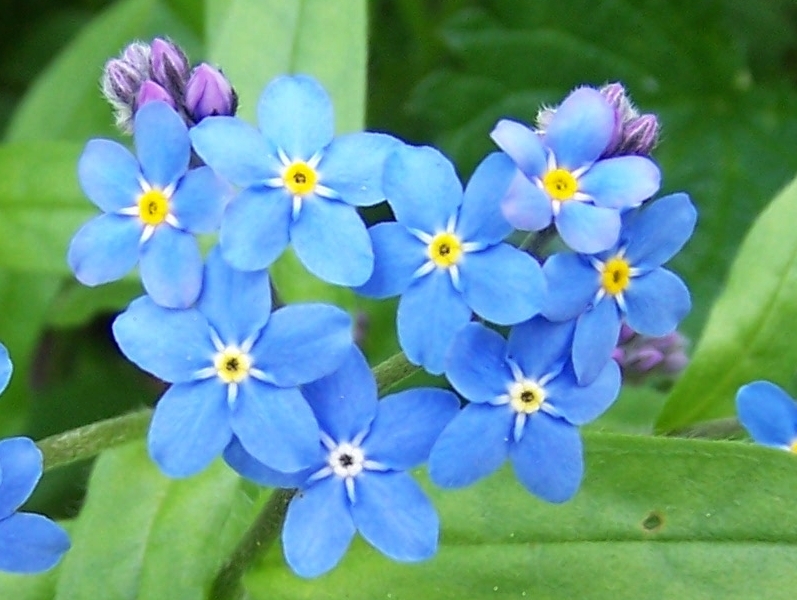
alien anytime. A more sinister strategy is used by the Blue Woodruff, but our
amateur spooks have discovered the security breach: it's a "bird-seed
alien", spread by contaminated bird seed placed in feeders by unsuspecting
British subjects.
Still, that does mean it can pop up *anywhere* near *you*. Have the Home
Department been informed about this, I wonder?
OK, this is definitely my kind of humour. Five stars! But no medal, unless you
catch that "Blue" Woodruff (it's really a red one, trust me). The
Russians can't cheat me they can't!
Tierra del Fuego is an archipelago off the southern coast of Patagonia,
divided between Chile and Argentina. "Flora of Tierra del Fuego" is a
serious, scholarly work by David M. Moore, who studied the plants of this
distant land for a considerable time. The book covers both the Pteridophyta
(ferns) and the Spermatophyta (seed plants, including flowering plants).
The book starts off with general chapters on Topography, Geology, Climate and
soils, Vegetation types and History of botanical exploration. The species
presentations are heavy with technical terms - this is obviously not a book for
the beginner or causal tourist. Yet, it could be used as an identification
guide, since it also include keys, black-and-white drawings and range maps. If
you ever visit Tierra del Fuego, don't forget to bring me Sisyrinchium
patagonicum, Philesia magellanica or Gavilea australis... ;-)
I give this guide to the plants at the end of the world four stars.
The full title of this green-covered book is "Ecological Studies 196.
Western North American Juniperus Communities. A Dynamic Vegetation Type".
It's edited by O.W. Van Auken. In the introduction, we learn that juniper
woodlands and savannahs in western North America are both extensive and
dynamic.
This volume contains research papers on this truly exciting vegetation type,
believed to be very sensitive and perhaps pivotal in understanding
global-change type phenomena, including droughts. All aspects of Juniperus are
covered later in the book, including patterns and causes of distribution, late
Pleistocene distribution, structure and composition of juniper communities and
factors that control them, the understory vegetation of juniper woodlands, the
role of mycorrhiza, ecological impact, management and conclusions.
Very technical, but probably a must if studying "dynamic vegetation
types" in the Wild West happens to be your idea of making a living.
This is the first volume of a “work in progress”, of
which only two volumes have been published so far. The ostensible goal of the
Flora Nordica project is to describe all species of vascular plants found in
the wild in the Nordic countries here defined as Sweden, Denmark, Norway,
Finland, Iceland, the Faroe Islands and Svalbard (Greenland is not included).
This volume comprises mosses, ferns and their allies, and gymnosperms. Flora
Nordica seems to “shadow” Nationalnyckeln, a similar and even more ambitious
project which has been discontinued due to lack of funding. In contrast to
Nationalnyckeln, with its lavish color illustrations, the Flora only contains
black-and-white illustrations, so we're dealing with a typical reference work
for professional botanists, not something for the general public. A curious
twist is that the work is in English, yet contains vernacular names in the
Nordic languages only! Probably a must have if you are a scientist specializing
in Scandinavian ferns or conifers, otherwise hardly worth the effort.
“Den nya nordiska floran” is Bo Mossberg's and Lennart
Stenberg's Über-flora for the Nordic countries, here defined as Scandinavia,
Finland, Iceland, the Faroe Islands and Svalbard. The flora is intended for the
general public, and all 3,250 species included seems to have been illustrated
in color. The flora covers seed plants plus ferns and their allies. It's a
wholly revised edition of “Den nordiska floran”, another mammoth work by the
same authors.
Bo Mossberg is a distinguished, award-winning illustrator. He has worked on
several “classical” Swedish floras. The illustrations in this particular work
took him about 15 years to complete, working full time! But yes, he did cheat a
bit, since the orchid section uses the same illustrations as an earlier book on
that specific group. Mossberg is so well known in Sweden that his name is
mentioned on the book cover before that of the actual writer, Lennart Stenberg,
a biologist and ex-chemist who headed the botanical department of the Swedish
Museum of Natural History when the flora was published.
The aim of “Den nya nordiska floran” is obviously to make a botany version of
Heinzel, Fitter and Parslow's detailed field guide to European birds, a guide
notorious for including virtually any vagrant birdie you're likely to encounter
anywhere between the Green Island and the Caspian Sea. Likewise, Mossberg's and
Stenberg's flora include not only indigenous Nordic plants, but also escapees
from gardens, or actual garden cultivars surviving at abandoned property lots!
Thus, the American purple pitcher plant grows at a few locations in Sweden
(including Gammelstorp at Blekinge) and has therefore been bestowed with a
full-size color illustration. Even the date palm has been included, since it
sprouts at garbage dumps in southern Sweden (the sprouts die at the onset of
winter). Just in case, species that are “previously known” from the Nordic area
has been included, too, such as the Russian rose “Rosa jundzillii”, since one
specimen was found at Stora Karlsö about 150 years ago. If you ever see it
again, you know who you gonna call!
Naturally, not even the Perfect Flora can include literally *all* species of seed plant (or fern) found on our distant shores. Thus, there are – wait for
it – 900 apomictic species of dandelions in Norden, hardly surprising since
this notorious weed apparently reproduces asexually (that's what “apomictic”
means), presumably cheating evolution in the process. Only a few dandelions
have been included, most of them eerily similar. The only exception is the cool
Arctic Dandelion which spouts white flowers and grows at Svalbard. OK, let me
guess. Mr Mossberg didn't want to spend 15 years (full time) painting
dandelions? He has my sympathy and understanding…
“Den nya nordiska floran” can
be found in well-stashed Swedish public libraries, and while it's too heavy to
bring out in the field (or to an abandoned property lot near you), it's
probably a must have for all serious plant collectors, nature romantics or
botany students.