Showing posts with label Waldemarsudde. Show all posts

Wednesday, June 7, 2023

A female art colony?


“Ljus över hav och land. Önningebykolonin på Åland” is a book and exhibition catalogue published by Waldemarsudde in Sweden. The publication year is 2022. Waldemarsudde is an art museum in Stockholm and the former domicile of Prince Eugen (1865-1947), who was a patron of painters and a painter himself. And yes, the “prince” is his actual title, Eugen being the son of King Oscar II. This particular book has no connection to Eugen´s artistic endeavors, however. Frankly, “Ljus över hav och land” is quite boring, unless extremely local landscape painting is your thing, the locale in question being Önningeby at Åland, or perhaps Åland in general. Late 19th century Åland, that is. Think peasant women working, peasant men working just as much, trees, windmills, coastlines, that kind of stuff.

Åland is an archipelago in the Baltic Sea. The population is Swedish, but Sweden lost Åland to Russia after a major war in 1808-1809. During the same conflict, Sweden also lost Finland to the Russians. Åland was administered as part of the so-called Grand Duchy of Finland until 1917, Finland of course being under Russian overlordship. When Finland became independent in 1917, Sweden wanted Åland back, but eventually the islands became a self-governing territory sorting under Finland, a status they still enjoy.

In 1886, an “art colony” was established at Önningeby, a farming village at Åland. Such “colonies” were apparently quite common all over Europe at the time, forming part of an emerging artistic subculture. Or perhaps demimonde? The colony lasted until 1914, when World War I broke out and the artists left in a hurry. Most members of the colony seem to have been Swedish painters from Finland (there is a Swedish-speaking minority in Finland), which is natural, since Åland´s farming population presumably only spoke Swedish. Most of the artists rented rooms or houses from the local peasants. The leaders of the colony were Victor Westerholm and his wife Hilma (who wasn´t a painter). Another prominent member was the Sweden-Swedish (to coin a phrase) J. A. G. Acke. What made the community unique among European art colonies was that the majority of its members were female, many of them painters in their own right.

I don´t think the articles in the exhibition catalogue are *that* good at explaining this peculiar state of affairs. As already noted, art colonies were an important part of the lifestyle and networking of a certain kind of late 19th century European painters. There must have been something counter-cultural about them, August Strindberg (the famous writer from Sweden) complaining about rank lesbianism when visiting a French art colony! Önningeby seems to have been much less raunchy, but it was still vaguely alternative since it offered female painters an opportunity to socialize, paint and sell their art. The usual norm at the time was that women were supposed to give up their educations and careers (if any) at marriage.

Other factors also contributed to the establishment of art colonies in the rural hinterland, such as new trends in painting itself, landscape and portrait painting becoming more realistic than before. There were also more or less explicit nationalist sentiments at work, the painters perhaps trying to find something “authentically national”. This kind of art colonies apparently disappeared with the advent of so-called modernism in art, since the modernists extolled the city over the countryside, and weren´t interested in artistic realism anyway. Still, counter-cultural communes certainly continued to exist even after World War I, so perhaps the authors´ perspective is a bit narrow here?

All that being said, “Ljus över hav och land” is mostly just an art book with Åland-related landscape and portrait paintings (and some still lifes thrown in for good measure). Good if you are an Ålandese local patriot, I suppose.

Tuesday, December 24, 2019

The Pre-Raphaelites go North


“Edward Burne-Jones: Prerafaeliterna och Norden” is both a book and an exhibition catalogue, the exhibition in question being an ongoing one at Prins Eugens Waldemarsudde, an art museum in Stockholm named after Eugen Napoleon Nikolaus, a Swedish prince and painter. The catalogue is bilingual, with the English pieces in the back and with smaller print. While Prince Eugen did meet the famous British artist Edward Burne-Jones, the connection between the latter and Sweden seems almost non-existent, making a huge portion of the book deal with the Arts and Crafts movement around William Morris instead (Morris was, of course, a friend and associate of Burne-Jones).

Edward Burne-Jones (1833-1898) was a member of the Pre-Raphaelite Brotherhood and a student of its founder, Dante Gabriel Rossetti. The Pre-Raphaelites aimed to revolutionize British artistic life with their Renaissance and medievalist retro style of painting. Many of their works showed a mysterious red-haired lady (actually Jane Morris, the wife of William Morris) who has become almost iconic. Burne-Jones seems to have embodied the contradictions of the 19th century counter-culture almost to a t, being inspired by the High Church Oxford Movement while having contacts with utopian socialist William Morris, who in turn was inspired by national romanticism in both high medieval and Norse forms. Despite his “old fashioned” and mysterious style of painting, Burne-Jones´ artistic ideal was actually intensely democratic. Art should be popular and available to all. The decorative arts should be elevated to the same high level as fine pictorial arts. Apart from painting, Burne-Jones worked with relief sculpture, designing for stained glass, tapestry, embroidery, mosaic, ceramic, book illustrations and jewelry – a conscious way to break with the idea that some art forms were “higher” and some “lower”. Apart from being a Pre-Raphaelite painter, Edward Burne-Jones was an Arts and Crafts pioneer and a forerunner of international Symbolism.

As already indicated, Burne-Jones wasn´t really interested in the Nordic countries and their traditions, being more keen on Italy and Chaucer. Only a few of his artistic pieces show Norse motifs. It was William Morris who was the great Norse-phile, although Burne-Jones did accompany his friend on a trip to Iceland, even drawing a funny picture of a slightly obese Morris trying to climb an Icelandic mountain! And while Burne-Jones did like Wagner´s operas, he was more interested in their depiction of grail knights than their Nordic trolls and dragons. Prince Eugen met both Edward Burne-Jones and Everett Millais in London, but he preferred the artistic work and company of Symbolist painter George Frederic Watts. The main conduit of Pre-Raphaelite and Arts & Crafts influence in Scandinavia was Walter Crane. In Norway, Gerhard Munthe became the main Arts and Crafts promoter, famous for his illustrated edition of the “Heimskringla”. The painter Frida Hansen is considered more of a pure Pre-Raphaelite, due to her ethereal and spiritual style. In Sweden, Ellen Key, Elsa Beskow and the art shop Sub Rosa are associated with Arts and Crafts.

A weird facet of the catalogue is that it tries to connect the Pre-Raphaelites with fantasy fiction, including “A Game of Thrones”, and with non-binary gender identities. This is obviously a flirtation with contemporary pop culture and social agendas. It´s never followed up with any analysis anywhere in the catalogue – something of a pity, really, since many of the characters in Burne-Jones´ paintings *are* weirdly androgynous. 

And yes, I did visit the exhibition…


Sunday, June 30, 2019

From Duce to decadence: the strange tale of the Tyresö Palace


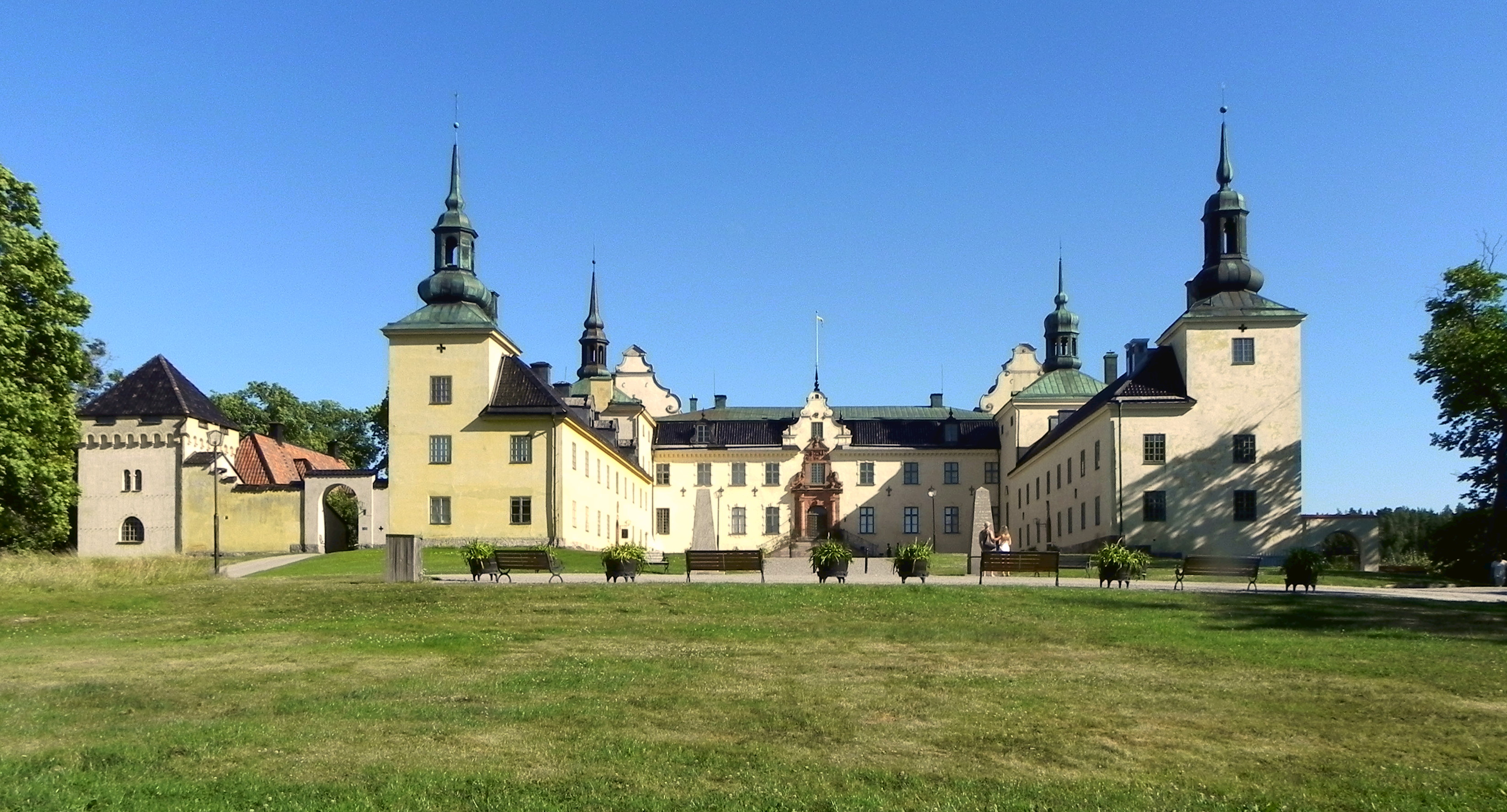
“Tyresö Palace – Nordic Museum”, published in 2016, is a tourist guide to Tyresö Slott in Stockholm, Sweden, and its immediate surroundings. Since 1932, the palace belongs to the Nordic Museum, founded by 19th century ethnographer Artur Hazelius (who also created Skansen). I recently visited and found it…strange. The last owner had a weird obsession with Marie Antoinette, the 18th century French queen executed during the French Revolution. If you want to see 20+ portraits of said Marie Antoinette, Tyresö Palace is definitely the place for you! Yes, one little engraving even shows her execution at the hands of the evil revolutionaries. There are also many portraits of Catholic popes and cardinals, and one photo of Mussolini. Yes, *that* Mussolini.

Clearly, not what you expect to find at a Swedish “palace” (I suspect a British lord would refer to the premises as “manor”)!

I was glad that I picked up this little book at a bookstore in nearby Tyresö Centrum, since it explains a thing or two. The palace was originally built during the Swedish “Great Power period”, and belonged to the ultra-illustrious Oxenstierna and De La Gardie families. Often, it was inherited on the female line (strange, I´ve been told by my politically correct teacher that Swedish women didn´t have inheritance rights until the late 1800´s, Muslim women of course getting them already under Muhammad). The palace has been rebuilt so many times that it´s not *really* a 17th century building anymore, rather it´s a bewildering and eclectic combination of many different Revival styles. I have no idea what they are called, but I suppose we could call them Neo-Renaissance, Neo-Romanesque and Neo-Gustavian. The Rococo interiors are real, though (including a Chinese tapestry). And yes, the present look of the palace is due to American wealth!

The last owner of Tyresö slott, Claes Lagergren, was a late 19th century Swedish businessman of farmer stock (well-to-do farmers, presumably). He was something of a maverick, had a fascination with the old European aristocracy, and converted to Roman Catholicism during a visit to Rome in 1880. This was at a time when most Swedes still considered Catholicism politically and religiously suspect, Sweden being a Protestant nation (with growing pockets of secularism here and there). Lagergren become papal chamberlain (!) in 1884, and five years later Pope Leo XIII officially ennobled him, giving him the title of marquis. Serving as a kind of diplomat between the Vatican and Sweden (this was before the Vatican became a soverign state), he also supported the Bridgettine Order of Elisabeth Hasselblad. His money made it possible for the Bridgettines to acquire Saint Bridget´s old house at Piazza Farnese in Rome. This of course explains both the Catholic portraits at Tyresö Palace (including of Saint Bridget or Birgitta, the famous Swedish 14th century mystic who moved to Rome) and the infatuation with the French aristocracy. The only known portrait painting of 16th century pro-Catholic Swedish king Johan III actually painted during the king´s lifetime also hangs at the palace, Lagergren apparently acquiring it in Rome.

Did I say “his” money? Well, not entirely his money…

In 1891, Lagergren married a super-rich American, Caroline Russell (later Caroline Lagergren), a member of a prominent New York business family with interests in banking, shipping and railway transport. It was thanks to her money that the Lagergrens could acquire Tyresö Palace and the enormous estate surrounding it. The restoration and/or rebuilding of the palace were also made possible by Caroline´s substantial wealth. Claes Lagergren´s newly minted aristocratic title gave the couple access to the Swedish crème-de-la-crème, including Prince Eugen who periodically lived at their estate and even established an artists´ colony there. (Eugen was a “Symbolist” painter otherwise mostly known for his connection to Waldemarsudde.) After Caroline´s death, Claes married another rich American, which enabled him to continue the lavish lifestyle. The palace was bequeathed to the Nordic Museum at Lagergren´s death in 1930 (officially taken over two years later).

One thing that struck me when visiting Tyresö slott was the (fairly typical) combination of ultra-conservatism and decadence. Lagergren was on a friendly basis with the painters around Eugen, including Anders Zorn (something not mentioned in the info booklet). Zorn, notorious for his paintings of nude women, was apparently something of a pornographer in private as well, telling lewd stories in drunken condition at Lagergren´s dinner parties, after having first tasted roasted peacock (the favorite dish of the marquis). It sounds weird that a papal chamberlain and admirer of Duce would have a guy like this over for dinner, but there you go! It´s also interesting to note that a huge portrait of Madame Le Pompadour adorns one of the many walls of the palace…

“Tyresö Palace – Nordic Museum” also contains information about a very different world: that of the peasants and servants working at the estate. Many of the peasants were crofters, and all of them seem to have been dirt poor, or nearly so, living in run-down houses literally infested with bugs. Once Caroline came down to a peasant who had just given birth, giving her some blankets – something unprecedented at the time. It seems the marquis missed the social encyclical of Leo XIII.

With that, I end this little blog post.

Thursday, September 27, 2018

Symbolism and nationalism


“Symbolism och dekadens” is a catalogue from an art exhibition held in Sweden between 19 Sep 2015 and 24 Jan 2016 at Prins Eugens Waldemarsudde in Stockholm. The theme: Swedish, Finnish and Latvian Symbolism. The point of the exhibition was to emphasize the connection between Symbolism (a late 19th century international art movement centered on Paris) and Swedish, Finnish or Latvian national romanticism. Many artworks considered “national romantic” should really be seen as expressions of Symbolism. Prince Eugen, the Swedish royalty and painter after whom Prins Eugens Waldemarsudde is named, had a Symbolist period himself.

Symbolism is notoriously hard to define, and the painters (or poets, or authors) who claimed the Symbolist mantle never developed a common style. Indeed, this was one of the points of this school of thought, which called on each painter to search within himself (or at least outside mundane reality) for inspiration. Dreams, the subconscious, mysticism, darkness, death – all could be mined by the painter, seen as a prophetic figure towering high above the uncomprehending hoi polloi. The reaction against “realism” in painting led many Symbolists to explore fairytales, myths and wild nature. Here, a connection with nationalist revivalism becomes obvious.

I have to say that I didn't find the essays in this volume *that* interesting, but the paintings are excellent. I didn't see much of them during the actual exhibition – to conjure a “mystical” atmosphere, the exhibition halls were very dark, which gave me a rather nasty headache! There is also a final chapter on sculpture and design. Only available in Swedish.