Showing posts with label Ants. Show all posts

Saturday, March 14, 2026

Dude


Credit: Shree Ganesh

A propos two previous blog posts. God loves bizarre ants. Adjust your theological speculations accordingly. We will now resume our regular broadcast. Thank you. 

Friday, March 13, 2026

Xenoparity


Biggest science news of the decade, nay, century? Not even sure if I understand this. 

Apparently, the Iberian harvester ant (Messor ibericus) has a very peculiar life cycle. For some reason, mating between "normal" males and queens can´t produce workers, only other males and queens. The queens therefore have to mate with males from a *completely different ant species* in order to produce hybrid workers. This other species is known as Messor structor. This is apparently considered a form of parasitism, presumably because the sperm of M. structor is effectively "stolen" by the M. ibericus queens to produce infertile workers for ibericus colonies.

Unexpectedly, colonies of the Iberian harvester ant have hybrid workers even in areas where there are no Messor structor ants, including at islands. This is where it gets weird. Really weird. Scientists have apparently found structor males inside ibericus nests even in areas where structor simply doesn´t appear in the wild?! Further research suggests that Messor ibericus queens can "clone" Messor structor males. Yes: ants of one species can have offspring of an entirely different species!

WTF?!

It´s not clear to me whether the Iberian queen mates with her own offspring in truly incestuous fashion to produce the workers, or whether another queen gets the honor, but the point is that there seems to be an entire "slave race" within the Iberian colonies, a "clonal lineage" of structor males bred for the sole purpose to father the hybrid worker-caste and then die. 

Nor is it clear to me how this could even work. I assume the sperm of Messor structor must have been "harvested" at some point in the distant past (perhaps thousands of years ago) and is now passed on somehow by the Messor ibericus queens. Which makes me wonder for how long this can continue, if the sperm deteriorates, and so on. Frankly, I had to read this stuff about five times before I got *some* kind of inkling about what on earth these guys are even talking about!

But yes, it does sound like science fiction. Especially since the two relevant species aren´t even closely related, having diverged evolutionarily about five million years ago. But perhaps what´s five million years to Man is only one day to Ant?    

Almost like science fiction: European ant "clones" members of another species

One mother for two species (the original scientific paper)

On a planet alien


Japanese scientists found a bizarre species of ant (bizarre *even* for ants, that is) which consist entirely of parasitic queens which reproduce by virgin birth ("cloning") and then hijack colonies of other ant species. Again: welcome to planet Earth, visitor! Where every ant is a queen...

Every ant is a queen in this parasitic species


Tuesday, December 16, 2025

Back to Godhead


Since totemism is "the world´s oldest religion", I semi-seriously wonder what´s my spirit-animal? And yes, I´m aware that totems and spirit-animals aren´t the same thing. But I can´t really contact my tribal ancestors 250,000 years ago, can I now?

I´ve always found magpies to be somewhat sympathetic (don´t tweet at me, bruh) so I suppose Pica pica pica might be it, I mean that Latin name is hilarious! And yes, it simply means "magpie magpie magpie". 

Another possibility is the black swan, since it´s a good symbol for sudden and unexpected spiritual enlightenment. You know, a black swan event. 

I´m somewhat partial to ants and termites, too...


Monday, December 15, 2025

Bird brains disprove materialism


Scientists have finally started to use "the brains God gave geese" and realized that (non-human) animals are - wait for it - conscious?! I mean, maaaan, who knew? Or was it *self*-conscious? Same thing.

No surprise there. But thanks for noticing, I suppose. What´s more intriguing is that different kinds of brains can give rise to the same kind of (self)-consciousness. Brainy creatures mentioned in the video above include humans, birds (and not just the inevitable corvids), crocs and even ants. 

So how can entirely distinct kinds of physical structures cause animals to be equally conscious? Please don´t tell the Idealists, LOL. 

Therefore God. 

Tuesday, August 5, 2025

Ants can dream


So I asked the AI about some strange claims I encountered lately...

Is it true that ants can dream (rapid antenna movement)? Is it true that ants have self-awareness (the ant with a blue dot on his head which looked at his reflection in a mirror and realized that it was a dot on *his* head and tried to remove it)?

These are fascinating questions, and both refer to real scientific observations—but the conclusions people draw from them are debated. Here's a breakdown of each claim:


💤 1. Do Ants Dream? (Rapid Antenna Movement = REM?)

Claim:

Ants show rapid antenna movement (RAM) during rest, which some researchers have compared to REM sleep in mammals, potentially indicating dreaming.

What’s Actually Known:

  • 2022 study on carpenter ants (Camponotus mus) found they experience two distinct sleep-like states during rest:

    1. One state of immobility,

    2. Another involving rapid antenna movement (RAM) and twitching.

  • This is analogous to REM sleep, which is associated with dreaming in mammals.

Is it dreaming?

  • No direct evidence shows that ants have dreams or inner mental experiences.

  • RAM might serve other purposes (e.g., memory consolidation, sensory processing).

  • Dreaming requires a complex internal model of the world, which it's not clear ants have.

✅ Conclusion:

  • Interesting finding, but saying ants "dream" is speculative.

  • The behavior resembles aspects of REM sleep but doesn't prove subjective dreaming.


🪞 2. Do Ants Have Self-Awareness? (Mirror Test with Blue Dot)

Claim:

A study found that an ant marked with a blue dot on its head looked in a mirror and tried to remove the dot—suggesting self-recognition and perhaps self-awareness.

What’s Actually Known:

  • In 2019, a paper by Edwardo Gallup and colleagues (not to be confused with the mirror test's originator, Gordon Gallup) described mirror test experiments with ants (specifically Camponotus floridanus).

  • Ants with a visible mark (like a blue dot) tried to touch or clean the marked area only when a mirror was present.

  • This behavior was not observed in unmarked ants or ants with invisible marks.

🧠 Interpretation:

  • Some interpreted this as passing the mirror test, which is often used as a proxy for self-awareness in animals (e.g., great apes, dolphins, elephants).

  • However, many scientists are skeptical:

    • Ants might be using visual cues from the mirror in a non-self-reflective way.

    • The mirror might simply be treated as part of the environment, not as a reflection of the self.

    • Ants have very different neural architecture from vertebrates, raising questions about how “self” would even operate.

✅ Conclusion:

  • The behavior is intriguing and unusual for an insect.

  • But it's controversial to claim ants are self-aware—most scientists remain cautious or skeptical.

  • The mirror test itself has been criticized as species-biased and not a definitive indicator of self-awareness.


🧾 Bottom Line:

ClaimVerdictNotes
Ants dream (via RAM)🟡 SpeculativeBehavior suggests sleep states, but dreaming is unproven.
Ants have self-awareness (mirror test)🔴 Controversial / UnprovenThe blue-dot study is interesting but far from conclusive.

Ants are remarkably sophisticated for their size—capable of learning, memory, communication, and even complex social structures—but equating their behavior with human-like consciousness or self-awareness is still a big leap.

If you're curious, I can also compare ants to other animals that show similar borderline traits (like octopuses, bees, or magpies).

Saturday, May 3, 2025

The imperial overreach of ants


I can´t get the Argentine ants out of my mind, I mean, *have* they taken over...the world or something?! And right under our very noses, they did! Rather than try to find a scientific paper on the topic, I lazily asked the All-Knowing LLM about it. And it was actually somewhat reassuring. It seems Linepithema may be suffering from imperial overreach... 

Is it true that most Argentine ants in the whole world belong to the same super-colony, or is this an over-simplification?

Yes, it’s basically true—but with important caveats.

🐜 The Claim:

Most Argentine ants (Linepithema humile) outside their native range belong to a single, vast "supercolony" in terms of genetic relatedness and behavioral cooperation—sometimes described as the largest cooperative unit in the animal kingdom.

✅ What's True:

  1. Global Spread from a Single Origin:

    • Argentine ants are native to South America (mainly around northern Argentina, Uruguay, and southern Brazil).

    • When introduced abroad (via human trade in the 19th century), they underwent a genetic bottleneck—reducing their genetic diversity.

    • Invasive populations in North America, Europe, Japan, Australia, etc., are genetically similar and often do not fight each other, even across vast distances.

  2. Lack of Intra-Colony Aggression:

    • In their native range, different nests often fight fiercely.

    • In invaded regions, ants from distant nests (e.g., San Diego and San Francisco) accept each other as nestmates.

    • This has led scientists to refer to these populations as a “supercolony.”

  3. The "Main" Supercolony:

    • One especially well-studied group—called the "Californian supercolony"—is genetically indistinguishable from populations in Europe and Japan.

    • These ants do not recognize each other as foreign and cooperate across continents (in lab tests), suggesting a shared ancestry and compatible chemical cues.


❗But Here's the Nuance:

  1. Not All Argentine Ants Belong to One Supercolony:

    • Other distinct supercolonies exist, even within the same geographic area (e.g., in Europe and California).

    • These do fight each other—so the idea of one global ant empire is an oversimplification.

    • Even within a country, there can be multiple rival supercolonies with clear boundaries.

  2. "Supercolony" is a Behavioral Category:

    • It's not a taxonomic or ecological term, but a way to describe highly cooperative, genetically similar nests.

    • Cooperation doesn’t mean coordination like bees—these are massive, decentralized networks of nests and foragers that tolerate each other.

  3. Evolutionary Fragility:

    • Because of low genetic diversity, invasive Argentine ants are vulnerable to disease or environmental change.

    • Their success is tied to human-disturbed environments; they may not remain dominant in the long term.


🧬 Summary

  • True: Many Argentine ants outside their native range are genetically similar and form cooperative supercolonies, with no aggression across huge distances.

  • ⚠️ Oversimplified: There is not just one single supercolony globally—there are several, and they can compete.

  • 🧠 Cool fact: Ants from the California and European supercolonies recognize each other as friendly despite being 8,000+ km apart.

Would you like a diagram or map showing where the major Argentine ant supercolonies are located? 

Thursday, August 22, 2024

If evolution is true, why are there still humans?


An evolutionary impossibility?

Some lighter bedtime reading (my time) on the theme "we are not the crown of creation". Note the bizarre information about octopi! Note also the interview with Dougal Dixon, whose book "After Man" was one of my favorite bedtime readings when I was much younger...

Does evolution ever go backward? 

Why haven´t all primates evolved into humans?

When humans are gone

Sunday, September 17, 2023

The fire ant next time

- Have you heard of the invasive fire ant?
It recently established itself on Sicily!
- Oh, I know, but I´m more interested in
Chinese spy balloons!

 A new problem in the wake of the climate crisis. Yes, it´s the world´s worst ant species, coming right at ya! 

Sunday, October 23, 2022

I solved Fermi´s paradox, guys


Previously posted on July 20, 2019.

There are two obvious solutions to Fermi´s paradox, and the reason why the matter hasn´t been put to rest is simply that both answers are intolerable to Modern Man and his belief in Eternal Progress, or rather a very specific view of Eternal Progress.


The first obvious answer is the Rare Earth hypothesis. We really are alone, and we are alone *not* because all civilizations go through a human-like history and eventually destroy themselves in a human-like nuclear war (a typical 1970´s anthropocentric conceit), but because multi-cellular life, or perhaps life as such, only emerged once in the entire universe – here on the third rock from the Sun. I´m not sure why this scenario is so intolerable to so many. Asimov has it, and in his novels, humans eventually conquer the entire galaxy because of it. I mean, there is no one to stop us! It´s almost as if the believers in eternal progress want there to be advanced alien civilizations as a kind of guarantee that we will once reach that stage, too. And a secret wish to fall down and worship the aliens…?

The second obvious answer is that the universe is *teeming* with life, including advanced life, yes, including advanced intelligent life…but most of it is unable to or even uninterested in developing our kind of advanced technology, let alone fly around in space. (If you believe in the supernatural, you could even argue that most life is clever enough to avoid this shitty universe, much preferring the astral delights of some spirit-dimension.) Humans aren´t the only intelligent species on Earth. What about chimpanzees, whales, ravens, or even octopi? Let´s assume whales or octopi evolve for another 100 million years or so. What makes us think they can´t become smarter? And why must this necessarily entail leaving the sea, becoming bipedal and have opposable thumbs? “Because that is the only way we can create a civilization”. No, it isn´t. What makes us think the only way to create a civilization is the human way? What makes us think a species with whale-derived intelligence would want to make the things humans are making? Come to think of it, even creatures driven by pure instinct can create something eerily resembling a civilization. Yes, I´m thinking of ants, which did it millions of years before humans even existed.

And that´s just one planet…

Imagine what weird and wonderful creatures could evolve at other planets. Once again: what makes us think they would be interested in communicating with other star systems (or conquering them), rather than studying the notochord, the immortality of the common cockchafer, or what have you. If they evolved differently from us, they might not even *need* to create a high technology civilization that emits radio waves. That´s something we have to do because we (or many of us, at any rate) wouldn´t survive without one. Other species might not need this kind of jerry-rigged contraption.

Believers in the very specific kind of progress which entails going to the stars can come up with some pretty bizarre scenarios “solving” Fermi´s paradox. Thus, one prominent atheist (who is otherwise a very smart guy) claims that the aliens must be hiding in the empty space in between star systems (that´s why we can´t see them) constantly hooked up to a virtual reality more interesting than our galaxy (that´s why they don´t bother with humans). Analyzing the Bayesian probability for this might be interesting, even apart from the fact that it sounds almost religious…

Next week, your favorite blogger will solve Euthyphro´s dilemma and the theodicy problem. End of transmission.

Monday, July 18, 2022

Welcome to Europe

Credit: Bubba73

Four species of fire ants are apparently regarded as "invasive species" in Europe. Another thing to worry about...

Monday, January 3, 2022

Madagascar mystery


This one is hard to believe...

A species of ant in Madagascar apparently lives in a kind of symbiosis with a snake, more specifically a snake that eats ant-eating snakes! This weird relationship was then misinterpreted by the natives and turned into a mythological story about "snake-eating ants". 

The world, agent Cooper, is a strange and wonderful place.

Madagascar´s snake-eating ants: Forgotten fable or fascinating fact?

Friday, July 16, 2021

Insectoid aliens?


Some fascinating speculations in this one. The claim that some UFOs are "simply" insect swarms may sound like a typical armchair skeptic debunking, but as cryptozoologist Karl Shuker demonstrates here, there is nothing simple about it. It seems that some insects can glow due to electrical discharges in the air after thunderstorms! 

I´m not sure whether this has been scientifically proven, but it certainly sounds as an interesting addition to the "natural but really weird" kind of explanations for supposedly paranormal phenomena. So the next time you see a glowing flying disc in the sky during a forest foraging foray, it might actually be an enormous aggregation of ants or moths! 

Nature has never been more strange... 

UFO-logical encounters of the insect kind?

Saturday, July 3, 2021

This week in pantheism

Celebrating 50 million years of evolution!

A very, very bizarre discovery. 50 million years ago, carpenter ants were plagued by peculiar parasitic fungi literally growing out of their tiny little asses. They still are, apparently. That´s "evolution" for you, right there. A 50 million saga of rectum parasitism. Must be a very succesful occupation, since natural selection never weeded it out! Also, another good argument against pantheism. If you are a pantheist, this is your god, full stop, end of story.  
Peculiar parasitic fungus discovered

Wednesday, November 11, 2020

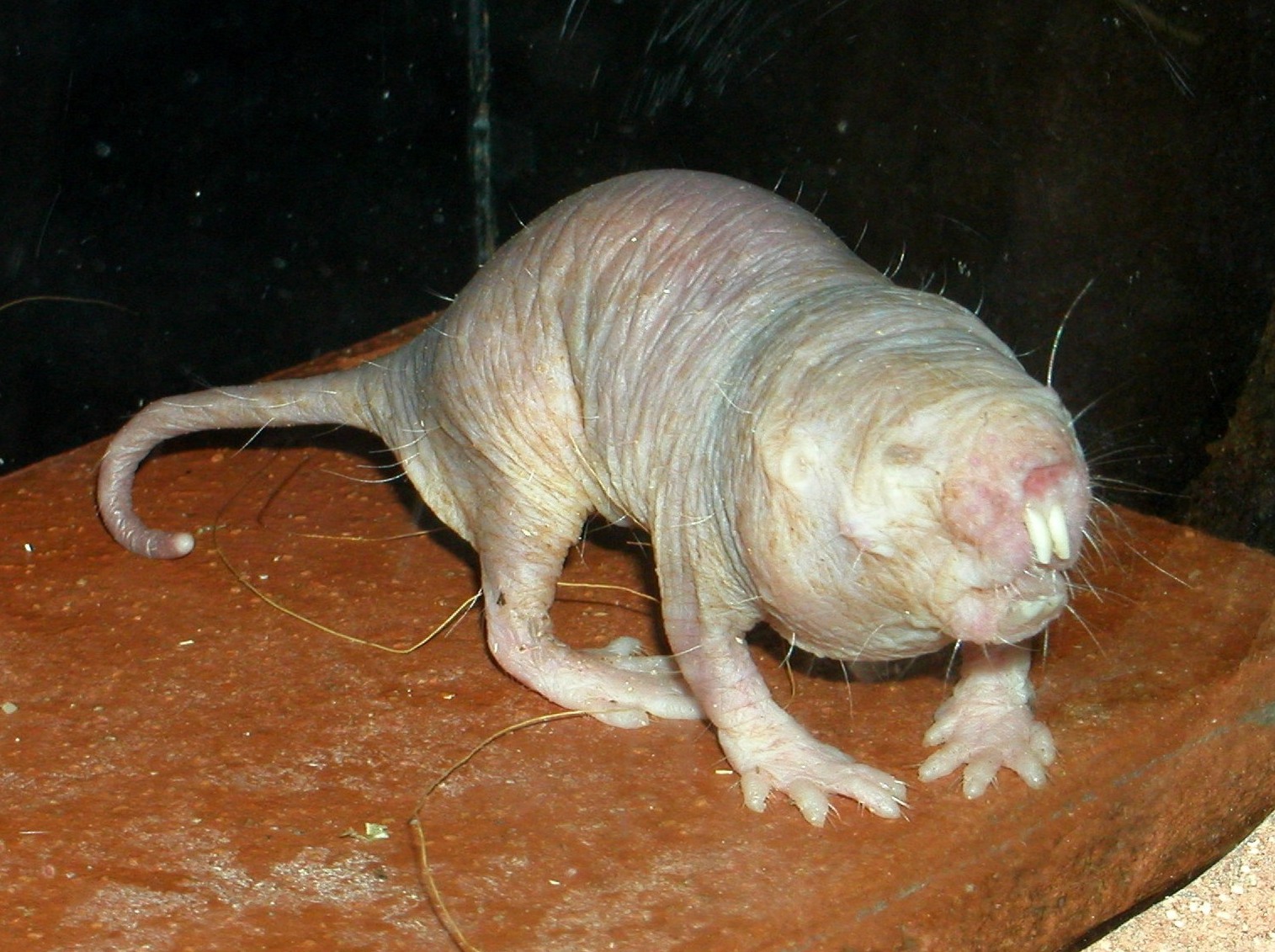
Monster of the Week (3): Literally mole-rat


The naked mole-rat is literally the most bizarre mammal in the world. Imagine a rodent living in ant-like colonies! Wtf?! 

But then, I suppose commuters in New York City often get the same feeling...

Naked mole-rats kidnap each other's babies, and turn them into slaves


Saturday, August 15, 2020

Tidlösans bekännelser (del 6)

Är människan "skapelsens krona" eller evolutionens mål? Det verkar faktiskt inte särskilt troligt. Visst är människan oerhört komplex, men är hon egentligen mer komplex än andra levande organismer? Jag tror att komplexitet alltid har funnits. Ju mer vi lär oss om naturen, desto mer komplexa verkar även "primitiva" organismer vara!

Men hur är det med människans intelligens? Är inte den oerhört komplex? Jag trodde länge på detta, men har börjat misstänka att påståendet är både antropocentriskt och antropomorfiskt. Vad är det som säger att människan är den enda intelligenta arten? Schimpanser, korpar, elefanter, valar och åttaarmade bläckfiskar är också intelligenta. Och vad är det som säger att intelligens måste se mänsklig ut för att räknas? En del forskning tyder på att träd har ett slags intelligens (även om forskarna kanske undviker begreppet). Det skulle inte alls förvåna mig om hela biosfären på något sätt är medveten och intelligent!

Men i så fall är människan inte så unik som vi tror. Jag har tidigare ironiskt påpekat att myror kan göra mycket av det som anses "unikt" för människan, exempelvis bedriva jordbruk och hålla boskap, och dessutom på ren instinkt! Visst, människor har vetenskap, filosofi, religion och estetik, men än sedan då? Vetenskapen fungerar inte, och vi har ingen aning om vilken religion eller filosofi som är sann (att döma av den moderna konsten vet vi inte vilken estetik som är vackrast, heller).

Tanken att människans "kreativa" intelligens inte är den enda möjliga, förklarar förresten Fermis paradox. Paradoxen är olöslig om den tolkas antropocentriskt.

Men om inte ens människans komplexitet och intelligens är unika, blir det svårt att hävda att vi skulle vara utvecklingens "mål". Vi är bara ännu en krusning på livets stora ocean...

Om man har en "övernaturlig" världsbild som innefattar allt från änglar och djävlar till älvor och aliens, blir det ännu svårare att hävda att Homo sapiens L skulle vara själva poängen med exercisen!


Monday, May 25, 2020

The god species


This is a funny video clip for school children (well, at least I *hope* it is intended for a younger demographic). I found it by accident the other day and realized that it clears up a really weird statement on Wiki about Argentine ants having created a super-colony that spans the entire world! Er, what? Wiki is clearly suffering from some kind of derangement syndrome, so thank god we have this little children channel readily accesible on our I-pods. 

It seems most Argentine ants outside Argentina *do* belong to a global super-colony, due to the fact that they are descended from a small number of genetically similar queens. This is apparently unprecedented even among ants. 

Let alone humans...

The social conquest of the Earth already happened. The catch is it wasn´t Homo deus, but Linepithema humile. 

Linepithema humile deus. 

Sunday, April 12, 2020

Australia with a twist


"Tasmania: Weird and Wonderful" is a fascinating nature documentary narrated by David Attenborough. It´s presently available at YouTube. Many of the species on the island are similar to those on the Australian mainland, but their size and behavior often differ markedly. The local platypus is much larger than its mainland form, there is a thriving population of mutant white wallabies, and the Tasmanian giant lobster takes 40 years to grow to a size of one meter. By contrast, the local penguins are diminutive (and nocturnal, to avoid being attacked by hungry gulls). There is also the dangerous "jack jumper ant", a large ant that can jump and the venom of which can on rare occasions kill humans! 

Of course, the main character is the so-called Tasmanian Devil (a marsupial mammal), with its bizarre calls and equally weird habits. For starters, the Devils are scavangers. I´m not even going to comment on their mating rituals! Western Tasmania has a climate almost the exact opposite of Eastern Tasmania. The western part is humid - in fact, it rains most of the year, while the eastern section is extremely dry.

The most fascinating organism mentioned in the documentary is Mountain Ash, really a species of eucalyptus tree (Eucalyptus regnans). The tree reproduces in a curious manner: its seeds are only released during bush fires, which may kill all other plants (including the Mountain Ash itself), but make it possible for the seedlings to sprout and grow without competition. But in western Tasmania, bush fires are rare due to the constant rains. Therefore, the eucalyptus trees simply continue growing - in one area of the island, all trees are 400 years old and reach a hight of 100 meters! In effect, this means that the latest bush fire took place at some point during around the year 1600... 

One species never shown in this production is our very own Homo sapiens. The viewer gets the impression that Tasmania is pure and pristine wilderness. Actually, the island is an Australian state, the home of about half a milliion people, and an economy partially based on mining and logging. And yes, the White settlers completely exterminated the local Aborigines during the 1830´s. Somehow, I feel that needs to pointed out for context.

That being said, "Tasmania: Weird and Wonderful" nevertheless deserves a closer look or two. This really is Australia with a twist.