Brian Oliver Sheppard's book "Anarchim vs.
primitivism" is an attack on anarcho-primitivism or neo-primitivism,
written from an anarcho-syndicalist perspective. The primitivists are a current
within the anarchist milieu which argues that abolishing the state and
capitalism isn't enough. They also want to abolish most or all technology, and
move society back to a pre-industrial stage. The most extreme primitivist, John
Zerzan, wants to go all the way back to the Palaeolithic and perhaps the
Neanderthals. More moderate primitivists are apparently ready to settle for a
libertarian version of the Iron Age or the Middle Ages.
The more "main line" anarchists write blistering attacks on
primitivism with a regularity I find perplexing. Murray Bookchin did it all the
time, Chaz Bufe did it too, and now comes Sheppard. One wonders why? The only
possible reason is that primitivists and regular anarchists (including
anarcho-syndicalists) belong to the same social milieu. This is richly ironic,
since the anarcho-syndicalists in particular claim to be oriented to the labour
unions and the working class. If so, why bother attacking people like John
Zerzan, who most workers or left-wing activists have never even heard of? I've
heard of anarcho-primitivism, but that's only because I've read Bufe decades
ago!
[SOME GENERAL PROBLEMS WITH THE PAMPHLET]
Personally, I'm neither a classical anarchist nor a primitivist. I suppose most
anarchists would consider me an unregenerate statist. (They are right!) Still,
I must say that Sheppard's criticism of primitivism is rather weak. While
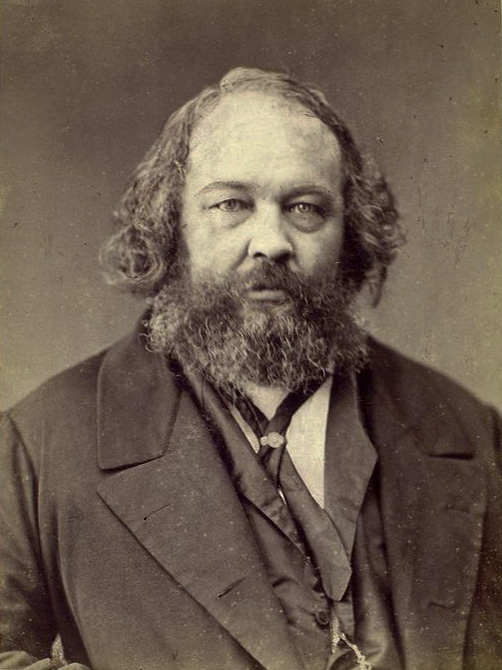
Proudhon, Bakunin and Krapotkin weren't primitivists, their emphasis on
decentralization, the peasantry, artisans and local mutual aid does reflect a
very early version of industrialism, rather than the full blown version
reflected by Marxism and certain forms of syndicalism. Thus, the
anarcho-primitivists aren't completely out on a limb when attempting to fuse
classical anarchism with eco-radicalism. Sheppard further attacks Dave Foreman
and Theodore Kaczynski (the Unabomber), but they aren't anarcho-primitivists.
Both are more "right wing", especially Kaczynski. Foreman, despite
his action antics, might not even be particularly radical.
The author's main argument against primitivism is that affluent, modern
Westerners don't want to give up their technology. Well, obviously not, but so
what? The real question isn't what anybody "wants", but what is
actually needed to solve the ecological crisis. Another main argument is that
primitivism, if implemented, would lead to the death of billions. While this is
certainly true, once again, it misses the point. The real question is whether
or not overpopulation is a problem. The author tries to have it both ways,
sometimes arguing that it isn't, sometimes proposing various ways to fight
overpopulation, for instance by getting rid of natalist religion, giving people
access to free contraceptives, etc. Sheppard also loves poiting out that the
primitivists don't live as they learn. Thus, Zerzan watches TV, Fifth Estate
use computers and Green Anarchist use the web. But the personal hypocrisy or
contradictions of the primitivists don't necessarily invalidate their critique
of modern civilization. I don't eat organic carrots, nor do I drink rain water,
but what does that say about the reality of climate change or the need for
organic agriculture? Not much, either way. I eat a lot of candy, too, which
would make any moralistic preaching on diabetes from my part somewhat comic,
but that doesn't mean diabetes isn't a threat, especially if you do eat a lot
of candy...
Sheppard's arguments against the primitivists are based on a kind of
middle-class populist "common sense", but these kinds of arguments
can be used against anarcho-syndicalism, as well!
[PRIMITIVE PEOPLES]
Sheppard's attacks on the cultures of primitive peoples aren't convincing
either. He confuses the Palaeolithic and Neolithic with pre-industrial but
hierarchic societies in the Americas at the time of the conquista, even
mentioning the Aztecs and the Incas. In passing, he shows his true colours (?)
on the woman question: "Iroquois women, for example, made most of the
important decisions in their society. (A matriarchal society, it is important
to remember, is still of course a hierarchical society.)" Now, we can't
have that, can we? For all we know, most or many Palaeolithic and Neolithic
cultures were indeed egalitarian and peaceful. Since they were stateless
cultures, it's strange that an anarchist like Sheppard rejects them out of
hand. (As an unregenerate statist, I'm equally fascinated by the egalitarian,
peaceful high culture of the Indus Valley, and the presumably peaceful but
hierarchic high cultures of Norte Chico and Minoan Crete.)
[THE ABOLITION OF WORK]
At one point, Sheppard makes fun of the anarcho-primitivist notion that
"work" can be abolished in a non-technological society: "As
they'd look in disdain over their shoulders at the `workerist' anarchist
civilization they have left, they could delight in pursuing the very hard work
of foraging and constructing shelter for themselves, deluding themselves that
that is not itself work - albeit a hard sort of work not aided by the machinery
that anarchists back in the hi-tech society have expropriated from capitalist
rule. In the end, the primitivist will be working much harder than his
`workerist' cousin, no matter how hard he may try to convince himself that he
has liberated himself from toil." While it's certainly true that
anarcho-primitivism has a utopian-hippie flavour, much research suggests that
Palaeolithic peoples really didn't work very hard. As for hard-working,
agricultural tribal peoples, many of them want to keep their traditional
lifestyles rather than be swallowed by New Delhi suburban sprawl. Does Sheppard
believe this to be an inherently irrational position? Besides, his own
viewpoint could also be criticized for being utopian - is it realistic to
believe that nobody would work hard in a super-technological society? Is
complete automation and robotization really feasible?
[IS TECHNOLOGY NEUTRAL?]
Further, Sheppard believes that modern technology is neutral, and therefore can
simply be taken over by the anarcho-syndicalist labour unions and hence be
"self-managed" on that basis. This is naïve, certainly for an
anarchist! I can understand Marxists who argue like this, since Communist
regimes, of course, don't self-manage anything, but run the entire economy from
a tightly knit centre. But how can modern technology be
"self-managed"? That's not prima facie clear, and even Sheppard
believes that some technology is inherently dangerous, such as nuclear power
plants. But surely the problem goes deeper than this: a hoe can be dangerous,
too, but a nuclear power plant is impossible without an entire centralized
structure around it, including a state to make sure nobody sabotages it, not to
mention the control necessary to ensure safe storage of the radioactive waste,
to stop theft of plutonium, etc. The nuclear power industry *cannot be*
self-managed, and most states probably couldn't control it sufficiently either
(it's difficult to imagine Jeffersonian America or CNT-run Aragon with nuclear
power).
[THE STATE AND ALL THAT]
As you may have gathered by now, I don't think we can get rid of the state,
unless civilization collapses entirely, at which point the question will become
redundant (and so will Sheppard's criticism of primitivism). It's difficult to
envisage an ordered transition from one system to another without some kind of
state power, not to mention the need for defence, diplomacy, international
trade, etc. In his most lucid moments, even Bakunin seemed to have understood
that one cannot abolish the state immediately, and it's interesting to note
that he expressed support for the Union during the American Civil War, while
criticizing the North for being too centralized. But both the Union and the
individual Northern states were...well, states. (Proudhon, by contrast,
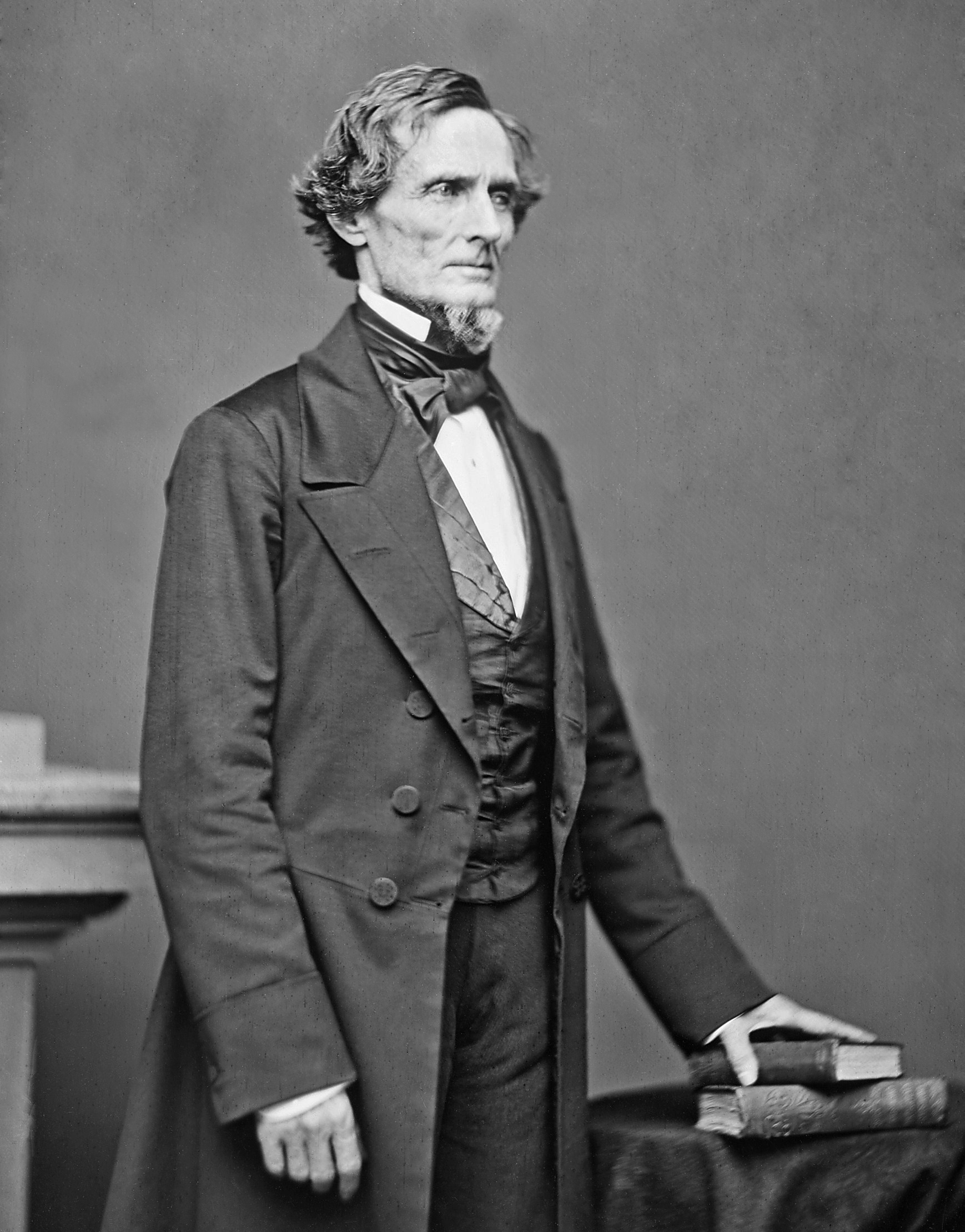
supported the Confederacy, but that, too, was a state power!)
It's not very likely that Nestor Makhno could have abolished the state had he
somehow taken power in the Ukraine. Rather, the Ukraine would have become a new
state, perhaps a more radical version of Stamboliski's Bulgaria. The CNT-FAI
didn't even try in Spain. After all, they joined the popular front! Had CNT
somehow managed to take sole power, Spain would either have become something
akin to Sandinista Nicaragua or Tito's Yugoslavia, depending on how the CNT
would have treated the other political currents after an anarchist take-over.
Occasionally, even Sheppard hints at some higher authority at work in his
supposedly self-managed society: "But an anarchist society worthy of the
name would not allow those holding religious beliefs to impose them upon
others, nor would religious beliefs be allowed to influence decisions of
production and distribution." Who's to stop that, I wonder? (And what would
happen to the Amish?)
[A STRANGE IDIOSYNCRASY]
Final point. What on earth does Brian Sheppard have against permaculture? :-D
[SUMMARY]
In sum, I can't say that "Anarchism vs. primitivism" have managed to
conclusively refute primitivism. The future may not be primitive, but then,
anarcho-syndicalism has also seen its better days, hasn't it?




.jpg)
.jpg)