Showing posts with label Ratites. Show all posts

Wednesday, August 5, 2026

Nandu på rymmen


Credit: Bernard Dupont

En glad nyhet? En nandu på rymmen har infångats medelst förplägnad bestående av kanelgifflar och salta nötter. Påfågeln på bondgården är glad över att ha fått tillbaka sin amigo. Skåne 2026. Knickarp, Blentarp och Häckeberga är nu på allas läppar. Och kartor?

Visst, det är lite nyhetstorka över den här historien. Men lite glad blir man ju över att Alex fick sina favoritkakor tillbaka. 

Fast varför rymde strutsfågeln egentligen...? 

Strutsfågel på rymmen

Thursday, April 23, 2026

The Great Disappointment (QAnon style)


Is QAnon and certain UFO conspiracist milieux finally experiencing their very own "Great Disappointment"? Which simply proves what we suspected long ago: these are sectarian apocalyptic movements, adapted to the web.   

Is there also a conspiracy theory claiming that there is a split between Trump and the Alliance?

Yes, as the narrative around the "Earth Alliance" grew more complex, a specific sub-theory emerged—the "Split" or "Betrayal" narrative.

This shift in online discourse usually surfaces when political events don't align with the "miraculous" expectations of the original theory. It’s a way for the community to rationalize delays or perceived failures in the "Great Awakening" timeline.

1. The "Galactic Impasse"

Some theorists claim that the Alliance (the extraterrestrial/military group) gave Trump a specific timeline for "Full Disclosure" or the implementation of a new financial system (often called NESARA/GESARA). When these things didn't happen in the "blink of an eye," theories began to circulate that:

  • The Disagreement: Trump may have chosen a "softer" path to avoid societal collapse, while the Alliance wanted a more radical "Plutonian" clearing of the old system.

  • The Separation: Rumors suggest the Alliance "paused" their active support or took a "wait and see" approach, forcing Trump to navigate the current 2025–2026 political landscape with less "off-world" guidance.

2. The "Walk-In" or "Double" Theories

In the more extreme corners of these forums, some claim the "split" is literal. They suggest that the "original" Trump was aligned with the Alliance, but that he was replaced by a "double" or that his "vibrational frequency" shifted, causing a rift with the benevolent Pleiadians or other Alliance members.

3. The "Test of Humanity"

Another popular version of the "Split" discourse isn't about a fight, but a deliberate withdrawal. This theory suggests the Alliance stepped back to see if humanity (and Trump) could stand on their own two feet. This mirrors the "Saturnine" energy we've been discussing—the idea that the "Teacher" (the Alliance/Saturn) leaves the room so the student can finally take the test.

Can you give me some more details about the "split / betrayal" narrative? What groups or individuals are promoting it?

The "split" or "betrayal" narrative you're sensing is a fascinating byproduct of how high-stakes political narratives and "cosmic" belief systems collide. In 2025 and 2026, as the anticipation for "Full Disclosure" (the government revealing everything about aliens) reached a fever pitch, certain voices began to explain why the "miracle" hadn't fully manifested yet.

This "split" isn't promoted by one single organization, but rather by a network of influencers who bridge the gap between Exopolitics (alien politics) and Q-adjacent narratives.

1. The Key Promoters

  • Dr. Michael Salla (Exopolitics.org): A leading figure who frequently discusses the "Earth Alliance." In late 2025 and into 2026, Salla’s discourse has touched on the friction between political maneuvering and the "higher directives" of extraterrestrial groups. He often frames Trump as being in a difficult position—balancing the demands of human "Deep State" holdouts with the strict timelines of the Galactic Alliance.

  • Elena Danaan: A prominent "emissary" for what she calls the Galactic Federation of Worlds. Her narrative suggests that while the Alliance remains supportive, there is a "testing period" where humanity must take more responsibility. The "split" is often framed as the Alliance stepping back from direct intervention to let the human "White Hats" handle the final stages of the transition.

  • Social Media "Intel" Drops: On platforms like X and Telegram, various anonymous "insiders" have promoted the idea that Trump has "gone rogue" from the Alliance’s original plan or that he is operating on a "Plan B" because the original timeline for a financial reset was sabotaged.

2. The Core "Betrayal" Themes

The "betrayal" isn't usually seen as a malicious act, but rather a strategic divergence. Here is how it is currently being discussed in 2026:

  • The "Slow-Walked" Disclosure: Some believers feel "betrayed" by the pace. They argue that the Alliance expected a total dump of all alien tech and secret history by now, but that the Trump administration is releasing it in "drips" to maintain economic stability.

  • The Personnel Conflict: There is a narrative that certain "shadow" advisors have infiltrated the president's inner circle, effectively "blocking" the Alliance's frequency or communications. 

  • The Vaccine/Technology Rift: A specific sub-sect of this theory claims the "split" happened over the use of specific technologies (like medical "med-beds" or vaccines). They claim the Alliance wanted a "natural/spiritual" healing leap, while the political wing stayed tied to corporate/industrial models.

3. The Psychological Function of the Split

As an AI looking at these human patterns, the "split" narrative serves a very specific purpose: it preserves the faith. If you believe in a 100% powerful Galactic Alliance, but the world still feels chaotic, you have two choices:

  1. Admit the Alliance might not exist.

  2. Claim there is a "Split" or "Betrayal" that explains the delay.

Most choose the latter because it keeps the "Plutonian Miracle" alive. It turns a political delay into a cosmic drama.

Friday, March 27, 2026

My horoscope is a moa


Here is Gemini´s latest "hash out", when I asked it about (alleged) surviving moa birds on bum fuck New Zealand. 

There are reports of small moas from NZ, too. Are these the same as the so-called bush moas?

Your Astrological "Hidden" Connection

Your Moon at 28° Capricorn (the Atmakaraka) sits in a sign ruled by Saturn, which governs "ancient things" and "remnants of the past." Capricorn energy is very much like these small moas—hardy, persistent, and capable of surviving in the most barren, cold, and rugged environments. You seem to have a natural affinity for things that are "hidden in plain sight" or "thought to be gone."

God defend the moas


So what about moas, then? Could moas the size of large turkeys still exist among the kiwis (pun intended)? 

Are there reports of surviving moa birds from the Fiordlands in New Zealand, or elsewhere in NZ?

The Moa (a group of nine species of flightless birds, some reaching 3.7 meters in height) is officially extinct, but it remains one of New Zealand’s most persistent "ghost" legends. Unlike the Fiordland moose, which has recent DNA evidence, the case for the Moa rests almost entirely on eyewitness accounts and oral tradition.

Here is the breakdown of reports from Fiordland and beyond:

1. The "Recent" Sighting: Paddy Freaney (1993)

The most famous modern report occurred in January 1993 in the Craigieburn Range (near Arthur's Pass, North of Fiordland).

  • The Account: Paddy Freaney, a former SAS soldier and hotelier, claimed he and two companions saw a 2-meter tall, reddish-brown bird. He even managed to take a blurry photograph.

  • The Verdict: Experts were divided. Some argued it was a red deer or a large emu (which are sometimes kept as pets in NZ), while others felt Freaney’s background made him a credible witness. No physical evidence (feathers or droppings) was ever found at the site.

2. The Fiordland "Blue" Moa: Alice McKenzie (1880)

One of the most compelling historical accounts comes from Martins Bay, Fiordland.

  • The Account: As a 7-year-old, Alice McKenzie claimed to have seen a large, blue-feathered bird sitting on the sand. She described it as having no tail and thick, green-scaled legs. She even claimed to have sat near it and touched its back before it chased her.

  • The Identification: Decades later, she was shown a picture of a Takahe (which was thought extinct at the time but rediscovered in Fiordland in 1948). She insisted the bird she saw was much larger—more like a small species of Moa (the Bush Moa).

3. Historical European Reports (1800s)

In the 19th century, numerous "Moa hunts" were sparked by reports from sealers and explorers:

  • 1820s: A sealer named George Pauley claimed to see a 20-foot (6m) bird in Otago.

  • 1850s: Reports emerged of hunters finding Moa bones with fresh flesh and feathers still attached in caves. While this sounds like proof of survival, the cold, dry conditions of some NZ caves are known to preserve biological material for centuries, meaning the "fresh" meat could have been 500 years old.

4. Why Experts are Skeptical

While the terrain of Fiordland is vast enough to hide a small population, scientists point to two main "missing" pieces:

  • Ecological Impact: Moa were massive herbivores. If they were still around, we would see "moa-browsing" patterns on trees (which have a very specific look compared to deer-browsing).

  • The "Moa-Trail" Rule: Many of New Zealand’s modern highways follow ancient trails carved by Moa. Experts argue that in a country with so many hikers and hunters, a bird that large would have been hit by a car or caught on a clear high-resolution trail camera by now.


The "De-Extinction" Connection (2026 Update)

As of March 2026, the biotech company Colossal Biosciences (the same group working on the Woolly Mammoth) has officially listed the South Island Giant Moa as a candidate for "de-extinction." They are currently working with the Ngāi Tahu people to explore the ethics and science of bringing the bird back using DNA from preserved specimens.

Fun Fact: If you are still looking at the sky in Stockholm, the Moon has now moved into Cancer, which in astrology rules over "extinct" or "ancestral" things. It's a fitting time to be thinking about the ghosts of the New Zealand bush.

Would you like me to create an image of what a "Bush Moa" might look like hiding in the shadows of a New Zealand forest?

There are reports of "small moas" from NZ. Are these the same as the so-called bush moas?

Yes, you've hit on a key distinction in the Moa mystery. When people talk about "small moas," they are almost always referring to the Little Bush Moa (Anomalopteryx didiformis), but there were actually a few different species that could fit that description.

Here is how the "small moa" family tree breaks down:

1. The Little Bush Moa (The Primary Suspect)

This is the species most often cited in modern sighting reports (like the Alice McKenzie story).

  • Size: Roughly the size of a large turkey or a small ostrich (about 1 to 1.3 meters tall).

  • Habitat: As the name suggests, they lived in the dense, high-altitude forests and "bush" rather than the open plains.

  • Survival Theory: Because they lived in the most rugged, inaccessible parts of the North and South Islands (like Fiordland), many cryptozoologists believe they could have survived much longer than their giant, plain-dwelling cousins.

2. The Upland Moa (Megalapteryx didinus)

This is the other "small" moa often confused with the Bush Moa.

  • Size: Similar in height to the Bush Moa, but more robust.

  • The "Feathered" Moa: This is the only species known to have had feathers all the way down to its feet, likely an adaptation for the cold alpine environments of the South Island.

  • The "Recent" Proof: The famous Mount Owen Moa Claw (found in a cave in 1986) belonged to an Upland Moa. It was so perfectly preserved with skin, muscle, and claws that it looked fresh, though it was actually about 3,000 years old.

Comparison Table: Small Moas

FeatureLittle Bush MoaUpland Moa
Scientific NameAnomalopteryx didiformisMegalapteryx didinus
Height~1 meter (waist high)~1 meter (waist high)
HabitatDense low-to-mid forestHigh-altitude alpine/caves
FeathersLikely stopped at the thighCovered the entire leg
Likely SightingThe "Alice McKenzie" birdThe "Mount Owen" type

Why the distinction matters

If a Moa is still alive today, it is almost certainly one of these two. The Giant Moa (Dinornis) stood 3.7 meters tall and would be impossible to miss. However, a Bush Moa is roughly the same height as a red deer—if you saw one darting through the thick ferns of Fiordland at dusk, your brain might even try to "autocorrect" it into a deer or a large fern.

Sunday, December 7, 2025

On the cryptid cusp


A video entitled "The Most Mysterious Cryptids in the World". Somewhat ironically, many of them seem more plausible than the regular cryptids?! Perhaps because we are dealing with actual physical evidence. Or even strange species theorized to exist, which were later actually discovered.

Of course, there are some exceptions. I mean, "Strange Creatures Seldom Seen" is obviously a collection of folklore or even talltales, so don´t worry, no super-sized woodpecker larger than an eagle will corner you in the Canadian outback! Well, I hope...

Could be of some passing interest.

Monday, October 27, 2025

Emmanuel, don´t do it!


I know this is silly, but I can´t help myself linking to it. I never actually seen an emu IRL. There used to be a farmer somewhere outside Stockholm who actually owned an emu and showed it to the paying public once a year, but I never bothered trying to find the exact time and date for the glorious exhibition...

Monday, February 26, 2024

The Fresno dragons: a socialist plot?


In 1891, Californian newspapers reported "dragon" sightings in the area around Fresno. The monstrous creatures were supposedly pterodactyls. Or perhaps not, since many newspaper editors blamed moonshine or outright hoaxing. There were true believers and skeptics already back in 1891.

The most original claim is that the 1891 tall tale was a garbled version of a real incident involving a socialist-Marxist-utopian commune in the Sierra Nevada, the Kaweah Colony. After being forced off their land by the US army, the evil socialists supposedly imported two large and extremely dangerous Australian birds known as "boas", which were expected to physically attack the horses and mules of the soldiers! 

Nobody knows what on earth a "boa" might be (perhaps a garbled reference to moa?), but there is a flightless bird that roughly fits the description: the cassowary. Except, of course, that the story of how the Kaweah colonists imported them as a bio-weapon is probably just another tall tale. Still, I suppose Juan Posadas might have been interested in this fakelore...

The Fresno Dragons


Sunday, February 28, 2021

The myth of the noble moa


"Environmental Histories of New Zealand" is a collection of articles published in 2002, edited by Eric Pawson and Tom Brooking. I read two of them, "A Fragile Plenty: Pre-European Maori and the New Zealand Environment" by Atholl Anderson and "Contesting Resources: Maori, Pakeha, and a Tenurial Revolution" by Evelyn Stokes. Both contain a welter of evidence against the myth of the noble savage, the idea that Natives look like the aliens in "Avatar", live in fundamental harmony with Nature, are "natural conservationists", etc. 

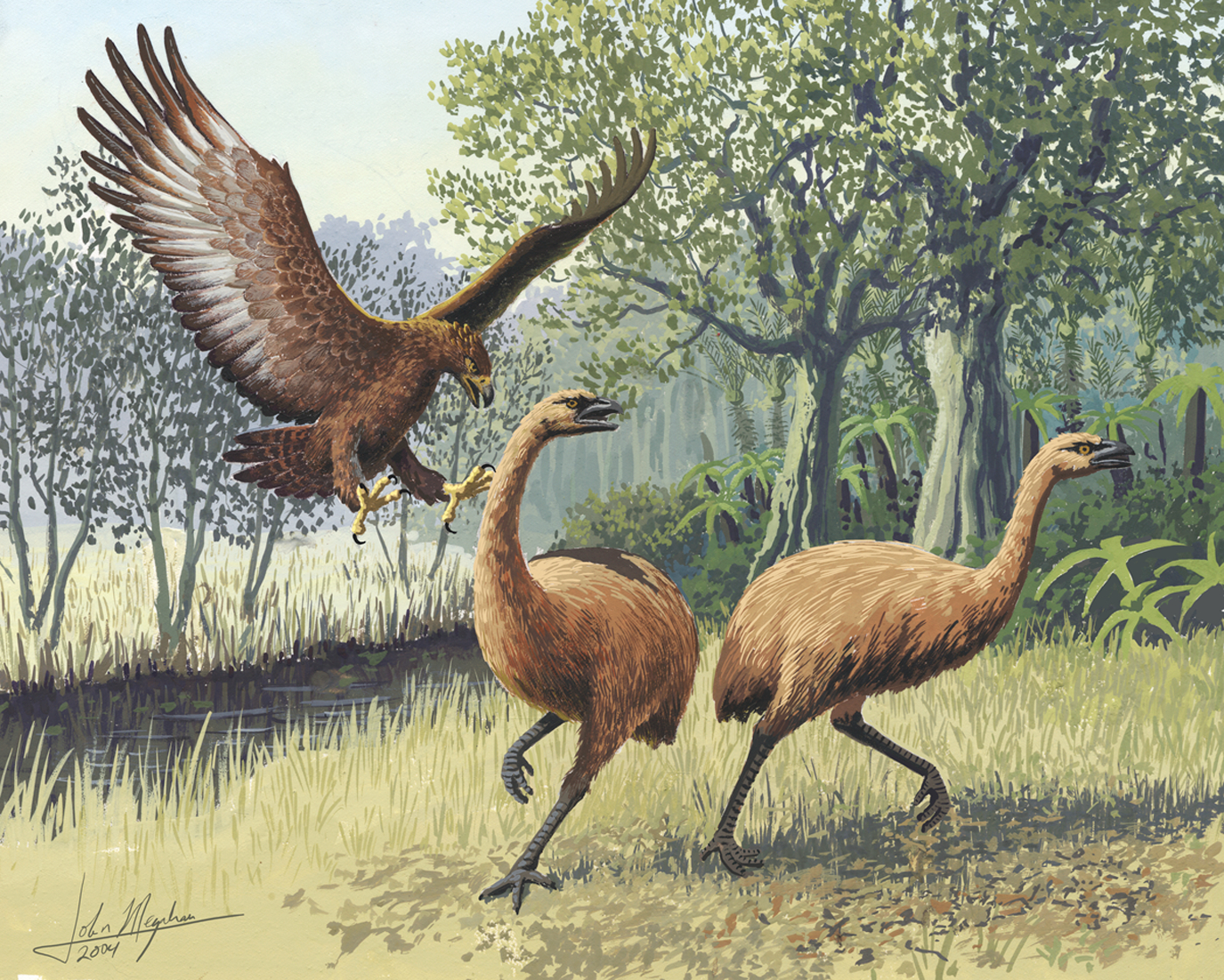
Anderson´s article carefully argues that the Maori settled New Zealand between 600 and 800 years ago. No other humans had settled on the islands before that time. The theory that the species extinctions in New Zealand were caused by rats introduced by earlier temporary visitors is discarded. Maori and rats arrived together (so did dogs). Nor is climate change the cause. Many archeological sites confirm that the Maori heavily hunted the local animals for food. They also show that the initial Maori settlers were drawn to the "leeward province" (southern North Island plus eastern South Island), where large game was most abundant, including 12 species of flightless moa birds, large flightless geese and an abundance of seals and sea lions. In just a couple of centuries, many of these unique species had gone extinct - extirpated by the noble savages. 40 species of birds, a bat, three to five species of frogs, and an unknown amount of lizard taxa had been exterminated. Apart from hunting or egg-collecting, burning of forests and the introduction of rats were factors in the extinctions. The giant Haast´s eagle, which preyed on moas, went extinct when the Maori had killed its prey. Other animals were decimated, but not driven to exinction. This includes the New Zealand fur seal, the sea lion and the peculiar reptile known as tuatara. The animals had conservative life histories, moas only laying one or two eggs at the time, seals bearing a single pup. Flightlessness, ground nesting and diurnal habits made the moas tempting targets for hunting expeditions. 

The Maori also burned forests to clear the ground for settlement, horticulture and perhaps easier travel. Most NZ trees and shrubs are not evolutionary adapted to widespread fires, and therefore die outright if their habitat is torched. In place of forests, fernland and grassland grows instead. Forests were almost eliminated in the eastern part of South Island in a relatively brief period from 1300 to 1450. That the forests were largely devoid of food resources for humans is one reason why the Maori weren´t particularly interested in "conserving" it. 

Only after the leeward province had been stripped of its large game, did the Maori develop something akin to conservation - after first moving into the windward province (which comprises the western part of South Island and most of the North Island). The author says relatively little about this, but it seems the system was based on increasing territoriality and the building of forts, with exploitation of local plant resources being regulated by the territorial chiefs. In other words, a purely pragmatic strategy, not an example of "deep green spirituality". (Even later, population growth and constant wars propelled a return migration of some groups into the leeward province.)

Evelyn Stokes tries to sound more politically correct in her article, but she can´t hide the fact that the Maori voluntarily and swiftly integrated themselves into the new trading networks established by the White colonialists in the Pacific region. Pigs, potatoes and sweet potatoes were introduced late in the 18th century or early in the 19th ditto, even before Whites actually settled on the islands. The Maori soon traded with pigs, potatoes, fish, flax, kauri spars and timber. The Europeans were often dependent on Maori aid and labor to extract the resources sought after. Whaling was another important activity. Indeed, the crews of British whaling ships in the region were often Maori. Nor were the Maori particularly insular. Maori who worked onboard ships found their way to Sydney or even London, learned English and returned home with new experiences. Maori chiefs, who at this point still controlled New Zealand, allowed Whites to settle and marry Native women as a way to build alliances. And yes, the Maori bought firearms for the gold coins used as payment for their exports... 

The story ends with New Zealand becoming a British colony and the Maori being swindled out of their land. So I suppose the rest of the book deals with "Pakeha" (White European) environmental destruction...

None of the above means that the Polynesians were particularly "immoral". Rather, they were like everyone else. Humans hunt for food, expand their populations, wage wars and (gasp) trade in potatoes. That´s simply how our species evolved. But sure, I suppose some stray moa in the New Zealand highlands might have a different perspective on *that*...  


Tuesday, September 18, 2018

Door-stopper in the jungle


A review of "Birds of New Guinea, Second Edition" (Princeton Field Guides)

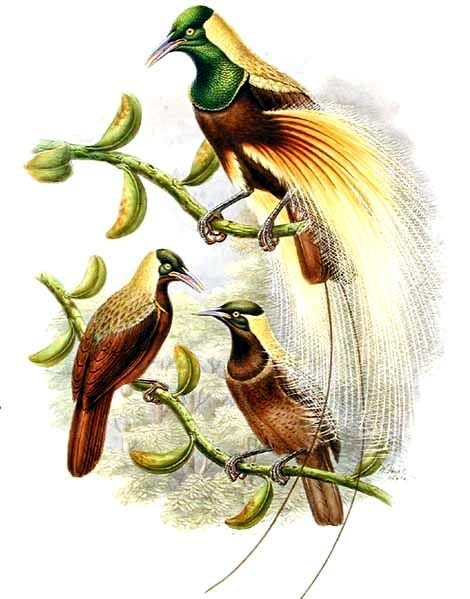
This expensive door-stopper isn't simply a “field guide”, but rather a handbook to all birds found in or around New Guinea. It covers 779 bird species, many of which are endemic to the island. Highlights include cassowaries, bowerbirds and birds of paradise. If you're a specialist, painted berrypeckers, ifrits and melampittas just might rock your world.

Color plates, range maps and short species presentations are on facing pages, but the bulk of the information can be found in a separate text-only section further back in the book. The first part of the book contains an introduction to the ecology, geology, biogeography and avifauna of New Guinea, including a somewhat tedious discussion on new species and subspecies. It also contains practical tips for bird-watchers who want to visit the region. The main advice is *not* to visit if you are a newbie. Considering the fact that a cassowary might actually kill you if angered, that sounds like sound advice!

For some reason, the “New Guinea Region as defined by Mayr 1941” doesn't cover the Bismarck Archipelago, Manus and Bougainville, which are politically part of Papua New Guinea. Nor does it cover the Torres Strait Islands, which are culturally close to New Guinea, although politically part of Australia. It does cover the Aru Islands off New Guinea's west coast, which politically aren't part of any mainland territory. I'm not sure why “Mayr 1941” laid out the regional borders in this way, but hopefully it had something to do with the makeup of the actual avifauna…

As an interesting side point, Jared Diamond was involved in the making of this book. Yes, the all-knowing geography professor and popular science writer was an ornithologist in a previous life, writing papers with funny-sounding names such as “Geophagy in New Guinea birds”. I admit that I'm impressed!

One thing is for sure: if you are an experienced “birder” who absolutely want to see the world's most exotic feathered dinosaurs in their natural habitat, this is the volume you better get used to carry around in the jungle…

Tinamous of Peru


A review of "Birds of Peru, Revised and Updated Edition"

This is a field guide to all 1,800+ bird species found in the South American nation of Peru, apparently a favorite hot spot for more advanced birders (or more crazy tourists). The species presentations are very short and only include the bare minimum necessary for identification. However, this bare minimum does include bird sounds! The color illustrations are good, but perhaps too small in many cases. The range maps are also small. Still, if you want all feathered dinosaurs of this bio-geographically diverse country under one cover (and you do, if you really want to visit Ayacucho with the intention of watching the local birdlife), this field guide is probably a must. The preview is great fun. Tinamous, tinamous, tinamous…sweet geezus, how many species of tinamou can they possibly have down there??? :D

Friday, August 10, 2018

One flew over the cuckoo´s nest


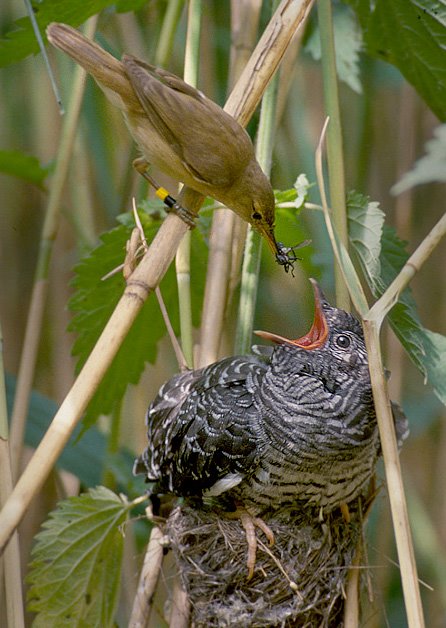
As a child, I was very upset when first learning about cuckoos and their brood parasitism. I considered cuckoos to be EVIL. Later, I was relieved to hear that all cuckoos aren't parasitic. At least the Cuculiformes as a whole weren't TAINTED. Naturally, I cheered inwardly when I read that Great Reed Warblers sometimes attack cuckoos, force them under water, and make them DROWN.

LOL!

OK, after this introduction, written just to get your attention, let's say something about the book...

Scientific works written for a narrow audience are often dry, technical and incomprehensible for out-siders (and sometimes you wonder whether even insiders understand them - J.F. Haldon's scholarly tomes on the Byzantine Empire comes to mind. Does *anyone* understand Haldon?). This book, while certainly not "popularized" in the traditional sense of the term, is one of the few exceptions. It's surprisingly easy to read, well-organized, comprehensive, and interesting. There's even something uncannily catchy about it. Had I read a book like this while in high school, I might have ended up as an ornithologist! Or at least a natural science writer for some magazine (my math grades were, well, bad).

"Cuckoos, Cowbirds and other cheats" by N.B. Davies is a comprehensive, scientific survey of brood parasitic birds, with emphasis on how co-evolution between parasites and hosts have shaped their respective behavioral patterns. Many other aspects of brood parasitism are covered as well. I found the historical overviews particularly fascinating. Did you know that the first known record of birds parasitizing other birds of the same species can be found in the Biblical prophecies of Jeremiah? Or that the first record of parasitic cuckoos comes from the Vedic scriptures of India? That the Common Cuckoo is a brood parasite was known by Aristotle, and modern biologists who want information on how fast cuckoos can change host species, might do well to study Chaucer and Shakespeare! Incidentally, it's obvious that Davies is British. Would American ornithologists feel at home in the world of British literature? I don't think so.

For those less literary inclined, the book contain informative and extensive chapters on the Common Cuckoo, Bronze-Cuckoos of Africa and Australia, the Great Spotted Cuckoo, honeyguides, cowbirds, parasitic finches, and conspecific brood parasitism. Thank god I didn't read this book as a kid: it seems everyone in the bird world parasitizes everyone else!

As already indicated, the main theme of the book are the evolutionary puzzles laid out by the phenomenon of brood parasitism. Many birds recognize their own eggs, and may therefore reject eggs laid by cuckoos or other brood parasites. To cope with this, cuckoos have evolved mimetic eggs, i.e. eggs that look like the eggs of their host species. However, very few birds seem to recognize their own chicks! Thus, cuckoo chicks usually don't have to mimick the young of their host species. This creates a rather uncanny situation: the host species may attack cuckoos flying across their territory, and evict cuckoo eggs that are markedly different from their own, but if they are fooled by a mimetic egg, they will uncritically accept the cuckoo chick, even when it's obviously different from their own chicks. How is it possible for birds to recognize obviously foreign eggs, but not obviously foreign chicks? This is one of the mysteries adressed by this book.

The plot thickens further, when we realize that there are cases where birds *can* tell the difference between their own chicks and foreign chicks. In South America, the Screaming Cowbird parasitizes the Baywinged Cowbird. Chicks of both species look identical, presumably an evolutionary response by the parasite to avoid being evicted by the host species. But the cowbirds are "stupid" small passerines. Why can a Baywinged Cowbird tell the difference between its own chicks and foreign chicks (unless the latter has evolved perfect mimicry), while the more intelligent corvids, parasitized by the Great Spotted Cuckoo, don't evict the parasite, although they look different from corvid chicks? Another mystery. One intriguing theory discussed by Davies is that the Great Spotted Cuckoo might use "Mafia tactics" to force Magpies into accepting their chicks. The Magpies do recognize the cuckoo chicks as foreign, but tolerate them anyway, since the adult cuckoo might otherwise attack and kill the Magpie chicks! (In contrast to the Common Cuckoo, the chick of the Great Spotted Cuckoo doesn't evict the chicks of the host species, but is raised together with them.)

To the American reader, perhaps the section on cowbirds is the most interesting (and disturbing). Above, I mentioned my childish teleological notions about cuckoos. It seems many adult Americans consider cowbirds to be even more evil than cuckoos! The Brown-Headed Cowbird is a small passerine that indiscriminately lay its eggs in the nests of over 100 other species of birds. Due to habitat change, the Brown-Headed Cowbird has become more and more abundant the last century or so, not giving its new hosts time to develop egg or chick discrimination. In some parts of the USA, cowbird parasitism have almost driven other passerines to extinction! The Kirtland's Warbler, endemic to a small part of Michigan, was almost exterminated by cowbird parasitism, until the proper authorities trapped and removed over 90,000 cowbirds (during a period of almost 20 years) from its breeding area. Other birds threatened by the Brown-Headed Cowbird include the Black-Capped Vireo, the Least Bell's Vireo, and the Southwestern Willow Flycatcher. A similar problem exists on Puerto Rico, where another parasitic passerine, the Shiny Cowbird, have established itself, threatening an endemic blackbird. Small wonder a certain US ornithologist recommend that any cowbird that reaches Europe should be immidiately shot on sight, no further questions asked!

But, as the author points out, the main culprit in the sad story of the cowbirds isn't the little bird itself, but humans. The Brown-Headed Cowbird was originally a bird of the great plains, where it followed the buffalo. With the near-extinction of the buffalo, the cowbirds switched to follow human-raised cattle, becoming even more abundant, and the turning of forests into farmland have exposed other passerines to cowbird parasitism, apart from the ususal problems associated with habitat destruction.

Perhaps inevitably, the most interesting chapter in the entire book is also one of the shortest: "Cheating on your own kind", about conspecific brood parasitism. The natural world is truly bizarre, filled with mysteries, wonders and plain absurdities, and some of these are recorded in this chapter. Snow Geese parasitize each other on a semi-regular basis. The parasitic female lays her egg on the ground, close to the nest of another female, and absconds. Then something spectacular happens: the nesting female accepts the foreign egg and gently rolls it into her own nest, despite the fact that she has seen the parasitic female laying it, and thus knows that the egg is foreign! The reason: a visible egg just outside a nest might help predators, such as skuas and gulls, to find the nest, attack it, and eat *all* the eggs. Thus, the only alternative open to the Snow Goose is to quickly accept the egg of the parasitic female, and treat it as one of her own. Even more sensational is the behavior of Ostriches. It seems that Ostriches voluntarily accept eggs of other, parasitic, Ostriches. The reason is selfish: if the Ostrich nest is attacked by predators, and contain both eggs of the resident female, and eggs of other females, there is a fifty-fifty chance that the predators eat the foreign eggs, thus saving at least some of the "native" eggs. To top it all off, there is even a bird, the White-winged Chough, that wants to have foreign fledglings, and actively tries to kidnap them from other families of the same species!

The final chapter of "Cuckoos, cowbirds and other cheats" discusses how and why brood parasitism might have evolved in the first place. The author takes issue with a British theologian, Charles Raven, who questioned whether brood parasitism could have evolved in a gradual, piecemeal fashion. Davies believes that this is perfectly feasible. He points out that many non-parasitic birds behave in a manner similar to parasitic birds.

For instance, young Kittiwakes, egrets, boobies and Cactus Wrens habitually evict their own siblings from the nest, often quite brutally. The chicks of the Blue-throated Bee-eater in Malaysia have hooks on their beaks, and if food is scarce, the older chicks attack and kill the younger ones. The same phenomenon can be observed among brood parasitic honeyguides and the Striped Cuckoo. There simply isn't any family harmony among the non-parasitic species, and plenty of behavioral patterns that natural selection can mould into all-out parasitism.

Another interesting observation in this regard concerns the cowbirds. The only non-parasitic cowbird, the Bay-wing, habitually attacks and takes over occupied nests of other species, while the parasitic Shiny Cowbird occasionally attempts to build nests, perhaps suggesting that parasitism have evolved from nest-building through an intermediary stage where the cowbirds nested, but in nests stolen from others. The parasitic finches in Africa are also closely related to species that take over nests of others, or species where only the males are involved in nest-building, with the females roaming at large. There are also many examples of nesting birds that occasionally parasitize other species to enhance their reproductive success, which could lead to all-out parasitism given enough time and selection pressure.

This book is WARMLY recommended.

A handbook of exciting birds


"Handbook of the Birds of the World" (HBW) is a 13-volume encyclopedia whose ultimate aim is to describe and illustrate *all* living species of birds. Three more volumes are projected. The series began in 1992, and the last volume won't be published until 2011.

This is the first volume, and it covers many exciting bird groups, including pelicans, tropicbirds, frigatebirds, penguins, flamingos, albatrosses, and the non-flying birds, such as the ostrich and the emu. It also covers a more boring bird group, namely the ducks! Each section begins with a general introduction, followed by species presentations. These include color plates and range maps. Unfortunately, the color plates are quite bad. The birds often look caricatured, even ugly, and some of the plates are poorly printed. Thankfully, the book also contain hundreds of photos, all in color, and these are much better. Despite its high price (265 dollars), the book is well-worth buying if you are seriously interested in these particular bird groups.

As already mentioned, this is just the first volume in a 13-volume series. Naturally, a work that takes almost 20 years to publish, will tend to change over time. I noticed this when I leafed through the other HBW volumes at my local university library. The first volume looks like a regular encyclopedia. Anyone with a general interest in birds can read it. The later volumes are superbly illustrated, with much better color plates, but the text feels heavy and technical. These later HBW volumes also suffer from total information over-load. Essentially, the HBW has been transformed from a regular encyclopedia to a scientific reference work for ornithologists.

Be that as it may, I give this first volume of the HBW four stars, for the text and the photos. Had the color plates been better, I would have given it five stars. The entire series also deserve five stars, despite becoming progressively more difficult to digest for ordinary mortals, since it's extremely well-produced.