Showing posts with label Camelids. Show all posts

Friday, May 30, 2025

My blogging just took a very strange turn


What is a robot or robotic jockey in camel racing?

A robotic jockey is a small remote-controlled device used to replace human jockeys in camel racing. Here's how it works and why it was introduced:


What is a robotic jockey?

  • It’s a lightweight robot mounted on the camel’s back.

  • The robot is equipped with:

    • A whip mechanism (usually a soft padded whip) to encourage the camel to run faster.

    • A speaker or device to issue commands.

  • The robot is controlled remotely by the camel’s trainer or handler from the sidelines using radio signals.


Why robotic jockeys?

  • Historically, camel racing in places like the Middle East used young boys as jockeys, some as young as 4 or 5 years old.

  • Due to child labor concerns, safety, and international pressure, many countries banned the use of child jockeys.

  • Robotic jockeys were developed as a humane and ethical alternative.

  • They allow the sport to continue while protecting children and improving animal welfare.


Benefits of robotic jockeys:

  • Eliminates child exploitation.

  • Provides consistent control over camels.

  • Can be programmed or adjusted remotely for better performance.

  • Reduces risks of injury to jockeys.


Where are robotic jockeys used?

  • Mainly in Gulf countries like the UAE, Qatar, and Saudi Arabia.

  • The technology is continuously improving for better control and reliability.


If you want, I can share videos or more technical details about how robotic jockeys work!

Thursday, February 20, 2025

Pachyderms of Loch Ness


- Yes, they seem to think that I´m you!

And camelids, too! Not to mention over-sized specimens of the lutrine persuasion. I never been particularly interested in Nessie or the Loch Ness monster. In fact, the whole thing strikes me as rather silly. I mean, we´re talking about one bloody loch just south of a city with 63,000 inhabitants. Are ye telling me that a breedin´ population of please-your-soars can live there undetected for millennia?! Then, I have a fake tartan to sell you!

It´s a cultural phenomenon, no more. As proven by Karl Shuker´s entertaining article about the monster´s split personality. While a plesiosaur is the most common identification, others have been proposed. Some of them very strange! How about a long-necked seal, a gigantic tullimonstrum, an "elephant squid", an *actual* elephant, or a camelid with a plesiosaur-like head and neck (the latter seen on land?!). There´s also the mother of all otters, also seen on Ireland. Shuker doesn´t mention "a specter conjured by Aleister Crowley", but then, he´s more into the flesh-and-blood portion of the cryptozoology specter, er, spectrum.

Entertaining, I say. And probably not true either way.  

Split personality: Nessie´s strangest identities 

Tuesday, February 18, 2025

Alter Ego


So I just saw a French science documentary, "Alter Ego", on Swedish TV about cloning. Artificial human cloning of non-human animals, to be exact. Remember Dolly the cloned sheep? For whatever reason, the European Union bans this kind of cloning, so the industry thrives in the rest of the world. In the docu, they interview Americans and Argentinians who clone horses (including race horses), Chinese who clone pet dogs, and a hyper-modern lab in the United Arab Emirates financed by the Emir of Dubai which clone dromedaries (camel races are popular in some nations). In the United States, there are supposedly cloned deer with exactly the qualities a wild-game hunter wants!

There are also discussions to clone mammoths and other extinct animals, such as the dodo. Maybe this is a bit too much hype? One scientist actually believes that cloning birds is extremely difficult to impossible. Another opines that "cloned mammoths" would really be genetically enhanced elephants which can live in cold weather! However, the cloned foal of a Przewalski´s horse (this species or sub-species is extinct in the wild) is real, so here is a possible avenue to save endangered species. It seems cloning can even enhance the genetic diversity of a species. The two-humped Bactrian camel (which is almost extinct in the wild) is mentioned as the object of another possible rescue mission. 

The documentary doesn´t discuss human cloning and no Raëlians are interviewed. The production is clearly pro-cloning and I do wonder after watching it why the EU has banned cloning. How does this help us? How does it help the animals? Is it just some weird superstition? On our "enlightened" continent! In reality, the applications are almost endless. Imagine killing off all wolves, but keeping their DNA around for future re-creation just in case. 

Hmmm...    

Tuesday, February 11, 2025

Llama-gate


- What do you mean, guv?
I identify as a llama, I do!

Maybe there is *one* close US ally Donald Trump should invade. Or why not a good ol´fashioned German blitz? LOL.

Lefty lunacy


Tuesday, April 9, 2024

When camels roamed the Arctic


“Hunt for the Oldest DNA” is a recent release from PBS-Nova. The documentary discusses the biggest scientific breakthrough of 2022. A team of scientists headed by Eske Willerslev from Denmark managed to extract DNA from a soil sample taken at Kap Köbenhavn on Greenland. The DNA turned out to be over 2 million years old! The previous record holder was one million years old DNA from mammoth bones. Or, to be more precise, the oldest *accepted* ancient DNA.

During the 1990´s, even more sensational claims were published, including a supposed discovery of 80 million years old DNA from dinosaur bones (the creationists are still talking about that one). This virtual “Jurassic Park” territory was soon abandoned, however. As for Willerslev, he tried for 15 years to extract DNA material from the Kap Köbenhavn samples, without success. His samples were even known as “The Curse”, since grad students who tried their hand on them always failed (sometimes with detrimental results for their careers). Then came the 2022 breakthrough, and here we are.

Apparently, certain kinds of minerals can “bind” ancient DNA and make it less prone to degrade. The clay and quartz at the Greenland site have this effect. The discovered DNA is from the Pliocene, the last warm period before the onset of the ice ages. The most surprising find was the DNA of a mastodont. The docu also discusses Greenland camels, known from the fossil record but not yet from the DNA samples. The ecosystem uncovered was vast and complex. Despite the warm climate, half of the year was still Arctic night, raising questions about how the animals or plants survived.

Since the Pliocene was much warmer than today, the issue of current climate change inevitably comes up. Willerslev and his team believes that the quest for ancient DNA could have practical applications. Apparently, scientists have managed to identify an ancient poplar gene that made that particular tree adapted to growing in the darkness of the long Arctic night. This gene has been successfully implanted in barley, perhaps giving rise to a specimen that could be grown on Greenland if it ever becomes ice-free again due to man-made climate change. Similar experiments with wheat and other food crops are underway.

And yes, one of the US scientists featured sits in meditation posture on a chair throughout the interview. A real weirdo, if you ask me. The expert on camelids, I believe.

Slow-paced, and I had to watch it twice to really get it. But yeah, probably worth the research grants. Even so, most people probably prefer “Jurassic Park”…


Thursday, July 20, 2023

Give the llama a carrot, please


I didn´t know crazy song "I´m an Albatraoz" had a sequel, called "Llama in my living room". Featuring AronChupa and his little sister Nora. And, I suppose, a South American camelid! But no albatross in sight this time either...

Monday, October 4, 2021

Well, actually...


"The Scorpion King" (2002) is a somewhat frivolous fantasy flick featuring a Schwarzenegger-Van Damme cross-over look-alike, but with more tan. Small wonder, since Mathayus (as the muscular warrior is named) runs around in a desert landscape that´s supposed to be ancient Egypt, but looks more like a stereotypically Orientalist Mideast bazaar. Mathayus, who is said to be Akkadian (an ancient Semitic people), is one of the few people who *doesn´t* look Hollywood Semitic. A few East Asian types have been thrown in for good measure, too, while the bad guy, Memnon, looks like a Roman commander! Yepp, it´s fantasy, alright. 

And while there is a gorgeous half-nude "sorceress" (what else?) in this production, starred by a former fashion model, most of the plot concentrates on the heavy fighting between Mathayus and faux Arabic hordes. Come to think of it, there doesn´t seem to be much else happening in "The Scorpion King" *except* sword fighting or archery?! More sword than sorcery, if you ask me. Unless you count the cobras, LOL.

The title of the film is inspired by a real Egyptian Pharaoh, simply known as Scorpion (or perhaps Scorpion II or King Scorpion), but I suspect the real guy would be somewhat surprised by this latter day barbarian reinterpretation of pre-dynastic Egyptian history. Apperently, "The Scorpion King" is also somehow a prequel to a series of mummy horror movies, but I frankly don´t understand the connection, even apart from the perhaps salient factoid that this production features no mummies! There are a few scorpions, though. (And cobras.)

That being said, I´m not saying you shouldn´t watch Dwayne "The Rock" Johnson flex his biceps, show his ware and rough up some phoney Nabateans in a sword-and-sorcery extravaganza. After all, I just did, and I´m still standing. Just don´t except any deeper insights into Sothic dating, Manethan chronology or Hamitic pre-history from this one!


Thursday, April 29, 2021

Cornering the camel


"A Perfect Planet: Weather" is the third installment in the recent BBC Earth saga. As usual, we get to see the wild, the weird and the wonderful from our (far from perfect) planet. 10 million flying foxes gathering in one small forest in Zambia, fire ants floating on the Amazon river, turtles laying eggs in Amazon sand banks which are washed away after only three months of existence, bee-eaters chased by eagles and crocodiles in Africa, red crabs afraid of sea water on Christmas Island (50 million of them), and the constant threat of climate change looming in the background. 

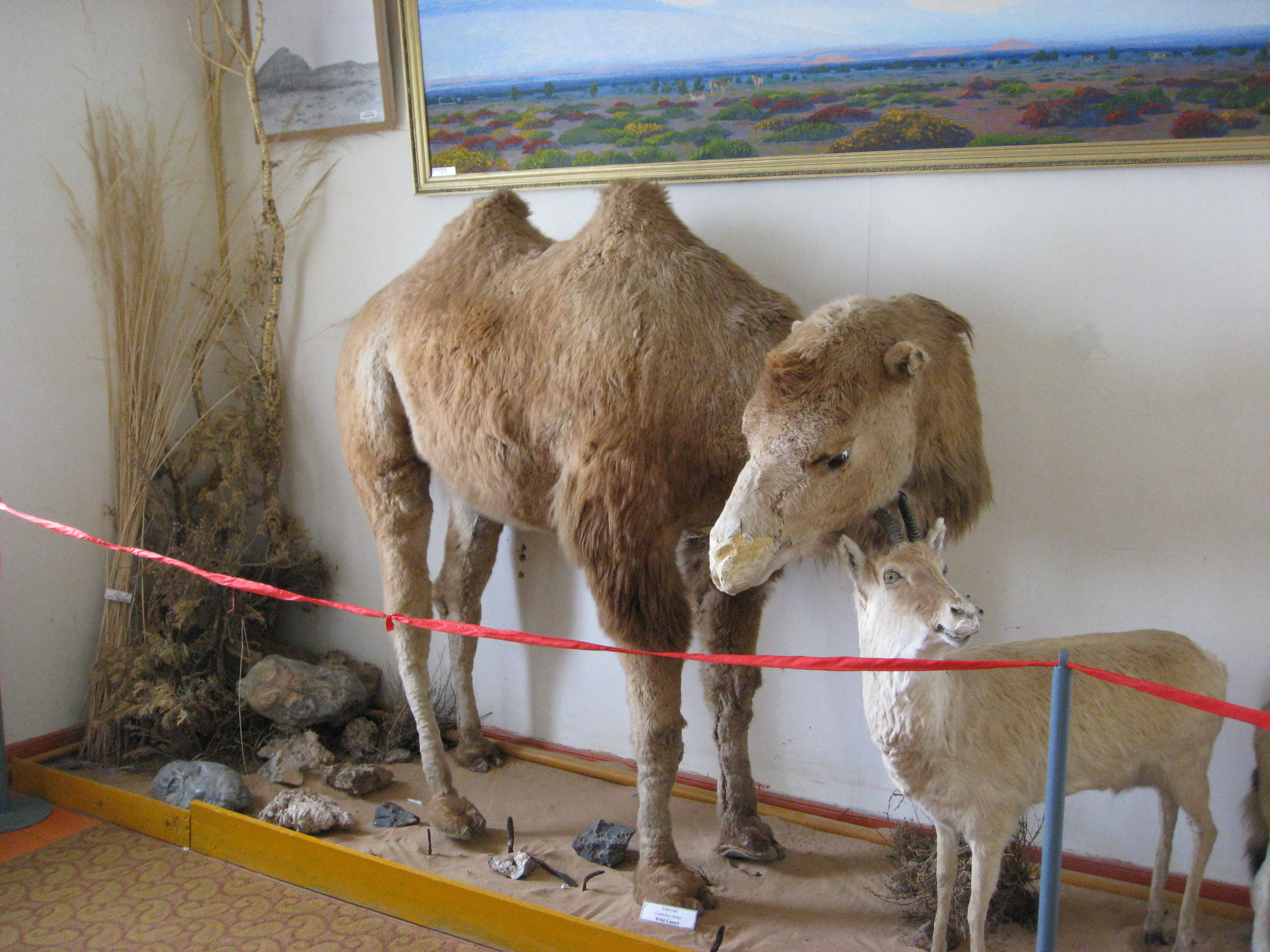
The high point of the production is the film crew´s search for the last remaining wild Bactrian camels in the Gobi desert (Mongolia). Imagine a desert that´s as cold as the Arctic, and where the camels can survive only by eating snow. If they can find it, that is... Finding the camels wasn´t easy either, the team apparently looking for them for two weeks! 

Despite protestations to the contrary, there is no particular "message" or educational value in this series, although it might of course give you a better appreciation of Nature. Or, more likely, scare the hell out of you (or make you admire new camera technology). Stay tuned for more extraordinary footage next week... 


Saturday, August 25, 2018

On the guard


This might be the ultimate guide to dogs, donkeys and llamas as livestock guardians. It's written from a North American perspective and covers all aspects of the issue. The author, Janet Vorwald Dohner, has raised and worked with guardian dogs for 26 years and is the past vice president of the Kangal Dog Club of America.

An introductory chapter of “Livestock Guardians” deals with predators likely to attack livestock: wolves, coyotes, cougars, feral dogs, etc. Even smaller animals such as skunks can be dangerous, for instance as vectors of rabies. The bulk of the book is about guardian dogs, introducing the reader to 31 different breeds. Some are relatively well known, such as the Great Pyrenees, the Anatolian Shepherd Dog and the Kangal. Others are more exotic, such as the Hungarian “Komondor”, a bizarre and very aggressive breed that looks like a giant mop! There are also more general chapters on dog training and health issues, and interviews with farmers sharing their experiences with various livestock guardians. Most illustrations are black-and-white drawings, but a colour photo section has been included. My favourite photo shows an Akbash Dog guarding chicken!

The book ends with somewhat shorter sections on llamas and donkeys, and a list of resources. The list, somewhat curiously, include addresses to the Predator Conservation Alliance and the Mountain Lion Foundation! More obvious (perhaps) resources include Llamapaedia, the Middle Atlantic State Komondor Club and the National Anatolian Shepherd Rescue Network.

In sum, “Livestock Guardians” is a book about everything you needed to know about these issues, but were afraid (or unable) to ask!
Five stars.