Showing posts with label Progressive Era. Show all posts

Tuesday, February 17, 2026

How the West was won


I heard rumors about this before, but usually rolled my eyes at it. Until now. Ever heard of the Progressive Western Republicans, some of whom were Mormons?

Is it true that there have been Republican politicians after World War II in Utah, Idaho and other places who took "progressive" political positions usually associated with the Democrats?

Yes — very much so.
In fact, for several decades after World War II, parts of the American West (especially Utah, Idaho, Oregon, Washington, and Montana) produced a distinctive kind of “Western Republican” who was economically progressive, pro-labor, and pro-government investment, even while being culturally conservative.

This now-forgotten tradition is one of the great buried chapters of U.S. political history.

Here are the clearest examples.


🏔 1. The Western Republican tradition

From the 1930s through the 1970s, many Republicans in the interior West believed:

  • The federal government should build dams, roads, and power plants

  • Labor unions were legitimate

  • Social Security and Medicare were good

  • Antitrust law should restrain corporations

  • Public land should serve the people, not just private industry

This was not seen as “left-wing” — it was seen as practical Western development policy.

Western states were poor, rural, and underdeveloped, so Republicans there wanted federal investment.


🏔 2. Utah’s progressive Republicans

Wallace F. Bennett (Senator, 1951–1974)

A conservative Mormon, but:

  • supported Social Security

  • backed Medicare

  • supported federal water projects

  • voted for civil rights laws

He opposed big business monopolies and supported labor protections.


🏔 3. Idaho’s progressive Republicans

Frank Church

Church was actually a Democrat, but Idaho’s Republicans were often not much different from him on economics.

The most important Idaho Republican was:

Len Jordan

  • Pro-welfare

  • Pro-public works

  • Pro-federal land protection

  • Backed Social Security and labor law

Idaho Republicans routinely supported:

  • unions

  • environmental protection

  • anti-corporate regulation


🏔 4. The Pacific Northwest Republicans

The most famous was:

Mark Hatfield

A Republican who:

  • opposed the Vietnam War

  • supported civil rights

  • supported food stamps

  • supported public housing

  • backed environmental protection

Today he would look like a Bernie Sanders–style Democrat on economics — but he was a lifelong Republican.


🏔 5. Washington State

Dan Evans

Republican Governor and Senator who:

  • expanded higher education

  • created environmental protections

  • supported abortion rights

  • supported welfare programs

Washington Republicans were often to the left of Southern Democrats.


🏔 6. Why this existed

The Western GOP came from:

  • small farmers

  • miners

  • loggers

  • Mormons

  • rural communities

They feared:

  • Wall Street

  • Eastern corporations

  • railroad monopolies

  • oil and mining trusts

So they wanted:

A strong federal government to protect the people from corporate power.

That was Republicanism in the West.


🏔 7. Why it disappeared

This tradition died after:

  • the Civil Rights Act

  • the Southern realignment

  • the rise of evangelical politics

  • Reagan’s transformation of the GOP

The Republican Party became:

  • Southern

  • evangelical

  • anti-government

  • anti-union

The Western progressive Republicans were pushed out or retired.


🏔 Final answer

Yes — for much of the 20th century, Republicans in Utah, Idaho, Oregon, Washington, and Montana were often economically progressive, pro-labor, pro-environment, and pro-welfare.

They were not Democrats in disguise.
They were a now-extinct species:

The Western Progressive Republican.

If you’d like, I can show how this tradition connects to Mormon political culture, conservationism, and even Teddy Roosevelt’s legacy — it’s a fascinating lineage.

What´s the connection to Mormon political culture?

The connection is deep, old, and very specifically Mormon — and it explains why Utah-Idaho Republicans once looked so “left-wing” on economics.

Let’s go step by step.


1. Mormonism was born anti-capitalist

Early Latter-day Saint society under Joseph Smith and Brigham Young was built on ideas that would today be called:

  • communitarian

  • cooperative

  • anti-corporate

  • anti-speculation

They practiced:

  • the United Order (shared property)

  • church-run industries

  • cooperative stores

  • price controls

  • collective land settlement

The goal was:

prevent rich outsiders from exploiting Mormon farmers.

Wall Street capitalism was seen as spiritually dangerous.


2. Federal government as protector of the Saints

Mormons had been:

  • expelled from Missouri

  • driven from Illinois

  • murdered and dispossessed

So Western Mormons developed a paradoxical view:

  • They hated federal interference in religion

  • But they loved federal money and infrastructure

Because:

Federal dams, railways, irrigation, and land law protected them from Eastern corporate power.

This produced a political instinct:

Government should defend the community against monopoly.


3. Why Mormon Republicans supported welfare and labor

In Mormon theology:

  • The church must care for the poor

  • No one should be left without food, land, or work

Utah built:

  • church welfare farms

  • church-run job systems

  • mutual aid societies

So when Republicans like Wallace F. Bennett supported:

  • Social Security

  • Medicare

  • federal housing

  • labor protections

they were not betraying Mormon values — they were translating them into federal policy.


4. Why they hated big corporations

Mormon settlers believed:

  • mining companies

  • railroads

  • oil firms

were tools of Gentile exploitation.

They wanted:

  • public land

  • cheap power

  • irrigation

  • antitrust law

That’s why Western Republicans backed:

  • the TVA model

  • dam building

  • public power

  • conservation

All of which look “left-wing” today.


5. Why this vanished

After WWII:

  • Mormons became middle-class

  • Utah became suburban

  • the Cold War made “collective” sound dangerous

  • evangelicals took over the GOP

Mormon Republicans shifted from:

communitarian populism

to:

suburban capitalism.

The old Mormon Republicanism quietly died.


Final truth

The reason Utah and Idaho Republicans once sounded like New Deal Democrats is simple:

They were practicing Mormon communitarianism through Republican politics.

It was not secular socialism —
It was theocracy-flavored welfare capitalism.

And for about 40 years, it quietly shaped the American West.

Saturday, January 25, 2025

Vilken fråga


LOL. Förenta Staterna har såklart varit en oligarki i minst 100 år. Kanske längre. Skillnaden är kanske att Rockefellers, Rotschilds eller Henry Ford var smartare. De verkar ha kontrollerat riktiga banker och/eller företag också, med riktiga (?) pengar resp. verklig produktion. En av dem var visst vicepresident också. 

Men vad fan kontrollerar Zucc eller Musk? Dina kokrecept? Rymdraketer som inte ens kan flyga? Men okej, de både startar och kommer ner...

Nästan som att man föredrar äldre tiders oligarki. Då även Big Labor och Big Ethnic Machine kunde sitta med vid bordet och pösa. 

Wednesday, April 3, 2024

Why strong minds always fail


"Never mind the metaphysics, let it be known to all
that I will give you plenty of Easter eggs!"

"Strong minds discuss ideas; average minds discuss events; weak minds discuss people." 

Attributed to both Socrates and Eleanor Roosevelt, the quote could be a paraphrase of a statement made by 19th century British historian Henry Thomas Buckle. Or at least attributed to him by one Charles Stewart (not clear who he was). 

But sure, the statement seems to be true...and explains why "strong minds" never get anywhere, since the broad masses don´t care about "ideas", but rather about events and people. They also seem to care about food, drink, farm subsidies, that kind of stuff. I mean, who knew?

The intellectuals are airheads. And nothing is new under the sun... 

A is A


Anti-immigration Breitbart News opposes the raising of the minimum wage. Meanwhile, back in the Progressive Era...

From my review of "Illiberal Reformers":  

>>>

Sometimes, Progressive reform proposals were extremely ingenious, such as the demand for a minimum wage. 

The Progressives conceded that a federal minimum wage would increase unemployment, but said that this was the *point* of such proposals! They were tailored to exclude unskilled workers from the workforce, most of such workers presumably being Black or recent immigrants. 

Another ingenious proposal was to portray the minimum wage as a “tariff on foreign labor”, thereby directly connecting agitation for such a wage with opposition to open borders.

<<<

Translation: Republicans want all workers to be White. They also want White workers to starve. Not clear who should eat the fast food, though...

Saturday, December 28, 2019

A conservative crusader?


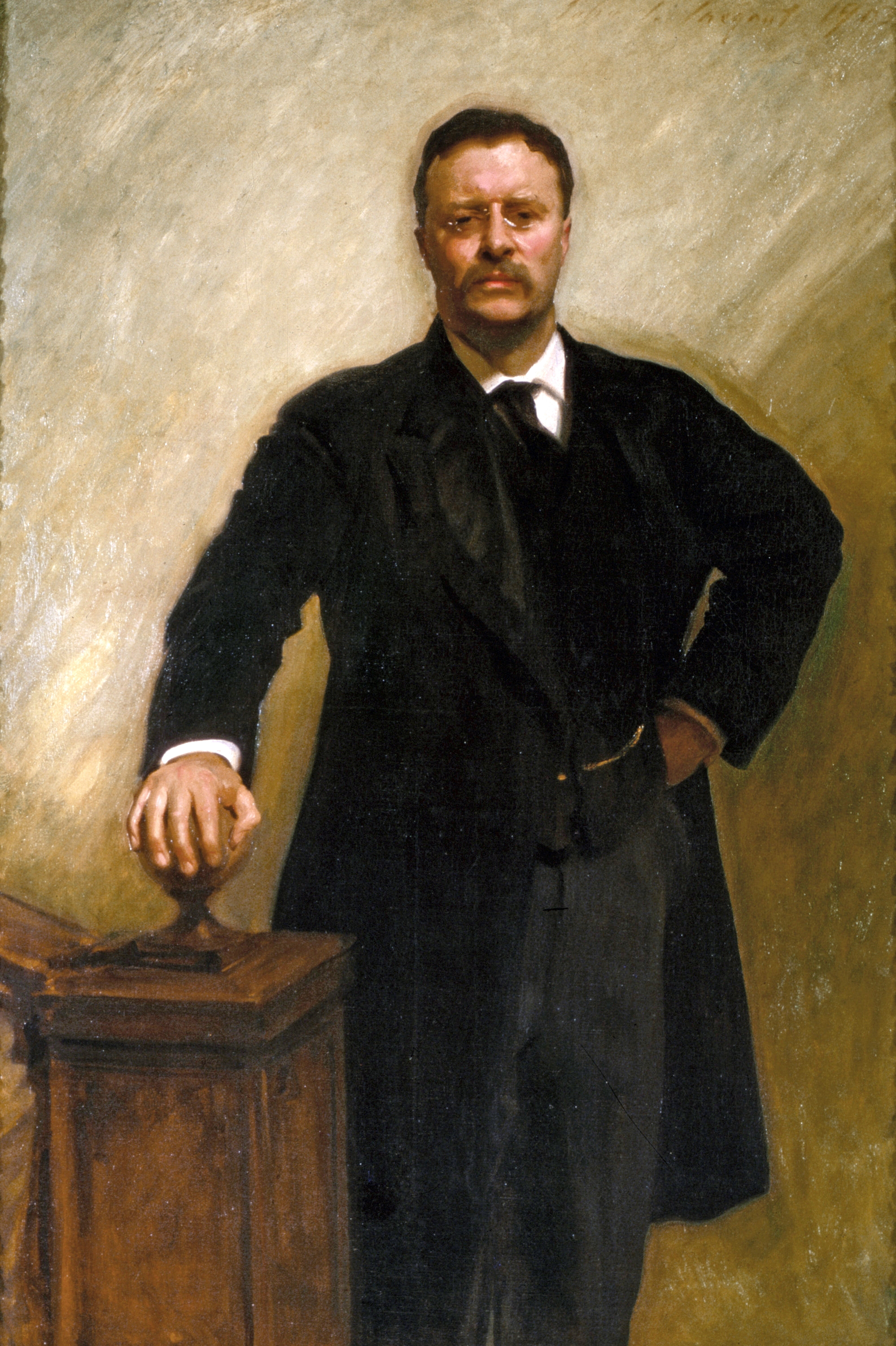
“Theodore the Great: Conservative Crusader” is a curious book by Daniel Ruddy, arguing that Progressive American president Theodore Roosevelt (served 1901-1909) was actually an conservative. What makes the book doubly curious is that it seems to describe the politics of TR relatively correctly – I say “seems” since I frankly only skimmed some chapters (the book isn´t very well written) – and yet reaches the conclusion that his Progressive administration was conservative.

I suppose this means that Ruddy has a somewhat unusual definition of “conservative”. It includes people as diverse as Alexander Hamilton, William Howard Taft, John F Kennedy and Ronald Reagan. If there is any least common denominator at all, it´s the idea that a conservative must be an interventionist and imperialist, making Murica great again (or great for the first time, if you´re Hamilton). Conservationism, huge and federally-funded irrigation projects, a national bank, a fair shake for labor, direct election of senators and finding a third way between laissez faire and socialism are all “conservative” in the mind of the author. I admit that I could probably live with a conservatism of this kind! Ruddy likes the gold standard, too, at least in so far as it brought a certain stability to the economic system – his preferred solution is neither a cross of gold nor free silver, but national banking (which didn´t exist in the US at the time).

Yet, the author isn´t completely uncritical of TR. I don´t think he *really* likes the Bull Moose Party interlude in TR´s career, and he is also uneasy about the US involvement in World War I, interestingly enough given his strong imperialist stances in general. In several chapters, Ruddy actually expresses strong support for Theodore Roosevelt´s diplomatic peace initiatives (which earned TR the Nobel Peace Prize). He also sharply criticizes TR´s record on race. Despite the famous dinner with Booker T Washington, Ruddy believes that TR´s overall politics eroded Black support for the Republican Party, making Northern Blacks gradually embracing the ditto Democrats instead.

Personally, I think bully pulpit aficionado Theodore Roosevelt was pretty much what he claimed to be: a progressive (or Progressive). That is, a really existing progressive. Progressivism with a human face be damned!

Sunday, December 15, 2019

The lesbians did it


“The Progressive Era” is a doorstopper volume containing writings by Murray Rothbard on this particular period in American history (which to Rothbard also included the New Deal). Some of the material has been published previously in various libertarian journals. Other pieces were intended as chapters of a new work, a work Rothbard never finished. “The Progressive Era” was published posthumously in 2017 by the Ludwig von Mises Institute. I readily admit that Rothbard´s extreme brand of libertarianism doesn´t appeal to me. It also strikes me as contradictory. Rothbard supports open borders and identifies heavily with the Catholic and German Lutheran communities who supported the old style Democratic Party, but these people were hardly “libertarian”. One sure wonders what Rothbard said about the more recent mass immigration of Hispanics and Muslims to the United States? Especially since he supports alien voting rights… Many of Rothbard´s positions would make more sense if he had been a conservative communitarian, but even then, it´s difficult to see how a nation with 100+ such communities could possible survive in the long run, especially if it has a very weak central power. I sometimes get the impression that there isn´t *anything* (except government intervention and lesbianism) Rothbard isn´t willing to defend, from slumlords and child labor to misleading labeling and Tammany Hall politics. That´s “laissez faire” for you, right there.


[A RELIGIOUS CONFLICT?]

That being said, “The Progressive Era” does contain interesting takes on a number of topics. Rothbard believes that the conflict between the Federalist-Whig-Republican tradition of cartelized Big Business or Big Government meddling into the life of the ordinary citizen, on the one hand, and the Jeffersonian-Jacksonian-Bourbon Democratic tradition of “individual liberty” and laissez faire economics, on the other, is at bottom a *religious* conflict. What Rothbard calls Pietists or sometimes “Pietistic Liberal Protestants” (PLPs) were pitted against Liturgicals (or rather Liturgicals and something we could call Creedals). 

The Pietists supported the Republicans and their moral crusades to remake all of society by stamping out sin, both individual vices such as drinking alcohol and political sins such as slavery. This moralistic holier-than-thou busy-body attitude rather seamlessly morphed into authoritarian social engineering of a liberal or socialistic slant. Both were based on the idea that the government has the duty to stamp out sin and injustice. Hence progressivism is really a secularized “left” version of Pietistic postmillennial Protestantism. Even feminism is part of this context, since it began as a “Christian” crusade against the saloon, the traditional gathering-place of patriarchal men. The typical Yankees of New England, who began as authoritarian Puritans, were Pietistic under Rothbard´s definition. So were many Scandinavian Lutherans. By contrast, the German Lutherans and most Catholics were Liturgicals, wanted to keep the government out of their communities, and believed that salvation was a private (or perhaps communitarian) matter solely mediated through their respective Churches, not through government institutions. Traditional creedal Calvinists had a similar attitude as the Liturgicals. 

Rothbard believes that a detailed analysis of 19th century election results showed that the Republican-Democratic split usually followed the Pietist-Liturgical divide. In the same city, two equally poor working class districts could vote for two different candidates depending on religious attitude. Democrats did better (or even better) among hard line German Lutherans (yes, that would be the notorious Missouri Synod) than among German Lutherans who were more soft line, and so on. 

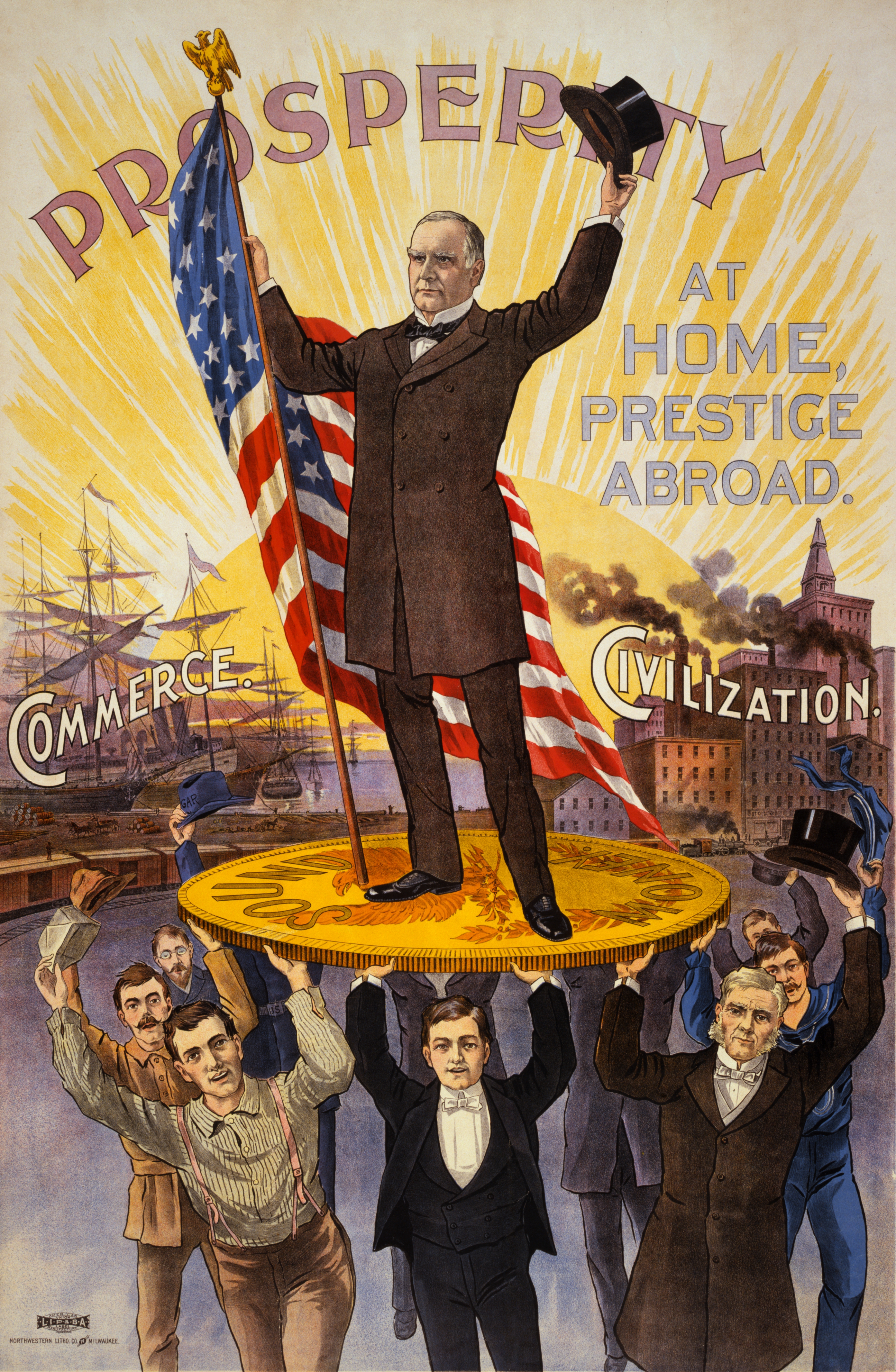
The fall of the old style Democrats came in 1896, when the Democrats had been taken over by the agrarian populists around William Jennings Bryan, who spouted a Pietistic program and hence attracted droves of such activists and voters to the Democratic banner, scaring away all Liturgicals except the Irish, who preferred to stay in the Democratic camp due to their control of a number of city-wide political machines. Meanwhile, the Republicans under William McKinley moved to the center, thereby attracting the declutched Liturgicals and winning the election. Unfortunately for any believer in laissez faire, neither party promoted it from then on, the new style Democrats continuing with their Pietistic campaigns under the ever-defeated perennial presidential candidate Bryan, while the “centrist” Republicans turned out to be hard boiled centralizers, cartelizers, imperialists and – surprise – authoritarian social engineers, and hence pretty “Pietistic” themselves, especially under one Teddy Roosevelt. They probably didn´t really believe in the gold standard, either…


[THE LESBIANS DID IT!] 

When Rothbard is at his most frivolous, he essentially claims that the American welfare state (please, *what* welfare state?) was the work of “lesbians”, that is feminist activists who apparently had this particular sexual orientation to a very large degree. Eleanor Roosevelt is one of the few exceptions – she is rather “our first bisexual First Lady”. OK, Murray, whatever you say. After a cold shower or two, the author does say some interesting things about the women´s movement, too, although they will probably rub the (post)modern feminists the wrong way! The early feminist movement had strong nativist and classist traits, attacking mass immigration (since the immigrant males were often more patriarchal than the Anglo men – sounds familiar?) and the foreign-born working class. The feminists, who were “upper class” according to the author, resented being treated as second class citizens, while immigrant males were automatically given the right to vote. It´s interesting to note that the votes of immigrant males often defeated proposals to extend the franchise to women when put to a referendum, thereby proving a thing or two, but nothing (post)modern feminists want to hear, of course. 

As already noted, the attacks of the Women Christian Temperance Union on saloons (sometimes literal attacks) weren´t simply fanaticized responses to the sin of drinking improperly labeled whiskey. The saloon was the all-male social hub of many immigrant communities, and the saloon-owner was often also a Democratic Party ward-heeler, making saloons politically important, too. It was in the saloon that the Democrats convinced or cajoled the local males into voting Democrat. When the Pietistic moral crusaders (who Rothbard see as proto-feminists) attacked the saloons and/or demanded state legislation against the selling of alcohol, they were striking a blow against the political power of patriarchal structures in the immigrant (often Catholic) districts. Of course, they were also promoting the Republicans over the Democrats…

Rothbard believes that female suffrage was a sheer political maneuver from certain interested parties, rather than a genuine concession to struggling oppressed women. This is most obvious in Utah, one of the first US territories to allow women the right to vote. Here, the reason was to bolster the domination of the Mormon-exclusive People´s Party (hardly a lesbian matriarchy) at a time when non-Mormon migrants settled in the territory in increasing numbers. In Wyoming, where many of the old settlers were Yankees, female suffrage was introduced to ensure old settler control of the legislature as against more transient new settlers. In both Utah and Wyoming, the new settlers had often left their families back East, or didn´t have any, and these all-male constituencies could therefore be defeated at the polls by enlarged male-and-female old settler constituencies. Rothbard believes that a similar scheme was underway all over the United States. If women were given the right to vote, the Pietistic candidates would gain most female votes, since Catholic women usually didn´t vote at all.


[THEODORE ROOSEVELT: THE FIRST PROGRESSIVE]

Another topic dealt with extensively in “The Progressive Era” is the politics of our favorite US president, Theodore Roosevelt, magnanimously dubbed “the first progressive” by Rothbard. Less magnanimously and more maliciously, Mr R implies that McKinley was assassinated on TR´s orders! To Rothbard, Theodore Roosevelt´s progressive regulations were really a form of forced cartelization of the US industry. This explains the otherwise curious fact that the largest capitalists actually *supported* the administration. Federal regulations made life harder for smaller and medium-sized firms, and also for dangerous innovators, while the large businesses would remain unscathed – since they could afford the regulations, while smaller businesses could not. Thus, federal regulation is a way for monopolistic capitalist businesses to do away with pesky competition and cartelize their respective industries. And not just businesses – the banking interests were busy working backstage to create a central bank dominated by them, something they didn´t succeed in doing until the Democratic administration of Woodrow Wilson (who was just as “progressive” as Teddy Roosevelt). 

Even TR´s much celebrated conservation measures were really undertaken on behalf of Big Business, or so Rothbard believes. By setting aside huge amounts of unused land as a federal reserve, the price of all other land (now a scarce resource) sharply rose, which of course benefited its owners (wealthy Republican donors?). Conservation also benefitted the railway interests, since land around the railways was exempted from government confiscation. This forced settlers to buy land for their farms from the railroad companies (which of course hiked the prices). Rothbard doesn´t give much for the trust-busting activities of the TR and Taft administrations. With a few exceptions, he believes that the trust-busting followed a pattern. Theodore Roosevelt was closely allied with the Morgan banking interest, while William Howard Taft was more lined up with the Rockefellers (so was FDR later). The trust-busting usually hit the capitalist group which *didn´t* support the sitting president…

In a concluding chapter, Rothbard sharply attacks Herbert Hoover, who in his opinion was a super-regulator rather than a proponent of laissez faire. To the author, Hoover´s policies were actually quite similar to those of both Wilson and Franklin Delano Roosevelt. The difference – which proved crucial in the end – was that Hoover couldn´t accept wholesale federal coercion of the business community. Instead of such “fascism”, Hoover believed that all regulatory measures must at bottom be voluntary. FDR believed otherwise and the rest, as they say, is history.


[WHAT WAS THE PROGRESSIVE ERA?]

So what was the Progressive Era? I suppose it was a nativist-imperialist form of neo-mercantilism inspired by Pietistic Postmillenial Protestantism and German Kathedersozialismus incorporating authoritarian social engineering and collaboration between Big Business and Even Bigger Government. While dominated by an alliance of bankers, industrialists and “progressive” Anglo politicians, it attracted middle class intellectuals who saw it as a third way between “anarchic” and “wasteful” free market capitalism and revolutionary socialism. And while Roth mentions it only in passing, one of the system´s functions was to appease and control an increasingly restive working class by co-opting Big Labor.

In other words, the Progressive Era was simply the modern phase of capitalism, in which laissez faire and a weak government is replaced by large scale production and a strong national administration, while the establishment decides to give the native workers a slice of the pie to avoid too much class conflict. Behold, really existing Social Democracy!

Wtf, I love the Progressive Era now.

Wednesday, December 11, 2019

The Administration´s promises have been kept


Another Michael Lind extravaganza, this time in defense of US president William McKinley. Contains a lot of interesting side points I haven´t seen before, such as attempts by liberal US historians to paint Andrew Jackson (!) as a "progressive", or claims from the same quarters that Woodrow Wilson was very different from McKinley and Teddy Roosevelt.

Eh, come again? I noticed years ago that Americans have a weird view of their own history, but clearly I didn´t know half of it!

Lind also does a good job debunking the libertarian-conservative-isolationist idea that America was once a glorious non-interventionist republic...from sea to shining sea, on land grabbed from the Indians, with excellent ports and territorial designs of a distinctly geo-political nature on Mexico, Alaska and the Caribbean. 

Quite long article (the link goes to its first page) but well worth reading!

Bringing back McKinley

Sunday, December 8, 2019

What´s the accusation?


Jim Powell´s “Bully Boy: The Truth about Theodore Roosevelt´s Legacy” is a libertarian critique of President Theodore Roosevelt (governed 1901-1909) and his legacy. Most of it is libertarianism or even neo-liberalism 101. Powell doesn´t believe that government bureaucrats should run private businesses, while Teddy Roosevelt in his estimation believed exactly that. The author harks back to the Gilded Age and the presidency of conservative Democrat Grover Cleveland, when the economy was based on laissez faire and the federal administration was relatively speaking weaker than it became later. Powell claims that many of the problems “fought” by TR and the Progressives were really pseudo-problems. There was no “timber famine”, no crisis of unclean food, no problem with trusts and other monopolies (except maybe purely local monopolies). Roosevelt used these as excuses to strengthen the power of the federal administration over the previously free economy.

So far, no surprises. (I´m of course a great admirer of the progressive Bully Boy. Feels we could need one today!) What perhaps surprised me was how consistent Jim Powell is in his libertarianism. For starters, the author is so strongly anti-interventionist  that he opposes both the 1848 war with Mexico and the building of the Panama Canal. His opposition to federal subsidies is so hard that he is *against* attempts to settle the Southwest, since people can´t live there without the federal government paying for the irrigation. Thus, in Powell´s vision, Mexico would still control about half of US territory, and nobody would be able to live there anyway! And yes, that includes California. As for the Panama Canal, Powell must know that it´s good for trade (which he of course supports) but since it also has an obvious military-strategic use, he is opposed to its existence anyway. Somebody might argue that this ultra-libertarianism is inimical to progress, or even downright treasonous. Something tells me Britain, Germany or Japan would be more interventionist! Who knows, they might even bully a libertarian semi-America.

One difference between Powell and Murray Rothbard (who also wrote extensively on the Progressive Era from a libertarian perspective) is that the latter more explicitly attacks the Progressives for creating an alliance between Big Government and Big Business. Thus, in Rothbard´s scenario, TR was in close cahoots with the Morgan banking interest, while presidents Taft and Franklin Roosevelt were in league with the Rockefellers. Powell, by contrast, seems confused by the fact that the capitalists often supported TR´s administration or had proposed tighter regulations already before TR became top bully. It doesn´t seem to fit his anti-socialist worldview.

For the record, I´m not saying “Bully Boy” is a bad book. It´s written in a relatively accessible style and can be seen as a basic introduction to the libertarian critique of Theodore Roosevelt´s presidency (or even progressive politics at large). However, I readily admit that my own political preferences are somewhat more bullyish…

Saturday, November 9, 2019

The Alpha Experience


“Theodore Roosevelt and the Western Experience” is a documentary about Theodore Roosevelt, who was US president from 1901 to 1909.

It´s virtually impossible to cram in all of TR´s life into one documentary, and many things are conspicuously absent or mentioned only in passing, such as the Panama Canal or the Bull Moose Party. The documentary centers on TR´s macho image and manly exploits in the Wild West, but also on his family life. On the political front, the producers paint TR as liberal, progressive and Green – which he, of course, was. However, I noticed that some conservatives are trying to portray Theodore Roosevelt (whose politics had a family likeness to those of Franklin Delano Roosevelt – pun intended) as one of their own.

Personally, I find TR´s politics fascinating, since he seems to have combined things often considered incompatible (rightly or wrongly): elite status, progressivism, populism, imperialism and conservationism. I cannot help thinking that we need a guy like TR today, but unfortunately we live on the far side of the peak oil curve, so combining say populism and conservationism might not be an election winner! With that, I leave it up to you to watch the documentary and reflect further on the Western experience…

Saturday, November 2, 2019

A message from the bully pulpit


I say Nancy Pelosi and Shillary Clinton are whimps. That, and a bunch of pussies, to boot. Impeachment? No man gives a damn about impeachment. If I had wanted to teach that Orange Man bloke some manners, I´d simply challenge him to a fight in the Octagon. That, or duelling with bear rifles! 

PS. Florida is for sissies. 

Yours for a stronger federal gov and more national forests,

TR 

Seeking the greatest good at the end of time


“Seeking the Greatest Good” is nominally a documentary about Gifford Pinchot (1865-1964), the first Chief of the United States Forest Service, often regarded as the “father of American conservationism”. Pinchot was a close ally of President Theodore Roosevelt, a progressive Republican, and was fired from his position as head of the Forest Service by Roosevelt´s more conservative successor William Howard Taft. Pinchot´s family later established the Pinchot Institute for Conservation to continue supporting large-scale conservation projects of American forests. “Seeking the Greatest Good” is really an extended pitch for said institute, clearly directed at prospective donors. It´s interesting…in its own way.

Thus, the documentary constantly emphasizes Pinchot´s good breeding and high level political connections, and those of his family. JFK is featured as he was speaking at an event organized by the Pinchot Institute. “The life of the mind” is said to be important, as so is a serious commitment to your community and country, “seeking the greatest good for the greatest number in the long run”. Not a single colored person anywhere in this production – it´s lily White (and perhaps a bit green). The Institute is housed in a fancy castle-like building in the lush countryside. We are clearly dealing with the East Coast liberal establishment here. It´s also interesting to see how the documentary-makers approach Theodore Roosevelt. They like his way of using certain prerogatives of the executive power to quickly rush through the creation of 21 national parks literally at midnight before Congress knew what was going on. More annoying is the music in the background, with its “Messianic” flavor.

But OK, I´m waxing a bit ironic here. Actually, the Institute is doing useful things, too.

The present-day Pinchot Institute is trying to preserve forests (together with rivers and lakes) by working closely with the (relatively speaking) smaller land-owners. The main reason why they sell their forests to big logging companies is that they can´t afford health care insurance in old age. The Institute therefore administers a comprehensive health care program for elderly forest owners, on condition that they don´t sell their land or cut the trees. Apparently, the health care is ultimately paid for by buyers of carbon offsets! In Vernonia, Oregon, the Institute has convinced local land-owners to pay 10% of their carbon offsets to a local fund to attract physicians to provide health care for the struggling community. Also, they provide biomass for local electricity needs. The community has built an entirely new community center and a public school thanks to these efforts. In Delaware, conservation of the Delaware River and its drinking water is high on the Institute´s agenda.

The documentary also contains polemic against John Muir and his “preservationist” perspective – Muir met and befriended both TR and Pinchot back in the days, but his perspective was radically different. Today, Muir would presumably be counted among the deep ecologists or primitivists. From a Muir-esque perspective, Pinchot´s conservationism is really “conserve today, exploit tomorrow”. The Pinchot Institute believes that Muir´s approach was unhelpful and would never carry the day in the West, with its strong mining, logging and cattle-ranching interests. Pinchot-style conservationism, by contrast, could be sold as a compromise solution which would even benefit the business interests in the long run. The need for pragmatism, bipartisan consensus and political unity when dealing with environmental issues is constantly emphasized in this production. And yes, it was made in 2012. 

Today…well, the Pinchot Institute is actually still trying to sound reasonable and bipartisanish when criticizing the Trump administration, for instance over its failure to act in support of the communities devastated by the recent catastrophic fires in California. Since TR would have challenged Orange Man to a wrestling match to show who´s Alpha, I suppose the Institute should be commended for its moderation!

As for the issues at hand, they are not simple – we need long-term sustainability to survive as a species (and as a nation, if you´re American), but we can´t simply stop using fossil fuels or nuclear power tomorrow morning either, unless a massive economic collapse followed by a Sino-Russian nuclear first strike appeals to you. Time will tell if the Pinchot Institute´s pragmatic approach is the right way to go, and times is running short…


Sunday, September 1, 2019

The bully pulpit


Time to emulate TR and his gunboat diplomacy, send the French navy to Brazil, occupy the Amazon and make it safe for resource conservation. Or go one step further, and make it off limits John Muir style. 

Also, make sure to protect the European beef cows. 

Friday, September 21, 2018

Wtf, I love the Kathedersozialisten now


Secret German socialist? 


“Illiberal Reformers” is a book attacking the Progressive Era in American history, usually associated with the presidencies of Theodore Roosevelt, William Howard Taft and Woodrow Wilson. The author is a libertarian who supports unrestricted mass immigration, sweatshop wages and limited government. He makes constant attempts to front as a “progressive” himself by defending immigrants, Jews and Blacks, while attacking the historical Progressives. I assume such a maneuver is necessary in today's political climate at American colleges (which are often dominated by “liberals”).

The author argues that most Progressives were racists and supported eugenics, opposed immigration (except from Western Europe), called for continued segregation of Blacks, and wanted to exclude women from the workforce. Even apart from this, the Progressives were often authoritarian, in effect calling for a kind of top-down social engineering through “the administrative state”. Woodrow Wilson, the future president, openly questioned the division of powers enshrined in the U.S. constitution. It was also common to explicitly attack individualism and individual rights, instead looking at society as an organism, with the citizens in effect being cells within a greater whole. The author claims that many future Progressives and reformers were educated in Germany by the “socialists of the lectern”, the Kathedersozialisten much maligned by Marx and Engels. There was also a connection to the social gospel preaching, the two movements being interpenetrated. This evangelical background also gave the Progressive movement its strong missionary zeal. More ironically, the author attacks the Progressive scholars for simultaneously being political activists – this is presumably an attack on his leftist peers today.

While the authoritarian streak in social engineering is well known (in Sweden, the Social Democrats supported the Institute for Racial Biology and sterilization of the feeble-minded), I admit I had no idea it went so far. It seems that the “illiberal” aspect of the Progressive politics wasn't an unfortunate aberration or prejudice, but a central point of the entire enterprise. Excluding Blacks, most immigrants, the unemployable, the mentally handicapped and (in some versions) women were integral to the Progressive agenda. The agenda was to uplift or protect the mostly Anglo working classes, and through this route avoid “race suicide”. Black and women activists naturally demanded inclusion of their groups, while accepting the general framework. Thus, Black leader W E B Dubois attacked the lesser gifted, while feminist leader (and anti-abortionist) Margaret Sanger supported eugenics. Sometimes, Progressive reform proposals were extremely ingenious, such as the demand for a minimum wage. The Progressives conceded that a federal minimum wage would increase unemployment, but said that this was the *point* of such proposals! They were tailored to exclude unskilled workers from the workforce, most of such workers presumably being Black or recent immigrants. Another ingenious proposal was to portray the minimum wage as a “tariff on foreign labor”, thereby directly connecting agitation for such a wage with opposition to open borders.

There are two problems with “Illiberal Reformers”. First, the reforms advocated by the Progressives could be extended to cover Blacks and women, which they indeed were during the super-progressive New Deal of the 1930's and the war economy of the 1940's (in the case of Blacks, “Northern” Blacks mostly). The rhetorical attempt to smear all “liberals” with the tar of racism therefore fails. Second, the author pretends as if all of the illiberal proposals were simply wrong. That's entertaining, coming from a libertarian. Of course, it's well known that immigrants from outside the Anglo-sphere habitually vote for the Libertarian Party…not!

That being said, still a fine study. Deserves five stars.

U.S. government, made in Britain?


A review of "Congresional Government: A Study in American Politics" by Woodrow Wilson

I skimmed this material, available free for download. Woodrow Wilson, the future U.S. president, published “Congressional Government” in 1885. This is a reissue from 1900, with a short introduction by the author. Wilson describes the functioning of Congress and the Executive as it looked like in 1883-84, when Chester Arthur was president and civil service reform was the most important political issue. Wilson believes that most effective power is in the hands of Congress, and that the so-called balance or division of powers laid down in the Constitution no longer functions. At the same time, power has become ineffective, being diffused on many different Congressional committees. The Executive and the Legislative are frequently in conflict, the Secretaries are semi-independent, and the two political parties are little more than coalitions of very disparate groups. The Judiciary is really subordinate to Congress. Wilson also points out that federal power has increased at the expense of the states.

Interestingly, Wilson's solution isn't to go back to a “strict construction” of the Constitution. Instead, he wants the United States to introduce the British parliamentary form of government. The Executive would be a Cabinet directly responsible to Congress. At the same time, Congress would presumably function in a more supervisory way than hitherto. Also, the political parties should become more homogenous. Civil service reform would make sure that only the top tier of the administration would consist of partisan political appointees. The power of the states would remain small. Indeed, Wilson's proposals would centralize power even further on the federal level. Despite being directly responsible to Congress, the president would probably be stronger than before. Wilson envisions the president to be a former Cabinet minister (rather than some random guy selected by a convention) and hence well-informed about all major policy issues – and presumably how to make Congress adopt them.

Not the most interesting material around, perhaps, but if you're into U.S. constitutional history, I suppose this could be for you.

In defense of the lectern


Amazon actually sells lecterns, and as a card carrying Kathedersozialist, I of course had to write a self-ironic comment... 

As an officially recognized Kathedersozialist (officially recognized by the Prussian government, that is), I use this lectern when indoctrinating young and impressionable American students in the necessity for an un-ironically historicist-organicist understanding of societal development, and how this relates to the creeping bourgeois socialism of Teddy Roosevelt and the American Empire Party. I also make them admire the German Post Office. (Unfortunately, one of my early Russian students seems to have developed some really boorish misunderstandings of my teachings, which I'm the first to deplore.) Above all, I emphasize the need for closer diplomatic and trade relations between the Second Reich of the Iron Chancellor and the budding humanitarian imperialism of the fair Republic, especially in the South East Asian and East Indian theatres. I know the annoying “proletarian” agitators and mischief-makers Marx and Engels are condemning me as a “socialist of the lectern”, but I think my approach is more practical and will lead to fruitful results in the near future…

Thursday, September 20, 2018

On race and rice


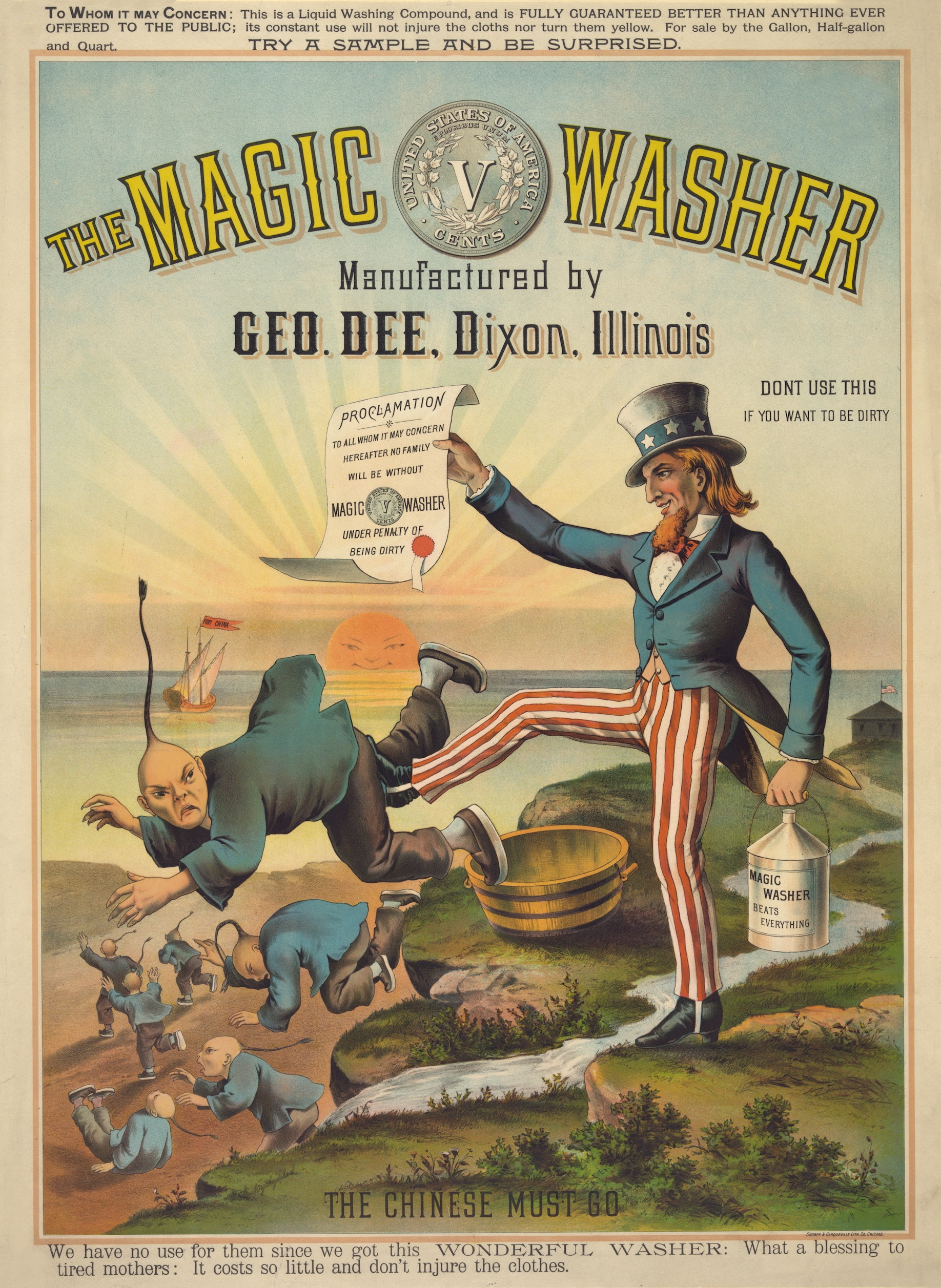
This is a pamphlet published by the American Federation of Labor (AFL) in 1902. At the time, the AFL was lobbying Congress to prolong the so-called Chinese Exclusion Act of 1882, a law de facto prohibiting Chinese immigration to the United States. The AFL was the “conservative” craft-based labor union of Samuel Gompers.

By today's standards, some of the anti-Chinese arguments in the pamphlet are unabashedly racist. The goal really is to protect White or Anglo-Saxon workers, and White civilization as such, from the yellow peril. One resolution demands the exclusion of all “Mongolian” (East Asian) labor from the United States. The Chinese are disparagingly referred to as “coolies” and “Celestials”. Mixed race offspring is said to be degenerate, and assimilation of the Chinese is therefore impossible.

The more standard arguments against immigration include its effect on wages and salaries, the rise in crime (including prostitution and trafficking), the slums, and the fact that the Chinese function as a “state within a state” through their semi-secret societies. Peculiarly to modern ears, anti-slavery arguments are used against Chinese immigration. The AFL also argues that Filipino workers must be protected against Chinese immigration to the Philippines (at the time a US territory). The title of the pamphlet (which apparently gave it some notoriety) is a reference to the following statement: “You can not work a man who must have beef and bread, and would prefer beef, alongside of a man who can live on rice. In all such conflicts, and in all such struggles, the result is not to bring up the man who lives on rice to the beef-and-bread standard, but it is to bring down the beef-and-bread man to the rice standard”. Strictly speaking, this is a quotation from “Half-Breed” Republican politician James G Blaine, who argued in favor of Chinese Exclusion in 1879.

The most interesting argument in the pamphlet is that the Chinese in many ways are *better* than the Whites, and that unrestrained Chinese immigration for *that* reason threatens the White working class. Today, merit-based immigration is seen as an acceptable alternative to open borders for everyone, but the AFL more or less explicitly rejects both. Merit-based immigration won't solve the problems (as seen by the AFL) with the Chinese presence in California and elsewhere, which include wholesale Chinese takeovers of key industries and trades.

The AFL's “class collaborationist” stances shines through the pamphlet at several points. The AFL argues that Chinese immigration threatens both workers and employers, since Chinese workers only work for Chinese businesses, and since these pay lower wages, the White-owned American businesses will be outcompeted. They mention an incident in which Chinese workers supposedly called a strike against a White employer who wanted them to work side-by-side with Whites. The Chinese threaten labor peace and the emerging brotherhood of capital and labor. The AFL also bemoans the American trade balance with China – some things, it seems, never change! Many of the resolutions printed in this pamphlet aren't specifically AFL, but much broader. However, it's safe to assume that the Gompersites supported their general tenor, otherwise why reprint them in a memo to Congress?

I wonder what Gompers would have said of the present-day AFL-CIO?