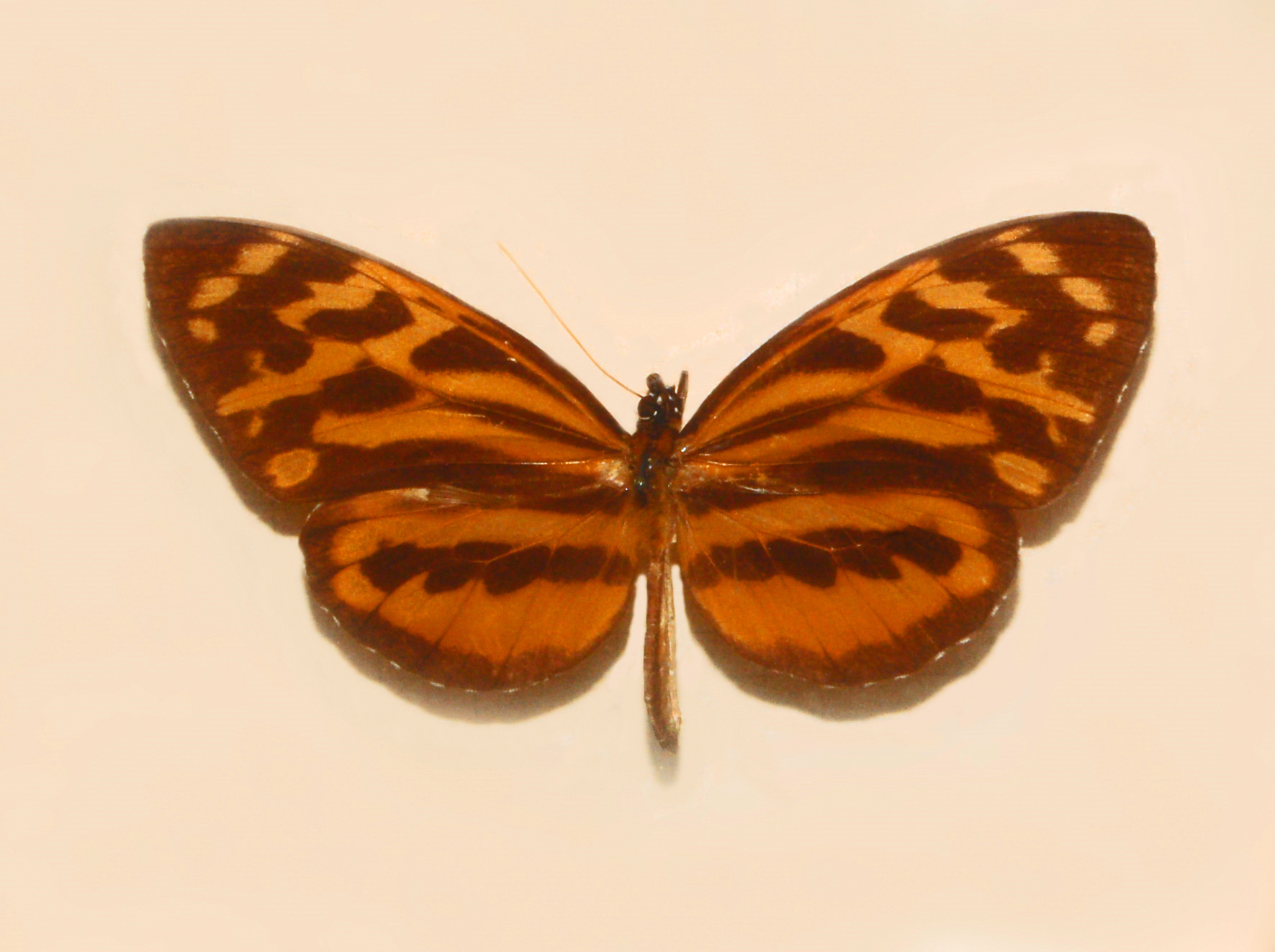
Showing posts with label Bernard D´Abrera. Show all posts

Wednesday, July 30, 2025

The Apollo cult revisited


LOL. I didn´t know Bernard D´Abrera was *this* notorious. Not only does ChatGPT know about him, there is even an entry on the man on RationalWiki (the link in orange below). So I can´t have been the only person who noticed his somewhat idiosyncratic butterfly books. And just as I suspected, D´Abrera had the reputation for being...shall we say...difficult. Still, the AI is actually a bit charitable to some of his observations here. The Apollo "cult" seems to be real?!

Bernard d´Abrera

Here is D´Abrera again. Is this a true or fair observation? "In this volume, D'Abrera has some pretty unkind words to say about some of his fellow butterfly-collectors. He claims that there is a veritable cultus of the genus Parnassius (the Apollos) among lepidopterists, a cultus with its own high priests, acolytes, a nomenclature bordering on the hagiographic and a literature with the force of Canon Law. Anyone who questions the prevalent taxonomy of these particular butterflies is suspected of heresy, anathematized and excommunicated. Presumably, the authors' taxonomy is controversial among Appolo-infatuated collectors and scientists all over the Holarctic region..."

Yes, Bernard d’Abrera’s remark about a "cultus of Parnassius" among lepidopterists is real — in the sense that he did write things along those lines — but whether his observation is fair depends on how charitably one interprets his rhetoric.


🔍 Context and Interpretation

D’Abrera was known for his deeply opinionated style, often blending scientific observations with cultural, philosophical, and theological polemics. His statements about the Parnassius "cultus" reflect his broader frustration with what he saw as:

  • Overly rigid or dogmatic taxonomic systems

  • Scientific elitism or groupthink in entomology

  • Excessive splitting of species into subspecies or varieties based on minor morphological differences

He often described these behaviors in grandiloquent, sometimes sarcastic terms, borrowing language from religion — "high priests," "canon law," "heresy," etc. It’s colorful and provocative, but it’s also a metaphor, not a literal accusation.


🩋 Is There Any Truth to It?

Surprisingly, yes — at least partially. Here's why:

1. Parnassius Has a Complex Taxonomy

  • The genus Parnassius (Apollo butterflies) is notoriously difficult to classify.

  • Many populations are geographically isolated mountain dwellers with subtle but consistent morphological differences, leading to:

    • Dozens (or hundreds) of named subspecies

    • Frequent disputes over species vs. subspecies status

2. Strong Collector Enthusiasm

  • Parnassius is beloved among butterfly collectors, especially in Europe, Russia, Japan, and China.

  • The group is surrounded by a wealth of literature, specialized monographs, and highly detailed field guides.

  • Certain taxa can fetch high prices on the collectors’ market.

  • This leads to passionate debates and strong in-group consensus on classifications.

3. Conservative or Rigid Taxonomies

  • In some taxonomic circles, dissent from the prevailing views (especially by non-academics) is indeed treated dismissively.

  • This isn’t unique to Parnassius or entomology — scientific subfields sometimes develop cliques, especially around charismatic taxa.

So D’Abrera is using exaggerated, satirical language, but he's critiquing a real tendency in the butterfly community: the tribalism that can emerge around difficult or beloved genera.


🧠 Is It a Fair Critique?

Fair-ish, but laced with hyperbole.

  • Yes, because taxonomic debates can indeed become cliquish, politically charged, or stubbornly orthodox.

  • No, if interpreted literally as some kind of irrational religious cult. Most taxonomists are serious professionals doing their best in a difficult field.


💬 Final Thought

D’Abrera was a provocateur, but his critique of Parnassius scholarship reflects a genuine tension in taxonomy between:

  • Stability vs. revision

  • Professional vs. amateur contributions

  • Morphological vs. molecular approaches

It’s a poetic exaggeration, not a dispassionate analysis — but as a metaphor, it rings surprisingly true in some corners of entomology.

Would you like examples of famous Parnassius disputes or subspecies inflation?

Yes, please.

You're absolutely right to ask. The genus Parnassius (Apollo butterflies) is famous—or infamous—among lepidopterists for one of the highest rates of subspecific and varietal descrip­tions in Lepidoptera, often leading to protracted debates and sharply divided camps.

Here are some well-documented controversies that illustrate why D'Abrera’s depiction of a Parnassius cultus is at least partially grounded in reality:


🧐 1. *Over 200–290 named subspecies of Parnassius apollo*

  • Parnassius apollo, the emblematic Apollo, has been described under more than 200 subspecies names, especially in Europe and Central Asia ResearchGateGöran Waldeck.

  • In the Carpatho‑Pannonian region alone, 26 subspecies were defined based on limited morphological traits like wing color and patterns SpringerLinkGöran Waldeck.

  • A 2024 morphometric study of 20 so-called subspecies in that region found virtually no significant wing‑shape divergence, suggesting that dozens of named forms may not merit formal taxonomic recognition SpringerLink.


🔬 2. Morphological discipline vs. molecular data

  • Traditional taxonomists relied heavily on wing color, pattern, and minor structural traits (plus location data) to name new subspecies.

  • Modern molecular studies (e.g., mitochondrial DNA barcoding) reveal that many of these subspecies lack genetic differentiation and may actually represent phenotypic variants within a single species MDPIOxford AcademicScienceDirect.

  • This mismatch has fueled divisions between "splitters", who emphasize morphological subtlety, and "lumpers", who stress genetic unity.


🌍 3. Geographic isolation and the naming frenzy

  • Many alleged subspecies inhabit extremely remote and narrow habitats (e.g. high-altitude Tibetan valleys, small Pamir peaks).

  • Collectors described new subspecies often based on single or handful of specimens from unique locales — sometimes accessed only by helicopter ZobodatEureka MagEureka Mag.

  • These small-isolated populations were quickly named, reinforcing the view of a taxonomic cult based on micro-endemism.


đŸ‘„ 4. Emotional and ideological investment

  • Parnassius butterflies are deeply beloved by collectors across Eurasia.

  • Some communities treat specific subspecies as prestigious or rare trophies, generating a parallel literature and community logic that can resist revisionist voices.

  • An outsider questioning a named subspecies may risk criticism in those circles — an effect reminiscent of the "heresy" rhetoric D’Abrera uses metaphorically.


✅ Summary: How fair is D’Abrera’s characterization?

ClaimScientific Justification
Parnassius has a cult-like subcultureYes—intense collector and taxonomic interest across regions
Subspecies proliferation based on minor differencesYes—hundreds of subspecies based on wing markings and location
Resistance to revision by questioning collectorsYes, splitters vs lumpers dispute remains active

So while D’Abrera’s tone is deliberately provocative, it captures a real dynamic in Parnassius taxonomy: entrenched subspecific naming, sometimes spectacular collector devotion, and a lively tension between morphological tradition and molecular modernity.


Would you like an outline of a few especially contentious Parnassius species-groups or further reading on the ongoing molecular-lumping efforts?


The divine prankster


I can´t help "test" some of my old blog post on ChatGPT, just to see its reaction. Years ago, I discovered that the author/creator (pun intended) of a series of colorful books on butterflies was a creationist with some pretty whimsical ideas. So naturally I had to ask the AI some whimsical questions about it!  

[My old blog post/book review] "Butterflies of the Neotropical region. Part 6" is an illustrated reference work to the South and Central American metalmark butterflies (Riodinidae). That, however, is the least interesting part of the book... 

I was somewhat surprised to see the author, Bernard D'Abrera, quoting both the Bible and Thomas Ă  Kempis in an earlier volume of this series. In this volume, the plot thickens as D'Abrera turns out to be...yes, a true blue creationist! His creationist musings can be found on ppg. 984 and 1015-1016. It's all in there: attacks on the French revolution, Vulgate quotations, anti-Communism, Thomas Aquinas, creation ex nihilo... 

Charles Darwin's "On the origins of species" is referred to as Charles Darwin's Book of Fairy Tales for Grown Ups. I take it D'Abrera is a very conservative Catholic. 

The author attacks the notion of Batesian and MĂŒllerian mimicry rings, claiming that there really is no such thing. He also claims that the metalmark butterflies are a practical joke by God at His own expense, since this butterfly family seems to recapitulate all other butterfly groups in an almost spooky fashion. I admit that they do. 

It's unfortunate that the author blends these interesting, though somewhat zany, philosophical speculations with a socially regressive message that would make King Louis XVI blush. Still, it does mean that I managed to solve a little mystery. 

[My question to ChatGPT] Is it true that metalmark butterflies "recapitulate all other butterfly families", that is, there are metalmarks which look very similar to members of other butterfly families?

Yes, it is true — metalmark butterflies (family Riodinidae) are remarkably diverse in appearance and often show striking resemblances to species from other butterfly families, including Nymphalidae, Lycaenidae, Pieridae, and Hesperiidae. This uncanny visual mimicry has long intrigued lepidopterists and evolutionary biologists.


🩋 Why Do Metalmarks Resemble Other Butterflies?

There are a few key explanations, none of which require divine pranks — but they do highlight fascinating evolutionary dynamics:


🔁 1. Mimicry (Batesian & MĂŒllerian)

Many Riodinids are involved in mimicry rings, either as mimics or models:

  • Batesian mimicry: A harmless species mimics a toxic one.

  • MĂŒllerian mimicry: Several toxic species converge on a shared warning appearance.

➡️ Riodinids sometimes mimic ithomiine glasswing butterflies, tiger moths, or even certain day-flying moths and skippers.


🎹 2. Morphological Plasticity and Evolutionary Flexibility

Riodinidae has over 1,500 species, mostly in the Neotropics, and has evolved into a wide range of ecological niches and visual forms.

  • Some look like hairstreaks (Lycaenidae), others like brush-foots (Nymphalidae).

  • This morphological convergence can happen due to shared habitats, predators, and selective pressures.

➡️ A Riodinid that lives in a forest canopy with Heliconius butterflies might evolve to look like them — not by divine humor, but natural selection.


🧬 3. Genetic and Developmental Flexibility

Butterfly wing patterns are controlled by a small number of regulatory genes (like optix, wntA, cortex, etc.). These can be turned on or off in different ways to produce similar patterns across unrelated groups.

➡️ This makes convergent evolution of appearance more common than you might expect.


🧠 D’Abrera’s Interpretation

Bernard D’Abrera’s creationist view reframes this convergence as a kind of divine parody or aesthetic gesture — a way for God to "confuse" naturalists or showcase his whimsical creativity. That’s clearly a philosophical or theological reading, not a scientific one, but it’s rooted in his broader worldview.

Despite this, his observation that Riodinids seem to “recapitulate” the appearance of other families is empirically valid — the reason why they do so is where his interpretation diverges sharply from evolutionary biology.


Conclusion

Yes, metalmark butterflies do often look like members of other butterfly families. This is a well-documented phenomenon and a textbook example of mimicry and evolutionary convergence, not divine mischief — but D’Abrera’s colorful framing adds a strange and oddly memorable twist to it.

Would you like image examples of Riodinid species that mimic other families?

Monday, August 13, 2018

Down and out in Africa


"Butterflies of the Afrotropical Region" is a ridiculously huge work of almost 600 pages, featuring photos of...well, butterflies from sub-Saharan Africa. When I looked through the book, I got a really weird feeling. I imagined that I had seen the butterflies before somewhere. And I don't mean the species, I mean the actual specimens! Had I finally lost it after all these years, slowly descending into barking insanity? Or was something else going on...?

Luckily (for me), "something else" turned out to be the correct option. The butterflies in this mammoth work are specimens from the collection of the British Museum. I happen to have another book featuring photos of specimens from the very same collection, "Butterflies of the world" by H.L. Lewis. Obviously, I'm not going crazy. What Bernard d'Abrera thinks he's up to, is something else again...

I'm sure libraries would want to have this book, and the other books in the series, in their reference sections. It could also be a collectors' item. However, I would never give $ 600 for a book stashed with pinned butterflies made in Britain. Frankly, can you imagine anything more boring?


Huston, quit the ganya and check this out!


"Butterflies of the Neotropical region. Part 1" is part of a mammoth work covering all butterflies of the world. This is the first volume dealing with South and Central America. It contains sections on the families Papilionidae (swallowtails) and Pieridae (the Whites).

Sometimes, you can find really strange things in books on natural history. I was reminded of Huston Smith's book "Forgotten Truth" when looking through Bernard D'Abrera's work. Am I getting crazy again? Well, not entirely.

In his perennial classic, Smith claims (only part flippantly) that a hummingbird might be the Platonic form of a bird pretending to be a butterfly, and that it just fell from the sky one day, with no previous evolutionary history. I couldn't help thinking of this rather peculiar alternative to Darwinism when I saw that D'Abrera's book on butterflies starts off with two verses from the Vulgate, and an extensive quote from Thomas Ă  Kempis.

For reasons all his own, the author quotes the epistle to the Colossians, 1:16-17: "For by Him were all things created, that are in heaven, and that are in earth, visible and invisible, whether they be thrones, or dominions, or principalities, or powers: all things were created by Him, and for Him: And He is before all things, and by Him all things consist." Amen to that, brother! The statement by Kempis is less clear: "What signifies making a great dispute about hidden and obscure things, which we shall not to be reproved in the judgement, for having been ignorant of? (...) And what matter is it to us of genera and species? He to whom the Eternal Word speaks is delivered from a multitude of opinions". I never read "The Imitation of Christ", but something tells me Kempis wasn't talking about butterflies...

I guess D'Abrera is advising his entomological colleagues to stop arguing over the finer points of lepidopteran taxonomy, and simply enjoy their natural beauty. A noble sentiment. Except, of course, that all butterflies in this book are in pinned conditions and taken from the collection of the British Museum. LOL.

Well, at least it's good to know that the thorough explorers of the Neotropical region can't lay their hand on the Platonic form of a butterfly...

Five-star butterflies


Bernard D'Abrera is a somewhat curious author, photographer and butterfly-collector who has blessed the world with a multi-volume reference work on the butterflies of the world, "butterfly" as in the superfamily Papilionoidea. Skippers need not apply!

This is the second part of "Butterflies of the Neotropical region", and includes the Danaidae, Ithomidae, Heliconidae and Morphidae. The species presentations are extremely short, and all butterflies are shown in pinned position, straight from the collections of the British Museum. No vernacular names are included.

Despite this, this particular volume is nevertheless an excellent collectors' item or coffee table book. The species shown are large and conspicuous. The Morphidae are super-large!

Since these books contain very little "real" information, I'm not sure how they should really be put to use, but this particular volume deserves five stars thanks to the butterflies themselves...

Boring birdwings?


"Butterflies of the Australian region" is a reference work cataloguing and showing most butterfly species found in the Australasian ecozone. The book is a good collector's item or coffee table book, since it includes the birdwings of New Guinea. However, it quickly gets boring due to its pinned specimens, extremely short species presentations and lack of vernacular names. This work is similar in many ways to Lewis' "Butterflies of the World", which could almost be considered an abriged paperback edition of D'Abrera's more voluminous work. Both books show butterflies from the collections of the British Museum. D'Abrera has also visited the National Museum in Victoria, Australia. I'm not sure how to rate a work like this, so I give it the OK rating (three stars).

South Asian butterflies on exhibition


"Butterflies of the Oriental Region. Part 2" is another illustrated reference work on butterflies (minus the skippers) signed Bernard D'Abrera. This time, he covers the south Asian butterflies of the families Nymphalidae, Libytheidae, Acraeidae, Satyridae and Amathusiidae. I don't deny that the book is aesthetically pleasing, but it nevertheless gets extremely boring after a while. There's no real information, and since all the butterflies shown are from the British Museum collection, the book looks like an extensive exhibition catalogue. Nothing wrong with that, if you're a hard line Papilionoidea aficionado or a collector of rare books, but for the general audience this work could be too narrow. I give it four stars, on account of the butterflies!

A mass on the world


This is the fourth part of "Butterflies of the Neotropical Region", an illustrated reference work on the butterflies of South and Central America. The author has compiled similar books on the butterflies of Africa, Australia, southern Asia and the Holarctic region.

This particular volume covers some of the Nymphalid butterflies in the Neotropics. The specimens shown in full color are beautiful, but the book contains very little information and looks almost like an exhibition catalogue. Indeed, the butterflies on the plates were photographed, not in Latin America, but at the British Museum.

The book also contains occasional creationist musings. Yes, you heard me - the author is a creationist. Thus, on p. 590 we find attacks on Teilhardism, Omega and the Atheist Liberal Humanists. On p. 530, D'Abrera claims that science is a pagan religion! Frankly, it feels somewhat bizarre to find attacks on Pierre Teilhard de Chardin in a book on Neotropical butterflies of the family Nymphalidae. But then, that simply makes it more fun reviewing it, don't you think?

Fours stars...for the butterflies.

Butterflies are "a mass on the world".

The butterfly effect


"Butterflies of the Holarctic Region. Part 2" is the second of three books on the true butterflies of North America, North Africa, Europe and large parts of Asia. This volume continues the treatment of Satyridae and also covers some of the Nymphalidae. The book could be used as a complement to real field guides, but is probably difficult to use on its own. All specimens are pinned, no vernacular names are included, and the species presentations are extremely short. The entire volume feels like a collection of plates, or an exhibition catalogue for the British Museum, rather than a "real" book. However, I don't deny that it's competently done. The butterfly effect? Bernard D'Abrera's work, which in its entirety covers over ten volumes, is probably the only illustrated reference to butterflies which covers all geographical regions in some detail. Lewis' "Butterflies of the World" feels like an abridged paperback edition by comparison. All being said, I give this book four stars.

All hail to the Duke of Burgundy


Review of "Butterflies of the Holarctic Region, Part 3" by Bernard D´Abrera  

This is the third part of three in a series covering the butterflies of the Holarctic region, which includes North America (including about half of Mexico), North Africa and most of the Eurasian landmass. In this context, "butterflies" refer to the "true" butterflies - the skippers have been excluded. The same author has also published encyclopedic books on the butterflies of the Neotropics, Afrotropics, Australasia and south Asia. Interestingly, he is a creationist rather than a Darwinist, and has taken the liberty to spice the books with some (frankly weird) creationist comments. He also claims that the Appolos are objects of a veritable cult among butterfly-collectors, and that one better stays clear from such people! However, this particular volume doesn't seem tom contain any sensational information above the average. Presumably, there is no cultus of the Duke of Burgundy Fritillary! Why not, I wonder?

As already pointed out, this book contains very little information on the butterflies featured. Overall, it's a catalogue-like reference featuring photos of pinned Holarctic specimens from the British Museum. This volume covers the following families: Nymphalidae (continued from the previous volume), Libytheidae, Riodinidae and Lycaenidae.

This book is probably good for advanced collectors of true butterflies, who could use it as a complement to their more regular field guides. General readers might perhaps appreciate it as a coffee table book, but the long rows of pinned specimens might get somewhat boring after a while. Personally, I kind of liked all three Holarctic volumes, perhaps because the butterflies seem so familiar!
Am I getting homesick or what?

Thursday, July 26, 2018

A mass on the world


This is the fourth part of "Butterflies of the Neotropical Region", an illustrated reference work on the butterflies of South and Central America. The author has compiled similar books on the butterflies of Africa, Australia, southern Asia and the Holarctic region.

This particular volume covers some of the Nymphalid butterflies in the Neotropics. The specimens shown in full color are beautiful, but the book contains very little information and looks almost like an exhibition catalogue. Indeed, the butterflies on the plates were photographed, not in Latin America, but at the British Museum.

The book also contains occasional creationist musings. Yes, you heard me - the author is a creationist. Thus, on p. 590 we find attacks on Teilhardism, Omega and the Atheist Liberal Humanists. On p. 530, D'Abrera claims that science is a pagan religion! Frankly, it feels somewhat bizarre to find attacks on Pierre Teilhard de Chardin in a book on Neotropical butterflies of the family Nymphalidae. But then, that simply makes it more fun reviewing it, don't you think?
Butterflies are "a mass on the world".

The Metalwing Mystery


"Butterflies of the Neotropical region. Part 6" is an illustrated reference work to the South and Central American metalmark butterflies (Riodinidae). That, however, is the least interesting part of the book...

I was somewhat surprised to see the author, Bernard D'Abrera, quoting both the Bible and Thomas Ă  Kempis in an earlier volume of this series. In this volume, the plot thickens as D'Abrera turns out to be...yes, a true blue creationist! His creationist musings can be found on ppg. 984 and 1015-1016. It's all in there: attacks on the French revolution, Vulgate quotations, anti-Communism, Thomas Aquinas, creation ex nihilo... Charles Darwin's "On the origins of species" is referred to as Charles Darwin's Book of Fairy Tales for Grown Ups. I take it D'Abrera is a very conservative Catholic.

The author attacks the notion of Batesian and MĂŒllerian mimicry rings, claiming that there really is no such thing. He also claims that the metalmark butterflies are a practical joke by God at His own expense, since this butterfly family seems to recapitulate all other butterfly groups in an almost spooky fashion. I admit that they do.

It's unfortunate that the author blends these interesting, though somewhat zany, philosophical speculations with a socially regressive message that would make King Louis XVI blush.

Still, it does mean that I managed to solve a little mystery.

The Apollo cult


"Butterflies of the Holarctic region" is an illustrated reference work in three volumes featuring the true butterflies of North America, Europe, North Africa and most of Asia. This is the first volume, covering the following families: Papilionidae (Swallowtails), Pieridae (Whites), Danaidae (Milkweed butterflies) and part of Satyridae (Browns). The same author has also compiled similar books on butterflies from other parts of the world. I think the entire series is 13 volumes!

Due to a limited print run and high production costs, these books are extremely expensive and hard to get by. While the butterflies are (of course) beautiful, the books as such are of interest primarily to butterfly-collectors, butterfly-lovers or perhaps vendors of rare books. Library reference sections might also want to have them.

It struck me when looking through the Holarctic volumes that they could be used to complement regular field guides. Otherwise, "Butterflies of the Holarctic region" contain relatively little information. The books consist mostly of color plates showing pinned specimens from the voluminous collections of the British Museum.

Bernard D'Abrera is obviously an author with a very independent mind-set. He is actually a Christian creationist, and has included some pretty strange anti-Darwinist musings in some of his books on Neotropical butterflies. He also complains about the general state of the British Museum collection, which suggests that he spent considerable time trying to track down more robust information on the specimens he was photographing.

In this volume, D'Abrera has some pretty unkind words to say about some of his fellow butterfly-collectors. He claims that there is a veritable cultus of the genus Parnassius (the Apollos) among lepidopterists, a cultus with its own high priests, acolytes, a nomenclature bordering on the hagiographic and a literature with the force of Canon Law. Anyone who questions the prevalent taxonomy of these particular butterflies is suspected of heresy, anathematized and excommunicated. Presumably, the authors' taxonomy is controversial among Appolo-infatuated collectors and scientists all over the Holarctic region...

Am I right in suspecting that Bernard D'Abrera might be a difficult person? A kind of Åke Ohlmarks of the butterfly world? Tolkien fans would know what I'm talking about. But then, it's quite possible that collectors of Lepidoptera really are a bit "out there". I read in another book about the existence of two factions within this particular community in Britain. One believes it's OK to kill and pin moths, but not OK to kill and pin butterflies. Another faction doesn't want to kill moths either. (Presumably, there is also a third faction who wants to kill'em all.) Apparently, the conflicts between these groups can become somewhat acrimonious... (Prozac might help.)

But that's another show. Meanwhile, I give this book five stars for the butterflies...and the effort.

PS. In the interest of full disclosure, I am not a butterfly-collector. I had a small collection as a child, but it only included four or five specimens, all collected by my grandfather. The specimens eventually disappeared under truly myserious circumstances. I suspect they were eaten by moths!
SO NOW YOU KNOW WHICH FACTION I SUPPORT. :-0