Showing posts with label Canary Islands. Show all posts

Sunday, May 10, 2026

The pandemic next time?


Should we be worried about the hanta virus? A bit spooky that not even isolated island such as Saint Helena and Tristan da Cunha are entirely safe. The Canary Islands don´t count. 

I assume it´s contained now? 

Monday, June 24, 2024

Invasiva arter


Ni fattar att det inte är en mänsklig rättighet att drälla runt i Medelhavsområdet eller på Kanarieöarna och trissa upp fastighetspriserna, va?   

Saturday, October 20, 2018

A moderately sunken continent


Lewis Spence was a Scottish scholar of mythology and folklore with occult sympathies. I´m not sure if he was a Theosophist or a Golden Dawn supporter. He was definitely interested in Atlantis, penning several books on the subject. “The History of Atlantis” was published in 1926. While Spence´s speculations about Atlantis are considered pseudo-science or at least “on the fringe” by mainstream archeologists (if they ever heard of them), he is actually situated on the more moderate part of the Atlantomaniac spectrum. So am I! Spence´s Atlantis has no connection to aliens or fusion technology, and at least in this book, not even to occultism per se. Rather, he sees it as an advanced Stone Age civilization, presumably a somewhat grander version of the megalithic cultures of the European mainland, which eventually developed into a Bronze Age culture before disappearing. The book was written before the theory of continental drift became accepted, and the only way to explain similarities between animal or plant life at continents far apart was to postulate the existence of ancient land bridges. In other words, “sunken continents”. To Spence, Atlantis was a large island in the Atlantic Ocean, spanning the area from the Canary Islands all the way to the Sargasso Sea. Thus, his speculations were at least borderline orthodox as far as the geology is concerned.

Spence believes that humans in Europe during the Paleolithic were fairly advanced, as seen in their cave art, burial practices and something the author sees as a primordial writing system. Spence further holds that mummification and hence a belief in resurrection comes from Atlantis, and that the Cro Magnon culture had such beliefs. Later, they show up in both the Americas and Egypt, a sign of Atlantean cultural influence. The Druids (who, however, didn´t mummify their dead) are also connected to Atlantis in this scenario. Various mystery religions are postulated to have emerged on the lost continent. So is the cult of the Titans. To some extent, Spence uses Atlantis as a kind of “deux ex machina” which explains the origins of every archeological anomaly. He is actually forced to change Plato´s chronology, placing the demise of Atlantis much later in order to use it as a proto-Egyptian, proto-Minoan and proto-Mesoamerican founder culture (today, other Atlantis researchers do the opposite: they assume that the civilization of Egypt emerged much earlier than the so-called Bronze Age, thus aligning it more closely with Plato´s original dates).

Spence also speculates that Atlantis was invaded, perhaps several times, by cultures emerging in Northwest Africa. One such invasion was Berber in character, and the Guanches of the Canary Islands were its descendants. So was the Azilian culture of Mesolithic Spain. Atlantis, or perhaps its colonies in Morrocco, was also attacked by Amazons! Spence essentially attempts to harmonize various Greek legends about the Atlas region in Northwest Africa, trying to place them into a meaningful chronological sequence. This is logical if you believe that myth is a garbled form of real history, less logical otherwise. Inevitably, Britain is seen as important, with the author expressing considerable interests in Welsh legends about sunken continents in the Atlantic. Occultism is mentioned only in passing, as when Spence admonishes the Theosophists to study Western traditions rather than “Oriental” or Egyptian ones, which the author believes are merely derivative. Atlantis, the Druids and the Arthurian romances are said to express pure occultism…

I haven´t read the other books about Atlantis by the same author, but I´m sure they are just as interesting and could function as an antidote to the more outlandish speculations about the lost land. While I´m not willing to support every single one of Lewis Spence´s ideas, I do believe the Lost Civilization crowd is on to something, perhaps something huge, and I´m therefore relatively positive to this material.

Wednesday, September 19, 2018

Islands in the sea


“Peoples of the Earth” was a series of popularized anthropology books, published during the early 1970's. Sir Edward Evans-Pritchard was the editor of the series. This volume covers the Caribbean, the islands of the North Atlantic (except Greenland and Iceland) and the ditto of the South Atlantic. This gives the book a somewhat peculiar look, since it includes articles on such unrelated places as Cuba, the Canary Islands and the Falkland Islands.

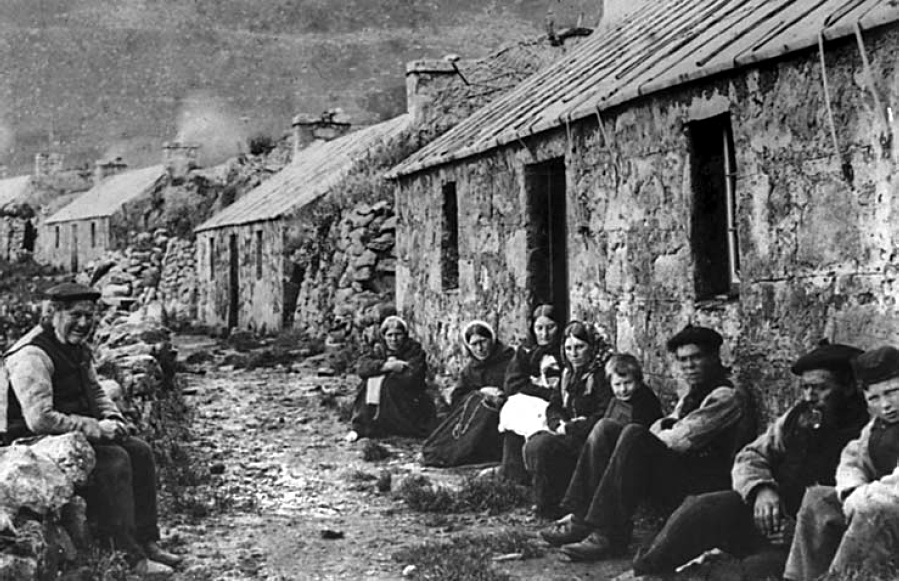
Many of the articles are written in a slightly condescending style - brace yourself for expressions such as “one fat Negro woman and four Mulattoes”. Jamaica and Haiti are solely represented by pieces on Rastafarianism and Voodoo, respectively. Other articles seem to be authored by anthropologists with a longing for poor, pristine and noble savages. That being said, I admit that I found this book fascinating. It mentions islands or ethnic groups I never heard of before: the communistic clan society at St Kilda in the Hebrides, the British settlers on the Bay Islands, the last remaining Caribs on Dominica… One article covers Tristan da Cunha, a small volcanic island in the Atlantic and the location of the most isolated human settlement on Earth. But yes, I did hear of Tristan before reading this volume. The photos are equally fascinating, one showing a female leader of the Haitian Ton Ton Macoute militias. Another picture shows American businessmen during an orgy at a hotel in Jamaica!

Unfortunately, I haven't seen any other books in the series, and since this volume was published in 1973, the information is probably in need of an update. That being said, I was sufficiently intrigued by this little gem (I bought the Swedish translation at a library clearance sale) to give it…five stars.

Tuesday, September 18, 2018

Blessed birds


Finally! A field guide to all the birds found in or around the Azores, Madeira, the Savage Islands, the Canary Islands and Cape Verde. These Atlantic archipelagos off the coast of southern Europe and northern Africa are, rightly or wrongly, often lumped together to form a region known as Macaronesia (the Isles of the Blessed).

Advanced field guides to European birds usually cover the Azores, Madeira and the Canary Islands (and, I suppose, the small Savage Islands in between) but not Cape Verde. However, I recently saw a field guide to African birds which didn't cover poor Cabo Verde either, so it seems these isles were blessed with oblivion until this work came along!

Besides, I think it's a good thing that there is a field guide specifically for “Macaronesia”, since many of their birds are endemic species or subspecies, often quite different in appearance from the nominate races on the Euro-African mainland. The total number of species and subspecies covered in this book is 573, so nobody can claim that Eduardo Garcia-del-Ray wasn't thorough!

Otherwise, everything is pretty normal in modern field guide land, with color plates, range maps and species presentations on facing pages. Some of the birds are old classics we loved to ponder already as kids when we got our first Heinzel-Fitter-Parslow, such as the drab Azores Bullfinch, the various subspecies of Common Chaffinch, and the majestic-looking Laurel Pigeons. New favorites may include the “cryptic species” Buglo Petrel. If you can obtain a DNA sample, you may be able to tell it apart from the Cap Verde Petrel!

All in all, this seems like another hit from Lynx Edicions. A Spanish edition exists for those who want local color. Bird-watchers on a chartered flight to these notorious tourist traps are indeed blessed.

Friday, August 17, 2018

Here be lizards


A review of "The Dragons of the Canaries" 

Despite all the filler about “dragons”, this isn't a documentary about the more sensational strands of crypto-zoology. Rather, it deals with perfectly normal lizards found on the Spanish-controlled Canary Islands off the coast of Northwest Africa. Some of them, known as Giant Lizards, can become around one meter in length. One of the giants, dubbed “the rarest lizard in the world”, was discovered as late as 1999. The documentary also shows the “mummy” of an even larger lizard (about one meter and a half) found in the 1940's. No living specimen has been found to match it – yet. I'm not particularly interested in herpetology, but if Oskar Simonyi's quest for outsized lacertids on volcanic islands is your cup of joe, “The Dragons of the Canaries” might just make your day.

Saturday, August 4, 2018

Just title and unjust slavery


A review of "The Popes and Slavery" by Joel S Panzer.

The Catholic Church didn't condemn all forms of slavery until 1890, when Pope Leo XIII issued his encyclical "Catholicae Ecclesiae". In other words, the condemnation of all forms of slavery came very late in Church history, at a point in time when abolitionism had already succeeded in the Western world.

The author of this book, Father Joel S. Panzer, attempts to prove that the Church condemned slavery much earlier. Panzer is not very successful in his endeavour. Quite the contrary. Several of the documents he quotes prove the exact opposite: that the Catholic Church as late as the 19th century did indeed defend certain kinds of slavery.

The author points out, quite correctly, that some forms of servitude were considered legitimate before the victories of the abolitionist movement. He also concedes that the Church never condemned servitude with a "just title" until 1890. But since this kind of servitude is really also a form of slavery, this simply confirms what the critics of the Catholic Church have been saying all along, i.e. that Leo XIII was the first pope to unhesitatingly condemn *all* forms of slavery.

Panzer has located a number of documents concerning slavery issued by various pontiffs. The earliest one is "Sicut Dudum" from 1435, issued by Pope Eugene IV. I don't deny that the document is admirable: the pope in question condemns, in no uncertain terms, the genocidal butchering of the Guanchos, the native inhabitants of the Canary Islands. Another remarkable document is "Sublimis Deus" from 1537, issued by Paul III. It prohibits the enslavement of American Indians and Filipinos. Paul III threatens those involved in slavery with excommunication. The encyclical angered the slave-traders, and eventually the pope was forced to withdraw his encyclical (or at least the threat of excommunication).

Both "Sicut Dudum" and "Sublimis Deus" are an improvement upon the medieval position of the Catholic Church, which prohibited the enslavement of Christians, but not of pagans, Jews or Muslims. Both Eugene IV and Paul III prohibit the enslavement of peoples who are still pagans (perhaps for missionary reasons). Unfortunately, there are still loopholes in these documents. What about "just title" slavery? Was slavery abolished in the papal states? Did the papal see take any action against the innumerable number of Catholics (including members of the hierarchy) who broke these prohibitions?

That the Catholic Church had nothing against slavery as such, is proven by Instruction 1293, issued in 1866 under the pontificate of Pius IX by the Sacred Congregation of the Holy Office. The instruction deals with slavery in Ethiopia. The document prohibits Christians from buying slaves who legitimately belongs to others, since this would be like stealing property. It further says that Christians have the right to buy slaves who have been illicitly enslaved, provided that these give their consent. However, the instruction doesn't tell the new owner to free the slave. No, it gives the Christian buyer the right to keep the slave in his own servitude! Naturally, the Christian owner is to treat the slave with "charity", instruct him in the "Faith", and so on. That's what they always say, isn't it? The document further states that native Christians and foreign missionaries have the right to search for and apprehend fugitive slaves, provided that these have been enslaved "justly". Those who have been "unjustly" enslaved, however, have the right to flee, although the Sacred Congregation believes that the question is a difficult one to answer. Indeed! The author of the document, presumably a papal secretary, explicitly states that slavery as such isn't against natural or divine law. Interestingly, a large part of Instruction 1293 is modelled on an earlier document, Instruction 515 from 1776, dealing with slavery in Cambodia.

"The Popes and Slavery" is worth buying for the documents it excerpts or quotes. They are presented in both Latin and English. However, as an analysis, is falls far short. It doesn't explain why Eugene IV and Paul III suddenly saw the light concerning the Guanchos, the Indians and Filipinos. It doesn't have an exhaustive discussion about the difference between "just" and "unjust" titles.

Above all, however, it fails to prove that the Catholic Church took a firm stand against all forms of slavery before 1890.

Despite the admirable efforts of individual Catholics, or even individual pontiffs, the record of the Catholic Church on slavery is nevertheless too little, too late.