Showing posts with label Montana. Show all posts

Wednesday, October 29, 2025

When the prophetic milieu succeeds


An interesting video on the baffling phenomenon of religious groups surviving prophecy failure. A large portion deals with the Lubavitcher and how they dealt with the death of their "Messiah", Rebbe Schneerson. More in passing, it also mentions Elizabeth Clare Prophet, Unarius, the Adventists and some Japanese NRMs. 

Perhaps unsurprisingly, sociological factors are crucial in securing the continued existence of an apocalyptic sect after the apocalypse fails to materialize. The Lubavitcher were a quite large group with an all-encompassing community structure and constant outreach programs. This guaranteed its survival after the crisis triggered by the Rebbe´s death. A charismatic leadership is another important factor. The leader must be able to convince the followers of the new line. Indeed, Clare Prophet´s failure of leadership might be one of the reasons why the group almost collapsed after the Montana episode. 

There must also be a "prophetic milieu" around the group. I assume Christian apocalyptic groups to some extent survive since "everyone" in Christendom believes in the Second Advent, and hence on some level share an ideological matrix even with the most deviant apocalyptic group (which thus operates within that matrix). 

Otherwise, I have to say that it´s almost fascinating to see how exactly the same excuses come up over and over again: spiritualization, "it was just a test", the followers weren´t ready, the Messiah is in occultation, and so on. 

Personally, I suspect that some kind of performative factor is also at play. Maybe a certain kind of Christians *must* sell their houses on a semi-regular basis supposedly awaiting the Rapture just to show everyone else how strong faith they have? A bit like when snake-handlers who are actually bitten by the snakes are treated as heroes rather than as failures, presumably because their snake-bites are a visible sign of their strong commitment. 

Recommended.  

Monday, June 9, 2025

Case closed...but not by "skeptics"


It seems the X-Files have been officially closed. Time to move on, agent Mulder.

However, I don´t think official "Skeptics" have much to brag about here. Note that the only way to debunk the UFO conspiracy theories is by confirming...another conspiracy theory!

Check mate. 

Pentagon secretely planted Area 51 conspiracy theory

Sunday, May 18, 2025

Fast food


- Yes, they are still eating cheeseburgers!

I have no idea whether this is good, bad or indifferent. Or just a conflict between different special interest groups. But...it does look rather silly to ban fake meat while *not* banning fast food! I mean, what´s up with that? 

Montana bans fake meat

Saturday, November 9, 2024

Parasitic divergence


This seems to be a *very* heterodox channel, but still in some sense "scientific", so plz don´t tell Prof Dave, LOL. In this "sneak peak", the content-creator Curt Jaimungal talks to Chris Langan, the creator of the Cognitive-Theoretic Model of the Universe (CTMU). 

Langan is said to be the smartest guy alive, with an IQ of 200 (?!). I looked into the CTMU some years ago, and (of course) didn´t get half of it, but I got the impression that it was some kind of neo-Hinduism trying to synthetize pantheim, theism and maybe even cyberpunk. And Whitehead as per usual? 

Or maybe not. Note Lagan´s laughing criticism of trans-humanism in the clip above. Well, at least there is *one* problem we don´t have to handle in the near meta-future!    


Saturday, June 29, 2024

Montana megaliths


Is this evidence that an unknown megalithic civilization once existed in Montana, of all places? Probably not, but it´s fascinating (after a fashion). The structures shown are called Sage Wall and Tizer Dolmen.

Saturday, February 24, 2024

On a frontier alien


A fascinating blog post about what could be the first reported "UFO crash" in the United States. The report is from 1865, and the crash presumably happened either then or in 1864. The newspaper reports of the incident are confusing (surprise). The "crash" could have been a meteorite impact - although a fairly big one - but the trapper witnessing it claims to have seen a mysterious stone with hieroglyphics on it. The newspaper then speculates:   

>>>Astronomers have long held that it is probable that the heavenly bodies are inhabited—even the comets—and it may be that the meteors are also. 

>>>Possibly meteors are used as a means of conveyance by the inhabitants of other planets, in exploring space, and it may be that hereafter some future Columbus, from Mercury or Uranus, may land on this planet, by means of a meteoric conveyance, and take full possession thereof—as did the Spanish navigators of the New World in 1492, and eventually drive what is known as the "human race" into a condition of the most abject servitude. 

>>>It has always been a favorite theory with many that there must be a race superior to us, and this may at some future time be demonstrated in the manner we have indicated.

Note that this was written in 1865! The author of the blog post (writing in 2023) fills in:  

>>>Lumley's account is actually quite startling when you consider its similarities to modern UFO lore and the fact that it was reported nearly a century earlier. 

>>>The Roswell crash debris was said to have material covered with strange hieroglyphics, much like the surface of Lumley's object. Socorro, New Mexico police officer Lonnie Zamora similarly stated that the egg-shaped craft he witnessed in 1964 was emblazoned with a strange red insignia. 

>>>The image of Lumley examining the crashed object and its path of destruction across the landscape echoes the story of young José Padilla and Reme Baca, who discovered an avocado-shaped craft that had plowed across San Antonio, New Mexico ranchland in 1945. Their claims are today known as the Trinity crash. 

None of the above proves that UFOs or aliens are real, of course. Anymore than the Aurora crash in 1897 (which I have discussed in a previous post on this blog). Still, it´s certainly intriguing that this kind of lore goes back all the way to the Civil War era! The idea that hieroglyphics are somehow supernatural is of course even older - compare Joseph Smith and the Mormons. 

Montana, 1865 - the first American UFO crash?


Thursday, February 15, 2024

Meanwhile, somewhere in Montana...


"Ridiculous. We were never near Roswell in the first place. Who is this Adamski fellow? And they can´t even get their AI to spell DISCLOSURE correctly!"

Saturday, September 2, 2023

The wild hunt


“The Hunt for Red October” is a 1990 film starring Sean Connery as a rogue Soviet submarine captain. It´s based on a novel by Tom Clancy. One of the protagonists of the story, Jack Ryan, is probably based on Clancy himself. How freely I can´t say!

I don´t think the film is *that* good or interesting, but Sean Connery can make any film – no matter how awful – into a treat. Also, “The Hunt for Red October” does have a Cold War feel that makes me almost nostalgic. And yes, the Cold War stereotypes of Russians (Communist or anti-Communist) are very Hollywood-esque and frankly ridiculous, but that simply adds to the nostalgia.

The rogue captain, named Marko Ramius, is said to be Lithuanian and decides to abscond to the United States when realizing that the Soviets are developing a new class of submarines that are almost impossible to detect by sonar. Not suspecting that Ramius and some of his officers are traitors, the Soviet fleet puts *them* in charge of the prototype, named Red October. Ramius then decides to make a daring escape to America in the actual submarine. In the process, he kills a political commissar actually named Putin! 

Naturally, the Soviet Red Fleet isn´t amused and goes after him, while Soviet diplomats tell the US leadership that Ramius has gone insane and wants to nuke America. Unfortunately for the evil Reds, CIA analyst Jack Ryan has met Ramius on a previous occasion and suspects him of being a covert anti-Communist. Ryan convinces a sleezy Washington operative to give him three days to find out the truth about the captain´s intentions. Several major plot holes later, the Americans realize that Ramius is really on their side, while the Russians are still in hot pursuit…

As I said, not exactly a deep philosophy lecture, but could perhaps be splendidly devoured on a rainy autumn evening. Should perhaps be watched together with the documentary “The Real Hunt for Red October”, reviewed by me elsewhere on this blog.

The real hunt for "Red October"


Friday, June 16, 2023

Unabomber postmortem


Not sure if anyone wants to listen to a two-hour presentation by Irish Traditionalist Keith Woods about why Ted Kaczynski was wrong, but if you do, well, see link above. 

The most interesting part of the slide show might actually be that Woods doesn´t sound particularly Traditionalist. But, as somebody else pointed out, Traditionalism is forever new. And forever heterodox... 

Wednesday, June 14, 2023

Uncle Ted, Uncle Dead


Apparently, Ted Kaczynski died a couple of days ago. Better known as the Unabomber! The link below goes to my take on the Unabomber Manifesto...

The Unabomber Manifesto

Tuesday, February 7, 2023

Escalation


Credit: y m k @katsurayume (from Twitter)

Year 3467. Based Scythian archer of Neo-Jomon Supremacy spots spy balloon from Montana Aryan Nations, prepares to shoot it down using new super-weapon from Ainu allies! 

Saturday, February 4, 2023

What do you mean "spy balloon"?


Credit: Lil Maya Asian Baby Girl @lil_mayaaa (Twitter)

"Gee, anon, have you heard about the Chinese spy balloon over Montana?!"

Sunday, October 30, 2022

Among hippies and yippies


A former hippie talks about his experiences of cults, counter-culture and various New Age quests during the 1960´s, 70´s and 80´s. It seems Vajrayana Buddhism straightened him out (more or less). 

Actually quite interesting. I discovered this content mostly by chance. 

Tuesday, February 22, 2022

Only got half of it


This was written by a guy who is supposed to have an IQ of 200. Since my IQ is 100, I obviously only got half of it, but it seems to be another version of neo-Hinduism. Some of the concepts are similar to Brahman and Shakti. 

The inventor of CTMU, Chris Langan, tries to synthesize this more pantheist conception with theism and even something that sounds like...I don´t know...cyberpunk, the quest for AI, or something like that? 

Langan is popular on the alt-right, we are direly warned by Wikipedia. Just so you know! 

I may or may not return to this problematique in the future. Haven´t yet recursively self-configured my élan vital... 

The Cognitive-Theoretic Model of the Universe

Wednesday, June 30, 2021

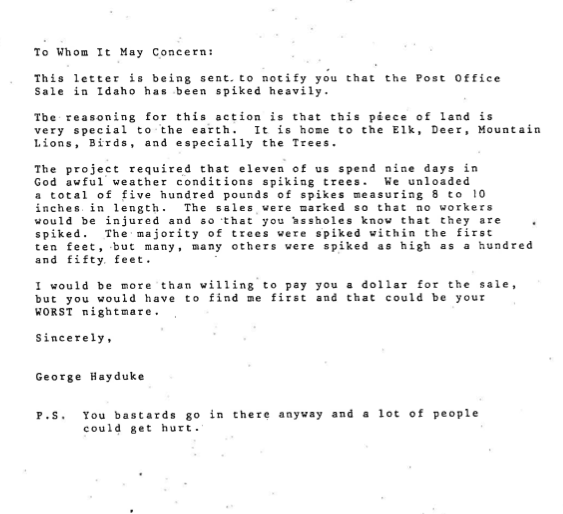
Spiking the trees


I have no particular opinion on who is "right" or "wrong" here, but the story is interesting in its own right. Of course, the Biden nominee might as well be seen as a former snitch, not just a "former eco-terrorist"!  

Biden nominates "former eco-terrorist" to head Bureau of Land Management

Biden nominee linked to 1989 sabotage

Friday, April 9, 2021

The Keystone Species


"The Archeology of Global Change: The Impact of Humans on Their Environment" is a book published in 2004 by the Smithsonian Institution. Yes, folks, it´s time for the Ashtar Command to bash the myth of the noble savage again! So far, I´ve "only" read the first part of the volume, which contains a somewhat eclectic blend of articles about Polynesia, the US Southwest and the Pacific Northwest. 

Humans have never lived in fundamental "harmony" with Nature, nor have they been "natural conservationists". The first evidence for overexploitation of natural resources comes from "archaic Homo sapiens". The size of tortoise shells and shellfish gradually decrease with time at Neanderthal sites around the Mediterranean, suggesting that our evolutionary siblings gathered (and consumed) the larger species or varieties first, making them go extinct! This also confirms the "optimum foraging" model, according to which humans should always harvest the most nutritious and easily accesible specimens first, and only then proceed to smaller, less nutritious and/or less accesible individuals. This pattern shows up again and again in the archeological record. In plain English, if forced to chose between eating and cultural ideology, most humans most of the time chose to eat. 

The contributors to this volume believe that humans were also responsible for the Pleistocene extinctions of "charismatic megafauna" in Eurasia, Australia and the Americas. I admit that I have no idea whodunnit, and the issue is only mentioned in passing, but some suggestive facts could be cited. For instance, that only a few species of megafauna went extinct in Africa, where humans and other animals presumably co-evolved for millions of years. By contrast, most megafaunal species went extinct in Australia and the Americas, where humans arrived comparatively late, and the animals hadn´t evolved any defenses against human predation. However, this assumes that received paleontological wisdom about human migrations is correct. What if humans arrived much earlier? An alternative hypothesis is that the megafauna went extinct due to climate change at the end of the Pleistocene. Of course, none of this has any impact on the conclusions of this book, which deals mostly with the Holocene (the present time period).

Patrick V Kirch´s article "Oceanic Islands: Microcosms of `Global Change´" deals with human impact on two Polynesian islands (Easter Island and Mangaia) and one ditto archipelago (Hawaii). The humans in question are the "Natives", the Polynesians, who colonized the islands long before the arrival of White Europeans or Americans. If pre-modern "Natives" are natural conservationists, islands should still be teeming with endemics (including flightless birds) and in general have the same biotopes as before colonization (except in cases of severe climate change). Unless, of course, evil Whites upset the balance! In reality, the Polynesians radically altered the island environments they encountered during their migrations in the Pacific. Nor is this surprising: the Polynesians practiced slash-and-burn agriculture and irrigation, introduced new food crops, and carried with them dogs, pigs and chicken. They were also followed by invasive species such as the Pacific rat or garden snails. And yes, they did hunt the animals already living on the islands...

Easter Island (Rapanui) was originally covered by parklandlike forests, with a canopy of palm trees. About 25 different species of seabird nested on the island. Rapanui was in effect a gigantic seabird rookery. There were also seven species of endemic landbirds. After 1,500 years of human habitation, Easter Island had changed completely: the forests had been cut down and replaced by grassland, the endemics were extinct, and most seabird species left the island, only a few remaining at small islets that are virtually unaccesible to humans. The Natives were fighting constant wars, which may have included cannibalism. 

The story of Mangaia (one of the Cook Islands) is similar. Probably colonized by Polynesians about 2000 years ago, the island´s environment had completely changed about 400 years ago. The interior of the island is covered by pyrophytic ferns and other fire-resistant plants, presumably in response to slash-and-burn agriculture. Of 17 documented landbird taxa in the archeological record, only four remained 600 years later. Some seabird species also left the island. Fish and gastropods found at archeological sites became progressively smaller over time, suggesting heavy exploitation of these particular resources. Mangaian society developed in a way similar to Rapanui, with constant tribal wars, widespread cannibalism, human sacrifice, and so on. (I won´t bother you with Hawaii.) 

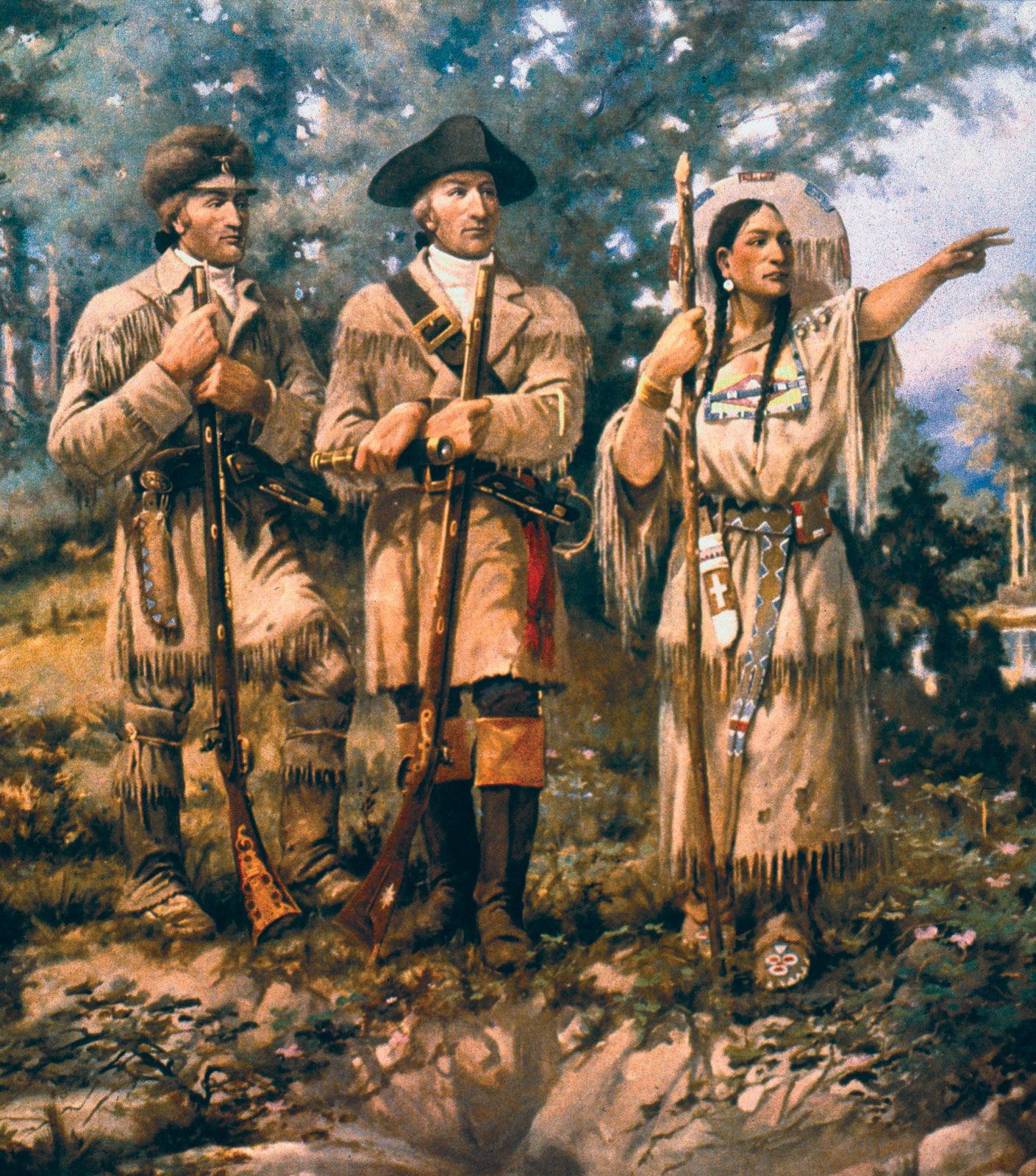
The most fascinating contribution in the first section is titled "Revising the `Wild´ West: Big Game Meets the Ultimate Keystone Species" by Paul S Martin and Christine R Szuter. It meticulously analyzes the journals of the famous Lewis and Clark Expedition (1803-1806) to Montana and the Pacific Northwest. In Montana, the expedition encountered enormous flocks of bison and other game animals, one bison flock estimated to be 10,000 animals strong! The bison, elk, wolves and grizzly bears were also extremely tame. Clark managed to kill a wolf with his spontoon, suggesting that he managed to get very close to it (a spontoon is apparently a weapon about 2 meters long). The wolf was eating a drowned bison and seems not to have cared much about the human hunter, before it was too late! Lewis, Clark and their "Corps of Discovery" had no problem finding and killing animals for food east of the Rocky Mountains. West of the Rockies was a different story. There, game was virtually non-existent. At first, the expedition was forced to live on dried fish and roots provided by the Natives, something that made them sick. Later, they bought horses and dogs from various Native groups, with the intention of killing and eating them. Nor were the animals in the Pacific Northwest particularly docile. Killing a grizzly was considered an extremely heroic and manly act by the Natives, since these animals were so extremely aggressive. 

What could account for the peculiar difference between the two areas explored by the Lewis and Clark expedition? The two explorers themselves had no explanation, and many historians don´t give one either. However, the answer is right there, in the journals.

It´s the Natives, stupid.

The Native population was abundant *west* of the Rockies, where the game was most scarce. This would indeed suggest some kind of connection. The situation in Montana was more complex. An aggressive Native group known as the Blackfoot had virtually cleansed large areas of competing tribes by systematic attacks. Thus, the overall population density of Montana was probably lower than the areas further west. Of course, Blackfoot raiding had led other tribes to take defensive measures. Vast stretches of "no mans land" separated the various tribal territories from each other. In these areas, hunting was deemed difficult, due to the risk of being spotted and killed by scouts from the enemy tribe. Martin and Szuter believe that the abundant wildlife described by Lewis and Clark lived in these "DMZs". There is some later evidence for the same phenomenon, for instance Colorado circa 1820-1840, when the bison disappeared from the territory *when the Indian tribes made peace with one another*. A more recent example would be the border between North and South Korea, where wildlife is thriving.

These facts (plus the later disappearence of many Native groups) make it problematic to argue that current conservation efforts are about "restoring" an original, pristine wilderness. There simply isn´t such a thing. There hasn´t been a pristine wilderness sensu stricto since humans first arrived in North America 12,000 years ago. Animal numbers have been controlled by humans ever since. Humans are "the ultimate keystone species". The "balance" (if that´s the right word for it) between Native hunters and prey animals was disturbed when Natives aquired horses, but also when European diseases severly decimated the Native population. This led to all kinds of anomalous situations, often misreported as some kind of "Eden" where animals are super-abundant and tame. Something that is really the result of an atypical absence of human hunters, something seldom seen since the Pleistocene...

I will certainly continue reading this book with considerable interest. 


Wednesday, September 5, 2018

The Demon of the North


In my mental universe, the wolverine isn't particularly mysterious. We have a number of them at our local zoo, right here in Stockholm. Kids love 'em. They are cute, cuddly and playful. In fact, they are more cool than brown bears. Of course, they are also extremely dangerous...

If you hate wolverines, "Chasing the Phantom" is not for you. This is definitely a "nerd" show. Apart from a lot of wolverines (what else?), we get to meet a number of human enthusiasts with a perhaps somewhat unhealthy obsession with this particular animal. One of them, Steve Kroschel (who reminds me of the crazy guy from A-Team), even breeds wolverines at his "wildlife center". The center also spouts a moose?! The funniest part of the documentary is when Kroschel's "tame" wolverines attack his camera equipment! Meanwhile, two other wolverine-bitten explorers search the pristine wilderness of Montana's Glacier National Park for the elusive glutton. One of the boys admits that he wants to *be* a wolverine, and "bite whomever he wants to bite". Oookay...

The most fascinating piece of info about the actual wolverines, is that the promiscuous male (who mates with several females) actually returns to all of "his" females, helping to rear the young. An interesting family arrangement, and apparently an unexpected one for scientists who until recently assumed that these animals were solitaires, with little or no meaningful interaction between different members of the species.

Definitely a treat if you like out-sized mustelids, and the crazy folk who chase them.
Five stars!

Saturday, August 25, 2018

Red Hawk speaks


"Custer's Last Battle" is a children's book about General Custer's last stand at Little Bighorn in 1876. This is the most recent edition from 2013. The original version was published in 1969. Joe Medicine Crow has written a foreword. "Red Hawk's" narrative is fiction, but based on various published eye-witness accounts of the battle. The author, Paul Goble, occasionally breaks the flow of the story, inserting factual background information. Personally, I consider the book pretty uninteresting, and would probably have done so even as a kid. But that's me.

An intriguing detail is the identity of the publishers: Wisdom Tales is an imprint of World Wisdom, the supporters of Traditionalist writer Frithjof Schuon in Bloomington, Indiana. In a sense, this is therefore a "conservative" defence of Crazy Horse and Sitting Bull against Custer and the U.S. Army. Schuon was a great admirer of the American Indians and their spirituality.

Not sure how to rate "Custer's Last Battle", but since it could be of some interest to Traditionalist-watchers (and, I suppose, Traditionalists), I give it three stars.