Sunday, June 9, 2019

Monty Python meets Ben Hur


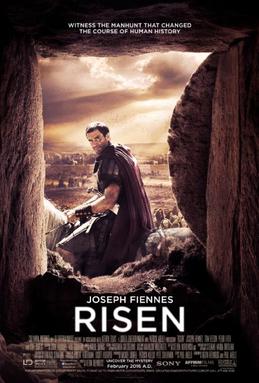
“Risen” is a 2016 American Biblical drama, freely based on some of the events in the New Testament. The main character, tribune Clavius, is non-Biblical but probably inspired by Longinus, the Roman soldier who pierced the side of Jesus at the crucifixion and later converted to Christianity. The plot is set at the time of the crucifixion, which Clavius is ordered by Pontius Pilate to supervise. When the body of Jesus (called Yeshua in the film) mysteriously disappears, Pilate commands Clavius to investigate the case and apprehend any suspects. The tribune soon realize that the case is stranger than he expected, and eventually discovers that Jesus is alive and well, that is, resurrected from the dead. The film ends somewhat inconclusively, with the Roman officer apparently converting to Christianity after the Ascension, while the disciples return to Jerusalem to await Pentecost. Clavius, fearing capture by Pilate, wanders into the desert to an uncertain fate…

The film is intriguing on a number of points. For starters, it´s not very “pious”, except at the end. Indeed, many of the characters or situations might have been included in Monty Python´s classical comedy “Life of Brian”! The disciples speak with rustic British accents and come across as a bunch of holy fools. Mary Magdalene (a reformed harlot as usual) speaks in stereotypical riddles. A recurring gag in the film is the line “Pilate summons you”, uttered at least five times. The disciples can´t seem to remember the Lord´s Prayer. Jesus is more serious, but I couldn´t help noticing his “Jewish” nose…and his striking likeness to Swedish New Age pop star Thomas Di Leva! But OK, the latter is presumably a co-incidence.

Another intriguing feature is that the film is very “orthodox” theologically speaking (orthodox with a lower case “o”, that is). Thus, the resurrection is portrayed as physical, not simply spiritual. The origins of the Shroud of Turin are explained – yes, it really was the burial cloth of Jesus. The Ascension is also physical or quasi-physical, with Jesus clearly being lifted *up* into Heaven. On other points, “Risen” emphasizes the Jewish character of early Christianity. Jesus is called Yeshua, God is constantly referred to as Yahweh, and Yeshua is thus the son of Yahweh. His Messiah-ship and kingship are often mentioned as a tie-in to Jewish beliefs. Yet, at the end, Jesus inaugurates the new dispensation by calling on the disciples to convert all the Gentiles...


An interesting scene features Clavius attempting to pray to Yahweh in Roman-polytheistic fashion, promising him “temples and many games” if he gives him a sign relating to the events he is investigating. Another strange fact: when Swedish TV recently showed this film, Clavius was referred to as an “agnostic” in the program presentation, when he is explicitly depicted as a devotee of Mars in the film.

This mixture of Monty Python and “Ben Hur” isn´t the best film ever made, but I admit it wasn´t *that* bad either, if you can stand the somewhat peculiar angle…

None dare call it treason


“1808: Gerillakriget i Finland” is a book by a Swedish author named Anders Persson. The name is extremely common, and I admit that I don´t know exactly who this Anders Persson might be, except that he has written several books on modern European history. His main interest seems to be the fate of small nations squeezed between the great powers: interwar Austria and Czechoslovakia, and Finland pretty much all the time. Persson´s main thesis is that it´s frequently the common people who take up arms to defend their nations (or at least their homesteads) in times of war, while the political and economic elite waffle and even collaborate with the enemy. His book gives a somewhat peculiar impression, “leftist” and yet somehow conservative at the same time.

In 1808, Russia attacked Sweden and eventually occupied Finland, which had been under the Swedish crown for centuries, thereby effectively depriving Sweden of almost half of its territory. The war of 1808-1809 was a national disaster for Sweden, and King Gustav IV Adolf was actually overthrown as a result. Sweden had refused to join Napoleon´s continental blockade against Britain, while Gustav Adolf apparently quite un-ironically believed the French emperor to be the Beast of Revelation mentioned in the Bible. Perhaps not the best grounds for a realistic foreign policy of a small nation during the turbulent Napoleonic Wars! When France and Russia temporarily united against the British, Napoleon gave Czar Alexander the green lights to attack Sweden and dismember it best he could. The Swedish troops at Sveaborg in southern Finland, one of Sweden´s best fortifications, surrendered to the Russians already at an early stage of the war. This was a huge national scandal, and many suspect to this day that the commanders at Sveaborg were conscious traitors.

Indeed, it seems that most “lords” in Finland were more than willing to collaborate with the advancing Russian troops. Landlords, priests and bailiffs remained at their posts and started taking orders from the Czar and the Russian military brass, thereby easing the way for the enemy. In the Lutheran Churches, the priests often preached non-resistance. Of course, this was before the era of nationalism and the modern nation-state, but it´s difficult not to see the actions of the officials in charge as downright treasonous. After all, they were supposed to be loyal to the King in Stockholm! There was also an active Swedish exile milieu in the Russian imperial capital of St Petersburg, which lobbied the Czar with requests to take military action against Sweden. These aristocratic exiles had their roots in the “Anjala League” directed against King Gustav III, Gustav IV Adolf´s father, and his war against Russia in 1788-1790.

When the petty and not-so-petty officials decided to side with the Russians (for “practical” reasons, of course – what else?), the peasants took up the resistance instead, sometimes with the aid of Swedish military, sometimes on their own. A large portion of the book deals with the struggle at Åland, which has a Swedish population. That the peasants at Åland fought back, while the commanders at Sveaborg surrendered, wasn´t lost on the Swedish press. King Gustav IV Adolf eventually awarded the leaders of the Åland guerillas medals of valor at a special ceremony in Stockholm. The book also describes the resistance in Österbotten, Birkaland and Norra Karelen. It was a curious alliance in a way, between the conservative anti-Napoleonic autocrat Gustav IV Adolf and angry armed peasants with little respect for the local officials and priests. Persson compares it to the anti-French resistance in Spain, led by priests and monks, or the ditto peasant war in Tyrol under Andreas Hofer. The author believes that Romanticism rather than Enlightenment thinking heralds nationalism, a phenomenon he seems to regard as historically progressive. Overall, however, the book is descriptive rather than analytical.

Russia´s victory in the War of 1808-1809 was probably a foregone conclusion. Russia had more manpower, while the Finnish population suffered from failed harvests, famine, and pestilence. It´s amazing the peasants managed to resist at all! Clearly, the Swedish military suffered from bad leadership (including from the King´s side), while traitors abound everywhere. Finland was finally declared an autonomous Grand Duchy under the Czar. Persson believes that the popular resistance against the advancing Russian army made the Czar rethink any plans he might have had to make the Finnish peasants serfs. Somehow, I doubt this – my guess would rather be that it would have taken a considerable mobilization of resources to reduce the free Finnish peasantry into serfdom. Rather than undertaking such an operation, the Czar already from the start planned to keep the social relations in Finland pretty much as they were within the context of an autonomous “Grand Duchy”. That, of course, is why the officialdom in Finland (including the Lutheran clergy) so easily made the transition from Swedish to Russian dominion – it wasn´t much of a transition to begin with. The peasants, by contrast, feared enserfement or at the very least large-scale plunder at the hands of “Cossacks and Kalmyks”. Also, their deep-seated class suspicions against the officialdom were amply confirmed when the local “lords” put their own safety above loyalty to king and country (which the peasants supported).

In the end, both camps were vindicated – Finland did enjoy autonomy without serfdom under the Czar for generations…until Russia decided that the time had come to Russify Finland (but still without serfdom, alas), triggering a series of events which eventually led to Finnish independence in 1917.

Saturday, June 8, 2019

No terrorist cells in this one


“Tempel Riddare Orden 100 År i Norden” is a very obscure book, published in 1987. I was somewhat disappointed reading it, I mean, I had hoped that the “Knights Templar Order” described in the book would turn out to be a sinister and shadowy upper class cult of half-crazed terrorist wanna-bees, based in *Sweden* of all places, but naaah… 

The TRO is actually an extremely respectable Christian temperance lodge! Think Good Templars and you get at least part of the drift.

The TRO has its roots in the 19th century American temperance movement. Its US parent society was formed in 1845 and was first called the Temple of Honor. Its members came from a much larger temperance movement, the Sons of Temperance. In 1849, the Temple of Honor broke all relations with the larger body and became fully independent as the Temple of Honor and Temperance. The first Swedish lodge was established in 1887. Interestingly, the Temple of Honor later died out in the United States, and in 1938 the Supreme Council was officially transferred to Sweden. Today (or at least in 1987), Tempel Riddare Orden (Order of the Knights of the Temple) exists in all Nordic countries. This book contains material in both Swedish, Danish and Norwegian.

Membership is limited to Christian males, and absolute abstinence from alcohol and drugs is (of course) a requirement for all members. While the order is non-partisan, it certainly has political connections, since several of its past Swedish Grand Masters have been Members of Parliament for the centrist Liberal Party. The Liberals used to regroup both free-thinking atheists and people with a background in the free churches (Christian denominations outside the Church of Sweden). Another prominent member is Bengt Göransson, a Social Democrat and former minister of culture and education. King Gustav VI Adolf was briefly the “protector” of the order. Many leading members of the TRO are/were also active in the IOGT, a more well-known temperance organization.

So why is the TRO a separate body at all? The main reason seems to be that the “Knights Templar Order” is strongly inspired by Masonry and its esoteric (or perhaps pseudo-esoteric) rituals. During the heyday of fraternal societies and orders back in the 19th century, this probably didn´t look so strange as it does today. After all, even the super-respectable IOGT is named after the crusading medieval knights of the Temple! Are we to believe this book, the Temple of Honor and the TRO were more seriously into Masonic ritualism than many other temperance groups, which gradually abandoned the concept. So did the Temple of Honor eventually, but the ritual work continued unabated in the Nordic offshoots. The rituals of the TRO are secret, but its meeting halls (showed in this volume) certainly remind me of the Freemasons. It seems the order was “outed” by some misguided tabloid reporters in the early 1980´s, and I suppose I could find the details if diligently searching for them, but who cares? Let me guess: you lie down in a coffin, hold a skull, and then experience a resurrection to the tunes of a Mozart composition?

With that jocular comment, I leave you for tonight. ;-)

The Bigfoot Deep Impact connection


Just what we always suspected...


The Bigfoot Deep State conspiracy


Just as we suspected...

The FBI once helped in the Hunt for Bigfoot

Sunday, June 2, 2019

Come at me, Wolodarski


Jag insåg just en sak. DN tog avstånd från både hamnarbetarstrejken och pilotstrejken. Däremot stödjer de klimatstrejkande skolbarn.

Hmmm...

Kan det vara så att DN helt kallt antar att Greta Thunberg är harmlös?

Jag har nämligen väldigt svårt att se Wolodarski stödja något *verkligt* radikalt. Och jag tror inte han vill åka kollektivt heller. Han använder nog hellre Uber.

Jävla hycklare. 


Yes, I decided to join the thorium cult


Peak oil be damned. I officially decided to join the thorium reactor cult. Now, build´em or else I nuke you with fissile material! 

Saturday, June 1, 2019

Breaking now: Greta kan visst flyga över Atlanten


Sluta byll-shitta, Greta Thunbergish kan visst flyga över Atlanten utan att öka halten av koldioxiden, yao... 

Thor´s hammer


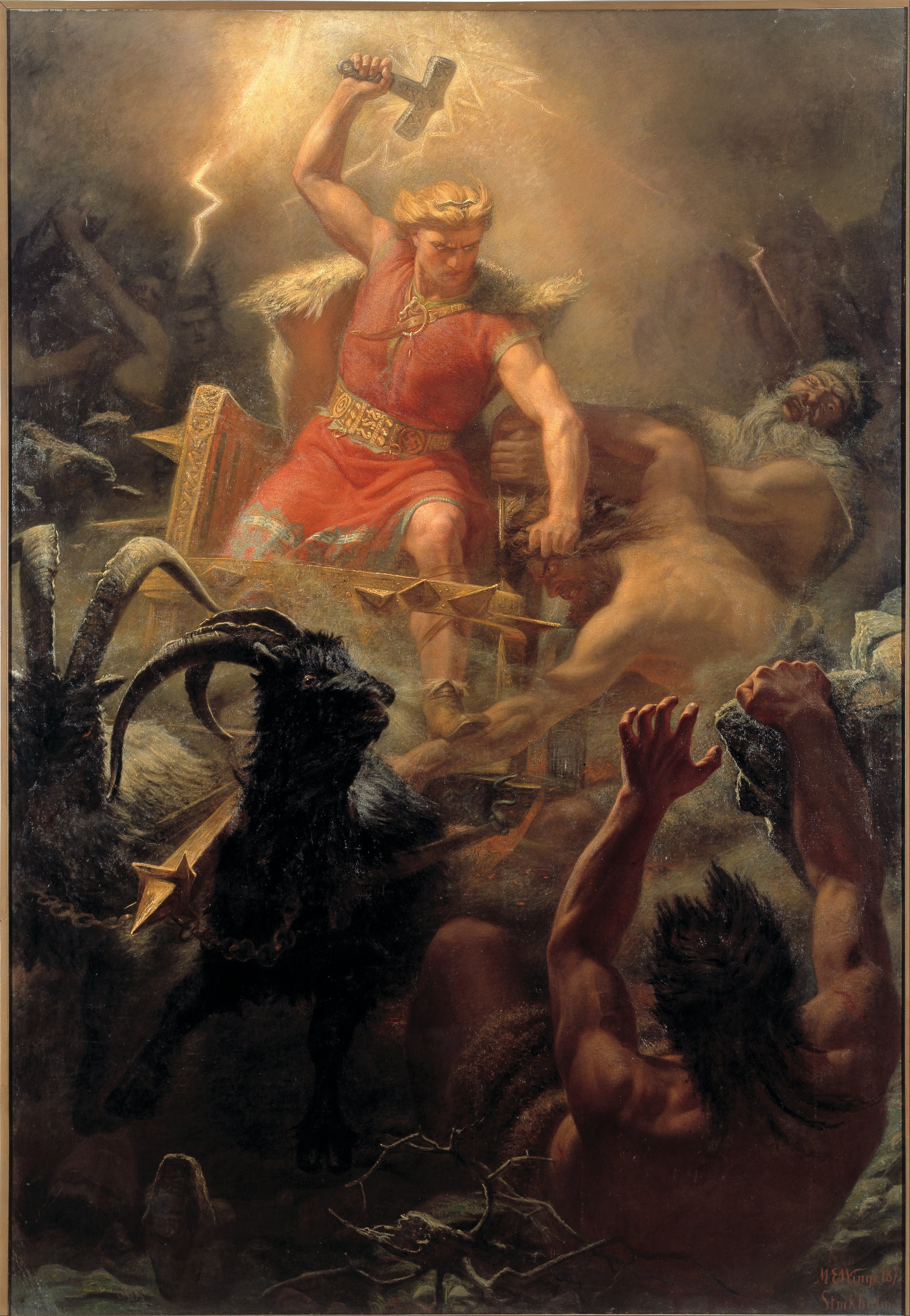
Can nuclear power based on thorium save the world? That would be...interesting. Especially since thorium is named after a certain giant-slaying Indo-European god known for his huge hammer!


MED till attack mot Virtanen


Jag stödjer ju inte MED, men den här recensionen av Virtanens bok är ändå rätt så intressant...


Vår samtids feghet