”Granskogsfolk: Hur naturen blev
svenskarnas religion” (Spruce Forest People – How nature became the religion of
the Swedes) is a book in Swedish by David Thurfjell, a scholar of comparative
religion. The author has interviewed a number of people who had spiritual
experiences while spending time in nature. The interviewees often avoid religious
or spiritual terms when describing their experiences, however, and many seem
embarrassed talking about them – especially if their experiences are seen as
religious. They are afraid to be seen as irrational or weird, Sweden being the
most secularized nation in the world. At the same time, the idea that spending
time in nature (often in the forests) is healing, meaningful or has some kind
of deeper existential dimension is very common in Sweden. Nature has become the
new “religion” of the Swedes and Thurfjell tries to explain how this happened.
The book covers *a lot* of ground, and only an outline is possible in a review
of this kind.
Thurfjell argues that current
spiritual experiences of nature cannot be seen as exemplars of timeless
mysticism. Rather, the experiences are strongly culture-bound and based on
modern presuppositions. The idea that humans have a distinct individuality that
takes precedence over community and *should* have spiritual experiences is a
modern construct. So is the idea of “Nature” as something set apart from
humans, something “spiritual” or “other”. Even “religion” is a modern category
– in pre-modern cultures, what we call religion is embedded in the rest of the
cultural matrix.
The view of nature in pre-modern
society was complex, and not always negative, not even when paganism was
replaced by Christianity (which didn´t view nature as sacred). The dark and
wide forests could be seen as a promise of freedom (at least for males).
However, what´s more striking are the pragmatic or negative views. That
peasants usually had a pragmatic view of nature is hardly surprising, given the
fact that they spent much of their time either in nature or working with
objects taken from nature. To the peasants, “Nature” didn´t exist as a separate
conceptual category. It was simply an embedded part of their everyday world, a
part necessary for their physical survival. Negative views were also common,
with nature seen as threatening, either by itself or due to various
spirit-beings said to inhabit it. The Christian religion, while seeing nature
as God´s creation, usually emphasized the world´s fallen character and the need
to leave it behind, going home to God. In Lutheran-inspired school textbooks,
the nature shown was often exotic – Palestinian, in fact – and far removed from
the everyday reality of Swedish peasants. During the 18th century,
nature romanticism (often of a pastoral character and/or inspired by Greek
mythology) was popular among the upper classes of society, but this didn´t
affect the general mood of the population.
Nature romanticism didn´t become a
mass phenomenon until the 19th and 20th centuries, due to
industrialization and modernization. Suddenly, nature was no longer “embedded”
into everyday culture. It became a sphere of its own, obviously separated from
the spheres of industrial labor, office work or engineering. The concept of
leisure and leisure time was invented, and nature became something people “went
back to” over the weekend to recuperate from the rigors of modern work. Since
the public work-sphere was associated with science, rationality and “maleness”,
nature became the sphere of the private, the intimate, the emotional and the “female”.
It was in nature that people could have deep experiences of existential
meaning. This nature romanticism would have been unthinkable to most people in
a traditional peasant society. Thus, nature became romanticized and seen as
spiritually meaningful precisely because people had become alienated from it! Nationalism
was another important factor in the growth of nature romanticism. Both Swedish
nature and Swedish folk culture were seen as unique and typically Swedish, and
both were promoted for the benefit of city-dwellers, for instance through
Skansen, an outdoor museum in Stockholm with old farmhouses on display.
As already mentioned, the social
construction of the free and sovereign individual with a rich interior life
that *mattered* (at least to him or her) also took place during the modern
period. One of the wellsprings of modern individualism was Pietism, with its emphasis
on personal salvation and the need of each believer to constantly monitor his
or her inner states and emotions. The German theologian Friedrich
Schleiermacher (early 19th century) played an important role in the
individualist-emotionalist turn of religion, with Christianity redefined as a
personal feeling of dependence on the infinite. At some point, the new
individualism and sentimentalism was fused with nature romanticism. This
happened even within Christian denominations. Some Christian currents also
became strongly nationalist, another conduit for nature worship. In modern
society, “religion” became another sphere separated from the others. In its individualist
and emotionalist form, the Christian religion (or religion-in-general) was easy
to combine with romantic Schwermerei for Nature.
Thurfjell´s interviewees fit the modern
format with their emotionalist views of nature, Christian backgrounds,
individual-existential preoccupations, need to “get away” from the drudgery of
everyday life, and so on. What is probably more typically Swedish is their reluctance
to even discuss spiritual experiences, and their seeming inability to even
describe their experiences, since they lack an adequate language. One paradox
of secularization is that people have more spiritual experiences, but can´t
properly communicate them! However, here we also see a potential weakness in
the author´s analysis. Can a subjective experience really be entirely
culturally constructed if those having it can´t express it in words? Are the
spiritual, crypto-spiritual or quasi-spiritual experiences of the interviewees
really completely different from ancient mysticism or mysticism in other
cultures (which seems to be the implication of Thurfjell´s argument)? One of
the people interviewed seem to have seen fairies or something similar in the
forest. But fairies have been seen since pagan times! They are not modern
social constructs (whatever else they might be).
My guess is that mysticism isn´t
entirely culturally constructed. There must be something universally human that
triggers these experiences. Either something psychological, or something “out
there”. God maybe. Or the fairy? Only then are the experiences mediated by
cultural expectations. I don´t know if the author really denies this – he seems
sympathetic to the topic and I wouldn´t be surprised if he had similar
experiences himself. However, the book does give a “postmodern” impression I
don´t fully embrace.
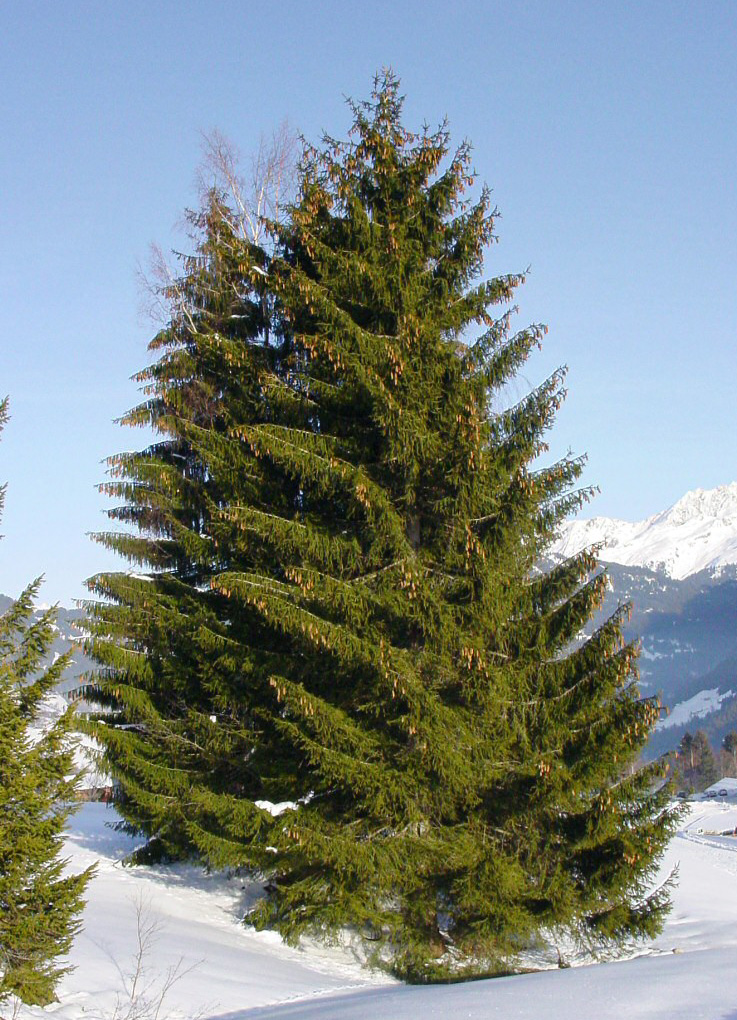
Deep down, we may indeed be Spruce
Forest People, after all…



.jpg)