Wednesday, December 25, 2019

It´s the Age of Aquarius


How do you enjoy the Age of Aquarius so far? Yes, we´re right in it. In fact, we´ve been right in it for about 140 years now. 

Bad news, huh? I mean, this is totally not what we expected, dude!

A new look at an old Devil, or Saturn is Satan after all


“The Fraternitas Saturni: History, Doctrine, and Rituals of the Magical Order of the Brotherhood of Saturn” is the self-explanatory title of this book by Stephen E Flowers. I have the fourth revised and expanded edition (the current one) published by Inner Traditions. A number of previous editions exist, one of them less self-explanatorily titled “Fire and Ice”. The Fraternitas Saturni is an occult order in Germany formed at some point during the 1920´s by one Gregor A Gregorius (real name Eugen Grosche). The order still exists, but probably doesn´t use the rituals described in this work. Apparently, the whole thing leaked out to the public during the 1960´s. Thus, Flowers is really telling us the old news here! Or so he (or the FS) wants us to believe…

The FS is mostly known for their connections to Aleister Crowley and the OTO. In true Crowleyan fashion, the FS places strong emphasis on ritualized sex magic. The rituals are described in this book - they are very bizarre. Apart from ritual sex (some of it group sex or homosexual in nature), the FS apparently also used illicit drugs, sacrificed animals and practiced something called “electric magic” (which could kill people at a distance). In the unlikely case that actual Gnosis interests you more than this gossip, LOL, sure, “The Fraternitas Saturni” does contain material on that, too.

The metaphysics of the FS are complex and convoluted, so only the barest outline will be attempted here. From Gnosticism, the FS have borrowed the idea that the material world is created not by “God” but by a subordinate Demiurge. This Demiurge is identified with Saturn-Satan and the Beast 666. In contrast to Gnosticism, however, the Demiurge is seen as a *positive* force. He is above all Lucifer, the Light-Bringer who rebelled against “God” (the Solar Logos). The rebellion and fall are positive and necessary for evolution and creativity to appear. So are death and destruction. Lucifer is the “higher octave” of Saturn (the divine being identified with the planet in ancient mythology). So is Uranus. Esoterically, initiation into the Saturnine mysteries is also an initiation into the sphere of Uranus, which represents the next stage of human evolution, the Age of Aquarius. (In traditional astrology, Aquarius was ruled by Saturn, while in modern astrology he is under the rulership of Uranus.)

The duality between Saturn-Lucifer and the Sun-“God” is tempered by a mystical unity between them. Deep inside itself, the Solar Logos has a dark “Satanic” streak, since darkness and chaos are more fundamental than creation and the light (compare Jacob Böhme). The demonic influence inside the Sun is identified as Sorath (Rudolf Steiner also uses this name for a demon in his system). In the same way, Saturn has a “solar” streak and will one day return to the Sun and be “redeemed”. As Demiurge, Saturn also has a “lower octave”. Those who fail to reach the higher octave of Lucifer will simply become blind tools of the Demiurge. The initiates are his brothers and co-workers. The FS adopted Hans Hörbiger´s bizarre “Glacial Cosmology” or “Welteislehre” as their own and coordinated it with their own esoteric speculations. In Hörbiger´s scenario, Earth was cast out of the Sun, and this was esoterically interpreted by the FS as “the fall of Lucifer”. Eventually, the Earth would fall back into the Sun and be destroyed – this is the FS “redemption”. (The original title of this book, "Fire and Ice", is presumably a reference to Hörbiger´s speculations.) 

The path to initiation is an arduous one, and includes meditation, visualizations, lodge rituals, magic with pendulums or mirrors, and the previously mentioned sex magic. The attitude fostered should be one of “compassionless love” (which to me as an outsider seems rather like no love at all). The Fraternitas Saturni believed the work of the order was guided by an anthropomorphic spirit-being known as the GOTOS, which embodied the order´s egregore (energy field created by collective magical rituals). Only the GOTOS could initiate the seekers into the higher Saturnine gnosis. A bust of the GOTOS reveals him to be strikingly similar in appearance to Gregorius, the founder of the FS! I get the impression that the practices of the FS were highly eclectic, drawing from both Eastern sources (such as kundalini yoga and Tantra) and Western ones (ritual magic of the “medieval” kind). The organization of the order resembled that of a Masonic lodge. The Eastern aspects apparently became more important after World War II. There is also a pseudo-Christian influence, since the Solar Logos is said to embody the Chrestus principle (Chrestus, not Christus). The name “Chrestus” obviously comes from Suetonius and some Christian apologists! By contrast, the Kabbalah only plays a minor role in the symbolism of the fraternity (i.e. they don´t use the qliphoth to describe their spiritual pastimes).

While Flowers compassionlessly denies that the Brotherhood of Saturn are Satanists, I think most people will see them exactly as that. Sure, they represent a Thelemic Left Hand Path and so on. But that´s precisely what everyone outside the Crowleyan demimonde calls “Satanism”.

It seems Saturn is Satan after all.

Tuesday, December 24, 2019

God jul


Insåg just att jag inte ordentligt önskat bloggens läsare (alla tre) en riktigt god jul, så jag gör det alltså nu!

Ready for unity at last?


“Det omaka paret: Tjeckernas och slovakernas historia” by Ingmar Karlsson is a recently published book in Swedish on a somewhat obscure topic (at least if you´re Swedish). Yes, it actually deals with the history of the Czechs and the Slovaks, two Slav peoples in Central Europe with a somewhat complex relation to each other. The author has previously published books on Turks, Kurds, Assyrians and European minority peoples (as in the Sorbs or the Ladino). I sure wondered why on earth he decided to tackle Czechs and Slovaks next! It turns out that Karlsson was Swedish ambassador to *both* the Czech Republic and Slovakia during the 1990´s. His wife is Slovak and his mother-in-law Czech (or perhaps Silesian Austrian). Karlsson met both Vaclav Klaus and Vladimir Meciar, the controversial top dogs on, respectively, the Czech and Slovak sides back in the days. Apparently, the meetings were pretty tense! 

As for myself, I have both Moravian, Slovak and Hungarian affinities, and therefore read “Det omaka paret” with great interest. I did manage to find perhaps four or five factual errors (some of them strange), but overall, I have to say that Karlsson knows his Czecho-Slovak history in and out, so much in fact, that I wouldn´t be surprised if he can read Czech and Slovak himself. In the end, even I learned a few things from Karlsson´s book, and I *do* read both languages, thank you.

Karlsson´s main point, which unfortunately is mostly true, is that Czechs and Slovaks (despite speaking mutually understandable languages) really have very little in common. The Czech lands, Bohemia in particular, were once the near-literal center of Europe, both politically and culturally. Prague was an important metropolis for centuries, from the 14th century to the 17th ditto. Bohemia experienced a “Protestant” Reformation a century before Martin Luther burst onto the scene in Germany. The Bohemian king was an elector of the “Holy Roman Empire”. Later, when the Czechs had been suppressed by the Germans, their lands were nevertheless industrialized, giving them an advantage over many other parts of Austria-Hungary when that empire came crushing down after World War I. By contrast, Slovakia was for almost 1000 years a Hungarian-controlled territory, simply known as Felvidék (“the Upper Lands” i.e. northern Hungary). For most of its history, it was strongly Catholic. It was also mostly populated by peasants, often impoverished smallholders.

When Czechoslovakia was formed in 1918, the Slovaks were actually fewer in number than the Germans, the most visible national minority in the new Czech-dominated republic. The Czech leadership declared Slovaks to be part of a united “Czechoslovak” nationality, an artificial creation supposed to boost the Czech numbers at the expense of Germans, Hungarians and other national minorities. While some Czechoslovakist Slovaks did exist, most Slovaks soon threw their support behind the Catholic nationalist Slovak People´s Party, which opposed the central government in Prague. Since this party eventually collaborated with the Nazis, they were banned after World War II. Still, the differences between the two brother peoples persisted. In Bohemia and Moravia, the Communist Party became the single largest party in the post-war elections. In Slovakia, most voters preferred the Democratic Party, the only viable non-Communist party. (This was before the Prague coup in 1948, when the Communists took over completely.) 

Under Communism, Prague centralism was (of course) the order of the day, something which benefitted ethnic Czechs (or at least ethnic Czechs who were Communists!), although *some* positive things did happen in Slovakia - Karlsson believes that the industrialization of this previous rural backwater was a good thing, despite being carried out by an authoritarian regime. The supposed "federation" between the Czech and Slovak "socialist republics" created in 1969 was mostly a sham reform. 

Flash forward to 1989, and the usual pattern reemerges. Immediately after the fall of Communism, political developments took a different course in Bohemia-Moravia compared to Slovakia. In the Czech lands, a mimic of the Western party system emerged, with conservative, liberal and Social Democratic parties. In Slovakia, the political field (after a Catholic Christian Democratic interlude) became dominated by nationalist populist formations with nebulous platforms and strongman leaders. One of the main political issues was the constant conflict with the Hungarian minority. (The German minority was forced to leave the Czech lands after World War II, making Bohemia and Moravia more ethnically homogenous.) While few people *really* wanted to dissolve Czechoslovakia, the inability of the Czech and Slovak politicians to create a federation that would satisfy both sides eventually set the stage for the country´s partition into two independent states, the Czech Republic and Slovakia. Thankfully, the divorce was peaceful. And inevitable, if Karlsson is right (and I think he is).

The last chapter deals with recent events in the two nations. One thing that struck me recently is that the Czech Republic and Slovakia has become *more* similar the last 20 years or so, not less, which was the tendency immediately after independence. Slovak politics are still dominated by a nationalist populist party, albeit a different one than during the 1990´s. Vladimir Meciar´s Movement for a Democratic Slovakia (HZDS) has been replaced by Robert Fico´s Smer. Critics charge the dominant political factions with rampant corruption, xenophobia and pro-Russian leanings. But the Czech Republic has *also* become anti-globalist, tacitly anti-EU and pro-Russian, even electing a Slovak populist billionaire named Andrej Babis Prime Minister! (Yes, the Czechs have elected a *Slovak* Prime Minister.) This tendency started already during the time of Vaclav Klaus, whose reputation as an orthodox neo-liberal Friedmanite seems to be overblown, to say the least. In reality, most of the Czech economy was subsidized by the government of this supposed market reformer, who opposed Czech EU membership and wrote positively about Vladimir Putin.

It´s almost as if Czechs and Slovaks have finally become ready to create that united nation-state which has proved so elusive throughout history.

The irony!

The Pre-Raphaelites go North


“Edward Burne-Jones: Prerafaeliterna och Norden” is both a book and an exhibition catalogue, the exhibition in question being an ongoing one at Prins Eugens Waldemarsudde, an art museum in Stockholm named after Eugen Napoleon Nikolaus, a Swedish prince and painter. The catalogue is bilingual, with the English pieces in the back and with smaller print. While Prince Eugen did meet the famous British artist Edward Burne-Jones, the connection between the latter and Sweden seems almost non-existent, making a huge portion of the book deal with the Arts and Crafts movement around William Morris instead (Morris was, of course, a friend and associate of Burne-Jones).

Edward Burne-Jones (1833-1898) was a member of the Pre-Raphaelite Brotherhood and a student of its founder, Dante Gabriel Rossetti. The Pre-Raphaelites aimed to revolutionize British artistic life with their Renaissance and medievalist retro style of painting. Many of their works showed a mysterious red-haired lady (actually Jane Morris, the wife of William Morris) who has become almost iconic. Burne-Jones seems to have embodied the contradictions of the 19th century counter-culture almost to a t, being inspired by the High Church Oxford Movement while having contacts with utopian socialist William Morris, who in turn was inspired by national romanticism in both high medieval and Norse forms. Despite his “old fashioned” and mysterious style of painting, Burne-Jones´ artistic ideal was actually intensely democratic. Art should be popular and available to all. The decorative arts should be elevated to the same high level as fine pictorial arts. Apart from painting, Burne-Jones worked with relief sculpture, designing for stained glass, tapestry, embroidery, mosaic, ceramic, book illustrations and jewelry – a conscious way to break with the idea that some art forms were “higher” and some “lower”. Apart from being a Pre-Raphaelite painter, Edward Burne-Jones was an Arts and Crafts pioneer and a forerunner of international Symbolism.

As already indicated, Burne-Jones wasn´t really interested in the Nordic countries and their traditions, being more keen on Italy and Chaucer. Only a few of his artistic pieces show Norse motifs. It was William Morris who was the great Norse-phile, although Burne-Jones did accompany his friend on a trip to Iceland, even drawing a funny picture of a slightly obese Morris trying to climb an Icelandic mountain! And while Burne-Jones did like Wagner´s operas, he was more interested in their depiction of grail knights than their Nordic trolls and dragons. Prince Eugen met both Edward Burne-Jones and Everett Millais in London, but he preferred the artistic work and company of Symbolist painter George Frederic Watts. The main conduit of Pre-Raphaelite and Arts & Crafts influence in Scandinavia was Walter Crane. In Norway, Gerhard Munthe became the main Arts and Crafts promoter, famous for his illustrated edition of the “Heimskringla”. The painter Frida Hansen is considered more of a pure Pre-Raphaelite, due to her ethereal and spiritual style. In Sweden, Ellen Key, Elsa Beskow and the art shop Sub Rosa are associated with Arts and Crafts.

A weird facet of the catalogue is that it tries to connect the Pre-Raphaelites with fantasy fiction, including “A Game of Thrones”, and with non-binary gender identities. This is obviously a flirtation with contemporary pop culture and social agendas. It´s never followed up with any analysis anywhere in the catalogue – something of a pity, really, since many of the characters in Burne-Jones´ paintings *are* weirdly androgynous. 

And yes, I did visit the exhibition…


Merry Christmas and run for cover!


Yes, in Sweden we celebrate Christmas already on Christmas Eve. Christmas Day is one gigantic hangover, while Boxing Day is...well, let´s just say nobody knows what the heck Boxing Day is for. Unless you want to start the traditional post-Christmas clearence sale shopping spree already on December 26. Some vendors on the web started it already yesterday! Come again?

For the record, I also believe that "shit´s changing". There has definitely been some kind of shift in consciousness in October, November and December. One manifestation is that Swedish pundits have pretty much given up and admit that Trump won´t be impeached, Brexit will happen, and the "liberal" world order is stone dead. No less! 

My fear is that 2020 won´t be the Aquarian super-year some optimists on the more spiritual end of things are claiming it will be, but rather something much, much darker and more negative. As in world economic crisis, wars and rumors of wars, pandemics and so on. The Fourth Turning is about to happen, and it won´t be pretty.

But sure, in a best case scenario, the people (and a section of the establishment?) will wake up and do what´s necessary to save our Titanic from those icebergs...

If not, well, I suppose there´s always the life boats...and the dragon ships.

Merry Christmas everyone!


It´s official: Christianity has ceased to exist


Thomas Sheridan claims that Christianity has been abolished (!) while a cult statue of Lucifer´s brother Diana mysteriously appears in Rome. I think Brother Thomas is exaggerating *slightly*, but sure, we´ll see... 

The Hare Krishna Brexit


I almost fell from my chair when I saw this. Yes, it´s Boris Johnson worshipping Krishna and Prabhupada in a Hare Krishna temple in the UK! I assumed the Monster Raving Loony Party stood for the hilarity in UK politix, but clearly I didn´t know half of it...

Imagine if somebody in 1968 would have written a science fiction story about a Tory PM in Britain doing puja at a shrine of the Hare Krishna freaks, the story would never be published, "too unrealistic".

Barking mad, barking mad I say!

But on the other hand, perhaps this opens up certain possibilities for one Tulsi Gabbard to actually run for the US presidency? 

The gadfly on the wall


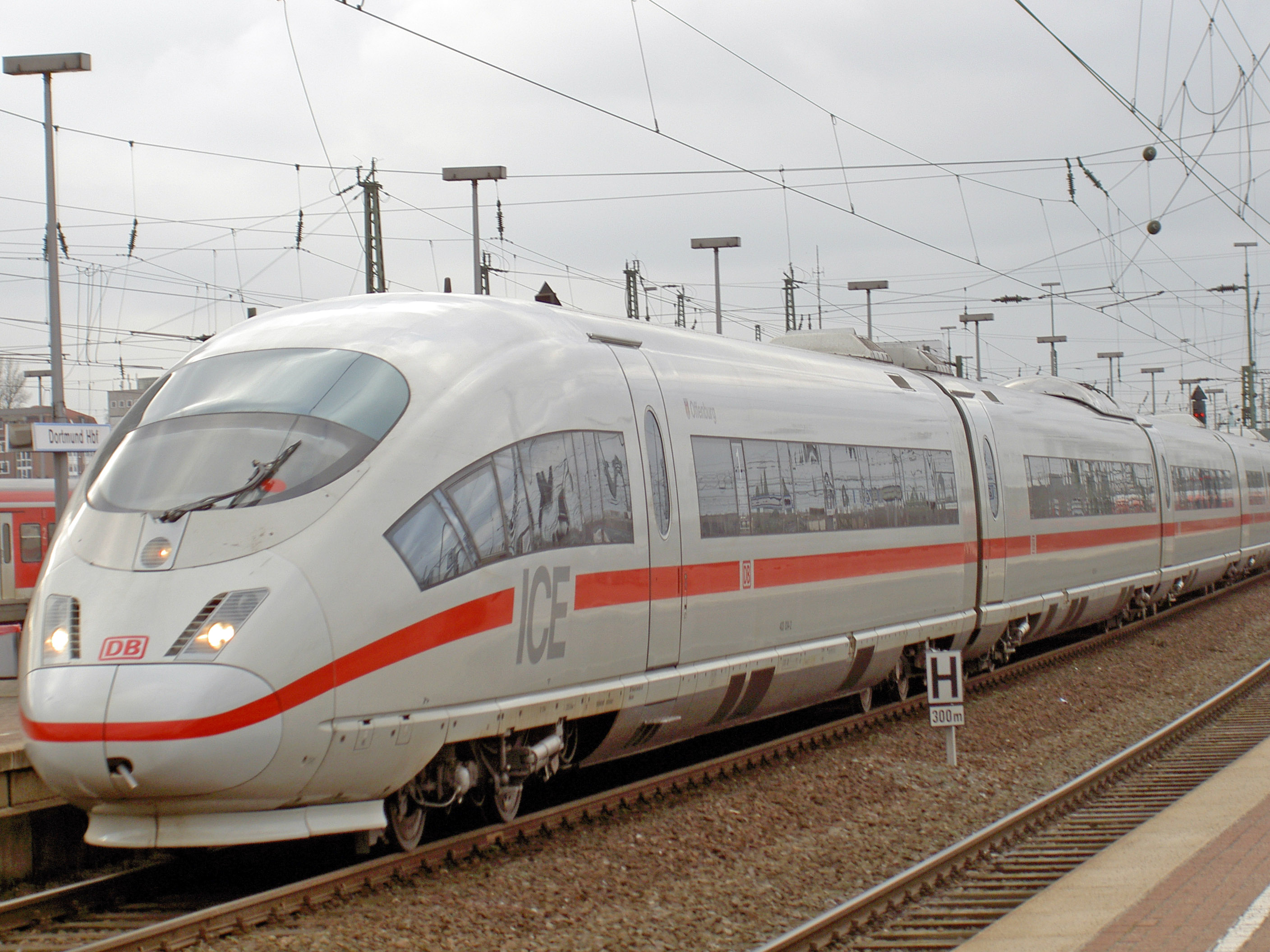
Libertarian gadfly "Sargon of Akkad" trolls Greta Thunberg. Sure hope his bug-out plan in the event of climate change being real is better than boarding a German train with a first class ticket, LOL. 

Wednesday, December 18, 2019

Jaha, det här förklarar ju saken


Pastor Kevin Swanson är inte den ende som hävdar att Greta Thunberg (hon på Tysklands-tåget) är besatt av demoner. Vår gamle vän Thomas Sheridan säger i ett klipp att Greta kan vara en *bokstavlig* demon (när ska Greta ändra sin Twitter-profil och skriva "Literally Demon"?). Och så har jag hittat den här...

Greta Thunberg is demon possessed and in need of an exorcism

Det knäppa med ovanstående är att bloggaren ifråga verkar vara frimurare...

Just det. Frimurare.

Det finns ju iiiiiinga konspirationsteorier om den rörelsen nehejdå.

PS. Jag har ju tidigare trollat Greta Thunbergs fans. Den här veckan trollar jag hennes kritiker istället. Har ni invändningar, grabbar, ta upp dem med Deutsche Bahne, ha ha!