Showing posts with label Lizards. Show all posts

Monday, August 31, 2026

Second breakfast


Another video on the Homo florensiensis situation. Recent research suggests that the "Hobbit" might not be a dwarfed Homo erectus (sensu stricto) but some kind of pre-human or almost-human. Perhaps an australopith (sensu latto)? I´m not surprised. I had a hunch in this direction already seven years ago. So can we go home now? Second breakfast, guys!

Bigfoot evidence

Tuesday, July 14, 2026

Barely human, merely Hobbit?


New research on the mysterious "human" (?) species known as Homo floresiensis suggests that they didn´t and couldn´t hunt dwarf elephants in their island habitat of Flores 100,000 years ago. Rather, the Hobbit (as this species of Homo is colloquially called) was feeding on carcasses of said pachyderm. The unfortunate proboscids had already been hunted and killed by Komodo dragons! That is, the extremely large monitor lizards known as "Komodo dragons" (this species of reptile is of course still around). 

Not sure what to make of this. If Homo floresiensis is an example of insular dwarfism - a shrunken Homo erectus as it were - then the erecti weren´t fully "human" in our sense of the term, still being subject to natural selection (which our species can at least try to escape or transcend). But isn´t there also evidence that Homo erectus were smarter than hitherto assumed? I mean, how on earth did they even *reach* Flores in the first place?

So I don´t know. Something strange is going on here. Either evolution can in extreme cases "go backward" even in a lineage were intelligence is developing. Or the good ol´ Hobbit wasn´t really a human in the first place, but some kind of stray australopith a long way from home...

Both perspectives are pretty mind-boggling. So if Frodo and his 57 half-cousins keep you up at night, pray that the Hobbits (those at Flores) were just monkeys! 

Wednesday, February 25, 2026

Tatzelwurm


Years ago, I actually read a book which took the Tatzelwurm seriously and proposed that it could be a cryptid, perhaps a large and largely unknown species of lizard. Think the Gila Monster, but much more agile. Reading more about it, I think it´s *much* more likely that we´re dealing either with local folklore (think dragons) and/or misidentified mammals. Why else would the "lizard" have the head of a cat? Of course, the book in question also took "de Loys´ ape" seriously, so there´s that...

Can you tell me about the Tatzelwurm?

The Tatzelwurm (also called Stollenwurm or Bergstutzen) is a creature from Alpine folklore, especially associated with parts of:

  • Austria

  • Switzerland

  • Bavaria in Germany

Its name roughly means “claw worm” or “pawed worm” (from German Tatze = paw, Wurm = worm/serpent).


🐉 What Does It Look Like?

Descriptions vary, but most accounts agree on a few features:

  • Long, serpentine or lizard-like body

  • Very short body compared to a snake — sometimes described as stubby

  • Two forelegs (sometimes four) with claws

  • Cat-like or reptilian head

  • Reported length: 1–2 meters (3–6 feet)

Some witnesses claimed it had:

  • A wide mouth with sharp teeth

  • Piercing eyes

  • Smooth or scaly skin

It’s often described as aggressive and dangerous.


📜 Folklore & Reported Encounters

The Tatzelwurm appears in Alpine folklore dating back to at least the 18th century, though stories may be older. It was said to:

  • Live in mountain caves or rocky crevices

  • Attack livestock

  • Poison or suffocate victims with breath or venom

There are scattered 19th and early 20th century reports from peasants and hikers claiming sightings in the Alps.

One famous alleged sighting occurred in 1828 near the Austrian Alps, where a man reportedly died after claiming to have encountered one. Later, in the early 1900s, some naturalists tried to investigate reports, but no physical evidence was ever found.


🧠 Possible Explanations

Scholars and skeptics have proposed several theories:

  1. Misidentified animals

    • Large salamanders

    • Escaped exotic reptiles

    • Distorted sightings of martens or other Alpine mammals

  2. Folkloric dragon survival

    • It may be a regional echo of European dragon legends.

  3. Cultural fear-symbol

    • Mountain dangers personified: avalanches, crevasses, wild animals.


🐲 Is It a Cryptid?

Yes — in modern terms, the Tatzelwurm is classified as a cryptid (a creature reported in folklore but lacking scientific evidence), similar in category to:

  • Loch Ness Monster

  • Mokele-mbembe

However, unlike those, it is specifically rooted in Alpine mountain culture rather than lakes or jungles.


🔎 Cultural Meaning

In Alpine regions, the Tatzelwurm represents:

  • Fear of wild, untamed nature

  • The mystery of mountain caves

  • A remnant of medieval dragon imagery localized into rural folklore

It’s less a “monster hunt” creature and more a regional mythic animal — somewhere between a dragon and a salamander.


If you’d like, I can also:

  • Compare it to medieval dragon symbolism

  • Explore its Jungian/archetypal meaning

  • Look at how it relates to other Alpine spirit beings

  • Or examine whether it could connect to older Indo-European serpent myths

Which direction interests you?

Could it be a misidentified large lizard (something like the Gila Monster in the United States)?

That’s a very reasonable hypothesis — and it’s one that has often been suggested.

Short answer: it’s unlikely, but not impossible in isolated cases.

Let’s break it down.


🦎 Comparison to the Gila monster

The Gila monster (found in the southwestern United States and northern Mexico) matches some Tatzelwurm descriptions:

Similarities

  • Thick-bodied

  • Large head

  • Short, powerful legs with claws

  • Venomous bite (which could explain “poison breath” folklore)

  • Somewhat slow but intimidating appearance

Key problem:
Gila monsters are desert reptiles. They do not live in cold Alpine climates.

The Alps (in Austria, Switzerland, and Germany) are far too cold for such reptiles to survive naturally.


🌡 Climate Problem

Large lizards are ectothermic (cold-blooded). Alpine regions have:

  • Long, cold winters

  • Snow cover

  • High elevations

  • Short warm seasons

Even Europe’s largest native lizards (like wall lizards or green lizards) are much smaller and prefer warmer habitats.

A stable breeding population of something Gila-sized in the Alps would be biologically implausible without modern climate change — and even then, survival would be difficult.


🦎 What About Escaped Exotics?

This is more plausible in modern times:

  • A privately kept exotic lizard escapes.

  • Someone sees it.

  • Local folklore interprets it through existing myth.

However:

  • Most Tatzelwurm reports predate exotic pet trade.

  • Many accounts describe creatures longer than any Gila monster (sometimes 1–2 meters).


🐉 More Likely Biological Candidates

If it was a real animal, possibilities might include:

1. Giant Salamanders (misidentification theory)

Europe does not have giant salamanders like Asia does, but large amphibians can look very strange when glimpsed briefly.

2. Distorted Mammal Sightings

A rearing marten, otter, or badger seen briefly in rocky terrain can look surprisingly serpentine.

3. Folkloric Amplification

A small lizard + fear + retelling = dragon-like creature over time.


🧠 Psychological & Folklore Layer

The “two-legged serpent” motif appears in medieval European dragon imagery. The Tatzelwurm may be:

  • A regional survival of dragon iconography

  • A mountain adaptation of the pan-European “wyrm”

The name itself (Wurm) already places it in that mythic category.


⚖️ So Could It Be a Gila-Monster-Type Animal?

Biologically stable Alpine population?
→ Extremely unlikely.

Occasional misidentified reptile?
→ Possible but weakly supported.

Myth emerging from distorted sightings + dragon folklore?
→ Much more probable.


If you're interested, we could go deeper into:

  • Whether Europe ever had large lizards in historical times

  • The evolutionary plausibility of a cold-adapted reptilian cryptid

  • Or whether Alpine folklore preserves older Indo-European serpent myths

Which direction would you like to explore?

Whether Europe ever had large lizards in historical times.

Short answer: Yes — but not in the time period relevant to Tatzelwurm legends.

Europe has had very large reptiles in deep prehistory, but not in recorded human history in the Alpine region.

Let’s break it down carefully.


🦎 1. Deep Prehistory (Millions of Years Ago)

In the Miocene epoch (about 23–5 million years ago), Europe was warmer and supported large reptiles.

Giant Monitor Lizards

Fossils show that relatives of modern monitor lizards once lived in Europe. One famous example is:

  • Varanus priscus (more commonly known from Australia, but related forms existed in Europe)

Europe had monitor-like lizards during warmer climatic periods, when subtropical ecosystems extended much farther north.

However:

  • These disappeared long before humans.

  • Climate cooling during the Ice Ages wiped out large reptile populations in Europe.


🦎 2. During the Ice Age (Pleistocene)

By the time humans were present in Europe (last 300,000 years):

  • Large reptiles were already gone.

  • Cold-adapted mammals dominated (mammoths, cave bears, etc.).

  • Reptiles were limited to small, cold-tolerant species.

There is no fossil evidence of large lizards surviving in Ice Age Europe.


🦎 3. Historical / Medieval Europe

In recorded history:

  • The largest European lizards are species like the green lizard (Lacerta viridis), typically under 40 cm.

  • Europe has no native monitor lizards.

  • No fossil or archaeological evidence suggests survival of large reptilian species into Roman or medieval times.

If something Gila-sized had existed in the Alps 1,000 years ago, we would expect:

  • Bones in caves

  • Mentions in Roman natural histories (e.g., Pliny)

  • Physical remains

None exist.


🌍 4. Climate Barrier

The Alps (in Austria and Switzerland) have been cold for tens of thousands of years.

Large ectothermic reptiles:

  • Cannot regulate internal temperature.

  • Struggle in long freezing winters.

  • Require warm basking environments and extended active seasons.

A hidden relic population surviving Ice Ages in Alpine caves would be biologically extraordinary — and would require a unique physiology unlike any known lizard.


🧬 5. Could a Cold-Adapted Large Reptile Evolve?

Theoretically?
Yes.

Realistically?
Extremely unlikely.

To survive Alpine winters, such a reptile would need:

  • Extreme hibernation ability

  • Deep geothermal cave habitats

  • Very low metabolism

  • A stable breeding population

No fossil record supports such a lineage.


🐉 Why the Legends Persist

Even though large lizards didn’t survive historically in Europe, Europe did preserve:

  • Dragon myths

  • Wyrm legends

  • Serpent-killing hero stories

The word “Wurm” in Tatzelwurm already places it in that mythic lineage.

It’s much more plausible that:

  • Small reptiles or mammals were misidentified.

  • Dragon imagery survived in localized folklore.

  • Mountain dangers became personified as a clawed serpent.


🔎 Bottom Line

Did Europe once have large lizards?
→ Yes — millions of years ago.

Did they survive into historical times in the Alps?
→ There is no fossil, archaeological, or textual evidence that they did.

Is the Tatzelwurm a survival of prehistoric reptile fauna?
→ Extremely unlikely.


If you'd like, we could explore something more speculative:

  • Could Ice Age cave ecosystems hide unknown vertebrates?

  • Or how dragon mythology may preserve distorted memory of prehistoric megafauna?

  • Or whether similar “two-legged serpent” beings appear in Indo-European myth patterns?

Given your interest in comparative religion and symbolism, the mythic continuity angle might be especially interesting.

Tuesday, February 3, 2026

Singular


Five animals only seen once. OK, quite interesting! Note the implication for cryptozoology: if even species that are extremely rare can become known to science, why can´t we find cryptids which supposedly live in our very backyards? Cuz they´re not real, obviously. 

Unless they´re fairies. As per usual! 

Monday, March 17, 2025

Lizards on rafts


- Not sure if the journey was worth it, tbh...

"Iguanas sailed on rafts 34 million years ago". LOL, no, they didn´t. But the headline does sound funny. I mean, for a moment I hoped peer-reviewed Science (TM) had proved the Silurian hypothesis?! 

Alas, it´s an article about perfectly normal lizards clinging to masses of vegetation drifting with the ocean currents all the way from North America to the Fiji islands. The longest journey ever made by a non-human terrestrial animal, apparently. Somewhat ironically, the ancestors of the Fijian iguanas may have been desert-dwelling ditto in America. 

I assume their evolutionary adaptations to a desert environment (think extreme heat, almost no water) may have helped them survive on the "raft" in scorching tropical heat with no fresh water until they reached the land of milk and honey in the middle of the Pacific...

Iguanas on rafts

Sunday, March 10, 2024

Lurking in Liberia


Could an unknown (and gruesome) species of crocodile or monitor lizard be lurking in inland Liberia? Cryptozoology blogger Karl Shuker has some ideas about the problematique. 

The existence of this cryptid seems unlikely, but it´s interesting to note that the natives don´t consider the gbahali to be supernatural, but just another dangerous animal. My wild guess, offered from the wilds of my armchair, is that the man-eating beast is a misidentified Nile crocodile of extremely large size (a form that would itself be unknown to science). 

If a White man with a herpetology degree survives a gbahali attack while lurking in Liberia, we´ll finally know...

The Gruesome Gbahali: Lurking in Liberia?


Thursday, May 6, 2021

Back to Galapagos


"Oceans" is the fourth part of the five-part documentary "A Perfect Planet" from the BBC. Or rather ocean, since strictly speaking there really is just one large sea on planet Earth. As usual, we get to see spectacular footage of more or less bizarre creatures. There is the flightless cormorant on the Galapagos Islands (it´s an excellent swimmer and diver) and the sea iguanas, large lizards which seek their food in the oceans...but die of cold unless they swim back to shore within 30 minutes. When really hungry, they simply attack the nests of the cormorants, eating the algae the nest are made of! 

Meanwhile, somewhere else in the Pacific, surgeon fish gather to release their eggs and sperm into the water to be carried away by the streams from any threatening predators...except the giant manta rays, which gather at the same place at exactly the same time, gobbling up substantial amounts of the nutritious mix! Another pelagic glutton is Bryde´s whale, which we see in action somewhere off the Thai coast. "A Perfect Planet: Oceans" also features sharks, sting rays, bony fish of all kinds, and a very bizarre octopus (or is it a squid?). 

The episode ends with another look at how "A Perfect Planet" was made, concentrating on the first part of the series, "Volcano". The team, led by Richard Wollocombe, descend into the crater of the dormant volcano at Fernandina, one of the Galapagos Islands. More people have been in space than down this particular crater, and I can´t say I blame Buzz Aldrin for choosing the former option! The place looks like a cross between Mordor and Dante´s Inferno, with huge rocks constantly falling down the steep slopes. At the bottom of the crater is a mysterious blue-green lake. But why on earth does anyone want to film *there*, and did they ever get an insurance, and if so, how much did it cost? If you´ve seen "Volcano", you know the answer: female land iguanas regularly descend into the crater, despite all the dangers, to lay their eggs in the warm ash at the bottom. How on earth evolution took *this* course is never explained, and perhaps we don´t even want to know...

The next and last episode of this stunning series is, perhaps ominously, entitled "Humans". Let me guess. We get to see a lot of house crows, house sparrows and cockroaches? A perfect planet indeed! :D 


Thursday, April 15, 2021

Perfectly wild


"A Perfect Planet" is a new series shown on BBC Earth, narrated by David Attenborough. When shown on Swedish TV, however, we have to rest contented with Henrik Ekman! I recently watched the first episode, "Volcano".

It´s ostensibly an educational production about the pivotal role of volcanic activity in sustaining life on Earth. Except, of course, that it isn´t. The "educational" angle is just an excuse to show the most spectacular footage of wildlife the BBC could lay their hands on this season. No hard feelings, btw! I mean, who cares about geology, anyway?

First, we get to see Lake Natron in Tanzania, a large volcanic lake where literally millions of lesser flamingoes breed and nest every year. It looks like another planet. Unfortunately for the flamingoes, but fortunately for the ecological balance in nature, marabou storks also gather to feast at those young flamingoes which aren´t fit enough to run away. I assumed the truly spectacular footage from Lake Natron was made by drones (the lake seems to be strongly acidic) but actually it was shot by an actual human who reached the interior of the lake area with a hovercraft! The local Massai tribeswomen even had to help him repair the hovercraft´s skirt... 

Next, we get to see some bizarre footage from the Galapagos Islands. At the small island of Wolf, one of "Darwin´s finches" (actually tanagers) have evolved a truly remarkable behavior. The "vampire ground finch" sometimes attacks the Nazca boobies and literally sucks their blood, weirldy enough without the boobies even noticing. At the island of Fernardina, an iguana climbs down into a volcanic crater 800 meters deep to lay its eggs in the hot sands surrounding the volcanic lake. This almost literal descensus into hell is extremely dangerous for the lizard, due to steep cliffs and falling rocks. 

This first episode ends with scenes of otters and coyotes from Yellowstone and a large gathering of cute-looking but dangerous brown bears from Kamchatka in Russia. 

I´m not sure if "A Perfect Planet" really proves that the planet is perfect, but at the very least, it does seem to be perfectly wild! 

I will certainly continue watching this series with great interest. 


Monday, September 3, 2018

Give 'em CBT and then some!


An island off the coast of Florida turns out to be infested with Komodo dragons that look jumbo-sized even by the standards of their breed. Clearly, somebody forgot to monitor the lizards. A greedy oil company, a hippie pilot with an inordinate fondness for reptilians, and a biologist with a record are other ingredients in this lighter Friday night entertainment. Excellent if you actually liked "Anacondas - The Hunt for the Blood Orchid" and similar pseudo-horror films. Personally, I wasn't entirely thrilled by it, but I admit that's somewhat subjective. One things for sure, though. "Komodo" proves that Cognitive Behavioural Therapy really does work.

Almost believable


SPOILER WARNING

A group of idealistic scientists at a secret facility on a Pacific island experiment with DNA to create super-maize in order to end world hunger. The U.S. military cajoles them to test the enhanced DNA on reptilians instead... You can probably make out the rest of the plot, LOL.

The fun starts when a group of surprisingly good-looking Green activists sneak onto the island to expose the machinations of Mad Science Gone Dangerously Wrong. To cover their tracks, the military bombs the island, while the slightly overgrown reptiles mentioned in the movie title kills and eats both scientists, Greens and each other in the rampage of the century.

Well, almost but not quite.

"Komodo versus Cobra" is actually pretty boring, with over half of the movie not showing any monsters at all?! This is a typical low budget production, a kind of "Jurassic Park" with a depleted special effects budget. But sure, if you like to watch B-movies featuring monsters on a rainy summer day, I suppose this could be an option. Two stars. Or perhaps two-and-a-half, since the plot is almost believable. I mean, what *are* the powers-that-be really doing on Tahiti...?

Friday, August 17, 2018

Here be lizards


A review of "The Dragons of the Canaries" 

Despite all the filler about “dragons”, this isn't a documentary about the more sensational strands of crypto-zoology. Rather, it deals with perfectly normal lizards found on the Spanish-controlled Canary Islands off the coast of Northwest Africa. Some of them, known as Giant Lizards, can become around one meter in length. One of the giants, dubbed “the rarest lizard in the world”, was discovered as late as 1999. The documentary also shows the “mummy” of an even larger lizard (about one meter and a half) found in the 1940's. No living specimen has been found to match it – yet. I'm not particularly interested in herpetology, but if Oskar Simonyi's quest for outsized lacertids on volcanic islands is your cup of joe, “The Dragons of the Canaries” might just make your day.

Sunday, August 5, 2018

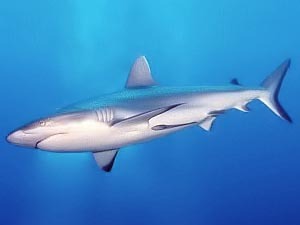
Where on earth are the sharks?

The shark on the photo has no connection to the book under review


The book "Sharkwater" is a companion to the documentary of the same name, also available from Amazon. The movie "Sharkwater" is one of the best documentaries I've ever seen, and it has received a lot of awards at various international film festivals. The movie follows the controversial action group Sea Shepherd as they try to save sharks from poachers in Costa Rica and the Galapagos. It also contains splendid footage of sharks.

I had expected the book to be pretty much the same. Sure, the photos are (mostly) excellent. Most are in colour. But where on earth are the sharks???

I'd say only about 10% of the photos in the book version show sharks. Instead, we are treated to pictures of starfish, jellyfish, barracudas, seals, iguanas and the Sea Shepherd crew. All very interesting, to be sure, but I wanted more hammerheads and whale sharks! Not to mention our old friend (and Spielberg's nemesis), the Great White. In that sense, the book was something of a disappointment.

Still, since the photos aren't bad, I nevertheless give "Sharkwater" four stars.
But I prefer the movie documentary.

Sunday, July 29, 2018

An evolutionary scandal


"Clonality" by John C Avise is a scientific, scholarly overview of clonal and asexual reproduction among vertebrates. The book is rather technical, and hence not suited for the general reader. Here's a sample sentence: "One likely hypothesis is that this outcome arose by a form of automixis, or automictic parthenogenesis, wherein mitotic-type divisions follow a meiotic reduction division and yield multiple haploid cells, some of which are genetically identical." If you're currently taking advanced biology classes, this is the book for you!

As a layperson, I could only skim the book. But yes, it does contain some pretty weird information. The phenomenon of "virgin birth" or parthenogenesis is usually associated with invertebrates (aphids come to mind), but also occurs in certain species of lizards. There is even a "lesbian" lizard which engages in pseudo-copulations, despite procreating by parthenogenesis. Since all offspring are clones of the mother, parthenogenetic species of this kind are usually all-female. Interestingly, parthenogenesis occasionally occurs even among sexually reproducing species. For instance, some turkeys and other game birds have occasionally propagated by "virgin birth" from unfertilized eggs.

Even more bizarre are the phenomena known as gynogenesis and hybridogenesis. (I never understood a third version, known as kleptogenesis!) Gynogenesis means that a parthenogenetic female of one species mates with a male from another species, but the sperms don't really fertilize the female egg. They trigger the development of the embryo, but no more. In essence, the foreign male is sexually parasitized by the "virgin" female (a feminist dream?). Hybridogenesis is more complex: the male becomes the biological father of the hybrid offspring, but is prevented from becoming the biological grandfather of the next generation, since the hybrid casts off his genetic material before reproducing. A frog thing, apparently.

The book also discusses identical quadruplets among armadillos, hermaphroditic fish, and (of course) Dolly and the vexing question of human cloning. There are also sections dealing with the evolutionary pros and cons of asexual reproduction. The author believes that parthenogenesis is a derived trait, and that it's somehow evolutionary unstable in the long run. He admits, however, that some invertebrates that reproduce asexually might be very ancient (tens of millions of years old) and calls this "an evolutionary scandal". The scandalous creatures are known as darwinulid ostracods, bdelloid rotifers and orbatid mites. Creative evolution?

"Clonality" is probably a five-star book, but since I'm not an expert on the issues under debate, I give it four. Somebody should write a more popularized version of this book!