Showing posts with label Sigmund Freud. Show all posts

Tuesday, December 16, 2025

Freud´s shadow?


A kind of sequel to the previous, shall we say "session", with ChatGPT. 

Why did therapy culture clung to repression?

This is a very perceptive question, because the persistence of repression in therapy culture is not mainly about evidence — it’s about psychology, institutions, morality, and narrative. Several forces converged to keep the idea alive long after it should have faded.

I’ll lay them out clearly and without polemic.


1. Repression is a perfect moral narrative

Therapy culture is narrative-driven.

Repression offers:
• A hidden cause for present suffering
• A villain (abuser, system, patriarchy, family)
• An innocent victim
• A redemptive arc (recovery → healing)

This structure is extremely compelling.

It turns diffuse suffering into:

“Something bad happened to you, and it was not your fault.”

That is morally powerful — and often emotionally relieving — even if factually incorrect in specific cases.


2. It validates suffering without ambiguity

Many people suffer without:
• Clear trauma
• Clear causation
• Clear blame

Repression solves this discomfort.

Instead of:
• “I don’t know why I feel this way”
you get:
• “Something terrible happened, and I forgot it”

This is comforting in a paradoxical way.

Therapy culture prefers meaningful pain to meaningless pain.


3. It flatters therapeutic authority

Repression implies:
• The truth is hidden
• The therapist has special access
• Recovery requires expert guidance

This:
• Elevates therapist status
• Justifies long treatment
• Creates asymmetry of knowledge

Models based on:
• Coping
• Skills
• Acceptance
are less mystique-laden.


4. Freud’s shadow never fully lifted

Even after psychoanalysis declined scientifically:

• Its concepts remained culturally dominant
• Training programs retained psychodynamic language
• “Unconscious” explanations retained prestige

Repression survived as:
• A metaphor
• A folk theory
• A clinical intuition

Long after its evidential basis eroded.


5. The 1970s–90s cultural moment

The repression boom didn’t happen in a vacuum.

It coincided with:
• Feminist consciousness-raising
• Survivor movements
• Distrust of institutions
• Exposure of real, hidden abuse

Important point:
• Many real abuses had been denied or silenced
• The idea of repression resonated with this truth

Unfortunately:
• The model overgeneralized
• Suspicion replaced evidence


6. It aligns with a confessional model of healing

Modern Western therapy inherits a confessional structure:

• Healing comes from:
– Telling
– Naming
– Revealing
• Silence is pathology
• Disclosure is virtue

Repression fits this perfectly:
• What hurts must be spoken
• What is hidden must be exposed

But this is a cultural value, not a scientific fact.


7. It explains symptoms too neatly

Repression allows almost any symptom to be interpreted as trauma:

• Anxiety → abuse
• Sexual difficulty → abuse
• Depression → abuse
• Dissociation → abuse

This creates a closed explanatory loop:
• Symptoms prove repression
• Repression explains symptoms

Closed loops are psychologically attractive — and scientifically dangerous.


8. Therapists are human (and morally motivated)

Most therapists who promoted repression were not cynical.

They were:
• Trying to help
• Deeply empathetic
• Influenced by moving narratives
• Often themselves shaped by trauma discourse

Believing repression:
• Allowed them to stand unequivocally with the client
• Avoid skepticism that felt morally cruel

But moral alignment is not the same as epistemic rigor.


9. Institutions lag behind evidence

Even after the recovered-memory crisis:

• Training curricula changed slowly
• Popular psychology lagged decades
• Media narratives fossilized earlier ideas

Once embedded, ideas persist by inertia.


10. Why the idea is still attractive today

Even now, repression persists because it:

• Offers certainty where there is ambiguity
• Converts suffering into story
• Externalizes blame
• Elevates therapeutic insight
• Feels compassionate

But compassion and truth are not always the same thing.


11. The deeper reason (philosophical)

At a deeper level, repression appeals because:

We want suffering to have a cause we can uncover, rather than a condition we must learn to live with.

Repression promises:
• Knowledge instead of acceptance
• Explanation instead of endurance
• Discovery instead of uncertainty

That promise is hard to give up.


12. One-sentence takeaway

Therapy culture clung to repression because it is narratively satisfying, morally validating, institutionally empowering, and culturally resonant — not because it was empirically solid.

If you want next, we could:
• Compare repression with modern trauma therapies
• Look at predictive processing and memory
• Examine parallels with religious confession
• Or analyze how this connects to modern identity formation

Just tell me where to go next.

On the knife-edge (part 3)


ChatGPT on repressed memories. Part 3 of 3 (although I might post sequels). 

So although repression in the Freudian or "pop" sense doesn´t exist, painful events may be forgotten and reconstructed by memory later?

Yes — that is exactly the right conclusion, and it’s important to state it with the right precision, because a lot of confusion comes from collapsing different processes into the single word repression.

Here is the clean, consensus position, stated carefully.


1. What does not exist (in the strong sense)

What does not have good evidence is:

• A special unconscious mechanism
• That actively blocks traumatic memories
• For years or decades
• While keeping them intact
• Until they are later “recovered” accurately

This is Freudian / pop repression, and the evidence does not support it.


2. What does exist (and is well-supported)

Several ordinary, well-understood processes do occur and can look like repression if you use loose language.

A. Failure of encoding (very common)

If an event happens when someone is:
• Very young
• Overwhelmed
• Dissociated
• Intoxicated
• Injured

Then:
• The memory may never be fully encoded
• Later recall is fragmentary or absent

Nothing was “pushed down”; it was never clearly stored.


B. Ordinary forgetting over time

Like all memories:
• Traumatic memories decay
• Especially if not rehearsed
• Or if actively avoided

Avoidance is conscious or semi-conscious, not repression.


C. Context-dependent recall

Memories are cue-dependent.

• New contexts
• New concepts
• New narratives

can make previously inaccessible memories retrievable.

This feels like “recovery” but is ordinary memory dynamics.


D. Reinterpretation of old memories

This is especially important for childhood experiences.

A person may:
• Remember events without understanding them
• Later reinterpret them with adult knowledge
• Experience this as “remembering for the first time”

But the memory itself was not hidden — its meaning was.


E. Reconstruction and confabulation

When recalling:
• Gaps are filled in
• Narratives are shaped
• Emotions add certainty

This reconstruction can feel vivid and real — even if inaccurate.


3. Why this feels like repression from the inside

Subjectively, people experience:

• “I never remembered this before”
• “It suddenly came back”
• “It explains everything”

This subjective experience is genuine, even when the mechanism is not repression.

The brain does not label:
• encoding failure
• reinterpretation
• reconstruction

It just produces a coherent story.


4. Childhood vs adulthood (important distinction)

Childhood

• More forgetting
• More reinterpretation
• More vulnerability to suggestion

Adulthood

• Less total forgetting
• More avoidance
• More emotional blunting
• Less sudden “recovery”

Neither requires repression.


5. The safest formulation (used by experts)

Most cognitive psychologists would say something like:

“Painful events can be forgotten, avoided, or poorly encoded, and later recalled or reconstructed, sometimes with significant distortion; however, there is no convincing evidence for a special repression mechanism that reliably stores and later releases accurate memories.”

This phrasing is deliberate and precise.


6. One-sentence bottom line

Painful experiences can be forgotten or only partially remembered and later reconstructed, but they are not hidden intact in the unconscious waiting to be unlocked.

That’s the intellectually honest middle ground.

If you want, next we could:
• Explore why therapy culture clung to repression
• Look at predictive processing models of memory
• Examine implications for trauma treatment
• Or compare this with Buddhist views of memory and suffering (which might interest you)

Just say where to go next. 

On a knife-edge (part 2)


ChatGPT on repressed memories of abuse and trauma. Part 2 of 3. "For the record only". 

Look at famous case studies (true and false)

Below is a careful tour of famous case studies that shaped how scientists now think about repressed vs reconstructed memories. I’ll separate credible cases, ambiguous cases, and demonstrably false cases, and explain why each matters.

I’ll avoid sensationalism and stick to what the cases actually show.


1. Cases often cited as “true recovered memories” — and why they’re controversial

A. The Jane Doe / “delayed recall” abuse cases

There are many reported cases where adults say:
• They did not remember childhood abuse for years
• Later remembered it in adulthood
• The abuse was independently corroborated

What these cases really show
• Some traumatic events are genuinely forgotten
• Some are later recalled
• Independent corroboration does sometimes exist

But crucially
• These memories are often:
– Partial
– Vague
– Triggered by external reminders (news, conversations)
• Not recovered through hypnosis or memory-recovery therapy
• Often involve reinterpretation rather than sudden recall

Most memory researchers classify these as:

Ordinary forgetting + later recall, not repression in the Freudian sense.


B. Linda Meyer Williams’ study (1994)

This is often cited as the strongest evidence for repression.

The study
• Followed women with documented childhood sexual abuse
• Interviewed them as adults
• Some did not report the abuse initially
• Some later acknowledged it

What it actually supports
• Some people do not spontaneously report known abuse
• Avoidance, shame, and lack of salience matter

What it does not prove
• An unconscious repression mechanism
• Complete amnesia followed by accurate recovery
• Memory being “stored intact”

Even Williams herself later clarified that her findings were misused.


2. Ambiguous cases — where interpretation matters

A. War trauma with delayed recall

Some combat veterans:
• Do not recall specific incidents for years
• Later remember fragments

This is often cited as repression.

Modern interpretation
• High stress impairs encoding
• Alcohol, injury, dissociation play roles
• Memories were never fully consolidated

Again: encoding failure ≠ repression.


B. Chronic childhood abuse cases

In long-term abuse:
• Events blur together
• No clear episodic boundaries
• Later recall is schematic (“I know it happened”)

This looks like repression but is better understood as:
• Poor episodic encoding
• Narrative reconstruction


3. Famous false-memory cases (very important)

These are where the strongest evidence exists.


A. The McMartin Preschool case (1980s)

Claim
• Hundreds of children abused in satanic rituals
• Underground tunnels
• Animal sacrifices
• Flights in hot-air balloons

Reality
• No physical evidence
• Highly suggestive interviews
• Leading questions
• Long interrogations

Children came to believe the events vividly.

Outcome
• Longest criminal trial in US history
• All charges dropped

Significance
• Demonstrated how easily detailed false memories can be created
• Especially in children


B. Paul Ingram case

Who
• Sheriff’s deputy
• Accused of satanic ritual abuse by his daughters

What happened
• Initially denied everything
• Under pressure, began to “remember” abuse
• Even “remembered” crimes that never occurred

Key experiment
• Psychologists suggested a fictional event
• Ingram developed a detailed memory of it

Outcome
• Confessed
• Later recanted
• Conviction overturned

This case is devastating to repression theory.


C. “Alien abduction” cases (Elizabeth Loftus’ work)

People under hypnosis:
• Recovered detailed memories of alien abduction
• With strong emotional conviction

These memories:
• Followed cultural scripts
• Varied by decade and media exposure

Importance
• Shows how suggestion + imagery = certainty without truth


D. The “Lost in the Mall” experiment (Loftus & Pickrell)

Method
• Participants told they were lost in a mall as children (false)
• Encouraged to recall details

Results
• ~25–30% developed a memory
• Some added rich detail
• Many were confident it happened

This experimentally proves false autobiographical memory formation.


4. Therapy-induced false memories (1980s–90s)

Common techniques:
• Hypnosis
• Guided imagery
• Dream interpretation
• “Your symptoms mean abuse”

Outcomes:
• Memories of satanic ritual abuse
• Incest rings
• Multiple perpetrators

Later investigations showed:
• No corroboration
• Strong therapist suggestion
• Cultural contagion

This period permanently altered professional ethics.


5. Why “false” doesn’t mean “lying”

This is crucial.

People with false memories:
• Are not faking
• Are not consciously lying
• Experience genuine emotion
• Experience genuine certainty

Memory sincerity ≠ memory accuracy.


6. What case studies collectively show

Across decades:

Supported

• Forgetting of trauma can occur
• Recall can happen later
• Memory is reconstructive
• Suggestion powerfully shapes memory

Not supported

• A special repression mechanism
• Long-term storage of intact traumatic memories
• Reliable recovery via therapy techniques


7. The modern consensus phrasing

Most experts now say:

“Traumatic memories may be forgotten or avoided and later recalled, but claims of repression followed by accurate recovery should be treated with skepticism, especially when memories emerge under suggestive conditions.”


8. One-sentence takeaway

Case studies show that memory is vulnerable, not vault-like — and that certainty is a poor guide to truth.

If you want, next we could:
• Examine neurobiology of traumatic memory
• Look at legal standards for recovered memories
• Compare Freud’s repression to predictive processing
• Or discuss why the idea remains culturally powerful

Just say where to go next.

On a knife-edge (part 1)


Just to see what would happen, I asked ChatGPT about repressed memories. This is part 1 of 3. It´s almost as if the AI is walking on a knife-edge...

Is there any evidence for so-called repressed memories of traumatic events (both childhood memories and memories from adulthood)?

Short answer: there is no good evidence for “repressed memories” in the strong, classical sense, but there is solid evidence for ordinary forgetting, fragmented memory, and later reinterpretation of past experiences. The distinction matters a lot.

I’ll break this down carefully, because the topic is unusually confused and emotionally loaded.


1. What “repressed memory” originally meant

In classical psychoanalytic theory (Freud):

Repression = an unconscious process that actively keeps traumatic memories out of awareness, sometimes for decades, until they are later “recovered” intact.

Key claims:
• The memory still exists in full detail
• It is inaccessible to consciousness
• It can later be recovered accurately
• Recovery is therapeutic

This strong claim is what people usually mean by “repressed memory”.


2. Scientific consensus today

Bottom line

There is no reliable evidence that traumatic memories are commonly or systematically repressed and later accurately recovered.

This is the mainstream position in:
• Cognitive psychology
• Memory research
• Clinical psychology
• Psychiatry

Major professional bodies (APA, British Psychological Society) all take versions of this view.


3. What is well-supported instead

A. Traumatic events are usually remembered too well, not too little

Decades of research show:

• Traumatic memories tend to be:
– Highly persistent
– Intrusive
– Emotionally vivid
• Core symptoms of PTSD involve:
– Flashbacks
– Intrusive recollections
– Nightmares

This is the opposite of repression.

Trauma typically enhances memory for central features, even if it distorts details.


B. Ordinary forgetting happens — including for trauma

People can forget traumatic events, but this is not repression.

Examples:
• Very early childhood events (infantile amnesia)
• Events that were not understood at the time
• Chronic abuse without clear episodic boundaries
• Dissociation during trauma reducing encoding

This is failure of encoding or consolidation, not repression.


C. Memory is reconstructive, not archival

Modern memory science shows:

• Memories are:
– Reconstructed each time they’re recalled
– Influenced by beliefs, narratives, and context
• Confidence ≠ accuracy
• Emotion increases certainty, not reliability

So a “recovered” memory can feel powerful and real even if it is false or distorted.


4. Childhood trauma and “recovery” later in life

This is the most controversial area.

What is plausible

• People may:
– Recall new interpretations of old experiences
– Reframe ambiguous memories as abusive once they gain adult understanding
• Example:
– A child didn’t understand sexual behavior
– An adult later recognizes it as abuse

This is reinterpretation, not repression.


What is not supported

• Sudden recovery of:
– Detailed
– Long-forgotten
– Previously inaccessible
– Highly specific abuse memories
• Especially when triggered by:
– Hypnosis
– Guided imagery
– Leading therapy techniques

These conditions are strongly associated with false memories.


5. The “recovered memory” crisis (1990s)

This is why the field is cautious.

During the 1980s–90s:
• Therapists actively encouraged memory recovery
• Techniques included hypnosis, visualization, dream interpretation
• Many patients came to believe they had been abused
• Some accusations were later shown to be false

Outcomes:
• Families destroyed
• Legal miscarriages of justice
• Major re-evaluation of memory theory

This was not fringe — it was widespread.


6. What about dissociation?

Dissociation is real, but often misunderstood.

• Dissociation can:
– Fragment memory
– Reduce emotional integration
– Create vagueness or gaps
• It does not reliably:
– Store complete memories intact
– Prevent recall for decades
– Guarantee later accuracy

Dissociation ≠ repression.


7. Adult trauma and amnesia

Adults can forget trauma, but usually:

• The forgetting is:
– Partial
– Gradual
– Context-dependent
• Memory may be:
– Avoided
– Emotionally blunted
– Not frequently rehearsed

Again: no special repression mechanism is needed.


8. Current consensus formulation (very important)

Most researchers would say:

“People may forget, avoid thinking about, or fail to encode traumatic events; later they may recall or reinterpret them — but there is no convincing evidence for a special unconscious repression mechanism that stores accurate memories for later recovery.”

This wording is carefully chosen.


9. Why the idea persists anyway

Several reasons:

• Trauma narratives feel morally compelling
• Personal testimony is emotionally persuasive
• Therapy culture values “hidden truths”
• Memory feels like a recording, but isn’t
• People underestimate suggestion effects

Also:
• False memories feel exactly like real ones


10. Final plain summary

• Strong repression theory: ❌ Not supported
• Trauma forgotten via repression and later recovered accurately: ❌ No good evidence
• Ordinary forgetting, poor encoding, reinterpretation: ✅ Well-supported
• Trauma usually remembered vividly: ✅ Strong evidence
• Recovered memories under suggestive therapy: 🚩 High risk of false memory

Or in one sentence:

Trauma distorts memory, it doesn’t hide it in a vault waiting to be unlocked.

If you want, we could next:
• Look at famous case studies (true and false)
• Examine PTSD memory mechanisms in detail
• Compare Freud’s repression to modern models
• Discuss legal implications and standards of evidence

Just say where you’d like to go.


Sunday, August 17, 2025

Projection


Overheard on the internets: "Freud should have realized that his own idea of the unconscious was itself a freudian projection, his wish is that the unconscious was just wishes because its simple and easy to understand. The depths Jung was plumbing are terrifying for most people to even acknowledge."

Sunday, June 16, 2019

Trolling the skeptics?


“Fakta eller fantasier. Föreställningar i vetenskapens gränstrakter” is a Swedish book edited by Jesper Jerkert. It´s a sequel to ”Vetenskap eller villfarelse”, which I haven´t read. Both books are written from a skeptical perspective and reprints material from “Folkvett”, the magazine of the Swedish skeptics´ organization VoF. Think “Skeptical Inquirer” and CSICOP and you get at least some of the picture. Since the contributions are written by a diverse bunch of authors and are often quite short, the quality of the material is equally varied. Most of it is tolerable, regardless of whether you are a skeptic or not. For obvious reasons, I found the Atlantis debunking unconvincing, but YMMV. The book was published in 2007 and shows Olof Rudbeck on its front flap! Yes, that would be the 17th century loco who claimed that Sweden was, ahem, Atlantis…

One contribution stands out, and I can´t help thinking that the editor might have been trolling his readers. It´s the Dalkvist-Westerlund article on parapsychology, which actually defends the idea that parapsychology is a legitimate science, and criticizes its skeptical critics in some detail! I will certainly use this piece, fully cross-referenced, in any future confrontation with the Angry Atheist brigade (although I might just as well be sending it telepathically to James Randi). Another intriguing article attacks Sigmund Freud, painting him as a more or less conscious fraud. I noted that the article attacks both his early “seduction theory” and his later idea that all memories of sex abuse in early childhood are purely imaginary – both claims, the author of the article claims, are Freud´s own speculations, since the psychoanalyst´s own case files back up neither. The author sees Freud as a seeker and intellectual explorer who made the mistake of insisting that his wild ideas were scientifically proven. (Velikovsky comes to mind here.)

Yet another interesting piece deals with Environmental Somatization Syndrome (ESS), including oral galvanism, Sick Building Syndrome (SBS), and oversensitivity to electromagnetic fields. The author, a medical doctor, believes that these syndromes are all in the mind, and tend to go away if the authorities simply refuse to listen (and refuse to pay). The fact that each generation, or every country, has its very own “ESS”, often connected to new forms of technology, while the symptoms are identical, is to the author a good indicator that we are dealing with problems that are at bottom psychological. Also, ESS-type symptoms *disappear* if a real toxin is present, to be replaced by the standard symptoms associated with that particular agent.

Lysenko, alternative medicine, humanistic psychology, the new Swedish Bible translation, dowsing, the Intelligent Design movement, the history of conspiracy theory, and the differences between CSICOP and VoF are other topics covered in “Fakta eller fantasier”.

Perhaps not the best book around on the topics under debate, but quite well-crafted for lighter weekend reading. If skepticism is your cup of tea (or homeopathic sugar water), you probably won´t regret reading it.

Sunday, September 16, 2018

The Synchronicity Cult


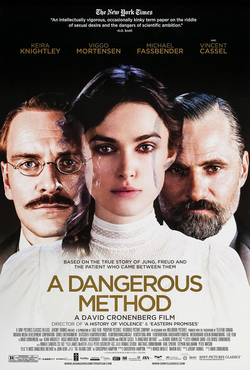
Weird. Is synchronicity real? I just posted a review of Richard Noll's cult classic “The Jung Cult” (or, as evil tongues call it, “Völkische Jung-Mädel”), and look what Swedish TV aired literally the same evening: “A Dangerous Method”, freely based on the true story of Carl Gustav Jung's collaboration and conflict with Sigmund Freud. The only thing lacking now is a mysterious dung beetle (or Egyptian god with kingfisher wings) flying into my flat through the open window!

“A Dangerous Method” doesn't shy away from the more juicy (some would say “Freudian”) aspects of Jung's early career. The Swiss psychoanalyst's entanglement with the beautiful, intelligent and crazy Sabina Spielrein forms the centerpiece of the story. Yes, Dr Jung (who was married) had an erotic relationship with her. The film also features Jung's fateful encounter with anarchist Otto Gross, who was one of his patients (!) but had a demonical influence on the man who was supposed to cure him.

I can't say “A Dangerous Method” is *that* interesting, unless you have an Oedipal crush on psycho-analysis, and the plot is probably incomprehensible to anyone who hasn't read extensively on the subject. Still, it did give me new respect for Viggo Mortensen as an actor – like most people, I remember him as Aragorn in LOTR. Here, he stars…Freud!

I'm not sure if it's another aspect of Jungian or Völkisch synchronicity, or just a sheer co-incidence, but another TV network was showing “Twin Peaks” reruns at the same time as “A Dangerous Method” was aired.

Apparently, Jungian analytical psychologists prohibited their patients-clients from reading Noll's fratricidal attack on the Jung cult. I can only hope that they can at least watch “A Dangerous Method”. If not, I suppose there is always “Twin Peaks”…

Saturday, September 15, 2018

The demons of Concord


“Demonology” is an essay penned by Ralph Waldo Emerson, the American man of letters and founder of New England Transcendentalism. It's vintage Emerson: hard to read, even harder to understand, seemingly contradictory, and dealing with a dozen different subjects concurrently. One of the few subjects it doesn't deal with at any length is actual demonology! Thus, don't expect any sensational revelations about witches, warlocks or exorcists…

The essay is often said to anticipate Freud, due to Emerson's interest in the interpretation of dreams. I think this is unfair, both to Emerson and Freud, since the “sage of Concord” see dreams as, in some sense, supernatural. Dreams may contain genuine premonitions of the future and hence be prophetic, since every man is simply working out his “fate” (a Hindu or Buddhist would perhaps call it karma). Emerson does connect dreams to our deeper personalities, and in this resembles Freud, but I don't think the father of psychoanalysis would have approved of the black mud of occultism implied in Emerson's esoteric/Hermetic/Neo-Platonic perspective. Jung? Maybe.

But then, Emerson doesn't really approve of the muddier streams of spirituality either. To him, the cosmos is at bottom lawful and logical (or at least should be, to the disciplined mind of the spiritually enlightened). Mesmerism, séances or ghosts strike him as chaotic, with no real connection to anything else, and hence no real meaning. “Nature” (including its spiritual dimension) is sufficiently grand, and so is Man, so why bother with spiritist manifestations or animal magnetism? However, Emerson doesn't entirely rule out the existence of paranormal phenomena. He sees “the demonic” as Spirit's way of reminding humans of its existence. If you don't see the well ordered spiritual cosmos, you will be hit in the head by its chaotic shadow: “Demonology is the shadow of Theology”. This, too, sounds a bit like Freud – it's the repressed contents of the Id coming forth by night, but once again, Emerson connects it to a broader supernatural reality. He quotes Goethe on the “demonic”. And yes, Patrick Harpur's “Daemonic Reality” comes to mind...again!

Instead of seeing Ralph Waldo Emerson as anticipating Freud, perhaps we should see ol' Sigmund de-esotericizing German Romanticism?

Thursday, August 30, 2018

The dog that ate Philemon


"Don't listen to the voices in your head. Listen to your Great Pyrenees". Seems like good advice. What a shame neither Sigmund Freud nor Carl Gustav Jung heeded it. I mean, it could have saved the world a lot of trouble...

Thursday, August 23, 2018

Out of Egypt have I called the Father


“Moses and Monotheism” is easily Sigmund Freud's strangest text…apart from all the others, LOL. It was written in installments over a longer period, and finally published as a single work in 1939. A curious fact that struck me when reading it is that the distance between Freud and Jung isn't as large as expected. Freud's theories also presuppose a kind of Lamarckian inheritance of psychic material, the idea that the psyche is an actual “energy”, and even a collective unconscious on both ethnic and species levels.

OK, and the difference between this and Jung is…?

Presumably that Freud viewed religion, including “his” Jewish religion, as a neurosis, while Jung viewed it as something positive (at least in the Neo-Gnostic version of Jung himself).

That being said, Freud's concrete speculations about Moses and monotheism are, to put it mildly, hard to believe. In Freud's scenario, there were actually two characters called “Moses”. The original Moses was an Egyptian priest and follower of the monotheistic sun cult of heretic Pharaoh Akhenaten. Freud points out that the name “Moses” sounds Egyptian (compare Ahmose, Tuthmosis, etc). After the death of Akhenaten, Moses converted the Israelite tribes living in Goshen to his sternly ethical monotheist religion, rebelled against the new “pagan” Pharaoh Horemheb, and led “his” people out of Egypt in the direction of Canaan. However, the Israelites were unused to the new demands imposed on them by the stern father-figure of Moses, and therefore killed him (!) In Midian, the Israelites met a new prophet, also called “Moses” in later traditions, who gave them an easier religion centered on the volcano deity Jahve, who was no different from the Baalim of the pagan peoples. However, the ideas of the original Moses gradually returned to the surface, in the form of the ethical-monotheistic preaching of the Prophets (Isaiah, etc). A completely new departure was made by Paul. His strange new claims about the Jews killing the Son of God, are really about the original murder of the quasi-divine father-figure Moses, symbolized by God the Father. Since salvation is attained through the blood of Christ, this means that the original father-murder has been “atoned”…or so the psyche imagines.

Freud's claims are easier to understand (although hardly easier to accept) if placed in context of his other ideas. Thus, Freud believed that every son simultaneously hates and fears his father, and secretly want to kill him (the Oedipus complex). What is true for the individual, is true for the entire human race (a version of “ontogeny recapitulates phylogeny”). The most crucial event in human history was a kind of father murder, during which the subordinate male members of the primordial horde killed and cannibalized the alpha male. Later, the remorseful males attempted to expiate their sin by worshipping the dead father as a “god”, and symbolically ate his flesh and blood (compare the Christian eucharist). There are other similarities between the life-cycle of the individual and the history of the Jewish people. Thus, just like repressed material from early childhood might come back in adulthood after a prolonged period of “latency”, so the repressed ethical monotheism came back after a period of Jahvist-Baalist occultation. Presumably, Christianity is another resurfacing of repressed material, since the Christians “admit” their guilt in the primordial deicide/patricide.

What is less clear, frankly, is why we should fight such “neuroses” as ethical Jewish monotheism or Christianity, if they help us get in touch with our repressed better selves? As far as I understand, Freud was something of a “pessimist”, holding that humanity needs repression (of aggression, sexuality, etc) for civilization to be possible at all. This creates neuroses, but that's just tough. But why can't religion, if based on the “sun cult of Akhenaten” (which Freud seems to admire), also be a positive force, healing civilization from its discontents?

I can't help wondering what would have happened if Freud had reconciled himself with his own prodigal son, the fratricidal little “Aryan Christ” Jung…

Sunday, August 5, 2018

A book that made me stay agnostic


Fawn Brodie's "No Man Knows My History" was first published in 1945. On various points of detail, it has been superseded by more recent research. Also, one can debate whether or not Brodie's psychological and hypercritical take on Joseph Smith is correct or methodologically meaningful. Still, "No Man Knows My History" remains the classical biography of the Mormon prophet. Everyone who is interested in Mormonism from a non-Mormon ("non-faith promoting") perspective must read and come to terms with this book. Brodie herself was expelled from the Mormon (LDS) Church after the book's publication. Mormon scholar Hugh Nibley responded with a piece bearing the sexist title "No, Ma'm, that's not history". I'm not sure whether it's still available, or whether anyone really cares. As for Brodie, she eventually became a successful history professor and wrote biographies of Thaddeus Stevens, Richard Burton, Thomas Jefferson and Richard Nixon. I haven't read them, but apparently they are heavily dependent on Freud and psychoanalysis, which strikes me as somewhat problematic. (Many American scholars seem to have a very reverential attitude to Freud. Perhaps patricide is in order?)

What makes Brodie's biography controversial is her forthright description of Joseph Smith as a fanatic and deliberate con man. In a later edition, she dubs him a megalomaniac. To Brodie, it seems obvious that if somebody makes claims that are patently absurd from an atheist viewpoint, that person must be a conscious liar. In the same manner, she writes off Joseph Smith's earliest followers as easily fooled, manipulated or hypnotized. Today, it's considered bad politic among anthropologists or comparative religion scholars to take matters quite this far. (Richard Dawkins is another case again. But then, he's a biologist.) However, I must admit that I feel a certain sympathy for Fawn Brodie's position. Smith, after all, made some pretty extreme claims!

Regular prophets claim to have visions, hear voices or meet supernatural personages. The visionary might be honestly reporting a subjective, psychological experience. He may even be (honestly) delusional. But Joseph Smith claimed to have found, seen and handled an actual material artefact, the golden plates from which the Book of Mormon were "translated" through the aid of an equally material artefact, the Urim and the Thummim (apparently, some kind of spectacles). Moreover, the Three Witnesses claimed to have had a collective vision of an angel showing them the golden plates, while the Eight Witnesses claimed to have both seen and handled the plates in a strictly down-to-earth fashion. The problem, of course, is that the entire story is absurd: there never were any golden plates, no Urim and Thummim, etc. It's therefore difficult not to charge Joseph Smith with conscious fraud, and his followers with extreme gullibility.

The same basic story applies to the Book of Abraham, where Smith did have access to an actual document, but where the "translation" is fraudulent. Add to this Smith's personal character, which included secret polygamy (while the Book of Mormon condemns polygamy), joining the Freemasons and copying their rituals (while the Book of Mormon condemns Masonry), revisions after the fact of published church material, etc. And what about prohibiting alcohol in Nauvoo while still running a saloon in the main building? Smith's disciples don't inspire much confidence either. The Three Witnesses all left the Mormon Church, yet insisted that their testimony about the golden plates was true. Smith's estranged wife Emma Hale Smith joined a monogamous breakaway group after her husband's death, taking revenge on Smith's polygamous successor Brigham Young by claiming that Smith had never been a polygamist.

If this is how religions are usually conceived, I rather stay agnostic!

Readers of "No Man Knows My History" should also consult "Reconsidering No Man Knows My History", a critical reappraisal of Brodie's book edited by Newell Bringhurst.