Showing posts with label HBW. Show all posts

Wednesday, March 4, 2020

Yes, storks

A highly abberant stork? Only in California!


“Handbook of the Birds of the World” (HBW for short) is a gargantuan encyclopedia in 17 volumes describing all living species of birds known to science. That´s about 9,000 of them! The first volume was published in 1992, the last one just a few years ago. There are also two extra volumes containing extensive checklists of…well, all the birds previously described. This is a review of the second volume, published in 1994. It seems I missed to comment it during my illicit reviewing spree at Amazon.com, which ended in Jeff Bezos personally purging me in 2018. OK, not really, but it seems it wasn´t on sale in Bezosland and therefore couldn´t be properly fake-reviewed by yours truly, so here I go on my blog instead!

Somewhat surprisingly, Vol 2 only covers two orders, the “classical” Falconiformes (diurnal birds of prey a.k.a. ditto raptors) and Galliformes (chicken and their allies a.k.a. gamefowl and half a dozen other aliases). I admit that I didn´t dig *that* deeply into the section on the galliforms, but it doesn´t seem to mention the bantam breeds, so perhaps that´s a plus for chicken fanciers, who often positively hate the poor little things, or so I´ve been reliably informed. Instead, I went straight for the main course, the Falconiformes. In HBW´s version, or rather their 1994 version, the raptor order consist of New World vultures, the Osprey, Hawks & Eagles (presumably including the Old World vultures), the Secretarybird, and Falcons & Caracaras (called “falconids” in this work). That being said, all wasn´t well in raptor space back in the 1990´s. The exact taxonomic position of the New World vultures was especially contentious.

HBW argues that New World vultures may actually be closer to storks (yes, storks) than to other birds of prey. The idea of a Californian Condor really being a highly aberrant stork does have a certain intrinsic appeal. Some of the similarities between Cathartidae and Ciconiiformes are absolutely stunning: “For example, both groups of birds keep cool by squirting their legs with urine, which then evaporates off to leave the legs sometimes looking as if they have been white washed”. The genera within Cathartidae may not be closely related either. We also learn that there used to be Old World vultures in the New World until 10,000 years ago and New World vultures in the Old World 20 million years ago (not sure what made them leave). Even on the species level there is confusion. Or was back in ´94. The good ol´ Turkey Vulture, well known from spaghetti western flicks, might actually be several different species. It´s difficult to know since all museum specimens look the same – the skin color (a distinguishing mark for subspecies and species) fades after death!

In this volume, the “falconids” are relatively firmly anchored in Falconiformes (as the diurnal birds of prey are called when they do include them – otherwise it´s Accipitriformes) due to their “external morphology, internal anatomy, behaviour, feather parasites, and moult patterns”. DNA studies suggested the same thing, but today scientists believe on the basis of new research that falconids aren´t closely related to accipitrid raptors at all, rather they are a sister group to parrots and passerines! Interestingly, one M Jollie suggested already in 1977 on non-genetic morphological grounds that falconids are polyphyletic (google it!) and are closer to owls, cuckoos, plantain-eaters and indeed parrots than to other diurnal birds of prey.

Otherwise, everything is pretty much as usual as far as HBW volumes are concerned: detailed family presentations followed by species presentations and range maps, and a lot of color illustrations and ditto photos – one of the reasons why these books are so prohibitively expensive. Yes, I looked it up in a library, thank you! That being said, the species presentations are quite short compared to later volumes in the series with their complete information overload on every small and obscure tropical songbird. Nor are there any additional chapters on mostly unrelated topics, also a feature of later volumes.

Perhaps transcended by current research?

Tuesday, September 18, 2018

Check out the checklist


Just when you thought the show was over…

“Handbook of the Birds of the World” (HBW) is a 17-volume encyclopedia describing all living species of birds. It seems the editors just can't part with this project, since supplemental works are still being published. This is the first volume of “Illustrated Checklist of the Birds of the World”, covering the non-passerines. A second volume, featuring the passerines, will be published later this year. Despite its name, the “checklist” isn't a traditional, boring, scientists-only textual mass of Latin names. Rather, it's a kind of super-summary of the 17-volume HBW, complete with species presentations (albeit shorter ones than in the original work), range maps and color illustrations. The main reason for rinsing and repeating everything one more time seems to be that it *isn't* a straightforward rehash.

The editors have apparently applied a new method for defining species, associated with Joseph Tobias, to the world's avifauna. Rather than looking at the DNA evidence, the new species concept is based on morphology and bird behavior (including bird song). This has led to substantial changes in the taxonomy. Among non-passerines, there have been 462 splits and only 30 lumps, presumably meaning that 432 new species have been added to the list, all of them described and illustrated in the Checklist. Say hello to the Snow Mountain Tiger Parrot, Butterfly Coquette and Lompobattang Fruit-dove! In an article on the web, the HBW-cum-Checklist editors forthrightly admit that the recognition of many new species has obvious consequences for conservation efforts, including larger amounts of grant money for the scientists involved in the conservation…

Another new feature of the Checklist is that it (finally) describes and illustrates (if at all possible) extinct birds, including the Great Auk and the Dodo. The total number of extant bird species covered in this first volume is 4,372 plus 99 extinct species. It will be interesting to see if Lynx Edicions manages to squeeze all passerines into a second volume as promised, or if yet another jumbo-sized book is waiting in the wings…

I'm not sure who would want to buy “The Illustrated Checklist of the Birds of the World”, but if you found the 17th (index) volume of the HBW incredibly boring, I suppose this could be just what you were looking for.

Five stars!

Non-passerine summary


904 pages, 357 plates, 8,290 bird illustrations, 4,428 distribution maps, 34 full-page reference maps and 2,126 bibliographical references. Does that sound like something you want? Could be yours for just over 200 dollars!

The Illustrated Checklist of the Birds of the World (Volume 1: Non-Passerines) is a summary of the seven non-passerine volumes of the mega-encyclopedia known as Handbook of the Birds of the World (HBW). In addition, it contains over 400 new species, previously assumed to be subspecies or similar such. This fact alone makes it necessary reading for scientists or very advanced ornithologists.

I'm not sure if the general public is interested in an extended taxonomic revision of a previously published encylopedia, but apparently HBW was a commercial success even outside academe, so who knows…

Saturday, September 8, 2018

Sociable weavers


What can I say? This is vol. 15 of "Handbook of the Birds of the World", a 16-volume encyclopaedia describing and illustrating all known, living species of birds. Those familiar with these books know that they are extremely expensive, very difficult to read due to heavy scientific terminology, but also singularly well-produced, with full-colour photos and plates.

This volume covers eight passerine families, including Finches, Weavers and New World Warblers. One chapter deals with the brood-parasitic Whydahs and Indigobirds. There is also a special chapter entitled "Conservation of the world's birds: the view from 2010". I admit that I didn't read it. I hope it's positive!

As usual, HBW contain a veritable overload of facts, including in the extensive photo captions. Here's a fascinating example of interaction between two unrelated birds and humans: the Sociable Weaver nests on electricity pylons and telephone poles, and have therefore extended its range into tree-less regions. The African Pygmy Falcon, which in South Africa is entirely dependent for roosting and breeding on the huge communal nests of the Sociable Weaver, has also been able to extend its range. Breeding raptors can't be disturbed without a licence, so the weavers have also benefited from the arrangement. The South African phone company can't destroy weaver nests which include one of the falcons!

"Handbook of the Birds of the World" isn't really intended for the general reader but it deserves all its five stars, as usual.

Home run


This is the 16th and last volume of the super-encyclopaedia to end all super-encyclopaedias, "Handbook of the Birds of the World", published by Lynx Edicions.

The first volume was published already in 1992, this one in 2011. Thus, the entire work took almost 20 years to complete! But then, there are almost 10,000 species of birds, so we shouldn't really be surprised.

This concluding volume covers four passerine families: Tanagers, Cardinals, Buntings and New World Sparrows, New World Blackbirds.

As usual, the photos and plates are excellent (and all in colour!), while the accompanying text is rather heavy and mostly geared to a scientific audience, and perhaps very advanced bird-watchers. This is a book for the reference library. Still, it's so well-produced that I wasn't surprised to find that the website of the publisher offer it to the general reader, as well. You can even pay in instalments!

Of the innumerable facts found in this volume, one in particular struck me. The global population of the Red-Winged Blackbird is 200 million, making it one of the most common birds in North America. Aha! Somehow, this solves the perennial small town "mystery" of why hundreds of Blackbirds occasionally fall dead from the skies...

Here's a clue: it really wasn't UFOs or aliens after all, so please delay that call to National Enquirer!

Five stars for the home run of Lynx Edicions.

Tuesday, August 21, 2018

The cryptid connection


This is a special, supplemental volume of that mother lode of all encyclopedias, the multi-volume “Handbook of the Birds of the World” (HBW). Most of it contains an index to the 16 official volumes, but a few additional features have also been thrown in. An extended article deals with BirdLife International, a partnership of bird conservation organizations which co-sponsors the HBW. Danish professor Jon Fjeldså has written extensive articles on bird classification and the search for new species. 15 species from the Amazonas are described for the first time, including an entirely new species of corvid, the Campina Jay, discovered in Brazil in 2002. There is also a photo section, showing more or less stunning color photos of everything from the cassowary to small passerines.

The most interesting part of this 17th HBW volume deal with new bird species not included in the official volumes. Most of the “new” species are previously known populations which for various reasons weren't recognized as species in their own right until recently. The most sensational is the Gunnison Grouse, which lives and breeds in Utah and Colorado, in full view of bird-watchers and scientists (and, I suppose, Mormons). It was confused with the somewhat larger Greater Sage-Grouse until the 1990's, when a thoroughgoing survey revealed it to be a distinct species, the first new species of bird described in the United States since the 19th century. Another sensational find is the New Zealand Storm-Petrel, believed to be extinct and not recorded since 1850, until it showed up in creepy Fortean fashion in 2003. These days, the petrel even breeds on an island 50 km outside Auckland! Some species are genuinely new discoveries, such as the Nechisar Nightjar, known from a single wing found on a road in southern Ethiopia.

Fjeldså also mentions a number of entertaining hoaxes. One of them is over a century old. In 1894, Polish explorer Kalinowski supposedly caught and killed an unknown species of tinamou at “Licamachay” in southern Peru, a place not found on any maps. His specimen was subsequently lost during World War II. Recently, the dead bird surfaced again, and a peek into the explorer's private notebooks showed that he wasn't anywhere near the supposed place of discovery, “Kalinowski's Tinamou” being a perfectly regular tinamou of a previously recognized species. A cruder hoax was perpetrated in New Zealand in 2009, when a pink hawk created quite a stir among the local bird-watchers. It turned out to be a hawk painted pink by a private citizen, the perpetrator facing criminal charges for mistreating animals (apparently, fooling bird-watchers is legal). Fjeldså is surprisingly positive to “crypto-zoological” reports about small, unknown moas in New Zealand, observed in 1989, 1990 and 1993. He doesn't believe in Thunderbirds, though. Fjeldså then mentions Peter Hocking, a Peruvian-American who straddles the thin red line between crypto-zoology and official science, also being a Christian missionary. Hocking has apparently compiled a whole list of crypto-birds from Peru, but these are “normal” birds, such as parakeets. He also believes there are tigers native to South America…

Fjeldså's articles on bird systematics was also interesting. People who love to see scientists confused and confounded might find it comic. DNA tests have shown that traditional bird taxonomy (the system used in the official 16 volumes of HBW) is mostly wrong. Thus, it turns out that grebes and flamingoes are closely related (I have a miniature flamingo in my duck pond!). So are waterfowl (Anseriformes) and landfowl (Galliformes). Ducks and chicken are closely related? Figures. Walt Disney and Old MacDonald would love it. A strange-looking small bird in Colombia, the Broad-Billed Sapayoa, turned out to be the only “Old World suboscine” found in the New World, presumably a relict population 50 million years old. Another piece of good news is that the Tropicbird is no longer an aberrant cousin to the pelicans. Interestingly, the DNA testing showed that some counter-intuitive relations actually are genuine. Swifts and hummingbirds really are related, and so are tinamous (which look like hens) and ostriches. And yes, sandgrouse are related to doves, not to shorebirds. Glad to have that sorted out. And now some bad news: it turns out that at least five Asian subspecies of the Common Blackbird (Turdus merula) aren't really common blackbirds at all, but belong to two different and distinct species! Hmmm…did they use contaminated samples, or what?

As another reviewer pointed out, most of this volume is really an index, but since the other highlights were a great fun to skim, I will nevertheless give “HBW: New Species and Global Index” four stars. Now, please go out there and catch me a miniature moa!

Monday, August 13, 2018

Five stars for Speedy Gonzales


This is the eight volume of Lynx Edicions' "Handbook of the Birds of the World" (HBW). It's the first volume to cover passerines. 9 families of suboscine passerines are included: Broadbills, Asities, Pittas, Ovenbirds, Woodcreepers, Typical Antbirds, Ground Antbirds, Gnateaters and Tapaculos. You may be excused for never hearing about them before.

As usual, the amount of information is staggering. The editors virtually brag about previously unpublished material on poorly known Neotropical genera, unique photos, etc. The authors themselves have gathered much of the new information, or consulted highly competent bird-watchers or field ornithologists. I believe them!

The HBW includes both presentations of each family, species presentations, color plates of all described species and a lot of spectacular photos (also in color). The family presentations are divided into the following sections: Systematics, Morphological Aspects, Habitat, General Habits, Voice, Food and Feeding, Breeding, Movements, Relationship with Man, Status and Conservation. If that isn't enough to floor you, each species presentation deals with Taxonomy, Distribution, Descriptive Notes, Habitat, Food and Feeding, Breeding, Movements, Status and Conservation. Had enough? No? Each volume of HBW also contains a special chapter on some aspect of ornithology, this time it's the history of bird systematics.

It seems the passerines included in this volume are particularly elusive or otherwise problematic. The asities (singular asity) have moved around the entire bird family tree, sometimes regarded as starlings, sometimes as birds-of-paradise or sunbirds. Today, they have gotten their own little family among the suboscines. The broadbills are another problematic group, perhaps because they don't look passerine. Some resemble rollers, while the Green Broadbill looks like a petit quetzal. By contrast, the information on typical antbirds is almost ridiculously detailed, included 8 full-size pages just on the ant-following species. However, I must say that the antbirds have very unimaginative names: antshrikes, antvireos, antwrens... OK, let me guess, they have some kind of relationship with...ants? Sometimes, the authors just can't have a straight face. Under "Gnateaters: Relationship with Man", they tell us that the only people interested in these diminutive birds are bird-watchers or ornithologists! The best photo in the entire volume shows a Blackish Cinclodes (an ovenbird, apparently) sitting atop a sea lion on the Falkland Islands. Otherwise, I kind of fancied the vernacular names of the tapaculos: Chestnut-throated Huet-Huet, Moustached Turca, Crested Gallito or Chucao Tapaculo. Sounds like a bunch of characters from Speedy Gonzales!

:D

Perhaps I must emphasize that we are dealing with a very serious scientific reference work, not entirely suited for the general reader...

Be that as it may, I must (of course) give Gallito, Cinclodes and all their friends FIVE stars.

Commercial gnatcatchers?


This is volume 11 of HBW or "Handbook of the Birds of the World", a 16-volume encyclopedia and scientific reference work covering all (!) species of birds. The entire series took 19 years to publish, so the editors at Lynx Edicions must have been very satisfied indeed when the last volume hit the stores late last year.

The eleventh volume was published in 2006. It covers a number of passerine families, most notably the Old World Warblers. Indeed, about half of this grand volume deals with the warblers. The rest of the book covers Old World Fly-catchers, Batises and Wattle-Eyes, Kinglets and Firecrests, Fantails, Cisticolas and allies, Monarch Fly-catchers, and Gnatcatchers. I readily admit that I never heard of many of these families before. Gnatcatchers? As opposed to Fly-catchers, presumably...

As usual, each family is introduced with an extensive chapter on systematics, morphology, habitat, habits, relationship with man and conservation status. Species presentations follow. All species are illustrated on the color plates. In addition, the book also contains real color photographs of many of the birds mentioned in the text. It's the photos that mark HBW out from normal reference works of this kind, which are all text and very little pictures. I think the photos are the main reason why Lynx Edicions are promoting the HBW on the commercial market, despite the heavy, non-popularized character of the text.

Obviously, HBW volume 11 is worth five stars.

Only for rich kids?


This is the sixth volume in the spectacular, 16-volume super-encyclopedia "Handbook of the Birds of the World" (HBW for short). This volume covers Mousebirds, Trogons and the Coraciiformes, a diverse order including (among others) Rollers, Kingfishers, Bee-eaters and Hornbills.

Each family is introduced by a large chapter with the following sub-headings: Systematics, Morphological Aspects, Habitat, General Habits, Voice, Food and Feeding, Breeding, Movements, Relationship with Man, Status and Conservation. Species presentations follow. All species and many subspecies described in the text are illustrated on large, full-page color plates. There are also a lot of photos, all in color, in the introductory chapters.

The text is not sufficiently popularized, and the HBW is therefore primarily intended for large libraries or scientific institutions. The price is also forbidding. Each volume costs about 260 dollars, presumably excluding postage and packing. Take that times 16, and you have the approximate price for the entire series. It's 4,160 dollars. See my point?

However, if you have a very serious interest in, say, hornbills or bee-eaters, investing in this volume might nevertheless be a good idea. All volumes are available from Lynx Edicions through their website.

These birds don´t need a closer introduction


This is volume 4 of the truly Brobdingnagian "mother of all birdbooks", the Handbook of the Birds of the World. Known as the HBW for short, this 16-volume work took almost 20 years to publish, and apparently a supplement which is still waiting in the wings (pun intended). The total price of the entire series is about 4,200 dollars!

Obviously, the HBW is mostly intended for well-funded libraries and research institutions. In contrast to regular reference works, however, the HBW contains a lot of truly spectacular photos (all of them in color), plus illustrations of all described species (also in color). I'm not sure if this combination of commercial appeal and super-scientific contents makes any kind of sense, but clearly *somebody* is buying it, since the editors were allowed to finish their work. As we speak, they are busy preparing a Handbook of the Mammals of the World!

This particular volume of the HBW covers the following orders: Sandgrouse, Pigeons and Doves, Cockatoos and Parrots, Turacos and Cuckoos. With the possible exception of the Sandgrouse, these birds hardly need a closer introduction.

As usual, the HBW deserves five stars, although I must once again warn the general reader about the non-popularized character of this work and the exorbitant price. However, if you have an advanced interest in birds (and a lot of money!) don't worry, you won't feel cuckolded if you really do buy one of these...

Caprimulgiformes strikes again


The "Handbook of the Birds of the World" is a super-encylopedia spanning 16 volumes, published by Lynx Edicions and BirdLife International. It really does cover all living species of bird known to science. All 9,000 of them! Well, almost all. A supplemental volume with about 60 entirely new species will be published at some point next year.

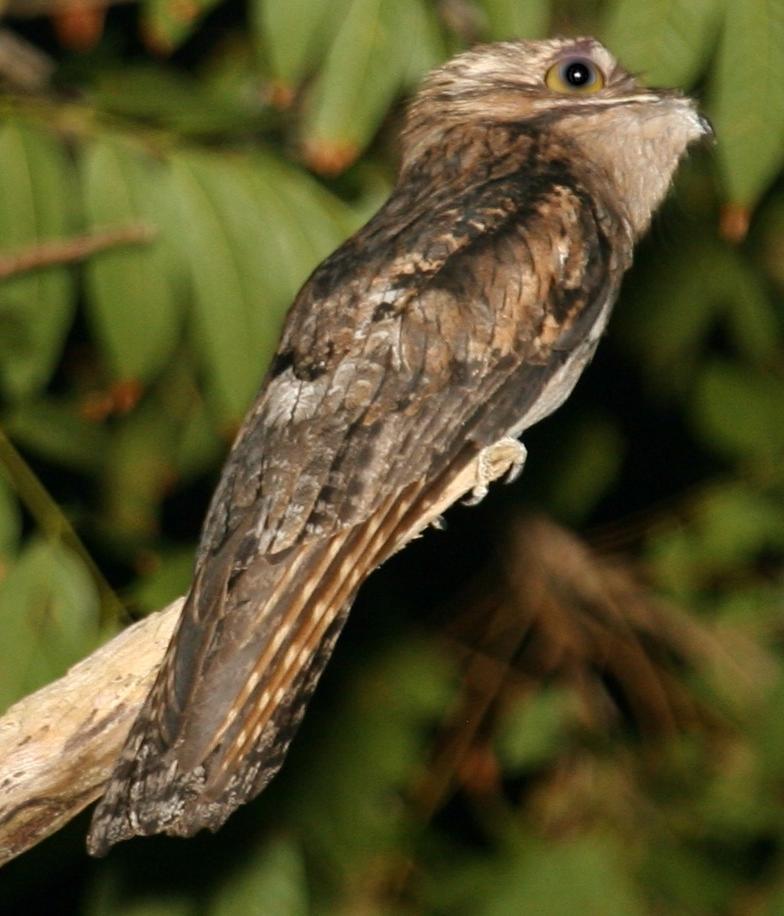
This is the fifth volume of the HBW. It describes three very different orders: the Owls (Strigiformes), the Nightjars and allies (Caprimulgiformes) and the Swifts, Tree-Swifts and Hummingbirds (Apodiformes). I always find it fascinating that the screeching, fast and even somewhat bizarre swifts outside my window are actually related to hummingbirds! But the most absurd birds in this volume are surely the Caprimulgiformes. It includes the Potoos, which are perfect mimics of tree stumps - a large color photo shows this strange ability (try to spot the bird in it!). Further, there are the strictly nocturnal Oilbirds, which communicate in bat-like manner through eco-location. Apparently, scientists who visit the caves where the Oilbirds live have to wear protective masks - the damp caves are a haven for a fungus that causes the lung disease known as histoplasmosis.

The text in the HBW is rather heavy and takes some time to get used to. These books, after all, are primarily intended for ornithologists (with or without protective gear). However, the large amounts of illustrations and color photos might appeal to a more general audience. Unfortunately, these books are extremely expensive, no doubt precisely because of the color (and colorful) photos.

I tend to give these books five stars hands down, and so is the case with volume 5.

Friday, August 10, 2018

THE MOTHER OF ALL BIRDBOOKS!!!


A review of "The Handbook of the Birds of the World", vol 10. 

Are you also sick and tired of all the second-rate birdbooks out there? I guess the Spanish (!) publishing company Lynx was, so they decided to do the impossible: publish the mother of all birdbooks, the birdbook to end all birdbooks. Since 1992, 12 volumes have been published, with 4 more waiting in the wings. The purpose of HBW is to illustrate and describe ALL bird species known to man. You heard me. All of them. All 10,000 of them. Gee, what a mindjob!!!

Of course, this makes the HBW extremely expensive. Each volume costs 265 dollars, the entire series (so far) goes for incredible 3,445 dollars. You probably have to be a state congressman to afford the lot! I'm lucky to live in a city where at least one library has all 12 volumes in a public reference section, but if you live in Littletown or Smallville, you might have something of a problem. Personally, I think I'll save some money to buy at least ONE volume of the series, just to prove I wasn't born on the wrong side of the tracks, LOL. But yes, I would LOVE to have the entire series, all 12 volumes sort of casually spread out in my living room, one here and one there. How's that for the lifestyle of the Noveau Riche?

When I eventually buy that one volume, I don't think it will be this one. With all due respect, thrushes are quite boring birds. Volume 4 (includes cuckoos, turacos and parrots) and volume 6 (includes trogons, rollers and hornbills) seem more exciting.

Still, when I went to the library to get a feel for this book, I nevertheless looked through this volume, which includes thrushes, wrens, waxwings and dippers, amongst others. Each volume of the HBW is organized in pretty much the same manner. First comes a general chapter on the bird family under review, including sections on Systematics, Morphological Aspects, Habitat, General Habits, Voice, Food and Feeding, Breeding, Movements, Relationship with Man, and finally a section on Status and Conservation. The general chapters are illustrated with large photos of various birds. There are often two photos per page, and amazingly enough, they are all in color! After the general chapter comes the species presentations. Color plates illustrates each species, and most of the subspecies, with a couple of varieties thrown in for good measure. Each species is then described in some detail. There is also an extensive bibliography after each presentation.

What really struck me when going through this volume, was the sheer immensity of information. Even the photo captions are filled with information. Frankly, a piece of information about thrushes, wrens or dippers not found in this volume, probably isn't worth knowing anyway! Thus we learn that William Blake wrote a poem about Robins, that 36% of the diet of a Mistle Thrush in Britain consist of insects and only 3.5% of slugs, that Fieldfares attack their enemies by defecating (I will avoid Fieldfares in the future), that the Island Thrush prefers to live at elevation 1000-1650 meters in the Philippines, but breed at 2100-3200 meters in Borneo, that Grand Cuckoo-Shrikes occasionally eat House Sparrows, and that there are 85 species of wrens (the gods must be crazy). We also learn that there is a bird named Ring Ouzel, and another called Black Solitaire. And then there's the Hypocolius (you heard me).

:-D

Aren't there any negatives about these books? To advanced biology students, probably not. To laymen, maybe a couple. I already mentioned the sheer volume of information. Another problem is that the book is teeming with never-explained scientific terminology. If you want to buy it, you better learn the meaning of words such as monotypic, congener, superspecies, conspecific, corvoid (sic) and dimorphism. (That's an easy one.) Thus, the HBW isn't for laymen, amateurs or people with a purely casual interest in birds. In order to really appreciate it, you need to be an experienced bird-watcher, a serious biology student, or perhaps a fanatical lover of profesionally produced books (me!). In other words, don't buy it for your kids just because they have a parakeet!

Finally, a personal observation. Although I'm singularly uninterested in thrushes, I almost wanted to spend the 265 dollars anyway, just after a few minutes of leafing. Once again, the photos are superb, and the color illustrations as well. This simply is THE MOTHER OF ALL BIRDBOOKS. Period!

A handbook of exciting birds


"Handbook of the Birds of the World" (HBW) is a 13-volume encyclopedia whose ultimate aim is to describe and illustrate *all* living species of birds. Three more volumes are projected. The series began in 1992, and the last volume won't be published until 2011.

This is the first volume, and it covers many exciting bird groups, including pelicans, tropicbirds, frigatebirds, penguins, flamingos, albatrosses, and the non-flying birds, such as the ostrich and the emu. It also covers a more boring bird group, namely the ducks! Each section begins with a general introduction, followed by species presentations. These include color plates and range maps. Unfortunately, the color plates are quite bad. The birds often look caricatured, even ugly, and some of the plates are poorly printed. Thankfully, the book also contain hundreds of photos, all in color, and these are much better. Despite its high price (265 dollars), the book is well-worth buying if you are seriously interested in these particular bird groups.

As already mentioned, this is just the first volume in a 13-volume series. Naturally, a work that takes almost 20 years to publish, will tend to change over time. I noticed this when I leafed through the other HBW volumes at my local university library. The first volume looks like a regular encyclopedia. Anyone with a general interest in birds can read it. The later volumes are superbly illustrated, with much better color plates, but the text feels heavy and technical. These later HBW volumes also suffer from total information over-load. Essentially, the HBW has been transformed from a regular encyclopedia to a scientific reference work for ornithologists.

Be that as it may, I give this first volume of the HBW four stars, for the text and the photos. Had the color plates been better, I would have given it five stars. The entire series also deserve five stars, despite becoming progressively more difficult to digest for ordinary mortals, since it's extremely well-produced.

Friday, August 3, 2018

Birds and bowers


This is the 14th volume of the mega-encyclopaedia "Handbook of the Birds of the World" (HBW), published by Lynx Editions.

This volume covers 17 passerine families, including bowerbirds, birds of paradise, corvids, starlings and Old World sparrows. All species are extensively described and illustrated on large colour plates.

There are also introductory chapters to the various families, complete with photos. Some of these are quite spectacular, including a drongo attacking an eagle, a House Crow chasing a flying fox, and a raven being attacked by a kestrel. Some other photos are more humorous, such as the one with a small girl eating ice cream, while the tray besides hers is frequented by House Sparrows. For whatever reason, the photographers seem to love birds sitting on top of cows, camels and buffaloes!

The most bizarre group of birds covered in this volume are presumably the bowerbirds, their "bowers" sometimes eerily resembling small human-built huts, complete with neatly arranged colourful objects outside, almost as if somebody was preparing a ritual of some sort. Indeed, the natives of Australia and New Guinea assumed that the bowerbirds *were* conducting rituals, and believed these birds to be supernatural. After watching the photos of bowerbirds and their bowers in this book, I see why!

As usual, the HBW is extremely expensive and the text is rather heavy. This is a book for the reference section of a university library, rather than something for the average reader. Still, the colour plates and fanciful photographs make it well worth waiting for, in case you do order it!

Both this volume and earlier ones can be ordered directly from the publisher.

From nidification to filoplumes


"Handbook of the Birds of the World" is an immensely fascinating mega-encyclopaedia, still under publication. 14 volumes have been published, the first already in 1992, and two more are being prepared. The ultimate goal of the exercise is to cover all (!) living species of birds, about 9000 and counting.

This is volume 13, covering a number of passerine families. The shrikes, a kind of passerine raptors which hunt small mammals and lizards, play a prominent part. So do the honeyeaters, a large family of Australian songbirds. Two "cousins" to the tits, penduline-tits and long-tailed tits, are also included. So are nuthatches, treecreepers, Old World orioles and sunbirds. If your primary interest in life is the wallcreeper, prepare yourself for a real treat - an entire section is devoted to this particular bird, placed in a family all of his own, Tichodromidae. The volume also covers a number of obscure birds only found in New Guinea or the Philippines.

What makes the HBW particularly appealing are the colour photographs and colour plates. Even if you're not interested in birds, the book is fascinating to just leaf through, for purely aesthetical reasons. If you really want to buy it, however, please note that the price is extortionate. On Amazon, 314 dollars is the bargain price. Even if you buy this volume directly from the publisher, the cost is still about 260 dollars (excluding postage and packing, I presume).

The HBW is thus mostly for libraries. It's also relatively difficult to read for a layman. You have to learn the meaning of strange words such as "nidification", "filoplumes", "sturnid" and "parvorder". And that's just from one page!

However, if you are an ornithologist or very advanced bird-watcher, and just won the jackpot at the state lottery, you might want to invest in a copy of HBW, volume 13.

Thursday, July 26, 2018

One swallow doesn´t make a summer


"Handbook of the Birds of the World" (HBW) is a 16-volume mega-encyclopedia covering all living species of birds. Yes, all of them. Really! This is the ninth volume, covering a number of passerine families. Highlights include cotingas, lyrebirds, swallows and the extraordinarily diverse tyrant-flycatchers. We also meet the primitive New Zealand wrens, believed to be the first passerines to diverge from the main stem of passerine evolution, already 85 million years ago.

As usual, the information presented is too detailed to ever by devoured by a layman, and even ornithologists might feel a bit cornered. Despite being an advanced reference work for scientists, HBW could be sold on the commercial market, as well. The stunning photos and illustrations (all in color) are what makes this book both so expensive, and so desirable...

The most fascinating chapter in this volume deals the swallow in human mythology. Apparently, barn swallows used to be associated with the crucifixion of Christ. They tried to save Christ from the temple guard in Gethsemane, and later tried to pluck out the thorns from his head. Another legend claims that while magpies tortured Christ by putting thorns into his feet, the swallows tried to remove them. For this reason, God granted swallows free access to human homes. We are also informed that a swallow reunited Adam and Eve after their expulsion from Eden.

In other legends, the swallows play a Promethean role. They steal the fire of the gods and give it to man. The fire is guarded by sparrows! (I *always* suspected them of being up to no good!) There are also many strange tales about why swallows have forked tails: because the snake in Eden bit off the middle feathers, or Thor tore the tail with a thunderbolt. The HBW also claims that the Koran mentions swallows attacking Christians besieging Mecca. This, however, cannot be correct. I never heard of any Christian attack on Mecca during the time of Muhammad. Overall, a problem with all these myths is that the HBW doesn't give their provenance. I've read in another book that magpies were popular during both Roman times and the Middle Ages, so where does the legend of magpies attacking Christ on the cross come from? 19th century British gamekeepers? Strangely, the mythology section says nothing about the old superstition that swallows hibernate during winter at the bottom of lakes.

But then, HBW isn't really about mythology, is it? ;-)

As already mentioned, this staggeringly well-produced work isn't really intended for a general audience, but rather for large libraries and universities. It's extremely expensive and the text is heavy and filled with scientific jargon. Still, if you are a really rich bird-lover, or just love spectacular books, you might actually enjoy it.
Five stars!

Babbling birds and silent fossils


"Handbook of the Birds of the World" (HBW) is a 16-volume mega-encyclopedia and reference work, covering all 9,000 bird species known to science. It took almost 20 years to publish. Interestingly, the publishing house (Lynx Edicions) is based in Spain. The HBW is only available in English, though. Lynx Edicions have also begun to publish a kind of quasi-official sequel to this series, known as "Handbook of the Mammals of the World" (HMW). I suppose their office workers don't have to worry about the Spanish finance crises! Guys, you have guaranteed employment until at least 2020. I'm jealous.

This is volume 12 of the HBW, covering 15 passerine families, the most well known being the Paridae (tits and chickadees). Despite their small size, tits have the reputation for being one of the most intelligent bird groups, after parrots and corvids. Otherwise, this volume contains chapters on birds with funny names like Babblers, Jewel-babblers and Australasian Babblers. Were they really named by bird-lovers, I wonder? The most comic part of the book deals with Pseudopodoces humilis, once assumed to be the smallest corvid in the world, until DNA tests showed that its really the largest parid in the world! Since some people can't tell the difference between a crow and a tit, I wonder what's next? What could a DNA test on the birds in your backyard possibly disclose? Alien genes?

Each volume of the HBW also contains a special chapter about some specific aspect of ornithology. This volume has an extensive section on fossil birds. For those tired of living, babbling birds? Apart from well-known fossil species (Archaeopteryx and so on), we meet the Messelirrisor (a hoopoe from Eocene), Mancalla (an auk from Pliocene), a megapode known simply as the Du, the condor-like Teratornis and the La Brea Condor, which actually was a condor. And countless of others!

Each volume of the HBW is extremely expensive and (I presume) something of a status symbol in the world of bird-watchers and bird-lovers. If I ever get a slush fund on the Cayman Islands, I'll make sure to procure all 16 volumes of this extraordinary work.

Excellent coverage of disgusting birds


Seriously, you didn't *really* expect me to stop reviewing HBW volumes, did you now?

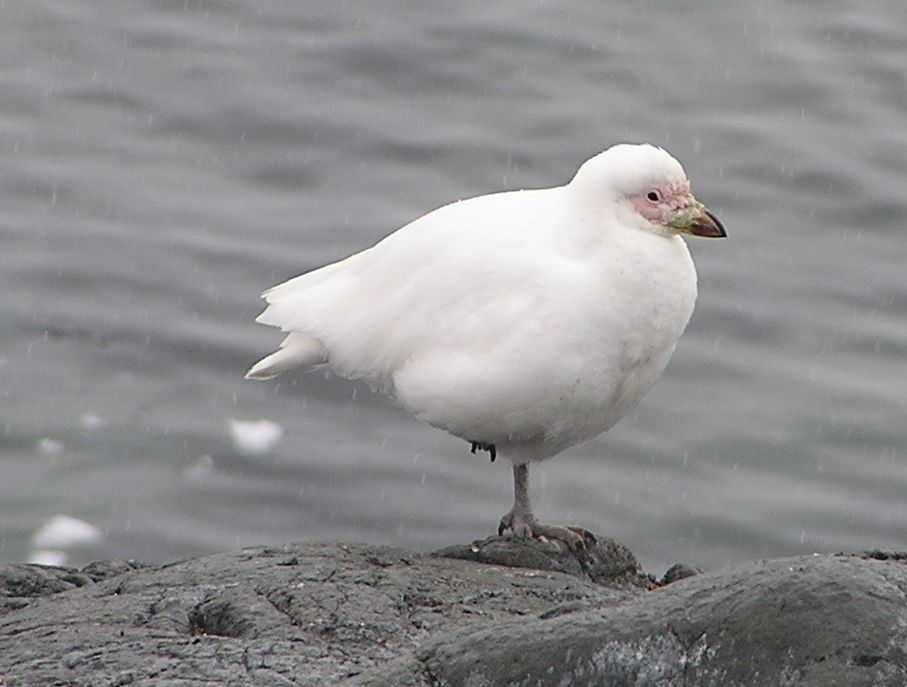
"The Handbook of the Birds of the World" (HBW for short) is a multi-volume encyclopedia describing and illustrating all 9000 extant species of bird. This is the third volume in this encyclopedia to end all encyclopedias. It covers the Opisthocomiformes, Gruiformes and Charadriiformes. Some of the birds covered are so common that they feel almost jaded, for instance the gulls. Others are exotic and somewhat bizarre. The hoatzin is a bird so unique that it has been placed in an order all by itself. Its chicks have claws on their wings (a bit like the fossil Ur-bird Archaeopteryx) and can swim, something the adult birds don't seem to master. We also get to know the sheathbills, who look a bit like a cross between pigeons and gulls. The sheathbills live on islands close to the Antarctic, and are "opportunistic feeders", to use the euphemistic expression. In plain English, they feed on everything: faeces, discarded placentae or umbilical cords from seal births, and they are even said to steal milk from seals by placing their beaks in between the suckling pups and their mother's mammary glands! I'm not sure if I even want to believe that...

The sheer volume of information contained in this gargantuan book is staggering, and so is its price. The HBW is really a reference work for libraries, and the text can be quite heavy for a general reader. However, these books contain excellent photos, all in color, of a wide variety of birds. Some of them are quite dramatic. This volume shows skuas attacking giant petrels, penguins and even sheep! The photos and color plates are the main reason why even an ordinary Joe might want to own some of the books in this series, but, alas, they are probably too expensive for the likes of you and me.

Still, HBW deserves five stars.

OK, what was that absolutely disgusting stuff about sheathbills, again?

One of the living


"Handbook of the Birds of the World. Volume 7: Jacamars to Woodpeckers" is the full title of this gigantic, 600-page book. Its part of a 16-volume series covering all living species of birds. This particular volume covers Jacamars, Puffbirds, Barbets, Toucans, Honeyguides and Woodpeckers. Just in case, it even includes a detailed description of the legendary Ivory-Billed Woodpecker - in the section on still living birds.

The most interesting part of this volume, however, is a specially-written chapter on extinct birds by Errol Fuller. Apart from the iconic extinct species (Dodo, Passenger Pigeon, Great Auk and so on), it includes information on a lot of lesser known extinction tragedies. Thus, we meet the almost flightless Spectacled Cormorant which used to live on Bering Island and adjacent areas in the Arctic. It met the same fate as the Dodo - it was good for the pot. A similar destiny affected the White Gallinule, a large flightless rail at Lord Howe Island.

Fuller also tells the bizarre story of the Stephen Wren, a miniscule flightless passerine endemic to Stephen Island. According to legend, this species was so rare that it was exterminated by one single creature - the lighthouse keeper's cat. The keeper was named Mr. Lyell, but Fuller doesn't mention that the cat's name was Tibbles. According to Wikipedia, however, new research (published just two years after Fuller's article in this volume) shows this story to be an over-exaggeration. The wren was indeed driven to extinction by cats, but rapacious Tibbles wasn't the sole culprit. Well, good to get that cleared out!

On a more serious note, although I'm not an animal rights activists, I nevertheless consider extinctions to be somehow unworthy of our human dignity. As Aldo Leopold put it: The difference between the passenger pigeon and man, is that man can mourn the passing of the pigeon, while the pigeon would hardly notice the passing of man! Hopefully, the Ivory-billed Woodpecker will one day turn out to be one of the living species. It would have an obvious symbolic significance...

Fuller also mentions a number of extremely rare birds, so rare that we hardly know anything about them - except that they are probably long gone. The Bay Thrush is known only from a painting by Georg Forster. It used to live at the Pacific island of Raiatea. The Mystery Double-banded Argus is known only from a single feather found at an unknown location at some time before 1871. Something tells me finding this bird would be even more difficult than spotting an Ivory-billed Woodpecker! A tip: try Indochina or Indonesia. Its closest living relatives thrive there. Further, there is the Rodrigues Night-heron, an aggressive heron harassing Huguenot refugees who made a temporary landfall at this distant island. Finally, there is the White Dodo and Leguat's Giant, the first probably being an artistic fantasy (Fuller's arguments on this point are quite clever), while the second may have been a stray flamingo.

As you might have imagined, I considered Errol Fuller's article to be the most interesting section of this volume. But sure, if jacamars or woodpeckers are more to your liking, don't you worry, you'll get your treat! Each volume of the HBW is literally stashed with scientific information on every described species, including extensive introductory chapters on each family. The whole thing is topped off by excellent color plates and a lot of full-color photos. However, this series isn't really intended for the general reader, which is why I found the chapter on extinct birds so interesting. It was written in a more popularized style, quite unlike the rest of this work. HBW is primarily intended for the scientific reference or research library.

That being said, I nevertheless award this volume the customary five stars.