Showing posts with label Snakes. Show all posts

Sunday, January 11, 2026

Titano-cryptid?


Some moderately entertaining tall tales about gigantic and truly monstrous snakes in South America. One of them a kilometer long?! And yes, space satellites see them. Are they rugous and squamous, as well?

Nupe. Impossible.  

Monday, October 27, 2025

Snake-throwers


One of my English-language teachers was a Swedish lady who lived for decades in West Virginia. Apparently, the inhabitants of the small town where she was staying warned her about the next town further down the road: "That´s where the snake-throwers live". That is, the crazy charismatic Christians otherwise best known as snake-handlers! It seems WV is the only state of the Union which doesn´t ban religious handling of serpents. Mountaineers are always free? 

The YouTube clip above tells the story with remarkable scholarly restraint. It even mentions what species of ophidians the snake-handlers use during their services...

You have been warned. Do not drive further down the highway! Unless you are a scholar of religion...or, I suppose, a herpetologist.

Wednesday, October 22, 2025

I think I found my spirit-animal


So if the Round Island burrowing boa still exists, it lives underground on one tiny uninhabited island? Sounds like my kind of dawg! Or, I suppose, ophidian...

Friday, October 17, 2025

Cobra panic or just Satan´s kumara?


Natas-natas-natas-natas-Lucifeeeeeer!!! OK, I´m joking, but look what I finally tricked the AI into creating, muh-hah-hah-hah! ChatGPT has the receipts. Btw, I answered "no" to the last question, WHICH IS PROBABLY WHY I´M STILL HERE. Enough fun for a Friday evening, right?

What is the symbolism of the cobra in Hinduism? Is it "good" or "bad"?

In Hinduism, the cobra (nāga) is a deeply symbolic figure that cannot be simplified as “good” or “bad.” Instead, it represents raw cosmic power, which can be both protective and destructive depending on how it is related to. It is a symbol of divine energy, mystery, and transformation.


🐍 Key Symbolic Meanings of the Cobra in Hinduism

1️⃣ Kundalini Energy — The Inner Serpent Power

  • The coiled cobra represents Kundalinī Shakti, the dormant spiritual energy at the base of the spine.

  • When awakened, it rises through the chakras, leading to spiritual illumination or, if uncontrolled, mental chaos.
    💬 Symbol: Hidden divine potential → both dangerous and liberating.


2️⃣ Guardian of the Sacred

  • Nāgas are ancient guardians of treasures, temples, and sacred waters.

  • They are neither gods nor demons but powerful serpent beings.

  • Temples often depict cobras to protect the sanctity of the deity.


3️⃣ Immortality & Rebirth

  • Cobras shed their skin → symbol of renewal, resurrection, transformation.

  • Connected to cyclical time and samsara (birth and death).


4️⃣ Connection to Major Deities

DeityCobra Symbolism
ŚivaWears cobra around his neck → Mastery over death, ego, and poison.
ViṣṇuRests on serpent Ananta/Śeṣa → Eternal cosmic support; infinite time.
Subrahmaṇya (Kārttikeya)Associated with serpents → Power & occult wisdom.
Nāga DevatāsWorshipped for fertility, rain, land protection.

5️⃣ Poison as Divine Power

Cobras symbolize viṣa (poison) — dangerous, yes, but also medicine in controlled form. Thus:

  • Adharma (evil) → Poison misused.

  • Dharma (righteousness) → Poison mastered.

💡 Moral: The serpent is not evil; the unmastered mind is.


🌓 So, Is the Cobra Good or Bad?

AspectNature of Cobra Symbol
BenevolentProtector, spiritual power, divine guardian
MalevolentFear, death, ego, hidden dangers
Ultimate TruthNeutral — Pure Shakti (energy) that becomes good or bad based on how one approaches it

🕉️ Philosophical Insight

“The snake is the power of God when controlled, and the terror of the world when uncontrolled.”


Would you like examples of Nāga worship rituals or cobra symbolism in Tantra and Śrīvidyā? This symbolism deepens even further in esoteric traditions.

Yes, please.

Certainly. In esoteric Hindu traditions—especially Tantra and Śrīvidyā—the serpent (nāga) gains an even deeper and more mystical meaning. Here, the cobra is not simply a creature of devotion or fear, but the very embodiment of cosmic power, hidden wisdom, and the gateway to transcendence.


🐍 Cobra Symbolism in Tantra & Śrīvidyā

1️⃣ Embodiment of Kuṇḍalinī Śakti

In Tantra, the serpent is Kuṇḍalinī, the coiled energy asleep at the base of the spine. It is depicted as a three-and-a-half coiled serpent, representing:

  • Three guṇas: sattva, rajas, tamas

  • Half coil: transcendence beyond nature
    When awakened, it rises through the chakras like a serpent climbing, unlocking divine consciousness.

🔱 The cobra here is not an animal — it is your own hidden divinity.


2️⃣ Śrīvidyā & Serpent Power

In Śrīvidyā, especially in the worship of Lalitā Tripurasundarī, the serpent symbolizes:

AspectSerpentine Meaning in Śrīvidyā
Icchā Śakti (Will)Desire to manifest creation
Jñāna Śakti (Wisdom)Hidden, occult knowledge
Kriyā Śakti (Action)Power of manifestation

The serpent is often seen at the base of Śrīcakra, coiled beneath the bindu, symbolizing that all creation rests upon latent power.


3️⃣ Nāga Kanyās – Serpent Maidens

In secret Śākta Tantras, nāgas appear as Nāga Kanyās, mystical serpent maidens who offer occult siddhis. They represent:

  • Hidden doorways to knowledge

  • Tests of restraint (desire vs wisdom)

  • Union of earth (body) and mystery (spirit)


4️⃣ Rituals of Nāga Worship

While most Hindu worship avoids direct serpent contact, Tantrics sometimes perform rituals to Nāga Devatās seeking:

  • Protection from obstacles

  • Acquisition of hidden knowledge

  • Mastery of sexual and psychic forces

🔍 Especially during Ādi Śaṅkara’s Prapañca Sāra Tantra, nāga worship is linked to controlling the lower nature to ascend spiritually.


5️⃣ Serpent as Desire (Kāma) to be Transformed

Yes — in deepest Śrīvidyā, the serpent is desire itself (Kāmakalā), which must be not repressed but transmuted into devotion and realization.

“That desire which binds the world is the same desire that, when mastered, liberates the yogin.”
— Śrī Lalitā Sahasranāma Commentary


⚖️ Tantric View: Cobra Is Beyond Good and Evil

LevelCobra Represents
PsychologicalInstinct, fear, sexuality
EnergeticKuṇḍalinī, occult power
MysticalDivine Shakti, gateway to Mokṣa

Would you like a symbolic meditation or Tantric visualization involving the serpent—like how to internally work with Kuṇḍalinī as Nāga Śakti?

Saturday, June 14, 2025

Moonshine snake


I´m getting less and less interested in these kinds of stories. What is happening to me? Am I turning into a basic bitch skeptic? 

Nooooo...  

Thursday, December 12, 2024

Survivors


Credit: Guillaume Baviere 


So I just watched the second episode of "Sveriges hav" (The Seas of Sweden), and it seems most of it actually is about, you know, Sweden. The first episode was about the Shetland Islands?! The sequel has the subtitle "Östersjöns överlevare" (Survivors of the Baltic Sea). Gotland is featured, but a Danish island has also been sneaked in, and who knows what else. 

Not sure if anyone even survived this extravaganza of various animals munching on each other. Starfish attacking clams, herring gulls swooping down on eider ducklings, the Gotland subspecies of grass snake hunting for fish in the sea...but also seals generally basking in the sun, waiting for better times. You get the picture. There are also enormous populations of moon jellies in the Baltic Sea, apparently a problem since they eat too much (and hence presumably out-compete the fish eaten by humans). 

It seems Lake NATO is really a gigantic smorgasbord! May it survive for the benefit of future hungry generations, and so forth.


Monday, May 20, 2024

Taxonomic vandalism (and then some)


Never heard of this matie before, but he is apparently some kind of local celebrity in Australia. 

Science blogger Darren Naish isn´t impressed, and charges free-wheeling herpetologist Ray Hoser with "taxonomic vandalism" and "nomenclatural harvesting". 

Or, not to put too fine spin on it, of being a real pain the ass! Apparently, the unhinged mate has named snakes after his pet dogs, when not busy running a snake-related road show, unsuccesfully running for office, and accusing other scientists of being rapists, thieves, and what not...    

Ray Hoser: Number 1 Taxonomic Vandal

Monday, March 25, 2024

The Soviet Sasquatch


An interesting video about Soviet cryptids. I was struck by how unoriginal they were. Yes, it´s essentially the same kind of cryptids as reported from North America or Western Europe: hairy humanoids, lake monsters, sea serpents and extinct charismatic mega-fauna still supposedly lurking somewhere in the far corners of Siberia. In this case the Steller´s sea cow, the wolly mammoth, and the giant short-faced bear (never heard of that one). 

There are two possible explanations for this curious fact. One is that the cryptids are actually real. After all, why *would* people behind the Iron Curtain see exactly the same kind of unknown animals as in the rest of the world? Another possibility is that Soviet cryptozoology was influenced by its Western counterpart. That´s not as far-fetched as it sounds, since one prominent Soviet cryptozoologist, Boris Porshnev, was a friend of Bernard Heuvelmans! (A book by Porshnev has been translated to English: "The Soviet Sasquatch") The same transformation of older folklore into "unknown real animals" - typical of much Western cryptozoology -  may have transpired in the modernizing Soviet Union, too. 

Misidentification is another factor. The Mongolian Death Worm (which was searched for by Soviet scientists) is often depicted as the monstrous Shai-Hulud from Frank Herbert´s science fiction novel "Dune". In reality, the Death Worm is only said to be about one and a half meters long. And it took me about five minutes to find *exactly such a creature* living in Mongolia: the desert sand boa. Case closed.

The Soviet Union was one of the few nations (if that´s the word for it) that launched several scientific expeditions in search of cryptids, both on its own territory and in Mongolia. Soviet scientists also participated in Chinese expeditions to find the Yeti. The fact that these official projects had as little luck as lay cryptid hunters in the US or Scotland is perhaps suggestive. 

The creatures don´t exist. Or maybe they do exist, but since they are ghostly in nature, Communists feared reporting what they had *really* found...
Wednesday, May 25, 2022

Serpentine cryptozoology


"Secret Snakes and Serpent Surprises" is a recent book (2022) by Dr Karl P N Shuker. Or perhaps not so recent, since much of the material has already been published, more or less, at the author´s website ShukerNature. The book is a motley collection of articles on every conceivable topic related to cryptozoology and snakes. "Cryptozoology", usually considered a pseudo-science, is the name enthusiasts have given to the search for monstrous mystery animals, often called cryptids, and it hardly comes as a surprise that many cryptids are serpentine. Eye witness accounts of impossibly large snakes exist from all over the world (in America, they are known as "boss snakes"). There are also tales, more or less believable, of strange hybrids, snakes that crow like a rooster, snakes with two heads (the second one in the rear), and (of course) ultra-venomous snakes (the bite of the "snow snake" can supposedly turn your blood into ice). There are also weird ophidians in religious mythology, and Shuker actually discusses observations of divine Nagas in Southeast Asia and India. One chapter deals with the snake that tricked Adam and Eve in Eden (did it walk on two legs and had the head of a female?). Shuker has also discovered a new Bible difficulty: the Acts of the Apostles mentions Paul handling a viper on the island of Malta, where no vipers existed in Biblical times...

Some of the reported sightings are dubbed "pseudo-snakes" even by the author. The colorful flying "snakes" in Wales simply must be a tall tale, and so is the "snow snake" of North America. (For some reason, he missed the lindorm reported from 19th century Sweden.) Other observations are more promising, but often impossible to verify. Perhaps there were boss snakes at one point in North American history, but since being large increased the risk of being killed by humans, selection pressure made the snakes smaller. "The scarlet viper" in the UK is perfectly real, but has turned out to be a color morph of juvenile common vipers, not a separate species (which an enthusiast tried to describe over a century ago). Snakes on New Zealand (where no such creatures should exist) have been reported, and even investigated by the proper authorities, but nothing was found. Of course, feral snakes are always a possibility in every survivable climate. 

One cryptid snake has actually been scientifically described: Cryptophidion ammanense, based on a photo of a lost museum specimen, the specimen in question being from Vietnam. Yes, the paper was published in a cryptozoological journal. However, more established scientists believe that "the secret snake" is really a misidentified sunbeam snake (a known species). 

Shuker clearly wants at least some cryptids to be the real deal, and is very charitable towards "the Namibian flying snake" and the "Mongolian Death Worm". Another distinct possibility is that they are simply creatures of folklore. One problem with judging reports of this kind (which Shuker also points out) is that folklore about known animals also exist, for instance claims that harmless snakes or lizards are really super-venomous. So there is always a possibility that even a "flying snake" might be a bizarre misidentification of a real creature, perhaps a gliding snake, or a snake with wing-like membranes which, however, can´t fly. On Madagascar, there is a folk tale about ants building snake-traps, fattening the captured snake by bringing it food, and then killing and eating it. Recent research suggests that what actually happens is that one species of snake lives inside anthills and defends them against another snake species, which likes to eat ants!

What makes me skeptical to most of these cryptid stories is that the reports are mostly old, and that we now live in the era of cell phone cameras and mass tourism. We should have more evidence for mystery ophidians than we seem to have, had they been real. Note that the only supposed cryptid snake ever described scientifically was very similar to a known species. The discovery of a fossilized Titanoboa (60 million years old) shows that super-sized "nagas" aren´t intrinsically impossible (this primordial serpent was 12 meters long!), but finding such creatures - and even stranger ones - today will probably prove much more of a challenge... 


Monday, January 3, 2022

Madagascar mystery


This one is hard to believe...

A species of ant in Madagascar apparently lives in a kind of symbiosis with a snake, more specifically a snake that eats ant-eating snakes! This weird relationship was then misinterpreted by the natives and turned into a mythological story about "snake-eating ants". 

The world, agent Cooper, is a strange and wonderful place.

Madagascar´s snake-eating ants: Forgotten fable or fascinating fact?

Monday, October 4, 2021

Well, actually...


"The Scorpion King" (2002) is a somewhat frivolous fantasy flick featuring a Schwarzenegger-Van Damme cross-over look-alike, but with more tan. Small wonder, since Mathayus (as the muscular warrior is named) runs around in a desert landscape that´s supposed to be ancient Egypt, but looks more like a stereotypically Orientalist Mideast bazaar. Mathayus, who is said to be Akkadian (an ancient Semitic people), is one of the few people who *doesn´t* look Hollywood Semitic. A few East Asian types have been thrown in for good measure, too, while the bad guy, Memnon, looks like a Roman commander! Yepp, it´s fantasy, alright. 

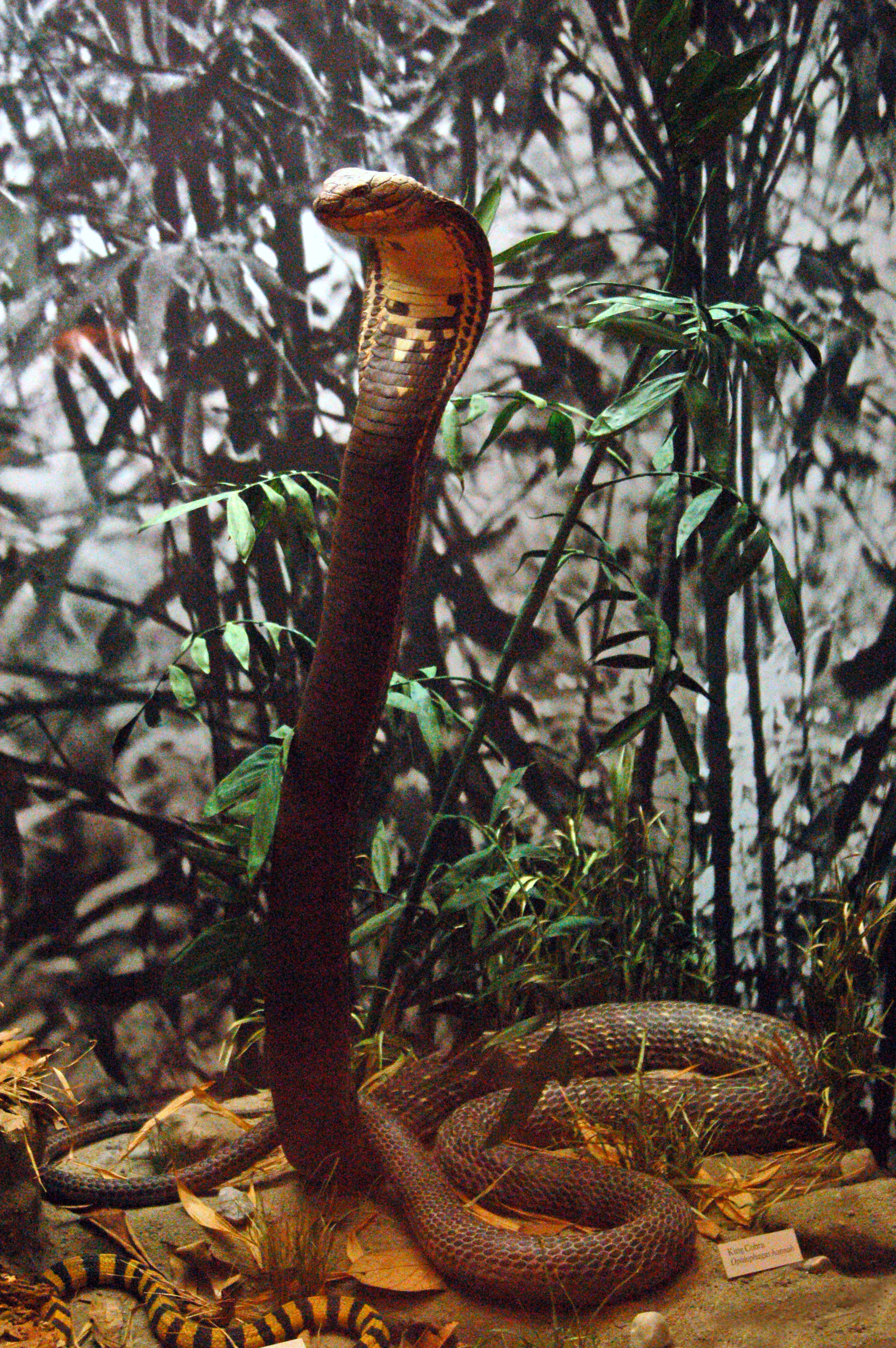
And while there is a gorgeous half-nude "sorceress" (what else?) in this production, starred by a former fashion model, most of the plot concentrates on the heavy fighting between Mathayus and faux Arabic hordes. Come to think of it, there doesn´t seem to be much else happening in "The Scorpion King" *except* sword fighting or archery?! More sword than sorcery, if you ask me. Unless you count the cobras, LOL.

The title of the film is inspired by a real Egyptian Pharaoh, simply known as Scorpion (or perhaps Scorpion II or King Scorpion), but I suspect the real guy would be somewhat surprised by this latter day barbarian reinterpretation of pre-dynastic Egyptian history. Apperently, "The Scorpion King" is also somehow a prequel to a series of mummy horror movies, but I frankly don´t understand the connection, even apart from the perhaps salient factoid that this production features no mummies! There are a few scorpions, though. (And cobras.)

That being said, I´m not saying you shouldn´t watch Dwayne "The Rock" Johnson flex his biceps, show his ware and rough up some phoney Nabateans in a sword-and-sorcery extravaganza. After all, I just did, and I´m still standing. Just don´t except any deeper insights into Sothic dating, Manethan chronology or Hamitic pre-history from this one!

Tuesday, September 18, 2018

Parental advisory


“Little Ophiologist” is the third book of four in a series called “Baby's First Field Guide”. It contains color photos of ten common species of snakes found in North America. The previous two volumes covered birds and butterflies, while the fourth seems to cover mammals.

I'm somewhat skeptical to a children's book about snakes, which portrays these creatures as cool and colorful – some snakes, after all, are extremely dangerous. True, the book does point out that rattlesnakes and copperheads have “venom dangerous to humans”, but that's about it.

I think it would be better to skip snakes entirely from a series of books for kids about approachable animals, or use this item only under strict parental guidance! Otherwise, you're little ophiologist may not get much older…

That being said, the concept as such isn't bad, and I therefore give it the OK rating (three stars).

Saturday, September 8, 2018

Charming snakes


"Giant Killer Snakes" is an episode of the U.S. TV series "MonsterQuest".

Part of the episode deals with a real problem: escaped pet pythons have established a breeding population in the Everglades, and some of the rogue snakes are making their way back to Suburbia... (Of course, it could be argued that anyone crazy enough to live in southern Florida has it coming!) A police officer and a herpetologist get their fair share of the action as they attempt to catch (and wrestle) with pythons. To charm a snake crawling its way into a residential area turns out to be easier said than done...

The other part of the documentary is more "paranormal", as the MonsterQuest team travels to southern Venezuela, hoping to find evidence for monstrous anacondas the size of a soccer field (sic). Needless to say, they don't succeed.

As usual, "MonsterQuest" is slow-paced, dragging and (unless you *really* like snakes) somewhat boring. However, if you are big tattooed biker with a huge python in your garage, I suppose you might find watching this worth the effort.

Three stars. Barely!

Let them take the Sunshine State


A review of the MonsterQuest episode "Pythons in America" 

"MonsterQuest" has a remarkable ability to be both sensationalist and boring at the same time.

Nobody denies that there is a breeding population of Burmese pythons in the Everglades, and that they are spreading to a lawn near *you*, at least if you're crazy enough to actually live in the Sunshine State. Nor does anyone deny that a lot of other dangerous snakes can and have escaped from captivity, including a King Cobra liberated by Hurricane Katrina. So why are these trivial facts treated as fantastic novelties on this show?

Then, the producers go off the deep end, with absurd speculations about "monster hybrids", pythons in the tunnels of New York City, or tropical snakes adapting to temperate climates... To cool us off a bit, they have hired a scientist who kindly informs us that a King Cobra is more likely to eat a python than to breed with it. Well, thank you. So what's the fuzz all about, then?

Besides, Florida is nuts anyway, so if the serpents want it, I'd say let'em have it! :D

Excuse me, is this a comedy?


"Anacondas: The Hunt for the Blood Orchid". It sounded promising, but for various reasons, I missed the first 50 minutes of the movie. Not to worry. The rest of it was just as bad as I expected!

A bunch of stereotyped, out-of-place characters starred by mediocre actors. A greedy, mad scientist searching for the fountain of youth (which turns out to be a rare orchid). And...well, anacondas. And then, maybe not, since the meagre plot is set in Borneo. Anacondas, of course, are South American. Borneo is in, ahem, the East Indies. Presumably, the "anacondas" are pythons, then?

Fortunately, the film has a happy ending, with Mr. Mad Scientist being killed by a noxious spider and subsequently feasted upon by the snakes during their mating ritual. The blood orchid (Perennia immortalis) is destroyed together with the 'condas, and, well, there the story pretty much winds down.

If you are a kid, you will definitely be scared stiff by the giant serpents in this production, but the rest of us either gasp or laugh, perhaps depending on the amount of lite alcoholic beverages we have consumed beforehand. Being a tee-totaller, I mostly gasped. But sure, "Anacondas: The Hunt for the Blood Orchid" might entertain those of a somewhat less classy disposition.

Blah, blah, blah.

Monday, September 3, 2018

Almost believable


SPOILER WARNING

A group of idealistic scientists at a secret facility on a Pacific island experiment with DNA to create super-maize in order to end world hunger. The U.S. military cajoles them to test the enhanced DNA on reptilians instead... You can probably make out the rest of the plot, LOL.

The fun starts when a group of surprisingly good-looking Green activists sneak onto the island to expose the machinations of Mad Science Gone Dangerously Wrong. To cover their tracks, the military bombs the island, while the slightly overgrown reptiles mentioned in the movie title kills and eats both scientists, Greens and each other in the rampage of the century.

Well, almost but not quite.

"Komodo versus Cobra" is actually pretty boring, with over half of the movie not showing any monsters at all?! This is a typical low budget production, a kind of "Jurassic Park" with a depleted special effects budget. But sure, if you like to watch B-movies featuring monsters on a rainy summer day, I suppose this could be an option. Two stars. Or perhaps two-and-a-half, since the plot is almost believable. I mean, what *are* the powers-that-be really doing on Tahiti...?

Welcome to my barbecue


A review of "Boa Versus Python". 

A big game hunt goes dangerously wrong when a monster-python (the green snake) escapes just outside the city of Philadelphia. The CIA sends out its very own monster-boa (the red snake) to eliminate the threat, and the stage is set for an epic battle of brawn versus brawn as the ophidians battle for world supremacy in the Philly metro. Or at least for the right to munch on a big game hunter. And yes, I'm simplifying the plot somewhat...

Otherwise, I noticed the preponderance of nude and semi-nude females in this production, suggesting it's made for 16-year old boys. Other monster flicks actually show more monsters than babes! I presume those are oriented to 12-year old boys. I admit I prefer such movies, suggesting that my mental age on a Friday night might be just about eleven and a half. So I'm afraid I can only give "Boa Versus Python" two stars. But then, the Delaware Valley aint what it used to be.
Welcome to my barbecue.

Thursday, August 16, 2018

Muslim William Paley


“The Tradition of Mufaddal” is a Shia Muslim text attributed to the sixth Imam, Jafar al-Sadiq (8th century). In its present form, the text is taken from a 17th century compilation, the vast “Bihar al-Anwar”, edited by Allama Majlisi. I'm not familiar with its exact manuscript history. For instance, one would like to know whether the text really is from the 8th century, or whether it's early modern and retrospectively attributed to Al-Sadiq, who is regarded as one of the most important Shia scholars. Perhaps an expert on the history of science can have some fun with this material…

The text is a polemic against “atheists” and “Manicheans”, the former denying the existence of a Creator altogether, the latter claiming that the material universe cannot be the work of the true god, since it's imperfect and evil. Al-Sadiq's response is a sustained appeal to the argument from design. The closest Western equivalent would be William Paley. “Tawheed al Mufaddal” is essentially a rather long-winding collection of perceived examples of design in nature, the animal world, and the constitution of man. Some things (almost) never change: the peacock is mentioned, although the Imam sees it as an example of perfect artistic design, while Phillip Johnson saw it as a creation of a whimsical god. Much of the biological knowledge in “Tawheed al Mufaddal” is out of date, such as the claim that dolphins kill and eat birds, using dead fish as bait! Since the Shia Imams are supposed to be infallible, this is surely a problem if you are a devout follower of this current. The translation is awkward, since some of the factoids make no sense even on their own (surely it’s an eagle, not a “cloud”, that attacks the pythons?).

Most of the examples mentioned in this little book can be readily explained by modern science through genetics or, ahem, Darwin's theory of evolution. However, the ancient atheists refuted by Al-Sadiq really were “intellectually unfulfilled” (to adapt a phrase from Richard Dawkins), since they seem to have regarded the ordered patterns of the cosmos as the result of pure chance or spontaneous generation. The Imam has little problem pointing out that purposeful organs surely cannot be the result of a chance assemblage of disparate elements. Al-Sadiq sounds less convincing when arguing against the “Manicheans”. What about natural disasters, epidemics or death? Here, the Muslim scholar is forced to resort to the rather silly theological argument (turned into a “philosophical” one by Leibniz) that we really do live in the best of all possible worlds, that God wants to simultaneously punish the wicked and chastise the good through calamities, that evil is a necessary character-builder, etc.

Yeah, sure. That's why everyone wants to go to Heaven and stay there forever, right? With those virgins, to boot!

Al-Sadiq also says that God created locusts to show humans who's *really* in charge. Try and stop my creations! This argument, at least to me, sounds psychologically more convincing since (obviously) the universe wasn't simply “made for man”. Overall, however, the author veers so much towards the design argument that he misses the fact that the world looks *both* designed and chaotic, both good and evil, and sometimes even designed for evil (the Manicheans make the opposite mistake, emphasizing the evil or chaos over the good or designed).

Overall, I must say that I consider the tradition of the Muslim Paley to be rather unconvincing and bad, and I will therefore only give it two stars.

Monday, August 13, 2018

I know you´re out there, Dubya


A fake Amazon review of "Conservation of European Reptiles and Amphibians" by Keith Corbett, posted in 2012. At the time, Amazon permitted pranks of this sort. 

*Conservation* of reptiles? You mean we should make the world safe for vipers and such stuff??? I DON'T THINK SO. Compassionate conservatism should have its limits. I'd say kill them before they multiply! Then, let's bring in some swallowtail butterflies. That should do the trick. Read'em lips on my mouth: No Stimulus for reptiles, give'em "Obamacare". Take it from me, I'm a liberal.