Showing posts with label Zimbabwe. Show all posts

Friday, July 28, 2023

Mass hysteria or black op?


In 1994, a UFO landed outside an upper class private school and warned the kids about a future climate crisis. Telephatically, the children saw huge forest fires and boiling oceans.

And no, it wasn´t in the United States (or in Sweden - Greta Thunberg wasn´t born yet). It was in Zimbabwe! The Why Files (link above) tells the story. 

But did it actually happen? Something clearly did, but was it mass hysteria, a weird prank, or some kind of op? The skeptic explanation (link below) does sound likely...unless, of course, the "aliens" were really fairies who could make themselves invisible to most of the potential eye witnesses.

And in this particular case, their apocalyptic prophecies actually came to pass! Look around you, skipper, what do you see? 

The 1994 Ruwa Zimbabwe Alien Encounter

Saturday, December 22, 2018

Palme är störtad


1977 publicerade Rabén & Sjögren ett seriealbum av Janne Lundström och Ola Nyberg, ”Uppdrag i Zimbabwe”. Den fiktiva handlingen utspelar sig i Rhodesia, som då fortfarande hade en vit minoritetsregim. Huvudpersonerna är två svenskar på hemligt FN-uppdrag. De understöds av ett gerillaförband ur Robert Mugabes ZANU.

Skurken är en högt uppsatt rhodesisk militär, som lite ironiskt heter överste White. I en serieruta håller han triumferande upp en rhodesisk dagstidning med rubriken ”Sweden expells socialists” och en ovanligt ful karikatyr av Olof Palme. Han kommenterar nöjt: ”Palme har blivit störtad”. Detta syftar alltså på valet 1976.

Överste White är en verklig person. Han bor numera i Namibia och intervjuades för många år sedan av Aftonbladet (eller kanske Expressen). Anledningen? Han hade blivit utpekad som inblandad i mordet på Olof Palme i samband med Sydafrika-spåret!

Ja, det var samma kille. Jag säger inte att han är skyldig, men det är ändå ett jäkla märkligt sammanträffande...

Saturday, September 15, 2018

An old friend


“The Riddle of Violence” is a book by Kenneth Kaunda, partially ghost-written by his long-time friend Colin Morris. Kaunda (popularly known as KK) was the President of Zambia from 1964 to 1991, much of that time heading a one party state. He was a statesman of some importance, since Zambia bordered Rhodesia and supported the African liberation struggle against Ian Smith's White minority regime. Zambia also supported the ANC in its fight against apartheid in South Africa.

Kaunda, a professing Christian, had been an admirer of Mahatma Gandhi in his youth and had apparently become something of a pacifist icon, due to his advocacy of non-violence in the Zambian independence struggle against Britain. As president, Kaunda took a more realistic stance towards force and violence – as already indicated, he supported the frequently violent struggle against White supremacist rule in Rhodesia and South Africa.

“The Riddle of Violence”, published in 1981, is Kaunda's attempt to explain (or excuse) himself. It's not very well-written, and Kaunda's polemics against strict pacifism are commonplaces. Thus, he points out that non-violent resistance only works if the enemy is willing to heed public opinion and would have been quite useless against Hitler. Some forms of “non-violence” are just as brutal as violence, such as economic sanctions – Gandhi's boycotts of British textiles made British millworkers unemployed during the Great Depression and reduced their children almost to starvation. The relation between violence and non-violence is complex, since a government usually listens to non-violent leaders only if there is a tangible threat of violence in the background. If there isn't, why listen at all? The Zambian president spends much time accusing the British of duplicity over Rhodesia, and British public opinion of hypocrisy. Nobody had any objection when the Church of England blessed the British war effort against Hitler, but when Blacks in Africa demand equality and the World Council of Churches expresses its support, it suddenly becomes extremely important that the struggle should be non-violent, or that the Churches shouldn't interfere in politics at all…

While Kenneth Kaunda's observations are certainly true, none of them are new. But yes, perhaps Kaunda's erstwhile allies among the Quakers and other Christian peace activists needed to be straighten out a bit.

It should be noted that most chapters in the book sound pragmatic, with “KK” often criticizing both pacifists and violence-mongers. Pacifists or “saints” are at bottom unpractical, but so are romantic revolutionaries and adventurists. Cynics who believe that anything goes during a war (“war is hell”) also get their share of the Kaundian whip. The least convincing parts of Kaunda's book are those where the author attempts to square his realistic/pragmatic view of violence with the Christian message of non-resistance to evil and love of enemies. At some points, he tries to reinterpret the Bible in the direction of a kind of liberation theology, as when he says that Jesus was baptized in the dirty river Jordan to show that as a human he wasn’t above sin! Overall, however, Kaunda is forced to concede that the Gospel really can't be consistently applied in politics and war, and leaves it at that – a more honest response, in a way.

Overall, however, I didn't find the points raised in “The Riddle of Violence” particularly original or interesting. What makes the book intriguing is simply the fact that it contains philosophical musing from the pen of a long term president. Since Sweden had good relations with Zambia, I actually heard about Kenneth Kaunda already as a kid! Reading this book was, in a weird kind of way, like reading something from an old acquaintance…

Saturday, September 8, 2018

The book that made Xenu freak out


"The Scandal of Scientology", published in 1971, was one of the earliest books accusing the Church of Scientology of being a dangerous, bizarre cult. The author, Paulette Cooper, was harassed by the Scientologists for years afterwards. According to documents obtained by the FBI, the harassment campaign even had a name: Operation Freakout. In the event, the only people who seem to have "freaked out" were the Scientologists themselves!

So what was it that made the book so controversial? Since "The Scandal of Scientology" is available free of charge on the web, everyone can read it and judge for themselves. Today, over 40 years later, the book feels pretty old hat. At the time of its publication, I suppose reactions were very different.

While Cooper is unaware of Xenu and the volcanoes, she does expose the weird antics of the lower levels of Scientology, including the auditing and the "training routines" (TRs). More damning, Cooper charges that sensitive private information obtained during the auditing have been used at a later time to blackmail members or discredit defectors. Hubbard's brutal treatment of his staff, his support for the racist regimes in South Africa and Rhodesia, and the group's devious recruitment tactics are all detailed, as are Scientology's problems with the authorities in various countries around the world. Ironically, the apartheid regime of South Africa suspected Hubbard of being a Communist agent plotting to overthrow it! The high fees and harassment of defectors is also mentioned. Cooper herself took several TRs as she was investigating the group, and her experiences are included.

However, there are also some problems with the book. Cooper plays heavily on the readers' puritanical streaks, accusing the Scientologists of being sexual libertines, sadomasochists and even paedophiles. Somewhat hypocritically (but very typically), this appeal to puritanical morality is accompanied by a detailed information on the sex scandals in question! In a particularly comic passage, the author complains: "As for the sexual questions, while the following list of activities at first glance would seem to cover the entire gamut of `sins', conspicuous in their absence are any questions about oral-genital or sadomasochistic activities -- and -- in an organization consisting of a large number of young single people - fornication." Please note that Cooper seems to place oral sex and "fornication" (between college students?) on the same level as sadomasochism! Note also that she *accuses* the Scientologists of practicing or condoning oral sex?! Must be one of their lesser crimes...

That being said, "The Scandal of Scientology" is nevertheless interesting, especially due to its status as an early (pre-Xenu, pre-Tom Cruise) investigation into the maze known as Scientology...

Saturday, August 25, 2018

Mission in Zimbabwe


“Finding Mercy” is a documentary made by New Zealand film maker Robyn Paterson. It details Paterson's attempts to find her childhood friend, Mercy, in Zimbabwe. During the 1980's, Robyn and Mercy were poster children for the new, democratic and multi-racial Zimbabwe supposedly built by Robert Mugabe after the overthrow of Ian Smith's repressive apartheid regime. In reality, Mugabe and his political party ZANU were already then consolidating ethnically based one-party rule, as the Zimbabwean Fifth Brigade (trained by North Koreans) unleashed a wave of terror against the civilian population of Matabeleland and the Midlands, who belonged to the wrong ethnic group and were suspected of supporting Mugabe's political rivals, Joshua Nkomo's ZAPU.

Over 30 years later, Zimbabwe is worse off than ever, despite a power-sharing agreement between Mugabe's ZANU-PF and the opposition party Movement for Democratic Change (MDC). In her attempts to find Mercy, Paterson meets or interviews dissidents, refugees and bribe-taking police officers with unclear sympathies. Her search takes her to the heart of the unstable Midlands region of Zimbabwe, but also to the capital city Harare. Abandoned farms, overcrowded slums, run-down schools and a huge black market are salient facts of life in Mugabeland, coupled with a pervasive climate of terror and fear. The search continues in neighbouring South Africa, home to four million immigrants from Zimbabwe, many of them political refugees living on the streets or in the community centres of friendly Christian churches.

Watching “Finding Mercy” brought back some memories even for me. Sweden was one of the foremost backers of ZANU and the new Zimbabwe, with Mugabe being the hero of many Swedish left-wing intellectuals and activists, due to his vaunted multi-racialism and pro-democratic leanings. As a child, I avidly read a Swedish comic about heroic ZANU guerillas (and their Swedish backers) fighting Ian Smith's regime. Despite never visiting Zimbabwe, I somehow feel involved in Robyn's story myself. It seems “Comrade” Robert Mugabe betrayed us all!

Miraculously, Robyn's childhood friend eventually turns out to live in Australia. Thus, she eventually “finds mercy”, but when and if the people of Zimbabwe will find *their* redemption is still unclear...

Monday, August 20, 2018

Stumbling on the truth in Great Zimbabwe


The author of this book, George Robert Gayre of Gayre and Nigg, was a British anthropologist, archeologist and expert on heraldry. He was also the founder of Mankind Quarterly, a journal often accused of “scientific” racism. Gayre of Gayre's book “The Origin of the Zimbabwean Civilisation” was published in Rhodesia under Ian Smith's White minority regime. It does contain interesting speculations, some of which have been confirmed by recent DNA studies. However, Gayre's work is also marred by a rather obvious anti-Black racism.

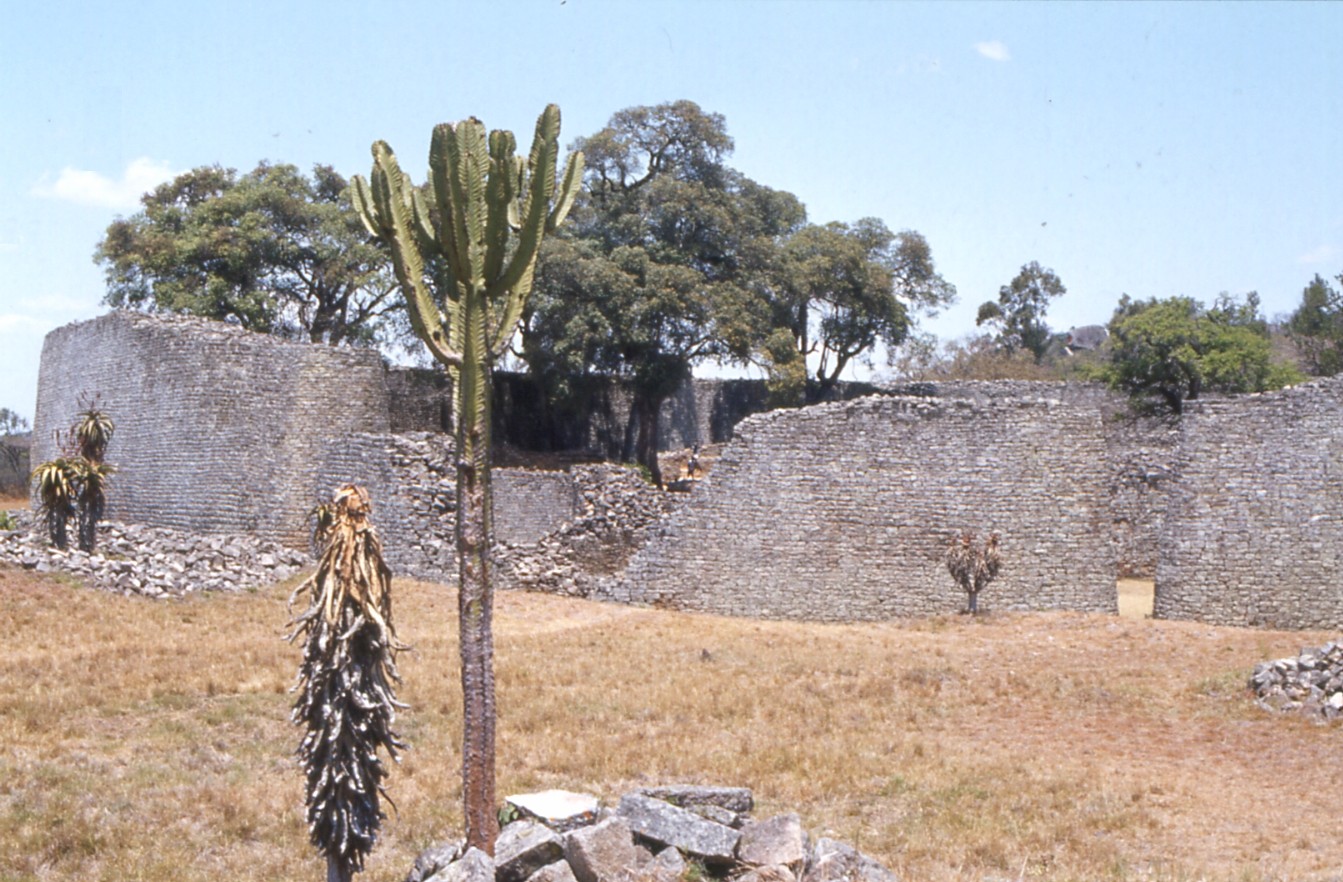
Ancient Zimbabwe was a mysterious high culture which disappeared shortly before the first Europeans arrived in southern Africa. Only its magnificent ruins are left, including those of its presumed capital, Great Zimbabwe. The territory of ancient Zimbabwe was roughly coterminous with the entity later known as Southern Rhodesia or Rhodesia. Speculations about ancient Zimbabwe's origins and downfall abound. They are often politically and racially charged. When Ian Smith's racist regime ruled Rhodesia, the most popular theory claimed that Zimbabwe wasn't the work of Black Africans, but of non-Black foreigners. White colonialists, perhaps? When Smith's regime fell, the new Black government of Robert Mugabe renamed the country “Zimbabwe” after the ancient high culture. The favored theory under Mugabe, which is also the favored theory in archeology at large, is that ancient Zimbabwe was the creation of Blacks, more specifically “proto-Shona” ancestors of the Shona, the dominant ethnic group in modern Zimbabwe. The iconic “Zimbabwe Bird” found in the ruins of Great Zimbabwe was/is used as a national symbol by both Ian Smith's Rhodesia and Mugabe's Zimbabwe.

It shouldn't come as a surprise, then, that R Gayre of Gayre and Nigg supports a version of the White supremacist theory of ancient Zimbabwean origins. In his scenario, White Semites – more specifically Judaizing Arabs from Sheba (Yemen) - journeyed to southern Africa after their kingdom had been overrun by Christian Ethiopians in the 6th century AD. Eventually, they established the civilization of Zimbabwe and mined gold for export by enslaving the “Bantu” and the “Hottentots”. During the period we would call the Late Middle Ages, the area of Zimbabwe was conquered by the Bantu, which led to the decline and destruction of the Semitic high culture. The surviving White Zimbabweans were “Bantuized” by “miscegenation” with Black Africans, and eventually evolved into the Lemba people, which still inhabit areas in South Africa and modern Zimbabwe. The Lemba are a “Negroid-Caucasoid cross”. The neighboring Venda probably also have some Semitic blood, but less than the Lemba, being their ancient allies but not directly related to the builders of Zimbabwe. The idea that the Bantu could have created something as magnificent as Great Zimbabwe is simply unthinkable to Gayre, who claims that the Bantu have always been primitive, unless forced to civilize by the whips of slave-masters, etc. I think it's obvious that the founder of Mankind Quarterly is running the errands of Ian Smith & Co. For “Bantu”, read ZANU and ZAPU. For “ancient Zimbabwe”, read modern Rhodesia. The point of the pro-slavery references is Über-obvious…

Gayre emphasizes that many non-Bantu African peoples are Hamitic or Semitic. Note that Hamites and Semites alongside Indo-Europeans are “Caucasoid” according to classical racial typology. Gayre believes that all advanced cultures in Africa were the work of Caucasoids! The author strongly suggests that the original Caucasoids were White “Aryans”. He habitually refers to Arabs, Jews and ancient Egyptians as “White”. In effect, they were off-shots of the Aryans. In Gayre's speculative recreation of ancient history, the primordial White civilization was Aryan and had its center in Europe, where it was represented by the Neolithic megalith builders. This megalithic culture also spanned North Africa and the Middle East. It was patriarchal and worshipped the fallos, symbolized by the megaliths. In ancient Egypt, Mesopotamia and India, this patriarchal culture was combined with a less advanced matriarchal stream to a syncretic culture with both fallic worship and mother-goddesses (most notably Ishtar). Ancient Zimbabwe is a later derivative of this compromise culture. As for the Bantu, Gayre believes that they were extremely primitive and matriarchal, and didn't even understand the role of the father in the reproductive process! Needless to say, most of the author's speculations are considered fringey or even beyond the pale by today's standards.

Due to the racialist character of “The Origins of the Zimbabwean Civilisation”, it's somewhat difficult to give the White Devil his due, but Mr Gayre's work does contain interesting information and, yes, intriguing speculations. Ironically, I suspect that his main point – the “foreign” character of ancient Zimbabwe – might be true! The idea that the Lemba, a Black people with some “Jewish” traditions, are descended from actual Jews, sounded crazy until recent DNA research. If anything, it seems that Gayre on *this* point didn't go far enough. The Lemba, or at least their most important clan, are descended from the original Jews in “Palestine”, rather than being Yemeni Arab converts to Judaism. Since this confirms Lemba oral tradition (which also mentions stays in Yemen and East Africa), one does wonder what other part of their tradition may be true? The Lemba claim that their ancestors built Great Zimbabwe. Later, they built a smaller walled city in South Africa. Conversely, the Bantu interviewed by Portuguese explorers during the colonial period claimed that their ancestors *didn't* build Great Zimbabwe. Apart from various surviving Jewish customs (including kosher dietary laws and male circumcision), the Lemba have also been gold-smiths, suggesting a connection to the gold-mining culture at Zimbabwe. Of course, even Gayre has to admit that the Lemba look more Black than Semitic, but explains this by gradual “Bantuization”. Lemba tradition claims that only the males are descended from Jews, while the females are native to southern Africa.

Another intriguing point raised by the author is that of possible Egyptian influence on both ancient Zimbabwe and the rest of sub-Saharan Africa. In the author's scenario, the Egyptians are (no surprise) White, but a more reasonable position is to see them as “people of color”, perhaps even as Black Africans. The similarities between the famous Zimbabwe Bird and the Horus falcon are obvious, and it's also interesting that the symbols on its pedestals can be found in the Neolithic megalithic cultures. To me, this suggests that Egypt and the culture of “Old Europe” was part of the same *matriarchal* complex, and it also raises interesting questions about what “racial type” these peoples may have belonged to, since the Indo-Europeans didn't enter Europe until much later. We know that Egypt influenced both the Biblical Israelites and the Nubians. Gayre believes that most of sub-Saharan Africa was influenced by Egyptian culture. If so, the iconic bird sculpture could have reached Zimbabwe both by a Semitic sea route and an African land route. It's almost as if Gayre is right, despite being wrong! He seems to have stumbled on the truth, but interpreted it completely backwards, according to his patriarchalist-racist presuppositions…

I'm not claiming that Zimbabwe was “matriarchal” or “Egyptian”, nor that it was “Jewish” in the narrow sense (Jews, of course, being patriarchal). However, both the symbols used by this culture and the oral traditions of its putative descendants raise a lot of questions (not to mention eye-brows). My guess, without being a scholarly expert on African archaeology, is that Zimbabwe was a product of a Jewish-Arab culture whose members intermarried with the local Blacks and used some ancient Egyptian symbols. There is nothing inherently strange with such a proposition. There have been Phoenician, Arab, Persian and Indian merchants or settlers in East Africa since time immemorial. Gayre's book contains a whole chapter on such contacts. The island of Madagascar was settled by sea-farers from far-away Indonesia. The more permanent settlers along the African coast would have intermarried with locals. Thus, the migration of the Lemba from Yemen to Zimbabwe fits a broader context. It's not as strange as it may seem at first glance. Rather, it's something we almost should expect! That Zimbabwe was a more “advanced” culture than most was probably due to its gold mines. The Egyptian survivals need not surprise us either, for reasons already mentioned.

In the end, I give “The Origin of the Zimbabwean Civilisation” by R Gayre of Gayre three stars.
One star off for the Rhodesian thing!