Showing posts with label Massachusetts. Show all posts

Friday, September 4, 2026

Tragedy and irony


Some contrarian content from Michael Tracey. Note that the prosecutor seems to be "Woke" and looks like a stereotypical "evil feminist", so presumably the Alt Right keyboard warriors who demand the death penalty for Lindsay Clancy are siding with "the damn liberals"? And in Massachusetts! Ironic if true...

Remove these foul creatures from public office immediately

Tweets from Michael Tracey

Tuesday, September 16, 2025

Blasphemy


And today we have Woke cancel culture and hate speech laws. And soon, anti-Woke ditto in the wake of a certain recent event. Each time has its own blasphemy, it seems...

Is it true that blasphemy laws existed in the early United States despite the First Amendement?

Yes, it is true that blasphemy laws existed in the early United States even after the ratification of the First Amendment (1791). These laws were primarily at the state level, and they coexisted with federal constitutional protections for freedom of religion and speech. The apparent contradiction stems from the limited scope of the First Amendment in its early interpretation.


🧾 Historical Context

🔹 The First Amendment (1791)

“Congress shall make no law respecting an establishment of religion, or prohibiting the free exercise thereof…”

  • At the time of its adoption, the First Amendment applied only to the federal government.

  • It did not initially restrict state governments, which continued to enforce their own laws on religion and speech, including blasphemy laws.


⚖️ Examples of Early Blasphemy Laws

1. Massachusetts

  • Had a blasphemy law as early as the 17th century, carried into the 19th.

  • In 1838, Abner Kneeland, a freethinker and former Universalist minister, was convicted of blasphemy under Massachusetts law for publishing writings that denied the existence of God.

2. Pennsylvania

  • Maintained laws criminalizing blasphemy well into the 1800s.

  • The 1824 case Commonwealth v. Kneeland upheld a blasphemy conviction.

3. Maine and New York

  • Also had blasphemy statutes on the books during the 18th and 19th centuries.

These laws typically prohibited denial of the Bible, mockery of Jesus, or offensive speech against Christian doctrines.


🧠 Why Were These Laws Possible?

  • The Bill of Rights, including the First Amendment, was seen as a limitation on federal power only.

  • States retained the authority to define public morality and regulate religious expression until the 14th Amendment (1868) and its later interpretation in the 20th century.


⚖️ Shift in Legal Doctrine: Incorporation

  • The “incorporation doctrine” (developed through 20th-century Supreme Court cases) applied most of the Bill of Rights to the states via the Due Process Clause of the 14th Amendment.

  • Key decisions:

    • Cantwell v. Connecticut (1940) — Incorporated the Free Exercise Clause.

    • Joseph Burstyn, Inc. v. Wilson (1952) — Struck down a New York blasphemy law as unconstitutional, recognizing blasphemy bans as violations of free speech.


✅ Summary

AspectExplanation
Blasphemy laws existedYes, in many U.S. states, especially in the 18th and 19th centuries
First Amendment protectionInitially limited to federal laws only
States could criminalize blasphemyUntil mid-20th century incorporation of the First Amendment
Current statusBlasphemy laws are unenforceable and unconstitutional under modern interpretations of free speech

If you’re interested, I can provide original texts of some early state blasphemy laws or details about famous blasphemy trials in U.S. history.

Details about famous blasphemy trials in US history.

Certainly. Here are some of the most notable blasphemy trials in U.S. history, which illustrate how Christian morality and legal authority shaped early American legal systems—despite the First Amendment—and how courts eventually shifted toward greater freedom of speech and religion.


⚖️ 1. Abner Kneeland (Massachusetts, 1838)

🧑‍🏫 Background:

  • Abner Kneeland was a former Universalist preacher who became a freethinker, atheist, and publisher.

  • He founded a secular newspaper, The Boston Investigator, in which he published critiques of Christianity and statements denying God’s existence.

💥 The Charges:

  • Convicted under the Massachusetts blasphemy statute, which prohibited public statements "contumeliously reproaching" the Christian religion.

  • Offending quote: He declared that he “did not believe in a God any more than he believed in any other non-existent being.”

⚖️ Verdict and Significance:

  • Found guilty of blasphemy in 1838 and sentenced to 60 days in jail.

  • His conviction became a national free speech controversy.

  • Ralph Waldo Emerson and others defended him as a victim of religious intolerance.

📌 Legacy: Last person jailed for blasphemy in U.S. history. Sparked debate about religious freedom vs. public morality.


⚖️ 2. Ruggles Case (New York, 1811)

(People v. Ruggles, 8 Johns. R. 290 N.Y. 1811)

🧑‍🏫 Background:

  • John Ruggles, while drunk, gave a public speech in which he denounced Christianity and Jesus in vulgar terms.

  • He was charged with blasphemy under New York common law, which protected Christian doctrines.

⚖️ Verdict:

  • Found guilty by the New York Supreme Court, which ruled:

    “Christianity is part of the common law... to revile it is to threaten the moral foundations of society.”

📌 Legacy: Landmark case confirming that blasphemy could be prosecuted under common law, even without a written statute. Later overturned by evolving constitutional interpretation.


⚖️ 3. Commonwealth v. Kneeland (Massachusetts, 1838)

Note: This is the official case title of the Abner Kneeland trial. Included here again because it's one of the few well-documented blasphemy prosecutions under a written statute.


⚖️ 4. Joseph Burstyn, Inc. v. Wilson (New York, 1952)

(Also called “The Miracle Decision”)

🧑‍🏫 Background:

  • A short film by Roberto Rossellini, The Miracle, was accused of being blasphemous by Catholic authorities and banned in New York.

  • The state’s censorship board revoked its license, citing a law banning sacrilegious content in films.

⚖️ Verdict:

  • The U.S. Supreme Court struck down the New York law as unconstitutional.

  • Ruled that "blasphemy is not a valid ground to suppress free expression."

📌 Legacy: This decision ended the enforceability of blasphemy laws in the United States.


⚖️ 5. Kalman v. Cortes (Pennsylvania, 2010)

🧑‍🏫 Background:

  • A satirical church, "The Church of the Flying Spaghetti Monster," challenged Pennsylvania’s ban on blasphemous corporate names after its application was denied.

⚖️ Verdict:

  • The state eventually revoked the blasphemy clause, recognizing it as unconstitutional under modern free speech law.

📌 Legacy: Confirmed that blasphemy statutes are obsolete under the First Amendment.


📜 Summary Timeline

YearCaseOutcome
1811People v. Ruggles (NY)Blasphemy upheld under common law
1838Commonwealth v. Kneeland (MA)Conviction under statute; jailed
1952Burstyn v. Wilson (SCOTUS)Blasphemy law struck down
2010Kalman v. Cortes (PA)Blasphemy provision repealed

📌 Conclusion

  • Blasphemy prosecutions were real in early American history, especially in states like Massachusetts and New York, and upheld on the basis of Christian moral order.

  • These laws gradually eroded due to the expansion of First Amendment protections in the 20th century.

  • Today, blasphemy laws are unenforceable in the U.S., though some remain on the books in outdated statutes.


Would you like full-text excerpts from any of these trial decisions, or a global comparison of how other countries still enforce blasphemy laws? 

Wednesday, August 13, 2025

Bomb MIT back to the Stone Age?


Why the obsession with proving Einstein wrong...if the alternative is an *even more crazy* universe á la Bohr and the Copenhagen clique? Dude! Forgive the media (and MIT) for they do not know what they are doing...  

Friday, June 27, 2025

Three men in a boat


So I re-watched “Jaws”. I never grokked this production the first couple of times I saw it. It hardly scared me and I found it boring! Today, I rather consider it very, very strange. Indeed, it comes across as two entirely different films. The first half is a rather (stereo)typical horror flick with all the usual ingredients. The monster attacks a wholesome all-American resort, munching on stoned hippies, children and stupid hillbillies. There is an idiot mayor, a scientific genius and a stable police officer just trying to do his job. OK, maybe it´s a *bit* original. Like the tiger shark who turns out to be a rare guest from Louisiana!

The second half is the real “Jaws”. The three main characters Brody, Hooper and Quint confront the super-sized shark in a boat that´s obviously too small and fragile (rather than calling the coast guard or navy). Quint turns out to be half-mad and personally obsessed with killing great white sharks. He is the “Captain Ahab” of the story. The whole thing makes zero sense, except as a bizarre male rite of passage. The shark is too large and too intelligent to be a normal animal. Indeed, it seems to be intrinsically *evil*.

Speculations about allegorical meaning are difficult to fend off. The three men on the worthless barge represent different kinds of Americans, perhaps different generations: the old and crazy war veteran Quint (who is presumably working class), the middle-aged and middle-class police officer, and the young well-educated scientist (implied to be upper class). Is this a vision of an America united against its external enemies? (“Jaws” was released in 1975.) Or is the shark a symbol of Nature showing its fangs? 

It´s intriguing to note that the irrational sailor Quint and the “rational” scientist Hooper turn out to be equally crazy (at least after a fashion). It´s also interesting that the person who eventually kills the shark is Brody, the stable White middle-class guy with an official police badge. He does so in the old fashioned way – with a rifle and some explosives – while Quint and Hooper tried various alternative techniques which completely failed. Order has been restored on Amity Island (note the 4th July parade – Amity is of course a symbol for America and its proverbial way of life). At least it´s been temporarily restored until the sequels, but Steven Spielberg had nothing to do with those.

So I suppose “Jaws” is at least somewhat interesting…


Saturday, February 1, 2025

Mary´s Little Remnant


I never heard of *this* sub-branch of sedevacantism before. Richard Ibranyi and his little sect Mary´s Little Remnant somewhere in the United States have taken sedevacantism to its quasi-logical conclusion, rejecting all popes since...wait for it...1130. Yes, really! Not sure why, tbh, but apparently Ibranyi is an adherent of Leonard Feeney, who was excommunicated from the Catholic Church in 1953. 

Feeney´s ideas, known by his opponents as Feeneyism and here called "Feeneyiteism", include the rejection of baptism by desire and baptism by blood, instead arguing that only baptism by water is valid. As far as I understand, these ideas are older than 1130, so perhaps somebody should form an even more consistent "more Catholic than thou" sect? Or why not become, you know, Protestant?

Another point of hot contention seem to be the idea that sexual intercourse without the intention of procreation should never be allowed at all. That is, not even "natural family planning". Since NFP was allowed by some popes pre-Vatican II, again you could argue that the Chair was vacated already before that council.

The content-creator considers Ibranyi´s sect interesting precisely in that it shows how absurd sedevacantism becomes if applied consistently. But (of course) you could also argue in the opposite direction: the papacy is absurd since it doesn´t seem to actually protect the Church from heresies in the first place!    


Friday, November 29, 2024

Treason


Mr Speaker, I not saying this is treason, I´m just asking how is this *not* treason? A New York politician wants New York State and some of New England to secede from the US and join Canada. Of course, this is just an attempt to create commotion. Besides, Canada probably doesn´t even want the Big Apple to join them in the first place! Vermont? Maybe. 

Democrat wants New York State to join Canada


Monday, November 18, 2024

From punk to monk


Conservative Lutheran theologian admits that he was a pizza-eating punk rocker in his youth?! HA HA HA.   

Tuesday, November 5, 2024

Friday, September 27, 2024

Make America pagan again


"The Wild Hunt" seems to be a Woke Neo-Pagan on-line publication, but on *this* issue, they side with the evil minions of Conspirituality (and the pre-2020 Woke-ish counter-culture). Interesting...

Pagan nurse fired for refusing COVID vaccination

Sunday, April 28, 2024

Fear of flying


“The Langoliers” is a two-part horror fiction series based on a novella by Stephen King. It scares the hell out of some people, but personally I just found it weird and incomprehensible the first time I saw it decades ago. I recently watched it again (strangely, it´s available on YouTube for free) and found it to be extremely dragging, although perhaps a bit more comprehensible. The only interesting characters are Dinah, Toomy and Nick.

The plot revolves around a group of airline passengers on route to Boston who wake up mid-flight only to find that everyone else on their plane has mysteriously disappeared (Rapture-style). After landing in Maine, the group discovers that everyone else in the world seems to be gone, too. The group somehow manages to deduce that they have travelled back in time after their airplane flew through a mysterious light phenomenon. Much of the plot (such as it is) revolves around the blind girl Dinah, who has telepathic abilities, and the clinically insane Toomy, who fears a group of demonic beings he calls Langoliers. Toomy strikes me as an unrealistic character even for a science fiction story! His karma is remarkably bad, too, since he is eaten by the demons despite not really being responsible for his mentally ill condition.

There are some philosophically interesting aspects of the story. For instance, time travel is said to be (almost) impossible, since the past is devoured by the Langoliers. This atheist and almost nihilist scenario is balanced by a religious reverence towards the mysterious time rift, which is said to be the crucible of creation and so forth – in other words, God. Stephen King presumably got the idea from the Rapture of Dispensationalist fame. That obviously raises the question what happened to the people who disappeared from the airplane: did they actually go to Heaven, merge with Brahman, or what?

But, as already indicated, I found “The Langoliers” quite uninspiring. Fun trivia: when the novella was published, one negative reviewer said that the story reminded him of a bad television movie! A somewhat ironic prophecy, that one.    


Thursday, April 25, 2024

The third time as burlesque


After Queers for Palestine, we now have Drag Queens for Palestine. We´re being burlesqued in real time. But sure, the left and the feminists (and perhaps even the Muslims) are being burlesqued even more!

Drag queens for Palestine

Thursday, April 20, 2023

A living Kennedy


Credit: National Farm Worker Ministry

Robert F Kennedy Jr (yes, he really is the son of *the* Robert F Kennedy) recently announced his decision to run for president. Or rather run in the Democratic presidential primaries, thus challenging Joe Biden, who is expected to announce his re-election bid soon. RFK Jr is an environmentalist activist, an anti-vaxxer and a supposed “conspiracy theorist”. For instance, he doesn´t believe that his father and uncle were killed by lone gunmen, go figure! 

A recent poll shows that 14% of 2020 Biden voters support Kennedy, which is intriguing to be sure, but it´s still too early to tell whether he will really be a problem for Joe in 2024. Probably not, if Trump is the apparent GOP nominee! 

In completely unrelated news, Marianne Williamson – the peculiar New Age candidate from the 2020 Dem primaries – has announced that she will make a second attempt…

Not sure if any of this means anything at all, but at least now you know. 

Robert F Kennedy Jr Launches Presidential Campaign

14% support for Kennedy among former Biden voters

Friday, March 24, 2023

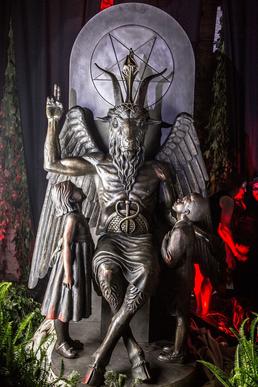
Responsible Satanism


Satanism is merely a lack of belief in God, right? A peculiar polemic against "the Satanic Temple" published by right-wing alt-media site Breitbart News. 

Satanic Temple requiring vaccination and masks

Thursday, March 10, 2022

We are only here to help you


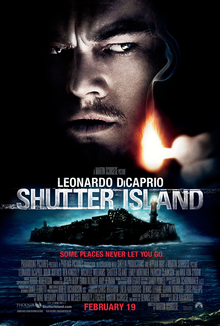
"Shutter Island" is a 2010 film directed by Martin Scorsese, with Leonardo DiCaprio starring in the lead role. Max von Sydow (a Swedish actor) stars a German "ex"-Nazi doctor. The plot has a number of strange twists and is actually quite interesting. 

The year is 1954 when police officer Teddy Daniels and his partner Chuck travel to a remote island housing a maximum security facility for the mentally insane, called the Ashecliffe Hospital. Their mission is to investigate the mysterious disappearence of patient Rachel Solando, but Teddy secretely suspects that much more is going on at Ashecliffe, including MK-Ultra-type experiments with mind control. He also wants revenge on a certain Andrew Laeddis, an arsonist and patient at the asylum who two years earlier killed Teddy´s wife. Both World War II and the Cold War forms backdrops to the story. 

The lead psychiatrist, Cawley, proves uncooperative. So do the other doctors (including Sydow´s character), the staff and the heavily armed police guarding the facility. Strangely, Rachel Solando reappears without any bruises, despite supposedly having been at large on the island during a severe storm. Events become increasingly less logical, and Teddy is plagued by recurring nightmares and bizarre visions (some related to Nazi Germany). Laeddis is nowhere on the island, while Teddy´s main source concerning the mind control experiments, an anti-Cold War activist named Noyce, turns out to be imprisoned in the worst part of the "hospital". Both the German doctor and the warden seem to be Nazis. Finally, Teddy finds the real Rachel Solando hiding inside a cave in a remote part of the island. She confirms that Ashecliffe is indeed used to test brain-washing techniques with psychedelic drugs, and that Teddy´s hallucinations are caused by the drugs being slipped into his food and cigarettes by the hospital staff. 

The dramatic finale and stand-off between Teddy and head shrink Cawley takes place at a lighthouse where the police officer believes that patients who know too much are secretely lobotomized. During the stand-off, Teddy realizes that *he* is Andrew Laeddis, that "Rachel Solando" doesn´t exist, and that his heroic investigation to reveal the evil conspiracy is an elaborate psychological defence mechanism. Actually, Teddy a.k.a. Laeddis is a patient at the mental hospital. Two years earlier, he killed his wife Dolores Chanal (the name being an anagram of Rachel Solando) after she had first drowned their three children. Teddy is indirectly responsible for the children´s death, since he knew that Chanal was mentally unstable but didn´t care. The entire "investigation" was a role play designed to make Teddy realize that his conspiracy theories are fake and illogical, making him face his own guilt. It´s also revealed that if Teddy relapses into his delusional conspiracist worldview, Cawley will have no other option than to have him lobotomized.

"Shutter Island" ends with Teddy pretending to become delusional again, since he can´t live with the insight that he really did kill his wife and (de facto) also his kids. He then voluntarily leaves for the lobotomy department...

I haven´t read the novel the film is based on, but the story can very easily be interpreted as a kind of conspiracy narrative in reverse. Usually, the conspiracy theorist turns out to be right. Here, he is revealed to be a delusional and homicidal maniac quite righfully incarcerated at a remote mental facility. His main "source" is really another madman. The evil head of the Grand Conspiracy, Cawley, turns out to be a progressive psychiatrist who wants to help mental patients by understanding them, rather than chain them for life or give them debilitating medicine (he lobotomizes Teddy very reluctantly under pressure from the other doctors). The somewhat illogical plot of "Shutter Island" is a device to show the viewer the illogical character of conspiracy thinking. And just as conspiracy theorists often fancy themselves being heroes while actually being little nobodys, Teddy LARP-s as a seasoned U.S. Marshal while actually being "Patient 67". (A more peculiar angle is that Teddy feels guily for killing Nazis at Dachau. Why would he feel guilty of that? Is this an oblique way to accuse conspiracy theorists of being pro-Nazi?) 

There is just one problem with this neat scenario. Yes, you guessed it: MK-Ultra was, ahem, real...

Perhaps whatever happened at Shutter Island really was a conspiracy. 


Sunday, November 28, 2021

Surviving with wolves

Credit: Mas3cf

"Misha and the Wolves" is a 2021 Netflix documentary about Misha Defonseca (or Monique de Wael), a Belgian-American writer of a memoir titled "Misha: A Mémoire of the Holocaust Years". A French derivative work by the same author is titled "Survivre avec les loups" (Surviving with the Wolves). Both were published in 1997. There is also a French film of the same title based on the latter book. 

According to the memoir, Misha is a Jewish Holocaust survivor, who ran away from the Catholic family that was hiding her after her parents had been deported by the Nazis (who occupied Belgium during World War II). At the time, Misha was only seven years old. The most sensational part of the story claims that she was adopted by a wolf pack in the Belgian forests! She also claimed to have killed a Nazi soldier who tried to rape her, by repeatedly stabbing him. 

The story was almost too good to be true. As indeed it was. "Misha and the Wolves" tells the story of how Defonseca´s lies were exposed. It´s an intriguing detective story, almost as hard to believe as Defonseca´s memoir. 

Somewhat ironically, it was Defonseca´s American publisher, Jane Daniels, who worked overtime to expose the hoax. Daniels claims that she initially believed in Misha´s story. The two women had a fall out after the memoir had been published, Misha Defonseca accusing Daniels of keeping most of the royalties. A US court sentenced Daniels to pay 22 million dollars to Defonseca, money Daniels claimed she didn´t have. So Daniels certainly had a vested interest in suddenly realizing that Misha´s memoir was a literary hoax, and hire people to prove the fact. (According to Wiki, the US court system has indeed revised its verdict and now demands that Defonseca pays Daniels a substantial sum instead!) 

After painstaking research in various archives (including preserved secret lists of Jewish children hiding from the Nazis during the war), Daniels´ team discovered that Misha Defonseca´s real name is Monique de Wael, she is a Belgian Catholic rather than a Jew, and was safely in parish school during World War II. Two reporters from the Belgian newspaper Le Soir did further research and came up with a possible motive for the hoax (apart from the money to be gained). It turned out that Misha´s parents *were* deported and killed by the Nazis. Both were members of the Belgian resistance. Misha´s father, Robert de Wael, is believed to have cracked under torture and turned in other resistance members. For this, he was widely regarded as a traitor after the war, and Misha became known as "the traitor´s daughter". This triggered Misha to invent a new identity for herself as a lone Jewish child and Holocaust survivor as a coping mechanism. After Misha Defonseca moved to the United States, this psycho-drama took on further life, as she joined a Jewish synagogue and began to tell her story to a gullible audience. As for Daniels, she was warned by a Holocaust historian that Defonseca´s story was impossible, but decided to publish her memoir anyway. The historian believes that Daniels was simply greedy. The most bizarre episode in the entire saga took place when The Oprah Show became interested in Defonseca´s story. They sent a team to the small town in Massachusetts where Defonseca was living in order to film her interacting with live wolves from a local wildlife sanctuary. The alpha wolf more or less attacked Defonseca under the very nose of Oprah´s producer, but then decided to let the "wolf-whisperer" go?!

While "Misha and the Wolves" is interesting, it´s frankly too kind to the people involved in this affair. I never read "Misha: A Memoir of the Holocaust Years", but if Wikipedia´s description of it is correct, it´s remarkable that *anyone* believed in this story. Here is Wiki: "At a time when she faces starvation in a forest, she is adopted by wolves, becoming a feral child. Protected by the pack, she survives by eating offal and worms. All in all, she treks over 1,900 miles (3,100 kilometers) through Europe, from Belgium to Ukraine, through the Balkans and Germany and Poland (where she sneaks in and out of the Warsaw Ghetto), to Italy by boat and back to Belgium through France. Before the war is over, the character has taken human life to survive, stabbing to death with a pocket knife a rapist Nazi soldier who attacks her." Either Americans are extremely badly informed about World War II history (and wolf biology) or Misha was automatically believed due to her status as a Holocaust survivor. But note that *Holocaust historians* (hardly Nazis) didn´t believe her, while many European readers *did*. So perhaps something else is going on here. And why wasn´t the above information included in the documentary?

With that little reflection, I end this blog post. (Swedish readers might want to know, that "Misha och vargarna" is available on SVT Play.) 


Monday, June 14, 2021

Moby-Dick has never been so angry


"In the Heart of the Sea" from 2015 is a film inspired by Herman Melville´s famous novel "Moby-Dick" and the events that supposedly inspired *that* work, the sinking of the American whaling ship "Essex" in 1820. I don´t deny that the film is well done, with an almost authentic early 19th century "feel", but it nevertheless comes across as boring and old fashioned. Perhaps for that very reason? I mean, there isn´t really much you can do with a story about an angry whale stalking a whaling ship! Especially not if the chemistry between the main non-whale protagonists is almost entirely lacking...

The plot revolves around the whaleship "Essex" and its strange odyssey around the world. Both the Atlantic and the Pacific turn out to be almost empty of whales (in 1820?), but the greedy Yanks from Nantucket finally get a pro tip from a Spanish captain which takes them to a mysterious part of the Pacific, the Offshore Grounds, where sperm whales are super-abundant. Unfortunately for our brave provider-males, one of the cachalots yearns for eternal fame through inclusion in an American Renaissance novel, and promptly sinks the "Essex" without further ado. Yes, this is the famous "white whale" (although it´s not really white in the film). The surviving crew descends into madness, despair and cannibalism, and soon realize that Moby-Dick is stalking them, still bent on avenging the Offshore Grounds massacre.  

Interestingly, the zenith of the combat ends with first mate Owen Chase *not* throwing his harpoon at the dangerous beast, at which point it quietly disappears into the deep blue ocean, never to be seen again. Cetaceans, it seems, have a sense of fair play! Years later, budding author Melville talks to one of the survivors of the ill fated journey and learns that the Nantucket whaling industry families covered up most of the story for reasons of profit. We also learn that crude oil has been discovered in Pennsylvania, heralding the decline of the whaling industry...

"In the Heart of the Sea" could work as matinée film on a rainy afternoon, but it will probably never take the pride of place of Ishmael and Ahab.


Monday, September 17, 2018

Beep beep, Richie


A word of warning to all Halloween freaks in my back yard...

Killer clowns are a paranormal phenomenon. Also known as phantom clowns, they were first spotted in Brookline, Massachusetts in 1981, and sporadically ever after. And no, the explanation isn't Stephen King's horror novel "It", since the novel wasn't published until five years later. We are dealing with real supernatural entities here. And know what? They don't just prey on children. Very very often, they are mysteriously drawn to adults in killer clown Halloween outfits...

MU HA HA HA!

Sunday, September 16, 2018

Ex Occidente Lux. Or at least Yoga


“A History of Modern Yoga” is an extremely interesting book, and could be quite shocking if you are an anachronistic “true believer” who thinks everything New Age-related is really ancient wisdom from Vedic India, Tibet or Atlantis. Actually, all those ideas you grew up with comes from your own backyard in California! People with a more fearless experimental-experiential mentality won't become scared by Elizabeth de Michelis' work, however, and ultimately it's that seeking New Age is supposed to be about in the first place. A small word of warning for the general reader, though. While “A History of Modern Yoga” is more accessible than most scholarly tomes, it *is* scholarly and can therefore put off people who aren't used to the terminology of comparative religion studies. Words such as “cult”, “cultic”, “esotericism” and “occultism” are used in unusual ways (thus, “cult” means almost the exact opposite in the book's scholarly universe compared to everyday usage). You might also want to check up the meaning of terms such as “emic” and “etic”. The author, a former practitioner of Modern Yoga, writes as an outsider to the “tradition” and therefore treats Hindu gurus such as Ramakrishna and Vivekananda as fallible humans rather than quasi-divine teachers. However, she isn't hostile to the traditions she is describing. This is a serious work of scholarship, not a scandal-mongering screed.

Elizabeth de Michelis makes a number of interrelated claims in her book. First, she argues that Western esotericism underwent significant changes during the 18th and 19th centuries. The “esoteric” components of the current New Age movement therefore aren't primordial, perennial or genuinely Eastern. Rather, the origins of New Age religion can be traced to Mesmerism, Transcendentalism, Spiritualism, Theosophy and New Thought, all Western and all products of a fundamental transformation of the Western esoteric heritage. To mentions just three aspects, this form of esotericism is individualistic (compare Ralph Waldo Emerson), evolutionary (compare Romanticism or Theosophy) and makes claims to be “scientific” (compare Mesmerism). There is also a strong connection to holistic health concerns, alternative medicine and positive thinking (compare New Thought). Modern Yoga has been fundamentally shaped by these new currents of thought, including those forms which still retain explicitly Hindu terminology (or even Indian teachers).

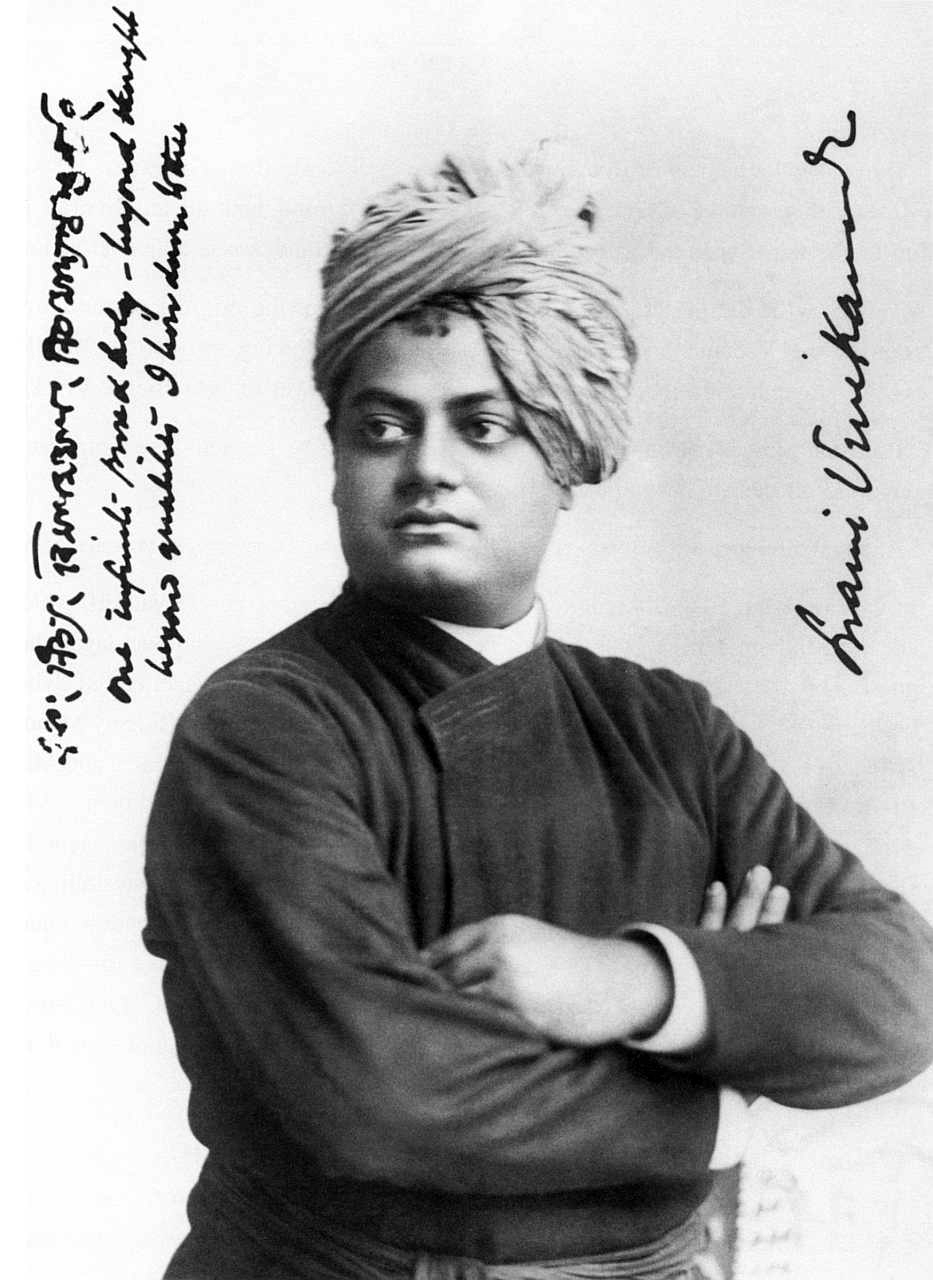
Second, Michelis argues that Swami Vivekananda (1863-1902), often credited with bringing Hinduism, Advaita Vedanta and Yoga to the West, was strongly influenced by modern Western esotericism. It wasn't simply an attempt to communicate ancient truths in modern language. No, Vivekananda was himself a modern reformer. His teachings are best described as Neo-Vedanta or Neo-Hinduism. Modern Western esotericism wasn't unknown in India during the 19th century. Quite the contrary, it was actively propagated there by Freemasons, Unitarian missionaries and Theosophists. The Brahmo Samaj, a “monotheist” Hindu reform society close in spirit to Unitarian Christianity, was the main conduit of this influence in India, most notably in Bengal. Western alternative medicine was also popular, most notably homeopathy. The works of Emerson was eagerly studied, as well. (Thus, Emerson influenced circles in India more than India influenced Emerson.) Vivekananda was thoroughly steeped in these ideas when he arrived in the United States, where he was quickly adopted by the cultic milieu in California and Boston. There, he deepened his understanding of the issues, and essentially became a modern Western esotericist in Hindu garb. The author believes that a closer analysis of his seminal text “Raja Yoga” proves this.

Third, the author argues that Vivekananda and Ramakrishna were extremely different. This is really a no-brainer, but since Vivekananda's Ramakrishna Mission and related organizations claim spiritual descent from Ramakrishna, the point could be controversial in some quarters. Ramakrishna was a more traditional Hindu, didn't adhere closely to Advaita Vedanta and was a rowdier mystic and ecstatic than the civilized Vivekananda. Nor was Vivekananda ever properly “initiated” by Ramakrishna. I noted with some surprise that some stories about Vivekananda's relation with Ramakrishna have a strong Christian flavor. Brahmo Samaj also used Christian imagery and terminology. The author argues that it was really the symbolism of “esoteric” Christianity (“esoteric” in the modern sense). Related to this is the author's claim that Vivekananda's teachings are strikingly different from those of Shankara and Ramanuja, the two fonts of Vedantic orthodoxy.

The last section of the book deals with Iyengar Yoga, a modern form of hathayoga widely practiced in both India and the West, arguing that a close reading of its canonical texts prove that we are dealing with a modern synthesis. Here, the author introduces the appealing neologisms “Neo-Hathayoga” and “Neo-Vishishtadvaita”. Where do I sign up? ;-)

Although “A History of Modern Yoga” is extremely expensive (despite being a book of normal length), it is well worth reading and pondering. It did clarify some things which I found murky, or only perceived dimly. But, of course, it doesn't “disprove” Neo-Hathayoga. While I frankly doubt it, it's always possible that the light of liberation really comes from California…

Saturday, September 15, 2018

Emerson on Plato...I think


I admit that I don't really know what to say about Ralph Waldo Emerson's essay “Plato, Or The Philosopher” (here called "A Short Introduction to Plato"). As usual, Emerson eloquently talks about everything and nothing (and perhaps about Plato), but it's not altogether clear if anyone is the wiser afterwards. Nor is it obvious where Plato's philosophy ends and Emerson's begins. Sure, the sage of Concord always sounded like this, and perhaps it was a deliberate “guru trick” to make people think harder (or to evoke feelings rather than the rational mind?), but personally, my brain is just spinning. But yes, after trying to read a few works about the chief Transcendentalist (also hard!), I did get the esoteric-Hermetic hints.

Emerson believes that Plato united both “Asia” and “Europe”, both the “infinity” of the Asian mind and the concreteness and practicality of Europe. Philosophically, he acknowledged both the One and the Many, and the “ladder” (great chain of being?) in between. The world (the Many) is understandable, precisely because it flows from the One (the Good, the Soul, the Divine). The scientific and the spiritual can therefore be united. So can, say, mathematics and poetry, which Plato also brought together in his own person.

Emerson doesn't shy away from Plato's elitism, but seems to interpret it in an individualist manner (which fits the American temperament better, but could also be given an esoteric spin). “The Republic” is an allegory of how to educate the human soul. Emerson mentions the need for a teacher, exemplified by Socrates. The teacher teaches by example, or even by his personality or Eros, rather than by mere discoursing. Presumably, Emerson viewed himself as such a teacher. Socrates was all things to all people, apparently an important fact. In passing, I note that Ralph Waldo quotes the Bhagavad Gita and the Quran, but not the Bible. It's also interesting to note that Emerson contradicts himself on whether or not the universe is knowable. At one point, he suggests that it is. At another, that it really isn't – even Plato “perishes”, as “unconquerable nature forgets him”. We are left to study on this for ourselves…

Most of the essay, however, is simply a long rhetorical eulogy to Plato and his immortal contributions. Says Emerson: “Out of Plato come all things that are still written and debated among men of thought. Great havoc makes he among our originalities. We have reached the mountain from which all these drift boulders were detached.” In other words, the entire history of philosophy is a series of footnotes to Aristocles…

I'm not sure how to rate this hard-to-read piece of Concordiana, but since I feel in a somewhat uncharitable mood, I will only give it two!