Charles Upton is a Traditionalist writer, i.e. a
follower (or creative interpreter?) of the school of thought associated with
René Guénon, Frithjof Schuon, Titus Burckhardt, etc. He is also a convert to
Islam and a member of a traditional Sufi order.
Upton's most well-known book is titled "System of the Anti-Christ".
Unfortunately, I haven't read it although I did read "Cracks in the Great
Wall", apparently an excerpt from the Anti-Christ book. "Vectors of
the Counter-Initiation" is intended to be a sequel to Upton's magnum opus.
The book is very in-house and probably of little interest to anyone except
other Traditionalists. It's not a single text, but rather a collection of articles,
letters and reflections on everything from conspiracy theory and UFOs to
psychedelic drugs and the fall of Lucifer. Its main purpose is to bring
together the metaphysical or spiritual perspective of Traditionalism with
modern conspiracy theory. His favourite conspiracist is Peter Levenda, author
of the trilogy "Sinister Forces" (one of Levenda's books deals with
The Nine, whom we met before - see my review of "The Stargate
Conspiracy").
Upton hopes that conspiracy theorists will read his book and gain an additional
metaphysical perspective on the character of the conspiracy (and the world at
large). Personally, I think the heavy character of "Vectors" will
keep the readership small, and the author's occasional attempts to mimic the
style of René Guénon doesn't help either.
I find this book extremely difficult to review, since my own perspective on
most things is *very* far removed from that of the author. By his definitions,
I would presumably count as a somewhat naïve purveyor of Anti-Tradition, with a
whiff of Pseudo-Initiation thrown in for good measure. Well, thank you. While
Guénonian Traditionalism is apolitical in the sense of abstaining from
meaningful political involvement, it is nevertheless a current on the far right
side of the political spectrum. Traditional religion (pre-14th century),
patriarchy, hierarchy, opposition to modernity and the very idea of
progress...these traits are all clearly spelled out in Upton's book. The
conspiracy theories are sometimes implicitly anti-Semitic (although Upton
perhaps doesn't see this) and explicitly anti-Masonic. Sounds familiar, does it
not?
In Upton's scenario, the New World Order conspiracy is ultimately traceable
back to the Counter-Initiation, a kind of inverted and diabolic mimic of true
religion. An important trait of the Counter-Initiation is the lust for power -
rather than meekly submit to the will of God in quiet contemplation and
suffering purification, the counter-initiate is a kind of black magician who
wants to "take the Kingdom of God by force" and use paranormal powers
to further his own, evil, ends. This is often done in the context of secret
societies with a deviated esoterism, of which the Freemasons and later Templars
are outstanding examples. Upton identifies Counter-Initiation with the idea of
Progress, since another central tenet of the Luciferians is the idea of
spiritual evolutionism, whereby all of society - or perhaps everything -
evolves to a higher and loftier plane. Theosophists, Anthroposophists and the
Integral movement around Ken Wilber are (obvious) representatives of this
trend.
To the author, regress and decay are the ways of the world: we live in the last
phase of the Kali Yuga (the Dark Age) which will inevitably end, not with a
Millennium, but with the complete and apocalyptic dissolution of the cosmos.
Only after that will a new cycle of time begin, this time with a Golden Age.
The difference between this and the premillennial scenario of many Christians
may seem moot to the outsider, but is actually crucial: the
"material" reign of Jesus on Earth is amenable to a
"progressive" interpretation, making postmillennialism the natural
cousin of its premillennial competitor (my observation). The Hindu notion of
fated cycles of time, including fated dissolutions, cannot be spinned in a
progressive direction.
The biggest problem with Upton's book - even on its own home turf - is its
opposition to syncretism. Upton regards syncretism and the interfaith movement
as a New World Order plot to create an artificial Über-religion that will
subsume or replace the existing world religions, as part and parcel of the One
World Government. Instead, he calls for defence of the orthodox religions, by
which he means all (or nearly all) religious traditions as they looked like
before the Renaissance. The problem is that Traditionalism itself is extremely
syncretistic, due to its claims to represent a primordial or perennial esoteric
tradition common to all world religions. As another reviewer have already
pointed out, Upton - who claims to be a traditional Muslim - freely blends
ideas and terminology from Islam, Christianity, Hinduism and Buddhism. He also
discusses shamanism as a possible valid path. Sometimes, the author cracks
ideas which are outright blasphemies from a Muslim perspective, as when he
claims that Jesus was crucified or that Jesus was higher than Mohammed. Nor is
Upton alone in this syncretism. As shown by Mark Sedgwick's scholarly overview
"Against the modern world" (a work deeply resented by
Traditionalists), the Traditionalists could be seen as a cluster of new
religious movements rather than a throwback to anything traditional. Frithjof
Schuon's "Sufi" order seems to have been particularly weird, cultic
and...well, syncretist.
Upton is acutely aware of these contradictions and devotes a whole chapter
trying to solve them, but I don't think he succeeds very well. One of Upton's
fears is that a denuded, soft Traditionalism will be used as an additional
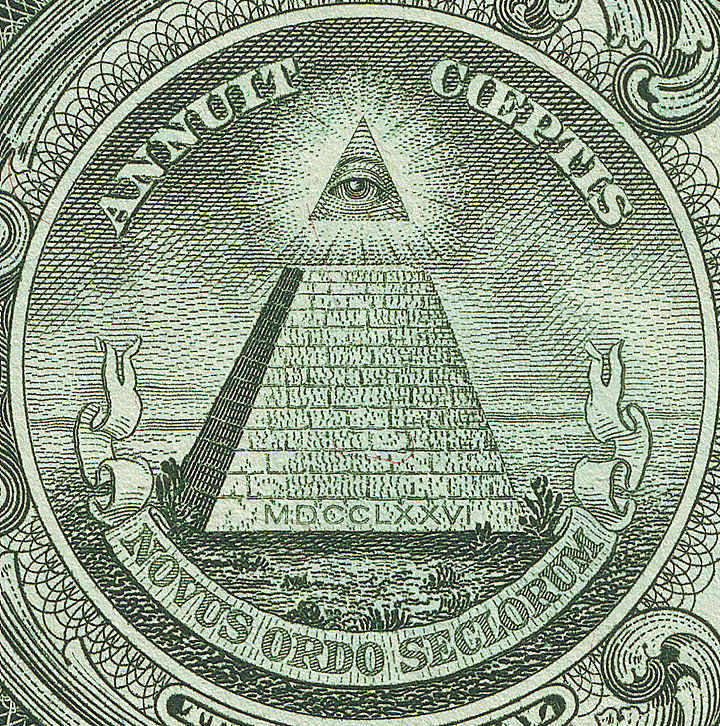
weapon by the globalist elites in their syncretist attempt to create a Novus
Ordo religion. Conspiratorial proportions guarded, this seems to be correct.
That bête noire Sedgwick points out in his previously mentioned work that soft
Traditionalism á la Huston Smith is indeed difficult to distinguish from some
kind of new agey ecumenism...
I'm not sure how to rate "Vectors of Counter-Initiation", since the
work feels both reactionary and confused, but since its pointless to criticize
a Traditionalist work for being Traditionalist, I eventually decided on three
stars. But yes, I feel completely "out of sync" - or was it
syncretism - with this book!