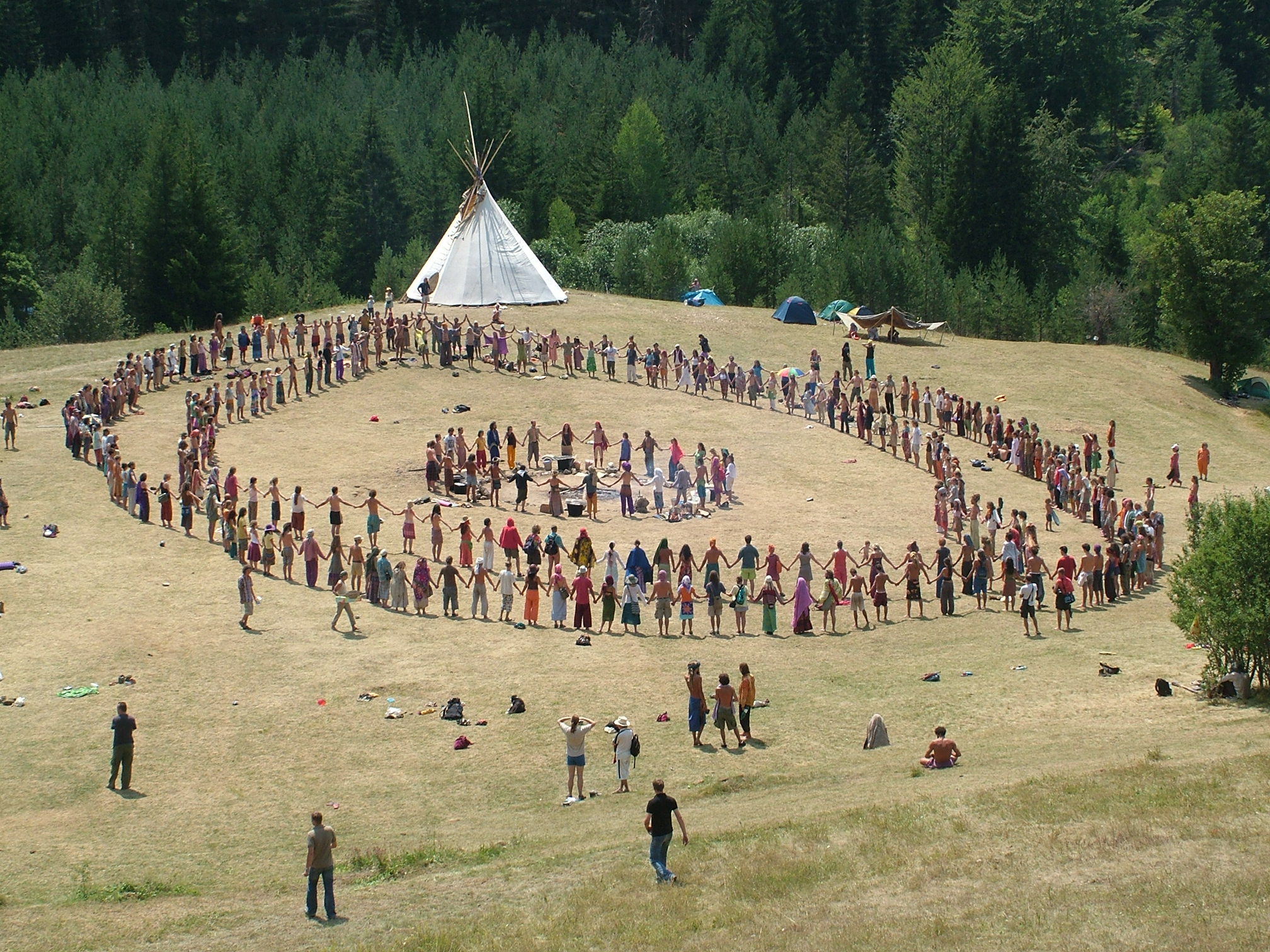
Be the Sun! Like Gandalf on the Bridge of Khazad-dûm, confronting the Balrog, we have to reveal our true angelic natures and stand in the Light. Some pep talk from David Spangler.
The blog to end all blogs. Reviews and comments about all and everything. This blog is NOT affiliated with YouTube, Wikipedia, Microsoft Bing, Gemini, ChatGPT or any commercial vendor! Links don´t imply endorsement. Many posts and comments are ironic. The blogger is not responsible for comments made by others. The languages used are English and Swedish. Content warning: Essentially everything.
Showing posts with label David Spangler. Show all posts
Friday, October 6, 2023
Wednesday, September 20, 2023
Findhorn finished?
It seems the Findhorn Foundation is ceasing all its operations. From David Spangler´s blog. Spangler was one of the leaders of Findhorn during their "heroic" period back in the 1970´s.
The reason for the close down isn´t entirely clear, but could be connected to the COVID pandemic somehow.
Thursday, September 13, 2018
The incarnation of David Spangler
David Spangler is a former leader of the Findhorn
community. He currently heads a group of his own, the Lorian Foundation. For
some reason, Spangler is sometimes considered to be the founder (!) of the New
Age. Christian fundamentalists consider him to be the Anti-Christ. Or one of
them? Spangler's soft and mushy form of spirituality isn't really my cup of
tea, but it's still a welcome contrast to the weird blend of earthly narcissism
and world-denying Gnosticism that plagues much New Age writing.
"An introduction to Incarnational Spirituality" is precisely what it claims to be, a basic introduction to Spangler's ideas. Spangler's basic idea is that we are supposed to be here. While humans are indeed immortal souls, we are not "trapped" in evil matter. Rather, our incarnation on Earth is a positive step in our evolution. We cannot or should not escape it. Instead, we must master our material incarnation and learn to live in harmony with each other, nature and Gaia herself (Gaia is also a kind of incarnated soul). Spangler believes that the human person is an emergent property of several different spirit-beings who work in tandem. (I admit that I didn't quite understand this part!) Apart from us, the world is inhabited by a wide variety of spirits, some of which humans can and should establish contact with. An important task for humans and spirits alike is "energy hygiene" and "subtle activism", which recharges our world with positive, healing energy. Spangler also believes that simply living our lives in a loving manner within the family or community is a positive form of spirituality itself. The book contains various exercises to enhance our Sovereignty, Self-Light and Grail Space. The emphasis is on positive self-affirmation together with others.
As I said, a bit too mushy for my taste, but what a contrast to many other "metaphysical" writers I tried to read lately...
Those who want even more of Spangler, could read "Subtle Worlds" and "Reflections on the Christ" after this one. For some overall context, you might also like Spangler's and Thompson's "Reimagination of the world".
Tuesday, September 11, 2018
A deceitful shriner
"Age
of Deceit" is a Christian fundamentalist and conspiracist film, available
for free on Youtube. Its ideas are similar to those of authors Thomas Horn,
I.D.E. Thomas, Michael Heiser, Lynn Marzulli, etc. While I found the movie
tedious, dishonest and somewhat bizarre, I admit that it does present the views
of this particular milieu in a relatively coherent manner.
The main idea is that the New Age and the UFO phenomenon are Satanic deceptions, paving the way for the Anti-Christ. The Anti-Christ will create a One World Government and One World Religion, centred on worship of supposed aliens from outer space. In reality, the "aliens" are literal demons. Alien abductions and channelled messages that deny the Biblical view of Christ are the main pieces of evidence for the evil character of the New Age-UFO phenomenon.
The narrator supports the apocryphal Book of Enoch, identifying the fallen angels with the "aliens". There are also murkier ideas about our sinful nature somehow being literally encoded in the DNA. I didn't bother watching the entire film, but I've read some of the writers referenced above. They claim that the fallen angels mated with human females, giving rise to a race of "giants" known as the Nephilim, who had some kind of alien DNA.
Pictures from the 9/11 attacks, the Bohemian Grove (?) and suspicious quotes from various UN officials suggest a conspiracist worldview, as do references to the Freemasons and the Illuminati.
At several points, the film is either dishonest, or the producers are so "under the ice" that they didn't bother checking their facts. David Spangler is quoted as saying: "No one will enter the New World Order unless he or she makes a pledge to worship Lucifer". The quotation is a hoax. Nor has Spangler ever been employed by the United Nations - at least not as far as I know. Alice Bailey is quoted as supporting Hitler and the Nazis. The quote is taken out of context, and comes from a piece in which Bailey *attacks* Hitler and the Nazis for the very things the movie claims she is supporting!
The most humorous part of "Age of Deceit" comes when the narrator interviews an old Mason who claims to be Lucifer himself. However, it's obvious from context - the narrator's own words and the red fez of "Lucifer" - that the old man is a Shriner. The Shriners are a subdivision of the Freemasons specializing in harmless pranks and practical jokes! In other words, "Lucifer" was only joking. Yet, the narrator fell for it and posted the sensational revelation online?!
"Age of Deceit" might tell us something about a particularly extreme fundamentalist subculture, but I don't think it offers any insight into "fallen angels and the new world order"...
Saturday, September 8, 2018
A damn good mystic
"Apprenticed
to Spirit" is a partially autobiographical book by spiritual teacher (and
seeker) David Spangler, whose message sounds like a less dogmatic and more
sympathetic version of Anthroposophy or perhaps Theosophy. Spangler takes us on
a tour of a somewhat strange childhood, during which he often encountered
angelic beings and had one particularly dramatic out-of-body experience.
Already as a small kid, Spangler was "psychic" (a bit like Steiner).
As a teenager, he often felt cosmic energies flowing through his body. As a
young man, Spangler gave up what could have become a promising career in
science and instead decided to become a mystic or metaphysical teacher. His
initially sceptical father eventually supported him with the somewhat strange
words: "If you're going to be a mystic, go out and be the best damn mystic
you can be." However, Spangler did get in trouble with his father at a
later point, when the old man threatened to have him arrested. Apparently, a
rumour had spread that Spangler had become the leader of a sex cult!
In reality, Spangler is surprisingly low-key, laid-back and undogmatic for a "mystic" associated with California (he even left the golden state at a later point). His teachings emphasize communion, love, cooperation with the spirits on equal terms and the right to say "no" to purported guidance from the spirit-world. He doesn't claim to know the full truth about the "subtle realms" and often criticize self-proclaimed gurus and prophets. Above all, Spangler is critical of New Age seekers who uncritically accept every communication from the spirit-world at face value, or demand that the spirits tell them exactly what to do. The book contains several absurd episodes of how such "guidance" can go dangerously wrong. Apparently, Spangler's critical attitude made him a few enemies in California, where his freedom-loving message was seen as a threat by aspiring gurus and (perhaps) their prospective followers.
But sure, even Spangler claims to have direct access to the spirit-world. His spirit-guide is an entity named John. John is said to look like a man in his early forties, with dark brown hair, wearing a light shirt and dark trousers beneath a tweed jacket! Had I read this during my most sceptical period, I would have concluded that poor Dave, although obviously not a leader of a sex cult, is nevertheless either a hoax or barking mad... A spirit wearing a tweed jacket? And while Spangler is generally sceptical of prophecies, he claims that John did give him two glimpses of the future which turned out to be correct. Already before the death of Andropov, John predicted that a certain Mikhail Gorbachev would eventually become Soviet leader, and that his politics would lead to the dissolution of the Soviet Union. John also predicted the rise of Islam and Islamic~related violence. Or so Spangler believes.
"Apprenticed to Spirit" further tells of Spangler's visit to the well-known Findhorn community, a New Age project in Scotland. For a number of years, Spangler was one of the de facto leaders of Findhorn, until he moved back to the United States and founded his own group, Lorian. At Findhorn, Spangler met William Irwin Thompson (another somewhat unusual spiritual pilgrim). Out of their discussions grew the Lindisfarne Association, which regrouped famous scientists, spiritual teachers and societal critics in an attempt to aid the emergence of a new planetary consciousness. However, Spangler also admits that the high hopes for a New Age didn't materialize as the idealistic 1970's gave way to the materialistic 1980's, when the New Age was turned into a marketing brand and dreams of a planetary consciousness were turned into a frantic quest for purely individual improvement. The term "New Age" became so tainted among serious~minded people that Spangler and several of his associates had to stop using it altogether.
Today, Spangler and his co-workers at Lorian have developed a concept they call Incarnational Spirituality, which emphasizes the positive aspects of our material incarnation and even claims that, in a sense, we aren't incarnated enough. This is also stands in sharp contrast to many other metaphysical schools, with their hierarchical and de facto dualist perspective, where spirit is seen as better, higher and more desirable than matter. Spangler, by contrast, believes that the material world and the spirit-worlds are on the same level, complementing each other, both being direct manifestations of the Divine Ground.
"Apprenticed to spirit" is an interesting read, but I also have one problem with it. Judging by Spangler's earlier texts, his worldview was originally obviously Theosophical, with ideas about the Cosmic Christ, Lucifer, Atlantis, Sanat Kumara being the true initiator of the Earth, etc. There are no traces of this message in Spangler's book, not even when he discusses his early meetings with John or the stint at Findhorn. Perhaps Spangler feels that his basic teachings have always been the same, and that only the language has changed. Maybe, but another possibility is that Spangler is projecting his current message on his past... The question should at least have been discussed in a book that comes close to being a spiritual autobiography.
That being said, I nevertheless recommend "Apprenticed to spirit" to all serious spiritual seekers, in particular those tired of all the commercialism, ego-tripped gurus and world-denying nihilists. Although Dave is a bit "soft" to my tastes, he *is* a damn good mystic!
Saturday, September 1, 2018
A voice from the past?
Although I wouldn't consider myself a follower of
David Spangler, I kind of like the guy and his books. Perhaps he appeals to my
softer hippy side, or perhaps I just happen to like his non-dogmatic,
non-sectarian approach to spirituality. Spangler's teachings, or rather his
approach to spiritual matters, is a kind of "New Age with a human
face" (and without the crystals!), or a more comprehensible version of
Theosophy-Anthroposophy-Alice Bailey Thought.
Yet, I admit that "Facing the future", published just three years ago, struck me as too soft, too much pie-in-the-sky, and just too anachronistic. It seems Spangler is forever stuck in the late 1960's and early 1970's, when the New Age was all about planetary consciousness, evolutionary transformation through Spirit, and a new synthesis between science, technology and spirituality. And, of course, Findhorn. Ah, those were the days! "Facing the future" is Spangler's attempt to orient himself in the new and somewhat grimmer realities of the 2010's, with peak oil, climate change, economic crises and U.S. political paralysis as some of the ingredients. I don't think he succeeds very well. Spangler is a personal friend of John Michael Greer, and the first chapters of "Facing the future" sound like a synthesis of Spangler and Greer, but as the story proceeds, Greer's peak oil predictions and pessimistic view of history are relegated to the background in favour of Aquarian Age-as-usual. More Spangler than Spengler, to crack a joke! Spangler is also a long-time friend of Stewart Brand, a recent apostate from the Green movement who has come out in favour of big cities, nuclear power and genetic engineering in his "Whole Earth Discipline". In the end, he seems to prefer Brand to Greer.
Spangler does criticize both negative apocalypticism and "positive" utopianism, two perspectives which really co-exist very well, with the spiritual elite creating Utopia after the chaff of humanity (most people) have been removed or killed in some gruesome catastrophy. However, his own perspective has certain similarities with precisely the perspective he disaffirms. Thus, Spangler mentions two visions of a possible future, in which a large amount of humanity seems to have disappeared (died out?), various cataclysms has changed the face of our planet, with the survivors living in a utopian society based on free energy and anti-gravity. One of the visions is his own, the other came to one of his neo-shamanistic friend. It's almost as if Spangler doesn't realize that the sneak peeks into our future are really just a version of the cultish apocalypticism he wants to get away from! And while free energy and anti-gravity would be cool, I don't think we have the time, nor even the energy, to invent and diffuse it - nor, probably, the wisdom to use it. Imagine a destructive civilization getting its hands on *free* energy!
Still, I recommend "Facing the future". Many other ideas in the book are interesting, although I suspect avid readers of Spangler's works will have encountered them before. Thus, Spangler rejects the notion that the spirits are "higher" or "better" than us. Rather, the spirit-beings are our equals, want to become co-creators with us, and are striving to establish a working relationship with us. The goal is not the disappearance of the material universe, but rather a synthesis, a "natural" universe open to energies from the subtle realms (Spangler's term for the spirit-world). In one sense, humans are "higher" than other physical organisms, but not because we are more intelligent, but rather because of our capacity to consciously love and empathize with other creatures than ourselves, including with Earth itself. This explains why the spirits of the subtle realms are interested in our evolution and strive to aid us. Spangler believes that miracles happen when humans (or humans and spirit-beings) get together in mutually loving relationships, creating a kind of energy vortex in which the "miraculous" emerges. Thus, if a larger portion of humanity would enter into a relationship with the subtle realms, Earth itself might begin to change.
However, Spangler is sufficiently realistic to point out that humans have destroyed the environment so much that not even the spirit-beings could heal all of it, and that any "miraculous" energy transfers to, say, save the polar ice caps would simultaneously drain some other part of the system of needed energy. Are we willing to take that risk? (Note that Spangler has a pretty "naturalist" view even of spiritual-cosmic energies.) Spangler further writes that Earth (Gaia) doesn't *really* need us humans to thrive or "become conscious". Gaia already has a form of consciousness and can take care of herself even without our fantastic stewardship, thank you!
In the end, however, Spangler is simply too optimistic as a person to really contemplate a negative future. His optimism sometimes gets the better of him, as when he claims that multinational companies or even world wars really play a positive role in bringing people together. His uncritical attitude to Brand is another example. Spangler is enthusiastic about the Internet, too, but how long will the net last in a severe energy crisis? I hope that Dave is right, but, frankly, the grumpy Spenglerisms of John Michael the Archdruid strike me as more realistic. And Greer is one of the moderates of the post-peak scene!
Still, I wish David Spangler good luck back there, somewhere in the Age of Aquarius... When the chips are down, we all have to face the future together.
A pilgrim in an aquarium
A review of David Spangler´s "A Pilgrim in Aquarius"
Although I'm a somewhat reluctant fan of David
Spangler's "real New Age", this one didn't move me. Perhaps I'm
temporarily satiated. I mean, how much Aquarian love, relationship and
transformation can a hard-boiled realist like me take in one sitting? I've read
two Spangler books this week! Or perhaps "A Pilgrim in Aquarius"
really is more tedious and boring than some of the man's other works.
For some reason, Dave has included a very unfortunate anti-millenarian screed by one Jackson Spielvogel as an appendix, in which this character (presumably a half-crazed paleo-conservative) compares the Hussites, Taborites and Anabaptists to the Nazis! They were all "millenarian", apparently. Somebody needs an appointment with Madame Guillotine or Eduard Benes...
But OK, I admit that Spangler's anecdote about presidential hopeful Jerry Brown having an election meeting on a New Age fair complete with hippies and a guy channelling pyramid energy through his hat, was entertaining. I always assumed that flat tax Jerry was the macho, hardhat type? Or was that a later spin in another primary election campaign?
Personally, I think those interested in Dave Thought should read "Subtle Worlds", "Reflections on the Christ", "Apprenticed to Spirit" and (if they are men enough) "Reimagination of the World", where Spangler's mystical Kumaras in the service of The Christ meet William Irwin Thompson's hard-boiled Irish working class background, and then some.
Sorry, Mr. Son of a CIA Agent, but only two-and-a-half stars for you this time.
For some reason, Dave has included a very unfortunate anti-millenarian screed by one Jackson Spielvogel as an appendix, in which this character (presumably a half-crazed paleo-conservative) compares the Hussites, Taborites and Anabaptists to the Nazis! They were all "millenarian", apparently. Somebody needs an appointment with Madame Guillotine or Eduard Benes...
But OK, I admit that Spangler's anecdote about presidential hopeful Jerry Brown having an election meeting on a New Age fair complete with hippies and a guy channelling pyramid energy through his hat, was entertaining. I always assumed that flat tax Jerry was the macho, hardhat type? Or was that a later spin in another primary election campaign?
Personally, I think those interested in Dave Thought should read "Subtle Worlds", "Reflections on the Christ", "Apprenticed to Spirit" and (if they are men enough) "Reimagination of the World", where Spangler's mystical Kumaras in the service of The Christ meet William Irwin Thompson's hard-boiled Irish working class background, and then some.
Sorry, Mr. Son of a CIA Agent, but only two-and-a-half stars for you this time.
Wednesday, August 29, 2018
The emergence of David Spangler
“Emergence: The Rebirth of the Sacred”, published in
1984, is a relatively good introduction to the ideas of David Spangler, a
spiritual teacher with a background in Findhorn and Alice Bailey-inspired
Theosophy. Indeed, it's almost fascinating to see how little Spangler's message
have changed over the years. Since I already commented extensively on Spangler
in other reviews, I will say relatively little about this book. All the usual
ingredients are there.
Humanity is called upon by spiritual forces to create a “new age”, but not through apocalyptic destruction, revolutionary action or obedience to some authoritarian religious leadership. Rather, humans should become co-creators with Gaia and the spirit-world in a gradually emerging planetary culture. While Spangler is at pains to sound non-partisan, the planetary culture sounds radical-liberal, with green technology, decentralized communities and global networks functioning to some extent as a democratic world government.
Spangler mentions his work at Findhorn, his collaboration with scholar William Irwin Thompson, the Gaia hypothesis of Lovelock and Margulis, David Bohm's “implicate order” and the quest for a new paradigm uniting science and spirituality. He mentions various groups in the United States working for a new age, including the New Alchemy Institute and the Windstar Foundation of John Denver. The author is at pains to disassociate himself from occultists, Satanists and cultists of various sorts. Spangler's own spirit-guide “John” is a co-worker, not an “ascended master” or heavenly guru. Spangler chose to tone down the more overtly Theosophical-Anthroposophical material for this volume.
As usual, Spangler is very optimistic, something I personally found a bit annoying. There's nothing about Cold War tensions (this in a book published in 1984!), overpopulation, or peak oil predictions. In true New Age fashion, “Emergence” combines space exploration with ecology, decentralized communities with a kind of UN-type structures, and even mentions the First Earth Battalion, a New Age initiative within the U.S. military (lampooned in the Hollywood comedy “The Men Who Stare at Goats”). This optimism makes Spangler's message feel somewhat dated today, and it probably felt a bit anachronistic already in 1984.
But, as already indicated, this is a relatively good intro to Spangler and the ideas of his own little group, Lorian, so I therefore give it four stars.
Monday, August 27, 2018
Pirates, princes and understatements
Steven Runciman's book “The White
Rajahs” was originally published in 1960. It tells the curious story of James
Brooke, a 19th century British adventurer who established himself at Kuching on
the Indonesian island of Borneo. The area where Brooke landed is called
Sarawak, and was at the time under the control of the Sultanate of Brunei. The
control was pretty nominal, however, with the Sultan's princes and officials
acting as petty sovereigns in their own right, fleecing the local population.
Pirates, slave-raiders, Chinese triads and headhunting Dyak tribes were other
problems in this truly God-forsaken part of the world. In 1841, Brooke was
appointed ruler (Rajah) of Kuching and the immediately surrounding area. Over
the next decades, James Brooke and his successor Charles Brooke managed to
expand the territory considerably. In 1888, Sarawak became a British
Protectorate, but it continued to function as a de facto independent state
until 1946, when the third White Rajah, Charles Vyner Brooke, ceded the area to
Britain. Today, Sarawak is part of the independent nation of Malaysia.
The rule of James Brooke and his successors proved popular among most sections of the diverse Sarawak population. The Ilanun pirates (slave-raiders from Ilanun Bay in the Philippines) had been a constant scourge along the Borneo coast, until Brooke managed to stop their operations with the aid of British gun ships and local Dyak warriors. His prohibition of Dyak headhunting was perhaps less popular, but most tribes eventually preferred peace and stability to the perennial conflicts that had characterized Sarawak before Brooke's advent. A new system of taxation eased the burdens on the local population considerably, often triggering rebellions in areas still controlled by the Sultan, with the rebels demanding that Brooke take over administration of their territory. The White Rajahs opposed too fast economic exploitation of Sarawak, fearing that this would harm the native population. Runciman describes Brooke and his dynasty as a positive example of enlightened despotism, a kind of paternalistic form of colonialism.
It's intriguing to note that Britain was originally uninterested in Sarawak, despite the White Rajah's constant lobbying for a British Protectorate over the area. At various points, the Brooke dynasty considered placing itself under Dutch or French protection, and there was even a none-to-serious plan to place Sarawak under nominal Greek suzerainty! Later, of course, the area became central to the world economy due to the discovery of oil. Ironically, most of the oil was discovered in areas still controlled by the dwindling Brunei Sultanate, making the rulers of this enclave some of the richest in the world…
In a book published in 1960, some things couldn't be said openly. Runciman strongly implies that Rajah James Brooke was a homosexual, but never says so explicitly. Male homosexuality was still illegal in Britain the year the book was published. (James Brooke's successor Charles wasn't his son, but a nephew.) Runciman's book also contains the following, almost bizarre piece of understatement: “Not only was the Duke of Brabant later, as Leopold II and ruler of the Congo, to show that he wasn't a suitable man to deal with native races...”. That's rather like saying that Adolf Hitler was somewhat awkward at Jewish-German relations… Another weakness of Runciman's account is that he says very little about why Rajah Vyner decided to cede Sarawak to Britain in 1946, and the political crisis following the decision (including protest marches and the assassination of a the British governor). Surely this must have been part of some big picture, with Britain and other Western colonial powers attempting to reassert their authority in Asia after Japan's defeat in World War II?
Otherwise, Runciman's book is quite good and well-written, with many of the colourful characters of Sarawak's history coming to life: imbecile Sultans, scheming but ultimately cowardly Brunei princes, rowdy Anglican bishops, and the Dyaks, with their headhunting traditions…
A final piece of information not found in this book. The last Rajah, Charles Vyner Brooke, had a heir-apparent, the Rajah Muda Anthony Brooke, who never got the opportunity to ascend the throne, due to Vyner's cession of the area to Britain. Instead, Anthony became a peace activist working for the United Nations. In that capacity, he became a friend of…David Spangler.
The world is small.
Thursday, July 26, 2018
Study the smorgasbord...er, monochord
I think this was my first attempt at reviewing (or even reading) a book by David Spangler and William Irwin Thompson. Reposted here just for fun!
"Reimagination of the World" is a book published in 1991. It
contains transcripts of lectures and discussions at the Chinook Summer
Conferences 1988-89. The two lecturers were David Spangler and William Irwin
Thompson. Chinook is (or was) a "spiritual learning center" at
Whidbey Island in Washington State.
Spangler is apparently regarded as one of the founders of the New Age movement - I honestly admit that I never heard of the guy until I picked up this book (he'll be glad to hear it). However, I have heard of Findhorn, a spiritual community in Scotland with which Spangler used to be associated. William Irwin Thompson is a maverick professor and self-professed working-class Irishman who founded the Lindisfarne Association. I admit that I did hear of *him* before picking up this book, probably in some of Morris Berman's books.
I'm not sure what to say about "Reimagination of the World". The book feels like a typical New Age smorgasbord of pretty much everything - and this in a book ostensibly critical of the New Age. Perhaps people who are "in-house" can pick up the vibes, but personally I found it bewildering. Both Spangler and Thompson (a.k.a. David and Bill) are fed up with the commercial, narcissistic, cultic and naïve sides of the New Age. Even Spangler is sceptical, despite being a psychic who claims to have paranormal contacts with spirits. (His ideas sound like a blend of Steiner and Seth.) Both want a more mature and down-to-earth spirituality, less obsession with gurus and "channels", more science (sic) and less Shirley MacLaine! However, their alternative to the New Age is simply another version of...well, the New Age. The whole thing feels like an internal, factional conflict.
Thompson criticizes the general dumbing-down of America and American pop culture, at one point bemoaning that nobody heard of Marshall McLuhan at a communications course he was teaching. A few lectures are devoted to Spangler's ideas about spiritual hierarchies, esotericism, the Cosmic Christ, etc. Spangler also talks about the supernatural entity "John", with whom he has established contact. Both men uncritically support Tibet and the Dalai Lama. The main difference between the two lecturers is that Thompson sounds more "Buddhist" and has greater respect for conventional science than the average New Age believer, while Spangler is more into "Christian" symbolism and sounds decidedly less scientific. At one point, Thompson jokingly refers to himself as "the hard cop", with Spangler being "the soft cop". Otherwise, the two men seem to understand each other perfectly. Both also have a sense of humour, as when Thompson repeats the weird phrase "Study the monochord" several times in a lecture. (According to legend, those were the last words of Pythagoras.)
Personally, I found the anecdotes retold by these two illuminates to be pretty entertaining. And disturbing? Spangler at one point left California, moving to Wisconsin. Since he is "the founder of New Age", the lunatic fringe of the movement interpreted his move as proof positive that California would soon disappear into the sea! Why else would such a spiritual person leave the golden state? In Wisconsin, Spangler met local New Age channels who prophesied the disappearance of *that* state into the Great Lakes... At another point, Spangler was interviewed by a TV reporter in a room painted in bizarre pastels with huge crystals hanging down from the ceiling. The reporter's first question was: "Why are so many fed up with the New Age?" As for Thompson, he is obsessed by paranoiacs, which suggests that he may have met a few of them himself. He also turns out to be on a first-name basis with both James Lovelock and Lynn Margulis, who were Lindisfarne Fellows (not paranoiacs). Otherwise, I must say that Thompson (a professor of literature) is too preoccupied with his Irish working-class background and constantly tries to cultivate a kind of "tough guy image". The book ends with a couple of confused and almost demented reflections on the fall of the Berlin Wall and the Gulf War.
I didn't really like the book, mostly because of its meandering, let's-talk-about-everything-under-the-sun character. It might be of some interest to New Age believers, but probably not to the general public. As already pointed out, the critique of the New Age offered in the book is simply another version of the same thing. I wouldn't be too surprised if the New Age simply assimilates this book into its holistic smorgasbord...
Or monochord?
Wednesday, July 25, 2018
A subtle criticism of the New Age
David Spangler is a former leader of the well-known Findhorn community in Scotland. He currently heads the Lorian Foundation, a relatively small spiritual group in the United States. Spangler is also the putative founder of the New Age movement. After reading his books "Subtle Worlds" and "Reflections on the Christ", I feel sorry that Spangler isn't the *real* founder of said movement! While Spangler's Incarnational Spirituality isn't really my cup of tea, I readily admit that the New Age would have been more sympathetic if the Lorian Foundation had been on its leading edge. In many ways, Spangler's ideas sound like Anthroposophy with a human face (or Steiner without Steiner).
"Subtle Worlds" is a book about the spirit-world. Spangler claims to be clairvoyant, and has a spirit-guide named "John". The book speaks for itself, and large parts of it will be familiar territory for avid readers of Theosophical or Anthroposophical material. Thus, Spangler's descriptions of the astral world and the higher worlds above it remind me of C.W. Leadbeater's "manuals" on these subjects. The impersonal conception of God ("The Sacred") is also familiar, as are the nature-spirits, elementals and thought forms.
What strikes me as very different in "Subtle Worlds" is the author's low-key approach to the spirit-worlds. He doesn't claim to have access to infallible revelations. Indeed, "John" is his spirit-companion and equal, rather than some kind of ascended master or supernatural guru. Spangler often emphasizes that revelations from the spirit-world will always be interpreted by the subjectivity of the human medium. He is sceptical of channelling, and believes that many people who claim to have contact with advanced spirit-beings are either deluding themselves, or being deluded by less evolved spirits. And no, he is not saying this in a fanatical manner ("only my spirit-guide is true"). The whole book is very humble, charitable and laid back.
One of Spangler's points is that humans and spirits are really on the same level, since we are both manifestations of The Sacred. In order to save Earth from destruction, humans and spirits should co-operate with each other, and the human experience of incarnation in perishable matter is seen as fundamentally positive. Humans are a kind of spiritual explorers whose destiny is to learn how to live a spiritual life in a material universe. Hence "Incarnational Spirituality".
Spangler is also more optimistic and positive than other writers on similar subjects. Robert Monroe's books on astral travel ooze negativity and demons, demons, demons... Spangler claims that the astral world is fundamentally a harmless place, and that the evil creatures from its lower levels can be easily avoided. Frankly, he seems to be underestimating the evil of humanity, and then project this "happy small town vision" onto the supernatural worlds! Still, even this part of the book could perhaps be profitable reading for those drawn to the more sensationalist sides of the New Age. Thus, Spangler writes that evil beings are drawn to human vanity and lust for power - i.e. they are drawn to *our* evil. Like the vampires of the legends, they need our explicit invitation to get inside. Few people get "possessed" without their own tacit cooperation.
At one point, Spangler mentions a young man who had been contacted by a spirit who claimed that the man was an avatar who would usher in the New Age (!). Spangler told the young man that the spirit-being was a parasitical entity, a kind of psychic vampire who feeds on the energy of "avatars" and their cultic followers. He convinced him to (presumably) get a real life. To a sceptic, this story might sound patently absurd, but please note the subtle (pun intended) message: if Spangler is right, most modern New Age prophets are possessed by evil spirits, rather than being genuinely spiritual... Spangler also believes that many people who have an "inner guide" are really in touch with a lower level entity who isn't evil, but simply deluded and loves to be looked up to as a "master". Another obvious criticism of the New Age! A sceptic could see this as metaphors for the all too human frauds that litter the spiritual landscape. The author also advises against drugs and alcohol, claiming that they might put you in touch with the closest equivalent of Hell in Spangler's worldview, a habitat for the unrepentant spirits of evil humans.
"Subtle World" contains few, if any, tips on how to get in touch with the supernatural. Instead, we are told to exercise our bodies, read good books, get a meaningful life here on Earth, etc. Loving kindness and forgiveness is (of course) extremely important. The weakest chapter in the book is "Subtle Activism", in which the author finally expounds on why we should be in touch with spirits at all. It turns out that we can somehow cleanse the psychic atmosphere from negativity by joint effort with the spirits. One example given by the author is to clean up the negative energy after an earthquake, something he explicitly compares to a Christian prayer group. A frankly more bizarre example is the claim that the deceased souls of American soldiers and Iraqi insurgents created a dome of light over Baghdad shortly after the U.S. invasion in order to create peace and harmony. Well, it doesn't seem to have been very successful... (Here we see the underestimation of human evil again. Perhaps Al-Qaeda are possessed by some of Robert Monroe's demons?)
Still, I award David Spangler's field notes and subtle criticisms of the movement he supposedly founded...five stars. Thanks for a good read, John. ;-)
The Luciferic Initiation
Hi, David, how are you? ;-) Here´s a review of your book "Reflections on the Christ", originally posted elsewhere!
This is the 2012 edition of David Spangler's classic "Reflections on
the Christ", first published in 1978. The book contains speeches given by
Spangler already in 1970-71 at Findhorn, a New Age community in Scotland.
Spangler has edited one of his more controversial speeches, "Lucifer,
Christ and God" and appended a new article, "A Retrospective on Lucifer,
Christ and God". An article called "A letter to the Findhorn
Community" has been dropped. Otherwise, it's pretty much the same book as
back in 1978.
According to Wiki, Spangler's ideas are inspired by those of Alice Bailey. I never read Bailey (correction: I *tried* to read Bailey - so have you, and we're still not any wiser), but I have read Steiner and Barfield. The similarities between Dave and the Anthroposophists are striking, and I've jokingly called Spangler's message "Anthroposophy with a human face".
According to Spangler, humanity hasn't fallen into matter from a higher and loftier estate we should all aspire to re-enter. Rather, we are supposed to be here. Humans are expressions of Spirit attempting to come to grips with dense matter. We are on an evolutionary journey which takes us down, deeper and deeper into the material world. We are supposed to evolve stable egos and self-conscious personalities. Only in a later stage of evolution do we start moving upwards again, somehow both transcending and incorporating matter (this part of Spangler's message is somewhat unclear). However, our spiritual evolution has gone dangerously wrong, since most of us have forgotten our mission and identify with matter so completely that we no longer believe in the spirit-world. Both the Buddha and Christ came to remedy this situation. Christ was a spirit-entity who overshadowed the human Jesus. When Jesus was crucified, his energy patterns somehow merged with those of the planet Earth (which is a kind of living organism), making it possible for humanity to attain wholeness again and continue its journey. I don't know what Bailey said about these things, but this sure sounds like vintage Steiner.
According to Spangler, the Christ is really a kind of cosmic energy or life force. He is the power behind our spiritual evolution. Lucifer plays a similar role. In Spangler's (controversial) vision, Lucifer isn't entirely evil, but rather a being which challenges man and prods him forward on his evolutionary quest, often by confronting him with his errors, deepest fears and anxieties. At one point, Spangler relates Lucifer to the Jungian Shadow, which must be incorporated rather than suppressed to make humans whole. "Satan" is simply the negative side of Lucifer, which becomes powerful when humans fail to confront their shadows. Satan feeds on the negative or "evil" energy patterns which are really the creations of human beings.
Spangler has often been fingered as the "founder" (sic) of the New Age movement. There is indeed much in this book which any new agey baby boomer can relate too: the Cosmic Christ, the Age of Aquarius, spiritual evolution, a positive view of matter, "evil" simply being misused energy or energy out of place, the idea that suffering is a learning experience, etc. Other ideas sound more occult, such as the talk about Atlantis and Lemuria, or Spangler's belief in the Kumaras, including Sanat Kumara. He is the "higher self" of the Earth, the planet's great "initiator" and somehow its real king and ruler. The "initiation" is a kind of fast-track evolution, in which millions of years of slow and steadfast growth are crammed into a few centuries. It's not entirely clear to me what Sanat Kumara will do, except that he will evolve humanity onto a new level. The whole idea sounds like a New Age version of postmillennialism. At one point, Spangler calls the Findhorn community "the Second Coming"!
The 1978 edition of "Reflections on the Christ" contained the rather unfortunate statement: "Maybe to enter the New Age, we all need to take a Luciferic Initiation". This quote (sometimes in suitably enhanced versions) has been used for good effect by both Christian fundamentalists and anti-New World Order conspiracy theorists. Poor Dave has been cast in the role of the Anti-Christ or worse. Some conspiracy websites claim that he is employed by the United Nations! Imagine that. As already noted, Spangler has responded to the furor by simply expunging all references to the Luciferic Initiation from the 2012 edition. I'm not sure if that helps. Search for "David Spangler Luciferic Initiation" on the web and see what happens...
In contrast to "Subtle Worlds" (reviewed by me elsewhere), this book sounds more dogmatically esoteric. I mean, Lemuria? Sanat Kumara? Please. Still, "Reflections on the Christ" could be of interest to those interested in the more hidden history of the New Age, far away from Carlos Castaneda, Shirley MacLaine or the crystal craze. For that reason, I recommend it to all fearless seekers.
Luciferic Initiation, anyone?
Subscribe to:
Posts (Atom)


._Engraving_by_G.H._Frezza%2C_1704%2C_Wellcome_V0035916.jpg)