Some kind of John Muir-esque situation at an abandoned Russian research station in the Far East. "This is the world atheists want". Or at least animal rights activists. Or no? :P
Some kind of John Muir-esque situation at an abandoned Russian research station in the Far East. "This is the world atheists want". Or at least animal rights activists. Or no? :P

For *whatever strange reason* I asked the AI this question. The question (or the quest?) might be more interesting than the answer, frankly...

This is a somewhat bizarre article from Live Science, arguing that a recent and sharp increase in bear attacks in Japan can be attributed to a lack of acorns. Apparently, if teddy doesn´t get his favorite snack, he beheads Japanese fishermen instead and munches on their tender flesh?!
Not being a scientist specializing in the feeding frenzies of Nipponid ursids, I can´t really say, but surely there could be other explanations? Maybe somebody´s population has exploded lately (ursid or Mongoloid hominid), maybe some bears are improperly habituated, or maybe it´s just a co-incidence?
Or maybe, just maybe we see the beginnings of John Muir´s war...

John Muir said that if humans and bears would ever wage a war, he would feel obliged to support the bears...
Are all religions essentially the same? Do they all lead to the same goal? The YouTube channel Doug´s Dharma says "no", which is interesting, since Doug is a very modernist and secular Buddhist! On this point, however, he is something of an "exclusivist".
Doug traces the idea that all religions are really the same to 19th century American Transcendentalism, and regard it as an attempt to save religion from scientific criticism, by making its essence identical to ineffable mystical experiences, forever beyond the horizons of science or materialism. The main problem with this view is that religious practitioners themselves (including many mystics) disagree with it. They insist that their respective paths are indeed different. Also, the "universalist" or "perennialist" perspective isn´t really universal, but based on a hidden hierarchy, with Advaita Vedanta in top position. He and his source are not the only people to have noticed this!
As for Buddhism, the Buddha often polemicized with other teachers (often unnamed), whose paths in his opinion didn´t lead to the cessation of suffering. Despite all this, Doug believes that "universalism" can be a "skillful mean" to draw people closer to the truth, train your own compassion, avoid religious strife in society, and so on.
An interesting little piece.

"The Making of Buddhist Modernism" is a book by David L McMahan, an Associate Professor of Religious Studies in the United States. The book was published in 2008. It comes across as a hybrid between a historical overview, a scholarly analysis and the author´s own essay-like reflections.
The topic is the often radical re-interpretations of Buddhism which has gained traction in the Western world since the 19th century. While McMahan believes that modern Buddhism is a "hybrid" rather than a fake, many of the new takes on the Buddha´s message have remarkably little in common with the original formulations. McMahan´s book isn´t an all-out polemic: he does believe that there is often *some* connection between the themes found in modernist Buddhism and the "original" message. But even then, modernist Buddhism reframes the issues in a way typical of modernity, not tradition. Somewhat ironically, even traditional Buddhism can be "modern" in the sense that we sometimes see a "re-traditionalization" of previously modernist currents. The fact that Western adherents of Buddhism can become more traditional and live in their own enclaves is in itself a product of modern globalization and "postmodern" culture. But I´m getting ahead of the story...
The themes woven together to create Buddhist modernism are varied and complex, McMahan doing a valiant attempt to disentangle them. One important theme is the "Protestant" character of modern Buddhism. Instead of monkish tradition, the scriptures of the Pali canon are central. Empty ritualism (once again monopolized by monks) is replaced by individual connection to the Divine through meditation. Laymen and their associations become progressively more important than monks and "priests". Other elements are: intense self-scrutiny, Victorian moral codes, an emphasis on social and political action. It´s not difficult to see the similarities with the Reformation´s insistence on "sola Scriptura", or with Pietism and the Social Gospel. Modernist Buddhist in Ceylon even carried out "counter-mission" against actual (British) Protestants, in effect mimicking the organizational methods of their adversaries!
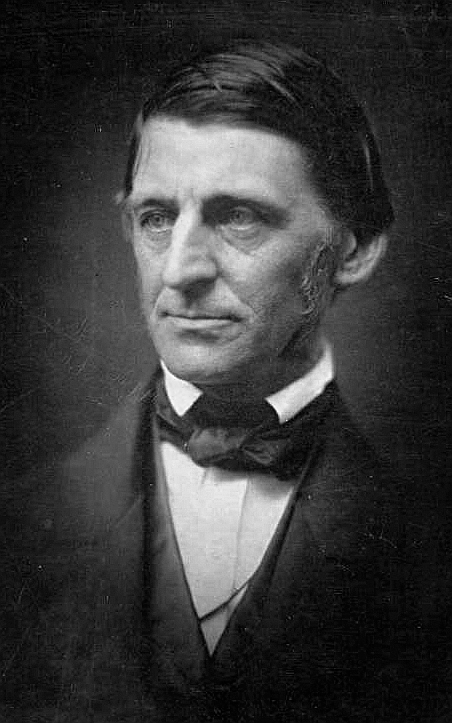
Two other sources for modernist Buddhism are really contradictory: scientism or Enlightenment rationalism on the other hand, and Romanticism on the other. Yet, this in itself shows the modern character of neo-Buddhist discourse, since the opposition between scientism and Romanticism is typical of Western modernity (or its more intellectual denizens). Connected to Romanticism are perennialism, Jungian psychoanalysis, Neo-Vedanta, Theosophy and the latter´s grand-children in the New Age. I was frankly surprised that many ideas about religion and spirituality that we take for granted are really reworked versions of the opinions of the German Romantics. (Hmmm...) Sometimes, the criss-crossing influences are almost ridiculous. Thus, Ralph Waldo Emerson and other American Transcendentalists believed themselves to be influenced by Hinduism and Buddhism (rather than simply repeating Romantic talking points). Later, modernist Buddhists would repeat *Emerson´s* views as an example of "Buddhism"!
Strictly speaking, there isn´t one monolithic Buddhist modernism, there are many. And while the initial impulse for reform in the Buddhist nations of Asia came from the West, it was quickly taken up by some Asians themselves. McMahan calls this phenomenon "strategic occidentalism" (a kind of strange mirror image of "orientalism"), with Sinhalese nationalist Anagarika Dharmapala in Ceylon as a prominent example. Dharmapala portrayed Buddhism as compatible with Darwinism, science and non-belief in a theistic god, while attacking *Christianity* as superstitious and backward. He even contrasted "Aryan" Buddhism with "Semitic" Christianity, apperently knowing exactly what strings to play when communicating with certain Westerners. Dharmapala was a modernist, but his modernism was nevertheless a different project from Western modernity - an important insight, since today we can clearly see that there are indeed many modernisms, not just one (the Western liberal one).
In contrast to the scientist-nationalist reinterpretation of Dharmapala stands the "occult science" interpretation of Buddhism advocated by Colonel Olcott of the Theosophical Society (whose "Buddhist Catechism" is still used in Sri Lanka - note the Protestant title!) or the perennialist-Romantic view of Zen brought to the United States by D T Suzuki from Japan. (It´s interesting to note that both Dharmapala and Suzuki were at one point members of the Theosophical Society.) What seems to have happened in many cases is that a modernist Buddhism emerging in Asia under Western influence (and Western pressure) was exported to the West by Asians, where Westerners became avid followers, perhaps without understanding that they were simply responding to *Western* modes of thought all along. As already noted, however, the Asians weren´t just passive envoys for this curious process. They wanted to counter Western colonialism and imperialism by selectively chosing modernizing themes to strengthen their own nations. Even the perennial Romantic Suzuki was really a kind of Japanese modernizer, supporting Japan in World War II. Asians still participate in various versions of modernist Buddhism, the current Dalai Lama being a good example.
While the author tries to be as charitable as possible towards the neo-Buddhistas, I must say that their doctrinal innovations are sometimes rather glaring. The most extreme is the Jung-inspired notion that the frequently bizarre deities of Tibetan Buddhism are really just psychological archetypes. The author points out that Tibetan Buddhism (which must look very superstitious to a believer in modern science and very "Catholic" to a modern Protestant) simply couldn´t make it in modern Western circles without this extremely radical (in my view, almost conceited) reinterpretation of "The Tibetan Book of the Dead". (At the same time, the Tibetan case is complicated by the fact that many Westerners *also* want Tibet to be a Romantic pre-modern haven, which ironically could be used by Tibetan Buddhists as an argument for *not* modernizing lest they lose the interest of affluent Westerners looking for noble savages.)
Other innovations include the notion that karma simply means "cause and effect" in the modern scientific sense (hint: it does not), or that dependent co-origination proves the deep ecological worldview. While the latter might actually be "true" in a sense, most forms of Buddhism consider the intricate web of the universe to be a samsaric yoke to be liberated from, not something to celebrate. (The author has managed to find one ancient Chinese form of Buddhism, Huayan, that´s actually "pro-nature", probably due to pre-Buddhist Chinese cultural influence.) As for Zen, it seems that essentially nothing you ever learned about this Sino-Japanese form of Buddhism from a modern Western book is true. Real Zen practice has nothing to do with "spontaneity", becoming enlightened while changing dipers or the art of motorcycle maintenance. (Isn´t Alan Watts the man, then?) Apparently, my favorite novel "Siddharta" by Herman Hesse has very little to do with Buddhism either, due to its perspective of individual seekership without any guru. The fact that most Buddhists in the United States tend to be politically liberal is surely another obvious difference with traditional Buddhism.
What way Buddhist modernism? The book was written 13 years ago. One trend that certainly is still going strong is mindfulness meditation. About five years ago, I ended up at a class for unemployed people in Sweden which featured...guess what...mindfulness. (We only did the most basic drills, as in "lay down on the floor and do nothing", so I didn´t even feel the right modernist-liberal vibes. What a pity.) There is also the persistent rumor that Hillary Clinton lost the 2016 election due to too much mindless mindfulness meditation. Perhaps the author is right when he, somewhat tongue in cheek, talks about the emergence of a "global folk Buddhism", comprising Buddhist or "Buddhist" techniques completely disconnected from the actual Buddhist religion. One also wonders how SJW struggle sessions and cancel culture will affect liberal modern Buddhism in the US, given the compassionate niceness of the latter, perhaps making them easy victims of the SJW juggernaut? The interface between climate protests and Buddhism might also be interesting to look into. The Dalai Lama recently had a video conference with Greta Thunberg. More ominously, a kind of Buddhist fundamentalism is still strong in Sri Lanka, Myanmar and perhaps other places...
It seems everything is in constant flux in samsara, even the dharma.



.png)