Showing posts with label Karelia. Show all posts

Saturday, December 20, 2025

Landet Kalevala


Credit: Urmas 

Har hittat ett nätbaserat finländskt uppslagsverk på svenska. Helt gratis. Nedan en länk till artikeln om Fjärrkarelen (här kallat Östkarelen). Innehåller en del intressant information om området under den sovjetiska tiden. Observera att flera av de lokala kommunistledarna hade svenska namn! 

Den andra länken går till en kort artikel om en märklig episod under första världskriget/finska inbördeskriget/ryska inbördeskriget... 

Östkarelen 

Murmansklegionen

Monday, February 26, 2024

Lilith´s spawn


"Nordiska väsen" is a entertaining book by Swedish author, illustrator and gamer Johan Egerkrans. The topic? Creatures of Nordic, mostly Swedish, folklore. Both the good, the bad and the literally ugly! The first edition was published in 2013. I recently procured the 2023 "jubilee edition", which apparently includes twelve new entries. For some reason, Egerkrans´ works are sold as children´s books, which may explain why I almost missed them! I´m not *entirely* convinced that "Nordiska väsen" is suitable for kids...or even adults, if you think ghouls and hobgoblins are real and haunt your back yard (or is it church yard).

The illustrations are somewhat "non-traditional", but as Egerkrans shrewdly points out, nobody really knows how the creatures of folklore really look like anyway. Besides, what counts as "traditional" might in many cases be national romantic images from the late 19th century (think John Bauer or Ernst Josephson). I´m not an expert on Swedish folklore, but if Egerkrans is to be believed, trolls weren´t seen as ugly or obviously different from humans - quite the contrary, they were often seen as (almost) human-like. Other critters look pretty much as expected: Näcken is green and dangerous, Odin is one-eyed and rides a fast horse, the gnomes are small and grumpy, and so on. 

I was surprised to learn that there are special gnomes associated with ships, and still others with water mills. Indeed, the folkloric imagination is virtually endless. Have you heard about merchildren before, or that some people living in coastal areas claimed descent from such? Did you know that the trolls have dangerous pets, such as hell hounds? Or that the often dangerous and ambivalent creatures of folklore are said to be descended from Adam´s first wife Lilith and her new husband Alför? According to another tale, the critters are spirits who fell out of heaven by mistake (!) during the war between God and Lucifer. Not belonging in hell, but unable to return to heaven, they have settled down in the Scandinavian forests... 

Some of the paranormal folkloric creatures would probably be seen as "cryptids" today, had people still searched for them. One example is the gamm or gam, an enormously large and evil raptor-like bird which preys on cattle. Another is the dragon-like lindorm, which indeed *was* downgraded to a cryptid during the 19th century by the maverick folklorist Hyltén-Cavallius. Other creatures seem to have been similar to modern cryptids from the start, such as the sea-serpent or the kraken. 

Some pagan deities seem to have survived the introduction of Christianity, although demoted to spirit status. Odin´s wild hunt was still seen and heard by the baptized but superstitious peasants, Odin supposedly being cursed (by God?) to search and destroy other spirit-beings until kingdom come. Every church was said to have a supernatural guardian: the spirit of an animal sacrificed when the church was built. It´s not clear from the account whether animals actually were sacrificed in this manner, or whether they were merely thought to have been so. The whole thing smacks of paganism. The goddess Hel lived on in the folklore, since her three-legged hell horse sometimes stalked the countryside. And ancient handaxes sometimes found in the wilderness were interpreted as Thor´s hammer and were said to protect the owner against all forms of malevolent sprites and spirits. 

Does anyone still believe in the creatures described in the book? That´s a good question. At least in my youth, a few people still took reports of Storsjöodjuret (known as Storsie in English) seriously - that would be the monster of Lake Storsjön. Our very own Loch Ness monster! Otherwise, I strongly suspect that the UFO-alien mythology has pretty much taken over everything...

"Nordiska väsen" (2023 edition) is recommended if you understand Swedish and/or like artistic books suitable as collector´s items. 


Sunday, July 16, 2023

Road to oblivion


Credit: Nordisk Film 

“The Eternal Road” is a somewhat peculiar film produced in Finland and Estonia, with dialogue in both Finnish and English. It´s supposedly based on a true story, but that seems highly unlikely. According to all-knowing Wiki, it´s based on a novel, and I suspect the story is “generic”.

The main character, Jussi Ketola, is a Finnish socialist who manages to escape a fascist death squad by running across the border to the Soviet Union, at the time governed by Stalin´s increasingly repressive regime. Since Ketola (against his will) worked for the anti-Communist Whites during the Finnish Civil War, the exiled Finnish Communists in the Soviet Union suspect him of being a capitalist spy…or at least pretend to think so. Ketola is forced to spy for the Soviet GPU instead, who wants to keep tabs on a Christian utopian commune established by American immigrants somewhere in Soviet Karelia.

The Finnish socialist (who speaks good English after working for a period in the United States) rather opts to become a member of the commune. It´s even implied that he converts to the weird Mennonite-type Christianity practiced by the expatriates. Naturally, the Americans are accused of being foreign agents during Stalin´s great purges, and many are executed at the hands of the GPU. For unclear reasons, Ketola is saved at the last moment by Kallonen (his GPU “control”) and later manages to escape back to Finland. The story ends with Ketola´s step daughter, who somehow managed to survive the Stalin years, telling his story.

The first part of “The Eternal Road” comes across almost as an absurd comedy, with the Finnish Communists in Petrozavodsk turning out to be dandified and more interested in partying with the ladies than in class struggle. As already noted, the American Christian socialists (how did they end up in Stalin´s Russia?) look like the Amish, while Ketola jokes with Kallonen, telling him that he is indeed surveilling the local hog, who looks distinctly suspicious. The second part is more tragic, but it´s hardly a surprise that most of the idealist socialists are deported or shot. Indeed, what *is* strange is that Ketola manages to escape through the border zone!

During the Stalin years, tens of thousands of foreign workers did immigrate to the Soviet Union to escape the Great Depression at home, or in some cases to help the Soviet peoples “build socialism”. Many were caught up in the purges. That – and the conflicts between Communists and Whites in Finland – form the backdrops to “The Eternal Road”. I can´t say I was *that* thrilled by this production, but I suppose it could be of some interest to an extreme niche audience…


Monday, January 6, 2020

The mystery of Karl XII


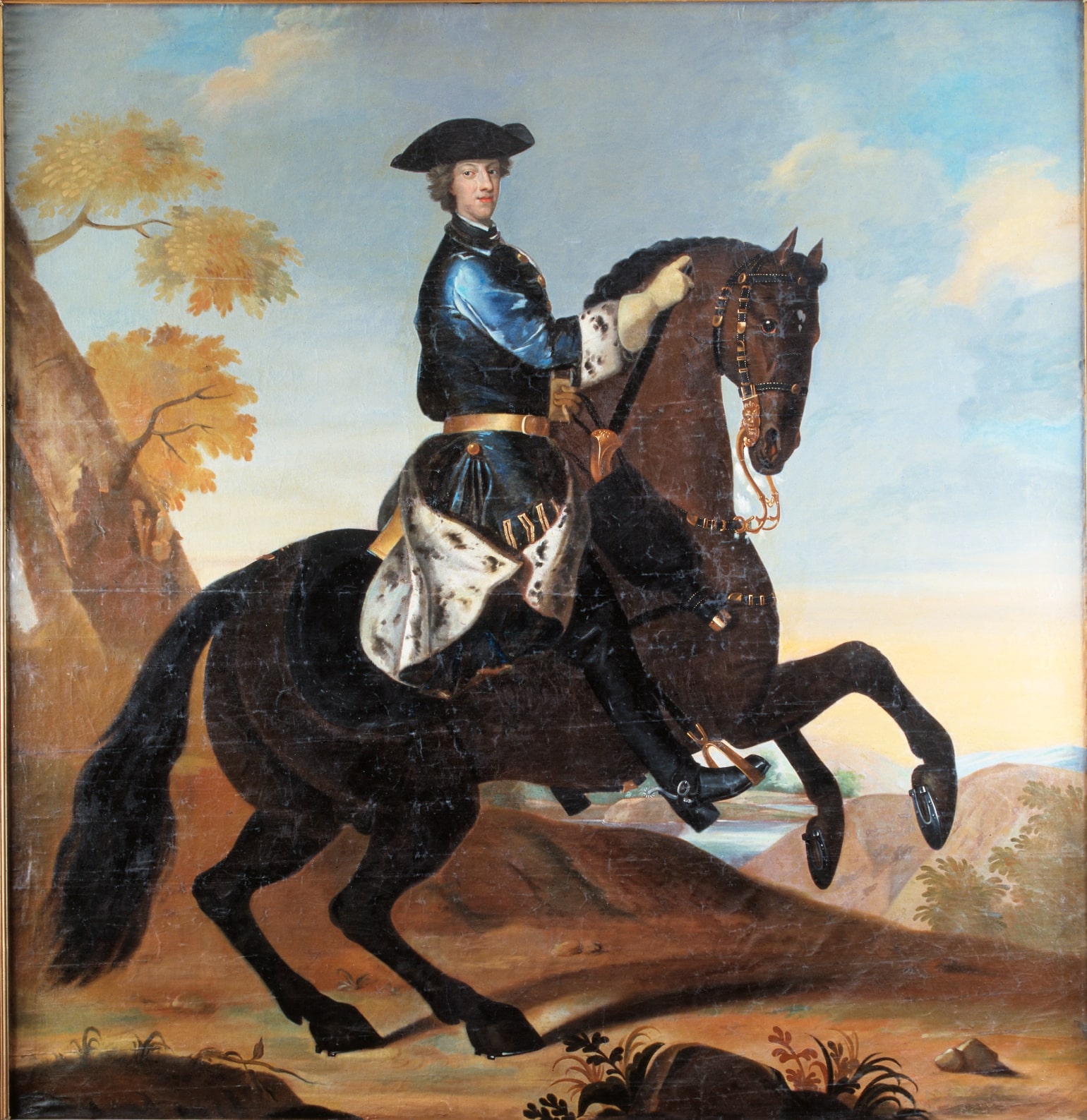
“Karl XII: En biografi” is a biography in Swedish written by Bengt Liljegren. The book was published in 2000. Karl XII (or Charles XII) was king of Sweden from 1697 to 1718. During most of that period, Karl was away from Sweden waging wars in the Baltic provinces, Poland, Germany or Russia. He was also semi-interned in the Ottoman Empire for several years. The “Great Northern War” ended for Karl XII on the 30th November 1718, when he was shot dead in Norway during a siege. The Swedish defeat in the 18-year long war effectively ended Sweden´s great power period, Russia taking Estonia, Latvia, Ingria and West Karelia. Czar Peter the Great built St Petersburg, soon to become the Russian imperial capital, on territory conquered from the Swedes (or reconquered since Russia controlled the area before Sweden´s rise to regional great power status). Sweden also lost some of its German possessions, but was allowed to keep Finland, which had been occupied by Russia during the course of the war. Karl XII´s death also ended the first period of absolutist rule in Sweden, absolutism being replaced by a constitutional monarchy dominated by the Diet or Parliament (“the Age of Freedom”).

In Sweden, Karl XII is still extremely controversial, the “great warrior king” being a symbol for right-wing extremism. When I was younger, left-wing radicals and neo-Nazi skinheads near-rioted on the 30th November every year at Kungsträdgården in Stockholm, where a 19th century statue of Karl XII is located, menacingly pointing eastwards (at Russia). Leftists and liberals have often pointed out how absurd and anachronistic Karl XII is as a Swedish nationalist symbol. The king ruled a multi-ethnic state, many of his officers and officials were foreigners, and he attempted to create an alliance of Swedes, Cossacks, Tatars and Turks against Russia. Tatars and Turks are, of course, Muslim. Liljegren doesn´t mention the old legend that Karl XII brought the Travelers (a kind of Gypsies) to Sweden. At the same time, the slightly trollish liberal take on Karl XII is another form of propaganda, since it´s just as anachronistic to portray the old dictator as “pro-immigration” or “anti-racist” in the modern sense. Paeans to Karl XII have usually been a right-wing preserve, leftists – somewhat strangely – preferring his father, Karl XI (who created the system the son was defending). In his book, Liljegren describes how the views of Karl XII have changed back and forth over the years, among both historians and the public.

Above all, he describes the actual reign of Karl XII. While Liljegren is admirably objective in his style of writing, it´s difficult not to be critical of the monarch after reading the 442-page tome. Since Sweden was attacked by a triple alliance of Russia, Denmark-Norway and Poland-Lithuania-Saxony, one can hardly fault Karl XII for taking up arms in defense of his realm. However, his concrete way of doing so ultimately proved disastrous for both Sweden and himself. Instead of concentrating on defending the Baltic provinces against Russia, Karl spent years fighting a quixotic war in Poland and then attempted to march on Moscow without due preparations. The Russians decisively defeated the Swedish army at the infamous battle of Poltava, forcing the king to flee south to Bessarabia, then controlled by the Muslim Ottoman Empire. After finally returning to Sweden, rather than counter-attacking the Russians (who had occupied half of the then Swedish kingdom), Karl embarked on two equally weird and badly thought-out campaigns in Norway. The entire reign of Karl XII was marked by famine, pestilence and war. 200,000 Swedish soldiers were killed. At the time, the Swedish kingdom had a population of only two and a half million!

I get the impression from Liljegren´s book that while Karl XII was a brilliant tactician on the battlefield (at least in the beginning of the war), his long-term strategy left much to be asked for. Diplomatic finesse he had none. The young king had a reckless streak, constantly being on the attack (literally), even when diplomacy and tactical retreats would have suited the situation better. With more strategic thinking and planning, Karl might have been able to hold on to the Baltic provinces – or at least to Estonia and Latvia. Some of his wilder plans were never put into operation: Karl XII apparently toyed with the idea of invading Britain in alliance with the Jacobites, and also wanted to establish a Swedish colony on Madagascar in alliance with local pirates! Mostly as a thought experiment, he also developed a new numeral system with 64 as its base, a system defended by Emmanuel Swedenborg (the future Seer of the North) in a pamphlet written mostly to show loyalty to the king-dictator. 

What struck me most when reading “Karl XII: En biografi” was the intractable personality of the king. On the one hand, he was authoritarian, unapproachable, inflexible to the point of obsession, and had a sadistic humor. Foreign diplomats described him as unkempt and extremely rude. On the other hand, he clearly had *something* which made officers and common soldiers follow him and trust him, even to the point of death. Some kind of mysterious charisma? Karl XII always dressed in uniform, didn´t wear a wig and kept his hair short – all three things unheard of among contemporary monarchs and aristocrats. This gave him a “plebeian” look. He cultivated an image of being an ascetic warrior, married to his army. Like many other Swedish kings, he also distrusted the higher nobility as a class, much preferring the lower nobility and the commoners. The king was also something of a religious zealot, which gave him a fatalistic outlook on life - everything was preordained by God, so why worry about failure. Above all, he seemed impervious to suffering.

My impression of Karl XII´s personality type is very negative. Was he a sociopath? Or did he have some kind of autism spectrum disorder? What makes the whole thing doubly disturbing is that his inflexible orders were usually followed meticulously, even by people who knew better. Karl XII´s father Karl XI had turned Sweden into a well-drilled militarist absolutist state – and the son was reaping the benefits.  

That is, until the 30th November 1718 (or December 11 according to the Gregorian calendar now in use). For centuries, rumors have claimed that Karl XII wasn´t killed by a Norwegian bullet, but by one of his own people. A French immigrant serving as an officer in the Swedish army, André Sicre, was widely suspected of being Karl XII´s assassin by his contemporaries. Liljegren believes that the king was murdered and that Sicre may indeed have done it. Cui bono? The author regards it as extremely suspicious that Frederick of Hesse – who subsequently became king of Sweden – acted so fast after the death of Karl XII, purging the most prominent Karoline loyalists while buying off the officer corps with lavish gifts. And why had the same Frederick only six months earlier issued instructions about what should be done in the event of the king´s death, instructions never before heard of? And guess who promoted André Sicre? Yes, the very same Frederick… 

If Frederick was the main conspirator, the conspiracy failed after his “Hessian” faction had purged the pro-Karl “Holstein” faction. In the aftermath of the purge, the Hessians quickly lost the initiative to a third group, the “men of freedom”, who abolished royal absolutism. Frederick (who was married to Karl XII´s sister Ulrika Eleonora) eventually did become king, but without much effective power. It should be noted that other historians, including Peter Englund, strongly support the idea that Karl XII was killed by enemy fire.

Perhaps the debate will continue for another 300 years…

Still, if Swedish is your first language, “Karl XII: En biografi” does give a good overview of the life and times of the most divisive king in Sweden´s history. And perhaps his death, too.

Friday, March 8, 2019

Time of troubles, game of thrones


”Den svenske tsaren” by Alexej Smirnov is a book about a Swedish military intervention in Russia. Yes, you heard me right, skipper! Of course, the intervention wasn´t yesterday. It took place during the so-called Time of Troubles in early 17th century Russia, when that country was essentially a failed state. Millions of people died during a famine caused by sudden climate change, Poland-Lithuania and Sweden invaded Russian territory (both Swedes and Poles actually reached Moscow!) and a number of pretenders to the Czarist throne, known as ”the false Dmitris”, marched through the country backed by Cossack troops, looting and burning as they went. Smirnov´s book (only available in Swedish) tries to sort out ”the great disorder” (as the period is called in Sweden) the best he can. It´s not a very pretty or edifying story, but rather a typical game of thrones in which the civilian population always comes up short, killed or victimized by rapacious troops (including ”allied” ones).

At the time, Sweden was ruled by Karl IX, while Poland was controlled by his nephew Sigismund who had also been Swedish king until Karl deposed him. Karl feared that Sigismund´s successful intervention in Russia would turn that country into a Polish asset. Rather than sit idly by and let this happen, the Swedes offered their services to anti-Polish Russian factions. While geopolitics and trade were the main reasons behind the conflict, a religious dimension certainly lurked in the background. Sigismund was a Catholic and closely cooperated with the Jesuits, while Karl was a Lutheran with Calvinist tendencies. Russia was neither and insisted on keeping their own Orthodox Church. The most hard-line Russians feared that their country would be forced to adopt either Catholicism or Lutheranism in the event of an alien victory. When the game of thrones was at its height, an assembly of Russian nobles and notables actually offered to make a Swedish prince Czar of Russia! The prince in question was Karl Filip, son of Karl IX and brother of Karl´s successor at the Swedish throne, the famed Gustavus Adolphus (Gustav II Adolf).

In the end, nothing came out of it. While Smirnov implies that world history could have taken a very different course, his own book suggests the opposite. First, Sweden wasn´t *that* interested in making the young prince Czar of all the Russias (or what was left of them). The main priority was always to secure strategically important border regions and thereby cut off Russia from the Baltic Sea (and the lucrative Baltic trade). Securing a pro-Swedish regime in Moscow was ”plan B”. Also, a Swedish prince as Russian ruler could have created a ”Sigismund situation” whereby a foreign monarch could make more or less legitimate claims on the Swedish throne – not a cherished prospect in Stockholm. I think Sweden was content when Russia defeated the Polish invasion forces while the Swedes were granted territorial concessions in Karelia, Ingria and so on. It´s not even clear whether Sweden had the resources for another military expedition to Russia – judging by the book, the mercenary soldiers always mutinied due to insufficient payment, large portions of the border regions had been laid waste by plunder already, and the people of Finland (then part of the Swedish kingdom) were sick and tired of financing the upkeep of large armies stationed in their provinces. When the Cossacks forced the boyars to elect Mikhail Romanov Russian Czar, Sweden didn´t have much choice than to acquiesce.

The author seems obsessed with the idea that Sweden should have become part of a larger union, either with Russia or with Poland-Lithuania. He constantly refers to Sigismund as the ”legitimate Swedish king”, as if any 16th century Swedish king was ”legitimate” – the entire Swedish kingdom was ”illegitimate” in itself by overthrowing Christian II, the last king of the Kalmar Union. But then, who knows, maybe Smirnov likes the Kalmar Union…or the European Union. (Sigismund wasn´t legitimate in the narrow sense either, but that´s for another time.)

Sunday, September 23, 2018

Kalsi's Kalevala


My review of "Corrosion" by Johan Kalsi.

I don't understand all the conflicts surrounding this book. Johan Kalsi exists. He is a real person. In fact, this 200-pound Finnish elite ranger is a personal friend of mine. He has the strength of Ilmarinen, the bright intellect of Väinamöinen and the political acumen of Mannerheim himself. On his forehead, he wears a tattoo of the Sampo. When I last met Commander Kalsi, at a get-together of Karelian war veterans, he pointed eastward and said: “The Ural Mountains form the natural borders of Greater Finland!” I believe this novel is an allegory of what Uralic omni-nationalists will do when the Russian empire finally corrodes.

Friday, September 21, 2018

The Vyborg Blast


A mini-essay I posted on Amazon.

This is the flag of Vyborg, known in Swedish as Viborg and in Finnish as Viipuri. Currently Russian, the town has historically been on disputed territory and fought over by Sweden, Finland and Russia. It's situated on the Karelian Isthmus. Vyborg Castle was founded by the Swedes in 1293 during one of their Northern “crusades”, ostensibly to convert the heathens of Karelia, but actually to create a trading outpost and border fortress, directed against Russian Novgorod. The outpost eventually turned into a settlement, and got officially incorporated as a town in 1403. The coat of arms, showing the letter W and three crowns, is from the same period. The three crowns are an old symbol of Sweden.

Vyborg played an important role in Swedish history, indeed, it was often seen as one of the most important towns (despite a relatively low population) due to its function as a trade hub and potential launching pad for further military expansion eastwards. Various weird legends grew up about the Eastern Swedish bastion, for instance the claim that commander Knut Posse used black magic to defend it from a Russian attack in 1495! The event is known as the Vyborg Blast. While the Russians may indeed have been scattered by an explosion of some sort, the story certainly didn't lose anything in retelling... As in any good frontier town, Vyborg's population had the reputation for being constantly drunk, vulgar, prone to fights and sexually licentious. Priests were profaned in the middle of their preaching, and even the upper class ladies were notorious for heavy drinking and profanity (and for claiming that women could be priests).

The rest of Vyborg's tortured history need not detain us here, suffice to say is that it definitely became Russian after World War II, but still uses the Swedish-period coat of arms and a flag based on the same.
Five stars!

Reconquista, when?

Thursday, September 20, 2018

Not a Quisling, but a Kuusinen


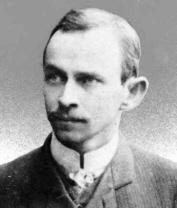
This is a pamphlet written by Finland's very own Communist Quisling, Otto Kuusinen. His main claim to fame was achieved during the Winter War between Finland and the Soviet Union in 1939, when Kuusinen became the “prime minister” of the short-lived “Finnish Democratic Republic” set up at Terijoki by Stalin's advancing Red Army. Claiming to be the legitimate Finnish government, Kuusinen's regime never succeeded in establishing control over all of Finland and disbanded already in 1940. Instead, the territories occupied by the Soviets were amalgamated with Soviet Karelia to form the “Karelo-Finnish Soviet Socialist Republic”, a “republic” of the USSR. Kuusinen was appointed head of the new republic, but far more important was his position as member of the Politburo, the highest leadership body of the Communist Party of the Soviet Union. In plain English, Kuusinen worked directly under Stalin himself, which may explain why not even the Finlandized Finland after World War II wanted him back! The old traitor had to remain in Moscow.

This particular pamphlet was published in 1944. Originally in Russian, the English translation is published by a British group which un-ironically called itself “Russia Today” or “The Russia Today Society”. (I assume “Russia Today” was a Soviet magazine.) In 1941, Finland had joined with Hitler's Germany in its attack on Stalin's USSR. After the Nazi defeat at Stalingrad, however, the Finns began to seek a way out of the war. My guess is that Kuusinen's text was reprinted in Britain by Communist sympathizers who didn't want Western public opinion to look favorably on Finland in the event of a Finnish break with the Nazis. Kuusinen says that the leaders of Finland “shall answer for their crimes with their heads”, wants “a secure guarantee” that Finland never attacks Russia again, and calls on the Finnish people to overthrow the government by force. All code for Communist invasion…

It's interesting to note that the introduction to this edition was written by Ivor Montagu, a British filmmaker and Communist who was briefly also a Soviet spy (according to the Venona transcripts). In an oblique way (“somehow Finnish democracy must be made real not fake, somehow Finland must become a good neighbor”), he too calls for the Sovietization of the country.

The pamphlet itself is relatively uninteresting, essentially a rendering of Finnish interwar history from a Communist perspective, with the Hitler-Stalin pact thrown down the memory hole. Yet, it was this pact which triggered the Winter War and led to the formation of the Terijoki government! Not the most interesting read around, and I only give it two stars.

Wednesday, September 19, 2018

Soviets in the land of Kalevala


Some reflections I posted on Amazon...

This is the flag of the Karelo-Finnish Soviet Socialist Republic, a largely artificial “republic” within the Soviet Union which existed from 1940 to 1956. The flag itself was adopted in 1953. This long-forgotten entity was formed by the merger of the Karelian Autonomous Soviet Socialist Republic (also part of the Soviet Union) with the Finnish Democratic Republic, an “independent” state created by Stalin on Finnish territory conquered during the Winter War.

That the “independent” Communist state in southeastern Finland was so swiftly incorporated into the USSR, might perhaps tell us something about Old Joe's designs in the event of a complete Soviet victory over the Finns…

That being said, I admit that the design is pretty good. The green symbolizes the forests and the blue the lakes, both forest and lake being staples of Finnish national identity (or at least national romanticism). This is, in effect, the flag of soviets in the land of Kalevala!

Monday, September 17, 2018

Another unknown people


A review of the Veps flag. 

This is the flag of the Veps or Vepsians, a small ethnic minority in Karelia and other Russo-Finnish border regions. The Veps live on the Russian side of the border. The Veps language is closely related to Finnish and Karelian.

The flag was adopted in 1992 at the Vepsian Summer Festival in the village of Kalajoki (Rybreka) in East Karelia. In 1994, the Vepsians living in East Karelia were granted their own national commune, which enjoyed a certain amount of autonomy within the “Republic of Karelia”, a subject of the Russian Federation. Apparently, the Vepsian national revival was short-lived, prompting the Russian-dominated republican authorities to abolish the national commune in 2006.

The flag's present status is unknown, but it's listed as the Vepsian flag on several websites. It's a typical Nordic cross flag, and could be inspired by the unofficial flag of East Karelia (which is green with a red-black cross). The flag supposedly symbolizes the forests, fields and rivers of the Vepsian regions.

Some Vepsians in East Karelia consider themselves a separate group, known as Ludians, and use a green flag with a red-blue cross.

Just so you know.

Thursday, September 13, 2018

Winter war beetles


"Ground Beetles (Carabidae) of Fennoscandia. A zoogeographic study" is a three-volume study by Carl H. Lindroth, originally published in German in 1945. (Lindroth himself was Swedish.) This English translation from 1988 was made by the Smithsonian Institution Libraries and the National Science Foundation as part of a program to translate valuable foreign-language scientific literature. Apparently, the original was published with the support of Längmanska Kulturfonden. Thank you.

Lindroth must have been some kind of grand old man of carabid studies, since he also wrote "The Ground Beetles of Canada and Alaska", something the editor Terry L. Erwin fondly remembers in a foreword to this translation of Lindroth's work on Scandinavian beetles. Erwin met Lindroth when the Swede was in Alberta, collecting...well, ground beetles (what else?).

The three volumes of "Ground Beetles of Fennoscandia" are divided as follows. The first volume contain species presentations, the second volume only contain range maps, while the third and concluding volume has the subtitle "General Analysis, with a Discussion on Biogeographic principles". There are both maps and graphs in these volumes, but - curiously - not a single illustration of a ground beetle!

The books cover Fennoscandia: Sweden, Norway, Finland and the Russian sectors of Lapland and Karelia, east as far as the line Swir-Onega-Lake Wyg (Uikujärvi)-Wyg River-Soroka. The book also covers Denmark, which is not really part of Fennoscandia. The old national borders (1939) are used, despite the book being published in 1945. Was the author a secret admirer of Mannerheim?

I don't deny that this work is a veritable treasure-throve of information for revanchist entomologists who want to resurrect Greater Finland, but it's not suitable for the general reader. Still, I give citizen Lindroth's work four stars for the effort. The effort to describe the ground beetles, obviously!

Counter-revolutionary mosquitoes


The scary-sounding title of this work is "Blood-sucking mosquitoes of the subtribe Culisetina (Diptera, Culicidae) in world fauna". Even scarier, it was originally published in Leningrad in 1967 by A.V. Maslov. The English translation is from 1989, financed by the Smithsonian Institution and the National Science Foundation.

The foreword feels extremely "Soviet". Instead of scientific information, Maslov opens by pointing out that mosquitoes attacks labour brigades in Siberia and diminish their productivity. He has personally witnessed this during studies of the Eleventh Forest-Cutting Brigade in the Vyazensk district of Khabarovsk region. The same problem has also been documented from Arkhangelsk and the Karelian Autonomous Soviet Socialist Republic. Even worse, milk yields from collective farms get lower when the cattle are pestered by the blood-sucking insects. Maslov just can't admit that he's a nerd caught in his bug period!

But then, who wants to end up in Siberia?

The rest of the book is extremely boring and technical, although it seems to be about the actual mosquitoes...

Saturday, August 11, 2018

Vladimir Nabokov


“Mammals of the Soviet Union” is the English-language version of an originally Soviet work in three volumes. The English translation dragged on for an additional two volumes, and it's not entirely clear whether the whole work was ever translated. To complicate matter further, the original work was unfinished and hence didn't cover literally all mammals of the (former) Soviet Union. Rodents, baleen whales and lagomorphs, among others, were not included. The work was overseen by V G Heptner (spelled Geptner in some library systems), the grand old man of Soviet zoology, and came to a screeching halt at his death in 1975. Despite this, and despite being very dated, the encyclopedia is still of considerable interest to scientists studying the Mammalia.

This is “Volume II, Part 2”, covering part of the Carnivora, more specifically hyenas and cats (felids). The original was published in Moscow in 1972. Heptner and A A Sludskii are listed as editors, while the illustrations are credited to A N Komarov and N N Kondakov. The scientific editor of the American translation is named Robert Hoffmann.

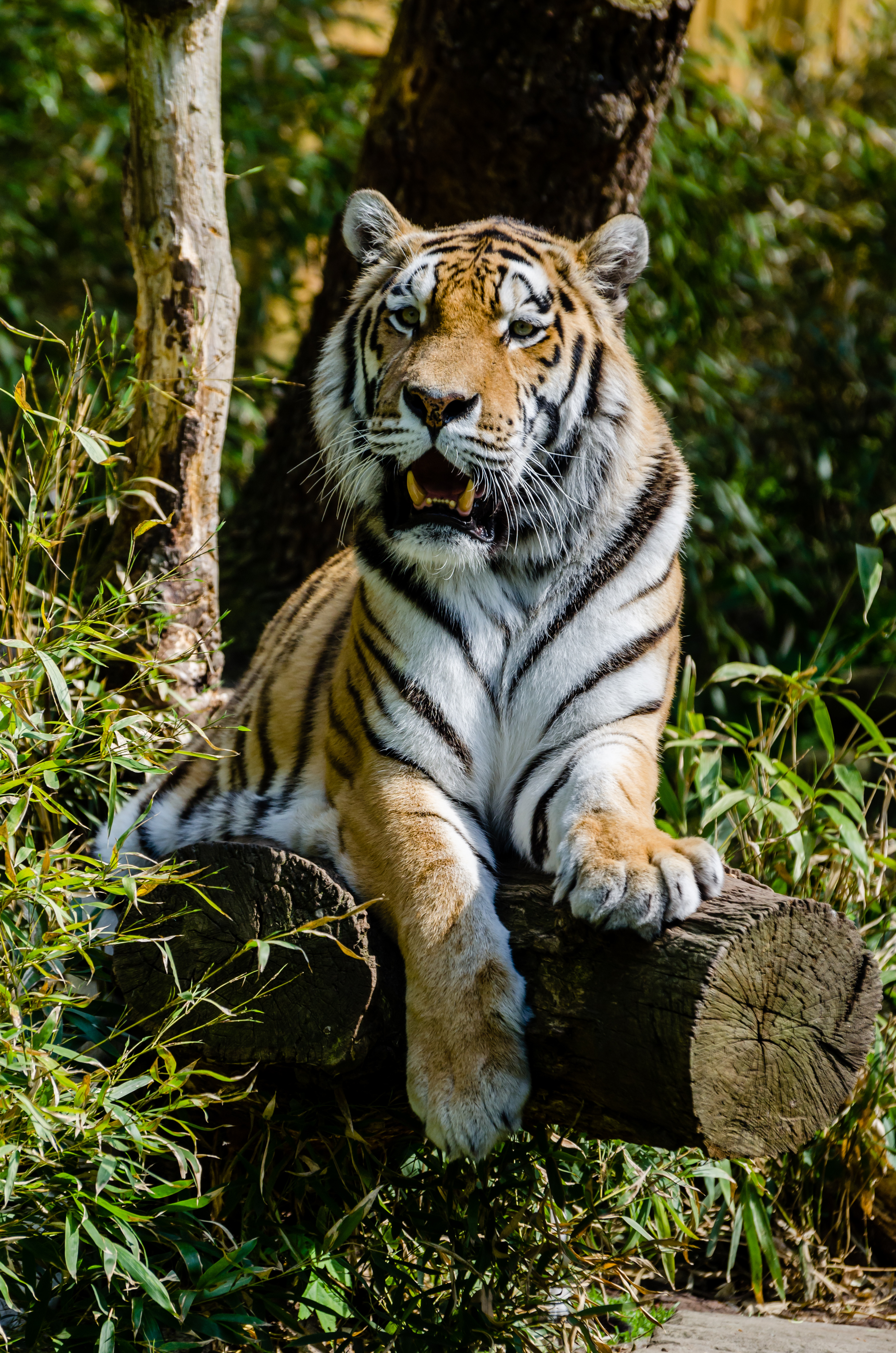
Some species dealt with in this volume may strike the unwary reader as surprising. In the West, we're used to see lions, leopards, cheetahs and hyenas as part of the charismatic African “megafauna”. Yet, the range of the lion extended all the way to the Caucasus until the 10th century, when it finally disappeared from the territories covered in this book. The cheetah can be found in Central Asia, the leopard in Central Asia, the Caucasus and the Russian Far East, and the striped hyena in the Caucasus and Central Asia. Since all these areas were part of the Soviet Union, these “African” mammals have found their way to the present volume.

The chief editor, Heptner, shows his “Russian” credentials when he rejects the vernacular name “gepard” for the cheetah, with the argument that it's bookish, artificial and a Western borrowing. He wants it replaced with “pardus”, a word found in old Russian chronicles!

The amount of information found in this volume is almost ridiculously detailed, and naturally, so are the references. How about Muminov's presumably classical 1967 study, titled (in Russian) “A new species of nematode (Troglostrongylus badanini sp. nov.) from the bronchi of jungle cat Felis (Chaus) chaus chaus Güldenstaedt 1776”, published in Dokladi AN UzSSR, Tashkent. A lot of “chaus”, there. Another favorite reference of mine is a book by one Mazák on the tiger, dutifully published in Wittenberg-Lutherstadt, and an article on the lynx published in a Soviet daily paper, Gazeta Leninskaya Pravda on March 24, 1956. Place of publication? Petrozavodsk in Soviet Karelia! Heptner's secretaries must have scanned the entire length and breadth of the Union (the Soviet Union, that is) for any conceivable tidbit of information on felids…

The most obscure source is a book by Vladimir Nabokov, “The Song of Igor's Campaign”. Nabokov is, of course, otherwise mostly known for his novel “Lolita”! I'm not entirely sure why this bête noire (pun intended) is included in an encyclopedia of Soviet mammals, but perhaps Igor was accompanied by big cats?

Probably indispensable if you are a big cat nerd, but otherwise, this might be just a bit too much to handle…

Yes, White Sea roundworms


Roundworms (Nematoda) is a group of mostly parasitic worms found pretty much everywhere. Naturally, Russia and the former Soviet Union haven't been spared the tremors. “Nematodes and their role in the Meiobenthos” is a book by T A Platonova and V V Galtsova. The Russian-language version was published by Nauka in Leningrad back in 1976, while the translation is dated 1985. For some reason, it's printed in Faridabad, India. The book is marked Volume XV (XXIII) of “Studies on Marine Fauna”, or rather “Issledovanie Fauny Morei”. It includes two highly technical sections, “Lower Enoplida of the Seas of the Soviet Union” and “Free-living marine nematodes as a component of the meiobenthos of Chupa inlet of the White Sea”. The illustrations are black-and-white drawings of (scary) diagnostic characters of nematodes. We're talking parasitical worms here, remember?