Showing posts with label Malta. Show all posts

Friday, April 17, 2026

Apocalypse not


- Yeah, I´m an extinct Giant Swan from Malta,
so how does this Hormuz opening help me?

So apparently the Strait of Hormuz has been opened. For ten days. Because of something in Lebanon. Maybe. Don´t get me wrong, but does anyone even care anymore? 

Saturday, May 3, 2025

Fria Greta


Fria Tider är i själva verket anti-israeliska, så i något slags teknisk mening har de hamnat på samma sida som Greta Thunberg här. Vilket de jävla fjollorna dock aldrig kommer att erkänna... 

Greta: Chockerande attack 

Saturday, January 14, 2023

The 100,000 year problem


So during the Middle Pleistocene, swans on Malta were lager than elephants living on the same island?!

Gotta love the Demiurge!

Human image for comparison above. Not sure if any human actually saw these wonderful creatures, though...

Wednesday, February 16, 2022

On the diffusion of giants


The Irish occultist Thomas Sheridan is in very good shape here, as he moderates a discussion with Brad Olsen, an American author of whom I know almost nothing. Judging by the titles and covers of his books, Olsen is also an occultist. The exchange in the YouTube "symposium" above is about "suppressed human origins and ancient America". 

In one hour, Olsen, Sheridan and a third guy named Jason manage to cover a surprisingly wide array of alternative topics. Did the Vikings reach much further south than official archeology and history believes? What about the Knights Templar? Did Phoenicians reach North America during the Bronze Age? What about the Red Paint People in Maine, Kennewick Man in Washington State, or legends in the Southwest according to which the Hopi and the Zuni are indigenous, while the Navajo are not? Casting their net even wider, the contributors then discuss "elongated skulls" and "giants" (weirdly, they never once say the word "Nephilim"), not just in the Americas, but also at the Mediterranean island of Malta. 

A catastrophist scenario is proposed, and the discussants wonder why the establishment refuses to accept pre-Columbian contacts (except a few stray Vikings), giants, Atlantis, and so on. The conclusion reached is that modern civilization simply cannot tolerate the idea that there have been other relatively advanced cultures (or even intelligent species) before our own, since that means we´re not "special" anymore. The American (White Christian settler) idea of "Manifest Destiny" could be another culprit. (I could add that it´s probably a mix of "Biblical" themes and the modern idea of progress.) 

While I can´t say I believe every word of these autodidacts, I might be *somewhat* more positive to these kinds of speculations than, say, five or ten years ago. I obviously don´t believe in the "alien" or "starchild" connection made by Olsen. There are no aliens. However, I noticed a certain tendency in official archeology. American pre-history just keeps getting longer and longer, never the other way around. Kicking and screaming, archeologists have been forced to admit that human settlement in the "New World" isn´t particularly recent. There must have been several migrations across the famed Bering land bridge, not just one. At the periphery of official science, various anomalies keep turning up, such as "European" or even "Australian Aboriginal" genes in some American Indian tribes, "Solutrean" points in America, and what have you. And beyond that periphery, or is it pale, who knows? New human species have been discovered, including the dimunitive Flores Man, so why can´t there have been "giants", as well? 

With those remarks...have fun with this content!  


Saturday, September 8, 2018

Worth waiting for


OK, I admit it. I'm a geek. About a year ago, I tried to set some kind of world record here at Amazon, posting 84 cranky reviews in a row. I also expressed my great sorrow and disappointment that our favourite vendor wasn't selling the 15-volume mastodon work "Noctuidae Europaeae". I mean, imagine what I could have done with *them*? However, it seems the gods have been smiling at me this week, because guess what showed up at the Amazon horizon?

Yes, you guessed it: "Noctuidae Europaeae. Vol 4. Hadeninae I." by Hermann Hacker, László Ronkay and Márton Hreblay, published by Entomological Press at Soroe, Denmark in 2002. A unique Hungarian-Danish co-production, I'm sure. And in the English language, to boot! I mean, my Hungarian *is* a bit rusty...

The in-house character of the book becomes readily apparent already at the dust jacket, which shows a painted self-portrait of a 20 year old Hermann Hacker back in 1971, and a photo of an 18 year old László Ronkay from 1973. The self-styled "Editor-in-chief", Michael Fibiger, starts off the preface with the words: "Hadeninae I - Finally! The editorial board and authors are pleased to present this long-awaited volume in the series Noctuidae Europaeae, scarcely a year after the publication of the previous volume, Hadeninae II. Although in preparation for many years, part of the delay has been waiting for the completion of revisions of large genera and tribes in the old sense Hadeninae, which of course include large numbers of extra-limital, non-European species".

Of course.

I also note that the encyclopaedia is funded by...wait for it...the Carlsberg Foundation. Carlsberg really is the best beer in the world.

So what's all the fuzz and buzz about, then? What are the Noctuidae? Well, they are...you know, moths. Owlet-moths, to be exact. Yes, we are talking about a 15-volume encyclopaedia covering all species of owlet-moths found in Europe. And this is all bankrolled by the same guys who gave us Danish ale! :D

Of course, this makes the potential readership of "Noctuidae Europaeae" rather narrow, and I don't think the present volume is an exception to the rule. "Hadeninae I" covers the tribes Hadenini and Mythimnini. Causal readers better get to learn fancy-sounding words such as subgenus, paneremic, nominotypical, turanoeremic, saccular, fascia, crenate and synonymy. All this just from the first entry, about the truly exquisite owlet-moth Hadula (Hadula) sabolurum pulverata (Bang-Haas 1907). It's only been found once in Europe, at the Maltese Islands, but is included anyway. Incidentally, in this book, Europe really means Europe, all the way to the Urals and the Caspian Sea.

Each species presentation contains sections on Taxonomy, Notes, Diagnosis, Bionomics and Distribution. Range maps are included. The photographic colour plates show the poor moths in pinned, stiffed, unnatural position. Yepp, it's a science books! Let me guess. The moths were "sugared" with Carlsberg beer? There are also plates showing genitalia figures, for identification purposes only.

Obviously, a tour de force of this kind is bound to be based on some really obscure source materials. Thus, there is Beshkov's 1995 article "A contribution to the knowledge of the Lepidoptera fauna of Albania. Some findings of a collection trip in September 1993", published in "Atalanta", issue 26. Or how about the 970 pages long work by E. Berio, "Noctuidae I. Generalità Hadeninae Cuculiinae. Fauna d'Italia. Lepidoptera", published in Bologna by Edizione Calderini. Can I review it, please? But the real scorcher is surely a Swedish book from 1840 by one J W Zetterstedt, "Insecta Lapponica" at 1,140 pages sharp. I didn't even knew there were that many bugs in Lapland!

For the general reader, this is a no-no, especially at the price of 235 dollars just for this single volume, but if you are an owlet-mothing geek, an associate professor of entomology in Albania, or an insane Amazon reviewer, "Noctuidae Europaeae" probably is a must-have.

Just don't tell me I didn't warn you!

Friday, August 24, 2018

The "unknown" crusaders


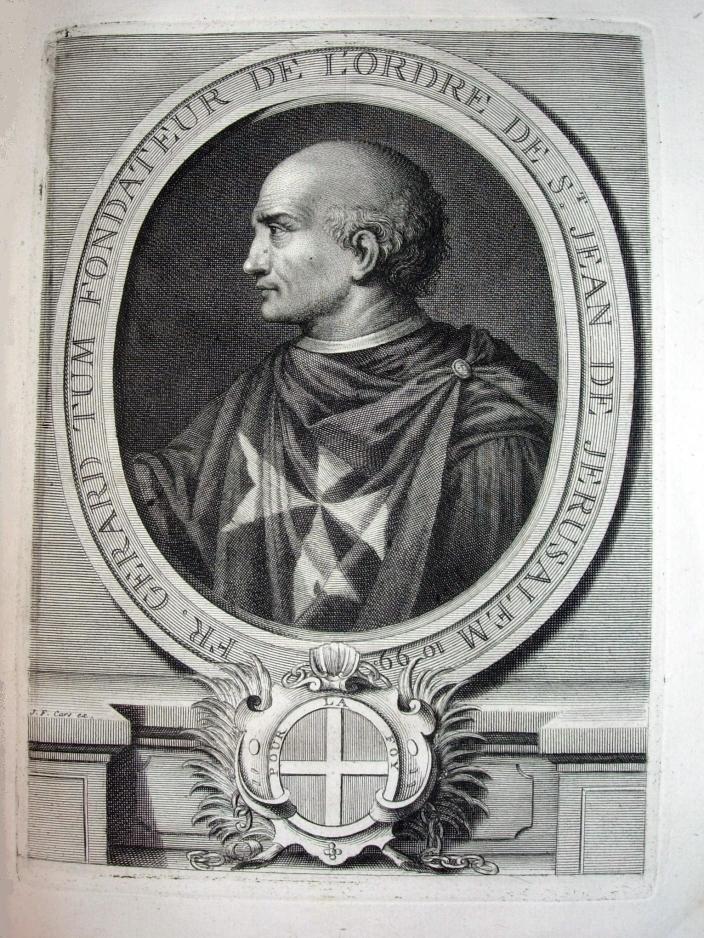
“The Knights Hospitaller” by Helen Nicholson is an excellent overview of the “Sovereign Military Order of St John of Jerusalem of Rhodes and of Malta”, the rather unwieldy official name of this fraternity at the present time. Originally, the Knights Hospitaller really were a Catholic-manned hospital catering to pilgrims in 11th century Jerusalem, already before the conquest of the city by the crusaders. At some point during the 12th century, the Hospital became militarized and eventually grew into one of the “classic” crusading orders, alongside the Templars and the Teutonic Knights. Apart from defending the crusader states and Cilician Armenia, the Hospitallers participated in military activity in Spain, Hungary and Poland. They operated a network of hospitals in both Palestine and Europe. To finance their military activities, the Knights owned vast estates in Europe, operated mills, dug mines, bought and sold their products at special markets, and lent money to kings. Many Hospitallers served as advisors or administrators at royal courts, and for some time most of the Papal States were administered by local officials drawn from their ranks.

After being driven out of Palestine by the Muslims, the Hospitallers established themselves first at Cyprus, then at Rhodes and finally at Malta, where they became known as the Knights of Malta. Their main activity during the 16th, 17th and 18th centuries was harassment of Muslim (Ottoman) shipping, interspersed with occasional attacks on the Ottoman-associated Barbary States in North Africa. In 1565, the Ottomans attempted to conquer Malta and destroy the knights, an attempt that spectacularly failed. The Knights of Malta participated in the famous Battle of Lepanto in 1571, when the Catholic powers routed the Ottoman fleet.

Ironically, the Maltese knights were later seen as a nuisance by the Christian states. The Hospitallers often attacked Christian vessels trading with the Muslim Ottomans (especially Venetian ships), or leased out their right to attack Muslim or “pro-Muslim” Christian shipping to people who were no better than pirates. When the Ottoman Empire stopped expanding in Europe, it became an on-off ally to various European powers, who often viewed Russia as a bigger threat. The Knights Hospitaller and their crusading zeal against the infidel had become an embarrassing anachronism. In 1798, Napoleon finally conquered Malta and forced the Hospitallers to leave. For a while, their order was based in Russia under the protection of the Czar! The order still exists and even enjoys extra-territorial status in many countries, but today's “knights” are a purely charitable institution.

A particularly interesting chapter in Nicholson's book deals with the organization and spirituality of the Knights Hospitaller. Apart from the actual knights, the Order had female members serving in the hospitals, and various kinds of supporters and sympathizers. The members of the Order, including the warriors, were supposed to follow the monastic rules of celibacy, poverty and obedience. Those joining the Order were often from the lower knightly class, and hence could use the Order as a path to advancement into the real nobility. The houses of the Order took care of orphans and abandoned children, some of whom joined the knights at adulthood. The Knights Hospitaller also owned Muslim slaves. A Muslim slave who converted to Christianity had to be set free, so the Hospitallers didn't encourage such conversions. Perhaps for this reason, the slaves were permitted to have their own imams! As for Hospitaller spirituality, it's interesting to note that this Catholic Order permitted Protestant branches after the Reformation, and for a period was under the protection of an Orthodox Czar. The main Catholic branches emphasized the cult of holy relics, including those of St John the Baptist, the patron saint of the Order. The relic cult eventually made the Knights of Malta look somewhat archaic even in the Catholic world. More up-to-date was the decision to invite Renaissance and Baroque painters to Malta. Caravaggio painted one of his masterpieces, “The Beheading of Saint John the Baptist” during his stay on the island.

The Knights Hospitaller tend to be overshadowed by the Knights Templar, no doubt because of the aura of mystery and heresy surrounding the latter group. Yet, the Knights of St John actually survived for a longer period and were active at more military theaters. Incidentally, there are conspiracy theories about the Hospitallers, too. Just ask your local unfriendly LaRouchian or Bircher! You won't find the conspiracist subculture in this book, however.

Helen Nicholson's “Knights Hospitaller” fills a gap in this public (non-)perception, and I therefore chivalrously award it five stars.