Showing posts with label Valentin Tomberg. Show all posts

Wednesday, August 2, 2023

Lost in the immensity


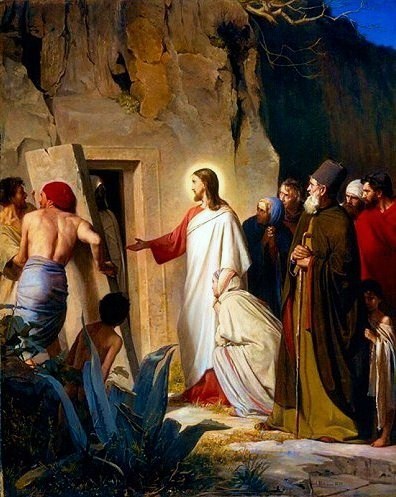
A little report from the trenches. I haven´t found my ishta-devata yet. So I´ve been reading about Martinism (all three versions) and now I´m preparing to devour a book about the Ismailites. I´m also trying to re-read Valentin Tomberg´s "Lazarus, Come Forth". Wish me luck, guys. And no, I haven´t asked Ganapati yet, I prefer to eat my sweets myself, thank you! 

Thursday, September 6, 2018

Valentin Tomberg, come forth!


Valentin Tomberg was an independent-minded Anthroposophist who later converted to the Catholic Church, and attempted to combine Catholicism with Christian Hermeticism. His most well-known work, "Meditations on the Tarot", was published anonymously. "Lazarus, Come Forth" is another important work, also published under the title "Covenant of the Heart". Tomberg's books are complex and hence difficult to review. They are also difficult to read cover to cover. This edition of "Lazarus, Come Forth" is published by Lindisfarne Books. It mentions both Tomberg's earlier, Anthroposophical writings, and those of his translator Robert Powell, who I assume is a maverick Anthroposophist.

One difficulty is the previously mentioned attempt to combine traditional, pre-Vatican II Catholicism (including papal supremacy and infallibility) with ideas derived from various occult traditions. Although Tomberg had left the Anthroposophical Society, the book even contains positive references to Rudolf Steiner. It sounds a bit disingenuous when Tomberg first attacks those who question papal monarchy and the pope's God-given right to interpret doctrine, only to later reveal his belief in a hexadic godhead with three feminine aspects in addition to the three masculine ones of the Trinity. He also tells us that YHVH is an angel rather than God himself, implies that reincarnation is real, and interprets various aspects of the Kabbala. The need to study the writings of Origen is seen as self-evident, despite this Platonizing Church Father being pronounced a heretic by the Catholic Church! One annoying aspect of Tomberg's thinking is the strong emphasis on hierarchy, with its concomitant attacks on democracy and (surprise) socialism.

The author accepts the reality of evolution, but believes that evolution is almost literally evil. It's the path of the serpent, promising a false salvation: "Ye shall be as gods". Evolution is purely "horizontal", meandering, and leads to constant competition, destruction and suffering. It's logical endpoint is Hell, or perhaps hell on Earth, when the human collective becomes "god without God". True Christianity represents salvation and liberation from evolution and the entire material universe of deterministic cause-and-effect. It's a new force, almost alien, which miraculously irrupts into our world so to speak from the outside. Salvation lay in a higher realm of divine archetypes, of which Nature is only a pale reflection, distorted by the snake. Tomberg affirms both the cataphatic and apophatic paths, but he clearly views the latter as higher and more important, it being the true path to salvation as exemplified by Dionysius the Areopagite and John of the Cross. The author also emphasizes that salvation is individual, with the collective representing materialism and death.

I get the impression that Tomberg's perspective is really a form of world-denying Gnosticism, with the world being created by the Devil. There are no solutions to this problem, except escape...

The above is based on those parts of the book I've read and (perhaps) digested so far. I'm sure there are other aspects of "Lazarus, Come Forth" which I might have missed. Although Tomberg does say interesting and profound things from time to time, I can't say I like the overall context. It's too conservative, too Gnosticizing and very eclectic. It resembles the Traditionalism of Guénon to some extent, although I suspect Tomberg's interests in various modern forms of occultism, not to mention his support for the Jesuits, is enough to place him beyond the pale in such circles...

In the end, I give Valentin Tomberg's meditations three stars.

From Russia with love


"Russian Spirituality and Other Essays" is a book containing articles by Valentin Tomberg, a Russian-born esotericist who started out as an Anthroposophist, but later converted to Catholicism, which he attempted to amalgamate with Hermetism. Tomberg's most famous work is "Meditations on the Tarot", published anonymously. "Russian Spirituality", by contrast, contains relatively unknown articles written during the 1930's, when Tomberg was still an Anthroposophist.

The articles are extremely difficult to comprehend, unless you are very familiar with the Anthroposophical worldview. In the main essay, Tomberg discusses how Anthroposophy could be introduced into Russia, reaching the conclusion that it must somehow be connected to the thought of Vladimir Solovyov. The Russian sage spoke about Sophia, and this "semi-incarnate" spirit-entity has now appeared on Earth in the form of Anthroposophy (Anthropo-Sophia). This balance between individual freedom and social cooperation is threatened by the utter materialism of Bolshevism, but also by "Chinese" or "Mongolian" spirituality which Tomberg fears might replace (or fuse with?) Bolshevism.

Unfortunately, Tomberg lost me about here, and I didn't really comprehend the rest of his work...I'm not sure how to rate a book I don't really understand, but since I don't wish to scare off anyone interested in Tomberg, I eventually decided on the OK rating (three stars).

Friday, August 31, 2018

Dear Valentin Tomberg


This was written in 2013. Today, I would probably be less skeptical to this kind of material. 

I posted a review of this curious book here at Amazon two years ago. At the time, I had only read about 100 pages. By now, I suppose I have devoured another 100! "Meditations on the Tarot" is a fascinating attempt to create a synthesis of Christianity, Hermeticism and the cosmic evolutionism of Anthroposophy. Of course, some people would argue that this is simply a home-coming for Hermeticism, which in its modern Western form has been Christian or "Christian" from the Renaissance onwards. The "anonymous" author of "Meditations", Valentin Tomberg, was an Anthroposophist who developed differences with the orthodox line of Dornach and eventually joined the Catholic Church. Indeed, his book has an afterword by Hans Urs von Balthasar (!), an important Catholic theologian and associate of then-cardinal Ratzinger. But while interested Catholics might imagine that Tomberg's oeuvre was a clever way of converting occultists to Catholicism, the opposite is more likely: the author was an occultist mole within the bosom of Mother Church. Of course, it's possible that Tomberg didn't see any contradiction between exoteric Catholicism and esoteric Hermeticism-evolutionism, but that would hardly be the "official" position of the Vatican.

Indeed, this is the most annoying aspect of "Meditations on the Tarot". While the author constantly calls on the reader to accept the authority of the Pope, the Church hierarchy and the Jesuits, his *own* ideas are anything but traditionally Catholic, if the book is read carefully. Tomberg believes in reincarnation, the Akashic chronicles, and has a "spiritual" interpretation of the resurrection, similar to that of the Tibetan "rainbow body". He does believe in a general resurrection, but only if the individual human wishes to be resurrected. God can't force anyone to resurrect against his or her will. Tomberg is also an Origenist universalist, and believes that even the Devil can be saved. When discussing cosmic evolution, Tomberg references Pierre Teilhard de Chardin, but I suspect the idea really comes from Rudolf Steiner. Sure, Tomberg constantly criticizes black magic, nihilistic views on nirvana, and so on, but this isn't really Catholic either, but a kind of "right hand path" Hermeticism.

So if Tomberg doesn't subject himself to the authority of the magisterium, why should we? Indeed, it seems as if the main group of Tombergites, the Sophia Foundation, are closer to Anthroposophy than Catholicism. They have republished Tomberg's Anthroposophical writings in flashy new editions.

Another meditation of mine on Tomberg's book: the author has an "integral" or "inclusivist" approach, in which all paths are seen as "true" in a certain sense, except that his own path is the highest one, while the others are lower. Thus, the Akashic record exists on three different levels, with the lower ones being interspersed with negative-astral forces. The higher one, inevitably, proves Tomberg's position! The author is also very scholastic, having answers to pretty much everything, including clever harmonizations of seemingly contradictory positions (such as creation ex nihilo versus evolution). While this does appeal to my own "dogmatic" side, it collides rather heavily with my sceptical side. What evidence does Anonymous have that his dogmas are the true dogmas?

Perhaps the world would be a splendid place if Valentin Tomberg's sermonizing was true, but this unknown friend remains unconvinced...

Saturday, August 25, 2018

The case of Sergei Prokofieff


This is an extremely interesting book, written by an otherwise unknown member of the Anthroposophical Society, Irina Gordienko (the author is deceased). Anthroposophy is a spiritual path developed by the Austrian occultist Rudolf Steiner about a century ago. Gordienko's book contains an extended criticism of Sergei O Prokofieff (not the Russian composer, but a grandson). This is sensational, since Prokofieff is currently one of the international leaders of the Anthroposophists! Thus, we are dealing with an "intramural" conflict between different Anthroposophical factions. There is a certain irony here, since Prokofieff has promoted himself as an implacable critic of the late Valentin Tomberg, a "heretic" and defector from the Anthroposophical Society who still has admirers within it. Gordienko charges that Prokofieff, too, is a heretic, no better than Tomberg, and stands under the influence of Luciferic forces! (Within Steiner's system, Lucifer is the name given to an evil spirit-being who wants to stop human evolution through phoney spirituality and astral glamour.) Despite occasional sarcasm, Gordienko's aim is a serious one: she really does believe that Prokofieff has deviated on a number of very crucial points from Steiner's original message. Nor is she alone, since the book also contains two articles by one Hellmut Finsterlin, criticizing Prokofieff along similar lines.

Although "Sergei O Prokofieff: Myth and Reality" is relatively easy to read, it might nevertheless be difficult to actually understand, since the author takes us on a roller-coaster ride through the incredibly complex worldview of Anthroposophy (and the even more complex worldview of Prokofieff). However, the main lines of Gordienko's argument are clear. She believes that human evolution is a very slow process. All attempts to force the process are "Luciferic" and will inevitably fail. The task of the "5th post-Atlantic cultural epoch" (i.e. the modern period) is to develop the "Consciousness Soul". Human individuality and the human ego ("the I") should be strengthened, not dispensed with. Science should be promoted, and even materialism plays a partially positive role. The best form of science is "Goetheanism", i.e. Steiner's interpretation of German polymath Goethe's scientific works. Gordienko emphasizes ethical individualism, free will and opposition to all forms of religious and political dogma (she often quotes Steiner's attacks on Communism, implying that Prokofieff has a dogmatic, Soviet-style mentality). Anthroposophy should not become a church or a narrow esoteric sect, but be a broad social-cultural movement. Humans should not sacrifice their egos, but rather develop them. Only Jesus sacrificed his ego, so the Christ (a sun-spirit) could incarnate in him. However, the point of this sacrifice - and of the subsequent "Mystery of Golgotha" - was to strengthen the human ego, not to abolish it or take it over.

These evolutionary strivings are opposed by various demonic forces. As already indicated, Gordienko believes that Prokofieff is under the literal sway of Luciferic beings. Lucifer is an evolutionarily retarded spirit, a kind of cast-away from an earlier eon in Earth evolution. Lucifer hates everything earthly and material, including humanity as presently constituted. He wants to replace humanity with a purely spiritual existence, and therefore attempts to mesmerize humans with promises of spiritual fullfilment outside the physical world. The down-side is that humans must give up their free will, becoming parasitized by Lucifer and his minions. This is an interesting critique of many established religious traditions, which are indeed "anti-physical". Anthroposophy's closest competitors, Theosophy and its derivatives, come to mind as typically "Luciferic" in this sense. (As a side-point, Steiner can't have come up with his system all by himself. Joseph Smith's view of the Devil is strikingly similar to Steiner's view of Lucifer. Yet, the Mormon prophet lived generations before Steiner. Critical scholars hold that Smith was inspired by esoteric sources. Perhaps they were the same ones that Steiner subsequently studied?)

Here follow some examples of Prokofieff's Luciferic thinking, as seen by Gordienko. Prokofieff believes that humans can be collectively possessed by a Group-Soul, and that the Anthroposophical Society was overshadowed by such a soul ("the Being Anthroposophia") at the so-called Christmas Conference in 1923. Prokofieff belittles the ego, constantly calling it "the lower I" in favour of the Spirit-Soul (a kind of higher I). The lower I must be overshadowed by each person's guardian angel, which will act as a kind of higher I for the time being. Prokofieff claims that Rudolf Steiner sacrificed his ego and all his body sheaths (the astral, etheric and physical), so that he was no longer a human individuality, but rather a receptacle through which higher beings spoke, including "The Bodhisattva". By Prokofieff's logic (or so Gordienko believes), Anthroposophy didn't reach its full fruition until the Christmas Conference, thereby rendering null and void Steiner's earlier development of Goetheanism and ethical individualism. Gordienko also accuses the Russian Anthroposophical leader of emulating Nietzsche and his search for the Superman. Apparently, Prokofieff hopes that the Anthroposophical Society will become the seedbed for a new "Michaelic race" (a reference to the archangel Michael). Even Prokofieff's charismatic style of speech is criticized as a Luciferic aberration, mesmerizing the audience with rhetoric rather than teaching genuine esoteric truths.

The main sin of Prokofieff is an attempt to bypass several necessary evolutionary stages. At one point, the author implies that her opponent believes in the possibility of a bodily resurrection here and now! She warns that any attempt to create an imperishable body during our eon will lead the practitioner to become an empty shell. Humans will become "gods" and evolve into "the Spirit-Man" only in a distant future, during the "Vulcan eon". Trying to jump over evolutionary stages is the lie of Lucifer, and will lead the human attempting them to loose his free will and destroy any positive development of the Consciousness Soul. Readers of Prokofieff's "The Case of Valentin Tomberg" will recognize many of these criticisms from that book - Prokofieff's charges against Tomberg are often strikingly similar to Gordienko's case against Prokofieff! There is another projection going on too, with Prokofieff accusing Tomberg of being too young and rash when presenting his new revelations, while Gordienko points out that Prokofieff was even younger (only 26 years old) when he presented *his* stunning new insights into Steiner's message. To an Anthroposophist, this is significant, since people who are too young apparently have an undeveloped astral body, easily taken over by Lucifer during faulty spiritual practice. Where the famous composer's grandson *really* comes from is less clear, except that he began reading esoteric literature at an early age (some of his relatives were Anthroposophists) and has a romantic view of esoteric groups as a kind of modern Grail knights out to save the world...

To sum up, Gordienko fears that Sergei Prokofieff's success within the Anthroposophical movement will transform it from a broad cultural movement with an esoteric core, to a quasi-Theosophical sect, not much different from similar groups littering the spiritual landscape. Of course, one obvious problem with her work is that Gordienko herself is very dogmatic. She believes that all spiritual revelations that contradict Steiner simply must be in error, since Steiner was - surprise - the Master who had earned the right to speak with authority. Thus, her seemingly "liberal" or "individualist" criticism of Prokofieff is ultimately based on absolute faith in the founder of Anthroposophy. Indeed, the author is a kind of traditionalist who dislikes all post-Steinerian innovations. Hence her ire against Prokofieff, who is seen as a dangerous peddler of novelty (compare once again Prokofieff's attacks on the dangerous innovator Tomberg!).

"Sergei O Prokofieff: Myth and Reality" has apparently never been advertised in the German-language Anthroposophical press, and I'm not sure if the Prokofieff faithful have penned a response. However, I strongly suspect that Irina Gordienko's book, brought to us by the mysterious Moskau-Basel-Verlag ("Moscow-Basel Publishers") will become an underground classic, and may already have achieved that status...

Another Anthroposophical heresy


“Gautama Buddha's Successor” is a book by Robert Powell, containing some additional material by Estelle Isaacson. Powell is a leading member of the Sophia Foundation, a group claiming adherence to both Rudolf Steiner (the founder of Anthroposophy) and Valentin Tomberg (a defector from Anthroposophy who developed his own brand of spirituality). In my humble opinion, Powell strays mightily from both, and has launched a system all his own. His co-author Estelle Isaacson is described as a “mystic and seer”. The book also contains excerpts from Steiner's and Tomberg's writings.

Powell claims that the year 2014 marks the start of a new cultural epoch. Powell's nominal master Steiner divided world history into several periods, each characterized by its own particular form of spirituality. Thus, when Powell claims that we have just entered another cultural epoch, he is in effect saying that an entirely new religious dispensation has arrived. Powell believes that we will soon be witnessing three pivotal, earth-shaking events: the incarnation of Ahriman (a demonic being), the incarnation of a bodhisattva, and a kind of second coming of the Christ. The bodhisattva is the same being which will eventually become Maitreya Buddha around AD 4443. He incarnates once every century, becoming progressively more perfected. Powell believes that Steiner was an incarnation of (or perhaps a vessel for) this bodhisattva. Weirdly, Powell claims that the reign of the Anti-Christ started in 2013, so we are presently in the thick of it! The Christ, who returned invisibly in 1933, will reveal himself to all of humanity in 2016. The bodhisattva will preach the message of the Christ and inaugurate a synthesis of Buddhism and Christianity, which will (presumably) become the new spirituality of mankind.

Powell's proofs for the above contain mostly of convoluted astrological speculations. The author has a very free-wheeling approach to Steiner's and Tomberg's writings. While Steiner did indicate that Ahriman would incarnate on Earth at some point during the 21st century, he didn't reveal any details. He certainly didn't claim that a new epoch would start in 2014, or that Christ would reveal himself in 2016. Tomberg promoted a synthesis of traditional Christianity and Western esotericism, not Buddhism. It's also more or less unbelievable how Powell can claim that we live in the middle of the 3 ½ years reign of the Anti-Christ! Powell must be inpatient, since he can't wait until AD 4443 or the even more far-away Jupiter or Vulcan eons for the turn-around to come…

“Gautama Buddha's Successor” may be of some interest to those looking into alternative forms of spirituality, but at bottom it's simply another Anthroposophical heresy.

The Steiner Question


“The Bodhisattva Question” by T.H. Meyer is an Anthroposophical book discussing whether or not Rudolf Steiner was a bodhisattva. After Steiner's death, the question was answered in the affirmative by Adolf Arenson, while Elizabeth Vreede denied it. Both Arenson and Vreede had been students of Steiner. To an outsider, whether or not Steiner was The Bodhisattva of the 20th century, or was directly inspired by him without being identical, sounds like a moot point, but apparently it's a hotly debated one within Anthroposophical circles.

If Steiner wasn't a bodhisattva, who is the actual 20th century saviour of mankind? Some people have pointed to Valentin Tomberg, a controversial choice given the fact that Tomberg was an apostate from the Anthroposophical Society. The Theosophists, from which Steiner split, had their own choice: Jiddu Krishnamurti, who was considered to be both a bodhisattva, the Christ and the World Teacher. Steiner denied that Krishnamurti could be the Christ who according to Steiner's research would soon appear “in the etheric” rather than physically in a human vessel. He also denied that a young boy could be initiated into the being and function of a bodhisattva. In Steiner's soteriology, the bodhisattva (who is a reincarnation of Jeshu bin Pandera, a mysterious personage mentioned in the Talmud and sometimes identified with Jesus of Nazareth) proclaims the Christ, without being identical to him.

By claiming that Steiner was The Bodhisattva (and hence the future Maitreya Buddha), Anthroposophists can elevate their founder to a very central role in the spiritual hierarchy, while simultaneously denying any competing claims to bodhisattva status, buddhahood or Christhood. However, Steiner himself apparently never explicitly pointed to himself as a bodhisattva, making the position of the opposite camp somewhat logical, too: if Steiner's revelations are true, surely he was telling the truth when denying that he was a bodhisattva? Steiner also said that the bodhisattva always designates his successor, something Steiner never did.

“The Bodhisattva Question” is a rather “boring” book, and is probably of little interest to the general reader. You need to be extremely interested in the occult milieu (or everything connected to Krishnamurti) to sift through this material. However, if you are, chances are that T. H. Meyer's expositions on the Steiner Question will find its way to your bookshelf.

Tomberg before Tomberg


"Inner Development" is a rather narrow book, comprising seven consecutive lectures given in 1938 by Valentin Tomberg, a member of the Anthroposophical Society. Tomberg later left Anthroposophy for the Catholic Church, creating his own distinct synthesis between Christianity and the Western esoteric tradition. (Tomberg's magnum opus, "Meditations on the Tarot", was published anonymously.)

In 1938, Tomberg was still an Anthroposophist, although probably a maverick one, making it difficult for the outsider to judge how much of his speculations are taken from Anthroposophy founder Rudolf Steiner and how much are his own innovations. Indeed, Tomberg criticizes dogmatism and the lack of new revelations after Steiner's death, suggesting that *he* (Tomberg) is the conduit of new esoteric truths.

"Inner Development" is easier to read than Steiner's texts, but it's still sufficiently Steinerite to be of little interest outside a small circle of Anthroposophical cognoscenti. I found parts of the lectures interesting, while others were bland or dull. One of Tomberg's main points, derived from Steiner, is that humans shouldn't attempt to reach purely spiritual immortality in the immediate hereafter. He criticizes Indian Yoga on this point, including the attempts to awaken/channel the kundalini. Instead, the human soul should reincarnate and pass through various stages of suffering and purification, compared by Tomberg to the passion of the Christ. The goal is a form of bodily resurrection and evolutionary perfection in the distant future. Indeed, it's not even clear whether Tomberg believes Yoga actually works, since he claims that the kundalini, after ascending to the Crown and triggering an ecstatic experience, immediately descends to the ground and enters the demonic, Ahrimanic realm!

Other lectures describe various mystic experiences on the path of Anthroposophical meditation, most notably the encounter with the Guardian on the Threshold, a kind of karmic-spiritual double to the spiritual seeker, who reveals his *real* (often bad) character. One chapter deals with Steiner's famous six exercises from "How to achieve knowledge of higher worlds".

Tomberg emphasizes that meditation and spiritual development takes courage and entails a lot of pain - no suger-coated New Age here. Tomberg also speculates about the exact role of Michael, Lucifer, Ahriman, guardian angels, etc. A curious trait is the claim that meditation redeems "the Luciferic double", presumably a demon that feeds off the human astral body. As far as I know, Steiner never claimed that Lucifer could be redeemed. This seems to be a Tombergite new revelation...

I'm not sure how to rate this work, but eventually I give it three stars.

Tuesday, August 7, 2018

The case of the Mars Buddha


"The Case of Valentin Tomberg" is an absurd book. The author, Sergei O. Prokofieff (a grandson of the famous composer), is a leading member of the Anthroposophical Society, a small religious group founded by Rudolf Steiner about a century ago. The book is an attack on Valentin Tomberg, another leading Anthroposophist who eventually converted to the Catholic Church and created a syncretistic blend of Catholicism and Hermetism. In the opinion of Prokofieff, this is strictly verboten. He therefore sets out to warn all Anthroposophists of this dangerous heretic!

To give you the flavour of this book, here are some quotes:

>>>>Moreover, Tomberg asserts that the future Maitreya Buddha will work in the sense of Ignatius of Loyola. (...) In contrast, Rudolf Steiner speaks about the future Maitreya Buddha in quite a different sense on many occasions. He points out how his mission is connected with the fundamental task of esoteric Christianity and its leader Christian Rosencreutz. His spiritual research showed that "the current of the Maitreya Buddha works together with the Western current that links up with Christian Rosencreutz". For in order to establish an occult foundation for the future union of spirituality and the intellect, Christian Rosencreutz sent his "most intimate pupil and friend" Gautama Buddha to Mars. This took place as early as 1604 at a secret council of the true Rosicrucians with the aim of preventing humanity from splitting up into two races comprising pure intellectuals and purely spiritual human beings.>>>

He sent the Buddha...where?

Prokofieff further claims that Tomberg, naturally enough, must have been duped by the Devil himself. Apparently, the Devil (or some Anthroposophical equivalent) appeared to poor Tomberg in the shape of...Rudolf Steiner.

The evil one has many tricks up his sleeve, it seems.

Sunday, July 29, 2018

Dear Unknown Friend


"Meditations on the Tarot" by Anonymous is actually the magnum opus of Valentin Tomberg, a maverick Anthroposophist who eventually converted to the Roman Catholic Church. However, he never really became a main line Catholic, and his books are an attempt to synthesize Hermeticism or esotericism with traditional Christianity in its Catholic form. The official edition of "Meditations on the Tarot" was published posthumously and never mentions the author's name. Curiously, it has an afterword written by Hans Urs von Balthasar, a prominent Catholic theologian who was appointed cardinal shortly before his death.

I never really understood if Tomberg was at bottom an esotericist using Catholicism as a cover, or whether he was a real Catholic attempting to convert his former followers by mimicking part of their message. Perhaps inevitably, some Christians have interpreted Tomberg as the former, while some Anthroposophists claim the latter! Unless I'm mistaken, the Anthroposophist critique of "The case of Valentin Tomberg" claims that the Catholic Church have used Tomberg's book in the ex-Soviet Union in order to stop occult revivals and channel it back to the Christian fold.

"Meditations on the Tarot" is a very extensive work, and I don't claim to have read all of it. After reading the first 100 pages, I noticed the following. First, the book isn't really about the actual tarot deck. Each chapter deals with some aspect of Hermeticism, and the connection to the actual tarot cards feel somewhat forced. I can't help wondering whether the whole tarot angle is simply an editorial ruse to get the readers attention. Second, Tomberg's book cannot really be read cover to cover (although you're welcome to try!). It's a book that requires detailed study. Third, Tomberg has a tendency to shift from subject to subject. On the one hand, this does make for some exciting reading. On the other hand, it's difficult to find the relevant sections again, unless you pretty much know the entire book by heart. Which you don't.

So much for the style of the book. As for the actual contents, I admit that "Meditations on the Tarot" is quite fascinating. Tomberg's philosophy is a kind of occultism with a human face. It attacks black magic, emphasizes humility, love, faith and hope, seems to regard the crucifixion and resurrection of Jesus as a real event rather than just a symbol or allegory, and rejects the Hindu-Buddhist notions of karma, maya and nirvana. It does teach reincarnation, however, although the author doesn't insist on officially proclaiming the doctrine. Less sympathetic is the strong craving for temporal authority and hierarchy in the form of Emperor and Pope (and implicitly Czar), although Tomberg graciously allows that the office of Emperor might be "esoteric" at the moment. This explicit support for the Catholic hierarchy was one of the things that made the Anthroposophists reel. (In other writings, he also expresses very strong support for Ignatius of Loyola, the founder of the Jesuits.)

The author's influences are varied, but he often quotes the French magicians Papus, Péladan and Eliphas Levi. Jung is referenced several times. The Jewish kabbala is another prominent influence, both the Zohar and the Lurianic kabbala. Yet another influence might be Böhme and Schelling. Tomberg even mentions Rudolf Steiner! Catholic figures often quoted or mentioned include John of the Cross and Teresa of Avila.

I'm not entirely sure what to make of our unknown friend's meditations, but I'll nevertheless give his work five stars.

BTW, I suspect I'm stalked by an angry Anthroposophist here on Amazon, so I expect to get at least one non-helpful vote on my review...

;-)

A sequel to Rudolf Steiner


Valentin Tomberg was a dissident Anthroposophist who eventually left the movement founded by Rudolf Steiner and converted to Catholicism. As a Catholic, he attempted to create a synthesis of traditional Christianity and a strand of the Hermetic or "esoteric Christian" tradition, the end result of which was the book "Meditations on the Tarot".

While that book looks interesting (I read parts of it), Tomberg's earlier meditations on the Old and New Testaments, compiled in the volume "Christ and Sophia", sound much more in-house. They were written when the author was still very much under the spell of Steiner's Anthroposophy. While he does attempt to steer an independent course (which led to conflicts within the Anthroposophical Society), "Christ and Sophia" is too dependent on Steiner's system to be of much interest except for those who actually believe in every nook and cranny of this curious new religion. Not being one of the illumined ones, I didn't really get much.

Tomberg follows Steiner's complex, convoluted and frankly conceited cosmology as he reveals the results of his own "spiritual research". Thus, we are once again privy to detailed speculations about the Old Moon incarnation of the Earth, the Sun being Yahweh Elohim, the incarnation of the Zoroaster "I" in the Nathan Jesus, the return of Christ in the etheric, Lucifer and Ahriman, Atlantis and Lemuria, und so weiter. Here and there, the "heresy" of the author becomes obvious, as when he claims that Lucifer is a Janus-faced being who was eventually redeemed by the crucifixion of Jesus Christ, leaving only Ahriman as a demonic adversary to humankind. Tomberg also writes that there are always three initiates on Earth at the same time. Since Steiner was just one, that leaves two others. Could it be...? Tomberg never says, but perhaps he was referring to himself! Essentially, the meditations on the Old and New Testament are a kind of new revelation. The custodians of Steiner's legacy were not amused.

"Christ and Sophia" also contains an extensive introduction, containing interesting details about Tomberg's early life and activities. He had contacts with several different occultist groups, and was fascinated by Eastern Orthodoxy and the Sophiology of Solovyev and Bulgakov already at an early age. Even as an Anthroposophist, he seems to have been independent-minded and not a little ambitious. Unfortunately, the introductory chapter says very little about Tomberg's later life as a Catholic. One wonders whether he still believed in the teachings contained in this book - esoterically, of course - or whether he entered a different occult stream. Sergei Prokofieff, in his anti-Tomberg missive "The case of Valentin Tomberg" claims the latter. Tomberg's followers in the Sophia Foundation, who are the real publishers of this volume, seem interested in both phases of Tomberg's thinking, perhaps in order to harmonize them?

Personally, I found myself more at home in "Meditations in the Tarot", perhaps because that work is weaving together two established traditions: Catholicism and Hermeticism. "Christ and Sophia" sounds like a sequel to the exotic speculations to Dr. Rudolf Steiner, itself a mutated version of Blavatsky's Theosophy.

Not really recommended.

Friday, July 27, 2018

Barking mad?


Sergei O. Prokofieff (who apparently is related to the Russian composer Sergei Prokofiev) is one of the leaders of the General Anthroposophical Society. The original founder of the Anthroposophical movement was, of course, the Austrian clairvoyant Rudolf Steiner.

And yes, Prokofieff is on a heresy hunt...again!

Prokofieff's number one enemy is the late Valentin Tomberg, a defected Anthroposophist who converted to the Catholic Church and attempted to create a synthesis between traditional Catholicism and Hermeticism. Tomberg's main work is titled "Meditations on the Tarot". It's usually published anonymously. Strangely, some editions contain an afterword by Cardinal Hans Urs von Balthasar! There is some contention whether Tomberg was a Hermetic infiltrator within Catholicism, or a Catholic fifth-columnist within Hermeticism and occultism. Prokofieff believes the latter, while Tomberg's admirers presumably hold to the former position.

Prokofieff's opening salvo against Tomberg is the book "The case of Valentin Tomberg", where he claims that Tomberg was a Jesuit agent under occult imprisonment and literal devilish influence. The book really challenged my credulity when I read it a few years ago. At the time, I didn't know that Anthroposophists had a long list of really bizarre and frankly cultic beliefs, which the Russian author seems to have swallowed hook, line and sinker. He swallowed the fish, too, I'm afraid. Thus, Prokofieff claims that Christian Rosenkreutz sent Gautama Buddha to the planet Mars in AD 1604 to save humanity from some kind of grave spiritual danger. (Read that again, slowly.) Now, I don't deny that Tomberg himself had some pretty strange ideas, but he seems to have become *less* strange when he left the Anthroposophists to become a Hermetic Catholic!

"Valentin Tomberg and Anthroposophy: A problematic relationship" is a sequel to the above-mentioned book. It's quite short, a pamphlet rather than a book. Still, it does contain sensational information for those who consider this conflict of cosmic importance. Prokofieff quotes a private letter from Tomberg in which the old man admits that he no longer believes in Anthroposophy, that Rudolf Steiner's revelations were entirely subjective, and that he (Tomberg) would rather not be associated with the Anthroposophical writings he penned in his youth. Prokofieff also quotes several witnesses who heard Tomberg deny that he was a bodhisattva, something his supporters maintain to this day.

Will the Tombergites be shaken to the nasty core of their brutish beings by these revelations? I doubt it. They will probably point out that Jesus never explicitly called himself "God", that Jiddu Krishnamurti denied being the "World Teacher", that Krishna walked the Earth as a chariot-driver, that Maitreya once pretended to be a dying dog with maggots in his wounds, etc. You get the picture. Since Tomberg was the Bodhisattva esoterically, he naturally feigned ignorance about being the Bodhisattva. Or maybe Sorath faked the letter and gave it to Prokofieff at an auspicious moment. Or something.

The rest of the pamphlet gives us the usual "guilty pleasure" glimpses of the strange worldview of Anthroposophy. Apparently, true Christianity today is true Rosicrucianism, which in turn is Anthroposophy. It's symbol is a cross with seven roses (this is very important). Prokofieff strongly implies that Rudolf Steiner was a reincarnation of Christian Rosenkreutz, and/or that Steiner had a secret Rosicrucian master. He also claims that Michael (the archangel) founded a spiritual school in Heaven, where he taught the true Christian message to the departed souls of Platonist and Aristotelian philosophers. Today, these philosophers have been reborn on Earth and joined forces with the Anthroposophists. Those not fortunate enough to be educated by Michael in the supersensible realm, are preaching false Christianity. Tomberg himself was probably under occult imprisonment by the Jesuits or even darker forces, just as St. Boniface (?!).

I'm sorry, but somehow I find all this very hard to believe! Richard Dawkins would presumably be even less charitable, and call the poor author "barking mad" (twice).

OK, next week I'm finally going to read Owen Barfield's "Poetic Diction". :P