Måtte Krishna förbanna dig, fräcke avgudadyrkare!
 |
| En helt annan höna |
Dramat kring påfågelhonan (eller hönan) "Rödvit" alias "Berit" (sic) fortsätter. LOL.
Scientists have finally started to use "the brains God gave geese" and realized that (non-human) animals are - wait for it - conscious?! I mean, maaaan, who knew? Or was it *self*-conscious? Same thing.
No surprise there. But thanks for noticing, I suppose. What´s more intriguing is that different kinds of brains can give rise to the same kind of (self)-consciousness. Brainy creatures mentioned in the video above include humans, birds (and not just the inevitable corvids), crocs and even ants.
So how can entirely distinct kinds of physical structures cause animals to be equally conscious? Please don´t tell the Idealists, LOL.
Therefore God.

At the moment, it´s apparently Egg Meme Month, but since the coffee prices are going up too, I expect May to be coffee meme season! I don´t eat that many eggs, but as a caffeine junkie of some standing, yeah, I´m getting worried now. I mean, do I have to imbibe more energy drinks instead? Dude.
The meme is from one of JMG´s fora, but he may have picked it up somewhere else.
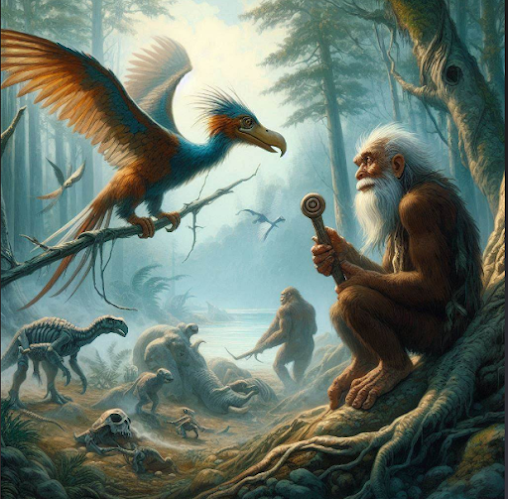 |
| - Yes, I attained herd immunity in 2025! |
It seems RFK Jr doesn´t have jurisdiction over agriculture, but he seems to be lobbying hard for his somewhat peculiar approach anyway. Well, at least he believes in evolution through natural selection! So does Mother Nature, I´m afraid...
Peculiar fact: none of the articles seem to contain interviews with the chicken farmers. What do *they* say about this situation?
RFK Jr wants bird flue to spread on poultry farms
RFK Jr says let bird flu go through farms
 |
| - Yeah, I´m sure you guys are happy! Credit: Frank Schulenburg |
Happy Thanksgiving...to everyone!
The Atheist Party Line crowd will "counter"-attack in 10, 9, 8, 7...
I never read "The Wedge" (as in Scott Carney´s book with that title), but I suppose this 15-minute video is a kind of teaser trailer. The title is "What the Theory of Evolution Gets Wrong" and it´s posted on a channel jokingly called "backchannel"...
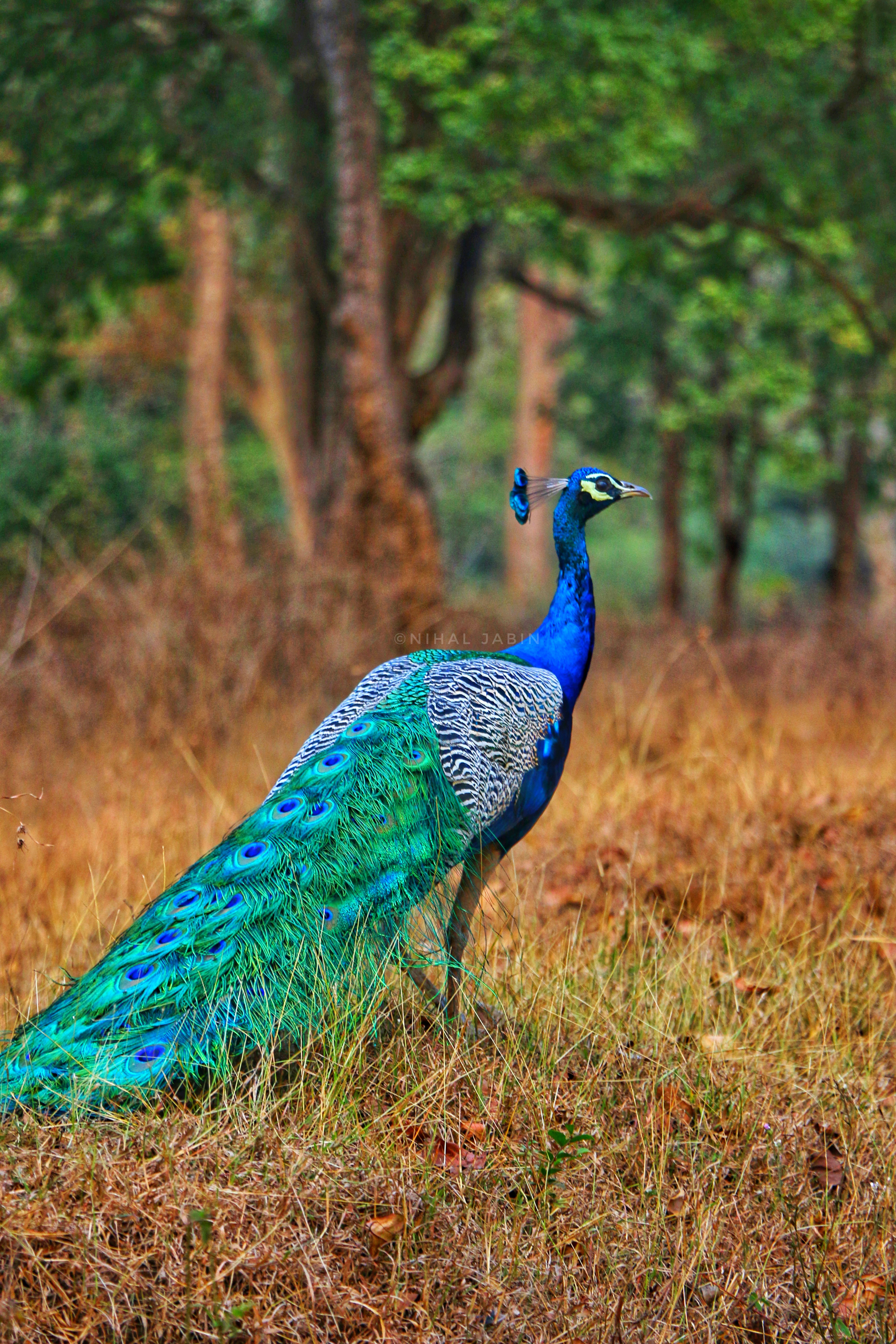
Short story: Consciousness plays a greater and more independent role in evolution than we usually assume. Maybe even love and aesthetics! Yes, it´s the peacock again...

"The Leopard Rocks" is a documentary about leopards living in the Aravalli mountains of Rajasthan in northwestern India. I´m not an expert on leopards, but apparently the big cats in this particular region are unusually gregarious. They live in caves in the hills and supposedly never attack the humans in the area.
The documentary tries to paint a picture of primitive shephards living in balance with Nature, but this is obviously a truth with some modification. The area is advanced enough to have a large dam providing water during the dry season, the lack of suitable prey animals for the leopards suggests human impact on the surrounding environment, and when leopards sneak into the villages to abduct and kill farm animals, the local business community pays the poor farmers money in compensation so they won´t hunt the leopards. Why? Because of tourism, that´s why.
The balance around the Leopard Rocks seem very precarious.
Other highlights include Hanuman langurs (yes, they really do live around a temple on one of the rocks), the striped hyena (they, too, are gregarious in this particular region), the mongoose, peacocks, parakeets and antelopes. Frankly, the langurs and the temples were more interesting than the big cats, but that´s me!
End of reflections.
 |
| Credit: H. Raab |
OK, my headline is click bait, but I was surprised to learn that soft tissue *has* been extracted from dinosaur fossils. I mean, the local Skeptic (TM) association assured me it was impossible. Otherwise, I assume most of this articles were published during the more "wild" period of LiveScience!
Could evolution ever bring back the dinosaurs?
Dinosaur blood vessels survived for 80 million years without fossilizing
Controversial T-Rex tissue explained
Last year, a clip supposedly showing "the legendary White Phoenix" went viral in China. Two versions of the clip are linked above. But nah, it wasn´t a phoenix (legendary or otherwise), it´s a silver pheasant (a bird I read about already as a kid). The third clip shows such a bird from a more obvious angle. Per Wiki, these birds aren´t even particularly rare...
 |
| "Excuse me, dear sir, is this the way to the heartland?" |
“Wild Scandinavia” is a three-part BBC series about nature in the Nordic countries. I just glanced at the episode titled “Heartland”. In Sweden, it has been given a somewhat different title: “Sveriges hjärta” or The Heart of Sweden. Which is kind of odd, since some parts of the docu were apparently filmed in Norway and Finland! Cough, cough, cough…
“Heartland” takes us to the Scandinavian and, I suppose, Finnish boreal forests. For some reason, the winter section is more extensive than the summer ditto. Perhaps the Nordic winters are more fascinating for an international audience? Animals featured include lynxes, bears, beavers, reindeer, wolverines and wolves. One high point of the documentary is a struggle between bears and wolves over a reindeer carcass. Another is a similar struggle involving golden eagles and ravens. Ospreys are also shown. We even get to meet human ice-skaters! A strange oversight is that no deer or moose are shown.
The production ends with
the lekking (mating rituals) of the black grouse, a relatively large galliform
living in the “heartland” forests. The film team had to spend the night at the
lek grounds in freezing winter temperature. Geezus, can´t footage of this kind
be obtained with drone technology these days? Or no?
I admit
that “Wild Scandinavia: Heartland” could be of some interest to somebody who is
completely uninformed about “our” local wildlife. Personally, I tend to avoid
the wilder parts of our land, preferring more urban congregations, but I
suppose YMMV!
 |
| Credit: Mary K Hanson |
Turkey changes its international name to Türkiye. Which means Turkey in Turkish. In case you wonder.
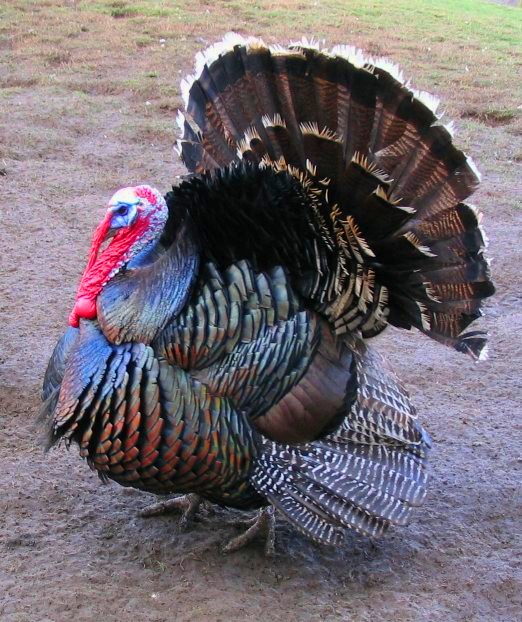
"Thank god for Bidenflation, at least that means I can live a year longer!"
I admit that this annual "pardoning of a turkey" is quite funny. Joe seems to be a natural when it comes to stuff like this. But why is the turkey white? Some kind of pardon-friendly subspecies, perhaps? Happy Thanksgiving, btw. ;-)
 |
| Credit: Mick Lobb |
Now, this one is *very* hard to believe! It´s not even clear whether this is folklore sensu stricto, or some kind of fakelore.
According to local legend (or local pub tall tales), the area around Penllyn Castle in Glamorgan, Wales, UK was inhabited by - wait for it - peacock-plumed flying serpents as late as the 19th century, said plumed serpents having a notorious penchant for munching and feasting on the chicken of the local fakelorists.
Eh, come again?!
That these "snakes" were really misidentified pheasants, peacocks or parrots is hardly likely (for starters, not even Welsh peacocks eat chicken nuggets). Nor is the idea of a misidentified exotic cryptid bird very likely, since the local game-hunters and voracious Victorian collectors would surely have come across it, shot it and placed it in a local cabinet of curiosities, where Richard Owen would no doubt have spotted it, too.
That leaves fairies (but fairies don´t leave reptile skin) or a local Cymric bard with story-telling abilities far surpassing those of good ol´ Iolo Morganwg!