Hesychasm goes full Messalian. We´ve been here before, haven´t we? I actually "discussed" this with AI recently...
Hesychasm goes full Messalian. We´ve been here before, haven´t we? I actually "discussed" this with AI recently...
 |
| Credit: Daderot |
From an old blog post:
>>>I did get one insight, for all it´s worth, while reading the book. Johansons points out that medieval guilds, including powerful merchant guilds such as the Hansa, had initiation rituals featuring ordeals. The stone-masons had secret recognition signs, and many guilds had fictitious founder myths which the members were supposed to learn (perhaps as another sign of recognition). Thus, the stone-masons claimed that Moses was the first of their trade!
>>>What this means, of course, is that we can lay all conspiracy theories about the Knights Templar to rest. The fact that the Templars might have had secret initiation rituals and “heretical” lore (“heretical” to the heresy-hunters of later centuries) doesn´t prove that they were a truly occult-heretical brotherhood. Their practices seem to have been medieval Catholic commonplaces! What a pity.
Exactly. Note also that the Knights Templar were accused of worshipping a severed head named Baphomet. Which sounds like a wordplay on John the Baptist (Ioannes Baptista) and Mahomet (the Turkish name of Mohammed). Bunk, of course. But note that the Knights Hospitaller, who were never accused of anything, openly venerated...wait for it...the severed head of John the Baptist!
Note finally that Bernhard de Clairvaux, the original inspirator of the Knights Templar, had an almost "Tantric" bride-chamber mysticism. Which wasn´t considered heretical either at the time.
Are we on to something here?
Oh, and the Templars sometimes wore "Abraxas stones", but I´m sure that´s just a co-incidence!
"A Different Christianity" is a book published in 1995. The author, Robin Amis, is almost unknown, but his little band of followers have nevertheless written an extensive entry on him at Wikipedia (it wasn´t there a few years ago). Apparently, Amis (a convert to Eastern Orthodoxy) was an officially recognized "fellow traveler" of sorts to the monks at Mount Athos. His book is an extremely difficult read, and I don´t claim to have understood it completely myself. However, I don´t think it correctly reports Orthodox mysticism or hesychasm. A more charitable way of putting it, is that Amis wasn´t a *main line* Orthodox Christian. Religions, after all, can and do change...
Amis was a supporter of Boris Mouravieff, a Russian military officer who left Russia after the Bolshevik revolution (he had also served as Alexander Kerensky´s secretary) and eventually settled in Switzerland. In Constantinople, Mouravieff had met the idiosyncratic spiritual teacher G I Gurdjieff and his chief apostle (or ex-apostle or would-be apostle...) P D Ouspensky. Years later, Mouravieff published a three-volume work called "Gnosis" (Amis translated it to English) in which he attempted a synthesis of the Fourth Way (the teachings of Gurdjieff and Ouspensky), Eastern Orthodoxy and (perhaps) some form of Freemasonry, claiming that this was the true esoteric message of the Orthodox Church and the "Great Brotherhood". Amis frequently references both Gurdjieff, Ouspensky and Mouravieff, but note that of these, only the latter claimed to be Christian or Orthodox (no, some remark on the fly about the Fourth Way being "esoteric Christianity" doesn´t count). Amis clearly believes that there is a secret tradition within Christianity, but he admits that it might not be an unbroken chain going all the way back to the apostles, but a message that has disappeared and been reconstructed at several points in the past. Perhaps be believes that the Mouravieff phenomenon is the latest such reconstruction?
"A Different Christianity" does have a take on the Christian message which will strike many readers as very different from the usual one. Amis has a strong perennialist tendency (really a syncretist one), and often compares Orthodox hesychasm with Hindu yoga, including kundalini-related experiences (although he never uses that very term). He believes that there isn´t any difference between Western and Eastern system at their base, all of them representing the same "faith". Demons don´t really exist - they are really psychological projections of our own inner "demons". By this logic, could it be said that angels don´t exist either? The apocalypse is an allegory for the personal enlightenment of the believer. At one point, Amis says that we get saved by faith alone, and that works are products of our faith - the Protestant position. I find it ironic that Amis rejects the Gnostics from his irenic synthesis, while including the Hindus. Among the Church Fathers, he is especially interested in Clement of Alexandria, Origen and Evagrius of Ponticus, all three of whom were considered problematic from the standpoint of strict Church orthodoxy. More unusual sources of inspiration include alchemy and "The Book of Abramelin the Mage"!
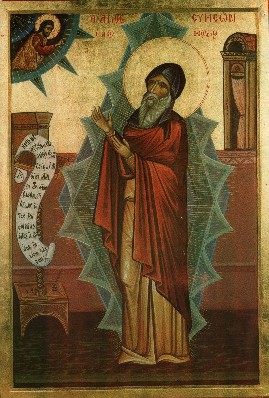
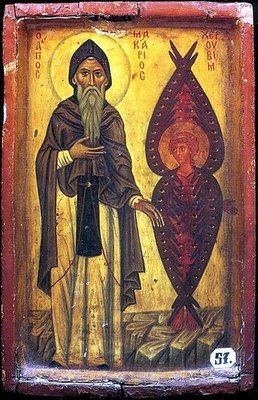
Amis seems to reject the standard Christian notion that the human person is *both* a body and a spirit. Instead, he sees the spirit exclusively as the seat of the personality. This presumably explains his interest in Evagrius, who was often criticized for exactly this position himself. There seems to be a tension in the book between two strikingly different conceptions of mysticism (although I suppose the author may have seen them as two distinct stages). First, there is the idea that the goal of mysticism is to abide in a kind of almost nirvanic stillness ("noetic ascesis"), something that would make all persons strikingly similar, and presumably unaware of their physical bodies. Second, is the opposite idea of mysticism as Eros, as transformed sexual energy, indeed as "energy" in general, an energy which fills the physical body and eventually leads to a dramatic experience of the divine Light. In Orthodoxy, this experience is said to transform the physical body into an imperishable resurrection body (if only for a moment), but this aspect seems to be of no interest to Amis - yet, *that* is surely the original goal of hesychasm. It was precisely this "material" aspect of the new mysticism which made the medieval critics of the hesychasts suspect that they were really "Messalian" heretics. To Amis, the important thing is the spirit, and I suspect that the real goal is the noetic stillness, rather than the more dramatic manifestations, but it´s nevertheless intriguing (in a book about asceticism) that the author talks about sex and Eros so often, even to the point of quoting Allan Bloom!
I admit that my spiritual (and, I suppose, bodily) preferences are very different from those of "A Different Christianity", which may explain why my hydrogens weren´t magnetized by this gospel...
If you want to own all hard books about mysticism, you might consider adding this to your collection.