Showing posts with label Integral Theory. Show all posts

Thursday, June 11, 2026

AI understands me...almost


Both ChatGPT and Gemini told me (after the usual tedious prompts et cetera) that my "religious" ideas are fairly close to Neoplatonism and Theosophy. Which seems to be more or less correct. So I suppose the Machine understands me better than the ridiculous quizzes which constantly make me Unitarian Universalist!

Or maybe not, since further conversations made ChatGPT pair me with Kashmir Shaivism (it does that all the time), while Gemini proposed that I sound like a synthesis between Gaudiya Vaishnavism (think Hare Krishna) and Aurobindo´s Integral Yoga?!

Ahem...

Back to square one? 

Sunday, April 26, 2026

Off the grid


An old hippie from Australia talks about his 54 years "off the grid" in Auroville in India, the intentional community founded by Aurobindo´s spiritual collaborator The Mother. 

Friday, October 17, 2025

Where´s Alan Kazlev at?


- Nah, the black stork from Poland couldn´t make it,
so the Brotherhood decided to use me
as their symbol instead! What´s your prob, dude?
Never seen a black swan before???

I just realized that I never linked to this. It´s M Alan Kazlev´s classical critique of Ken Wilber, published at Frank Visser´s website Integral World. It´s undated (as far as I can see), but no footnote is more recent than 2006 (again, as far as I can see). The bizarre "Wyatt Earp" fracas, which took place that year, is treated as a recent event. Kazlev could perhaps best be described as an independent esotericist. At least at the time, he saw himself as a follower of Sri Aurobindo and The Mother (Mirra Alfassa). 

I´m not sure if anyone cares about Ken Wilber anymore, but since Visser´s site is still up, I suppose *somebody* must do so. Wilber´s peak popularity as a spiritual teacher seems to have been circa 1995-2010. I must have discovered him around the time Kazlev wrote his critical essays. 

Wilber´s "Integral Theory" is a grand and eclectic Theory of Everything. Since Wilber believes in cosmic evolution, there is a family likeness with Theosophy and New Age. Transpersonal psychology and Tibetan Buddhism are other sources of inspiration, the latter mediated through the controversial Franklin Jones (Adi Da Samraj). Wilber also claims an affinity with Aurobindo. Indeed, the term "Integral" seems to come from this particular Indian guru. Since Kazlev is/was a follower of Aurobindo, much of his criticism revolves around Wilber´s attempts to integrate (or should we say integralize?) Aurobindo´s teachings with Wilber´s own.

The essays are hard to read unless you have a working knowledge of the Integral and Wilberite scenes. The author argues that Aurobindo´s Integral Yoga is incompatible with Wilber´s Integral Theory. In many ways, the two approaches are exactly opposite. At least if you think Wilber´s goal is similar to Tibetan Buddhism or Advaita Vedanta (not the same thing - I know). But in 2017, Wilber actually wrote a book ("Trump and a Post-truth World") in which the stated end-goal of human-societal-cosmic evolution sounded pretty Aurobindonean! 

My impression of Integral Theory is that there have always been a tension between a this-worldly perspective (which sometimes sounds rather political) and a more other-worldly one in which liberation can only come by a radical break with samsara. Kazlev seems to assume that radical transcendence is the ultimate goal of Wilber´s teachings, either by merging with the Brahman (compare Advaita) or by "realizing" that samsara is really nirvana (compare Vajrayana or Zen). Both approaches imply that the world as we see it is an illusion. By contrast, Aurobindo had a realist metaphysic and strived for "supramentalization" and the divinization of matter (all matter in the universe), a perspective similar to the resurrection of the body and the new heavens/new earth of Christianity, but probably connected to tikkum olam and derived from Lurianic Kabbala by way of Max Théon. But I´m digressing...

One important point in Kazlev´s critique is that Wilber´s spiritual teachings are strangely "physicalist" in the sense that spiritual experiences seem to take place "in" matter rather than "above" or "beyond" it. It´s almost as if spirituality and mysticism (while objectively real) must nevertheless have a material correlate (compare Wilber´s holonic quadrant). To Kazlev, this is a compromise with modern scientism and materialism. Another important point is that Wilber´s de facto gurus Franklin Jones and Andrew Cohen can´t be truly enlightened beings. Rather, they are stuck in what Aurobindo called the Intermediate Zone and what other occultists would probably call the astral or lower astral. This explains both their often dangerous charisma, their half-truths and their abusive behavior. 

In hindsight, it´s also obvious (and kind of funny) that Kazlev himself often falls into the behavior he accuses Wilber of having. This despite the fact that Kazlev often charges Wilber and the Wilberians of projecting their short-comings onto others! Over-intellectualization? Check. Claiming that your critics simply can´t understand your teachings, since they are at a lower spiritual elevation? Check. Claiming that even abusive gurus might do *some* good? Check. It´s possible that Kazlev realized these shortcomings later. Thus, there is a later essay in which the author says that he no longer takes over-intellectualized metaphysical diagrams seriously and admits that he used to indulge in them himself! Bingo. 

Again: these essays are very niche, but if Ken Wilber and/or Aurobindo is the goal of your holonic striving, then I suppose they could be of some interest.

Towards a larger definition of Integral, part 1

Part 2

Part 3

Part 4

Saturday, June 21, 2025

There is no infinity


Is a "theory of everything" (in the sense this term has in physics) impossible? And why should we care? Indeed, Sabine makes the same point herself. 

What will happen now is obvious: some (quasi)religious prophet will claim that he has the really real theory of everything and *can* explain what lies beyond Gödel and the black holes... 

Monday, April 21, 2025

Shadow over Auroville


Some really surprising information in this one. I didn´t know that Auroville (the quasi-utopian community in southern India organized by Aurobindo´s supporters) has a de facto special status within the union of India. One of its governing bodies include fairly high-ranking elected Indian officials! It seems the BJP government has claimed the mantle of Aurobindo and may be moving towards making Auroville a federal territory, while making the community more explicitly "Hindu" (or rather Hindutva). 

I suppose the old hippies living in the community don´t like the new developments. The short docu linked above hints at ethnic and perhaps political tensions between native Indians and White Western expats, many of the former supporting the BJP. Note also the special visa provisions for foreigners residing in Auroville.

One thing I didn´t get was *why* (as in "why really") the federal government of India is so interested in this particular location. Let me guess. Some kind of property development? Perhaps this is the end of the Mother´s agenda...       

Thursday, April 3, 2025

Big Mind


So where Ken Wilber at? I haven´t read his most recent book "Finding Radical Wholeness", but the link below goes to a critical review by his constant shadow Frank Visser over at Integral World (yes, that site still exists). 

Make of the critique what ye wish, but I get the impression that Wilber is pretty much at the same place as, say, 20 years ago. The Tantric aspect is supposedly new, but hasn´t Wilber always been inspired by Tibetan Buddhism somehow?

And yes, Visser himself seems to be mostly stuck in the same place as always, too!    

The search for a "Big Wholeness"

Tuesday, August 15, 2023

Lost in evolutionary space


Credit: Kanzeon Zen Center


Some disjointed thoughts on Ken Wilber. 

Wilber claims to know both Bill Clinton and Karl Rowe. During the 1990´s, Clinton was widely considered to be "to the right" within the Democratic Party. He supported globalization, wanted to "end welfare as we know it" and talked about "family values". At the same time, Clinton had a somewhat unconventional public image for a politician. He played the sax on TV and recorded a self-ironic video of himself hitting a vending machine. It struck me that Slick Willy´s  cavorting with Wilber may have been part and parcel of this unconventional image. As for Rowe, he was of course George W Bush´s campaign general (as in election campaign).

Wilber´s Integral Theory was probably adapted to those portions of the privileged middle classes which were more conventional and "centrist". Perhaps they benefitted from both Clinton´s and Bush´s policies. It´s interesting to note that Wilber attacked New Age and political correctness, despite being (broadly) New Age himself and not particularly "based". Perhaps this was his way of signaling to the mainstream middle classes that he was just as respectable as they were. He consciously placed himself in the center. He also rejected conspiracy theories and apocalypticism.

Wilber´s Integral Theory is clearly inspired by Theosophy, but the societal optimism is much more explicit. Soon, globalization will propel a select few into a new form of consciousness, which represents the next stage in human and spiritual evolution. Regular liberals are better than the reactionary, nationalist and intolerant sectors of the population, but they still need to break free of certain shortcomings (such as fanatical identity politics) to reach the loftier global heights of integral understanding.

Now, why oh why would this be appealing to privileged middle class people in Amerika circa 2000, do you think? Because it probably rather faithfully reflects their self-understanding. 

Note also that Wilber supported "Bright Green" politics (really no Green politics) and that some of his erstwhile disciples are high on Bjorn Lomborg, climate change denial and such. The whole thing unravelled rather spectacularly with Trump´s election victory in 2016. Wilber´s response, "Trump and a Post-Truth World", was to berate the West Coast liberal elites for their arrogance - which had paved the way for Trump - but offering no particular alternative. I´m not sure what Wilber says today, but in the real world, not even Biden´s defeat of Trump solved America´s problems. We seem to be spiralling downwards on the evolutionary scheme...

So what´s the point of the above? No idea, except that it´s interesting that Wilber´s timeless theory of everything was so firmly situated in the *material* realities of turn-of-the-millennium United States. However, Wilber´s system also has an escape clause of sorts: the world-soul will never find what it´s looking for within evolutionary samsara anyway, necessitating a clean break into a purely spiritual dimension. 

Maybe it´s high time for that break. Or at least the preparations for it! 


Sunday, August 13, 2023

Being and becoming


"Buddha at the Gas Pump" or BatGap is a YouTube channel featuring interviews with a long range of spiritual teachers and personalities, most of them broadly New Age or Buddhist. The show host Rick Archer is a former member of TM. In this episode (the latest), Archer interviews Carter Phipps, the former editor of the magazine "What is Enlightenment?". I think it´s fair to say that the group behind this publication, the Andrew Cohen Community, was a cult. For what it´s worth, even Cohen himself might agree with this today! As for Phipps, he comes across as a kind of more self-critical version of Ken Wilber. Some people probably do need to hear his message. 

The video is titled "Does Spiritual Illumination Create its own Intrinsic Blindness?" and it´s pretty clear that the answer given by both Phipps and Archer is "yes". TM´s guru Maharishi Mahesh Yogi believed that once you take care of the "spiritual root", the entire tree with all its branches will flourish, but alas, it didn´t turn out that way. Archer has met very devoted TM practitioners who were also criminals! And while neither contributor makes a direct reference to Adi Da Samraj and Andrew Cohen, I think the connection is obvious. Instead, Phipps criticizes Ramana Maharshi, or rather the adulation of him in certain circles - also a daring move, I imagine.

The main point of the presentation is that intense mystical states, while important and beautiful for the individual having them, simply aren´t enough to make you "the pinnacle of evolution" or a "fully enlightened being". Archer believes that such people are extremely rare, and those who exist must be both spiritual and highly ethical. Phipps doesn´t seem to believe in "full enlightenment" at all - at least not during our present phase of evolution! Indeed, the belief in such things could even *hinder* our evolutionary progress, which must take place in the material world, the world of culture and politics. 

One of Phipps´ central points is "Don´t turn the ground of being into the goal of becoming for you, for me or for us". An experience of the divine ground of being could become a starting point for further evolution, but emphatically isn´t the "goal". Of course, mystics often disagree. Mystical states have a "fragrance of finality" about them and lead to "the myth of the given" as the mystic takes his spiritual state super-literally. In reality, what often happens is a weakened self-structure. During mystical states, the "super-ego" is taken off line, so to speak, making people feel extremely free and self-confident. This can lead to disastrous results if the person scores high in narcissism. In fact, both people with too high self-confidence and those with low self-esteem might feel all-knowing due to such an experience (I think the funny example given in the interview refers to then-TM-member John Gray, who later authored books about gender roles). 

Another problem with these states is that they can function as a psychological response to trauma - the paranormal is "better" than the trauma-filled normal world. Indeed, even lightning strikes can cause paranormal states in humans!

But what should be done instead? To be honest, Phipps´ perspective could very easily be combined with atheism. It could become a kind of "spiritualized materialism", in which mystical visions are seen as just another interesting psychological method to improve our condition in the "real" world (the only one that matters anyway). After all, the evolution he is talking about seems to be societal, not "spiritual" (except maybe in a very broad sense). A Christian could argue that while "pagan" mysticism does indeed lead to super-egoism, Christian ditto (or perhaps Christian non-mysticism?) leads to humility. But even humility can become a narcissistic exercise, a kind of bizarre form of masochism. 

Another possible response would be to argue that the experiences described by Phipps come from the astral world (or the "inner worlds"), rather than from the real divine dimension. But of course, anyone can say that - unless you can prove that a certain form of mysticism actually does lead to the desired evolutionary responses...      


Thursday, January 19, 2023

Against integral teleology


John Michael Greer´s recent (as in yesterday evening my time) criticism of Ken Wilber. The discussion thread is quite interesting, too.  

Against Enchantment I: Ken Wilber

Tuesday, September 20, 2022

Realistic Adwaita


Swami Medhananda is a scholar and a member of the Ramakrishna Mission. I recently read his article "Cutting the Knot of the World Problem: Sri Aurobindo´s Experiential and Philosophical Critique of Advaita Vedanta". I find it intriguing that a member of the Ramakrishna Order (associated precisely with Advaita Vedanta) would write insightful polemics against it, but there you go! 

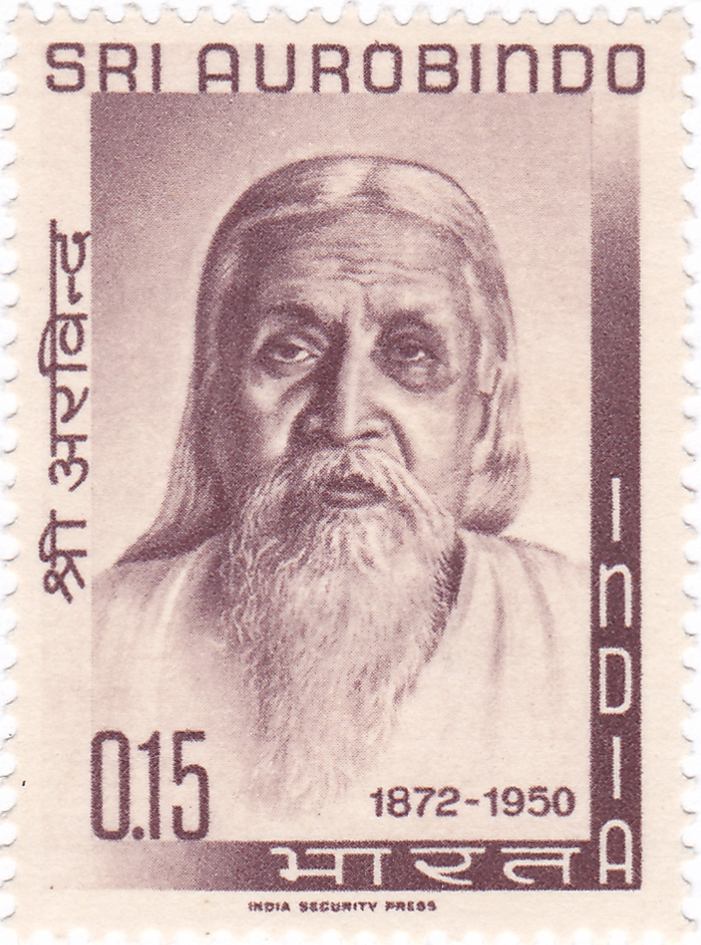
Sri Aurobindo (1872-1950) was a Indian freedom fighter turned mystic who eventually founded his own ashram, based in Pondicherry (then a French territory) in southern India. The utopian community Auroville, founded by Aurobindo´s spiritual collaborator Mirra Alfassa (The Mother) is still situated there. Medhananda believes that Aurobindo was strongly influenced by Ramakrishna and his disciple Vivekananda (who founded the Ramakrishna Mission). The author has written extensively on Ramakrishna´s mystical-philosophical approach, known as Vijnana Vedanta, which is strikingly different from "main stream" Advaita Vedanta. It is, however, similar to Aurobindo´s "realistic Adwaita" (Aurobindo´s spelling). 

To Aurobindo, the sole reality is the Divine Saccidananda (Sat-Cit-Ananda = Being-Consciousness-Bliss). While this may sound "monist", Aurobindo emphasized that reality isn´t just the impersonal Brahman, but also the personal and dynamic Cit-Shakti (Consciousness-Force), which manifests as everything in the universe. Divine Reality is infinite, both personal and impersonal, both transcendent and immanent. Moreover, the "created" world is real, not an illusion, nor a lower form of reality. Hence the term "realistic (i.e. ontologically realist) Adwaita". 

Medhananda believed that Aurobindo had three sources for his position. First, scriptural interpretation. Aurobindo argued that the Vedic hymns, the Upanishads and the Bhagavad-Gita showed that the world was real, not an illusion, and that several different spiritual paths can lead to liberation. Second, philosophical arguments. Thirdly, and perhaps most importantly, Aurobindo´s own spiritual experiences. When studying meditation under an Advaita Vedanta guru, Aurobindo did have a powerful mystical experience of a non-dual impersonal Absolute, compared to which everything in the phenomenal world was merely shadows. Later, however, other spiritual experiences came to the fore, experiences which suggested that there is a dimension higher than "nirvana" or the impersonal Brahman. During one particularly dramatic experience in Alipore jail, Aurobindo saw how Krishna had taken the form of everyone and everything around him: trees, walls, jailers, even the other prisoners! While the nirvanic experience isn´t "wrong", it will eventually give way to an even broader and deeper realization. 

A quote from Aurobindo´s writings: "At an early stage the aspect of an illusionary world gave place to one in which illusion is only a small surface phenomenon with an immense Divine Reality behind it and a supreme Divine Reality above it and an intense Divine Reality in the heart of everything that had seemed at first only a cinematic shape or shadow. And this was no reimprisonment in the senses, no diminution or fall from supreme experience, it came rather as a constant heightening and widening of the Truth; it was the spirit that saw objects, not the senses, and the Peace, the Silence, the freedom in Infinity remained always with the world or all worlds only as a continuous incident in the timeless eternity of the Divine." 

It´s clear that Sri Aurobindo considered his spiritual experiences to be more important than "Shankara´s logic", Shankara being regarded as the main ancient proponent of Advaita Vedanta. Still, Aurobindo did criticize Advaita Vedanta on philosophical grounds, as well. This criticism is the usual one, which I think strikes everyone who studies "pure" Advaita Vedanta: if the phenomenal world is "maya" or illusion, where is "maya" located? Since Brahman is the sole reality, maya must come from Brahman itself, but if so, Brahman can´t be perfect, and might even be "dual" somehow. I noticed that some "mayavadins" try to solve the problem by declaring it unsolvable: "maya" is simply unscrutable, and that´s that! But that doesn´t solve anything, since it still implies that the Divine is imperfect - inscrutably imperfect...

Medhananda believes that Aurobindo´s realistic metaphysics can be used to ground an ecological approach to our current civilizational predicament. Maybe, but the most interesting aspect of Aurobindo´s "integral worldview" is surely the evolutionary perspective, in which humans are just a stepping stone to a higher form of life: Gnostic Man or Overman. If this sounds similar to Theosophy, that´s because it *is* similar to Theosophy. It´s also similar to the idea of resurrection found in Judaism and Christianity! These aspects of Aurobindo´s integral theory aren´t explored by Medhananda, however.

That being said, this is still a very interesting contribution. 

Friday, January 7, 2022

Thursday, January 6, 2022

OK Boomer


About two months ago, Ken Wilber was interviewed on a YouTube channel called The Stoa. Wilber was a well-known writer on spiritual topics during the 1990´s and 00´s, but seems to have lost traction since. Hearing the interview, I can´t say I´m surprised. 

Wilber´s Integral Theory (which could be seen as a strongly modernized and syncretized version of Theosophy) sounds increasingly irrelevant in the new post-2016 reality. I realize that *every* topic can´t be covered in a two-hour YouTube satsang, but it *does* look strange that neither Trump, Biden nor COVID restrictions came up during the conversation between Wilber and his interlocutors. In other words, the actual global-systemic crisis in the real (first quadrant?) world. 

The problem is obviously Wilber´s evolutionary-optimistic worldview, in which everything just gets better and better all the time, a worldview he apparently has decided to stick to until he gets reincarnated in some turquoise star system. At one point in the presentation, Wilber even comes close to denying climate change, probably taking a cue from Björn Lomborg, accusing Extinction Rebellion of being "negative"! (Well, I suppose they are.) Rather than seeing that science is going through a crisis which may destroy it altogether (or at least its reputation), Wilber actually thinks that evolutionary theory is progressing in *his* direction, towards an understanding of Eros and teleology. And when asked whether we should try to preserve the ancient "traditions" - presumably a way to salvage what can be saved from the mess we´re in - Wilber in effect says no. The only "tradition" worth saving is the mystical core of every religion, as interpreted by modernized Zen Buddhism. Wilber strongly implies that someone who becomes enlightened today (or in the future) is more advanced than the Buddha. While the "emptiness" is the same, the "form" is much more expansive, and in Wilber´s system, apparently both are necessary for the enlightened being. (His view of enlightenment is probably very broadly inspired by Non-Dual Tantrism.)  

True, Wilber isn´t as nihilistic towards the past as, say, the SJWs. He is for evolution rather than revolution (at one point, Wilber boasted that he knew both Bill Clinton and Karl Rove), and the higher levels in his evolutionary scenario both "transcend" and "include" the previous ones. When discussing with de facto philosopher John Vervaeke, Wilber expresses strong support for his "Post-Nominalist Neoplatonism", and he seems genuinely intrigued by the ability of Neoplatonism to combine seemingly opposite notions (such as "ascent" to the spirit and "descent" into matter). Unfortunately, his discussion with Vervaeke was cut short precisely when it became interesting! And in the end, Wilber still sounds too transcending/repudiating of earlier perspectives. 

I think Integral Theory is past its pull date, and probably can´t be salvaged by any Hegelian Aufheben, being too "late modern" or even "postmodern" for the new and somewhat more "descending" world situation...  


Tuesday, October 26, 2021

The esoteric Krishnamurti


I don´t remember where I read this...

Exoterically, Krishnamurti had a message many people associated with Advaita Vedanta or some form of Buddhist modernism. However, K also had an esoteric message. He believed in...the shakti. If so, what he calls "Love" in his public speeches is really Shakti. However, K refused to teach kundalini yoga to Westerners, since it was too dangerous (probably a true observation, all things considered). 

This is why David Bohm became interested in K´s message. Bohm regarded the shakti as a very real energy field "beyond" or "behind" the cosmos. It could be accessed through our minds, if we could only find the right technique to do so. Bohm was a former Marxist who had given up on radical societal change through material means. However, he still believed in the necessity of a world-wide transformation, and wondered whether access to this energy could change man - all men (and women) - for the better. In other words, he never gave up the global collectivist vision of Marxism. 

But as I said, I don´t know where I read all of the above (in two different places, I think).

Another thing also struck me. Why didn´t Bohm establish contacts with Sri Aurobindo instead? Perhaps he simply never met him. After all, Aurobindo lived in Pondicherry and wasn´t easily available, not even to world famous quantum physicists!

With that, I leave you for now. 


Friday, September 24, 2021

Value realism at the Omega Point


Waking Cosmos (or metaRising) is a YouTube channel and podcast devoted to a mostly panpsychist exploration of the problem of consciousness. I linked to some episodes before, and here we go again!

In the presentation above, WC argues that consciousness is not only deeply mysterious by itself (for how can dead or even living matter have a subjective inner world?), but that it could point to something teleological within the universe. Perhaps the cosmos *needs* consciousness in order to become aware of itself? Maybe it´s part of the deep structures of cosmic existence? Among the philosophers and scientists mentioned in the clip, Paul Davies and Thomas Nagel are the two most well known. 

WC tries to avoid the notion of a transcendent creator-god as much as possible, but I think it´s very difficult to do so. For instance, if "value realism" is true, where do the "values" originally come from? Values, I assume, can´t exist without a consciousness, suggesting that the universe must have been fine tuned (i.e. created) by a super-consciousness. And that´s what we call the G-word. WC instead proposes explanations that strike me as even stranger than good´ ol´ God almighty, such as a "future attractor" that "retro-causally" creates the world (that is, the cause-effect relation can move from the future backwards in time). 

One thing that surprised me was the explicit mention of Pierre Teilhard de Chardin and his notion of the Omega Point. It feels so retro! WC believes in a strong version of the Western Idea of Progress (at least in my humble opinion) in which the entire universe evolves towards a kind of divine state in which everything is saturated by life and consciousness, presumably of an extremely advanced kind, perhaps manifested in powerful cosmic beings. And while WC denies that this is anthropocentric - humans are only one small part of this grand scheme, after all - I think it can easily be spun that way, since we are part of this drama of increased complexity, and presumably are meant to evolve as much of it as humanly (or over-manly?) possible. It can also be given a Theosophical or Aurobindonian spin...

While I don´t rule out anything (not even a retro-causal computer on planet Kolob gone completely bonkers), if allowed to speculate, I would probably guess that we are in a temporary bubble (or is it manvantaric cycle) created and sustained by a hyper-cosmic super-consciousness with purposes we can´t even begin to fathom, and that our own part in the scheme is only a tiny dot smaller than those of jellyfish...  


Tuesday, January 26, 2021

Tuesday, September 22, 2020

Theosophy made in Denmark?


Martinus Thomsen (1890-1981) was a Danish spiritual teacher. He is usually just called Martinus. His supporters often refer to Martinus' worldview as "Martinus Cosmology". They seem to be heavily concentrated in Denmark and Sweden. Martinus Kosmologi should *not* be confused with Martinism, a French occult current named after the 18th century mystic Saint-Martin.

I haven't read all of Martinus' writings, (collectively known as the Third Testament) so the following review should be condidered preliminary. It's wholly based on the first volume of "Livets Bog" (The Book of Life), Martinus' seven-volume magnum opus. The first volume was originally published in 1932. The Swedish translation (and all others) have kept the Danish original title.

I think it's obvious that Martinus' cosmic worldview is really a form of Theosophy. It could be described as Theosophy minus the exotic pseudo-Hindu-Buddhist terminology. Theosophy in plain Danish, perhaps? Martinus claims that the work is the result of supersensible revelation. It was apparently first published with financial backing from a Danish Anthroposophist. I admit that Martinus, while boring, is a better and more lucid writer than Steiner (although I suppose Steiner's forbidding style could be an artefact of bad translation).

Everything in the universe is alive, including planets, stars and galaxies. Everything is also constantly changing and evolving towards higher forms of life and existence. Like in Theosophy, there are Masters, here called World Redeemers, but at least in this book, they are strangely anonymous. Instead, I get the impression that the cosmic evolution is wholly pantheistic and automatic, propelled forward by entirely impersonal forces. It's not clear to me if the souls really have freedom of will to opt out of the cosmic cycles (or speed up their own evolution).

That Martinus was very much a product of his time is obvious at several points in "Livets Bog". He strongly believes in the Western idea of Progress, including technological and scientific progress. Martinus also turns out to be a very literal socialist. The society of the future is a world government which owns the means of production and administers them through central planning. High technology will abolish all human wants and give everyone enough spare time for artistic and other pursuits. And yes, people will be paid in labor vouchers...

Martinus is no revolutionary, however. Instead, he supports what we would call a welfare state, and believe it should gradually expand its power over the economy. In fact, he seems very positive towards the state in general, perhaps because it's a collective and hence potentially collectivist organ. What is lacking is a concrete political program. Martinus states that the ideal world society won't be established until 3,000 years into the future by a new "cosmic impulse".

Another tendency visible in the book is the idea that all competing worldviews are really part of the grand cosmic plan, and represent distinct stages or functions along the way. Martinus can therefore sound surprisingly positive when discussing Catholicism, Islam, "idolatry", materialistic science or secular socialist movements. An integral theory if I ever saw one! However, there is also a strong dose of condescention towards those not spiritually enlightened enough. They should be forgiven since they simply don't know better, and even their incomprehension is somehow necessary in the bigger scheme of things.

The central idea of "Livets Bog" is that evil is inevitable, necessary and wholly integrated into the divine plan. Evil doesn't seem to be an illusion (like in ACIM), but everything in the cosmos is "wholly good" in the sense that evil and suffering is what makes the souls turn towards the light in the first place. Creation itself has two phases, with the "dark" phase being the first, devolving the souls more and more into dense matter and individuality. The fall of man is the moment when humans become conscious of their "animal" suffering, while not yet being enlightened enough to enter "the real human kingdom" of love and foregiveness. This creates the impression that humans are "worse" than animals - we haven't learned how to be real humans, while all animals are perfect as animals. Of course, the fall is necessary for our future evolution.

Taking a cue from Theosophy and Anthroposophy, Martinus' view of evolution is non-Darwinian. All living organisms don't share a single ancestor. Rather, there are many parallel lines of evolution. Martinus seems fascinated by social insects, and believes that the class of Insecta must originally have come from another planet than the spiritual ancestors of Mammalia. In the distant future, some of the social insects may evolve into creatures on the "human" level of evolution. Plants are also strange. On the one hand, their consciousness is less developed than that of animals and humans. Yet, they nevertheless stand closer to the spiritual dimension, which explains why they can inspire great human artists, and so on.

One thing never explained in this first volume of "Livets Bog" is what practice we should follow to become more enlightened beings. What is Martinus' yoga? He does explain the ideal we should strive for. The spiritual man is wise, loving, humble, celibate, vegetarian, works in a lowly position (perhaps as a worker or janitor), doesn't proselytize, and so on. 

In other words, he is like Martinus himself...

Stay tuned for more cosmic cycles! 


Monday, July 27, 2020

The cat that walked through walls


"Quantum Questions: Mystical Writings of the World´s Greatest Physicists" is a collection of articles edited by Ken Wilber, an American writer and spiritual teacher. Ann Niehaus is credited with being the author´s research assistant. Wilber´s system, known as Integral Theory, has changed somewhat over the years, but could be characterized as a synthesis of Mahayana Buddhism, Jean Gebser, transpersonal psychology and Theosophy-derived notions (among others). In this book, he also makes frequent references to Traditionalist writers. I have the revised edition from 2001. 

Within the New Age, it´s common to argue that quantum physics somehow prove the spiritual worldview. Fritjof Capra´s famous book "The Tao of Physics" take this line. Wilber, interestingly, takes the exact opposite position. Physics do *not* prove the spiritual worldview, indeed can´t prove it at all, even in principle. My interpretation is that Wilber wants to save sprituality and mysticism from the atheists by placing them in an ontological and epistemological dimension completely separate from that of science. The idea is somewhat similar to Stephen Jay Gould´s NOMA (non-overlapping magisteria). Wilber also fears that a spiritual worldview based on science would be disproven if  (or when) the scientific theories change. Thus, an ostensibly scientific spirituality would in effect be subordinated to science (and subject to constant change). To Wilber, quantum physics is not about spritual phenomena, but deals entirely with material realities. The book debunks claims that Quantum Mechanics (QM) somehow prove mind-over-matter, that the observer can directly influence an experiment, that Schroedinger´s cat is neither dead nor alive until somebody takes a look, or that the strange properites of light (both a "wave" and "particles") are somehow magical or occult.

The volume contains texts by Heisenberg, Schroedinger, Einstein, De Broglie, Jeans, Planck, Pauli and Eddington. It´s interesting to note that so many prominent quantum physicists were dualists or panpsychists. The main reason seems to be that in their opinion quantum physics didn´t explain mind and consciousness. Some kind of dualism became inevitable when it turned out that all the weirdness of QM was purely material in character. Many quantum physicists also felt that modern science no longer describes objective reality as it is. Rather, the theories have become highly abstract mathematical equations. Scientists succesfully manipulate symbols, but they don´t seem to correspond to anything "out there". Perhaps *all* scientific theories are really models of this kind, rather than descriptions of anything "real"? But if so, what if there are things outside the models? A mystical mind, perhaps? Another common argument, by contrast, said the opposite: the fact that the universe can be described mathematically at a "deep" level, suggests that mathematics aren´t a human construct but rather something the mind discovers. But if so, where does the correlation between cosmos, mind and math come from? 

Wilber suggests that the mathematical structure of the cosmos is ultimately derivable from a higher spiritual dimension, and hence represent a kind of Platonic form. I was somewhat surprised by the fact that he integrated math into his spiritual dimension of reality - since math is closely connected to science, I had expected him to argue that it belongs wholly to the physical realm. 

One quantum physicist conspicuous by his absence from Wilber´s collection is David Bohm. This is ironic, since Bohm is usually considered to be the most spiritual of them all, no doubt because of his coversations with Jiddu Krishnamurti, the former "World Teacher" of the Theosophical Society. Bohm believed that science *could* prove the spiritual worldview, which I suppose explains why Wilber doesn´t even mention him. I find this somewhat ironic, since you might as well argue that Bohm tried to integrally integrate physics, mysticism and even politics at a higher level. 

This is obviously a very short introduction to "Quantum Questions" and its contributors, so let me end by saying that both Wilber´s contributions and the old articles by Heisenberg & Co are very interesting in their own right... 

"Five stars". 

Saturday, November 9, 2019

Ken Wilber did nothing wrong


To whom it may concern...evo-devo, orthogenesis and facilitated variation prove that God is real. 

There, I said it. 

Thursday, September 27, 2018

Lost in a post-Clinton world


Although I never been a “fan” of Ken Wilber, I did consider the writings of his early and middle periods (Paleo-Ken and Meso-Ken) to be somewhat interesting. Then came his postmodernist-Habermasian turn (Neo-Ken) and I lost interest. Now, it seems that “the famous philosopher” has reached a fourth stage in his color-coded evolution. I suppose we could call it Post-Ken!

Let me guess: Ken Wilber's fans, who are mostly “liberal” and live on the West Coast, were profoundly *shocked* by Donald Trump's election victory, since it seems to disprove the upward evolutionary trajectory of Eros (and US liberal politics) they all believed in. Wilber has written this book to assure his admirers that evolution hasn't been cancelled, it's still in progress, and Trump's victory is really *part* of that evolution. Unknown to Trump, the cunning of Eros has readjusted evolution by taking a temporary step back, really as a warning to the liberal elites to mend their ways or else, and the upward trajectory to Integral (or Turquoise) will be resumed soon. Or will it? Perhaps Wilber has written this essay just as much to reassure himself, since in the end he proposes *no* political program for how to deal with the current mess in the United States. Instead, he simply expresses a pious wish that one day, sooner than we think, the Singularity will happen and the world will turn into a virtual paradise of high technology and super-consciousness (think Sri Aurobindo's Gnostic Man plus strong AI). None-too-humbly, Wilber sees himself as a central player in this millenarian scenario. As the Messiah, perhaps…?

This doesn't mean that “Trump and a Post-Truth World” gets it *all* wrong. Wilber is quite right that the haughty arrogance of the liberal elites was one of the reasons for Trump's success. He is also right that there is a serious disconnect between the liberal propaganda (in all its versions) and stark American reality, with unemployment, poverty and war. The various “identity politics” wedge issues popular among college-educated liberals have alienated many voters. Wilber believes that it's high time for the bruised liberal elites (who represent what he calls “green” consciousness) to reach out to the majority of the American people (who have an “orange”, “amber” and “red” consciousness). However, somewhere here the author goes off track. It's obvious that he looks down upon the great unwashed masses just as much as the West Coast elites he is criticizing. Ordinary people are stuck on lower evolutionary levels of consciousness, sometimes much lower, they can't really help it, so of course they spew racist and ethno-centric garbage. At best, Wilber can only offer condescension, not real dialogue. Indeed, he says that if the lower tiers continue spewing chauvinism, they should be censored or punished! But in what sense is this different from what every other “liberal” pundit is already saying?

The book has a peculiar intellectual-centered (or pundit-centered) worldview. In some weird way, the author believes that the postmodernist intellectuals and their college-student hangers-on have attacked the notion of objective truth so much, that the great mass of voters finally took it to heart and voted Trump, the post-truth liar extraordinaire. Ahem, no, most Trump voters believe that The Donald is telling the unvarnished truth, not clever lies, and few of them have ever heard of deconstruction, postmodernism or the Frankfurt school. I think Wilber's supporters need to believe his surrealist scenario, since the alternative is far grimmer: admit that Trump might be right about immigration, taxes or China. It also looks downright silly when Wilber (surely not with a straight face) accepts the “post-truth” and “fake news” narratives, as if the media or the political class pre-Trump were never telling lies! He even says that Hillary Clinton didn't lie during the election campaign, which is probably “true” in the sense that she didn't have to – since the Clintonista-controlled media apparatus wasn't asking her any hard questions to begin with…

That Ken Wilber understands at least some things is interesting, to be sure, but overall this book comes across as the desperate cry of Integral for relevancy in a world dominated by…truths too hard to integrate.