Showing posts with label Lars Jonsson. Show all posts

Friday, September 21, 2018

Midwinter birds


I have the Swedish original of this book, “Vinterfåglar”. Lars Jonsson is a productive author of nature books, chiefly on birds, illustrated by himself. Unsurprisingly, Jonsson is also a bird-watcher.

“Winter Birds” is not a field guide, but rather a kind of bird aficionado book. It illustrates and describes about 60 species typical of the Swedish winter landscape. Most of them are common European species, so the book could be of interest to British readers, too. Seabirds, shorebirds, ducks and geese have been excluded, so “Winter Birds” only covers “terrestrial” species (so to speak). The bird descriptions follow no particular format, and are to a large extent based on Jonsson's personal observations.

This is probably a good book if you're a bird-lover, but it can also work as a general coffee table book. Due to its winter theme, it works well as a Christmas gift. Five stars. But then, I give almost all Jonsson's works that rating…

Birds in winter


A review of "Vinterfåglar" by Lars Jonsson

This is the Swedish original version of “Winter Birds” by Lars Jonsson. It's a book for bird lovers, to a large extent based on the author's own personal observations of various Swedish bird species. And yes, Jonsson is also the illustrator! The book covers about 60 species, most of which can also be found in the rest of northern and central Europe, which explains the English translation. Good for the coffee table, or as a Christmas gift to the bird aficionado in your life. Five stars!

Monday, August 13, 2018

Lars Jonsson´s boring birds


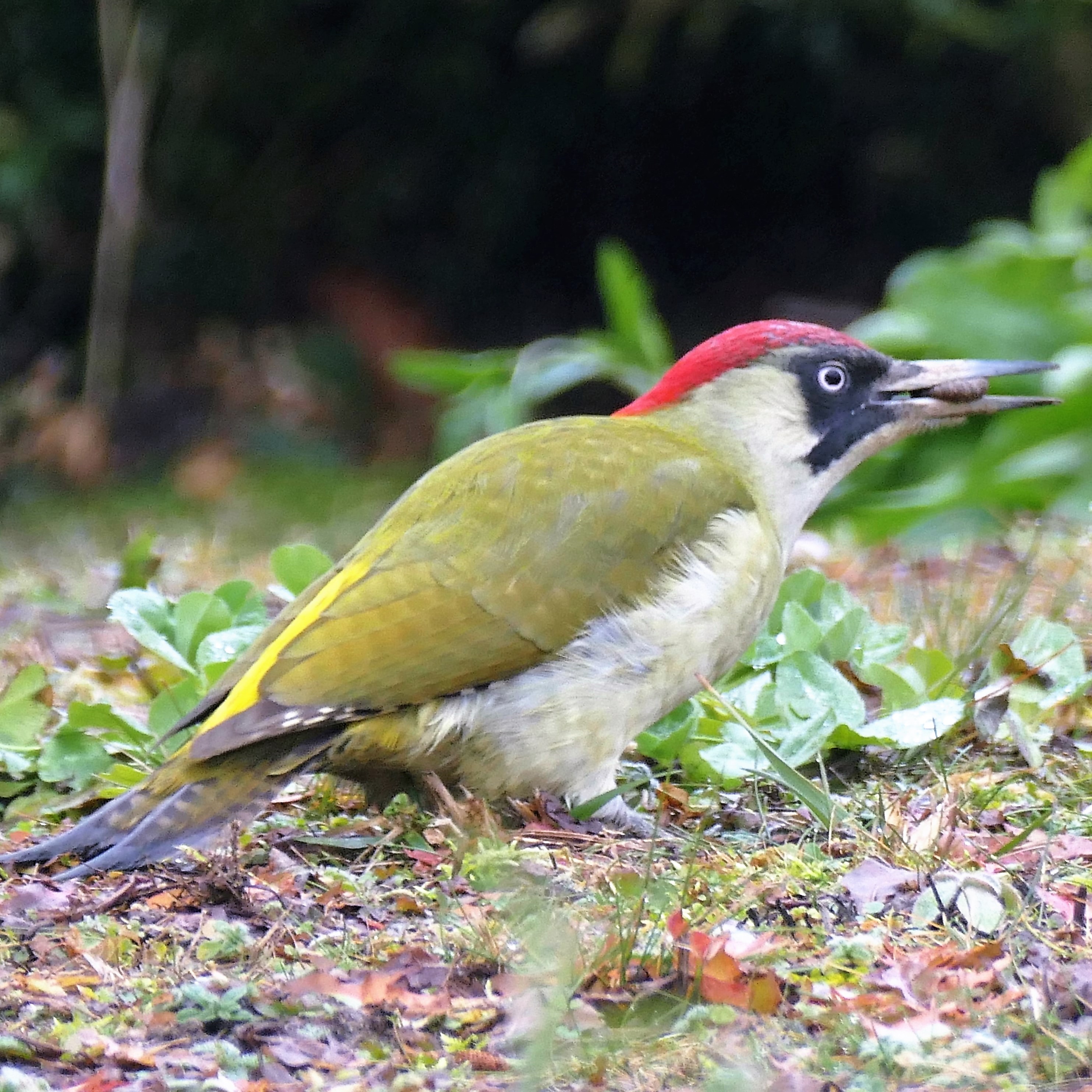
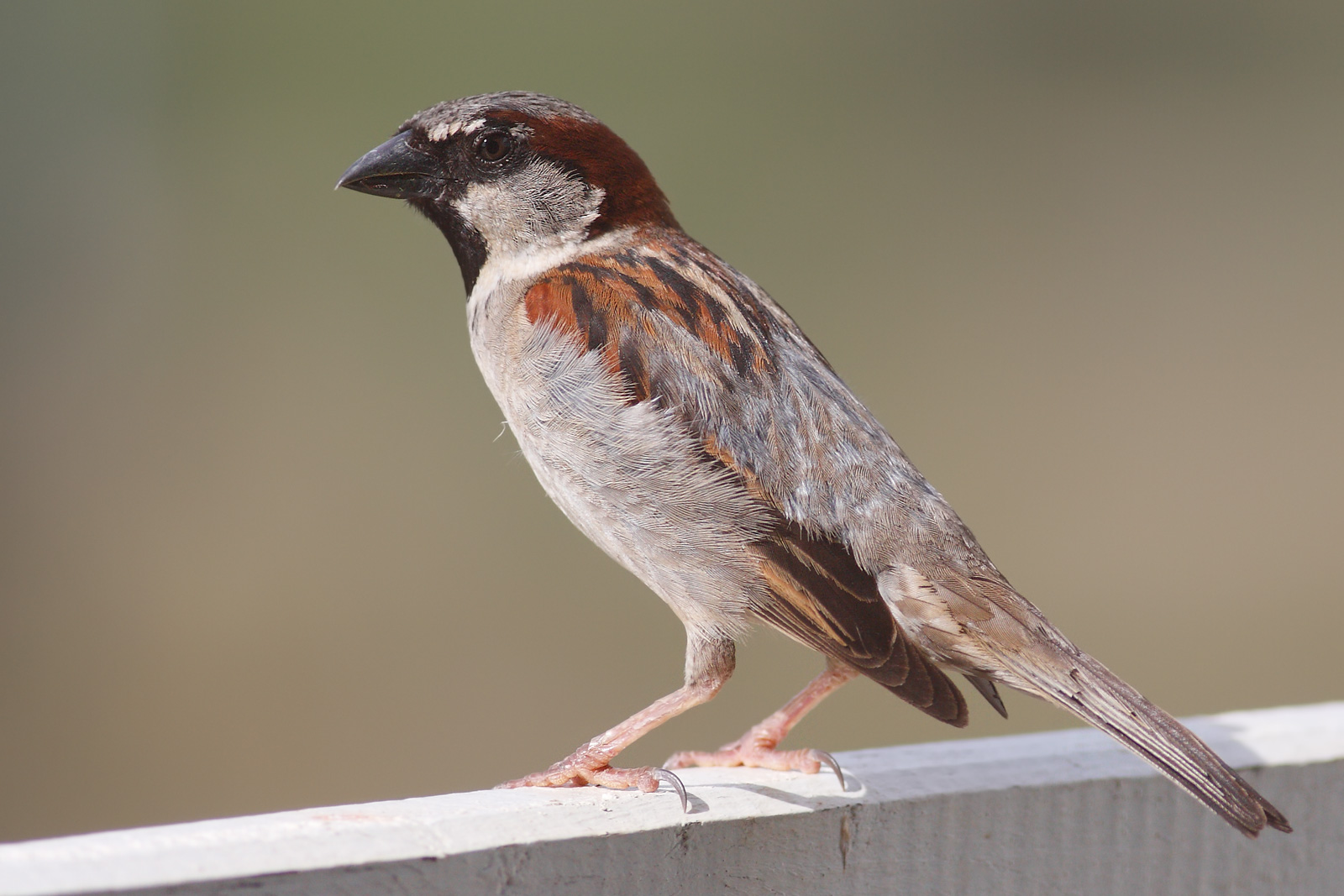
"Birds of Wood, Park and Garden" is the first volume of a five-volume work, covering all birds of Europe. This volume is intended as a field guide to the birds of woodlands and parklands in Europe north of the Alps but south of the boreal forest zone. In other words, the usual boring feathered critters hopping around outside my window...or at least further out in "my" strolling area. They are all in there: house sparrow, tree sparrow, fieldfare, blackbird, green woodpecker, wood pigeon and the super-abundant corvids. Gee, I constantly have to remind myself that these are supposed to be close evolutionary cousins of the T-rex, lest I surely die of boredom! Only the bluecrow and the hoopoe stand out but, alas, they never seem to show up outside my apartment building...

The Swedish edition of this book was the first thing ever published by Lars Jonsson, the famous Swedish bird painter. He was only 24 years old! The text, penned by Jonsson himself, sounds extremely mature, so I always assumed the author was at least in his fifties... Jonsson's illustrations are, of course, excellent but still feel "rough" compared to his later forages into bird painting. I don't wish to sound ungrateful to the Master, but this basic-basic bird guide somehow didn't rock my world in the way Jonsson's later works tend to do. Therefore, I only give it three stars. Still, it is strange that Jonsson was flunked by the Swedish Art Academy. What did they want him to do, a Pollock?!

Where are the grebes?


A review of Lars Jonsson´s "Birds of Sea and Coast" 

This is the second volume of Lars Jonsson's somewhat unwieldy, five-volume series of field guides to European birds. The unwieldiness has been compensated for by lavish illustrations, made by the author himself. For those who actually want to *use* Jonsson's oeuvre in the field, I rather recommend the one-volume jumbo version, "Birds of Europe".

This second volume of the original series covers sea birds and coastal birds of Northern and Central Europe plus the British Isles. Thus, we are talking the Atlantic and the Baltic Sea. Shorebirds, ducks, geese and gulls are prominently featured. However, it's not always clear why some species have been included, but others excluded. Why are the divers included, but not the grebes, for instance?

This little book has been superseded by the previously mentioned one-in-all volume, but it could still be of some interest as a sheer work of art, or perhaps as a gift to a shorebird nerd.
I therefore give it four stars.

Not so ugly ducklings


A review of Lars Jonsson´s "Birds of Lake, River, Marsh and Field" 

This is the third volume in a five-volume series of field guides written and illustrated by Lars Jonsson. This volume covers typical birds found in or around lakes, rivers, marshlands and agricultural landscapes. The geographical range is Northern and Central Europe, north of the Alps but south of the "taiga". Ducks, shorebirds, grebes and rails are prominently featured, as are assorted passerines. We also get to meet the crane, the kingfisher and the swift.

Personally, I think that this series is rather idiosyncratic. Birds are not usually connected to a distinctive biotope, I mean they do fly! I'm pretty sure you can find a lot of birds around the average European lake not included in this slender little volume. Indeed, Jonsson later published a one-in-all volume called "Birds of Europe", covering the entire continent from Iceland to the Bosphorus.

However, as a work of art in its own right or a birthday gift to a bird-lover, even the third volume of the original series works just fine.
These ducklings sure aint ugly! Four stars.

Lars Jonsson´s first book


Believe it or not, but this is Lars Jonsson's first book, the original Swedish edition of "Birds of Wood, Park and Garden". It was published in Sweden in 1976, and is both written and illustrated by Jonsson himself. At the time, the young painter was only 24 years old. A few years earlier, his application to the Art Academy in Stockholm had been turned down! Considering that Jonsson went on to become the Audubon of the 20th century, I sure wonder why? Even in this early book, his genius is clearly visible...

My main problem with "Fåglar i naturen: Skog, park, trädgård" is that the birds featured in it are so, well, damn boring. These are the birds every Swede sees outside his window from childhood onwards: sparrows, finches, crows, magpies, thrushes... OK, magpies are quite cool (they are the parrots of the North!), but otherwise, I long to see some stray albatross or thunderbird gently circling around my local shopping mold, LOL.

Unfortunately, it seems that Jonsson's first book is unavailable at the present time from our favourite vendor, Amazon. Don't worry, the sparrows will be here next year as well...

Birds in winter plumage


"Fåglar i naturen" is a classical, Swedish field guide to European birds in five volumes, written by Lars Jonsson. More sensationally, the very same Jonsson also illustrated the entire series - and his bird paintings are superb! The entire series was quickly translated into English, and later a one-volume version of the work was published, called "Birds of Europe" in English. This is the second volume of the original Swedish series, covering the birds of the Atlantic and Baltic Sea coasts.

Otherwise, I really can't say much about "Fåglar i naturen: Hav och kust" than I've already said when reviewing the English-language edition. Since this book is in the Swedish language, I suppose it's mostly of interest to collectors of rare books, Jonsson aficionados or people who really luve shorebirds in winter plumage...

Saturday, August 11, 2018

Lars Jonsson´s secret island


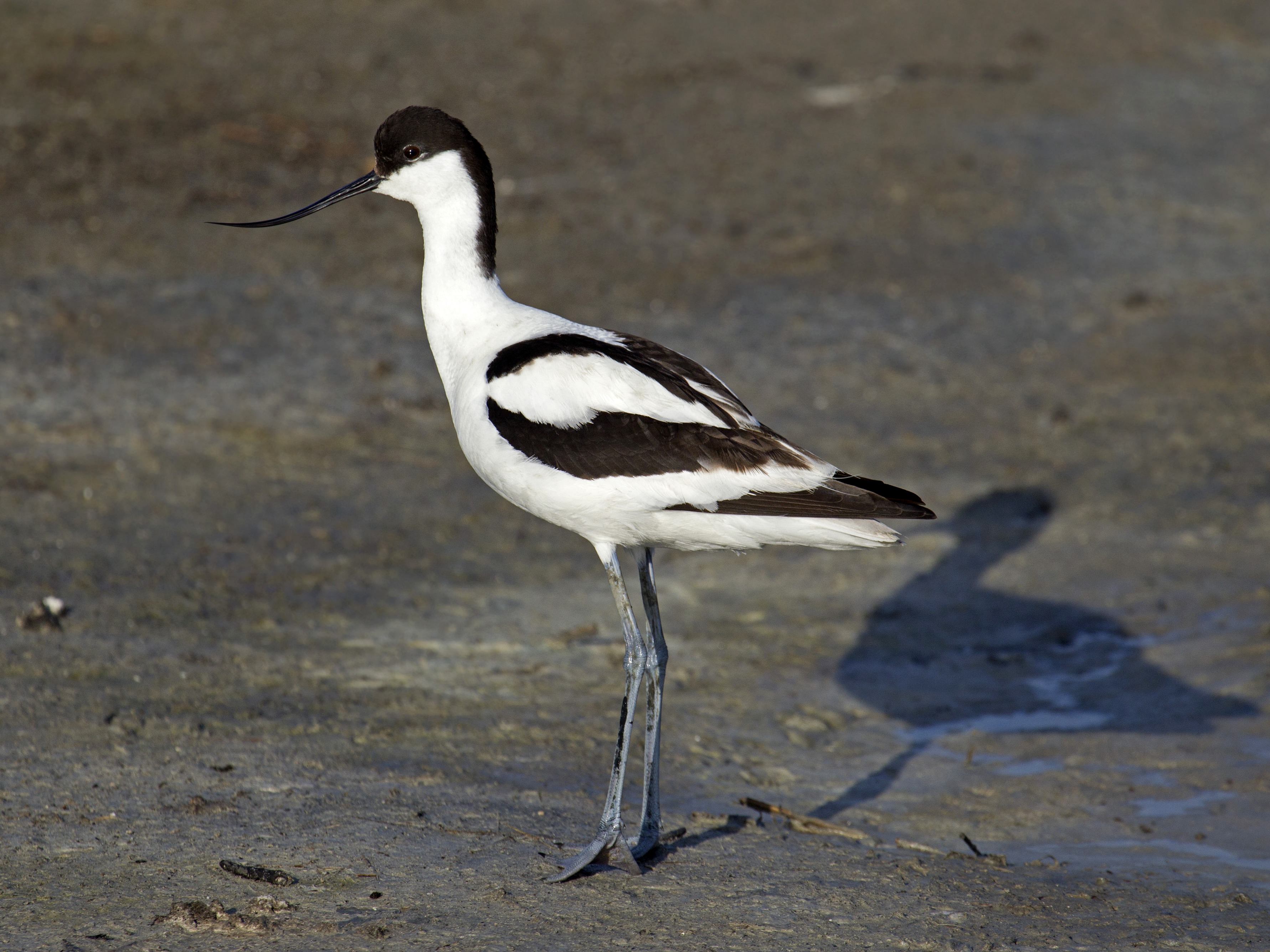
Lars Jonsson is an accomplished Swedish painter, mostly known for having both authored and illustrated a number of classical field guides to European birds. “Bird Island” is a more straightforwardly artistic book. It's coffee table format, but you probably shouldn't have it on your coffee table. Somebody could steal it! It's not clear where “the island” is situated, but my guess would be somewhere outside Gotland in the Baltic Sea, since Jonsson apparently lives at Gotland. The quasi-poetic text is of little interest. The bird paintings are the main course. The avocet, plovers and other shore birds play prominent roles. The ubiquitous starling shows up even at the small island, and there is also a magnificent painting of a hooded crow. The artwork showing herons at night is fascinating. Jonsson has even included a painting of a cow! “Bird Island” would make a good gift, or the kind of book you have on your best book shelf to impress causal visitors. Downside: could be considered somewhat boring by some. Four stars.

Friday, August 10, 2018

An excellent work of art


It may seem strange to review a field guide to birds as if it was a work of art. In the case of Lars Jonsson, however, it isn't so strange. Quite the contrary. Jonsson, who lives in Sweden, is both a bird-watcher and a painter. He was still in his twenties when he was commissioned to illustrate a five-volume field-guide to European birds. Frankly, I assumed the guy was much older! Today, Jonsson has a website in both Swedish and English, and also runs his very own art gallery, open to the public during the summer months. Of course, he has published art books specifically devoted to his paintings of birds, but somehow I feel that the field guides he illustrated are the "real" Lars Jonsson. What I find particularly fascinating about Jonsson is that he seems to know virtually everything about birds, despite not being a trained scientist in the field. Clearly, his contact network includes many "real" ornithologists, and equally clearly, he has spent hours upon hours in the wild, watching and painting birds.

"Birds of Mountain Regions" is the English translation of the fourth volume of the five-volume series mentioned above. Why review it, rather than the other volumes? I guess it's for nostalgic reasons. The Swedish edition of this book was the first book about birds my parents bought me as a kid, during a visit to the Museum of Natural History in Stockholm, incidentally the same museum where Jonsson's abilities as an artist were first discovered by some museum employee when Jonsson, still a teenager, made drawings of the stuffed birds. I never really read the book (the text is a typical, boring "field guide text"), but I was deeply intrigued by the painted illustrations, and I wasn't alone! At least 30 years ago, the general feeling among bird-watchers in Sweden was that the five-volume series is very difficult to use and very expensive to buy, but that the illustrations are remarkable, and almost *to* good to be true.

Eventually, I prodded my parents to buy me some more volumes, and I even bought some myself, and when I look at the entire series, this volume still strikes me as the best one. Why? No idea. I'm not an art critic, but it seems that Jonsson's skills improved over time, making the later volumes better than the earlier one. Or *even* better, since the earlier volumes weren't bad either... :-)

One thing I particularly like about this book is that the birds are often placed in their natural environment, rather than simply painted in isolation against a blank background, which seems to be the standard procedure among field guides. Even Jonsson sometimes paints like that, but just as often, he places the ducks firmly in the water, the jays and owls in the pinetrees, and the majestic crane somewhere in the northern marshlands. It's stuff like this that makes this much more than a field guide, and turns it into an art book in its own right. Jonsson also paints the birds from angles that make them look alive, rather than simply being specimens on a color plate.

Incidentally, don't let the surprisingly ugly cover of this book fool you. The original Swedish edition had a much better cover, showing a bluethroat. As a kid, it was precisely that bluethroat which prompted me to choose this particular book over the others (my father would only let me buy one book in the museum store).

Is the book good as a field guide? No idea. It covers the birds of northern Scandinavia and Finland, but apparently only the most typical species. "Southern" birds aren't included, even if they happen to live in the area. This is presumably what made Lars Jonsson to eventually publish a one-volume field guide, "Birds of Europe", also available from Amazon. But as the work of a great artist, it's five-stars hands down. And remember, he was only 26 years old when he wrote and illustrated this book!

PS. If you can, try to get hold of the HARDBACK edition from 1979. It may be available from the British version of Amazon. Jonsson's paintings should be enjoyed hardback!

The best and worst of Lars Jonsson


A review of Lars Jonsson´s "Birds of Europe: with North Africa and the Middle East"

This book has a rather complicated pre-history. From 1976 to 1980, the Swedish writer, painter and bird-watcher Lars Jonsson wrote and illustrated a five-volume work on European birds. The reactions were mixed. On the one hand, Jonsson's paintings of birds were rightly admired, and the entire five-book series was translated into English. On the other hand, many Swedish bird-watchers considered the books difficult to use in the field, and expensive to boot. In 1992, Jonsson tried to remedy the problem by publishing a one-volume work based on the previous five volumes. It was called "Birds of Europe". For some reason, it was first published in English. Several editions of it exists. My review is of the 2006 edition, the one with the owl on the cover. (Amazon may have placed this review at some other product pages as well.)

First, the positives. Lars Jonsson is an excellent artist, working in what I suppose could be called the Classical Realist tradition. His illustrations are quite simply great, and almost make the birds come to life. Often, he places the birds in their natural environment, and paints them as they really look like in the field, pre-occupied with wading, perching, eating, or whatever it is birds do. I'm particularly impressed by his ducks, shorebirds, owls, nightjars, thrushes and finches! This makes the book worth the money, for both bird-lovers and art-lovers, and indeed book-lovers.

But is "Birds of Europe" really a good field guide? Several other reviewers have expressed a large amount of scepticism on this point. I'm not a bird-watcher myself (my idea of bird-watching is strolling down to some local duck pond to watch the Canadian geese LOL), but I tend to agree. Lars Jonsson is either better at painting birds than at editing books, or perhaps his editor is a lazy bum who coldly calculates that everything with the name "Lars Jonsson" on it will sell, no matter what. For every good illustration, there seems to be an ill-organized, spotty page with dozens of identical-looking flying birds, impossible to tell apart from each other due to confusing captions! Even on the good pages, the captions are often confusing. Sometimes the birds are illustrated on the same page as the species presentation, sometimes on the facing page, and sometimes somewhere else entirely. Some species aren't illustrated at all. And the range maps seem to be all over the place! For some reason, the section on raptors seem particularly screwed up.

There is another problem as well. The book is called "Birds of Europe with North Africa and the Middle East". However, many North African and Mideastern species are illustrated with small pictures only, some are only mentioned in the text, and others aren't mentioned at all! It also looks as if the book doesn't cover the Canary Islands, the Azores and Madeira. And our good old friend, the ring necked parakeet, is only partially illustrated (sic). This stingy treatment hardly justifies the sub-title "with North Africa and the Middle East".

Because of the lay-out problems and bad editing, I cannot give this book five stars. However, as a collection of vintage bird art, it's worth buying anyway. It's a book for your bookshelf, rather than your backpack.

Wednesday, August 8, 2018

Lars Jonsson´s wonderful birds


A review of "Lars Jonsson´s Birds: Paintings from a Near Horizon"

Lars Jonsson is a Swedish painter and amateur naturalist who illustrated several field guides to European birds. Actually, to call Jonsson an "amateur" naturalist feels somewhat ridiculous, since he probably spent more time in the field than most scientists!

This book is an excellent introduction to Jonsson and his art for the American public. Jonsson has always been something of a natural. At the age of seven, his parents submitted one of his works to a children's art competition. They were accused of fraud! The jury didn't believe that the drawing was made by a child. Jonsson had his first exhibit at the age of 15, at the Museum of Natural History in Stockholm (the capital of Sweden). He also illustrated a membership bulletin for a young naturalists' association. Curiously, at the age of 20, Jonsson's application to the Academy of Arts was rejected! But perhaps that's the fate of all great artists?

Perhaps it was just as well. Instead of lingering at the Academy, Jonsson took a trip to the island of Gotland in the Baltic sea, and realized that all field guides to birds were seriously flawed. None of them showed waders in juvenile plumage, despite the fact that such waders are the most common in real life. This would have been around 1971. Jonsson spent the next years working on a five-volume series of new field guides to European birds, which he both wrote and illustrated. They have become classics, and have even been translated into English. As a kid, my father bought me one of them, ironically at the Museum of Natural History. Much later, Jonsson also published a one-volume field guide, "Birds of Europe", based on the five-volume series. By that time, he had moved to Gotland, where he owns a small private museum exhibiting his paintings. He has received the prestigious Master Wildlife Artist Award, and some younger painters apparently try to imitate him and "the Lars Jonsson look".

"Lars Jonsson's Birds" contains a representative selection of Jonsson's art, plus short commentaries by the artist himself. The earliest work is the funniest: a very bad drawing of a sparrow made by Jonsson at the age of four. It looks like a parrot. Well, it's good to know that Jonsson wasn't a prodigy when he was *that* young! All the other works are serious, and include watercolors, oil paintings, illustrations from the field guides, and lithographs. Most paintings show birds (naturally), but some orchids and other flowery plants are included, plus a self-portrait and a portrait of Jonsson's brother. There is also a curious photo of Jonsson somewhere in Arabia, looking at a gull caught by his guides. And then there are eiders, eiders, eiders... Jonsson seems to be down right obsessed by eiders! (The eider is a large, black and white duck living on seashores.)

What always struck people about Jonsson's bird paintings is that they are very realistic. This is true even of the somewhat standardized illustrations in the field guides. Jonsson manages to capture the individual character of each bird. The paintings and illustrations in this book cover a whole range of different bird species, but my favourites are the gyrfalcons. They look almost magical. But there does seem to be three kinds of birds not even Jonsson can paint properly: magpies, crows and jays. I'm an unofficial corvid aficionado, and I can't say the magpies and crows in this book touched me. (The jays in his field guides are even worse - and jays have personality!)

But that's a very minor complaint against a great artist. If you are a lover of great art, birds, or both, I recommend "Lars Jonsson's birds". In fact, I even recommend his one-volume field guide "Birds of Europe". I don't think you should use it in the field, though. Both books are for the coffee table.

Recommended.

Friday, July 27, 2018

Worth waiting for


"Birds of the Mediterranean and Alps" is the fifth and concluding volume of a series of field guides written and illustrated by Lars Jonsson, an accomplished Swedish painter and "amateur" ornithologist. His books are famous for their almost bizarrely brilliant colour illustrations. Somehow, Jonsson's birds look even better than the real thing! The two last volumes of the series are almost works of art in their own right. (I'm referring to this volume plus "Birds of Mountain Regions", which is volume four.)

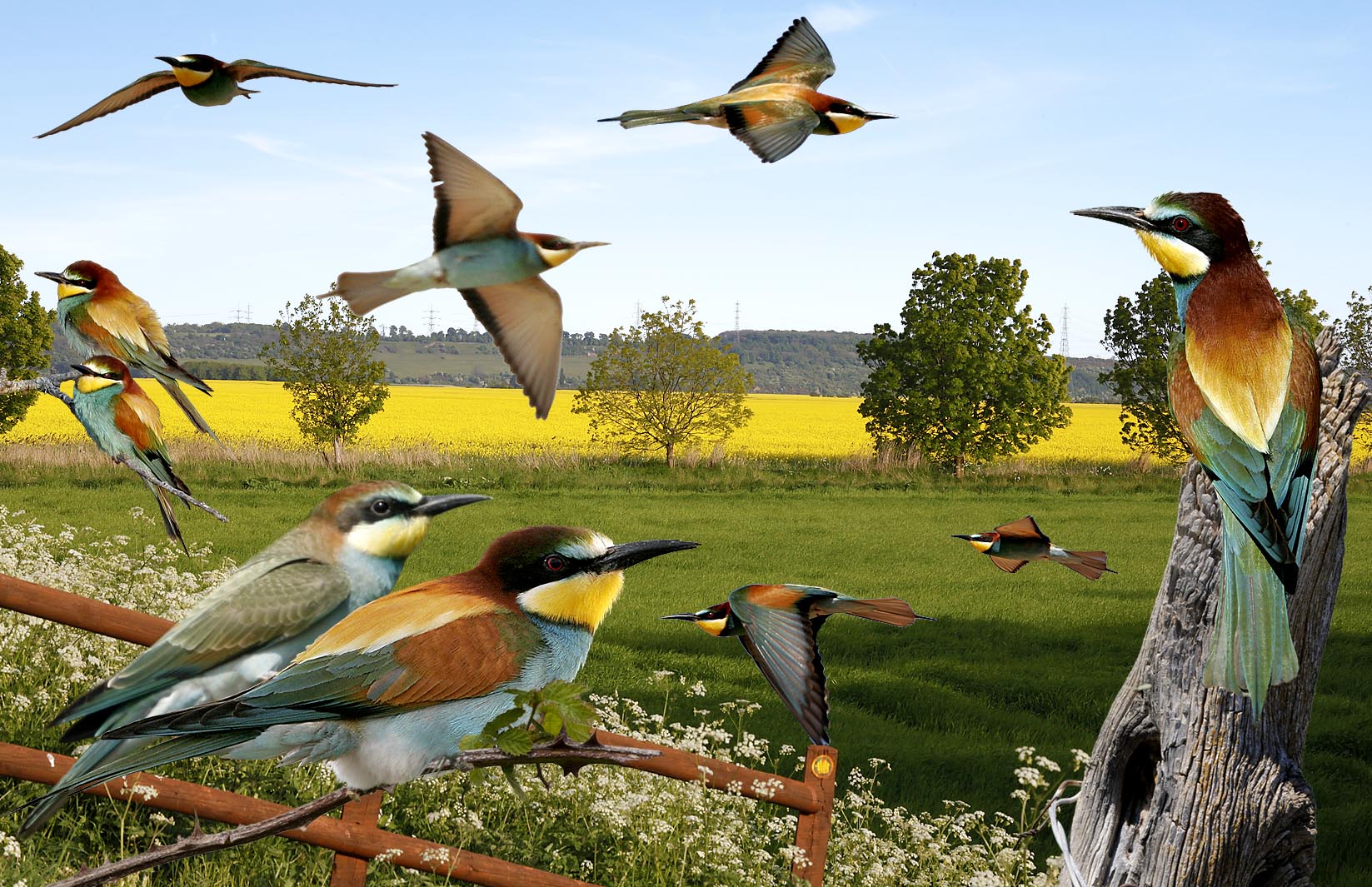
"Birds of the Mediterranean and Alps" covers the birds of southern Europe, the Black Sea region and the mountain ranges of Central Europe. A few typical Anatolian and North African species are shown, as well. When I was a kid, me and my friends eagerly awaited the appearance of this volume, since we considered foreign birds to be more "cool" than the quintessentially boring ducks, crows and sparrows found in Sweden. We weren't disappointed. I mean, the bee-eater on the cover says it all!

The main problem with Jonsson's books have always been that the birds are split on five volumes in a rather idiosyncratic fashion. As field guides, they are probably overrated. Later, Jonsson finally published the one-volume "Birds of Europe" and entered the 21st century with flying (pun intended) colours.

However, I admit a strong nostalgia for the original, unwieldy concept. 


(For the record, the illustration above is *not* from Jonsson´s book.)