Showing posts with label Idaho. Show all posts

Saturday, July 4, 2026

Sister Shroom


Apparently, this atheist chic takes magical mushrooms. She proceeds proposing a natural explanation to the weird patterns appearing in psychedelic visions. Interesting, to be sure. But note that her explanation is perfectly compatible with pantheism. Here we go again: "spiritual atheism" is either shame-faced spirituality or a quasi-religous LARP. Or perhaps both.

Or as a sixties hippie would no doubt have put it: Dude!  

No-nonsense atheism?


It seems even atheists have to believe in something...

Ultra-super-duper ateista Matt Dillahunty calls out "spiritual atheism", arguing that it´s an oxymoron since spirituality is simply nonsense. But note that even my man Matt de facto believes in...psychotherapy.

The second video is c/o Britt Hartley and clearly shows her peculiar eclecticism. On the one hand, the universe is meaningless, free will doesn´t exist, there is no soul or "self", und so weiter. She even calls herself a nihilist! On the other hand, this is apparently untolerable, so Hartley says atheists should "steal from religion" and become "spiritual" anyway. Which includes both meditation, ritual, community-building, et cetera. Note also the references to psychedelic drugs.

There is also a discussion on patriarchy and gender differences in relation to spirituality. Here we go again...

In other words: atheism (as in consistent atheist materialism) doesn´t work even for atheists. Conclusion has been drawn. 

Tuesday, February 17, 2026

How the West was won


I heard rumors about this before, but usually rolled my eyes at it. Until now. Ever heard of the Progressive Western Republicans, some of whom were Mormons?

Is it true that there have been Republican politicians after World War II in Utah, Idaho and other places who took "progressive" political positions usually associated with the Democrats?

Yes — very much so.
In fact, for several decades after World War II, parts of the American West (especially Utah, Idaho, Oregon, Washington, and Montana) produced a distinctive kind of “Western Republican” who was economically progressive, pro-labor, and pro-government investment, even while being culturally conservative.

This now-forgotten tradition is one of the great buried chapters of U.S. political history.

Here are the clearest examples.


🏔 1. The Western Republican tradition

From the 1930s through the 1970s, many Republicans in the interior West believed:

  • The federal government should build dams, roads, and power plants

  • Labor unions were legitimate

  • Social Security and Medicare were good

  • Antitrust law should restrain corporations

  • Public land should serve the people, not just private industry

This was not seen as “left-wing” — it was seen as practical Western development policy.

Western states were poor, rural, and underdeveloped, so Republicans there wanted federal investment.


🏔 2. Utah’s progressive Republicans

Wallace F. Bennett (Senator, 1951–1974)

A conservative Mormon, but:

  • supported Social Security

  • backed Medicare

  • supported federal water projects

  • voted for civil rights laws

He opposed big business monopolies and supported labor protections.


🏔 3. Idaho’s progressive Republicans

Frank Church

Church was actually a Democrat, but Idaho’s Republicans were often not much different from him on economics.

The most important Idaho Republican was:

Len Jordan

  • Pro-welfare

  • Pro-public works

  • Pro-federal land protection

  • Backed Social Security and labor law

Idaho Republicans routinely supported:

  • unions

  • environmental protection

  • anti-corporate regulation


🏔 4. The Pacific Northwest Republicans

The most famous was:

Mark Hatfield

A Republican who:

  • opposed the Vietnam War

  • supported civil rights

  • supported food stamps

  • supported public housing

  • backed environmental protection

Today he would look like a Bernie Sanders–style Democrat on economics — but he was a lifelong Republican.


🏔 5. Washington State

Dan Evans

Republican Governor and Senator who:

  • expanded higher education

  • created environmental protections

  • supported abortion rights

  • supported welfare programs

Washington Republicans were often to the left of Southern Democrats.


🏔 6. Why this existed

The Western GOP came from:

  • small farmers

  • miners

  • loggers

  • Mormons

  • rural communities

They feared:

  • Wall Street

  • Eastern corporations

  • railroad monopolies

  • oil and mining trusts

So they wanted:

A strong federal government to protect the people from corporate power.

That was Republicanism in the West.


🏔 7. Why it disappeared

This tradition died after:

  • the Civil Rights Act

  • the Southern realignment

  • the rise of evangelical politics

  • Reagan’s transformation of the GOP

The Republican Party became:

  • Southern

  • evangelical

  • anti-government

  • anti-union

The Western progressive Republicans were pushed out or retired.


🏔 Final answer

Yes — for much of the 20th century, Republicans in Utah, Idaho, Oregon, Washington, and Montana were often economically progressive, pro-labor, pro-environment, and pro-welfare.

They were not Democrats in disguise.
They were a now-extinct species:

The Western Progressive Republican.

If you’d like, I can show how this tradition connects to Mormon political culture, conservationism, and even Teddy Roosevelt’s legacy — it’s a fascinating lineage.

What´s the connection to Mormon political culture?

The connection is deep, old, and very specifically Mormon — and it explains why Utah-Idaho Republicans once looked so “left-wing” on economics.

Let’s go step by step.


1. Mormonism was born anti-capitalist

Early Latter-day Saint society under Joseph Smith and Brigham Young was built on ideas that would today be called:

  • communitarian

  • cooperative

  • anti-corporate

  • anti-speculation

They practiced:

  • the United Order (shared property)

  • church-run industries

  • cooperative stores

  • price controls

  • collective land settlement

The goal was:

prevent rich outsiders from exploiting Mormon farmers.

Wall Street capitalism was seen as spiritually dangerous.


2. Federal government as protector of the Saints

Mormons had been:

  • expelled from Missouri

  • driven from Illinois

  • murdered and dispossessed

So Western Mormons developed a paradoxical view:

  • They hated federal interference in religion

  • But they loved federal money and infrastructure

Because:

Federal dams, railways, irrigation, and land law protected them from Eastern corporate power.

This produced a political instinct:

Government should defend the community against monopoly.


3. Why Mormon Republicans supported welfare and labor

In Mormon theology:

  • The church must care for the poor

  • No one should be left without food, land, or work

Utah built:

  • church welfare farms

  • church-run job systems

  • mutual aid societies

So when Republicans like Wallace F. Bennett supported:

  • Social Security

  • Medicare

  • federal housing

  • labor protections

they were not betraying Mormon values — they were translating them into federal policy.


4. Why they hated big corporations

Mormon settlers believed:

  • mining companies

  • railroads

  • oil firms

were tools of Gentile exploitation.

They wanted:

  • public land

  • cheap power

  • irrigation

  • antitrust law

That’s why Western Republicans backed:

  • the TVA model

  • dam building

  • public power

  • conservation

All of which look “left-wing” today.


5. Why this vanished

After WWII:

  • Mormons became middle-class

  • Utah became suburban

  • the Cold War made “collective” sound dangerous

  • evangelicals took over the GOP

Mormon Republicans shifted from:

communitarian populism

to:

suburban capitalism.

The old Mormon Republicanism quietly died.


Final truth

The reason Utah and Idaho Republicans once sounded like New Deal Democrats is simple:

They were practicing Mormon communitarianism through Republican politics.

It was not secular socialism —
It was theocracy-flavored welfare capitalism.

And for about 40 years, it quietly shaped the American West.

Thursday, January 1, 2026

Into the void


These videos are somewhat...annoying. Ex-Mormon atheist Britt Hartley discusses the so-called Vallow-Daybell doomsday murders in Idaho and Arizona. She reaches the conclusion that religion can´t stop religious psychosis since the difference between them is merely quantitative. There is no particular difference between the Mormon faith at large and the psychotic delusions of crazed cultist Lori Vallow. Except perhaps that Vallow takes her religion seriously (too seriously, perhaps). Religious "moderates" therefore enable the extremists. Et cetera.

But what about, ahem, atheism? What if somebody would take the "hot takes" of atheist materialism absolutely seriously: there is no free will, the cosmos is meaningless, humanity is an accident or even a mistake...wouldn´t *that* lead to psychosis? What makes Hartley´s anti-religious agitation (including moderate religion) so weird is that she herself knows that atheism can lead straight to nihilism - the topic of the third video linked above. So why isn´t the difference between moderate atheism and radical nihilism ("a lived experience of existential depression") also merely quantitative? Maybe the reason why most YouTube atheists never get depressed is that they are "Jack atheists" (to coin a phrase), who don´t really take their bullshit seriously. 

I actually wonder what the difference might be between a person who spins into depression when realizing that the universe is meaningless, and a person who doesn´t. I also wonder if the two groups are gendered, women being more common in the first group. A person who interprets both religion and atheism "existentially" might spiral off into nihilism if rejecting religion, while a person who looks upon worldviews "intellectually" might feel less threatened. And come up with intellectually satisfying "solutions" to, say, the free will problem ("compatibilism"). And in our culture, the first group is usually female, and the second is male.

With those reflections, I end this little introduction.  


Wednesday, June 30, 2021

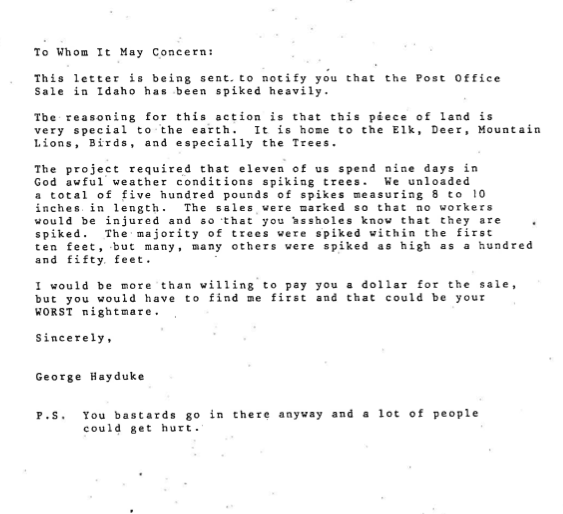
Spiking the trees


I have no particular opinion on who is "right" or "wrong" here, but the story is interesting in its own right. Of course, the Biden nominee might as well be seen as a former snitch, not just a "former eco-terrorist"!  

Biden nominates "former eco-terrorist" to head Bureau of Land Management

Biden nominee linked to 1989 sabotage

Friday, April 9, 2021

The Keystone Species


"The Archeology of Global Change: The Impact of Humans on Their Environment" is a book published in 2004 by the Smithsonian Institution. Yes, folks, it´s time for the Ashtar Command to bash the myth of the noble savage again! So far, I´ve "only" read the first part of the volume, which contains a somewhat eclectic blend of articles about Polynesia, the US Southwest and the Pacific Northwest. 

Humans have never lived in fundamental "harmony" with Nature, nor have they been "natural conservationists". The first evidence for overexploitation of natural resources comes from "archaic Homo sapiens". The size of tortoise shells and shellfish gradually decrease with time at Neanderthal sites around the Mediterranean, suggesting that our evolutionary siblings gathered (and consumed) the larger species or varieties first, making them go extinct! This also confirms the "optimum foraging" model, according to which humans should always harvest the most nutritious and easily accesible specimens first, and only then proceed to smaller, less nutritious and/or less accesible individuals. This pattern shows up again and again in the archeological record. In plain English, if forced to chose between eating and cultural ideology, most humans most of the time chose to eat. 

The contributors to this volume believe that humans were also responsible for the Pleistocene extinctions of "charismatic megafauna" in Eurasia, Australia and the Americas. I admit that I have no idea whodunnit, and the issue is only mentioned in passing, but some suggestive facts could be cited. For instance, that only a few species of megafauna went extinct in Africa, where humans and other animals presumably co-evolved for millions of years. By contrast, most megafaunal species went extinct in Australia and the Americas, where humans arrived comparatively late, and the animals hadn´t evolved any defenses against human predation. However, this assumes that received paleontological wisdom about human migrations is correct. What if humans arrived much earlier? An alternative hypothesis is that the megafauna went extinct due to climate change at the end of the Pleistocene. Of course, none of this has any impact on the conclusions of this book, which deals mostly with the Holocene (the present time period).

Patrick V Kirch´s article "Oceanic Islands: Microcosms of `Global Change´" deals with human impact on two Polynesian islands (Easter Island and Mangaia) and one ditto archipelago (Hawaii). The humans in question are the "Natives", the Polynesians, who colonized the islands long before the arrival of White Europeans or Americans. If pre-modern "Natives" are natural conservationists, islands should still be teeming with endemics (including flightless birds) and in general have the same biotopes as before colonization (except in cases of severe climate change). Unless, of course, evil Whites upset the balance! In reality, the Polynesians radically altered the island environments they encountered during their migrations in the Pacific. Nor is this surprising: the Polynesians practiced slash-and-burn agriculture and irrigation, introduced new food crops, and carried with them dogs, pigs and chicken. They were also followed by invasive species such as the Pacific rat or garden snails. And yes, they did hunt the animals already living on the islands...

Easter Island (Rapanui) was originally covered by parklandlike forests, with a canopy of palm trees. About 25 different species of seabird nested on the island. Rapanui was in effect a gigantic seabird rookery. There were also seven species of endemic landbirds. After 1,500 years of human habitation, Easter Island had changed completely: the forests had been cut down and replaced by grassland, the endemics were extinct, and most seabird species left the island, only a few remaining at small islets that are virtually unaccesible to humans. The Natives were fighting constant wars, which may have included cannibalism. 

The story of Mangaia (one of the Cook Islands) is similar. Probably colonized by Polynesians about 2000 years ago, the island´s environment had completely changed about 400 years ago. The interior of the island is covered by pyrophytic ferns and other fire-resistant plants, presumably in response to slash-and-burn agriculture. Of 17 documented landbird taxa in the archeological record, only four remained 600 years later. Some seabird species also left the island. Fish and gastropods found at archeological sites became progressively smaller over time, suggesting heavy exploitation of these particular resources. Mangaian society developed in a way similar to Rapanui, with constant tribal wars, widespread cannibalism, human sacrifice, and so on. (I won´t bother you with Hawaii.) 

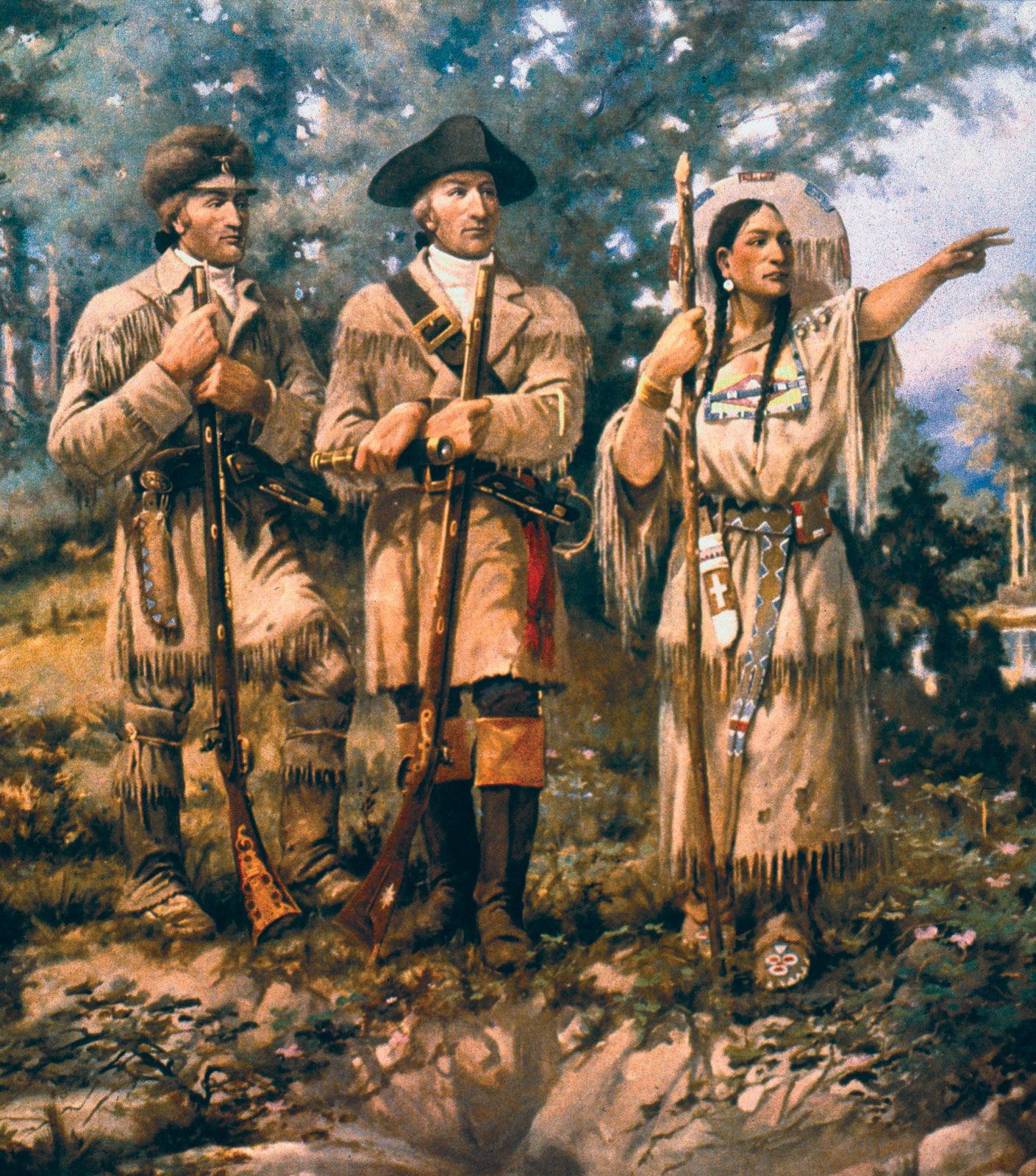
The most fascinating contribution in the first section is titled "Revising the `Wild´ West: Big Game Meets the Ultimate Keystone Species" by Paul S Martin and Christine R Szuter. It meticulously analyzes the journals of the famous Lewis and Clark Expedition (1803-1806) to Montana and the Pacific Northwest. In Montana, the expedition encountered enormous flocks of bison and other game animals, one bison flock estimated to be 10,000 animals strong! The bison, elk, wolves and grizzly bears were also extremely tame. Clark managed to kill a wolf with his spontoon, suggesting that he managed to get very close to it (a spontoon is apparently a weapon about 2 meters long). The wolf was eating a drowned bison and seems not to have cared much about the human hunter, before it was too late! Lewis, Clark and their "Corps of Discovery" had no problem finding and killing animals for food east of the Rocky Mountains. West of the Rockies was a different story. There, game was virtually non-existent. At first, the expedition was forced to live on dried fish and roots provided by the Natives, something that made them sick. Later, they bought horses and dogs from various Native groups, with the intention of killing and eating them. Nor were the animals in the Pacific Northwest particularly docile. Killing a grizzly was considered an extremely heroic and manly act by the Natives, since these animals were so extremely aggressive. 

What could account for the peculiar difference between the two areas explored by the Lewis and Clark expedition? The two explorers themselves had no explanation, and many historians don´t give one either. However, the answer is right there, in the journals.

It´s the Natives, stupid.

The Native population was abundant *west* of the Rockies, where the game was most scarce. This would indeed suggest some kind of connection. The situation in Montana was more complex. An aggressive Native group known as the Blackfoot had virtually cleansed large areas of competing tribes by systematic attacks. Thus, the overall population density of Montana was probably lower than the areas further west. Of course, Blackfoot raiding had led other tribes to take defensive measures. Vast stretches of "no mans land" separated the various tribal territories from each other. In these areas, hunting was deemed difficult, due to the risk of being spotted and killed by scouts from the enemy tribe. Martin and Szuter believe that the abundant wildlife described by Lewis and Clark lived in these "DMZs". There is some later evidence for the same phenomenon, for instance Colorado circa 1820-1840, when the bison disappeared from the territory *when the Indian tribes made peace with one another*. A more recent example would be the border between North and South Korea, where wildlife is thriving.

These facts (plus the later disappearence of many Native groups) make it problematic to argue that current conservation efforts are about "restoring" an original, pristine wilderness. There simply isn´t such a thing. There hasn´t been a pristine wilderness sensu stricto since humans first arrived in North America 12,000 years ago. Animal numbers have been controlled by humans ever since. Humans are "the ultimate keystone species". The "balance" (if that´s the right word for it) between Native hunters and prey animals was disturbed when Natives aquired horses, but also when European diseases severly decimated the Native population. This led to all kinds of anomalous situations, often misreported as some kind of "Eden" where animals are super-abundant and tame. Something that is really the result of an atypical absence of human hunters, something seldom seen since the Pleistocene...

I will certainly continue reading this book with considerable interest. 


Saturday, February 1, 2020

Åh nej, Lyndon LaRouche hade rätt


Vem hade egentligen rätt? EAP eller Greta Thunberg? Den frågan har äntligen besvarats. Lägg märke till det ryska *flytande* kärnkraftverket, detta efter att jag i ett tidigare inlägg ironiserat över just sådana...

Ooookay.


Framtidens kärnkraftverk byggs i fabrik

Friday, August 24, 2018

Well, at least they met a lot of humans


They are baaaaaack...

For some reason, the tired old concept still works: town hall meetings, eye witness reconstructions, the cliff hanger with the growling gorilla, night investigation in black-and-green, and Bobo Fay's incomprehensible comments. ("Incomprehensible" as in "I don't understand his dialect".) The only thing missing is the main character. You know, Bigfoot...?

But yes, it's entertaining after a fashion. In the first episode, half of the BFRO team visits Bethel, a primitive and isolated village in Alaska where people live off the land as they've done for thousands of years...not! Please note the huge cranes, modern trucks and fishing boats in the background. According to Wiki, Bethel also has an airfield and a port?! In the second episode, the team goes to the Idaho panhandle, which also turns out to be teeming with people (no neo-Nazi compounds in sight, though).

I admit a certain childish fascination with the (outlandish) eye witness reports. Honest misidentifications or hallucinations seem out of the question here.The witnesses either saw Bigfoot or are lying through their big teeth! Huge primates attacking tents on the Alaskan tundra, or just showing off their 12 feet high ware, a Bigfoot nursing offspring visible for twenty minutes on Mount Moscow (sic) in Idaho, and one guy only being fifty percent sure that a huge hairy creature walking across his property was a squatch. Cliff Barackman's comment: "He should have a beer with Ranae!" (Ranae is the perennial team skeptic.)

Is there something out there? Of course there is. Come on, some people see far stranger things than this (economic upturns, for instance). If we are very, very lucky, maybe the BFRO will find something one day... That would be a great season finale, don't you think? ;-)

PS.
On Animal Planet, this is dubbed "season 6".

Saturday, August 4, 2018

WHY DIDN´T HE JUST PAY HIS PARKING TICKET?


20 people voted "non helpful" when I posted this troll review on Amazon... 

Why didn't Johnny just pay his parking ticket? Does he think he has some kind of special privileges, just because he's from Idaho?

Well, I suppose the traffic police (who were just doing their job) picked on the wrong guy...

Sunday, July 29, 2018

Extremists R Us


I read Jon Ronson's book in an abridged Swedish edition. I expected the book to be comic relief, and it's certainly marketed that way. Instead, I found the book to be disturbing, tragic and (at best) tragicomic. Sometimes, it made me sympathize with the extremists!

The physical attacks on David Icke in Canada makes you wonder who is more insane: Icke or the people harassing him? As for Randy and Vicki Weaver, they were obviously the victims of a set up, to put it mildly. The paranoid crypto-Nazis who chase the Bilderbergers are disturbing, but so are the Bilderbergers themselves. One of the Bilderbergers, Dennis Healy, doesn't understand what on earth the fuzz is all about when interviewed by Ronson: "Sure we have secret meetings. So what? That's how it works. That's how thing are done".

So that makes it alright, then?

The high point of "Them" is Ronson's successful infiltration of the Bohemian Grove, a place where conspiracy theorists believe that the Bilderbergers carry out bizarre rituals in honour of an owl god. They turn out to be partially right: Ronson actually manages to watch the secret ritual, complete with a mock sacrifice in front of an owl statue. The "ritual" turns out to be a ridiculous, pseudo-Masonic college fraternity stunt. The thing looks more pathetic than menacing. Indeed, somebody suggests to Ronson that the Bilderbergers might actually *like* all the conspiracy theories about them. It boosts their egos. Today, nobody controls anything anymore.

Perhaps the full-length original version of "Them" is more entertaining. Or perhaps the Swedish translation is to blame?

I don't know, but I walked away from this book more convinced than before that the extremism of the conspiracy theorists is fuelled by the insanity of the real world...

Electricity beyond the light


The classical books on near-death experiences by Raymond Moody or Melvin Morse paint the phenomenon in a very bright light. NDEs are virtually always positive and have positive after-effects on those who experience them. I'm sure the Unitarian Universalists love Moody and Morse. And who knows, maybe they are right.

And then there's P.M.H. Atwater.

"Beyond the Light" gives a somewhat different view of the other side than the all-positive works of Moody. Atwater mentions the heavenly encounters, but also details hellish near-death experiences. They are apparently relatively common. She also makes a connection between NDEs and other paranormal phenomena, including UFOs. The most interesting part of the book deals with after-effects of the NDEs. It seems that even positive NDEs can have "negative" effects, including missing time, oversensitivity to light, the strange malfunctioning of electronic equipment, and virtual hauntings. Some people who experienced NDEs see more UFOs than usual. The subjects are frequently misunderstood by their spouses, relatives or peers. Occasionally, they feel a strong drive to convert the rest of the world to some kind of "message" given them while on the other side.

The same kinds of after-effects are also reported by Albert Budden in his book "Electric UFOs". That book, however, is not about NDEs but rather deals with supposed encounters with aliens or ghosts! Budden believes that the experiencers have been exposed to strong electromagnetic fields, making them prone to hallucinations. This explanation is difficult to apply to NDEs, unless one can prove that the resuscitation attempts in hospital beds are "major electric events", to use Budden's terminology. However, even people who "die" out in the open, miles from a hospital, can experience NDEs. Are dying people more sensitive to unknown electromagnetic fields? Or is God electric? Or...?

Well, who knows. Still, the fact that many people who experience the occult or the supernatural react in the same physical manner, surely must mean something. At the very least, it shows that we are dealing with *some* kind of objective phenomenon. But what on earth that phenomenon can be, I honestly don't know.

The third part of "Beyond the Light" is New Age fluff. Still, there are some interesting items even there. Thus, Atwater is fascinated by alternative medicine and food. This, too, reminds me of Budden, who claims to have found that many people who supposedly encountered UFOs and aliens have masked food allergies, which makes them prefer health foods...

There is *something* beyond that light...