Showing posts with label Paraguay. Show all posts

Friday, December 1, 2023

Down and out in Asunción


The cultic scam known as the United States of Kailasa continues. This time, they tricked some officials in Paraguay, a very real nation in South America. The Guardian tries to exenorate the Paraguayans with the absurd argument that "Kailasa" has tricked others before! 

Yeah, whatever. 

Have they never considered that bribe money might have been involved? Or that some local officials are incredibly stupid people? I mean, how hard is it to check Kailasa´s status on the web...  

Officials in Paraguay sign agreement with fake nation

Sunday, April 18, 2021

Tillplattad


Har inget särskilt att göra så här på söndag morron, så jag har toksurfat på nätet och hittat lite konstiga grejer, exempelvis den här informationen om corona på Plautdietsch, alltså plattyska. Eller rättare sagt den särpräglade dialekt av plattyska som i huvudsak talas av mennoniter. 

Okej, då vet vi det. :D 

PS. Här är förresten ett utdrag ur bibelöversättningen till Plautdietsch. Närmare bestämt från "Daut 1. Buak Mose", alltså Första Mosebok. 

 Em Aunfank schauft Gott de Himmel un de Ieed. Un de Ieed wea wiest un ladich, un Diestaness wea äwa de ruzhende Deepe [Onentlichkjeit]; un de Jeist Gottes schwäwd äwa de Wotasch. Un Gott säd: Daut woat Licht! Un daut word Licht. Un Gott sach daut Licht, daut et goot wea. Un Gott trand daut Licht von de Diestaness. Un Gott nand daut Licht Dach, un de Diestaness nand hee Nacht. Un daut word Owent un daut word Zemorjess: De 1-ta Dach.

Den var ju enkel. Här kommer en svårare!

Soo worden vollbrocht de Himmel un de Ieed un aul äa Häa. Un Gott haud aum 7-den Dach sien Woakj vollbrocht, daut hee jemoakt haud; un hee rud aum 7-den Dach von aul siene Woakjen, dee hee jemoakt haud. Un Gott säajend däm 7-den Dach un heilijd am; dan aun däm seljen rud hee von sienem Woakj, daut Gott jeschaufen haud, enn däm hee daut muak. Dit es de Entstonung vom Himmel un de Ieed, aus see jeschaufen worden, aun däm Dach, doa de Harr, Gott de Ieed un Himmel muak, un äa aulet Struck vom Feld oppe Ieed wea, un äa aulet Krut vom Feld utleet; dan Gott, de Harr haud noch nich oppe Ieed räajnen loten, un kjeen Mensch wea doa, om däm Ieedboddem too bebuen.

Där räckte nog inte skoltyskan till, tror jag. Och så toppar vi med Matteusevangeliet. 

Aus Jesus, enn Bethlehem em judeschen Laund, jebuaren wea, enn de Tiet aus Heroodes Kjeenich wea, kjeemen vom Oosten (utem Morjelaund) Stearnforscha no Jerusalem, un säden: «Wua es de Kjeenich de Jude, dee jebuaren es? Dan wie ha sien Stearn em Morjelaund jeseenen, un send jekomen, am auntobäde». Aus Kjeenich Heroodes daut hieed, wea hee erschrakjt un gauns Jerusalem met am. Un hee vesaumld aule Huagepriesta un Schreftjelieede utem Volkj, un forscht no, woa de Christus jebuaren woaren sull. See oba säden too am: Enn Bethlehem enn Judäa; dan aulsoo steit derch dän Profeet jeschräwen: «Un du Bethlehem, em Judischen Laund, du best nich de jerinjsta unja de Firste (Harscha) enn Judäa; dan ut die woat een Harscha häa komen, dee mien Volkj Israel weiden woat». {Mi.5,1} 

Och hör sen!

Sunday, September 9, 2018

Jesuits and Natives


"The Lost Paradise" by Philip Caraman is a book about the Jesuit "state" or "republic" in Paraguay, which existed for several centuries from the late 16th century to the 1760's. The book is very uneven. Some chapters are downright confusing, while others are more clearly written. The most interesting parts of Caraman's book deal with the organization and daily life of the Jesuit towns in colonial Paraguay.

The Society of Jesus established self-governing towns known as reductions in various parts of South America as part of their missionary strategy. The Jesuits fraternized with the Indians, attempting to "civilize" and modernize them by establishing an urban culture based on trade, handicrafts and agriculture. In the process, the Catholic order hoped to convert the indigenous population to Christianity. The Jesuits opposed enslavement of the Indians and other forms of exploitation, making the reductions unpopular among Spanish settlers and Portuguese slave-raiders. They were also extremely annoying to the Jesuits' Franciscan competitors, and eventually to various royal governments in Europe. The Jesuits were a semi-independent international organization, and part of their finances came from the reductions in South America. Small wonder the "Black Capes" were controversial!

The reductions in Paraguay and adjacent regions of Brazil and Argentina were the most successful - or at least the most notorious. They have been turned into legend by both contemporary and modern writers, sometimes depicted as a Utopia in the best traditions of Plato and Thomas More, sometimes seen as an authoritarian, paternalistic nightmare. The truth seems to lay somewhere in between. Since the usual alternative to living in a Jesuit reduction was enslavement or enserfment at the hands of European settlers, it's not particularly surprising that many Indians more or less voluntarily choose the protection of the Society of Jesus. In this sense, the Jesuit "republic" in Paraguay really was a positive development.

Judging by "The Lost Paradise", the area controlled by the Jesuits wasn't really a "state" in the strict sense of the term, but rather a network of autonomous towns. Nor was it an independent kingdom or republic. Together, the Jesuit reductions comprised an administrative unit within the Spanish Empire, and the inhabitants were therefore subjects of the Spanish crown. The reductions regularly paid taxes to the rulers of Spain! However, the Jesuits *did* have their own agendas, different from those of the local Spanish settlers. For instance, they opposed the virtual enslavement of the Natives through the encomienda system. Apart from the Jesuits themselves, Spanish settlers were usually not allowed to visit the reductions. More generally, the Jesuit padres were part of an international Catholic order subject to the Pope, rather than to the kings of Spain. This raises the question why the Spanish crown permitted a quasi-autonomous unit of this kind?

I don't think Caraman analyzes this question in sufficient depth, but he does point to some factors favouring Jesuit crypto-independence in Paraguay. The reductions guarded the border between the Spanish colonial possessions and those of Portugal. Sao Paolo in Brazil was in the hands of slave-raiders known as Mamelucos who regularly attacked Native settlements, including some of the original Jesuit reductions. Since the Mamelucos were Portuguese subjects, it was in the best interest of the Spanish crown to permit the Jesuits to arm the local Indians against them, thereby stopping the Portuguese empire from expanding into Paraguay and Argentina. Another factor favouring the Jesuits was the sparseness of Spanish settlements in the region. Even Buenos Aires (later the burgeoning capital of Argentina) was dependent on Jesuit-led Native troops for protection against the Portuguese. I also suspect that the Spanish authorities might have liked the Jesuit Order's pacification of the indigenous tribes. The colonial settlers resented or feared the activities of the local Indians: large-scale theft of cattle, attacks on outlying settlements and cannibalism. The Society of Jesus attempted to convert even the most "wild" and "primitive" (read war-prone) Natives to Christianity.

How did life in a reduction look like? While it must have felt regimented for former hunters and gatherers, Caraman's book doesn't suggest an autocratic nightmare. Nor does it suggest complete communism. The reductions did have vast tracts of land held in common, but the author believes that the Indians were used to communal ownership due to their recent "primitive communism" living nomadically in the jungles. The Indians also had private plots. They couldn't be bought or sold, but this was no real problem either, since land was so abundant that everyone who wanted additional plots were simply given what he wanted. Horses and cattle seem to have been semi-feral all over Paraguay, and also existed in such abundance that most Natives actually consumed beef as a staple! Caraman is also impressed by the houses for orphans and widows, and the fact that there were no beggars in the reductions. People who couldn't work were given hand-outs from the common storehouses. The author describes the Jesuit system as a "welfare state".

Military drills, religious processions and celebrations, and (for some) handicraft production were common activities in the reductions, apart from the daily drudgery of agricultural labour. Occasionally, the Jesuits sent missionaries backed up by Christian Indians to the pagan tribes, winning them over by a combination of force and cajoling. While life in the reductions was better than being worked to death by Spanish encomenderos, it was not a tranquil Utopia either. Smallpox epidemics and other diseases took a grisly toll. Bad eating habits led many inhabitants to become chronically ill from worm-infestation, addiction to intoxicants was relatively common, and periodically there were battles with Mamelucos or pagan Indians. But then, war and disease were not unknown in Europe either. More originally Paraguayan were the constant attacks by jaguars. Here, "The Lost Paradise" contains some anecdotes that are frankly unbelievable. One Indian settlement was supposedly besieged for nine days by a huge flock of *very* hungry and very angry jaguars. According to Wikipedia, the jaguar is a solitary animal, except for mother-cub groups. How many cubs did this particular mother have, I wonder? The Jesuits also reported that the jaguars often sneaked into their towns, ambushing and killing people.

An ironic fact about the Jesuit reductions is that their main export product was yerba (a.k.a. yerba mate or mate), a drink the Jesuit fathers considered to be an intoxicant. However, they were forced for pragmatic reasons to let the Indians drink it, and for economic reasons to export it. Indeed, yerba from the reductions soon got the reputation for being the best in the market! Another "irony" (if that's the word for it) is that the reductions had Black slaves - a fact only mentioned once by Caraman. He doesn't mention their number, but the inconsistency between protecting Indians from enslavement, while buying Black slaves, is glaring...

Despite their sympathies for the Natives, the Jesuits *did* have a paternalistic, crypto-racist attitude towards their wards. The author accepts their complaints at face value, suggesting that he, too, is something of a racist. This leads to constant contradictions in his narrative. Apparently, the Guarani (the main Indian people in the region) were "indolent" and therefore had to be constantly supervised when working or drilling. The medical assistants were particularly stupid. However, the author also claims that there were usually only two (!) Jesuits present in each reduction, making the reader wonder who really supervised the indolent Guarani? At one point, Caraman seems to suggest that the day-to-day running of the settlements were in the hands of traditional Indian leaders (caciques). Since the reductions were making modest profits, clearly somebody *wasn't* being indolent...

The Jesuits, once again parroted by Caraman, also accused the Guarani of low intellectual abilities. Apparently, they were completely unable to come up with new inventions of any kind. Strangely, however, they were masters at imitation. One Jesuit writes that the Guarani built him an organ, being an exact replica of an organ he had brought with him from Europe. It's unclear why this isn't seen as an example of intelligence? Some of the other complaints are simply silly. The Guarani were so low-brow that one couldn't "reason from created objects to the existence of a creator", and apparently they were no good at mathematics, either. Somehow, I feel the Natives in 17th century Paraguay might have had other things on their minds than learning multiplication...

Eventually, the Jesuits themselves got other things to worry about. In 1750, a treaty between the erstwhile arch-enemies Spain and Portugal ordered the Jesuits (and the Indians) to leave seven of the reductions. The Jesuits complied, but the Guarani decided to resist only to be defeated in battle by a combined Spanish-Portuguese force. Despite Jesuit compliance with the expulsion order, their enemies spread out the rumour that the order was disloyal to the Spanish crown. In 1767 the Jesuits were expelled from all of South America by orders of king Charles III. The Society of Jesus was seen by its opponents in both Spain, Portugal and France as a "state within the state", and as the political arm of the papacy. In 1773, the Catholic Church was forced to officially dissolve the Jesuit Order en toto. Meanwhile in Paraguay, the new colonial administration had realized that the reductions were necessary to keep stability in the region, and therefore ordered the Franciscans to continue where the Jesuits had left off. However, the harm could not be repaired and the old Jesuit towns soon went into decline and were eventually abandoned. Today, only ruins are left.

Although "The Lost Paradise" by Philip Caraman might not be the most graceful book around, it does give an interesting look at the Jesuit "republic", and paints it as less controversial than many popular sources. For that reason, it can be worth reading.

Wednesday, August 1, 2018

The Jacobin of Gran Chaco


A review of "Reign of Doctor Joseph Gaspard Roderick De Francia in Paraguay". 

This book was originally published in 1827. The authors, Rengger and Longchamps, were two Swiss nationals who had visited the South American nation of Paraguay in 1819. For various reasons, they couldn't leave the place until 1825.

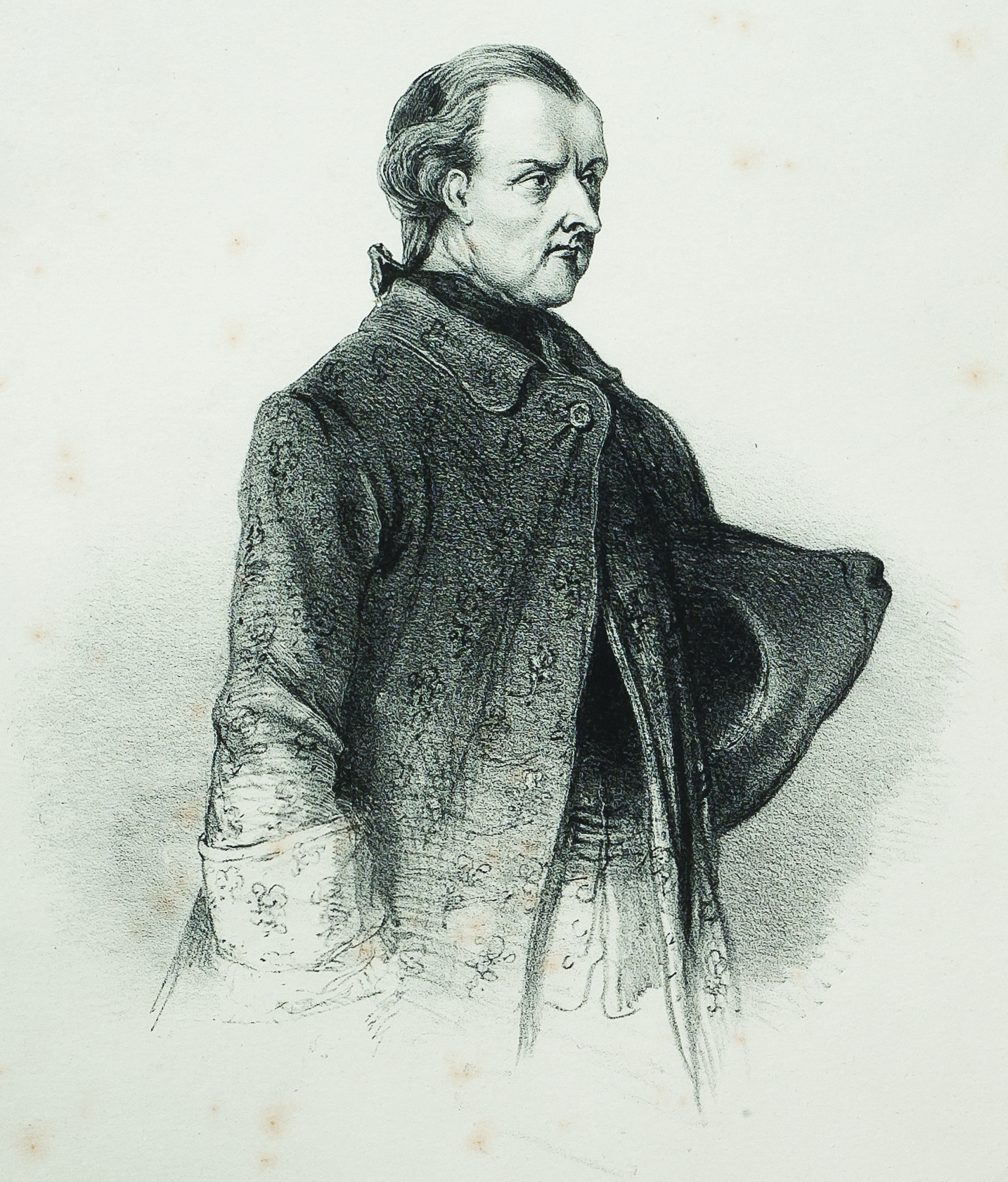
At the time, Paraguay had just won its independence from Spain and defended it against Argentina. The government was headed by Dr. José Gaspar Rodriguez de Francia, a self-styled Dictator and president for life. What makes Francia's rule so interesting is that it was an early attempt to create something akin to socialism. While Francia admired Napoleon, the Jacobins seem to be a more relevant source for his ideas. Rengger and Longchamps intensely disliked Francia, but several interesting facts nevertheless emerges from their narrative.

Before independence, Paraguay had apparently been a typical colonial monoculture exporting tobacco and "the herb of Paraguay", and importing basic foodstuffs. The authors blame this on the indolence and stupidity of the locals, when in fact it's a classical colonial situation. Francia, upon taking power, isolated the nation from the outside world and turned the cash crop plantations into agricultural land, thereby boosting domestic food production. Rengger and Longchamps marvel at the fact, that Francia managed to turn the lazy inhabitants into such efficient agricultural labourers! Francia also imposed a state monopoly on foreign trade, compulsory militia service and corvée.

According to the book, the population of Paraguay was divided into several "castes". Of these, the Spaniards had been the most influential before independence. There was also an elite group of Creoles (Mestizos). Francia overthrew the Spaniards and gradually confiscated their property. He also diminished the role of the Creole elite, instead basing his power on plebeian Creoles, which he promoted to high rank within the administration and army. (Francia himself was a Creole of French extraction. Hence his name.) The Dictator studied the works of Voltaire and Rousseau, dissolved the religious orders and forcibly secularized the monks. Some convents were turned into granaries and wharehouses. Francia also made himself the de facto head of the Catholic Church in Paraguay.

The Swiss travellers go to some length describing Francia's "terror", strange laws and capricious nature. They claim that the dictator took his worst decisions when he had "fits of hypochondria". He lived the life of an ascetic, and apparently wasn't married at the time the authors visited Paraguay. Apparently, Francia was also completely disinterested in money, and his only private vice was cigar-smoking.

In other respects, Paraguay still resembled a colonial settler state. Francia never abolished Black slavery and his regime had constant conflicts with Indians. Some of them worked the state lands under serf-like conditions. Francia's personal barber and personal cook were Black slaves, although the authors marvel over how leniently he treated them. Still, one wonders why this "enlightened despot" didn't abolish slavery en toto, especially since the slaves seem to have been few in numbers (there were also free Blacks in the country).

Due to tensions between Paraguay and neighbouring nations, Francia often "grounded" foreign visitors and merchants on visit to his country. Rengger and Longchamps were forced to stay in Paraguay for six years, until the Dictator finally gave them permission to leave. The authors were naturalists and were free to travel across Paraguay itself and collect specimens of rare animals and plants. Rengger was also a doctor, which also gave him freedom of movement (the regime used his services). Since they published a detailed book about Paraguay only a few years after their home coming, one wonders whether or not they could have been spies as well? The neutral Swiss!

Francia ruled Paraguay until his death in 1840, at which point the nation quickly reverted to the chaotic, neo-colonial status it still "enjoys". Yet, it's interesting that a "Jacobin" program was made to work in this godforsaken country for almost half a century.

Tuesday, July 31, 2018

The unknown socialist


Marx and Engels published "The Communist Manifesto" in 1848. Unbeknown to both them and many others, a de facto socialist state had already been created...in the small and isolated Latin American nation of Paraguay.

The curious regime of Dr. José Gaspar Rodriguez de Francia lasted from 1814 to 1840. Francia called himself El Dictador (The Dictator) and was president for life. His detractors have accused his regime of terror, and the man himself of being literally insane. Richard Alan White's book "Paraguay's Autonomous Revolution 1810-1840" is an attempt to defend Francia's politics from a Third Worldist and neo-Marxist perspective. Remarkably, the book is published by the University of New Mexico Press.

White believes that Francia had strong popular support in Paraguay. He describes the politics of El Dictador in some detail. Paraguay had a virtual planned economy with a state monopoly on foreign trade. Import and export prices were set by the government. A radical land reform was carried out, and large tracts of land were taken over by the state. The power of the traditional Spanish and creole elites was broken by confiscating most of their property. The Catholic Church was closely supervised by the government, and most of its lands confiscated. Interestingly, Paraguay managed to break its neo-colonial dependence on a few cash crops (yerba and tobacco), creating a diversified and self-sufficient economy, even growing enough food to sustain its population. A program of public works was instituted, which abolished begging and vagrancy. White claims that taxes were lowered, the budgets balanced and sustainable development promoted. Francia also gave asylum to fugitive slaves from other nations and deserters from the various civil wars in Argentina.

What White never really explains, is how this socialistic regime could possibly have been set up in a backwater like Paraguay 200 years ago. He does hint at some explanations, however. The main one is precisely the isolation of the country. The ruling elites were weak and faction-ridden. This presumably made it easier for Francia to take power. Also, the constant blockades of Paraguay by neighbouring Argentina (who resented Paraguay's neutrality during the various wars of the period) made it necessary to create a self-sufficient, near-autarkic economy. However, the author never analyzes this question in depth. He also claims that the autonomous revolution didn't end until the death of president Francisco Solano Lopez in 1870, but never backs up the statement. Nor does he discuss the tricky consequences for Marxist theory which surely must strike everyone reading about Paraguay. How can socialism (or something closely resembling it) be set up in a Third World nation without an industrial proletariat? Doesn't this disprove the Communist Manifesto?

As already mentioned, most other treatments of Dr. Francia's reign are very negative. I've previously reviewed a book by Rengger and Longchamps originally published in 1827, which gives a very different view of the period. From this book, I got the impression that Francia's regime was based on creole plebeians, but not on Indians and Blacks, who continued to be discriminated in various ways. White at least implies that the regime was really based on the Indians (and presumably poor creoles). As for the Blacks, White admits that Francia never abolished slavery, although he reports that Francia eventually manumitted his own slaves (both of them). The decision not to abolish slavery is curious, considering that only 2% of the population were slaves.

In contrast to many other sources discussing Francia, White says very little about the supreme leader's personal character or background, although he admits that Francia made himself into a dictator, and that virtually all decisions in the country were made by or scrutinized by him. He also mentions Francia's harsh measures against political opponents, connected to the former elites or foreign intelligence operations. The various rumours about Francia's erratic temperament and bizarre actions are hardly discussed at all, probably quite rightly. It's not very likely that somebody who almost single-handedly ruled an entire nation for 26 years would have been clinical!

Where did the president for life get his revolutionary ideas from? This seems to be unclear. Rengger reports that Dr. Francia was fluent in French, claimed to be part-French (hence his name) and admired Napoleon. He knew about Rousseau and Voltaire. White points out that Francia studied in Spain and was influenced by the Enlightenment, but is less sure of the concrete influences. He sees parallels with Rousseau, Volney and Babeuf, but also mentions Saint-Simon, a contemporary. Ironically, Francia's doctorate seems to have been in...theology!

Regardless of what one may think of Dr. José Gaspar Rodriguez de Francia, "Paraguay's autonomous revolution" is indispensable reading for those interested in this particular part of world history.