Showing posts with label Réunion. Show all posts

Thursday, January 1, 2026

Dead as a solitaire


The dodo, the passanger pigeon and the great auk are three almost iconic extinct birds. Inevitably, some people claim to have seen them after they officially traversed to the proverbial hunting grounds. 

Also as usual, some of the reports are more difficult to believe than others. For instance, a report of a living dodo in Zambia?! Hint: the dodo was a flightless bird living on the island of Mauritius. Zambia is a landlocked country in South-Central Africa. But even that pales when compared to an alleged video of a dodo in...Costa Rica. Yeaaah. 

My "favorite" is the Canadian whiskey distiller who tricked the media to a marketing event on the Orkney Islands, claiming to finance an expedition looking for surviving great auks. The runner up is the bizarre story of penguins on the run in Norway being mistaken for said auks. Is that even true, or an April Fool´s joke?

Interestingly, Teddy Roosevelt believed that he spotted passanger pigeons seven years after the species supposedly disappeared. So TR *did* have some kind of cryptid connection. The usually trigger happy rough rider decided not to shoot them. Later sightings are probably misidentified mourning doves or bizarre specimens of domestic pigeons on the run.

A very entertaining video, all in all.    

Thursday, February 27, 2020

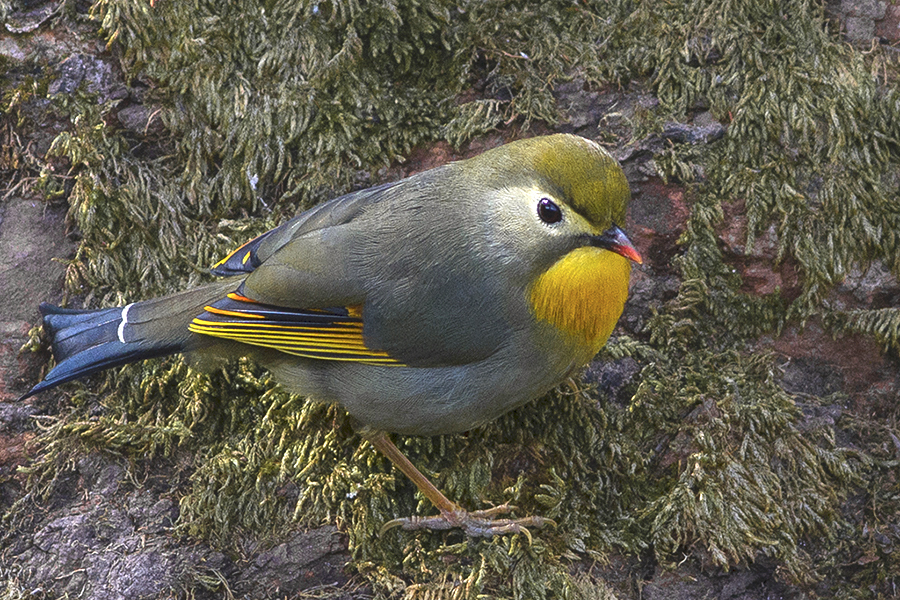
Come and see the leiothrix

Leiothrix, a bird from Himalaya introduced at Réunion?!


“Birds of the Indian Ocean Islands” is a field guide written by Ian Sinclair and Olivier Langrand, with illustrations by Norman Arlott, Hilary Burn, Peter Hagman and Ian Lewington. First published in 1998, this is the fully revised 2013 edition. Sinclair is apparently the grand old man of African field birding, and have written over 20 books. Langrand is a French conservationist. The book is sponsored by the hardware business Chamberlain and is devoted to conservation efforts.

The area covered by the field guide includes Madagascar, the Mascarenes (i.e. Mauritius, Rodrigues and Réunion), the Comoros and the Seychelles. In other words, the island-nations and colonies off the east coast of Africa. It also covers seabirds from the same general area. 502 species are included, all illustrated in color. Illustrations, species presentations and range maps are on facing pages, making the guide easy to use. It reminds me of Heinzel-Fitter-Parslow.

The introduction describes the major bird-watching hotspots on the covered islands, and how to reach them. Curiously, the guide says next to nothing about the political situation in the area. Surely, both Madagascar and the Comoros are extremely unstable? Was the text simply taken over from the 1998 version of the book? Nor is the political status of the islands mentioned. Isn´t it relevant that Mayotte is a French dependency, while the rest of the Comoros form an independent state? The introduction also include a long list of endemic species, and a ditto of “new species”, although most of these seem to be previously known populations promoted to species status (and in some cases, to conservation efforts c/o the international community).

Many of the birds are virtually unknown even to an arm-chair bookish amateur ornithologist such as the Ashtar Command, I mean, what on earth are tetrakas, jeries, newtonias, couas or the leiothrix? Only currently living or recently extinct bird species are included, so no dodos or elephant birds in this one! By contrast, European migrant birds passing the Seychelles on their way to and from the African mainland are included, including the corn crake. Strindberg would have been surprised, LOL.

With that Swedish in-house joke, I end this review of “Birds of the Indian Ocean Islands”, 2013 edition, which I got for a discounted price when buying CDs from a local vendor (sic). Swedish local, that is.