Showing posts with label Moldova. Show all posts

Tuesday, October 13, 2026

Predictions


Credit: Arunraj Foundation

Maybe I already "predicted" this, but for the record: I don´t think Russia is crazy enough to launch an actual military attack on a NATO nation. 

If they attack anything outside Ukraine, my guess is Moldova or Svalbard. They are quasi-Western and non-NATO territories already controlled by half by the Russians (Transnistria and Barentsburg, respectively). But even more likely is "more of the same": cyber-sabotage, influence operations, perhaps blowing up a few arms depots.  This conflict is going to be be decided in Ukraine...or in European elections.

Or perhaps American ones. 

Tuesday, May 19, 2026

Kompisröstning


Är inte detta något slags brott mot Eurovisions regelverk? Moldavien borde kanske utestängas från tävlingen nästa år? Att Moldaviens jury inte gav så många poäng till Rumänien är i själva verket positivt, eftersom låten var ett sado-masochistiskt porrnummer om strypsex! 

Moldavien svek grannlandet, TV-chef tvingas avgå

Tuesday, March 17, 2026

No more wars


This is *not* the Finnish entry to the Eurovision Song Contest. In fact, it´s not an ESC song at all, but a new version of a classical Euro-disco hit from Moldova. Note the marching Russian (?) female cadets?!

Donald, plz don´t start any new wars over this song, plz plz plz. LOL.

A propos a previous blog post...

Sunday, September 28, 2025

Drängarnas lakejer


Det pro-ryska blockets symbol.
Ingen tvekan om var sympatierna ligger!

Vänsterpartiets förra ledare Jonas Sjöstedt gör drängtjänst åt imperialismen. Hade jag nog skrivit om jag vore kommunist. Vilket jag förvisso inte är. Alltså skriver jag inte så. Eller?  

Ödesval i Moldavien

Friday, January 31, 2025

Tiraspoltransgaz


Communist shaking hands with capitalist


This is some kind of Henry Kissinger-level stuff from the European Union. Please note that "Transnistria" is a non-recognized pro-Russian quasi-Communist breakaway republic. If you can´t beat ´em...bribe ´em.

It seems that Russian Gazprom provides gas to both Moldova and Transnistria, perhaps through the same pipelines? Since Moldova has a pro-Western government, Russia decided to stop the gas deliveries, but this unfortunately left pro-Russian Transnistria hanging in the air...and deprived of gas, too?!

Are the Russians actually losing the plot? 

The EU offers emergency support to tackle the energy crisis in Moldova

Pro-Russian separatists refuse EU gas


Monday, October 21, 2024

The last Soviet republic


Some cynical questions. If the pro-EU Moldovan administration fears Russian vote buying, why didn´t *they* make sure to buy the votes instead? If the old KGB tries to destabilize your nation, surely it´s gloves off?

But perhaps they *couldn´t* do it. Which raises another question: why has the EU (and EU membership) lost its allure to the impoverished East European masses? Why do so many Moldovans prefer Putin´s Russia (and Moscow gold) to some association treaty yada yada with Brussels? 

Perhaps the hallowed European Union is doing something wrong? I mean, we can´t even rig a referendum in freakin´ *Moldova* for crying out loud...   

Moldova set to vote "no" in EU referendum

Friday, February 23, 2024

The fire next time: Transnistria?


Rumors or fears about the Russian-Ukrainian war spilling over into Moldova are hardly new, and here we go again. While Moldova doesn´t border Russia, part of its territory is actually controlled by a Russian-backed breakaway republic known as Transnistria. And they do border Ukraine...

As far as I understand, there have always been Russian Federation troops in Transnistria, the population of which is largely Russian. 

Since Moldova isn´t a NATO member, it could be a tempting target for a new front in the war. Indeed, it´s difficult to see what Moldova (or NATO for that matter) could even do, if Russia officially annexes Transnistria, and then choses to go no further? Transnistria would then become a new Kaliningrad, which it perhaps already is anyway.


Monday, November 13, 2023

Jan Myrdal: Högernationell?


Hade Jan Myrdal en högerradikal period i sin ungdom som han försökte dölja? Blev han mer "högernationell" mot slutet av sitt liv? Att han var Förintelse-förnekare, eller åtminstone Förintelse-minimerare, visste vi ju redan. Tobias Hübinettes spekulationer är ju riktigt intressanta här! 

Jan Myrdal och nationalismen 

Friday, July 21, 2023

Begging the Question


Previously posted on January 12, 2019. 

“Varför tigger romer?” (Why do the Roma beg?) is a controversial book by Stanislav Emirov, a priest in the Calvinist Church in Sweden. Roma or Romani people is the “official” designation of the ethnic group (or perhaps cluster of groups) popularly known as Gypsies. Many Gypsies from Romania and Bulgaria regularly travel to Sweden in order to beg in the streets and on the commuter trains. Most are strictly speaking illegal aliens, but the police do nothing since the Swedish establishment doesn´t care. Emirov has interviewed beggars, former beggars, and Roma activists in an attempt to understand the underlying problems. His book contains material from several European nations, although the emphasis is on Sweden.

The book feels disjointed and contradictory, more like a draft than a finished product. It´s peculiar in some ways. Emirov claims that the Calvinist Church has a special “team” aiding beggars in Stockholm, but their aid is never specified. Instead I get the impression that they served as the author´s intelligence operatives, mapping the beggar underworld. Emirov does come across as very critical, even hostile, to Gypsy culture which raises the question why the Roma wanted to talk to him (and his team) at all? Perhaps the author became progressively more skeptical to the Gypsies during his travels around Europe. “Varför tigger romer?” has been loudly denounced as “anti-ziganist” (i.e. anti-Gypsy) in the left-leaning parts of the Swedish media, while conservative daily Svenska Dagbladet has given it positive coverage.

Most controversially, Emirov reaches the conclusion that the Roma beg because they are Roma. Begging is one of the traditional Roma “trades”, and is always an option for any Roma who can´t get enough income from some other source. While begging is of course connected to poverty in most cases, other poor groups don´t beg, which to Emirov indicates that begging among the Roma is a culturally conditioned response to destitution. The fact that some Roma are rich but beg anyway also points to a cultural component. Emirov further argues that the Gypsies actually prefer poverty to assimilation. They obviously don´t *want* to be poor, but their hostility and paranoia towards majority society forces them to separate from it, both physically and mentally. To many Gypsies, any form of integration into, or accommodation with, non-Gypsy society is really assimilation and hence unclean by definition. Today, this separatist strategy has become dysfunctional: traditional Gypsy trades such as entertainment, peddling, horse-trading and certain handicrafts have either disappeared or been taken over by non-Gypsies. This forces separatist Gypsies to take up begging and other kinds of criminal activity.

But what should be done about the problem? Emirov advances several different perspectives on the problem of Roma begging, and these are not easily reconciled. When at his best libertarian-capitalist mood, Emirov proposes that begging is a trade like any other. Indeed, begging can be seen as a rational choice for some people. It can be compared to charities asking (begging!) people for a donation. The beggar simply eliminates the charitable institution as a middle-man, taking money directly from citizens in the street. This is also good for the giver, who thus gets some kind of choice in the matter of whom she should give to. Logically, Emirov should therefore call for the wholesale legalization of begging. However, he rather proposes that begging should be regulated by the state according to a quota system and that all beggars be forced to buy a license. The police will make sure that the regulations are followed by more frequent controls. The explicit purpose is to discourage Gypsies (who hate being regulated and registered) from begging, or entering the country at all. Emirov calls this the “nice way” in contrast to the “hard way”, which entails border controls of a more classical type.

However, in a later section, the author also proposes what he calls “the only right way”. This turns out to be a very peculiar “Austro-Marxist” proposal to give the Romani people status as an extra-territorial or non-territorial member-state of the European Union. All Roma (and presumably similar groups) around Europe should become “citizens” of this extra-territorial state, which would have representatives at different levels of the EU hierarchy. In this way, Emirov believes, the Gypsies will gradually become more positive towards the idea of integration. I consider this proposal to be unrealistic in the extreme, but above all, it´s faulty even on the basis of the author´s own premises. Thus, Emirov believes that Romanians and Bulgarians will remain racist towards the Gypsies for the foreseeable future. But if so, why should Romania and Bulgaria accept a non-territorial Gypsy political entity supported by Brussels on their territories? Further, Emirov claims that the only way to stop Gypsy begging without repression is to give them ample welfare payments. Apparently, 80% of all able-bodied Gypsies in Sweden are unemployed and hence live off the tax-payer. If so, the only way to stop Gypsies from the Balkans to beg, in Sweden or elsewhere, is to give *them* generous welfare payments, too. But what makes Emirov think that European tax-payers will accept such a solution? There are literally millions of Romani in Europe, and the Balkan republics are hardly the only places where you can find anti-ziganism.

The Gypsy cultural autonomy proposed by the author would simply become an enormous drain on the EU resources – or so it will seem to many EU citizens. The final objection is that even such an autonomous organization would probably be seen by the Roma themselves as a form of assimilation (perhaps the subtlest one yet). The initiative to form it, after all, comes from the unclean EU. It´s integrated into the EU´s structures. And Emirov says himself that “integration” is the ultimate goal, and on his own premises, this will be interpreted as racist “assimilation” by those whom it chiefly concern. Emirov´s liberal “pro-ziganist” opponents also have a problem, however. They really are integrationist, and have attacked “Varför tigger romer?” precisely for its “separatist” tendencies. I happen to agree with Emirov that opposition to majority society is strong among many Gypsies, guaranteeing that only small elite groups willing to interact with mainstream society will be attracted to the liberal perspective. I almost suspect that the welfare money is a way of hiding the fact that most Roma are still fundamentally Roma (for good or for worse).

As for Emirov, he closes his book by describing Moldova and Russia. Moldova is the only nation in Europe where the Romani population *does* intermarry to a relatively large degree with the majority, but the author sees this as a situation unlikely to be introduced anywhere else. In Russia, there is a truce or modus vivendi between Gypsies and Russians, the latter having a romantic picture of the former, something the former use to their advantage. Here the book ends, with the somewhat counter-intuitive statement that Putin´s Russia of all places might be the best place for the Romani people.

Despite everything, “Varför tigger romer?” is an interesting work, if seen as the journalistic report of one man. It does give a sneak peek into the world of beggars (including non-Gypsy ones). That being said, some of the author´s interpretations of Romani culture strike me as weird on the face of it (and I´m certainly no expert). Thus, why does Emirov constantly claim that Gypsies “can´t plan ahead”, “live from day to day”, and so on. His own book proves that those who beg *do* organize their work well in advance – as well they might. How else are they able to compete with all the non-Gypsy beggars? The same with those who form Gypsy associations in order to receive grant money from the state, and so on. Since Gypsies don’t like the prying eyes of unclean gadjos, has it never struck Emirov that the fatalistic and indifferent attitude towards life espoused by many of his interviewees is really a trick to make him, the annoying Calvinist busy-body, loose interest and go away? 

I´m also surprised by the author´s claim that most Gypsies lack a religion! If so, they would be the only people (before the modern era) to do so, a sensational claim that surely calls for a more extensive discussion. My guess is that Emirov construes “religion” and “supernatural” very narrowly. I´ve been informed by a Catholic priest from Slovakia that while most Gypsies are indeed indifferent to the central tenets of Catholicism (except baptism), they do believe in curses and look upon the priest with considerable awe, in the belief that “rasha” is a conduit of supernatural power. Why isn´t this a kind of religion, I wonder?

With these, perhaps somewhat disjointed remarks, I close my review of “Varför tigger romer?”.

Tuesday, April 26, 2022

Just another day in the universe

The targeted radio masts in Transnistria
(Credit: Transdnestrian Interior Ministry/Reuters)


This is not looking good...

The Russo-Ukraine war might spread to Moldova ("Transnistria" is a Russian breakaway republic in eastern Moldova, bordering Ukraine) or even to Russia itself. 

Note that it wasn´t senile Joe Biden who made the statement about attacks on Russian targets...

As for Transnistria, my wild guess is that it´s a Russian false flag to provide Russia with an excuse to intervene, but it could of course also be a Moldovan bait.  

World War III next? 

UK minister: "completely legitimate" for Ukraine to attack targets within Russia

Two radio towers destroyed in Transnistria

Tuesday, March 8, 2022

Landet som icke är

Lenin-staty i Tiraspol, Transnistriens s k huvudstad
(Credit: David Stanley) 

Funderade för några dagar sedan faktiskt på varför vi inte hört någonting om detta. Men nu verkar det vara dags...

Transnistrien pekas ut som Putins nästa mål


Monday, January 6, 2020

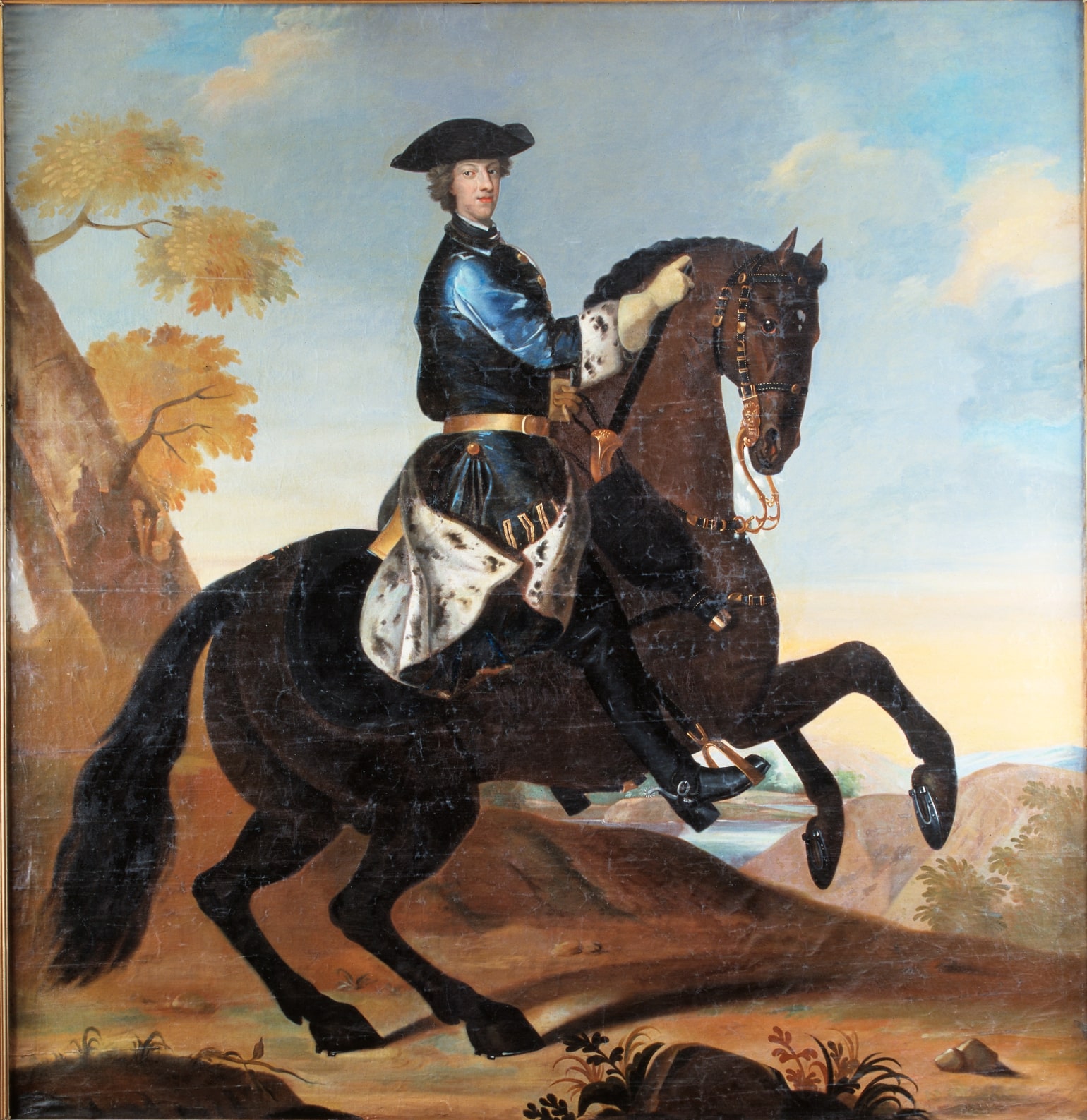
The mystery of Karl XII


“Karl XII: En biografi” is a biography in Swedish written by Bengt Liljegren. The book was published in 2000. Karl XII (or Charles XII) was king of Sweden from 1697 to 1718. During most of that period, Karl was away from Sweden waging wars in the Baltic provinces, Poland, Germany or Russia. He was also semi-interned in the Ottoman Empire for several years. The “Great Northern War” ended for Karl XII on the 30th November 1718, when he was shot dead in Norway during a siege. The Swedish defeat in the 18-year long war effectively ended Sweden´s great power period, Russia taking Estonia, Latvia, Ingria and West Karelia. Czar Peter the Great built St Petersburg, soon to become the Russian imperial capital, on territory conquered from the Swedes (or reconquered since Russia controlled the area before Sweden´s rise to regional great power status). Sweden also lost some of its German possessions, but was allowed to keep Finland, which had been occupied by Russia during the course of the war. Karl XII´s death also ended the first period of absolutist rule in Sweden, absolutism being replaced by a constitutional monarchy dominated by the Diet or Parliament (“the Age of Freedom”).

In Sweden, Karl XII is still extremely controversial, the “great warrior king” being a symbol for right-wing extremism. When I was younger, left-wing radicals and neo-Nazi skinheads near-rioted on the 30th November every year at Kungsträdgården in Stockholm, where a 19th century statue of Karl XII is located, menacingly pointing eastwards (at Russia). Leftists and liberals have often pointed out how absurd and anachronistic Karl XII is as a Swedish nationalist symbol. The king ruled a multi-ethnic state, many of his officers and officials were foreigners, and he attempted to create an alliance of Swedes, Cossacks, Tatars and Turks against Russia. Tatars and Turks are, of course, Muslim. Liljegren doesn´t mention the old legend that Karl XII brought the Travelers (a kind of Gypsies) to Sweden. At the same time, the slightly trollish liberal take on Karl XII is another form of propaganda, since it´s just as anachronistic to portray the old dictator as “pro-immigration” or “anti-racist” in the modern sense. Paeans to Karl XII have usually been a right-wing preserve, leftists – somewhat strangely – preferring his father, Karl XI (who created the system the son was defending). In his book, Liljegren describes how the views of Karl XII have changed back and forth over the years, among both historians and the public.

Above all, he describes the actual reign of Karl XII. While Liljegren is admirably objective in his style of writing, it´s difficult not to be critical of the monarch after reading the 442-page tome. Since Sweden was attacked by a triple alliance of Russia, Denmark-Norway and Poland-Lithuania-Saxony, one can hardly fault Karl XII for taking up arms in defense of his realm. However, his concrete way of doing so ultimately proved disastrous for both Sweden and himself. Instead of concentrating on defending the Baltic provinces against Russia, Karl spent years fighting a quixotic war in Poland and then attempted to march on Moscow without due preparations. The Russians decisively defeated the Swedish army at the infamous battle of Poltava, forcing the king to flee south to Bessarabia, then controlled by the Muslim Ottoman Empire. After finally returning to Sweden, rather than counter-attacking the Russians (who had occupied half of the then Swedish kingdom), Karl embarked on two equally weird and badly thought-out campaigns in Norway. The entire reign of Karl XII was marked by famine, pestilence and war. 200,000 Swedish soldiers were killed. At the time, the Swedish kingdom had a population of only two and a half million!

I get the impression from Liljegren´s book that while Karl XII was a brilliant tactician on the battlefield (at least in the beginning of the war), his long-term strategy left much to be asked for. Diplomatic finesse he had none. The young king had a reckless streak, constantly being on the attack (literally), even when diplomacy and tactical retreats would have suited the situation better. With more strategic thinking and planning, Karl might have been able to hold on to the Baltic provinces – or at least to Estonia and Latvia. Some of his wilder plans were never put into operation: Karl XII apparently toyed with the idea of invading Britain in alliance with the Jacobites, and also wanted to establish a Swedish colony on Madagascar in alliance with local pirates! Mostly as a thought experiment, he also developed a new numeral system with 64 as its base, a system defended by Emmanuel Swedenborg (the future Seer of the North) in a pamphlet written mostly to show loyalty to the king-dictator. 

What struck me most when reading “Karl XII: En biografi” was the intractable personality of the king. On the one hand, he was authoritarian, unapproachable, inflexible to the point of obsession, and had a sadistic humor. Foreign diplomats described him as unkempt and extremely rude. On the other hand, he clearly had *something* which made officers and common soldiers follow him and trust him, even to the point of death. Some kind of mysterious charisma? Karl XII always dressed in uniform, didn´t wear a wig and kept his hair short – all three things unheard of among contemporary monarchs and aristocrats. This gave him a “plebeian” look. He cultivated an image of being an ascetic warrior, married to his army. Like many other Swedish kings, he also distrusted the higher nobility as a class, much preferring the lower nobility and the commoners. The king was also something of a religious zealot, which gave him a fatalistic outlook on life - everything was preordained by God, so why worry about failure. Above all, he seemed impervious to suffering.

My impression of Karl XII´s personality type is very negative. Was he a sociopath? Or did he have some kind of autism spectrum disorder? What makes the whole thing doubly disturbing is that his inflexible orders were usually followed meticulously, even by people who knew better. Karl XII´s father Karl XI had turned Sweden into a well-drilled militarist absolutist state – and the son was reaping the benefits.  

That is, until the 30th November 1718 (or December 11 according to the Gregorian calendar now in use). For centuries, rumors have claimed that Karl XII wasn´t killed by a Norwegian bullet, but by one of his own people. A French immigrant serving as an officer in the Swedish army, André Sicre, was widely suspected of being Karl XII´s assassin by his contemporaries. Liljegren believes that the king was murdered and that Sicre may indeed have done it. Cui bono? The author regards it as extremely suspicious that Frederick of Hesse – who subsequently became king of Sweden – acted so fast after the death of Karl XII, purging the most prominent Karoline loyalists while buying off the officer corps with lavish gifts. And why had the same Frederick only six months earlier issued instructions about what should be done in the event of the king´s death, instructions never before heard of? And guess who promoted André Sicre? Yes, the very same Frederick… 

If Frederick was the main conspirator, the conspiracy failed after his “Hessian” faction had purged the pro-Karl “Holstein” faction. In the aftermath of the purge, the Hessians quickly lost the initiative to a third group, the “men of freedom”, who abolished royal absolutism. Frederick (who was married to Karl XII´s sister Ulrika Eleonora) eventually did become king, but without much effective power. It should be noted that other historians, including Peter Englund, strongly support the idea that Karl XII was killed by enemy fire.

Perhaps the debate will continue for another 300 years…

Still, if Swedish is your first language, “Karl XII: En biografi” does give a good overview of the life and times of the most divisive king in Sweden´s history. And perhaps his death, too.

Saturday, January 12, 2019

Begging the Question


“Varför tigger romer?” (Why do the Roma beg?) is a controversial book by Stanislav Emirov, a priest in the Calvinist Church in Sweden. Roma or Romani people is the “official” designation of the ethnic group (or perhaps cluster of groups) popularly known as Gypsies. Many Gypsies from Romania and Bulgaria regularly travel to Sweden in order to beg in the streets and on the commuter trains. Most are strictly speaking illegal aliens, but the police do nothing since the Swedish establishment doesn´t care. Emirov has interviewed beggars, former beggars, and Roma activists in an attempt to understand the underlying problems. His book contains material from several European nations, although the emphasis is on Sweden.

The book feels disjointed and contradictory, more like a draft than a finished product. It´s peculiar in some ways. Emirov claims that the Calvinist Church has a special “team” aiding beggars in Stockholm, but their aid is never specified. Instead I get the impression that they served as the author´s intelligence operatives, mapping the beggar underworld. Emirov does come across as very critical, even hostile, to Gypsy culture which raises the question why the Roma wanted to talk to him (and his team) at all? Perhaps the author became progressively more skeptical to the Gypsies during his travels around Europe. “Varför tigger romer?” has been loudly denounced as “anti-ziganist” (i.e. anti-Gypsy) in the left-leaning parts of the Swedish media, while conservative daily Svenska Dagbladet has given it positive coverage.

Most controversially, Emirov reaches the conclusion that the Roma beg because they are Roma. Begging is one of the traditional Roma “trades”, and is always an option for any Roma who can´t get enough income from some other source. While begging is of course connected to poverty in most cases, other poor groups don´t beg, which to Emirov indicates that begging among the Roma is a culturally conditioned response to destitution. The fact that some Roma are rich but beg anyway also points to a cultural component. Emirov further argues that the Gypsies actually prefer poverty to assimilation. They obviously don´t *want* to be poor, but their hostility and paranoia towards majority society forces them to separate from it, both physically and mentally. To many Gypsies, any form of integration into, or accommodation with, non-Gypsy society is really assimilation and hence unclean by definition. Today, this separatist strategy has become dysfunctional: traditional Gypsy trades such as entertainment, peddling, horse-trading and certain handicrafts have either disappeared or been taken over by non-Gypsies. This forces separatist Gypsies to take up begging and other kinds of criminal activity.

But what should be done about the problem? Emirov advances several different perspectives on the problem of Roma begging, and these are not easily reconciled. When at his best libertarian-capitalist mood, Emirov proposes that begging is a trade like any other. Indeed, begging can be seen as a rational choice for some people. It can be compared to charities asking (begging!) people for a donation. The beggar simply eliminates the charitable institution as a middle-man, taking money directly from citizens in the street. This is also good for the giver, who thus gets some kind of choice in the matter of whom she should give to. Logically, Emirov should therefore call for the wholesale legalization of begging. However, he rather proposes that begging should be regulated by the state according to a quota system and that all beggars be forced to buy a license. The police will make sure that the regulations are followed by more frequent controls. The explicit purpose is to discourage Gypsies (who hate being regulated and registered) from begging, or entering the country at all. Emirov calls this the “nice way” in contrast to the “hard way”, which entails border controls of a more classical type.

However, in a later section, the author also proposes what he calls “the only right way”. This turns out to be a very peculiar “Austro-Marxist” proposal to give the Romani people status as an extra-territorial or non-territorial member-state of the European Union. All Roma (and presumably similar groups) around Europe should become “citizens” of this extra-territorial state, which would have representatives at different levels of the EU hierarchy. In this way, Emirov believes, the Gypsies will gradually become more positive towards the idea of integration. I consider this proposal to be unrealistic in the extreme, but above all, it´s faulty even on the basis of the author´s own premises. Thus, Emirov believes that Romanians and Bulgarians will remain racist towards the Gypsies for the foreseeable future. But if so, why should Romania and Bulgaria accept a non-territorial Gypsy political entity supported by Brussels on their territories? Further, Emirov claims that the only way to stop Gypsy begging without repression is to give them ample welfare payments. Apparently, 80% of all able-bodied Gypsies in Sweden are unemployed and hence live off the tax-payer. If so, the only way to stop Gypsies from the Balkans to beg, in Sweden or elsewhere, is to give *them* generous welfare payments, too. But what makes Emirov think that European tax-payers will accept such a solution? There are literally millions of Romani in Europe, and the Balkan republics are hardly the only places where you can find anti-ziganism.

The Gypsy cultural autonomy proposed by the author would simply become an enormous drain on the EU resources – or so it will seem to many EU citizens. The final objection is that even such an autonomous organization would probably be seen by the Roma themselves as a form of assimilation (perhaps the subtlest one yet). The initiative to form it, after all, comes from the unclean EU. It´s integrated into the EU´s structures. And Emirov says himself that “integration” is the ultimate goal, and on his own premises, this will be interpreted as racist “assimilation” by those whom it chiefly concern. Emirov´s liberal “pro-ziganist” opponents also have a problem, however. They really are integrationist, and have attacked “Varför tigger romer?” precisely for its “separatist” tendencies. I happen to agree with Emirov that opposition to majority society is strong among many Gypsies, guaranteeing that only small elite groups willing to interact with mainstream society will be attracted to the liberal perspective. I almost suspect that the welfare money is a way of hiding the fact that most Roma are still fundamentally Roma (for good or for worse).

As for Emirov, he closes his book by describing Moldova and Russia. Moldova is the only nation in Europe where the Romani population *does* intermarry to a relatively large degree with the majority, but the author sees this as a situation unlikely to be introduced anywhere else. In Russia, there is a truce or modus vivendi between Gypsies and Russians, the latter having a romantic picture of the former, something the former use to their advantage. Here the book ends, with the somewhat counter-intuitive statement that Putin´s Russia of all places might be the best place for the Romani people.

Despite everything, “Varför tigger romer?” is an interesting work, if seen as the journalistic report of one man. It does give a sneak peek into the world of beggars (including non-Gypsy ones). That being said, some of the author´s interpretations of Romani culture strike me as weird on the face of it (and I´m certainly no expert). Thus, why does Emirov constantly claim that Gypsies “can´t plan ahead”, “live from day to day”, and so on. His own book proves that those who beg *do* organize their work well in advance – as well they might. How else are they able to compete with all the non-Gypsy beggars? The same with those who form Gypsy associations in order to receive grant money from the state, and so on. Since Gypsies don’t like the prying eyes of unclean gadjos, has it never struck Emirov that the fatalistic and indifferent attitude towards life espoused by many of his interviewees is really a trick to make him, the annoying Calvinist busy-body, loose interest and go away? 

I´m also surprised by the author´s claim that most Gypsies lack a religion! If so, they would be the only people (before the modern era) to do so, a sensational claim that surely calls for a more extensive discussion. My guess is that Emirov construes “religion” and “supernatural” very narrowly. I´ve been informed by a Catholic priest from Slovakia that while most Gypsies are indeed indifferent to the central tenets of Catholicism (except baptism), they do believe in curses and look upon the priest with considerable awe, in the belief that “rasha” is a conduit of supernatural power. Why isn´t this a kind of religion, I wonder?

With these, perhaps somewhat disjointed remarks, I close my review of “Varför tigger romer?”.

Tuesday, September 4, 2018

Numa Numa!!!


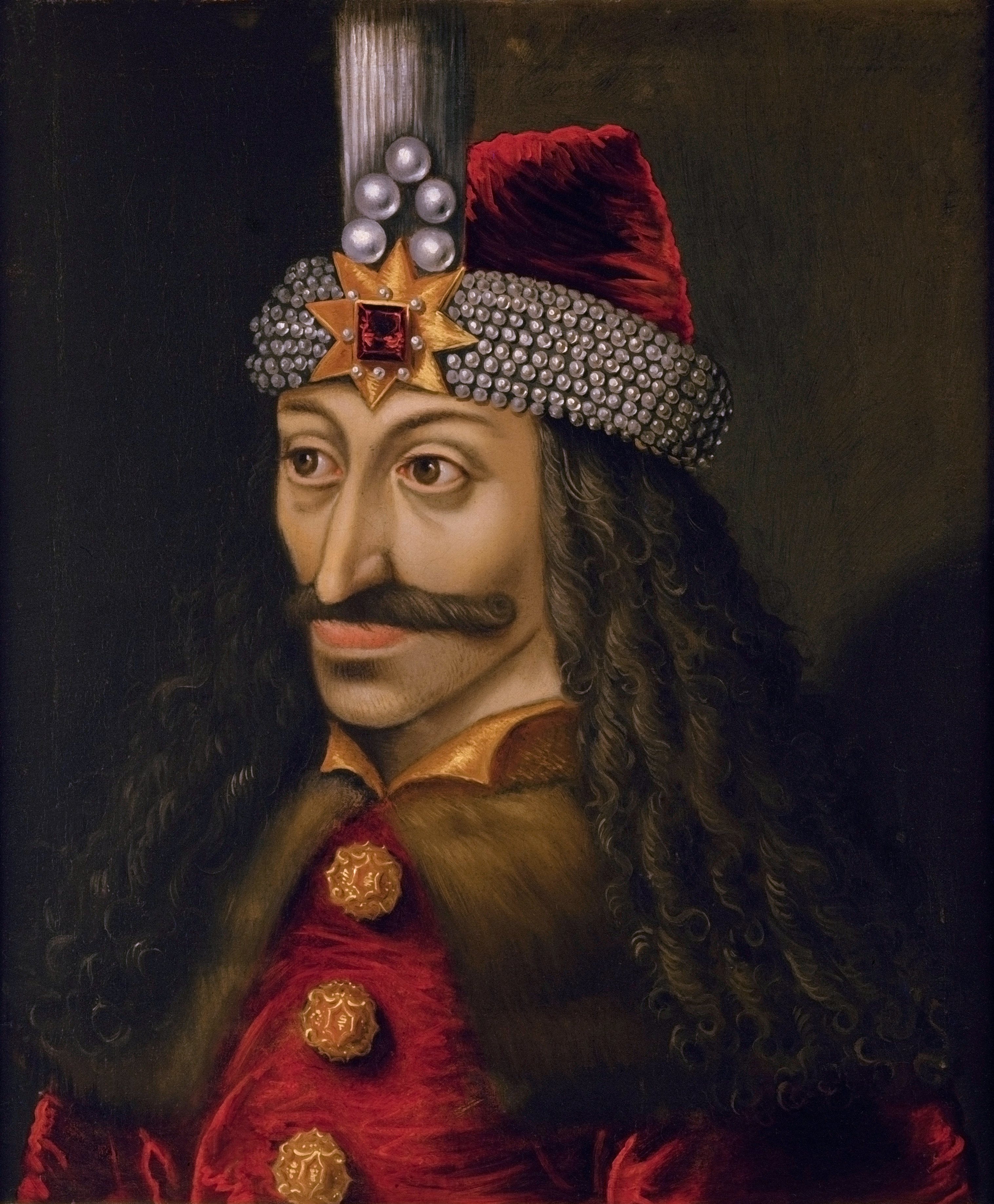
This is Euro-disco at its most bizarre. The Romanian singer Haiducii performs a string of cover versions of Moldovan disco band O-Zone's "Dragostea din tei". Or, to give the full cover title at *my* version of the CD: "Dragostea din tei (mai ai hii)". It's of course so terribly bad that it becomes good, as behoves Italo-disco. An American guy, one Gary Brolsma, managed to get his "fifteen minutes of fame" by lip synching to this stuff on Youtube. Numa, Numa, Gary! I'm not sure how to rate this annoying composition, but since I don't want to be impaled by Count Dracula, I'll give it...five stars. But pssst...Miko Mission and Ken Laszlo really were better. Mai ai hii?

Wednesday, August 29, 2018

An Archdruid in the land of Dracula


I'm beginning to understand how John Michael Greer can finance that lavish, suburban lifestyle of his. Jokes aside, this is something as peculiar as a *Romanian* translation of a JMG tome. The book chosen for this rare honour is JMG's excellent "The Element Encyclopedia of Secret Societies", which I'm sure can be of considerable interest to the average readers in Bucharest, Transylvania or Moldova. No irony!

Of course, the book has a North American/West European angle, but considering "the black flood of occultism" that reached "Eastern" Europe after the fall of Communism (with commercial post-Communist bookstores selling everything from Hare Krishna oeuvres to works on Pyramidology), I think Romanian readers can benefit from reading a healthy, non-sensationalist, non-conspiracist book about Freemasons, Jacobins, Jacobites, Carbonari, Satanists, etc. The author is something of an autodidactic expert in this field, being a member of at least a dozen secret fraternities himself!

I say all this with the reservation that I haven't checked the quality of the Romanian translation, not being Romanian myself. Of course, if you understand the English lingo, you might want to procure the original version...

Tuesday, August 14, 2018

I love Belarus


A review of the 2011 ESC album.

I dissed the Eurovision Song Contest 2010 pretty badly. My first reaction on hearing the Eurovision Song Contest 2011 was: Eurovision Song Contest 2010, come back, all is forgiven!

Happily, most of the dead dross was voted out already during the semi-finales. The finale was therefore relatively tolerable. Besides, I'm partial to Irish twins on met, Moldovans in dunce caps, Ukrainian "sand artists" and Georgian metal freaks who desperately attempt to mimic the Devil himself. And, of course, Stefan Raab! (What drug *he* was on, is open to some speculation.)

My only regret is that Belarus didn't make it to the finale. Their song, complete with balalaikas, was actually called "I love Belarus". And yes, Belarus is the last Communist regime in Europe. According to counter-revolutionary sources, the song was originally titled "I was born in Byelorussian ASSR". But perhaps that is just SMOT propaganda?

This CD contains all the participating songs, including the dead dross, the living dodos and...Belarus. As usual, however, the ESC should really be watched live. It never *really* works on a CD.

I have a pretty varied taste in music, so my favourites this year included Finland, Russia, Azerbaijan, Denmark, Sweden, Ireland, Hungary, Germany and France (Corsican opera!). Entertainment value only: Moldova. And, of course, Byelorussian USSR. Incidentally, my co-workers had pretty strange favourites, including the black metal dodo from Georgia!

The biggest disappointment was the British entry. Superstars who can't sing?! But then, I suppose *really* successful bands are used to playback. In the ESC, you have to sing live...

After a dramatic round of voting, Azerbaijan won the contest. Next year, the ESC will therefore be organized in Baku (rather than in Minsk)!

All in all, not a bad show. But, as I said, it really should be devoured live on TV, or at a DVD player near you.

This is the "playback" CD version.

;-)

Monday, August 13, 2018

A nation that doesn´t really exist


Chances are, you never heard of Transnistria. But no, Transnistria is not an imaginary place from some bad Bond movie or Tintin adventure story. The "nation" of Transnistria actually exists!

It's a relatively tiny area at the Moldovan-Ukrainian border, controlled by the Russian army but styling itself an "independent republic". They still use old Soviet Communist symbols, and even issue their own rubles (they are only valid in Transnistria itself). By international right, Transnistria is really part of Moldova, but the Moldovan government doesn't dare attacking it, due to the large contingent of Russian soldiers. NATO intervention would start World War III, so Transnistria stays.

And yes, they sell beautiful silver rubles with White swans and hammer-and-sickle symbols. I guess this somehow adds to their GNP.

The British Trotskyist magazine "Miltant" once expressed support for this wonderful workers' state with its multi-ethnic militia. (I still have that issue of their paper, so they can't deny it.) Which may or may not tell us which side *those* guys were really on during the 1990's.

Or perhaps they just preferred Transnistrian silver to Russian gold?

;-)

Sunday, July 22, 2018

Rakovsky on Romania and Bessarabia


My review of Christian Rakovsky´s "Roumania and Bessarabia", published by the Workers International League. 

Christian Rakovsky was a leading Bolshevik who for a short period was premier of the nominally independent Ukrainian Soviet Socialist Republic (actually an appendix to Soviet Russia). He also had a number of diplomatic missions abroad. Rakovsky supported Trotsky´s Left Opposition against Stalin, surrendered in 1934, but was nevertheless purged by the Stalinist regime a few years later. He was executed in 1941.

“Roumania and Bessarabia” is a pamphlet written by Rakovsky in 1925, when he was Soviet ambassador to Britain. Perhaps for diplomatic reasons, the pamphlet is said to have been penned in Moscow. This rare work was reissued in 1990 by the Workers International League, a small Trotskyist group in Britain.

Bessarabia is an area between Romania and the Ukraine. Today, most of Bessarabia comprises the independent nation-state of Moldova. Historically, Bessarabia was contested territory between Czarist Russia and Romania, changing hands several times. Its population was multi-ethnic, albeit with a Romanian-speaking plurality. After the 1917 revolutions in Russia, Romania took advantage of the political turmoil and occupied Bessarabia, an occupation subsequently recognized by the great powers. Soviet Russia, of course, regarded Bessarabia as Russian territory, and protested the Romanian invasion and annexation. “Roumania and Bessarabia” lays out the official Soviet position on the question. Before the revolution, Rakovsky (a Bulgarian by birth) had been active in both the Romanian, Bulgarian and Russian Marxist movements, which presumably explains why he was chosen to write a text of this sort.

Rakovsky´s pamphlet contains historical, legal and political arguments against Romania´s right to Bessarabia. Thus, he points out that the region has always been multi-ethnic, with a substantial Slav population. Russia originally conquered Bessarabia at a time when Romania didn´t even exist as an independent state, being part of the Ottoman Empire. Rakovsky questions the legal validity under international law of the agreement whereby Britain and France recognized Romania´s incorporation of Bessarabia. He argues that Romania attempted to double-cross the Allies during World War I, and points out that Russia (i.e. Czarist Russia) came to Romania´s aid during the war, to no great benefit for itself. Here, Rakovsky is clearly appealing to diplomatic sensibilities in various Western capitals.

His main arguments, however, are more political and directed at a very different audience.

Rakovsky argues that not even the Romanian-speaking population of Bessarabia supports the Romanian occupation. During the revolution, the peasants occupied land owned by aristocratic landlords. When Romania took the area in 1918, the landlords returned. The peasants were subject to a regime of terror. Several peasant uprisings were brutally suppressed. Rakovsky argues that all talk about “land reform” and “universal suffrage” in Bessarabia is a pure sham. The “democratic” decision by the local provisional government to hand over power to the Romanian military was a de facto coup d´etat. The author mentions massacres, rapes, floggings and other atrocities committed by the Romanian troops.

Here, I think that Rakovsky is talking to socialists, Communists and humanitarians to protest the White terror in Bessarabia.

Rakovsky says that the Soviet government is willing to negotiate with Romania, but only if the Romanian troops are withdrawn across the river Pruth, i.e. only if they actually leave Bessarabia! At the same time, the Bolshevik ambassador is careful not to suggest that Bessarabia must be annexed to the Soviet Union. Before the revolution, Rakovsky had protested Czarist Russian control of Bessarabia, and he was obviously sensitive to the suspicion that the Soviet Union simply continued the imperialist aims of Czarism. Instead, the author implies that a plebiscite should be organized in Bessarabia, and that the territory might then become an independent state. He also raises the slogan of a “democratic federation of the Balkans” and somewhat undiplomatically calls for the overthrow of the Romanian oligarchy.

“Roumania and Bessarabia” may be of some interest to advanced students of Soviet history. Christian Rakovsky attempts to combine diplomatic arguments with revolutionary agitation, in an almost perfect mix. I suppose the pamphlet might also be interesting to Romanians and Moldovans.

Stalin “solved” the Bessarabian question in 1940 by seizing the area from Romania by force, ironically as part of the Molotov-Ribbentrop pact. The peasants were once again subject to terror, now from the Soviet side. After the fall of the Soviet Union in 1991, most of Bessarabia became the independent state of Moldova. It´s still marked by conflicts between Romanian-speakers, Russians and various minority groups who usually side with the latter. Unfortunately, the area might change hands a few more times in the future…