Just unleash the power of poly-crisis late capitalism and give us another RNA vaccine, Don! I´m sure your supporters (and RFK Jr) won´t mind at all, LOL.
Just unleash the power of poly-crisis late capitalism and give us another RNA vaccine, Don! I´m sure your supporters (and RFK Jr) won´t mind at all, LOL.

Why is everyone so afraid of an Ebola pandemic all of a sudden? I´m sure Trump can handle the situation, just like he did the last time, by rushing through the development of a new vaccine, HA HA HA.
Besides, the Donald is really SAINT GERMAIN IN THE FLESH!!!

This wouldn´t be controversial, had it not been for the fact that chimpanzees are our evolutionary cousins. So a "civil war" between chimps in darkest Africa is a thing. Should I or you tell the non-paying public about the bonobo, the vegan-bisexual chimpanzee and their matriarchal chimp outs?
Is this some kind of shock therapy? The YouTube channel "Holy Koolaid" attacks and exposes fake faith healers (that is, faith healers). Some of this stuff is *very* disturbing!
The only fun moment is when a guy who is being exorcised of demons gets a call on his mobile in the middle of the ritual. The pastor, quite understandably, gets really angry...or not so understandably, if he too is a shyster.
Otherwise...I advise discretion from the point of the viewer.

A Giant Potto (and it really is huge) and two scary mystery birds...don´t get me wrong, but is *this* the best the fabled Mountains of the Moon at Ruwenzori can offer us in terms of cryptids? Geezus, I had expected albino killer apes, dinosaurs, or at the very least some really nasty spider, but naah!
Some cryptozoological riddles from Ruwenzori
I´ve heard of the mysterious Kenyan Orthodox Church before (I think it´s mentioned in passing in Kallistos Ware´s book "The Orthodox Church"), but I never reflected over its pre-history. Until now...
Apparently, the Kenyan and Ugandan Orthodox Churches (which today are "officially" Eastern Orthodox) were originally connected to the so-called African Orthodox Church in the United States, a quasi-Orthodox Church body set up by Black nationalist Marcus Garvey.
One of the AOC´s congregations is very exotic. It´s named after the jazz musician John Coltrane, who was worshipped as God (!) by a small cult. When the cultists wanted to join the AOC, they were told to demote Coltrane from divine status to that of an ordinary saint (yes, they have icons of him). Apparently, mass is still celebrated with a saxophone?!
I admit that I never heard of the AOC, or Saint John Coltrane for that matter, before. You learn new shit every day, LOL.
What level of irony is this guy on? Viewer (or listener) discretion strongly advised here!
 |
| Credit: Ndoto ya Afrika |
"Jesus of Africa: Voices of Contemporary African Christology" (2004) is a book by Diane B Stinton, a Canadian scholar and theologian. She resided and taught in Kenya at the time her book was published. "Jesus of Africa" combines theology and anthropology. It´s not as interesting as I first imagined, and feels somewhat "in-house", but it´s not a complete waste of time either. People extremely interested in Christian missionary activity (and the theological conundrums surrounding it) will probably find it worthwhile.
Stinton has carried out field work in Kenya, Uganda and Ghana, and also quotes authors from Cameroon and other countries in sub-Saharan Africa. She has mostly excluded southern Africa from consideration, however. The book comments on some theological developments within African Christian Churches since the abolition of European colonial rule. Both Protestants and Catholics are included. There are also "African Independent Churches", Christian denominations started by Black Africans outside the structures of the missionary Churches (which are ultimately controlled from Europe or the United States). Stinton describes various strategies used by African Christians to make Jesus and the Biblical message more relevant to African concerns, both traditional and modern.
The author refers to these strategies as "inculturation" and "liberation". There is an obvious tension between them, not always explored in the book, since the former tries to adapt Christianity to traditional African cultures (including traditional African religions), while the latter is more modern and might therefore clash with tradition. For instance, feminist theology will come into conflict with patriarchal structures, while a more general liberation theology will clash with those of a less radical political bent. There are also attempts to bridge the gap between inculturation and liberation, however, for instance by claiming that traditional culture is really matriarchal, or by recasting traditional kings ("tribal chiefs" in Western parlance) as liberation fighters.
Much of the inculturation will strike more doctrinally purist Christians as syncretist and heretical. While Stinton paints African religion as monotheist, I think more traditional theologians will easily define it as pantheist and polytheist. The "life force" from "God" is mediated through spirit-beings, of which the ancestors of the tribe, clan and/or family are the most important. This makes ancestral cults central to many African cultures. Jesus is incorporated into this structure as the Ancestor par excellence, sometimes referred to as the Proto-Ancestor, who mediates between God and man. He can also be seen as the foremost manifestation of the vitalistic life force which permeats the entire cosmos and ultimately comes from God. Traditional African terms for the Divine are used when describing "God the Father" of the Bible, and likewise Jesus can be given names or titles associated with the Divine or some important divine figure in the traditional religion. Jesus can further be cast as a traditional African king, who is seen not only as an earthly ruler and mediator with the Divine, but also as a powerful warrior and "liberator" or "savior" of his people. The author once visited a Church compound where the chapel (i.e. the "house" of Jesus) was surrounded in circular fashion by the other buildings, in the same way as the house of a king is surrounded by the domiciles of his plural wives!
Other inculturation attempts include seeing Jesus as a family member, obviously because the extended family is the central social unit in many African societies. Jesus can be seen as father, brother, husband, or even as "mother". While nobody interviewed in the book regards Jesus as literally feminine, many women did see Jesus as a motherly figure. He is said to give life (like a woman) and care for his flock in motherly fashion. Sometimes his suffering is interpreted as a motherly act. In one Kenyan culture, women have traditionally worked as shepherds, so obviously "the good shepherd" sounds like feminine symbolism there. However, women just as often see Jesus as a manly figure. For instance, widows might interpret him as a "husband".
The author is "pro-African", which a critical reader might find mildly annoying. For instance, the already mentioned attempt to cast African paganism as "monotheist", obviously intended as praise, since monotheism is "good" in a Christian context. A more neutral observer might argue that it shouldn´t matter whether or not non-Christian religion is mono-, pan- or polytheist. Both the author and the African theologians she quote constantly use the terms "holistic" and "wholistic" when describing traditional African culture. But surely this term can´t be African? It smacks more of American New Age! It´s also obvious that the holistic "community" described by Stinton is really a tribal or clan society, something very problematic from a "liberation" perspective.
An ironic side effect of the inculturation efforts is that belief in magic, witches and traditional medicine has remained strong even in a Christian context, often supplemented by faith healing. Jesus can be seen as a powerful healer or medicine man. It struck me that the success of the prosperity gospel in Africa (mentioned in passing by the author as an anti-traditional reaction) can actually have a "traditional" explanation: maybe the Faith movement preachers are seen as powerful magicians?
Some topics are not covered in the book at all, or only mentioned in passing, yet seems relevant to the context. Thus, Stinton mentions that African Christians often prefer the Old Testament to the Gospels. Why? This is never explained. Is it the tribal aspect? Or something more disturbing? In Rwanda, the Hutu extremists used OT imagery to rally the Hutu against the Tutsi. It seems Black Jesus can also be a genocidaire! I also noted that White Europeans get all the blame for the slave trade, when in reality the Muslim slave trade was just as extensive and older than the Christian. Kenya and Uganda would have been mostly hit by the Muslim slave trade, while Ghana was presumably hit by both. Is "liberation" only directed against Whites, or is there an anti-Muslim aspect we are not told about?
From a non-Christian perspective, "Jesus of Africa" also raises other questions. For instance, how far can Christianity be stretched without becoming something else entirely? *Is* Christianity relevant to Africa (or anyone really) if it has to be de-Judaized, de-Biblicized or de-NT-ized to fit the new cultural context? How would Christianity look like if it had used the same inculturation strategy during, say, the Early Middle Ages when it spread to northern Europe? And what exactly is the infallible divine revelation in all this?
Those are my reflections on the contemporary African Christologies.

I can´t stop linking to this rather obvious Communist front group...
Note the irony that Max Blumenthal (who seems to be pro-Chinese) is also anti-lockdown, while the dogmato-sectoid-Trotskyite World Socialist Web Site (linked to elsewhere) is anti-Chinese...except on lockdowns, where it recommends that all the world follows China´s so-called Zero COVID policy!
OK, I admit I was a left-watcher in my sadly misspent youth.
That being said, Blumenthal´s and Stavroula Pabst´s article *is* a good criticism of the lockdowns and the pro-lockdown "left". The lockdowns have hit the working class and the Global South particularly hard, while being used to "lockdown" democratic debate in the Western nations. Critics have been branded "Nazis" or "fascists". Blumenthal hints at the left´s middle class social composition as the explanation for their (indeed bizarre) support for what amounts to a bourgeois-imperialist (by their own definitions) global emergency. Note also that this supposedly "woke" left supports measures that increase domestic violence against women, mental health problems among youth and young adults, and more IMF control over "BIPOC" nations in the Third World.
A quote from the essay:
>>>For many among the urban laptop class, including a large swath of the hyper-online Western left which still clamors for national school closures and demands lockdowns in the face of a handful of new cases (while crudely painting critics of official Covid policy as Nazis), quarantine orders merely enforced an already sedentary lifestyle that revolves around Zoom meetings, ordered food and Amazon deliveries. The restrictions further eliminated tedious commutes to work while providing those able to work remotely with the satisfying sense that staying home was a bold act of social solidarity.
>>>Under this spectacular arrangement, which assumed individual behavior could slow down or contribute to the spread of a virus, isolation was framed as a moral choice that led many of those willingly confined to their homes to fear or vilify a working class that frequently provided them with vital services. And while non-pharmaceutical interventions have generally proven futile against COVID-19, the stentorian demands to socially distance and attendant shaming of those who fail to obey has done little more than generate hostility between friends, families, and communities.
>>>“Lockdowns are a luxury of the rich,” Bhattacharya said, “and affect a certain class of people at the expense of others. A lockdown doesn’t mean all of society stops and we all sit in cages alone while we wait for the fires to go away. The poor and working class, many of them vulnerable and older, are asked to risk themselves, while another class of people stays at home protected.”
>>>This was particularly true in the Global South, where class divisions are clearly drawn and most people live dangerously close to the poverty line.
I said this before: I expected the "new 1914" of the left to be something dramatic, say a "military bloc" with the US army as they bomb the hell out of rogue Trump supporters marching on some state capital. I couldn´t imagine in my wildest fantasy that it would be uncritical support for misguided lockdowns (and even more misguided vaccine mandates?) during a flu pandemic...
The dialectic works in mysterious ways.
500 million more people, mostly in the Global South, has been forced into poverty by the COVID pandemic. Or perhaps because of the Global North *response* to the COVID pandemic?
Leftist gadflies Jimmy Dore and Max Blumenthal argues that the lockdowns of the international economy, imposed by the globalist establishment in the rich Western nations, are collapsing the economies of the "Third World". Immunization campaigns against other diseases have been scrapped, many nations have become heavily indebted to the IMF (again), and poverty is spreading even in nations that are considered "Middle Income", where people who recently escaped poverty are falling back again. The education system in places like Uganda has been devastated by two years of lockdown, with the students being forced to work for a living (they can´t "chill in the metaverse", as Blumenthal puts it).
All this was *predicted* by the UN already in April last year, yet nothing has been done to solve the situation. By our "woke" leftoid elites, I might add.
 |
| The Indonesian orchid "Kimilsungia" |
"Guns, Guerillas and the Great Leader: North Korea and the Third World" is a book written hy Benjamin R Young. It was recently published by Standford University Press as part of their "Cold War International History Project". While the book does contain interesting facts (and a lot of borderline factoids), it nevertheless comes across as a rough draft. The book tries to describe North Korea´s foreign policy from 1956 to 1989, but lacks a more detailed analysis of the entire period in question. There isn´t even a general summary chapter. To be honest, the book comes across as a kind of catalogue of every weird North Korean mishap in the Third World, but without any attemp at a real synthesis. There are also a number of strange errors: the author (or his editor?) confuses Mauritius with Mauritania, claims that Muhammad is a "deity", and insists on calling the Janatha Vimukthi Peramuna "the People´s Liberation Front" - while that is what the name means, everyone else just calls it JVP. After reading the book, I still don´t understand *why* the DPRK did what they did (as in "why really"), although a few answers can be gleaned by reading the narrative carefully.
Which doesn´t mean you shouldn´t read the book. If you love killer clowns on a Halloween rampage in the Third World, you gonna love "Guns, Guerillas and the Great Leader".
A long time ago, I assumed that the DPRK were a super-isolationist Communist regime which really did have an independent line, and in contrast to Enver Hoxha´s Albania didn´t even try to create a "world movement" all their own. Later, I assumed that North Korea was really just a Soviet satellite, although a slightly idiosyncratic one. Judging by Young´s overview, the truth is more complex and also more sinister. North Korea was politically independent from both the Soviet Union and the People´s Republic of China, but also economically dependent on them - the "North Korean miracle" was really Made in Elsewhere. The solution seems to have been to play off the Soviets and the Chinese against each other, reaping dividends from both. When necessary, the DPRK carried out its own influence operations, economic deals and even terrorist attacks. There is a certain irony in this, since the "Democratic People´s Republic of Korea" was established by the Soviet Army and saved from USA/UN occupation by the People´s Liberation Army of China! Yet, since both the Soviets and the Chinese left early, the Kim family clan could remain firmly in control and pursue their own policies without direct supervision by Moscow or Beijing (both of which frequently complained about the North Korean attitude). So why were the North Koreans allowed to continue, year after year, even when they carried out crazy stuff worthy of a Gaddafi? I assume the reason is geopolitical: neither the Soviets nor the Chinese Communists can allow a "capitalist" or "pro-American" unification of Korea, and therefore need the DPRK as their buffer state in the north. This gives the Kims (including the present one) a certain leverage and ability to manoeuvre. They can go very far without risking more than some diplomatic reprimands backstage...
I think the main, or even only, reason for DPRK´s "solidarity" with "the Third World" is the North-South conflict on the Korean peninsula. Judging by Young´s account, this is the case even when North Korea tries to get influence in Africa. It´s really a way to counter attempts by *South* Korea to gain such influence, or to move first. Sometimes, North Korea wants to test its weaponry, or even engage South Korean agents and military personnel abroad. During the Vietnam War, North Korea supported North Vietnam and the NLF, while South Korea did likewise with South Vietnam. The DPRK sent fighter pilots to Vietnam, and tried to assess the strengths and weaknesses of the South Korean troops active there. They also attempted to abduct South Korean military, spread Communist propaganda among them, etc. In Africa, the two Koreas were engaged in a decades-long propaganda war against each other, the purpose of which was to secure African support for the North Korean position within the Non-Aligned Movement (NAM), which North Korean diplomacy tried to use as a forum and a tool for DPRK interests. While the aid to various Third World nations was originally free of charge (the North Koreans even paid handsomely for propaganda in various foreign newspapers), during the 1980´s the relations became more business-like, with the DPRK demanding payment (in foreign currency) for services rendered.
What struck me most was the intensely opportunist character of the North Korean foreign operations. Machiavelli would have liked these guys. In Uganda, North Korea supported both Idi Amin, Milton Obote and Yoveri Museveni! In southern Africa, North Korea originally had cozy relations with Zaire´s very own killer clown Mobutu Sese Seko, only to abandon him (and his Angolan FLNA proxies, and I suppose his avasuits), in favor of the Angolan MPLA. In the Middle East, Kim Il Sung secretly supported Egypt´s peace deal with Israel, while saying the opposite in public! And despite its support for North Vietnam during the Vietnam War, the DPRK pivoted to Pol Pot´s Cambodia after the war, even trying to get Vietnam expelled from the NAM. The bromance between Cambodia´s Sihanouk and Kim Il Sung must have been something to behold, with Sihanouk telling a high-ranking US official that the North Korean leaders don´t want war, since they are used to a life in complete comfort and luxury (something that must have impressed this truly precious prince who, alas, was no stranger to war). Sihanouk preferred having North Korean body guards, notorious for their brutality, being intensely suspicious of Cambodian royal palace guards...
A fun fact is that North Korea weren´t the only opportunists in these transactions. Frequently, *they* were taken advantage of themselves, especially in the super-corrupted African theatre. Once, a pro-Western newspaper in Cameroon published pro-DPRK propaganda just for the money. Many "Korean friendship associations" in Africa paid people to become members, which all kinds of unscrupulous elements took advantage of. In Uganda, the "friendship association" supported Museveni, at a time when the North Korean regime was still aiding and abetting Obote. The Communist Dergue regime in Ethiopia cynically accepted aid from both Koreas! But then, the Dergue may also have been the only regime in the world which accepted aid from both Cuba and Israel...
Judging by Young´s account, the best aid rendered by the Kim regime to its "allies" in the Third World was the military one, which included both weapons, ammunition and frequently brutal instructors. He doesn´t have an opinion on the quality of the huge palaces and monuments built in Africa by North Koreans. Much other aid was substandard, including porcelain factories which made dishes of such bad quality that you could cut through them with a steak knife. I´m not surprised. One popular "export" were the Mass Games, a kind of political gymnastic exercises, which could be used for propaganda purposes in a variety of nations (although the locals preferred to enhance the Mass Games with references to their own cultures). This brings me to perhaps the most entertaining portion of North Korean foreign propaganda: its notoriously inept character. It´s not clear to me whether the Kim Il Sung leadership really didn´t get it, or whether they simply didn´t care, since the real deals between DPRK and its "allies" were negotiated off-stage.
North Korea is notorious for its bizarre and hysterical personality cult of Kim Il Sung, and later also of Kim Jong Il, his son and heir-very-apparent. This personality cult was liberally diffused abroad (or in North Korea to visiting foreign delegations), often to the bemusement and slight consternation of the intended targets. After reading some of the Great Leader´s sage pronouncements myself, I have to say that most of them are basic bitch commonplaces. "We have to strengthen the people, weaken imperialism, and mobilize. This is very important". That kind of level. I assume that the statements *about* the Great Leader and the Dear Leader are more, shall we say, turgid. Even foreign diplomats, including from friendly socialist nations, where frequently forced to listen to long speeches extolling the virtues and excellencies of Kim Il Sung. One Spanish visitor, I think, was taken to the doctor for a check up before being allowed to visit Kim - the medic explained that the Leader is such a great man, that people frequently faint in his presence! An African delegation, when realizing that the next 40 rooms of a Kim Il Sung exhibition in Pyongyang were very similar to the 20 rooms they had already walked through, kindly asked to be taken elsewhere. The translations of books about Kim Il Sung to foreign languages were frequently pretty bizarre. One English translation had the headline "Kim Il Sung: The Divine Man", while an Arabic translation claimed that Kim Il Sung is God! (No less.) Ironically, the idea known as Juche, which the Korean Workers´ Party claims is Kim Il Sung´s foremost contribution to revolutionary theory, was succeful in the Third World mostly because it was interpreted as a commonplace. Thus, in India, Juche was associated with everything from Plato to Mahatma Gandhi, which seems correct - for what is Juche other than the idea of autarkic self-reliance from the Western-dominated world economy, the dream of many Third World nationalists?
Unfortunately, the Communist fun house of North Korea also had a darker side. One thing that struck me was that the North Koreans sometimes attacked "progressive" governments they should logically have tried to lobby diplomatically instead, as when they supported the mad Maoists of the JVP against the left-nationalist SLFP government of Sri Lanka, or when they backed a small revolutionary foco against the Mexican PRI government. In both cases, the rebellions were adventurist and doomed from the start (the Mexicans hardly started theirs before the police arrested them). Notoriously, North Korea supported the Japanese Red Army, a kind of East Asian version of the Baader Meinhof gang. Further, there was the Rangoon bombing of 1983, during which North Korean agents tried to assassinate Chun Doo-hwan, the president of South Korea, during his official visit to Burma (at the time a socialist nation). Finally, there was the bombing of Korean Air Flight 858 in 1987, killing over 100 people, in retaliation for South Korea refusing to co-host the 1988 olympic summer games. After the Cold War, it´s been pretty much downhill from there, with the North Korean regime looking upon the Third World as a gigantic smorgasbord for smuggling, hacking and other ways to obtain hard currency (implicitly or explicitly threatening to nuke the US unless the West pays tribute is another sure method).
North Korea has become a rogue state and international outlaw, and it seems the roots of the predicament go pretty deep. So does the geopolitical realities that seemlingly make the North Korean entity as viable as ever, at least for the Kim clan and its cronies. Today, the great benefactor of "self-reliant" Juche DPRK is, of course, China.
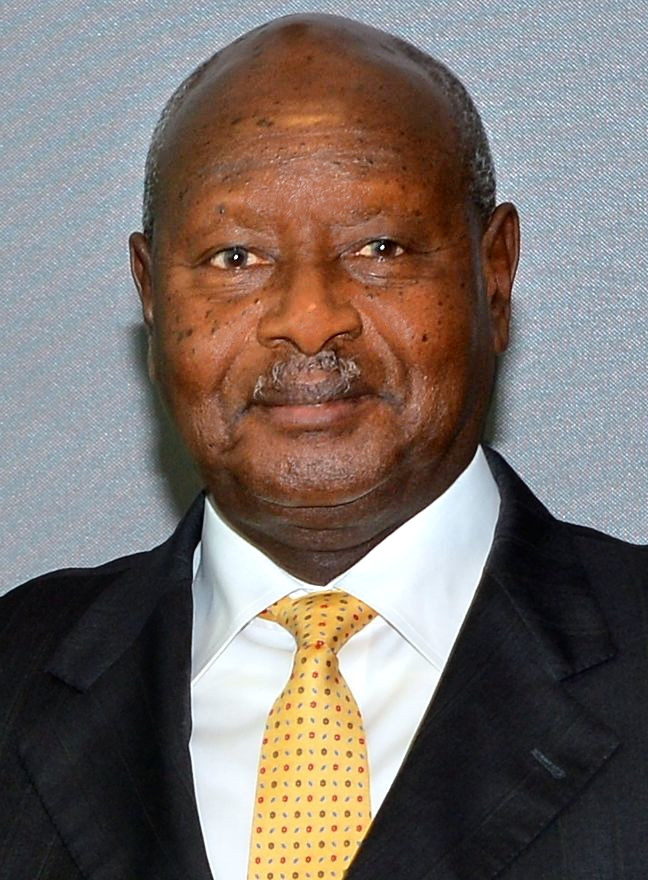
Twitter är upprörda just nu och säger sig plötsligt stödja "ett fritt Internet" och jag vet inte vad. Detta bara några dagar efter att Twitter och Facebook bannat USA:s president från sina plattformar...
I en koordinerad aktion valde Twitter, Facebook och Instagram att stänga ner ett stort antal konton som tydligen frontade för Ugandas regering inför ett stundande val.
Uganda svarade med att helt blockera Twitter, Facebook och Instagram...
Och Twitter kvider nu om "yttrandefriheten" på nätet. Detta efter att ha krossat konkurrenten Parler och utrensat folk från sitt forum i omkring en veckas tid.
Skadeglädjen bland både Trump-fans och andra Big Tech-kritiker är total.
Nu är Museveni givetvis en auktoritär ledare, och han kanske faktiskt bröt mot någon regel om "falska konton". Det är ändå oerhört dråpligt att Twitter får på käften på det här sättet.
Det är också intressant att Twitter erkänner att de samordnade med FB och Instagram mot Museveni.
Det är så framtiden ser ut, alltså. Privata företag ägda av multimiljonärer samordnar för att gynna den ena sidan i ett politiskt val. Och snart blir deras kille USA:s president...
Museveni kanske ändå gjorde rätt. Om tech-trusten blockerar dina konton, banna dem från landet.
Nu väntar vi bara på nästa drag från, säg, Macron.
Men visst vore det trevligt om man faktiskt kunde få yttrandefrihet på nätet, istället för att bara ersätta den ena auktoritära regimen med en annan...