Showing posts with label Owls. Show all posts

Tuesday, February 3, 2026

Singular


Five animals only seen once. OK, quite interesting! Note the implication for cryptozoology: if even species that are extremely rare can become known to science, why can´t we find cryptids which supposedly live in our very backyards? Cuz they´re not real, obviously. 

Unless they´re fairies. As per usual! 

Saturday, May 10, 2025

The owls are exactly what they seem


I always thought that the Kelly-Hopkinsville encounter was the "best" paranormal/alien encounter on record, I mean, how dafuq do you explain *that* incident? However, it seems that there is a natural explanation. And yes, it was the darn owls all along!

Can you tell me more about natural explanations proposed for the Kelly-Hopkinsville encounter?

Yes — the Kelly–Hopkinsville encounter (1955, Kentucky) is one of the most famous and sensational UFO/“alien” cases in U.S. history. A rural family claimed their farmhouse was under siege for hours by small glowing creatures. But despite the dramatic story, natural explanations have been proposed that offer a grounded alternative to extraterrestrial visitors.

Here’s a breakdown of those natural explanations:


🦉 1. Misidentified Owls (Great Horned Owls)

This is the most widely accepted skeptical explanation.

  • Great horned owls are large, territorial, and active at dusk and night — the same time as the encounter.

  • They have large, glowing eyes (due to eye-shine when light reflects off the retina) and feather tufts that can look like ears or horns.

  • Their silent flight and sudden swooping could appear as “creatures” dropping from the roof or trees.

  • They're known to be aggressive if defending a nest.

  • The witnesses described creatures that were about 3 to 4 feet tall, with clawed hands and pointed ears — matching owl proportions when seen in poor lighting and from a distance.

🔎 Supporting clues:

  • One of the “aliens” was said to float down from a tree — just like an owl gliding silently.

  • Witnesses shot at the creatures but found no blood or bodies — owls would likely flee or be missed in darkness.


🌠 2. Misidentified Meteor (Green Fireball)

Earlier that evening, witnesses saw a bright green object streak across the sky.

  • This was likely a meteor or fireball, which are very common in summer (especially during the Perseid meteor shower in August).

  • A brilliant meteor might easily be interpreted as a “craft landing” if someone is primed to expect something extraordinary.

  • The appearance of the light could have triggered the family’s fear response, causing them to interpret later ambiguous events (sounds, shadows, animal noises) as part of an invasion.


🧠 3. Psychological and Social Dynamics

The encounter happened in an isolated, rural setting involving a large extended family — around 11 people. The group dynamics may have influenced the experience.

  • Fear, excitement, and suggestion can spread quickly in tight-knit groups, especially under stress.

  • Multiple people seeing glimpses of movement in the dark can lead to shared misperceptions.

  • Firing guns, hearing strange noises, and staying awake for hours all increase emotional arousal and memory distortion.


🌾 4. Environmental Factors and Poor Visibility

  • The area around the farmhouse had dense trees, open fields, and darkness — prime for pareidolia (seeing shapes in shadows).

  • The family used kerosene lamps and flashlights, which cause harsh light/shadow contrast and can create illusions in rural nighttime settings.


🔫 5. Gunfire and No Evidence

  • The family fired at the “creatures” with rifles and shotguns for hours.

  • No blood, tracks, or bodies were ever found.

  • Investigators (including military police and local sheriff’s deputies) found no physical evidence of a battle.

  • This suggests the targets may not have been real or were animals that escaped unharmed.


🤥 6. Hoax Theory?

This is the least supported theory, but it’s been floated:

  • Some skeptics suggest it was a hoax for attention or media coverage.

  • But the Sutton family actively avoided publicity and even refused money offers later, making a hoax unlikely.

  • Most researchers today, even skeptical ones, believe the family sincerely believed what they experienced — even if they were mistaken.


🧠 Summary Table:

Proposed CauseExplanation
Great horned owlsGlowing eyes, silent flight, aggressive behavior explain "aliens"
Meteor/fireballGreen streak in sky seen as spaceship
Psychological dynamicsGroup suggestion and fear amplifying misperceptions
Environmental misreadsLow light, flashlight shadows, pareidolia in rural setting
No physical evidenceSuggests no actual physical creatures were present
Hoax theoryUnlikely due to family’s avoidance of attention

The Kelly–Hopkinsville case is a fascinating example of how a mix of natural events, misperceptions, and group psychology can create a seemingly supernatural experience — one that has persisted in public memory for decades.

Would you like a comparison between this case and the later 1977 Broad Haven school UFO sighting in Wales (also with multiple witnesses)?

Have monkeys been proposed, as well? You also mentioned raccoons.

Yes — monkeys and raccoons have both been proposed as natural explanations for the Kelly–Hopkinsville encounter, though these theories are much less supported than the owl explanation. Here's how they factor in:


🐒 Monkeys: Exotic Pet Theory

Claim: The "aliens" were escaped or released monkeys, possibly with silver paint on them (to account for the glowing or metallic look).

Origin: This idea may have originated as a rumor or joke in the years after the event — possibly fueled by public fascination with UFOs and “space monkeys” in the early space race era.

Problems with the theory:

  • No evidence of missing monkeys in the area.

  • No confirmed reports of exotic animal owners in rural Kentucky with monkeys.

  • Monkeys are diurnal (active during the day), not likely to be out at night.

  • If 11 people fired guns at them, it’s likely one would have been killed or injured, but no bodies or blood were found.

  • The theory of silver-painted monkeys is almost certainly apocryphal or satirical — it’s never been supported by direct investigation.

Status: Considered folklore or satire, not a serious explanation by most researchers.


🦝 Raccoons: Native Animal Misidentification

Claim: The witnesses saw raccoons moving around the farm — possibly on rooftops, trees, or approaching the house.

Support for the theory:

  • Raccoons are nocturnal and curious, and they often investigate human settlements.

  • Their glowing eyes (from tapetum lucidum reflection) can appear bright in flashlight beams.

  • They move in unusual or unpredictable ways, and from a distance or in low light, could be mistaken for something more exotic.

  • Raccoons sometimes stand on hind legs to look around, which might be interpreted as a humanoid figure.

Problems:

  • The creatures were described as 3–4 feet tall, much larger than raccoons.

  • Witnesses said the beings had large ears or “horns”, a feature raccoons don’t possess.

  • The Sutton family were familiar with local wildlife, so it’s unclear why they’d misidentify a raccoon as something alien.

Status: Some skeptics still mention it as a partial contributor, but raccoons alone likely don’t explain the entire case.


🦉 Compared to the Owl Theory

TheoryStrengthsWeaknesses
OwlsFits size, behavior, glowing eyes, night activityNo direct sighting confirmed, but plausible
RaccoonsFits glowing eyes and movementSize too small, unlikely to provoke such fear
MonkeysExplains humanoid appearance (if true)No evidence; likely urban legend or satire

In conclusion:

  • Monkeys have been proposed, but the idea is usually dismissed as a myth or joke.

  • Raccoons are more plausible but don’t account for all the reported features.

  • The owl hypothesis remains the most consistent with the physical and behavioral descriptions — especially when combined with environmental factors and human psychology.

Would you like links or excerpts from skeptical investigations (e.g. from Joe Nickell or the Committee for Skeptical Inquiry)? 

Saturday, February 15, 2025

The existence of luminous birds


- Maybe I just don´t feel like
 showing my ass to you guys!

A Karl Shuker exclusive, trying to shed some much needed light on the mystery of luminous birds. And yes, many of them seem to be barn owls! What else? Herons are frequently reported to be luminescent, too. There is just one little problem: according to modern science, luminous birds don´t exist. Certainly not self-luminous ones! 

Most of Shuker´s reports seem to be rather old. Shouldn´t bird-watchers see these fantastic specimens essentially all the time, had they been real? That being said, science apparently still denies the existence of ball lightning, so there´s that.

And while it has no direct relevance to this topic, I once saw a heron turn almost invisible right in front of me...in broad day light?! And no, it wasn´t paranormal, it was just a weird trick of the light at a certain angle. So who knows, maybe certain strange light conditions at night can make birds seemingly "glow"?  

Could be the fairies, too, as per usual.  

Shedding light on the mystery (part 1)

Shedding light on the mystery (part 2) 

Sunday, September 10, 2023

The barn owls are not what they seem


"Gee, what´s all this bunk about Mothman, the Jersey Devil and that Kelly-Hopkinsville stuff being minuscule BARN OWLS??? It was me all the time, the GIANT CRYPTID OWL OF NORTE AMERIKA. If the skeptics don´t stop their barn owl propaganda, I´m gonna swoop down on their next skepti-con, menacingly hooting!!!" 

Sunday, September 23, 2018

The owls are not what they seem


I don't usually review books I haven't seen, but I'm going to make an exception in this case. “Birds of the Bohemian Grove” looks like a legit field guide to birds in a certain area of California known as the Bohemian Grove…until you start digging. Sure, it's written by Hermann Heinzel, co-author the classical “Birds of Britain and Europe with North Africa and the Middle East”. However, the Bohemian Grove is owned by the elite Bohemian Club, which is mentioned in various conspiracy theories about Illuminati, Bilderbergers and what not. The symbol of the Bohemian Club is an owl. There is an owl on the cover of the book. Conspiracy theorists claim that the Bohemians make a mock sacrifice to a pagan owl-god! Further, the publisher of the book is given as “A Member of the Old Guard”. It may not be intentional, but I do get the feeling that somebody is laughing heartily at the conspiracy theorists!

Thursday, September 13, 2018

Venerable Snow Owl has the floor


I'm a duly elected representative of Owlkind, and I must say that me and my peers (especially Sir Barn Owl and the Hon. Gentleman Great Horned Owl) are getting a wee bit annoyed at CSICOP, Brian Dunning's Skeptoid blog, and (of course) the noxious "Doc" Shiels and, frankly, his entire family.

What's all this stuff about me and mine being responsible for all the UFO observations in the 48 contiguous states of the Union???

Apparently, the Venerable Lord Barn Owl was "Mothman" and somehow made the Silver Bridge in Point Pleasant collapse. Trust me, he never got anywhere near John Keel. Keel's not as tasty as a rodent or a starling, is he now? The idea that I and my wife attacked the Sutton clan in Kentucky is also perfectly ridiculous. I mean, Kentucky??!! Are you kidding my hind feathers?! No self-respecting owl wants to live in the state of Lizard Men, Leprechauns, Bluegrass and Jefferson Davies! Not to mention all the trigger-happy farmers. We *did* read the Lonely Planet presentation before deciding to move on to...Lapland.

The claim that my cousin Eagle-Owl (affectionately known as Bubo the Bubba) was somehow responsible for the Owlman incident in a desolate Cornwall church is close to being litigious. Everyone knows "Doc" Shiels was behind that one. In fact, I suspect "Doc" was behind most other purportedly paranormal phenomena, as well. Roswell? Rendlesham Forest? The Amityville Horror? Bileam's talking donkey? Clever Hans? Moses parting the Red Sea? If it smells like "Doc" and quacks like "Doc"...

In my opinion, Condon should have taken a *very* close look at this guy!

So what's this really about? I think CSICOP and the local Humanist Association are GOP fronts out to repeal the Endangered Species Act! They still can't get over that episode about Great Dame Spotted Owl. Soon, they will hold her responsible for the UFO observations of astronaut Edgar Mitchell. I mean, owls do fly, right?

In conclusion, Mr. Speaker, these rabid slanders against the Owl Lords MUST CEASE, otherwise we might contemplate much firmer action in the future. Such as swooping down on James Randi in V-formation at the next Sceptic Convention.

Yeah, really.

It's a barn owl, stupid


There's no such thing as "Roswell". In fact, not even the town of Roswell seem to exist. It certainly doesn't show up on my map of New Hampshire. The so-called UFO crash in Roswell was a BARN OWL. I mean, that should be obvious. It flew. So do owls. It crashed. So do owls. It scared the living daylights out of some rednecks. So do owls. The "alien bodies" retrieved were also owls. I mean, look at the eyes. They are big, green and glow at night. Just like the eyes of the New Hampshire subspecies of Barnie Owl. Case closed. The so-called Patterson-Gimli movie of the JFK assassination also shows a Barn Owl. So why did the federal gov classify the Roswell barn owl crash? The explanation is obvious: the anti-owl faction of the East Coast establishment wants to repeal the Endangered Species Act. They hate owls. Don't ask me why.

Monday, September 10, 2018

Ararat, we have a problem


Karl Shuker is a maverick biologist who stints as a Fortean writer and researcher. This book, "Karl Shuker's Alien Zoo" contains his articles for Fortean Times, a British publication about the unusual, the paranormal and the plain weird. Shuker's regular features are titled "Alien Zoo" and "The lost ark". They deal with cryptozoology, but frequently stray into the realms of folklore, hoaxes and even religion. I didn't know Noah had to save so many bizarre critters on the ark! Ararat, we have a problem...

Shuker's menagerie of marvels include sqrats (supposed hybrids between rats and squirrels), the water tiger of Ecuador, transparent catfish, a centipede with an odd number of legs (all others have an even number of legs), Unidentified Glowing Objects, snake-headed dogs, 7 foot tall flightless birds in the Mount Adams area of Washington State (?!), snakes that crows like cockerels, the Navajo Flying Snake, the Dinosaur Kangaroo and a tasty bird known as the Müshmurgh. There is also the gigantic Mongolian Death Worm, a fallen creature if there ever was one.

A staggering amount of sea-monsters have been reported, with names like Hessie, Messie, Gryttie and Oggy. Any relation to Nessie? Many other cryptids also have unforgettable names: Altamaha-ha, Makalala, Hantu Jarang Gigi, Ensut-Ensut, Tsere-Yawá, Öfuguggi, Skeljaskrimsli and Urdaköttur. Don't even ask me what those are - I don't have the book handy as I speak. OK, I think I remember the Öfuguggi. It's a dangerous, large cod with forward-pointing fins, stalking the seas around Iceland. In modern Icelandic, the word apparently means "pervert". If you are a fish noodler, don't touch!

In Ecuador, the Natives have reported a black panther with black, red, white and yellow stripes on its chest. Naturally, it's locally known as the rainbow tiger. In South Africa, the locals have spotted a bizarre beast "yellow in colour, serpentine in overall form, horse-like head, mane and a body the shape of a 20-quart barrel". The local cattle are said to have become restless at the sight of the creature. The gods must be crazy, yes?

Of course, we're not *really* supposed to take any of this at face value - it's a Fortean book, after all. Even Shuker admits that some of his case files might be hoaxes. Sometimes the bluff is easy to call. Surely a Loof Lirpa cannot be a real animal? Read that backwards, slowly! In other cases, the hoax is less obvious. A reader in Sweden, a certain Malcolm Sewell, claimed that there are two mysterious thunderbirds in the Swedish woods, known as "kungsörn" and "slaguggla". In reality, those are the Swedish names for Golden Eagle and Ural Owl, respectively. No mystery there - if your first language is Swedish. Luckily, Fortean Times have readers in Scandinavia who pointed out the joke (or error) to Shuker. As for the mysterious Mr. Sewell, I'm afraid we have to dispatch an Alien Abduction Team to his little red cottage AND TAKE CARE OF THE PROBLEM. Kidding...

In fact, many of the "cryptids" mentioned in "Karl Shuker's Alien Zoo" seem to be creatures of folklore. It seems every area of the world has its very own big, hairy beast. There are even a few reports from Britain, including the Shropshire Union Canal Man-Monkey and Old Ned's Devil. I would like to see the team from "Finding Bigfoot" descend on a small pub in the British countryside, trying to sniff out Old Ned. Small, hairy, pygmy-like humans are also common. Trolls? Mermen and mermaids are another folkloristic classic, spotted both in the oceans and in large inland lakes such as the Caspian Sea.

Shuker even mentions a couple of cryptids known only from religious legend. The Book of Mormon, famously or otherwise, talks about "cureloms and cumoms". No, ma'm, that's not history. In Spain, there used to be a holy relic of a feather from the wings of the angel Gabriel. Another curious medieval relic was a piece of skin from the snake in Eden. Apparently, Adam killed and skinned the snake after the fall?! On a more serious note, Shuker also discusses a number of early modern paintings which show unknown birds. (Errol Fuller has produced an entire book about such birds, "Lost Birds of Paradise".) Even a modern painting by Gaugin might show a bird unknown to science.

I'm not sure how to rate this nerdbook to end all nerdbooks (something tells me the average reader is a 15 year old boy), but since it does have a certain entertainment value, I'll give it four stars. But please don't say I didn't warn you...

Some say it thundered

Credit: Dr Haggis 


On 25 July, 1977 in Lawndale, Logan County, Illinois, 10-year old Marlon Lowe was attacked by a gigantic raptor with a 3-meter wing span that lifted him 60 cm off the ground and carried him for 12 meters. The boy was eventually saved by his mother. Indeed, his experience has become the classical Thunderbird encounter. It was a close one!

There is only one problem: according to modern science, Thunderbirds aren't supposed to exist. The creature is considered to be purely mythological.

Mark A. Hall is a cryptozoologist who believes that Thunderbirds are real, flesh-and-blood creatures. His book contain a lot of reports, both old and new, about birds carrying off people or livestock. Several modern reports come from Alaska, where birds with the even more dramatic wingspan of 4 meters have been reported.

The problem is that Thunderbirds are a world-wide phenomenon. The author mentions legends from Siberia, Russia proper, Indonesia, Malaysia, the Philippines, New Zealand, Fiji... More recently, Thunderbirds have been sighted in Iran, southern and eastern Africa, England and even Norway. If these outsized raptors are so universally well-known and have an almost global range, how come we don't see them more often? Why haven't any bird-watcher spotted them? What do they eat? Why don't they swoop down on carrion on a regular basis, scaring away all the vultures and crows in the process?

As usual in cases like this, there are only two possible answers. One is that they don't exist. They really are mythological creatures. The other is that we are dealing with some kind of paranormal phenomenon. We have a bunch of Unidentified Flapping Objects on our hands! The least likely possibility is that we are dealing with an exceedingly rare, flesh-and-blood bird who just happens to be substantially larger than a condor or sea eagle... (And who has survived all over the world, despite being rare.)

Hall also promotes the idea that an unknown, monstrous owl lives in the forests of eastern United States. He calls it Bighoot and believes that it may be responsible for the Mothman observations. Apparently, Bighoot is a master of disguises, and resembles a very large tree trunk when it sits on the ground!

OK, I suppose anything is possible in the state of West Virginia, but there are obvious pitfalls in explaining one unknown with another! Bighoot?

I decided to award Hall's book three stars, since this seems to be one of the few books available on the subject of Thunderbirds. However, "Thunderbirds" is so badly edited, that two stars would have been a more logical option. It may not be a book for the birds, but perhaps another writer should try his hand on this subject?

So what happened in Lawndale that summer day back in 1977? The truth is that we don't know, and probably never will, unless a Thunderbird is sighted by a group of respected ornithologists. Perhaps we don't *want* to know? We do know that Marlon Lowe still stands by his story. He is interviewed on the episode "Birdzilla" of the TV series "MonsterQuest". With that, we must unfortunately close the case for now and await further developments...

Sunday, September 9, 2018

What about the dwarf, mate?


"Animal X" was an Australian TV series with some kind of cult status. I never bothered watching the original, but "Animal X: Natural Mystery Unit" is apparently a U.S.-oriented version of the same show, albeit still with Australians on the cast.

The concept is simple: Bill Kerr a.k.a. the Mission Controller sends out two young investigators, David and Nathalie, to investigate alleged sightings of Bigfoot, ghosts, aliens and other paranormal creatures. Kerr tries to make it all seem spookier than it actually is, while Dave and Nat turn out to be singularly non-charismatic. Not even the disco beat in the background can save the day. But sure, if you are well-disposed towards shows of this kind, I suppose you could get *something* out of it, at the very least a good laugh!

In "Winged Creatures", the team visits Point Pleasant, West Virginia and a town in Maine weirdly called...wait for it...Pleasant Point. Jungian sync? They also make a trip to Mexico. Then, it's back to another part of Maine to meet the dean of cryptozoology, Loren Coleman for some kind of closure. The mission? To find some explanation for the bizarre winged humanoids reported from various parts of North America. Of these, Mothman of Point Pleasant is arguably the best known, mostly due to John Keel's classical blockbuster "The Mothman Prophecies". One of the original eye witnesses, Linda Scarberry, claims to have seen both winged humanoids and transparent Men in Black. Scarberry reports that Keel told her that the MIBs wanted to kidnap her child, since five women in Point Pleasant became pregnant simultaneously after the Mothman encounters?!

Some sceptics have attempted to explain away Mothman as a barn owl (sounds familiar?), but Coleman can do better. He believes that Mothman is an unknown, truly *gigantic* species of owl. Bighoot, not Bigfoot. But what about the transparent MIBs and threatened child nappings? What about the evil dwarf observed by Keel on more than one occasion? Well...? Much as I like the idea of a thunderowl, it doesn't seem to cover all the bases, even apart from being an example of explaining one unknown with another...

Here, "Animal X - Natural Mystery Unit: Winged Creatures" ends. Although I can't say this show is my cup of Australian tea, I nevertheless give it three stars for showing us the absolute fringes of cryptozoology.

I mean, winged humanoids...? ;-)

Monday, August 13, 2018

Young raptors


"The Birds of Prey of Southern Africa" is neither a reference work nor a field guide, but rather a book introducing southern African raptors to a more general audience. I'm not sure if the book was intended for a young readership, but it could work just fine in the hands of children around the age of 12 - 15. The text is written by Alan Kemp and the color illustrations (which are very good) were made by C.G. Finch-Davies. In very traditional fashion, the book includes both the diurnal birds of prey (eagles, haws, etc) and the owls. Taxonomically, they are quite distinct. Some of the species included have exotic-sounding names like Gymogene, Bateleur, Verreaux's Eagle and Secretarybird. They look pretty exotic, too. I'm not sure how to rate this book, but as a swift introduction to the world of raptors for a broad and perhaps young audience, it could probably fill a niche.

Caprimulgiformes strikes again


The "Handbook of the Birds of the World" is a super-encylopedia spanning 16 volumes, published by Lynx Edicions and BirdLife International. It really does cover all living species of bird known to science. All 9,000 of them! Well, almost all. A supplemental volume with about 60 entirely new species will be published at some point next year.

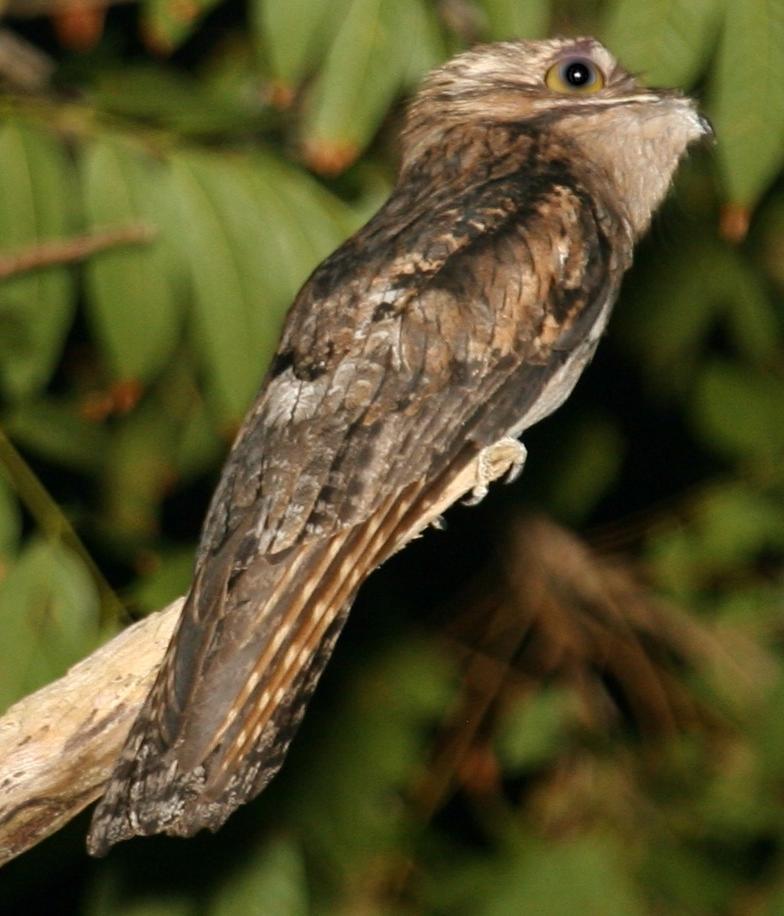
This is the fifth volume of the HBW. It describes three very different orders: the Owls (Strigiformes), the Nightjars and allies (Caprimulgiformes) and the Swifts, Tree-Swifts and Hummingbirds (Apodiformes). I always find it fascinating that the screeching, fast and even somewhat bizarre swifts outside my window are actually related to hummingbirds! But the most absurd birds in this volume are surely the Caprimulgiformes. It includes the Potoos, which are perfect mimics of tree stumps - a large color photo shows this strange ability (try to spot the bird in it!). Further, there are the strictly nocturnal Oilbirds, which communicate in bat-like manner through eco-location. Apparently, scientists who visit the caves where the Oilbirds live have to wear protective masks - the damp caves are a haven for a fungus that causes the lung disease known as histoplasmosis.

The text in the HBW is rather heavy and takes some time to get used to. These books, after all, are primarily intended for ornithologists (with or without protective gear). However, the large amounts of illustrations and color photos might appeal to a more general audience. Unfortunately, these books are extremely expensive, no doubt precisely because of the color (and colorful) photos.

I tend to give these books five stars hands down, and so is the case with volume 5.