Har jag ju misstänkt länge. Skeletten är helt enkelt lite *för* perfekta...
Dinosauriebluffen på Naturhistoriska förvirrar - är falska kopior
The blog to end all blogs. Reviews and comments about all and everything. This blog is NOT affiliated with YouTube, Wikipedia, Microsoft Bing, Gemini, ChatGPT or any commercial vendor! Links don´t imply endorsement. Many posts and comments are ironic. The blogger is not responsible for comments made by others. The languages used are English and Swedish. Content warning: Essentially everything.
Har jag ju misstänkt länge. Skeletten är helt enkelt lite *för* perfekta...
Dinosauriebluffen på Naturhistoriska förvirrar - är falska kopior
Just for fun, I asked ChatGPT a rather silly question, but actually got an answer. So I suppose this is today´s AI essay, LOL.
Are there (alleged) reports of surviving dinosaurs from North America, i.e. cryptid reports interpreted as dinosaurs or similar prehistoric creatures by cryptozoology enthusiasts?
Yes, there are a few alleged reports from North America that cryptozoologists and enthusiasts have interpreted as possible surviving dinosaurs or prehistoric reptiles. These are fringe claims and are not supported by mainstream science, but they have circulated in cryptozoological literature and popular culture.
Here are the most notable examples:
Sightings of a large, serpentine or humped creature in Lake Champlain.
Some descriptions suggest a plesiosaur-like shape: long neck, flippers.
Widely considered a modern myth or misidentification (e.g. sturgeon, logs, waves), but featured in cryptozoology circles since the 1800s.
Described similarly to Champ.
Also interpreted by some cryptozoologists as a possible relict marine reptile, though more often described as serpentine.
These lake monsters are the most commonly linked to "prehistoric survivors", especially plesiosaurs, though no physical evidence exists.
Scattered reports in the 1940s–1970s, especially from rural Georgia and South Carolina, of large, upright lizard-like creatures.
Sometimes described as being 5–7 feet tall, walking on two legs.
Often interpreted in retrospect as hoaxes, folklore, or misidentified animals (e.g., large lizards, escaped pets, or alligators).
Some local legends describe reptilian creatures in swampy areas, occasionally linked to cryptids or “living dinosaurs.”
These often reflect tall tales, with little consistency or credibility.
In states like Texas, New Mexico, and Illinois, there are scattered reports (19th century to 20th century) of giant flying creatures with leathery wings and no feathers.
Sometimes described as having crests, long beaks, or bat-like wings.
Occasionally interpreted as living pterosaurs by cryptozoologists.
Notable case:
Tombstone, Arizona, 1890: A newspaper account told of cowboys shooting a huge bird with a wingspan of 160 feet. Some cryptozoologists argue this could have been a pterosaur, but the story is likely fabricated or exaggerated.
Native American legends sometimes describe giant birds, serpent-like river creatures, or monstrous reptiles — which modern interpreters occasionally link (anachronistically) to dinosaurs or prehistoric beasts.
These are more symbolic/mythic than cryptozoological, but occasionally repurposed in fringe literature as “evidence” of survival.
No physical or fossil evidence exists of non-avian dinosaurs or Mesozoic reptiles surviving past the Cretaceous.
Many sightings are explained by:
Misidentified animals (e.g., sturgeons, birds, alligators, hoaxes)
Folklore and storytelling
Pareidolia and eyewitness error
Popular interest in dinosaurs and prehistoric life
Influence of creationist pseudoscience (e.g., young earth creationists sometimes cite these reports as evidence against evolution)
Cultural fascination with the idea of "lost worlds" or "living fossils"
Yes, there are alleged reports in North America of creatures interpreted as surviving dinosaurs or pterosaurs, especially:
Lake monsters (Champ, Ogopogo) → interpreted as plesiosaurs
Flying cryptids (Thunderbirds) → interpreted as pterosaurs
Swamp creatures → occasionally likened to bipedal dinosaurs
But these are folkloric or anecdotal, and lack credible scientific backing. They remain part of cryptozoological lore rather than biological reality.
Would you like a list of books or articles from cryptozoology circles that promote these interpretations?
Yes — the so-called "river dinosaurs" or dinosaur-like cryptids of the Southeastern U.S. are a little-known subset of American folklore and cryptozoological lore, often involving reports of large, bipedal, reptilian creatures near rivers or swamps. These reports are rare, scattered, and not well-documented in scientific literature, but they have circulated in fringe or local sources, especially in the 1940s–1970s.
Here’s a breakdown of what’s known (or claimed):
Size: 5 to 8 feet tall
Stance: Bipedal, walking upright
Features: Lizard-like skin, long tail, small arms, glowing or reflective eyes
Movement: Fast and agile; some reports say they moved “like a man,” others describe “lizard-like hops”
Altamaha River, Georgia (also known for the lake monster “Altamaha-ha” or “Altie”)
Congaree Swamp, South Carolina
Okefenokee Swamp, Georgia/Florida border
Green Swamp, North Carolina
These areas are rich in wildlife and have long been settings for swamp monster stories, some dating back to Native American oral traditions and pioneer legends.
Although technically not a "dinosaur", this is the most famous modern case of a bipedal reptilian cryptid in the Southeast.
He claimed a scaly, green, man-sized reptilian creature attacked his car near Scape Ore Swamp.
Had red eyes, clawed hands, stood 7 feet tall.
Prompted a media frenzy and numerous follow-up sightings.
Widely considered a hoax or misidentification, but still celebrated locally.
Some cryptid enthusiasts speculated it could be a “relic dinosaur” (e.g., a theropod, like a small T. rex or raptor).
Others believed it might be a mutant alligator or humanoid reptilian.
The Lizard Man became a local legend, spawning festivals, merchandise, and decades of debate.
Some creationist authors in the mid-20th century and beyond (e.g., John C. Whitcomb, Carl Baugh) promoted the idea that dinosaurs still exist.
They occasionally cited Southeastern U.S. sightings (along with reports from Africa and Papua New Guinea) as evidence against evolution.
The narrative was that humans and dinosaurs coexisted, and isolated populations may have survived the Flood.
While most cryptozoologists separate themselves from creationist agendas, there's significant overlap in dinosaur cryptid speculation.
Mainstream scientists consider these reports to be:
Folkloric exaggeration
Misidentified animals, especially:
Large monitor lizards seen on two legs or alligators
Escaped exotic pets (e.g., iguanas)
Bears or other large mammals glimpsed briefly
Hoaxes or pranks
Possibly even mass hysteria in rare cases
There is no physical evidence — no tracks, scat, remains, or credible photos — for any of these supposed creatures.
The American South has a rich storytelling tradition, including monster legends tied to swamps, rivers, and backwoods.
Some stories may stem from fear of the unknown, especially in isolated rural areas.
Cryptozoological interest in the Loch Ness Monster and Mokele-mbembe (Central African "dinosaur") likely encouraged local reinterpretations of unexplained creatures as dinosaurs.
While not mainstream, some books and articles that discuss these creatures include:
Loren Coleman, Cryptozoology A to Z (1999)
Lyle Blackburn, Lizard Man: The True Story of the Bishopville Monster (2013)
Regional folklore collections from the Carolinas and Georgia
Cryptozoological websites (e.g., Cryptomundo, Mysterious Universe)
Yes, there have been scattered reports — mainly from the Southeastern U.S. — of bipedal, dinosaur-like creatures, especially near rivers and swamps. Most are folkloric or anecdotal and include:
The Bishopville Lizard Man
Rumors of “river dinosaurs” or reptilian bipeds in Georgia and the Carolinas
Occasional interpretations by cryptozoologists or creationists as surviving dinosaurs
However, these remain unsubstantiated and are considered legend, hoax, or misidentification by mainstream science.
Would you like a map or timeline of these kinds of sightings across the U.S.?
The Monster of Partridge Creek is a cryptozoological legend from the Yukon Territory in Canada, dating back to the early 20th century. It’s one of the more obscure “living dinosaur” stories and is often cited in fringe literature and cryptozoology discussions.
The tale originates from two main reports published in the French newspaper Le Journal in 1907 and 1908, written by a French writer and mining engineer named Georges Dupuy.
According to Dupuy, the creature was seen near Partridge Creek, close to Dawson City, during a gold prospecting expedition in the Yukon.
According to Dupuy’s reports, the creature was:
A reptilian, dinosaur-like animal
Around 30 feet (9 meters) long
Covered in scales, not fur
With a serpentine neck and large tail
Described as similar to a sauropod, like a Brontosaurus
Witnesses claimed the beast left large tracks in the snow and frightened both humans and sled dogs.
Dupuy claimed he saw it himself, along with:
Prospectors
A local Indigenous guide named Tom, who reportedly said his people knew of such creatures
However, the only written source remains Dupuy’s articles, which appeared in Le Journal, a French popular newspaper of the time.
No independent corroboration of the event exists.
No physical evidence (tracks, bones, photos) was ever collected.
The story was published in a popular newspaper, not a scientific journal, and reads more like a piece of early science fiction or adventure journalism.
The location (Yukon in winter) is ecologically and climatically implausible for a cold-blooded reptile or any large dinosaur to survive.
Dupuy may have fabricated the story or presented a fictionalized account as nonfiction.
It could be a case of hoax, tall tale, or misidentification (e.g., a moose, bear, or even drifted snow around animal tracks creating odd illusions).
Despite the lack of evidence, the Monster of Partridge Creek is sometimes cited by:
Young Earth Creationists seeking to discredit evolutionary timelines
Living dinosaur enthusiasts
Cryptozoologists interested in supposed relic populations of prehistoric creatures
It has appeared in books like:
Mysterious Creatures by George Eberhart
Searching for Hidden Animals by Roy Mackal
But even among cryptozoologists, it is treated as a fringe case with extremely low credibility.
The Monster of Partridge Creek is a dinosaur-like creature reportedly seen in the Yukon in the early 1900s.
Originated from reports by Georges Dupuy in Le Journal.
Described as a sauropod-like reptile in a snowy, northern setting.
Lacks any corroboration or physical evidence.
Widely regarded as folklore, fiction, or hoax, though it continues to interest fringe theorists.
Would you like to see excerpts from Dupuy’s original articles, or how this story compares to other alleged "living dinosaur" tales like Mokele-mbembe?
| - Yes, they seem to think that I´m you! |
And camelids, too! Not to mention over-sized specimens of the lutrine persuasion. I never been particularly interested in Nessie or the Loch Ness monster. In fact, the whole thing strikes me as rather silly. I mean, we´re talking about one bloody loch just south of a city with 63,000 inhabitants. Are ye telling me that a breedin´ population of please-your-soars can live there undetected for millennia?! Then, I have a fake tartan to sell you!
It´s a cultural phenomenon, no more. As proven by Karl Shuker´s entertaining article about the monster´s split personality. While a plesiosaur is the most common identification, others have been proposed. Some of them very strange! How about a long-necked seal, a gigantic tullimonstrum, an "elephant squid", an *actual* elephant, or a camelid with a plesiosaur-like head and neck (the latter seen on land?!). There´s also the mother of all otters, also seen on Ireland. Shuker doesn´t mention "a specter conjured by Aleister Crowley", but then, he´s more into the flesh-and-blood portion of the cryptozoology specter, er, spectrum.
Entertaining, I say. And probably not true either way.
So I watched the recent BBC documentary "Attenborough and the Giant Sea Monster" (also called "Attenborough and the Jurassic Sea Monster"). It´s about a *very* complex and dangerous excavation in Dorset, where a team of scientists (or perhaps daredevils) have found fossils of pliosaurs, mega-sized reptiles which dominated the marine ecosystem during the Jurassic period about 150 million years ago. Attenborough also interviews a stringe of rather curious characters who turn out to be paleontologists, analyzing the fossils with various top notch scanning technology.
The pliosaurs had the strongest bite of any animal known, a bite so strong that they could easily have bitten through a modern car. They had one extra eye at the top of the head and four large flippers (apparently a unique feature). These monstrous predators hunted their plesiosaur cousins and ichtyosaurs. One of the scientists interviewed says that a pliosaur was probably more formidable than a T-Rex!
As usual, I waxed philosophical when watching this, thinking of how it confirms the Buddha´s first noble truth: Everything is suffering. Eat or be eaten was the norm in the shallow, warm Jurassic seas 150 million years ago. It still is.
When will this shit ever stop?
| Real neo-dinosaurs from Latin America Credit: Arpingstone |
Some mystifications. Neo-dinosaurs in Latin America?
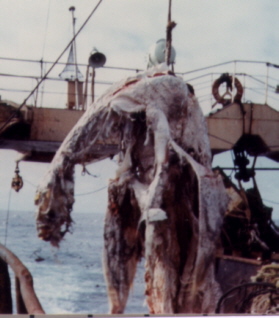
Or rather term, the term in question being "Zuiyo-maru truther", a person who still insists that the carcass found by the Japanese fishing boat Zuiyo-maru in 1977 actually was a plesiosaur...