Showing posts with label Coleoptera. Show all posts

Tuesday, July 29, 2025

God loves *snout* beetles


Credit: gailhampshire


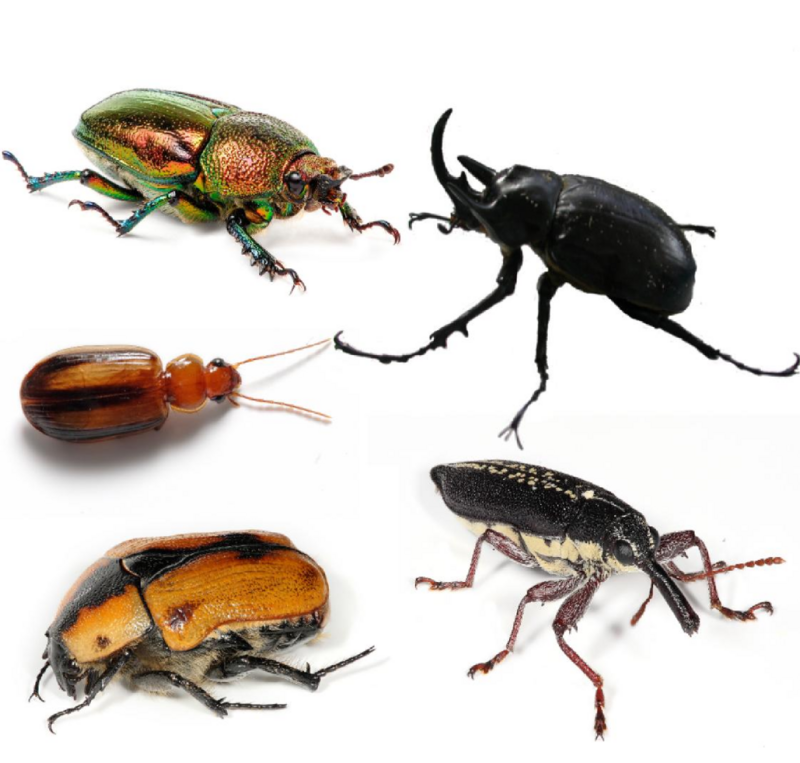
So the largest taxon (below class level) are the beetles, with about 450,000 described species. Hence the famous quip "God loves beetles". But guess what? The largest family is the weevil family (60,000 described species). So God doesn´t just love beetles, he very specifically loves *snout* beetles?!

The world, agent Cooper, is a strange and beautiful place. 

Thursday, October 3, 2024

God loves bombardier beetles


These were my midnight musings last night, but I didn´t have time to jot them down until now. Because I was sleeping it off, obviously! LOL.

The quip “God loves beetles” is intended as a jocular jibe against Christianity from an atheist-scientific perspective. There are currently 400,000 described species of beetles. When the quip was quipped (around 1968), I believe the number was 250,000. The point being that beetles are the single largest taxon. Therefore, God must love beetles. I mean, why did he create so many species of Coleoptera otherwise? And since Anglican clergymen would presumably find this deeply embarrassing, it´s excellent atheist rhetoric. Or something.

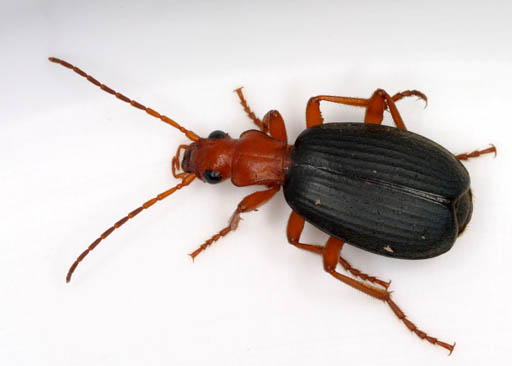
But is it really? Paul said that all of Nature awaits the arrival of the sons of God, and then Nature will be redeemed. So why can´t Paul´s God love Insecta? I mean, where were *you* when He created the bombardier beetle? Medieval Catholicism had a crypto-Neoplatonist tendency, in which all of reality was seen (almost panentheistically) as a gigantic chain of being. C S Lewis probably had the same perspective. I can see him laughing at the smart aleck atheists over a pint of beer at the Prancing Pony. “Yes, the beetles, well, I always wondered about that one myself”. Why can´t a god “constrained” by Neoplatonist “Forms” create a lot of beetles? But sure, I suppose it´s hard to explain why a Protestant god created 400,000 species of Coleoptera, since he seems to have an inordinate fondness for humans (or at least some of them)…

Other religions presumably have even less issues with the accursed bugs. In Islam, I presume Allah can create more or less anything at any time, just to show his omnipotence to humans as a kind of “teaching device”. And in Hinduism, Shiva creates beetles as he goes along, as part of his crazy dance, simply because he can (I suppose Kali or even Krishna could do the same!).

So what´s the problem really? 

Wednesday, July 24, 2024

Offended by the euphemisms


A guy with ideas that offend 

OK, I can´t let this one go...

The bizarre thing with the Woke is that they use "safe space" euphemisms even when discussing fascism and Nazism. It´s like a sick joke. Maybe it is?

Bro, Mussolini´s fascism wasn´t "an idea that offends". Nor does the name Hitler "have an objectionable sound to modern ears". Nor were Adolph and Benito simply "controversial figures". Geezus. The Nazis were genocidal maniacs, for crying out loud!

And why is Beyoncé mentioned in the same headline as Duce and der Führer? 

They are laughing at us. I´m offended by the euphemisms. Can I file a complaint with the HR department? 

Hitler beetle, Trump moth, Beyoncé fly 

Priorities

A beetle named after Adolf Hitler(!)
Credit: Michael Munich


This is the kind of BS that makes me wanna vote Trump or something...

I´m not entirely surprised that this happens, tbh, but I kind of hoped that the conservative character of scientific names (they are *supposed* to be unchangable) would stop the Wokies in this particular case. 

But naaah, apparently not. That being said, if these are the new rules...well...a number of organisms are named after Greta Thunberg. I´m sure Israelis and Jews might find *that* offensive. Just as offensive as name a living creature after, say, Hitler or Mussolini. Let´s see if somebody is brave enough to mount a challenge!

Botanists vote to remove racist references from plant names

Sunday, February 12, 2023

Skalbaggar, helt enkelt


Credit: Bugboy52.40


Lite lustigt att *den här* sajten skriver om skalbaggar på Madagaskar. Djupekologi? Metafor? Något om "generalister" versus "endemiska arter"? Fast ibland betyder "skalbagge" faktiskt "skalbagge"...

Femton nya arter hittade på Madagaskar


Sunday, July 17, 2022

A new theory of evolution


A very interesting article from The Guardian...

From the article: 

>>>Emily Standen is a scientist at the University of Ottawa, who studies Polypterus senegalus, AKA the Senegal bichir, a fish that not only has gills but also primitive lungs. Regular polypterus can breathe air at the surface, but they are “much more content” living underwater, she says. But when Standen took Polypterus that had spent their first few weeks of life in water, and subsequently raised them on land, their bodies began to change immediately. The bones in their fins elongated and became sharper, able to pull them along dry land with the help of wider joint sockets and larger muscles. Their necks softened. Their primordial lungs expanded and their other organs shifted to accommodate them. Their entire appearance transformed. “They resembled the transition species you see in the fossil record, partway between sea and land,” Standen told me. According to the traditional theory of evolution, this kind of change takes millions of years. But, says Armin Moczek, an extended synthesis proponent, the Senegal bichir “is adapting to land in a single generation”. He sounded almost proud of the fish.

>>>Moczek’s own area of expertise is dung beetles, another remarkably plastic species. With future climate change in mind, he and his colleagues tested the beetles’ response to different temperatures. Colder weather makes it harder for the beetles to take off. But the researchers found that they responded to these conditions by growing larger wings. The crucial thing about such observations, which challenge the traditional understanding of evolution, is that these sudden developments all come from the same underlying genes. The species’s genes aren’t being slowly honed, generation by generation. Rather, during its early development it has the potential to grow in a variety of ways, allowing it to survive in different situations. “We believe this is ubiquitous across species,” says David Pfennig of the University of North Carolina at Chapel Hill. 

Do we need a new theory of evolution?

Sunday, September 26, 2021

Some fun stuff from Wikipedia


Japanese Buddhist version of the Hindu goddess Lakshmi, known as Kisshoten.


Irish liberal party Fine Gael has a colorful history, here the party´s first leader O´Duffy in 1934...


Chaturaji, Indian four-player chess. Not exactly Enochian magic, but perhaps close enough? ;-) 


A sculpture of Hindu goddess Saraswati, standing outside the Indonesian embassy in Washington DC. One of the sculpted children below is supposed to be Barack Obama!


Chief William Neptune of the Passamaquoddy. Note the, ahem, lucky charms... 


A small town in Canada actually named Swastika...


A beetle with the bizarre scientific name Aaaaba nodosa. Some kind of nerd joke?

OK, closing for tonight!

Thursday, August 19, 2021

Stop this...now!


If God is real, personal and loves beetles, He should stop this crazed heathens AT ONCE with a thunderbolt or other celestial weapon of his choice!!!

Saturday, July 24, 2021

World on fire


"Megafires: The Global Threat" is a two-part Franco-American documentary from 2020 about the recent wave of forest fires in North America, but also other parts of the world. I just finished watching the first part, and it frankly made me feel almost depressed! Yes, it´s man-made climate change all over again.

The number and intensity of forest fires is growing by the year, fires can start even in December (so there is no distinct "forest fire season" anymore), and is only going to get worse for various reasons connected to climate change. For instance, snow is thawing rapidly, making it difficult for trees to absorb the water before it leaves the forest eco-system. At the same time, with each degree of warming, trees need more water, not less (about 20% more). The drought makes the trees less able to defend themselves against attacks from insects such as the ash borer, and dead trees of course make excellent fuel for forest fires...

In 1910, an enormous forest fire known as the Big Burn affected four US states, making the US authorities decide that forest fires were a virtual "public enemy number one". From around 1935 to 1985, American fire fighters *did* succesfully stop almost every forest fire in the country. However, from 1985 onwards, the number of forest fires have been rising very steeply. The reason, according to the scientists interviewed, is that the lack of forest fires have made the forest more dense, with more trees and vegetation in general, and hence more "fuel" once a fire really gets started. Before the 1930´s, fires in effect regulated the size and thickness of the forests, being part of the natural system. The succesful suppression of forest fires turned out to be a pyrrhic victory, especially with global warming added to the mix. 

And then there´s the peat...

The documenatry claims that the peat deposits contain 25% of the world´s carbon. More forest fires means more peat will burn, especially in areas such as Alaska, Siberia or Scandinavia, where global warming is more rapid than in the rest of the world. Peat fires can go on for months without being detected, since they can take place literally underground. "The earth itself is on fire". The team goes to Indonesia, where a scientist tells them that a local peat fire wasn´t stopped by three heavy rainfalls. 

Still, the most scary part of "Megafires" was the - wait for it - pyrocumulonimbus, a kind of monster cloud that forms during really severe forest fires and creates its own local weather system, complete with thunderstorms. The cloud can therefore spread the wildfire even further, almost as if the fire had a bizarre life of its own! 

Is this how the world ends, I wonder?

In the second part of this production (which I haven´t seen yet), we will supposedly learn about the solutions to the above predicament. Well, I certainly hope there are some, because from where I stand, it does not look good...


Monday, December 7, 2020

Thursday, September 27, 2018

The truth shall set you free


“Nationalnyckeln” (NN) is a biological encyclopedia published in Sweden. Most of the text is indeed Swedish. The original bold ambition was to publish over 100 volumes, covering all (!) species of “higher” multi-cellular organism found in Sweden. The original project was discontinued in 2014 after only 17 volumes, however, but it seems NN is up and running again after a four-year hiatus. An 18th volume will be published next month, with some additional volumes projected in 2019. However, it's doubtful at the present time whether NN will ever reach its original goal (which may have been more ambitious than, say, a manned mission to Mars).

This volume was published in 2007 and covers the longhorn beetles (Cerambycidae). 128 species have been found, at some point, in the Nordic countries, and all of them are covered here – including the Alpine longhorn beetle (Rosalia alpina) which haven't been found at Scandzan territory since 1926. The Greater Capricorn Beetle has – but only at Halltorps hage at Öland, where its larvae live inside really old trees (which are now rapidly dying off). The beetle is abundant in the rest of the world, though, so I wouldn't worry too much!

This is frankly a spectacular volume, with large color illustrations, and a good collector's item. For a long time, we wondered about God's plan for the world and teleology in the cosmos. Now, the truth has been revealed.

God loves Nordic longhorn beetles. Including Rosalia alpina.

Wednesday, September 19, 2018

Why do you think the Russian Five Year Plans failed?


Amazon sells a pesticide against Colorado beetles. We all know what that REALLY means, don´t we? :D

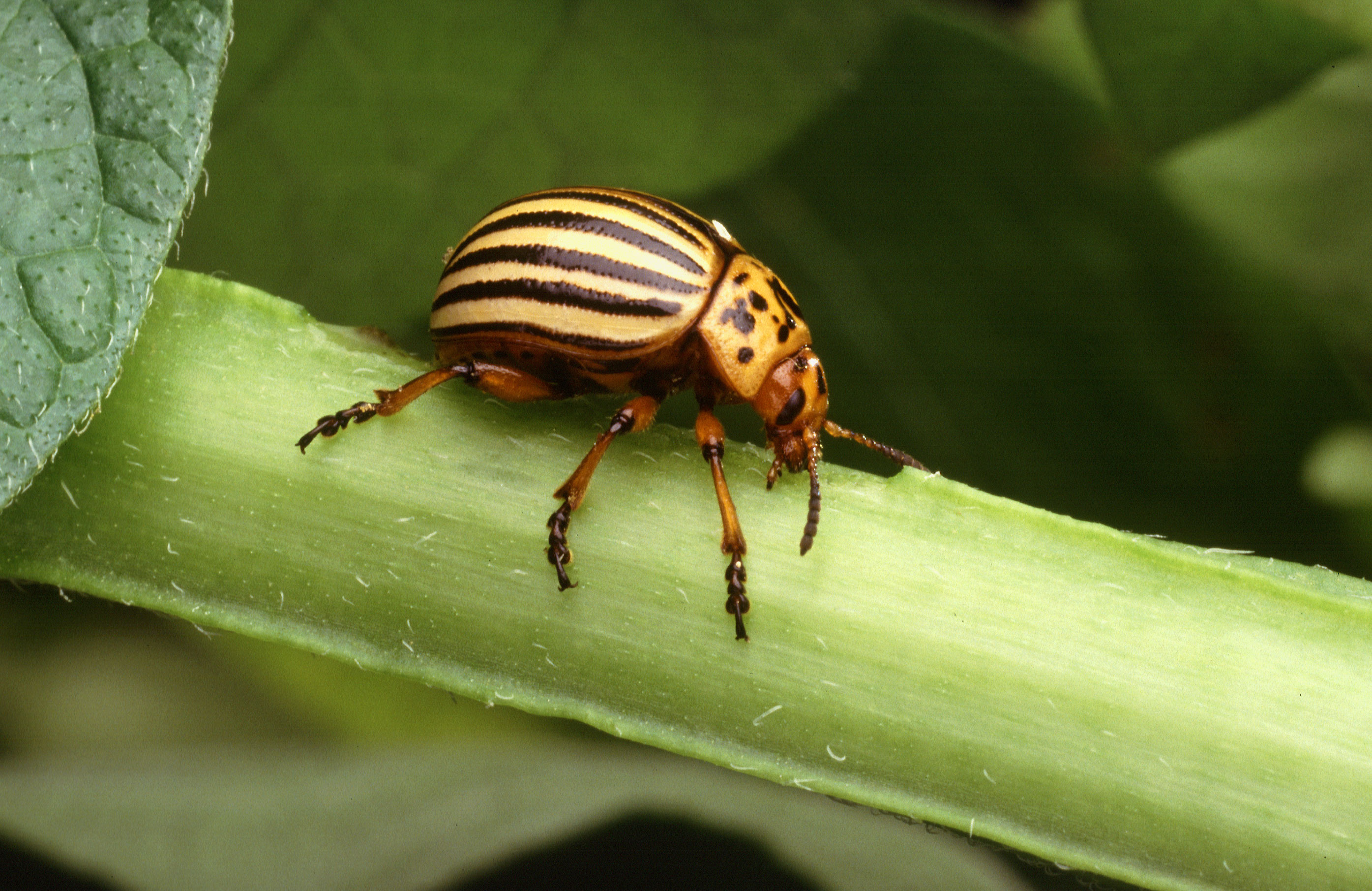
This witches' brew is a Communist conspiracy. It's a fact that GOD LOVES BEETLES and that the Colorado Potato Beetle is OUR PRIME ASSET IN THE FIGHT AGAINST GODLESS COMMUNISM. The Cold War wasn't won by Reagan's Star Wars but by BEETLES FROM JIMMY CARTER'S EXPERIMENTAL FARM IN GEORGIA. You think he grew peanuts there? THINK AGAIN.

Thursday, September 13, 2018

Winter war beetles


"Ground Beetles (Carabidae) of Fennoscandia. A zoogeographic study" is a three-volume study by Carl H. Lindroth, originally published in German in 1945. (Lindroth himself was Swedish.) This English translation from 1988 was made by the Smithsonian Institution Libraries and the National Science Foundation as part of a program to translate valuable foreign-language scientific literature. Apparently, the original was published with the support of Längmanska Kulturfonden. Thank you.

Lindroth must have been some kind of grand old man of carabid studies, since he also wrote "The Ground Beetles of Canada and Alaska", something the editor Terry L. Erwin fondly remembers in a foreword to this translation of Lindroth's work on Scandinavian beetles. Erwin met Lindroth when the Swede was in Alberta, collecting...well, ground beetles (what else?).

The three volumes of "Ground Beetles of Fennoscandia" are divided as follows. The first volume contain species presentations, the second volume only contain range maps, while the third and concluding volume has the subtitle "General Analysis, with a Discussion on Biogeographic principles". There are both maps and graphs in these volumes, but - curiously - not a single illustration of a ground beetle!

The books cover Fennoscandia: Sweden, Norway, Finland and the Russian sectors of Lapland and Karelia, east as far as the line Swir-Onega-Lake Wyg (Uikujärvi)-Wyg River-Soroka. The book also covers Denmark, which is not really part of Fennoscandia. The old national borders (1939) are used, despite the book being published in 1945. Was the author a secret admirer of Mannerheim?

I don't deny that this work is a veritable treasure-throve of information for revanchist entomologists who want to resurrect Greater Finland, but it's not suitable for the general reader. Still, I give citizen Lindroth's work four stars for the effort. The effort to describe the ground beetles, obviously!

A Cold War fossil?


"Mesozoic Coleoptera" is a tour de force by the fabulous four Arnoldi, Zherikhin, Nikritin and Ponomarenko. It was originally published in Moscow back in 1977. This American (or is it Amerikan) edition is from 1991. It was published as part of a program to translate important foreign-language reference works.

The Palaeontological Institute at the Academy of Sciences in Moscow have a collection of over 15,000 fossil beetles from the Mesozoic, apparently a difficult period in beetle evolution to sort out. This book is therefore a God-send to all palaeontologists specializing in beetles rather than dinosaurs - and, as we know, God loves beetles! (Dinosaurs were something else again.) "Mesozoic Coleoptera" even contains black-and-white photos of the fossils. Not all 15,000, though!

I'm not entirely sure how to rate this Cold War fossil, but I suppose four stars for the effort would be just fine.

Saturday, August 25, 2018

God loves chewing beetles


The bombardier beetle is a curious insect which has become something of a creationist icon. The reason is its explosive defence mechanism, which creationists argue can't be the result of chance or gradual evolution. "Bomby the Bombardier Beetle" is intended for children, and is published by the Institute for Creation Research (ICR).

I'm not a creationist, nor do I believe in talking beetles, but my main objection to this book is that it's incredibly bad even on its own turf. It's extremely confusing, there's no plot, and the religious message seems to have been largely forgotten (although Bomby does learn that God created bombardier beetles "thousands of years ago").

As another reviewer pointed out, the glossary is pretty strange, too. Thus, we learn that "stories" mean "more than one story", and that a "tiger" is a "large fierce cat". "Munching", apparently, means "chew with vigor". Indeed, the author seems obsessed with beetles chewing. I sometimes got the impression that Bomby and his father aren't doing much else besides in this story! The cover is different, too.

Only one star for Bomby, Father and Grandfather Bomb...

Wednesday, July 25, 2018

God loves beetles


OK, I admit it. Some of my Amazon reviews were quite trollish. Like this one. I promise I don´t really have any conflicts with the Transvaal Museum. Not even the Anomalipus department... 

The full title of this slender volume is "Revision of the genus Anomalipus Latrielle 1846. Coleoptera: Tenebrionidae: Platynotini." It's written by Sebastian Endrödy-Younga, a Hungarian scientist based at the Transvaal Museum. Indeed, his book is marked as no. 6 in the Transvaal Museum Monograph series. As indicated by the title (I hope), this is a scientific-technical presentation of beetles belonging to the genus Anomalipus, mostly found in East and southern Africa. All photos are in black-and-white. Somewhat confusing range maps have also been included. A must if you work at a museum and just got promoted to the Anomalipus department.