|
| Credit: El Golli Mohamed |
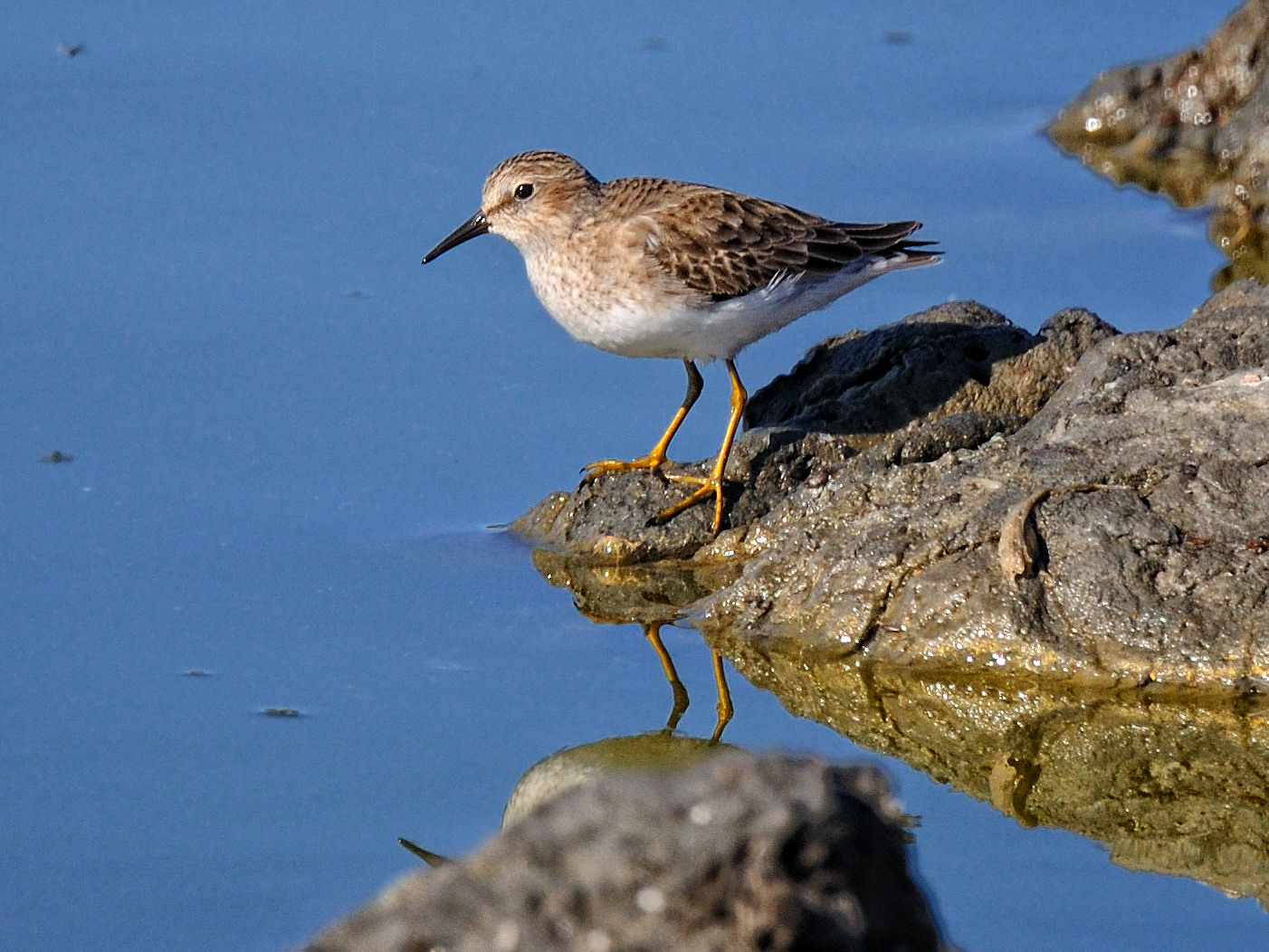
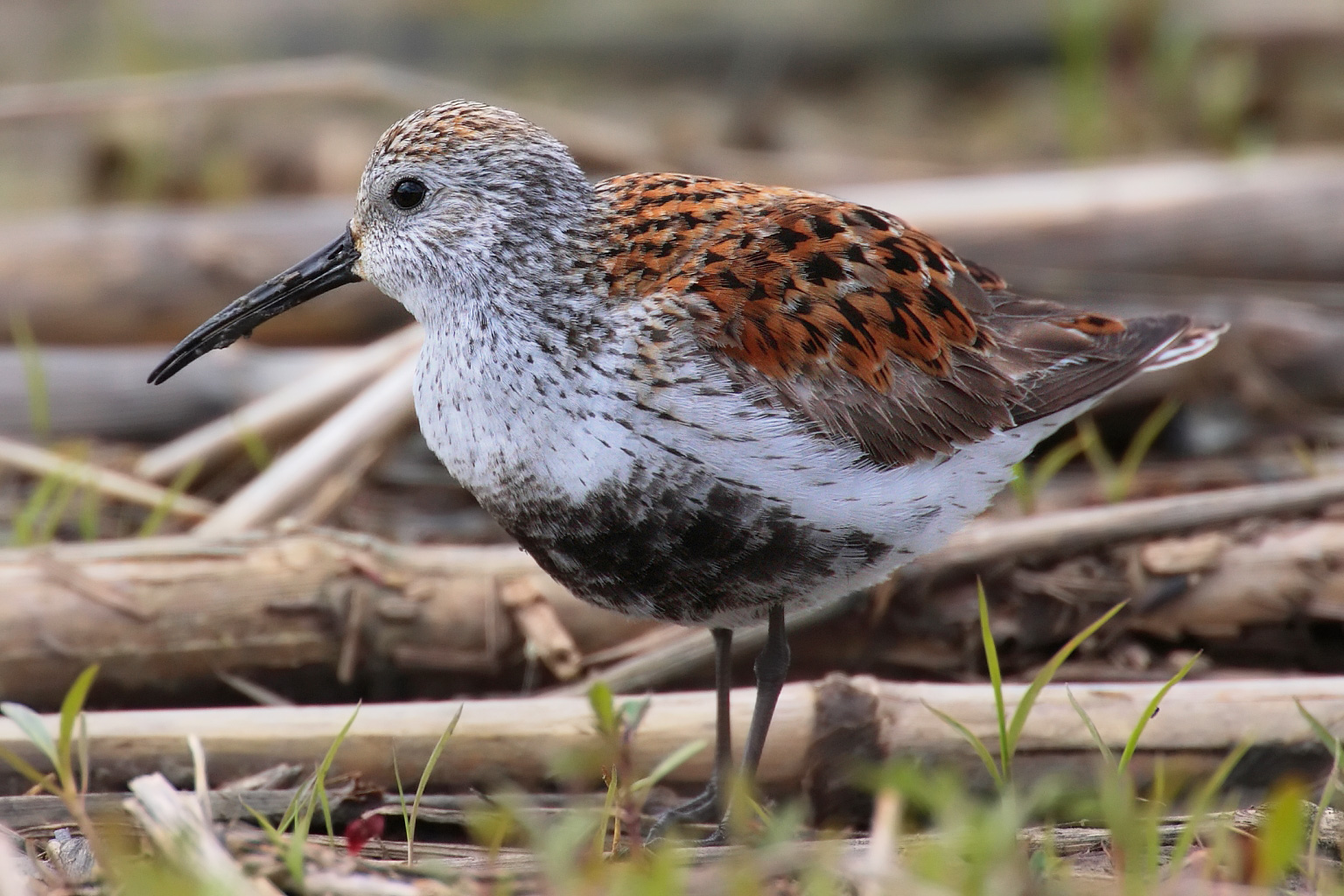
Har tydligen inte setts till på 84 år...i Sverige. Väldigt vanlig i Nordafrika?
|
| Credit: El Golli Mohamed |
Har tydligen inte setts till på 84 år...i Sverige. Väldigt vanlig i Nordafrika?
The dodo, the passanger pigeon and the great auk are three almost iconic extinct birds. Inevitably, some people claim to have seen them after they officially traversed to the proverbial hunting grounds.
Also as usual, some of the reports are more difficult to believe than others. For instance, a report of a living dodo in Zambia?! Hint: the dodo was a flightless bird living on the island of Mauritius. Zambia is a landlocked country in South-Central Africa. But even that pales when compared to an alleged video of a dodo in...Costa Rica. Yeaaah.
My "favorite" is the Canadian whiskey distiller who tricked the media to a marketing event on the Orkney Islands, claiming to finance an expedition looking for surviving great auks. The runner up is the bizarre story of penguins on the run in Norway being mistaken for said auks. Is that even true, or an April Fool´s joke?
Interestingly, Teddy Roosevelt believed that he spotted passanger pigeons seven years after the species supposedly disappeared. So TR *did* have some kind of cryptid connection. The usually trigger happy rough rider decided not to shoot them. Later sightings are probably misidentified mourning doves or bizarre specimens of domestic pigeons on the run.
A very entertaining video, all in all.

So I fed one of my old blog posts to ChatGPT...and here´s the response. A free-standing sequel to the discussion from last night. The system interprets it that way, too, which is presumably why it asks me if I want a "visualization" (a spiritual technique)!
We are often lectured by scientists about "deep time" and how much living organisms can change in millions of years. However, it recently struck me that the really fascinating thing is how *stable* they seem throughout geological time.
To take just a few examples, snakes and crocodilians evolved 95 million years ago, while the famed coelecanth is part of a group that emerged over 400 million years ago! Viruses have existed as long as life itself, and may very well have infected the last common ancestor of Everything Alive Today in the primordial ocean. They may even have *predated* life. Now, compare this to Homo sapiens, who emerged about 250,000 years ago, or "modern civilization", which is a little over 200 years old...
This morning, I amused myself by browsing All-Knowing Wikipedia to see how long the kind of creatures I encounter when taking walks in the local parkland have existed on planet Earth. Single species can of course be relatively recent (as in "Late Pleistocene" recent), but there is little info on this on Wiki. So I looked up genera and in some cases subfamilies or families. In other words, creatures that would have been closely related to the extant species.
This is what I found (YBP = Years Before Present)...
Larus (gulls): 20 million YBP
Corvidae (corvids): 17 million YBP (the Old World jay lineage)
Ardea (herons): 11 - 15 million YBP
Anser (grey and white geese): 5 - 15 million YBP
Cygnus (swans): 5 - 11 million YBP
Anas/Anatinae (dabbling ducks) : 5 - 11 million YBP
Canis (wolves, dogs): 9 - 10 million YBP
Felis (cats): 6 - 7 million YBP
Corvus (crows): 5 million YBP
Pica (magpies): 3 million YBP
Homo (humans): 2 million YBP
That life forms found around a bloody birdlake predated humanity with millions of years is, of course, a sobering thought...
Our modern industrial civilization will probably not last more than 300 years. If I counted correctly, that´s 0.0015% of the time gulls of the genus Larus have existed on Earth. Make of that what you wish.
 |
| En annan medelhavstrut Credit: Alexis Lours |
En mås som insisterar på att vistas vid skorstenen på Sixtinska kapellet (mitt under pågående konklav) har väckt visst uppseende både i Rom och internationellt. Den har skämtsamt döpts till "Pope Steven Seagull the First"!
Men vilken art är det?
Enligt SVT:s nyheter är det en fiskmås, men den tror jag inte på. Måsen i Vatikanen verkar mer "robust" än en dylik. Efter en diskussion med ChatGPT har jag kommit fram till att det förmodligen är en medelhavstrut!
Men vi får väl invänta ett officiellt utlåtande från BirdLife-Sweden. Eller kanske konklaven...
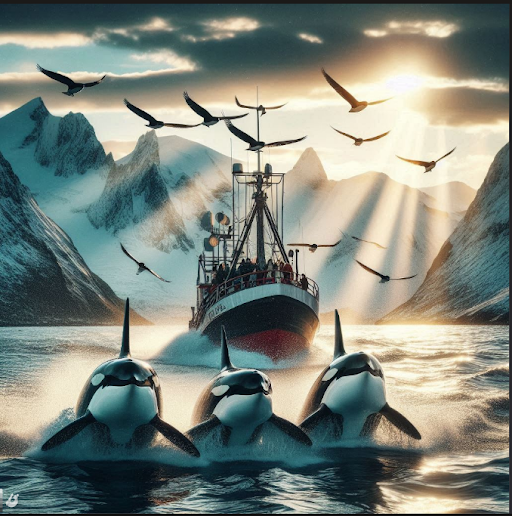
"Wild Scandinavia: Life on the Edge" is the first part of a three-part BBC nature documentary about...wait for it...Scandinavian wildlife. It deals with the Scandinavian coasts and features the Stockholm Archipelago, the sand dunes of Jutland, Norwegian fjords and the Arctic coast.
Perhaps good if you never seen any Scandinavian animals before, but personally, I recognized most of the species shown: the grey seal, the white-tailed eagle, killer whales, sea otters, puffins and so on. But sure, the various marine invertebrates were suitably disgusting. I don´t think I want to swim in Norwegian territorial waters!
In a later episode, they cheat and take the viewer to Iceland and Svalbard, which are not part of Scandinavia as the term is usually understood in Sweden, Norway and Denmark.
Could be of some interest on a boring February evening. As long as you know that the wildlife shown is far, far away...
 |
| Who´s calling me ugly, boy? Credit: Charles J Sharp |
But sure, the wildlife shown is so cool that casual viewers probably don´t care about the geographical naming conventions (or even locations).
Muskoxen (the bovids at Dovrefjell), arctic foxes and polar bears are featured. So are peculiar birds such as ruffs and little auks. We also get to meet a wolf spider which hunts flies at the outskrits of a hot spring on Iceland! I admit that the muskoxen were my favorites - these large beasts are even uglier than I expected, LOL. For some reason, they don´t show killer whales.
Could be of some interest if you are a nature documentary aficionado, but don´t expect any deeper philosophical insights...

Det här är Sverige 2023. Ett land där den förkrossande majoriteten av befolkningen (cirkus 80%) fortfarande röstar på de partier som är ansvariga för den situation som beskrivs i länken nedan.
Bilden ovan föreställer förresten en garfågel...
Om det här fortsätter kommer den enda lösningen till slut att vara någon form av fascism. Kanske har vi redan passerat smärtgränsen?
Och jo, ni som tror att en legalisering av knarket kommer att slå sönder de kriminella gängen kan sluta snacka nu!

"Osprey: Sea Raptor" is a British documentary about - you might just have guessed it - ospreys. It´s made by Love Nature, which has also produced a huge number of other nature documentaries. While ospreys do exist in Europe (including Sweden), "Osprey: Sea Raptor" is taped in the United States. The ospreys have a breeding colony at the Connecticut side of the Long Island Sound. As the bird flies (pun intended), it´s not *that* far away from New York City!
The osprey is a large raptor (diurnal bird of prey) specialized in diving for fish, which it catches with the help of its long claws. It´s sufficiently different from other raptors to be placed in a family all its own. The documentary follows an osprey couple (these birds usually bond for life) as it returns to the Long Island Sound from South America, where it migrates during the winter. Ospreys often reuse the same nests or nesting sites year after year.
While ospreys are pretty large, they can be challenged by both bald-headed eagles, cormorants and the great black-backed gull. In the documentary, the osprey punishes the cormorants by swooping down on their colony, and also manages to fend off the eagles, while the gull (which is of enormous size) turns out to be more of a problem! On land, foxes can sneak into osprey nests that aren´t elevated enough, and simply eat the eggs. Interestingly, humans living near the marshes help the ospreys by building nesting platforms.
I never seen an osprey IRL, and probably wouldn´t want to live too close to one of their colonies, but I admit that "Osprey: Sea Raptor" is well-produced and even somewhat fascinating.
 |
| Credit: Bengt Nyman |

I wrote about the ruff years ago, but here we go again, just for the fun of it. Of course, the ruff (Calidrix pugnax) isn´t a human (Homo sapiens). Some quotes from Wikipedia:
"Three differently plumaged types of male, including a rare form that mimics the female, use a variety of strategies to obtain mating opportunities at a lek, and the colourful head and neck feathers are erected as part of the elaborate main courting display."
"The ruff has three male forms, which differ in mating behaviour and in appearance: the typical territorial males which have a dark neck ruff, satellite males which have a white neck ruff, and the very rare cryptic males known as "faeders" which have female-like plumage. The behaviour and appearance of each individual male remain constant through its adult life, and are determined by a simple genetic polymorphism. Territorial behaviour and appearance is recessive to satellite behaviour and appearance, while preliminary research results suggest that the faeder characteristics are genetically controlled by a single dominant gene. It was originally thought that the difference between territorial and satellite males was due to a sex-linked genetic factor, but in fact the genetic locus relevant for the mating strategy is located on an autosome, or non-sex chromosome. That means that both sexes can carry the two different forms of the gene, not just males. The female does not normally show evidence of her genetic type, but when females are given testosterone implants, they display the male behaviour corresponding to their genotype. This testosterone-linked behaviour is unusual in birds, where external sexual characteristics are normally determined by the presence or absence of oestrogen."
Translation: the ruff has three genetically distinct forms of males, one of them mimicking the females, and the females have the same genes that create the variation in the males, genes which can be stimulated by testosterone, at which point the females exhibit male behavior...
Mother Nature at her finest. LOL.